How to Keep Orpington Chickens: A Beginner’s Winter Guide
How to keep Orpington chickens in a backyard flock: temperament, coop and roost sizing, winter care, broodiness, laying, and the honest downsides of the breed.
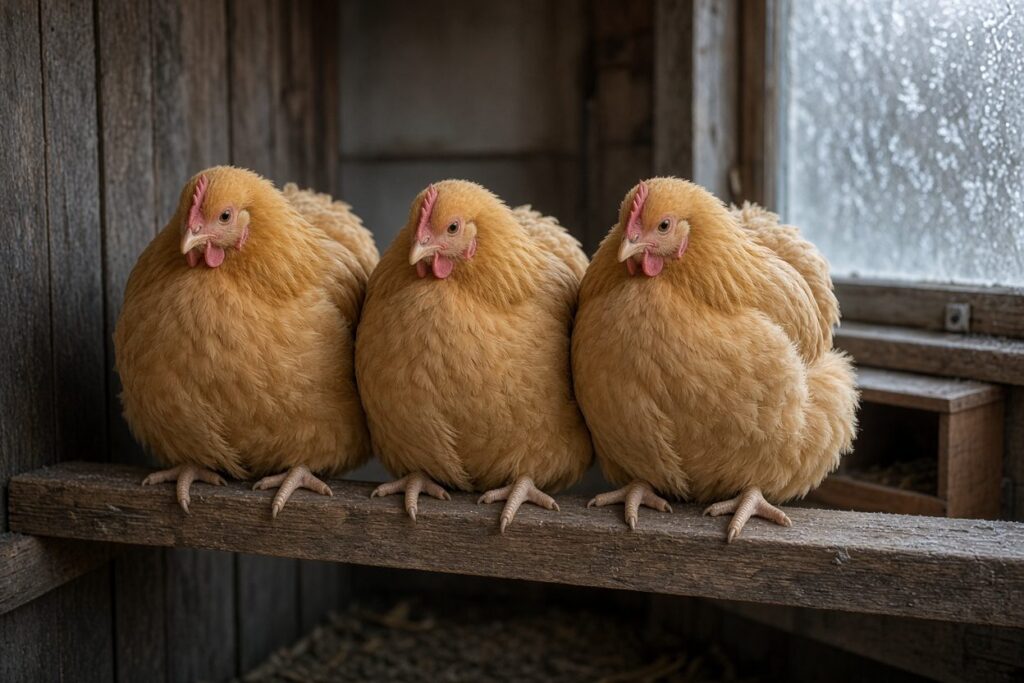
Last Sunday the first real frost came down off the ridge, and I went out at dawn to find my three Buff Orpingtons puffed up on the top roost like a row of golden throw pillows, completely unbothered, while I stood there in Kyle’s barn coat with my hands jammed in the pockets. The fount was frozen solid. The Orpingtons were fine.
That’s the breed in a sentence. Orpington chickens will handle the cold better than you will, but they still need you to do a few things right. My very first flock was three Buff Orpingtons out of a Tractor Supply brooder, and I’ve kept them ever since alongside my Australorps, Plymouth Rocks, and Easter Eggers. Here is what I’ve learned about keeping them well, heading into winter and out the other side.
What Orpingtons are actually like
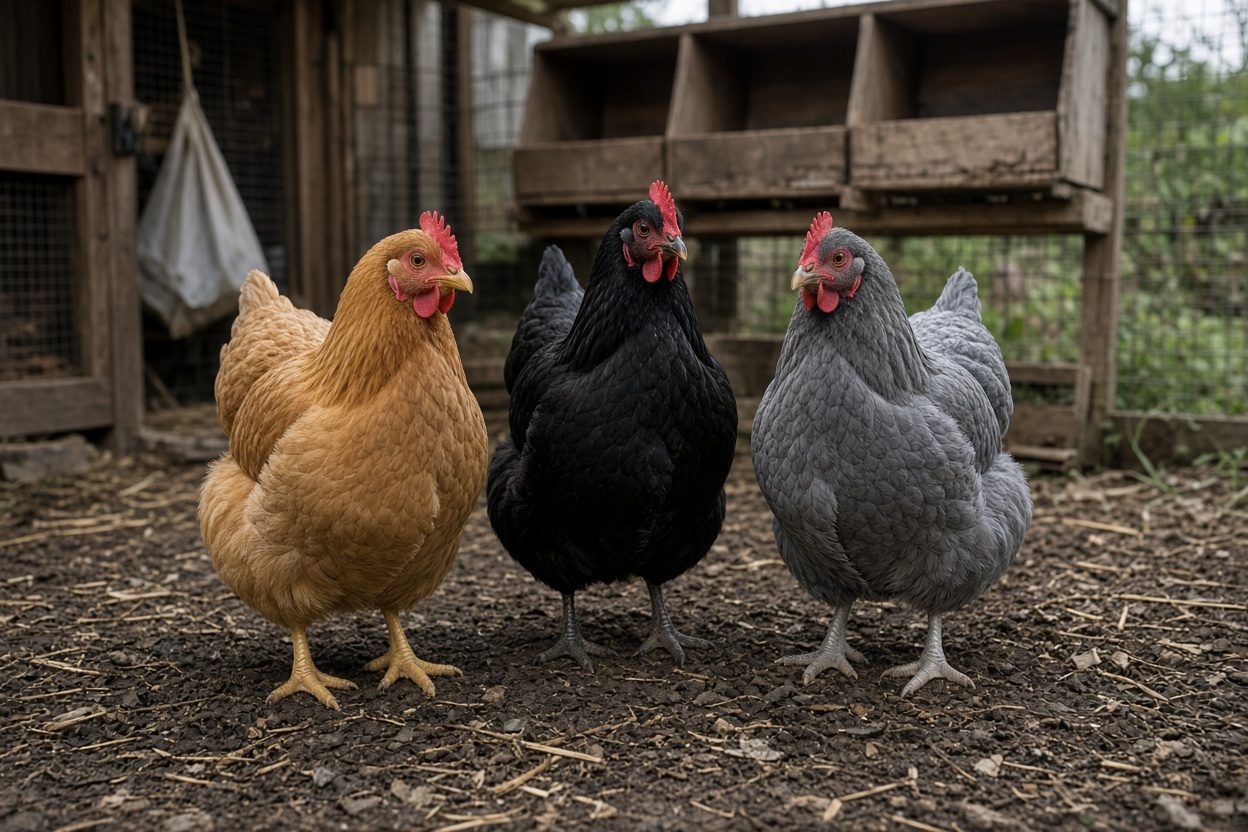
Orpingtons were developed in England in the late 1800s as a dual-purpose bird, and they still carry that big, broad body. The Buff is the one most people know, but hatcheries like Murray McMurray and Cackle also sell Black, Blue, Lavender, and White.
Temperament is the reason to get them. A Buff Orpington handled young will often follow you around the run and settle in your lap, and they’re about the best breed I know for families with kids. Hannah has carried one particular Buff around the yard like a sack of flour for years, and that hen puts up with it.
The flip side of gentle is low on the pecking order. My sweet Orpington Dot got picked on by the bossier hens one brutal August, and I’ve watched friendly Orpingtons get shoved off the feeder by a smaller Easter Egger with opinions. In a mixed flock, give them a second feeder and a second waterer so nobody goes without.
Size, and what it means for your coop
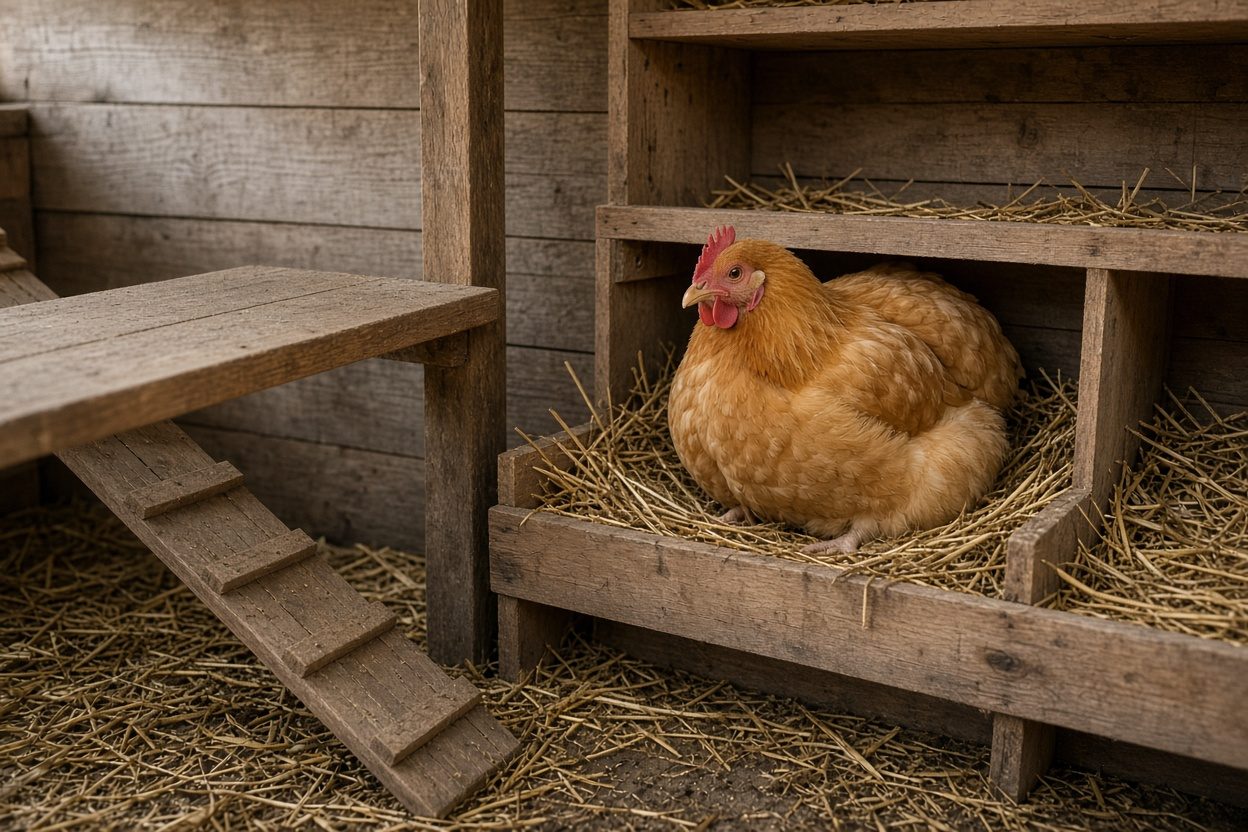
These are big birds. A standard Orpington hen runs around 8 pounds, and a rooster closer to 10. They look even bigger, because so much of an Orpington is feathers. That bulk changes how you set up the coop.
Floor space. The usual rule of 4 square feet of coop per bird is the minimum for Orpingtons, not the target. I aim for 5 or 6 for heavy breeds, plus at least 10 square feet each in the run. A crowded winter coop gets damp fast.
Roosts. Give each bird 10 to 12 inches of roost bar, and use a wide perch. A 2×4 laid flat, with the 4-inch side up, lets them cover their toes with their bodies on a cold night, which is a big part of how they dodge frostbite. Keep the roost lower than you might for lighter breeds, around 2 to 3 feet, with a ramp or a step. A heavy bird jumping off a high bar lands hard, and that’s how bumblefoot starts.
Nest boxes. The standard 12-by-12-inch box is tight for an Orpington. Mine use 14-by-14 boxes and seem happier for it. One box for every four or five hens is plenty.
The pop door. A fluffed-up Buff in January is wider than you’d think. A door built for bantams won’t do.
Cold-hardy, but not cold-proof

Orpingtons are one of the most cold-forgiving breeds you can keep, which is why they top my list of the best cold-hardy chicken breeds for beginners. That loose, dense feathering traps warm air like a down coat. A dry Orpington on a wide roost is fine well below freezing without any heat in the coop. Don’t hang a heat lamp. Lamps start coop fires every winter.
What they do need comes down to two things: dry and drinkable.
Dry bedding, and lots of it. All those feathers are only warm when they’re dry. Wet litter means damp air, and damp air plus a big single comb is how you get frostbite. I build a deep floor of hemp bedding in the fall and add to it all winter, which I describe in the deep litter method for a winter coop. The honest con on hemp is that it costs more upfront than pine shavings, though it lasts longer and stays drier under heavy birds.
Ventilation without drafts. Keep vents open high in the coop, above the roost, and close anything low that blows across the birds. Moisture needs a way out.
Watch the combs. The Buff Orpington’s big single comb is her one weak spot in winter. The first frostbite I ever saw was on one of my Buffs, the tips gone gray-black overnight in a damp coop. If you’re somewhere colder than East Tennessee, read up on how to prevent frostbite on chickens before the first hard freeze.
Water they can actually drink
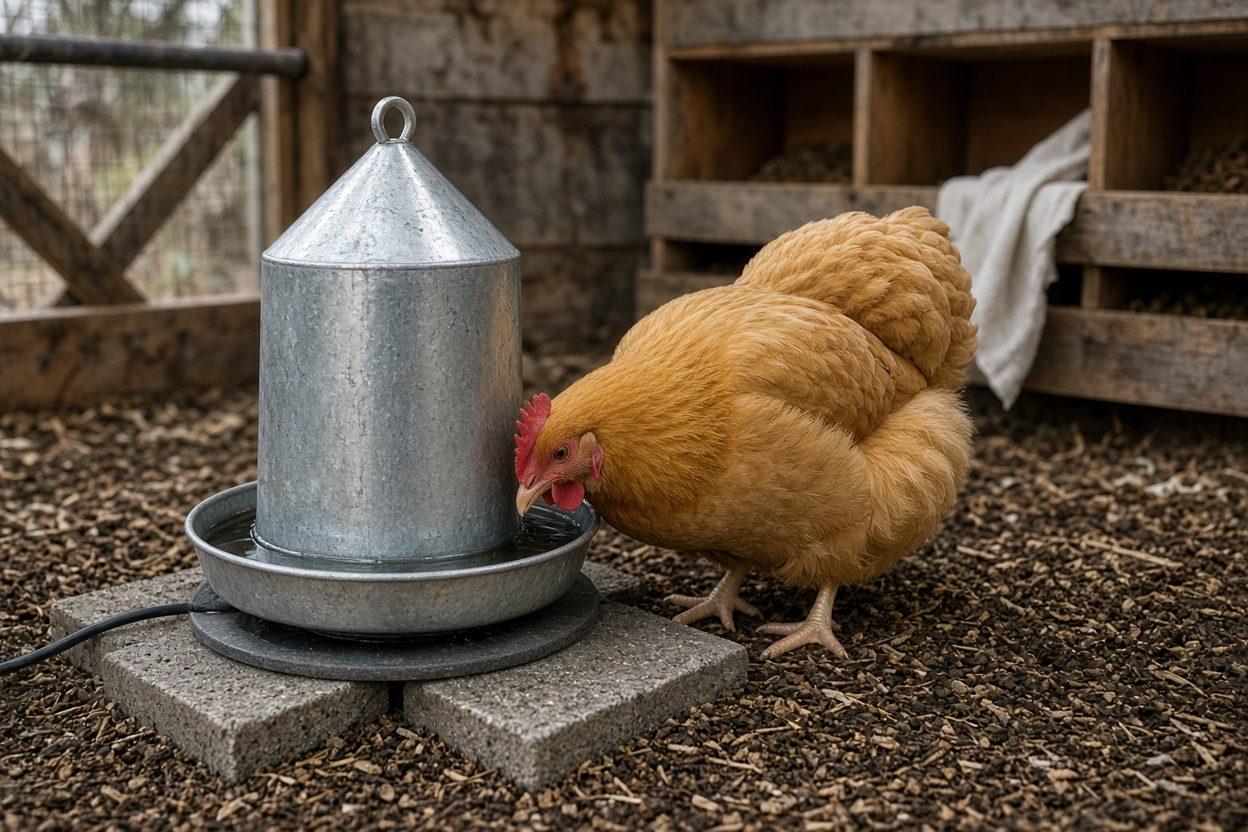
That frozen fount on Sunday morning was my own fault. I hadn’t plugged the heated base in yet for the season, and I’d been telling myself I had another week. Orpingtons are heavy eaters, and a hen who can’t drink won’t eat, and a hen who doesn’t eat can’t make her own heat overnight.
My setup is a galvanized double-wall fount on a 125-watt heated base, set on a couple of pavers so it sits level and up out of the bedding. It keeps water open on most Knox County nights. The trade-offs are real, though. You need a properly rated outdoor cord and a GFCI outlet, the base only works on metal founts, and when the power goes out you’re back to hauling warm water from the kitchen. I walk through the whole thing in how to set up a heated base for a metal waterer, and if you’d rather skip electricity, how to keep chicken water from freezing covers the other options.
Broodiness: the Orpington’s other personality
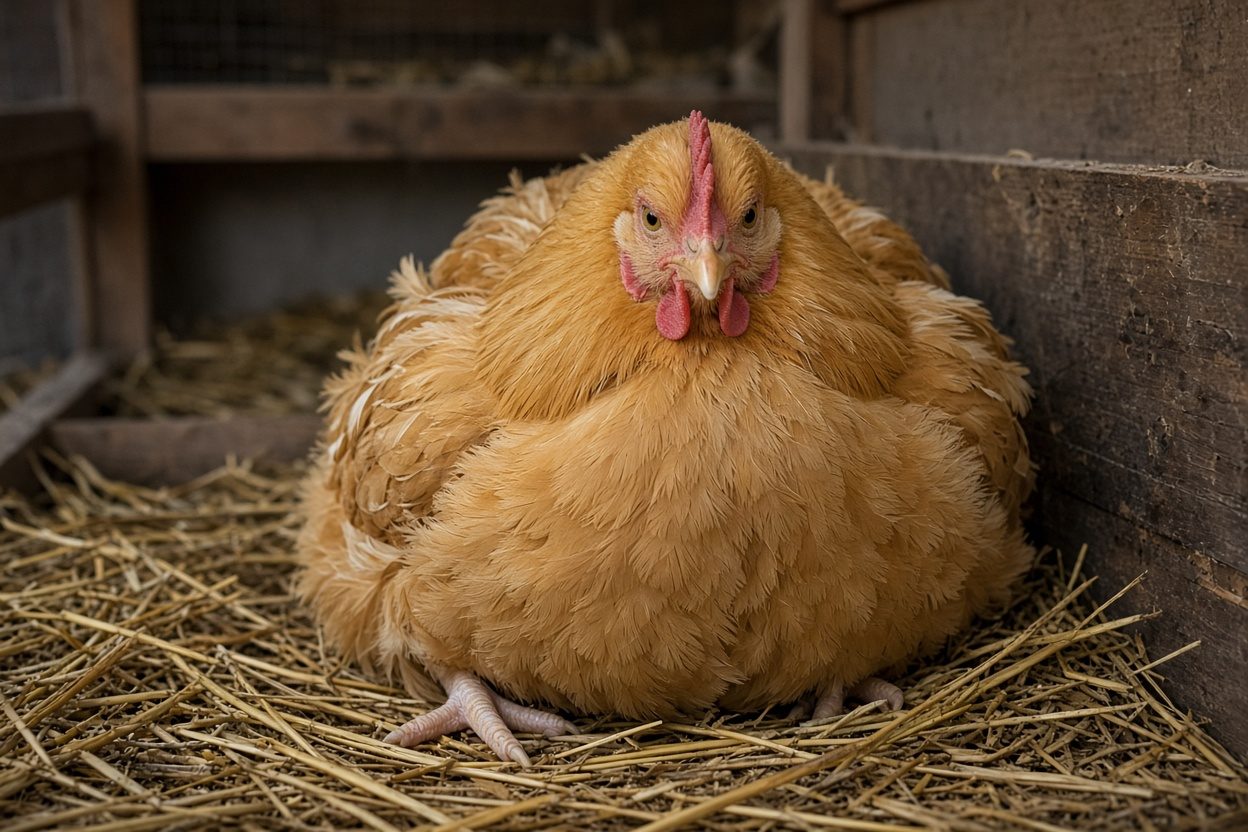
If you keep Orpingtons, one of them is going to go broody. She’ll flatten herself in the nest box, puff up, growl at you when you reach under her, and stop laying for weeks while she sits on eggs that may or may not be fertile. Buffs are famous for it. One of mine has gone broody three springs out of four.
An Orpington makes a patient mother if you want chicks. If you just want eggs, it’s a nuisance, and a broody hen can skip food and water longer than she should. Decide ahead of time which way you’ll go. I lay out both options in how to handle a broody hen.
What to expect for eggs

An Orpington hen gives you roughly 180 to 220 light brown eggs a year, a bit fewer than an Australorp or a Plymouth Rock. They mature slowly, often starting to lay around six months, sometimes later. A spring chick might not give you her first egg until the fall.
Like every breed, they slow down in short winter days and stop during the molt. Mine tend to keep laying a little in winter when lighter birds quit, but don’t count on it.
The honest downsides
I love this breed, and I’d still tell a friend these things before she bought six.
They eat a lot. A big bird eats like one. Your feed bill will run higher than it would for a flock of the same size of lighter layers, for fewer eggs. That’s fine as long as you know it going in.
They go broody. See above. Count on losing a few weeks of eggs from at least one hen most years.
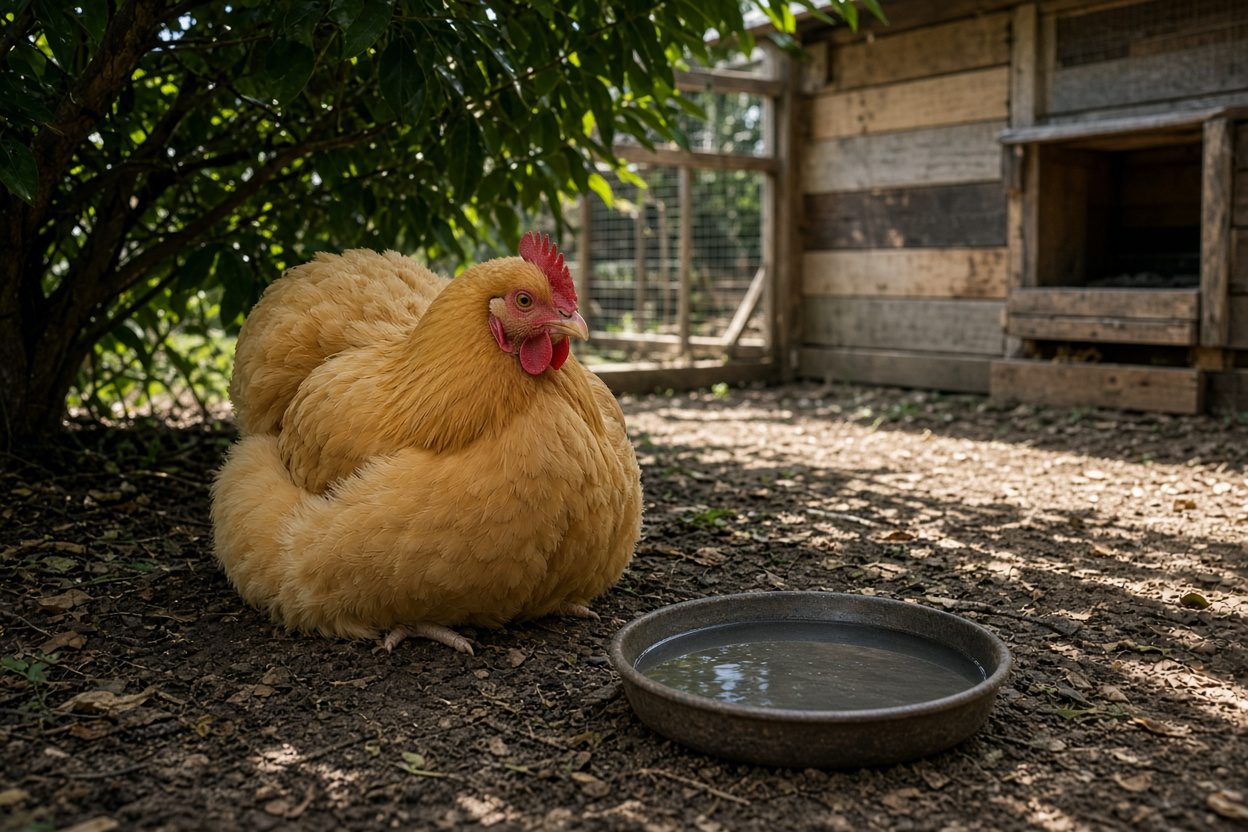
Summer is harder than winter. That down coat doesn’t come off in July. I lost a Buff Orpington my second summer to heat I didn’t catch in time, in a run that got full sun from noon on. Now I give them deep shade, plenty of cool water, and I keep OTC electrolytes on the shelf for a hen who’s panting with her wings held out. Follow the label, and call a chicken vet or the extension office if a bird doesn’t bounce back. Learn the signs your hens are overheating before June.
They’re easy targets. A slow, friendly 8-pound hen won’t outrun a fox or a loose dog. Good hardware cloth and a locked coop at dusk matter for every breed. They matter more for this one.
Is the Orpington right for your backyard?
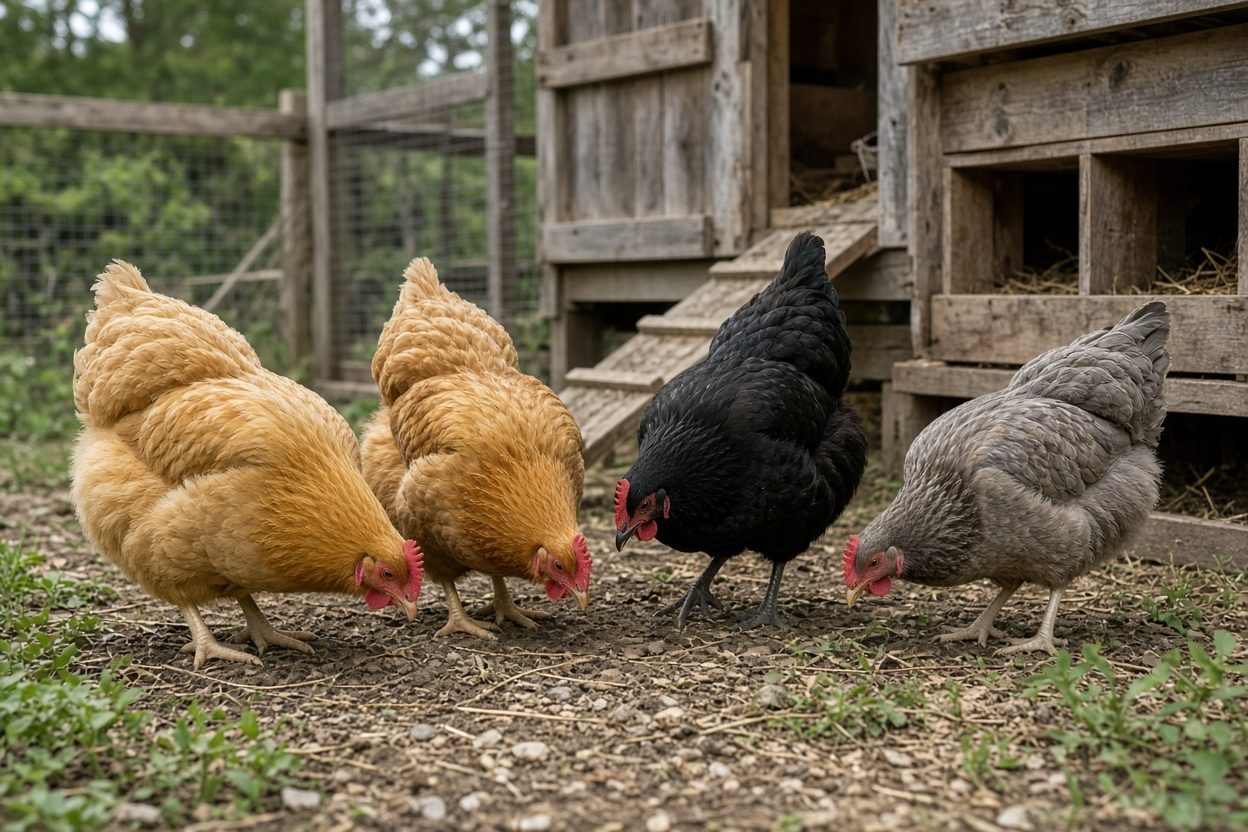
If you want a calm, cold-hardy bird that puts up with kids and lays steady brown eggs, yes. If you want maximum eggs per scoop of feed, or your summers are long and your run has no shade, mix in a few Australorps or Easter Eggers.
I go deeper on choosing breeds, setting up a coop for big birds, and getting through your first winter in my book, Raising Backyard Chickens for Beginners. It’s the book I wish I’d had the week I brought those first three Orpington chicks home.
Know your girls.
