How to Keep Chickens Safe Through a Winter Power Outage
When an ice storm takes the power, your hens still need water, dry air, and calm. Here's my plan for keeping chickens safe through a winter power outage.

The ice storm that took our power for three days a few winters back started at four in the afternoon, and by dark the pine at the edge of our lot was dropping limbs like gunshots. Kyle and the kids were hauling firewood onto the porch. I was standing in the coop with a headlamp, staring at a heated waterer base that had gone cold and dead under a fount that was already skinning over. Twelve hens looked back at me, completely unbothered. It was me who was panicking.
Here is what I learned that week, and what I’d tell a friend who texted me the night before a storm. The short version: your hens are tougher than your plan, and the plan is mostly about water.
Chickens handle cold. Wet and drafts are the problem.
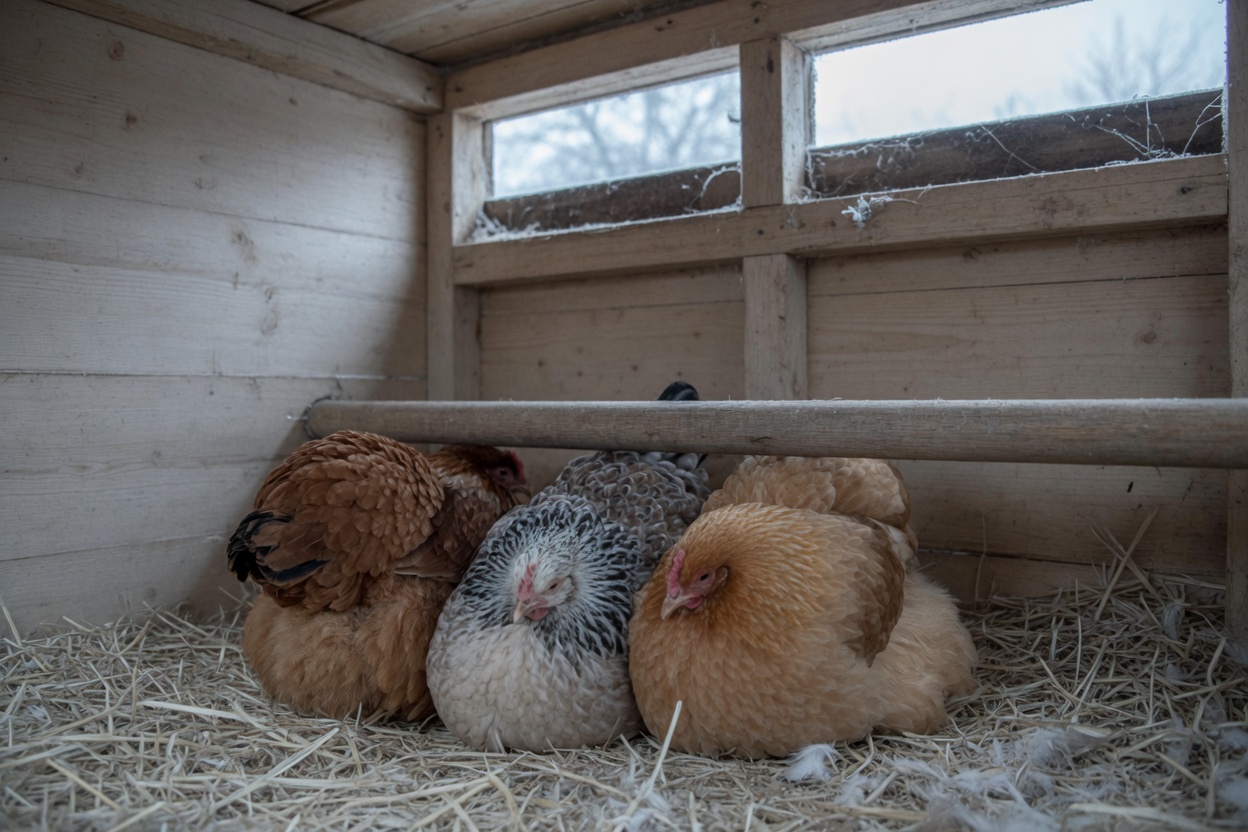
A healthy adult hen in a dry, draft-free coop can handle temperatures well below freezing. She fluffs her feathers, tucks her feet, and roosts shoulder to shoulder with her sisters. What hurts a flock in winter is damp air, a drafty roost, and no liquid water. A power outage makes the third one hard and tempts you into doing the wrong thing about the first two.
That wrong thing is heat. I know it’s tempting. Please don’t put a heat lamp in the coop, and please don’t run a generator or a fuel heater anywhere near it. Coop fires and carbon monoxide are the real killers in a winter storm, and a flock that’s warm enough for a hard freeze doesn’t need rescuing from it. I wrote more about why in how to keep chickens warm in winter without heat.
Before the storm: the 24-hour checklist

When the forecast turns, I do these in order.
Fill everything with water. I fill the fount, a second bucket, and two spare containers in the house. A hen drinks about a pint on a cold day, so twelve hens go through more than you’d think.
Lay in the bedding. I add a few inches of fresh hemp bedding over the coop floor and refresh the nest boxes. It absorbs moisture well, and drier air means warmer birds. If you want the deep-litter version of this, the deep litter method for a winter coop covers it.
Check the vents. Leave the high vents open. I know it feels backwards when the wind is howling, but a sealed coop traps the moisture from twelve birds’ breath, and wet air is what causes frostbite. Ventilating a coop in winter without freezing the birds has the details.
Charge the headlamp. Boring, essential. You’ll be in the coop in the dark.
During the outage: water is the job
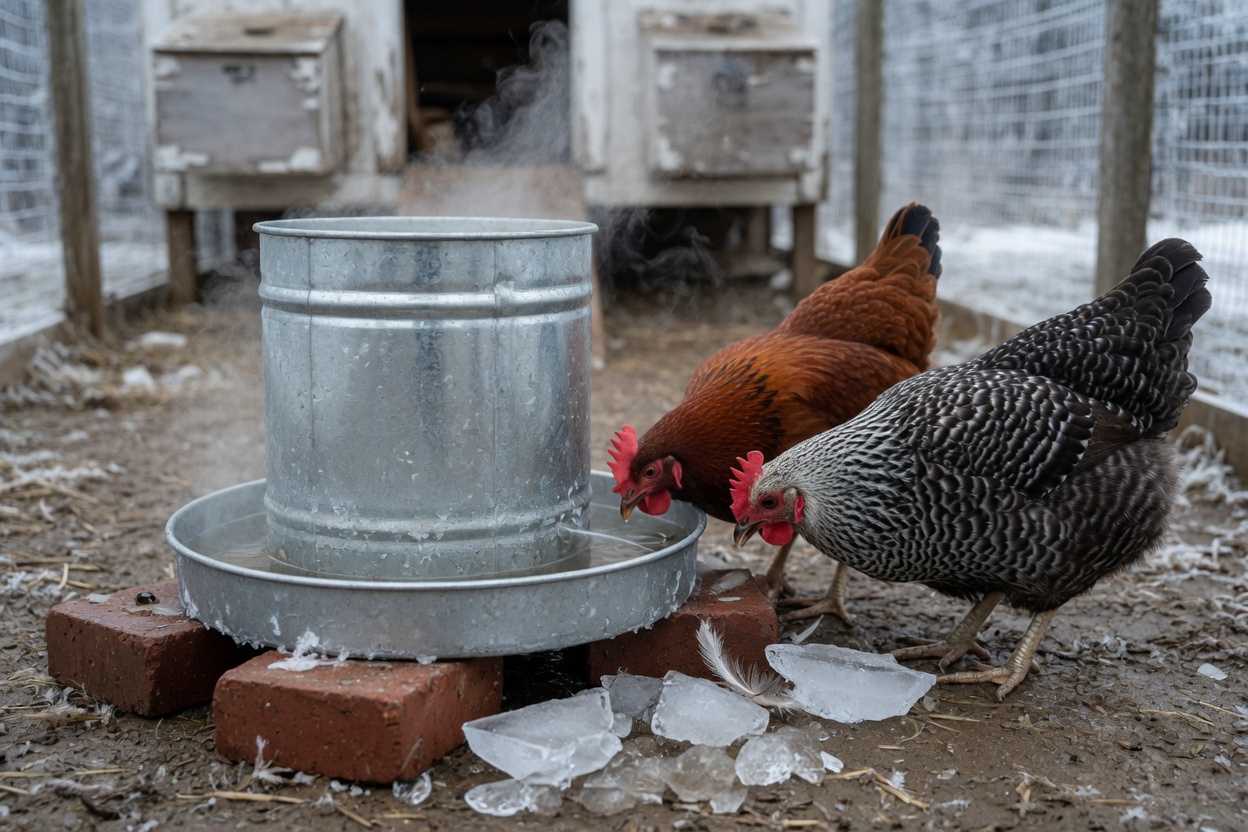
This is where the day goes. With no power, the heated base is just a metal plate, and a nipple-and-cup waterer will freeze solid in single digits. I’ll be honest, that’s the weakness I’d flag with nipple waterers. They keep the coop dry beautifully, but they have no answer for a hard freeze without power.
What works for me is a galvanized fount on a couple of bricks, plus a second container so I can swap. Twice a day, morning and late afternoon, I carry out warm water from the house, or water I’ve warmed on the stove or the wood stove, pour out any ice, and refill. Warm, not hot. Water that starts warm stays liquid for an hour or two, which is long enough for the hens to drink their fill. The nipple-versus-fount tradeoffs are laid out in nipple waterer versus galvanized fount for winter if you’re deciding which to buy.
If I see a hen that looks quiet or sluggish after a long night, I put a little poultry electrolyte powder in her fresh water, following the label. It’s an over-the-counter product, not a medicine, and it won’t fix a sick bird. For that, see how to tell if a chicken is sick.
Collect eggs more often. Eggs freeze and crack in the nest box, so I pick up three times a day instead of once. I covered this in how to keep eggs from freezing in the coop.
Keep feed dry and let them eat. Hens burn feed to make heat. Extra scratch grains in the late afternoon give them something to digest overnight. Don’t overdo it, because scratch is a treat and they still need their regular feed.
Leave them be. They may stay in the coop for a day or two. That’s fine. Don’t force them out onto ice, and don’t bring them into the house. A flock that’s calm, dry, and drinking is a flock that gets through.
About generators, and neighbors

If you run a generator, it goes outside, far from any building, with the exhaust pointed away. Never in the garage, never next to the coop, and never in the coop. Please, no extension cords strung through bedding to a space heater. I have seen what that looks like on a forum thread, and the photo is not one I’d care to describe.
Our county has a volunteer-run storm text chain, and during that ice storm a neighbor with a wood stove and no animals brought me a five-gallon bucket of warm water without being asked. If you keep chickens and you don’t know your neighbors, a storm is when you learn why you should.
What I’d buy first

If you can only afford one thing before winter, buy the galvanized fount. It’s the item that works in every scenario, and it’s the one I reached for in the dark. The heated base is a lovely addition for ordinary freezing nights, but I wouldn’t count on it alone. I’d put the hemp bedding second.
The book

If this is your first winter with a flock, my book, Raising Backyard Chickens for Beginners, is the deeper resource, a first-year guide for the things most of us wish someone had told us before the first hard freeze. Our twelve girls came through that ice storm without a lost bird. I can’t say the same for my nerves.
