How to Keep Chickens Calm on New Year’s Eve Fireworks Night
Keep chickens calm during New Year's Eve fireworks: lock up early, block the flashes, add steady sound, and know exactly what to check at dawn after a scare.

The first New Year’s Eve after I got chickens, the neighbors behind us set off fireworks at midnight, and when I walked out to the coop at five past twelve in my slippers, all twelve hens were off the roost and piled into one corner. Nobody was hurt. One Buff Orpington had a bent tail feather, and the whole flock sat in the dark making a low, unhappy sound I have never forgotten.
It is only late October, but New Year’s Eve is the one night of the year I plan for ahead of time, and the prep takes an afternoon. Hens can’t see well in the dark, so a sudden bang and flash is genuinely frightening to them, and the danger is less the noise than what a panicked flock does to itself. Here is what I do in East Tennessee, where half the county owns a fireworks tent by December 30.
What fireworks do to a flock

Chickens roost at dusk and go quiet. Their night vision is poor, which is why a hen that falls off a roost in the dark will often just stand where she landed until morning. A loud bang followed by a bright flash is outside anything the flock has a response for, and the usual response is to scatter and pile.
Piling is the real hazard. When a dozen hens crowd into one corner, the birds on the bottom can be trampled or smothered, and a bird that flies blind in a dark coop can hit a wall, a feeder, or a roost bar. I lost nothing the first year, and I got lucky. Plan as if you won’t.
Do this before dark
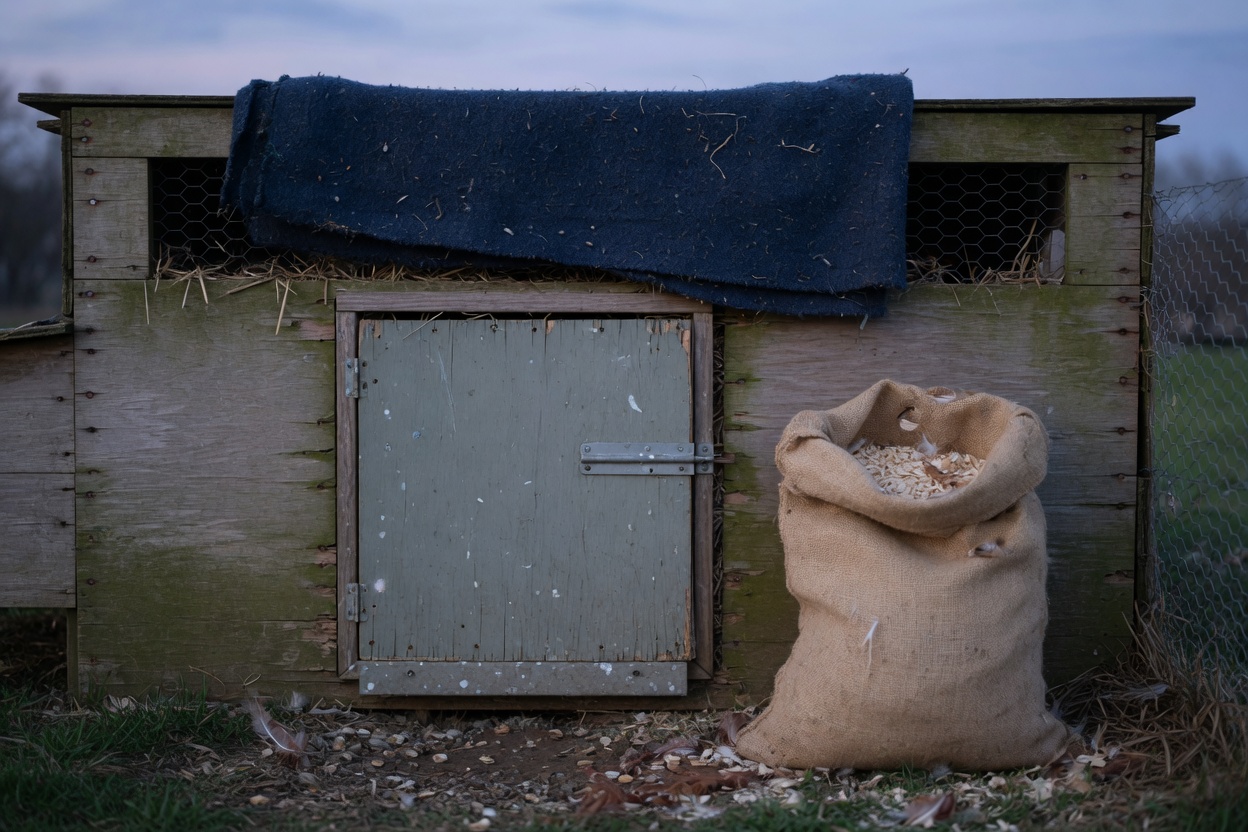
Close up early and close up tight. On New Year’s Eve I shut the pop door at dusk, latch the coop, and check every window and vent. A coop that is secure against raccoons is also secure against a flock that bolts. If your coop has a pop door that opens on a timer, switch it off for the night, because a door that swings open mid-panic is the last thing you want. I covered the basics of a tight, draft-free setup in how to winterize a chicken coop.
Block the flash. Most of the fright is the flash, not the bang. I hang shade cloth over the run on the side that faces the neighbors’ yard, clipped to the wire, and drape an old blanket over the one coop window that looks that way. Do not block your vents. Ventilation up high matters all winter, and I’d rather see a little light than hold in the ammonia. Cover the window and leave the vent.
Make the floor soft. I add a fresh layer of hemp bedding the afternoon before. A thick floor means a hen that drops from the roost has a soft landing. Keep roosts low enough that the drop is short, which is a good practice in general. Nest boxes help too, since a frightened hen will go for a dark, tight spot, and a stuffed one is a safe place to squeeze into.
Add steady sound. Put a small battery or plug-in radio on the coop’s outside wall, tuned to talk radio at low volume, and leave it on from dusk until after midnight. The idea is to keep the dark from being quiet, so the bangs register as one more noise instead of the only noise. I can’t promise it works on every flock. In my coop it takes the edge off, and it costs me nothing. If your coop has no outlet, a battery lantern radio does the same job.
Fill the water, and set it where it can’t tip. A double-wall fount is heavy, and a full one doesn’t get kicked over by a frightened hen. Spilled water on a cold night soaks the bedding, and wet bedding is how a bad night turns into frostbite. For more on winter water, read how to keep chicken water from freezing.
During the show
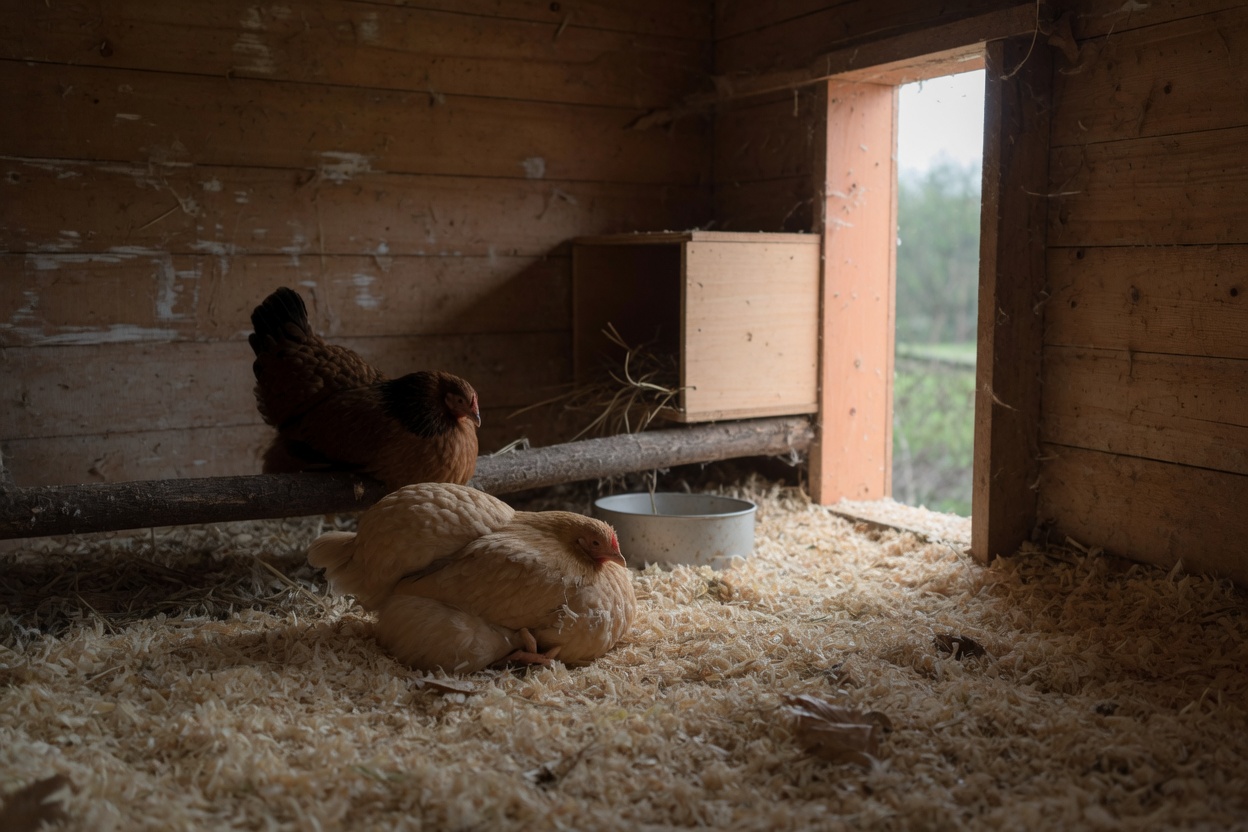
Stay out of the coop if you can. Walking in with a bright flashlight sets off another round of flapping, since you look like one more flash. If you must go in, use a dim light, speak low and steady, and move slowly. Don’t try to pick up a bird unless one is clearly injured.
If the flock is already piled, don’t wade in and scatter them. Stand at the door and talk calmly for a minute. They settle faster when they hear a voice they know. Then, once the noise has died down, check for any hen lying on her side or caught underneath the others.
Dawn check

At first light I look at every bird. A scared hen can pull a muscle, bend a feather, or crack a toenail, and she can also skip a day of laying, which is normal and not a worry by itself. Look for limping, a droopy wing, blood, or a bird that stays by herself in a corner with her feathers puffed. If one looks off, my notes on how to tell if a chicken is sick cover the basics, and a local vet is the right call for anything beyond that.
The morning after a scare I offer electrolytes in the water. It is an over-the-counter additive, not a medicine, and the label gives the mixing ratio. It’s one item in my chicken first-aid kit, and I use it after hot days, shipping stress, and nights like this one. I don’t claim it fixes anything, only that I’ve never had a hen turn it down.
What I’d skip
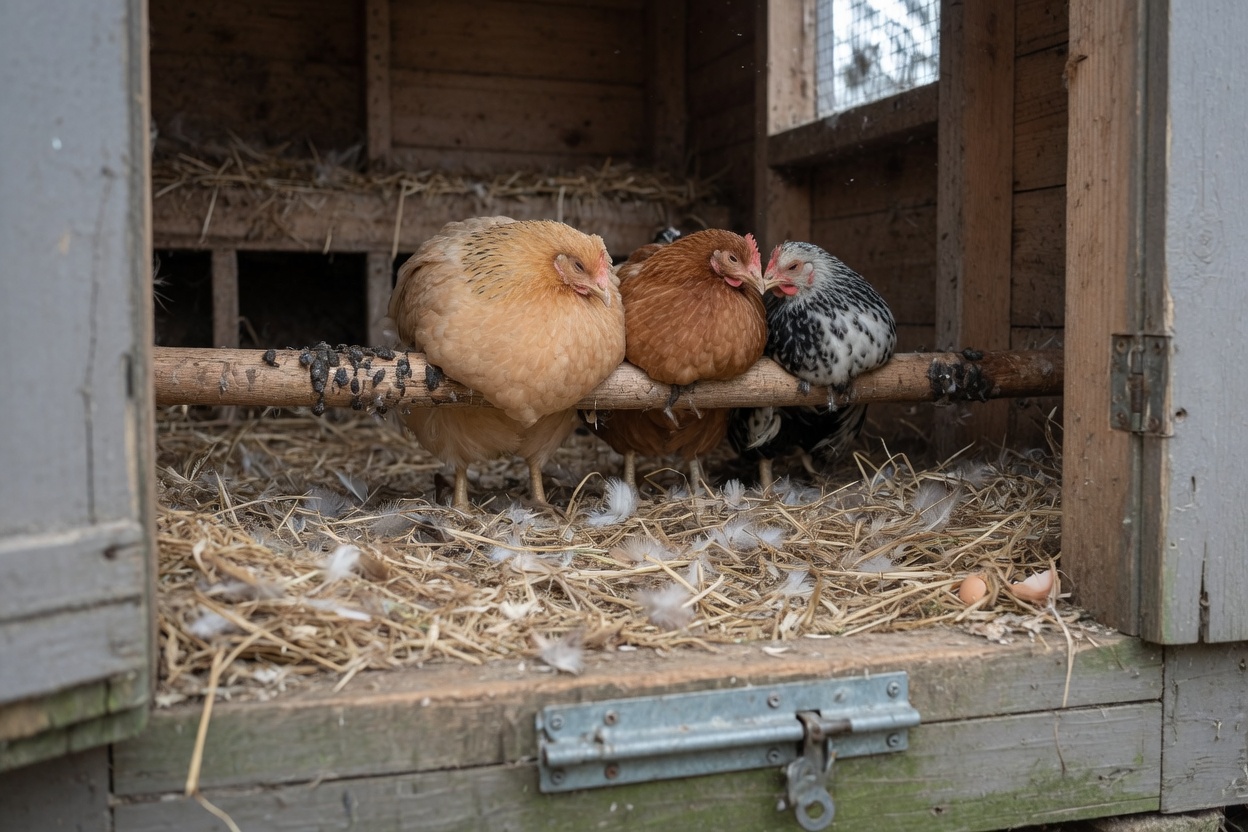
Don’t try to sedate the flock, don’t buy a gadget that promises to, and don’t rush out to the coop every ten minutes. A locked, dark, soft coop does more than anything you can add. And if a neighbor sets off fireworks all week, a short, friendly note ahead of time costs nothing. Mine now knocks on the door on December 30th to tell me what time they plan to start.
Where to go from here
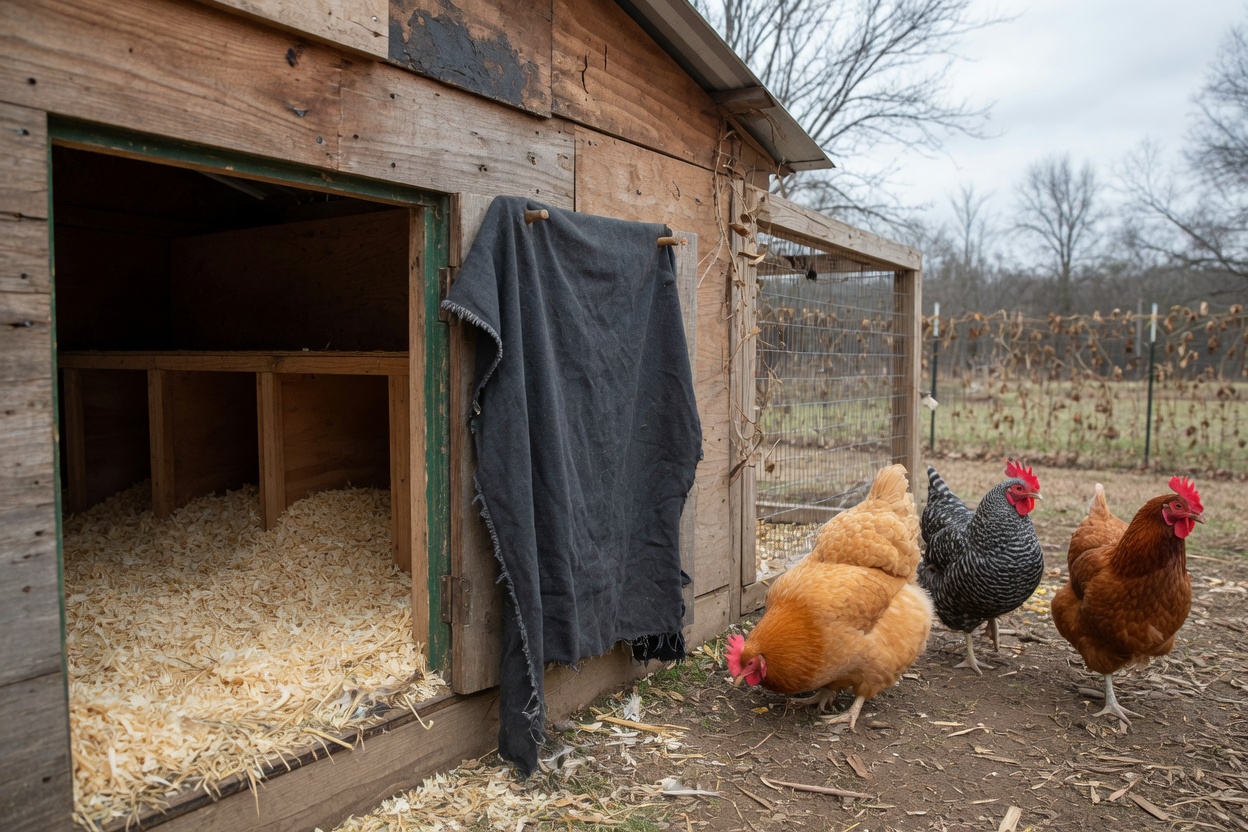
Pick an afternoon in December, hang the cloth, add the bedding, and check your latches. Then New Year’s Eve is a quiet night for you and for the girls.
For the full picture of how to set up a coop and a flock that handles surprises well, that’s the heart of my book, Raising Backyard Chickens for Beginners, written for keepers who want straight answers: Raising Backyard Chickens for Beginners.
Know your girls.
