How to Keep Chicken Waterers Clean (Without Scrubbing Daily)
How to keep chicken waterers clean without a daily fight: the setup that stops the mud and algae, the weekly scrub routine, and the closed system that changed everything.
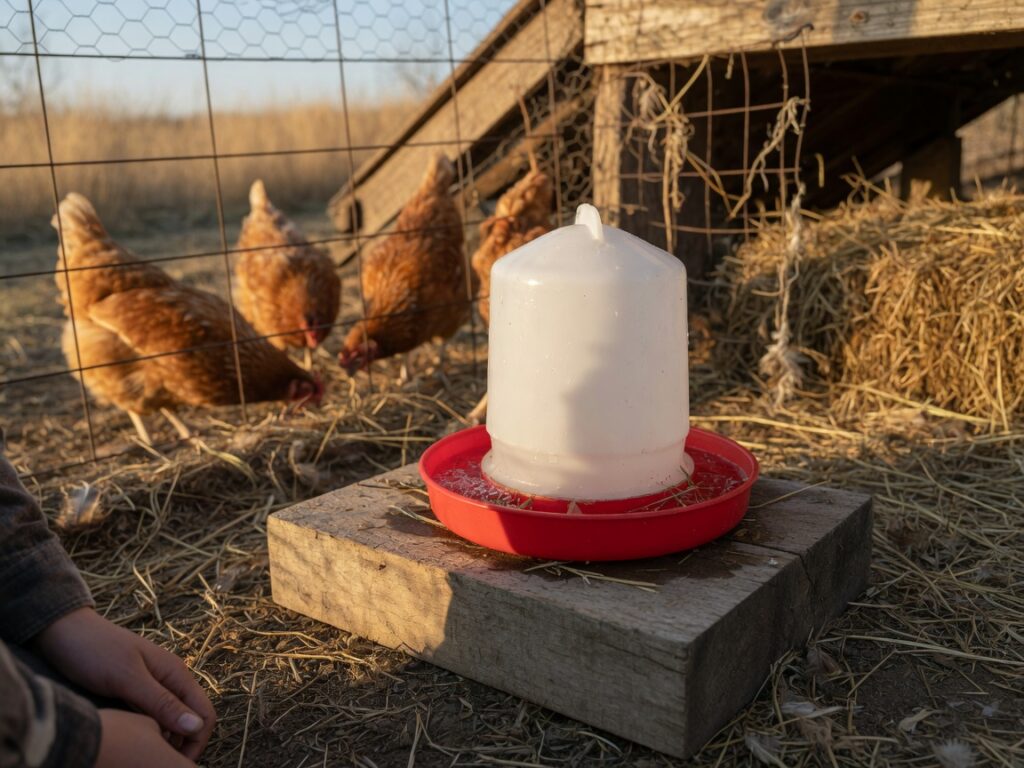
If you’ve kept chickens for more than a week, you already know the problem. You fill a nice clean waterer in the morning, and by afternoon it’s got bedding, droppings, and a scum of who-knows-what floating in it — and the girls are standing right there ignoring it. Dirty water isn’t just gross. Chickens drink less of it, and a hen who drinks less lays less and handles heat worse. So keeping the water clean isn’t fussiness. It’s flock management.
I’ve run a mixed flock outside Knoxville for six years, and I fought dirty waterers the hard way for the first two before I figured out that the answer is mostly about setup, not scrubbing. Get the system right and the daily cleaning nearly disappears. Here’s exactly what I do.
Understand why open water gets filthy so fast
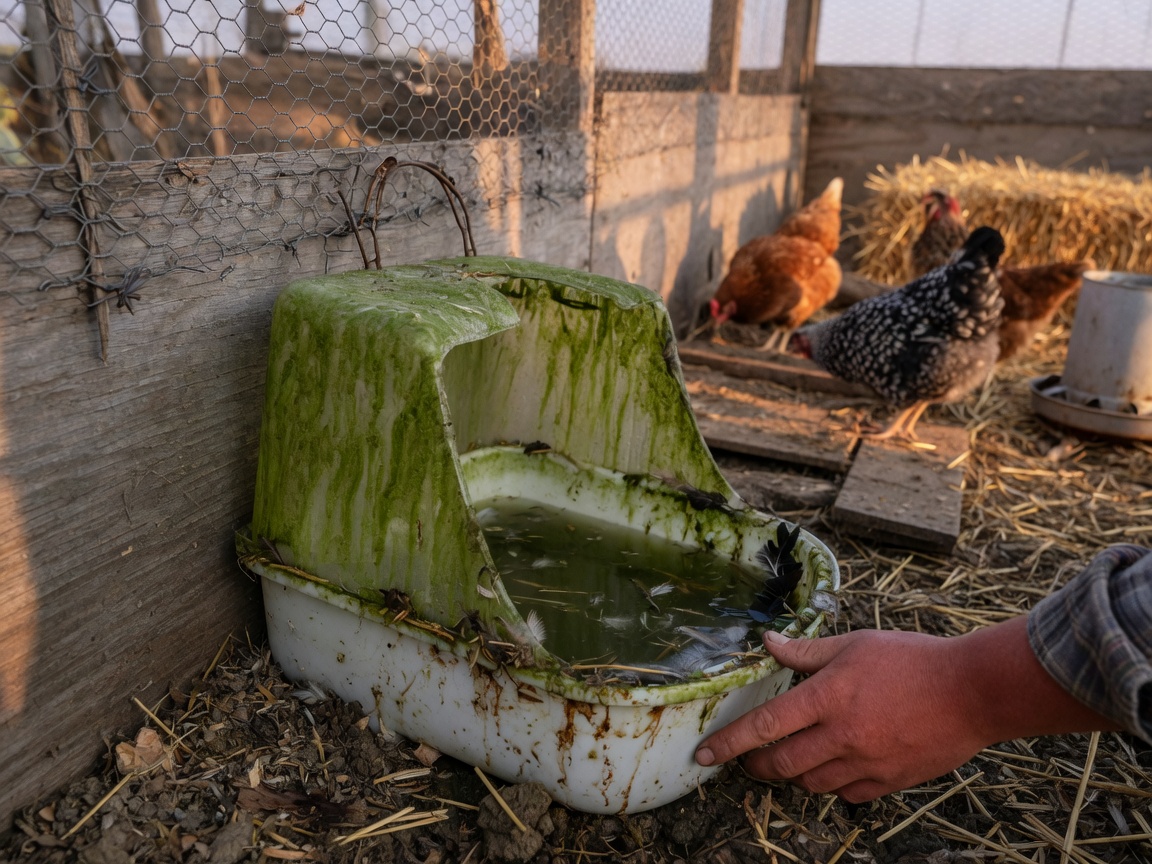
An open dish or a standard bell fount sits there like an invitation. Chickens scratch, and everything they kick up — pine shavings, dirt, droppings — lands in the water. They’ll perch on the rim if it’s low enough and foul it directly. And they dunk their beaks, which drops feed and grit into the water with every drink. Warm weather does the rest: standing water in the sun grows a green algae film within a couple of days, and that film cuts how much your birds will drink.
Once I understood that most of the mess comes from the water being open and at ground level, the fix got obvious. You either close the water off from the birds, or you raise it up out of the scratch zone. The best setups do both.
Switch to a closed nipple system
The change that did the most for me was moving to a nipple-and-cup waterer. Instead of an open pool, the water sits sealed in a reservoir and the birds trigger a little nipple valve that releases water into a small cup — or drink straight from the nipple, depending on the style. Because the water isn’t exposed, bedding and droppings can’t get in, and the birds can’t perch in it. Mine stays clear for days instead of hours.
There’s a short adjustment period. Chicks and older hens both need a day or two to learn to peck the nipple; I tap it with a finger so a drop forms and they catch on fast. Watch that first day to make sure everyone’s drinking, especially in heat. After that, it mostly runs itself.
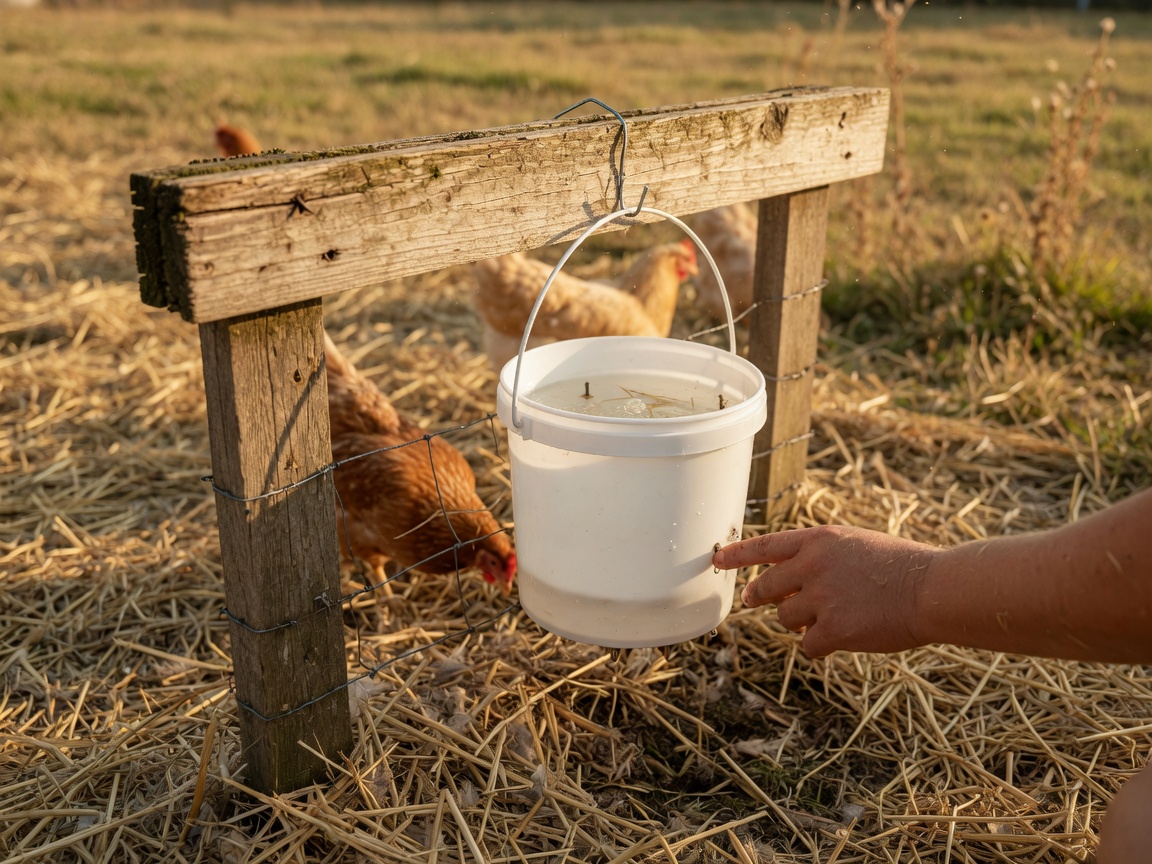
If you’re handy, the cheapest version of this is a DIY horizontal-nipple kit screwed into the side of a food-grade five-gallon bucket with a lid. You drill a few holes near the bottom, thread in the nipples, snap the lid on, and you’ve got a sealed waterer that holds days of water and stays clean because nothing but the nipple is exposed. My first one took twenty minutes and a drill, and I’ve built several since for neighbors setting up their first flocks. The lid is the whole point — it keeps the sun off the water too, which slows algae.
If you keep an open fount, raise it and rotate it
Some setups still call for an open fount — brooders, quarantine pens, or just a familiar backup the birds already know. I keep a galvanized double-wall fount as a second station for exactly that. The trick with any open waterer is to get it up off the ground.
Set it on a couple of pavers, a cinder block, or a low platform so the lip sits at about the height of a standing hen’s back. At that height the birds can’t scratch bedding into it and can’t easily perch on the rim, and you knock out most of the daily fouling right there. Put it in shade if you can — water in the sun grows algae faster and gets too warm to drink on a Tennessee afternoon. A galvanized fount also holds up to real scrubbing in a way the cheap plastic ones don’t; I’ve had plastic founts crack and stain within a season.
The weekly routine that actually matters
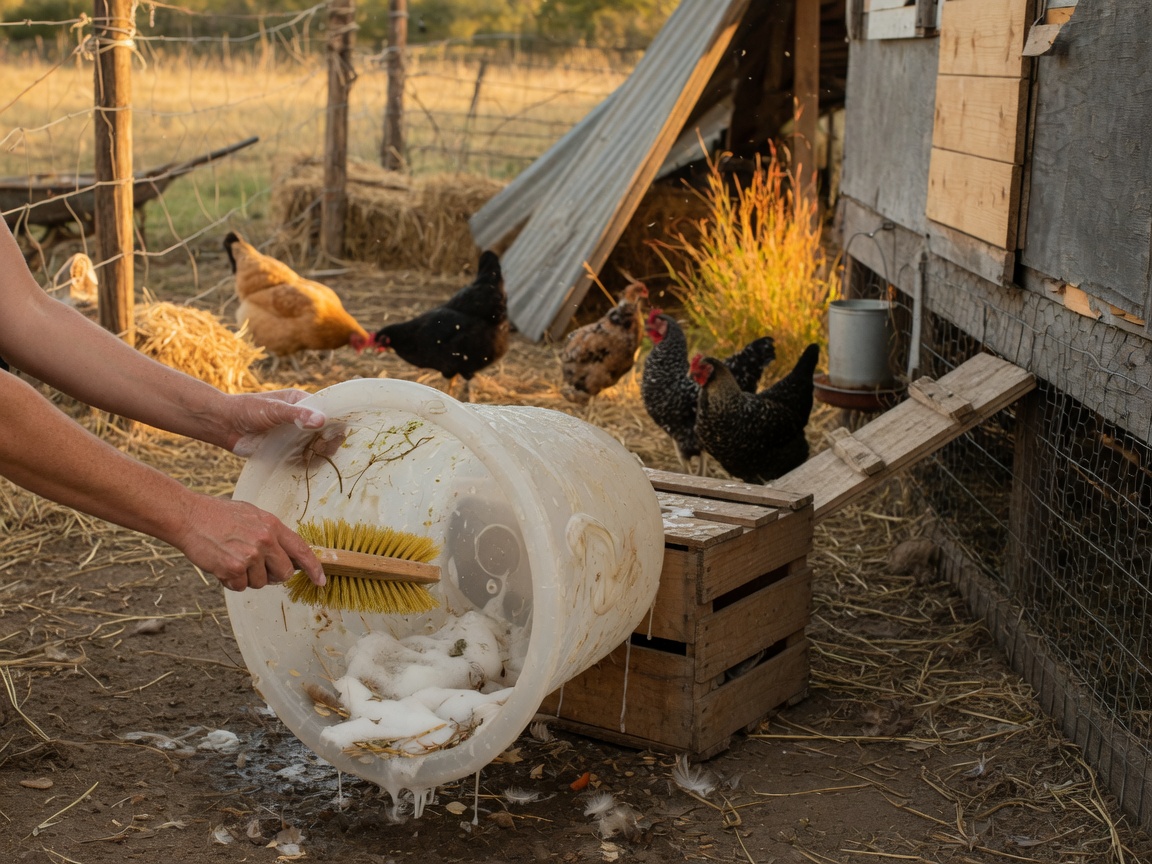
No setup is fully hands-off, so here’s the honest maintenance, and it’s less than you’d think.
Every day, glance at the water level and top off if needed — thirty seconds. You’re not cleaning, just checking nobody’s run dry, which matters most in summer.
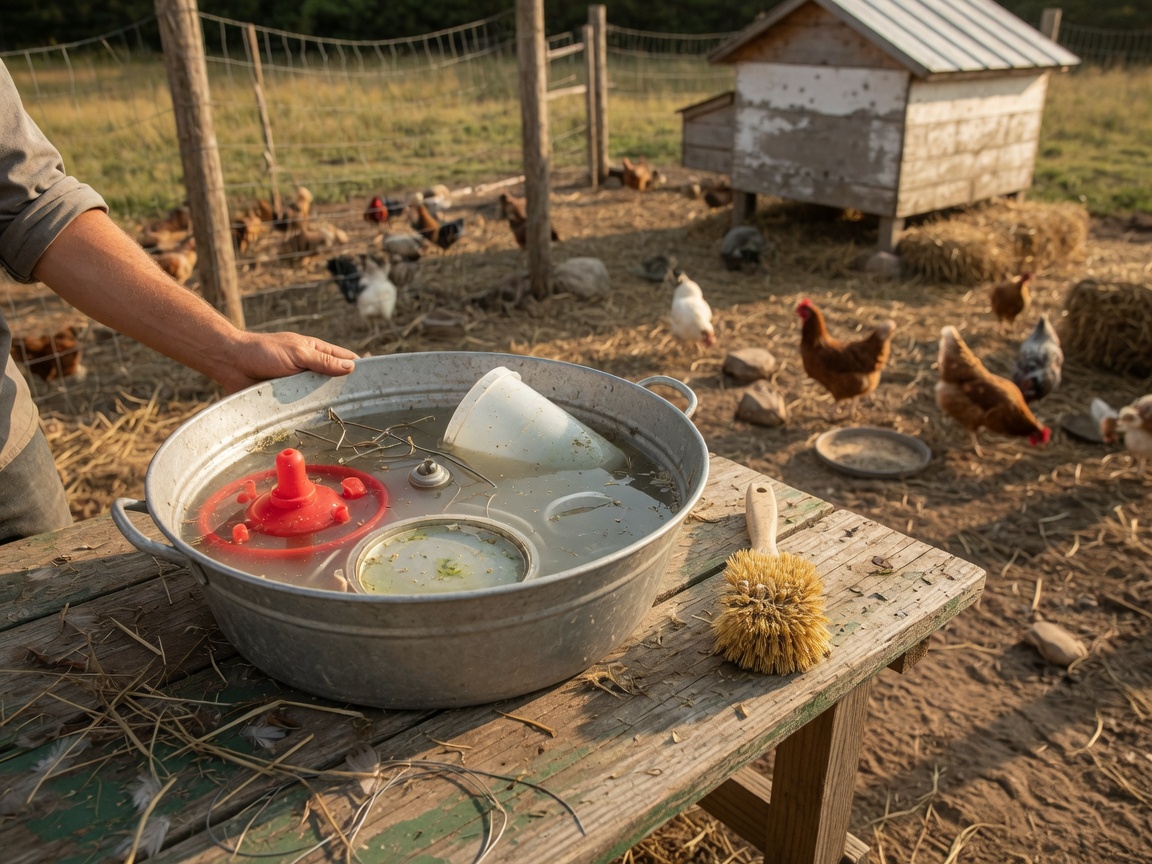
Once a week, actually clean. Dump the waterer, and scrub the inside with a stiff brush to break up the invisible biofilm — that slick coating that builds up even in a closed system and is what green algae grows on. A splash of plain white vinegar in the rinse water helps cut it; I keep a jug in the coop for exactly this. Rinse well and refill. For nipple systems, run some water through the nipples to flush any grit that’s worked in.
One honest aside from experience: the mistake I made for two years was letting a waterer go two or three weeks between real scrubs because it “looked fine.” A closed waterer can look clear and still be growing a film inside the reservoir you can’t see from the top. Now it’s every week, same day, no negotiating — I do it when I clean the coop. Consistency beats deep-cleaning a disaster once a month.
Don’t skip the winter version of this
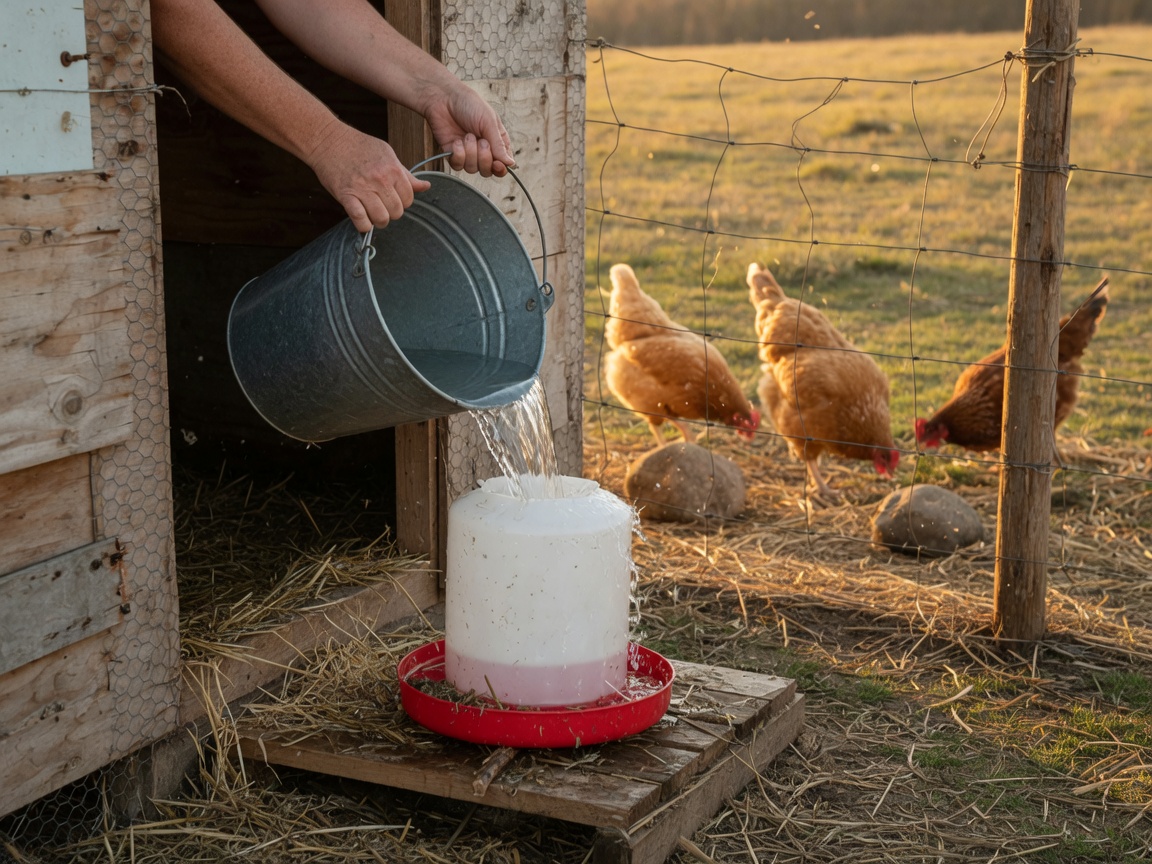
Clean water is a year-round job, but the failure mode flips in winter. Down here we don’t get the brutal freezes the northern keepers do, but even a hard Tennessee cold snap will ice a waterer overnight, and a frozen waterer is just a dirty, empty one by afternoon. If you’re keeping birds through real cold, plan for a heated base or a swap-out routine so the girls never go a day without open water. Nipple cups can freeze too, so keep an eye on them the first hard morning.
Clean water is the cheapest thing you do for your flock
None of this is expensive or complicated, which is exactly why it’s worth getting right. Close the water off with nipples, or raise your open fount out of the scratch, put it in shade, and scrub it once a week like clockwork. Do that and you’ll spend less time on water than you ever did fighting it — and your girls will drink more, lay better, and ride out the hot months in far better shape.
I walk through the whole first-year setup — waterers, feeders, coop, the seasonal rhythm of it all — in my book, Raising Backyard Chickens for Beginners. If you’re building your first flock and want one honest reference instead of ten contradictory forum threads, there’s a whole section on water and feed that goes deeper than this post can. Know your girls.
