How to Introduce New Chickens to Your Flock the Right Way
How to introduce new chickens to your flock without the bloodshed: the quarantine step everyone skips, the see-but-don't-touch method, and how to keep the peace.
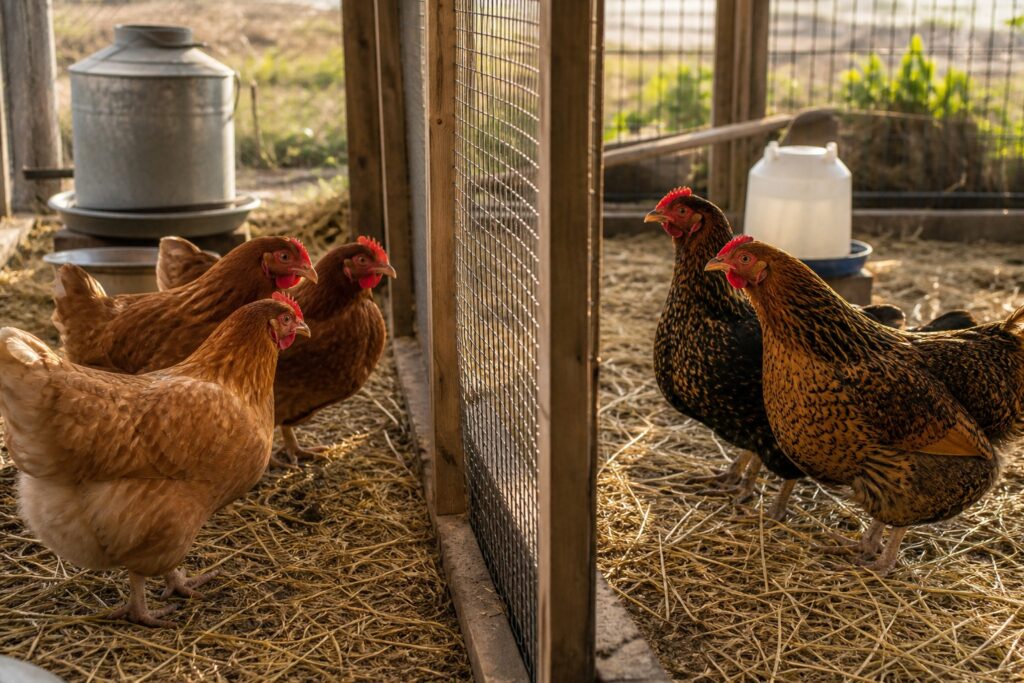
The first time I added birds to my flock, I did it the fast, wrong way. I brought home three Easter Egger pullets from a swap, opened the run, and set them down with my established hens like I was introducing houseguests. Within an hour my lead Buff Orpington had two of them backed into a corner, and I spent the afternoon refereeing a fight I’d started myself. Everybody lived. Nobody was happy. I never did it that way again.
Chickens are not casual about newcomers. They keep a real social order — the pecking order is a literal thing, not a figure of speech — and a strange bird dropped into the middle of it reads as an intruder to be driven off. The good news is that a slow, boring, structured introduction works almost every time. Six years and a lot of added birds later, here’s the method I use, and the steps most people skip.
Step one: quarantine, even when it’s a pain
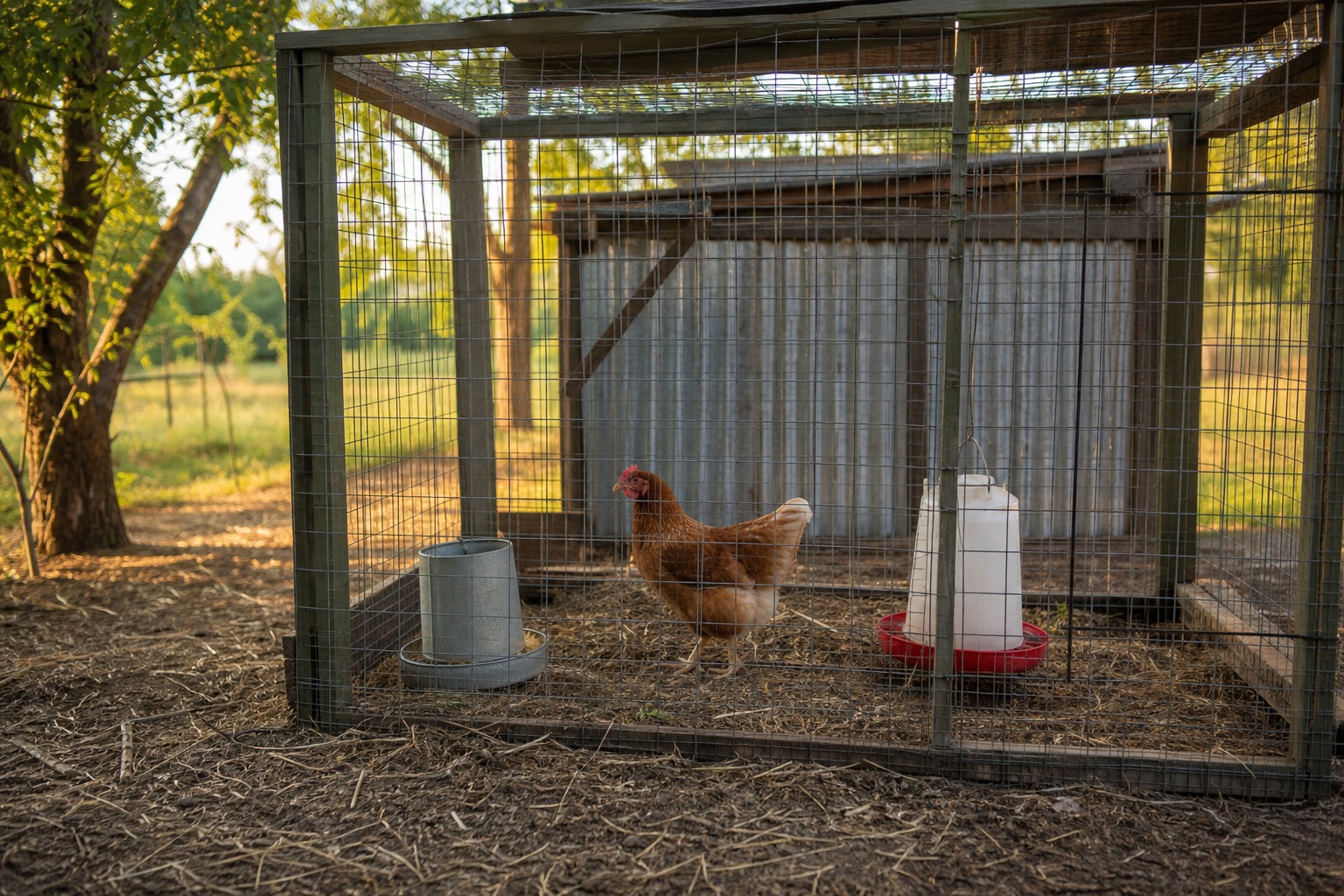
This is the step everybody hates and almost everybody skips, and it’s the one that actually protects your birds. Any new chicken — from a swap, a feed store, a neighbor, a hatchery bird past a few weeks old — goes into a separate quarantine setup for a solid two to four weeks before it ever sees your flock.
The reason is disease. A bird can look perfectly healthy and still be carrying respiratory illness, mites, lice, or worms straight into your coop. I learned this secondhand, watching my neighbor Linda lose half her flock to a bug that came in on two “healthy” hens she added without quarantine. Two to four weeks of separation, in a spot that shares no air and no water with your birds, gives problems time to show themselves.
Quarantine doesn’t have to be fancy. A large dog crate in the garage, a spare coop, a wired-off corner of the shed — anywhere your flock can’t reach. Give the newcomers their own feeder and their own clean nipple-and-cup waterer, and — this matters — do your chores for the quarantined birds last, then wash your hands and change your boots. You’re the most likely way a germ crosses the yard.
While they settle in from the move, I run Sav-A-Chick electrolytes in their water for the first few days. A car ride and a new home are stressful, and a little electrolyte support helps a bird eat, drink, and bounce back. Keep it to a few days, then back to plain fresh water. And keep it strictly over-the-counter — electrolytes, yes; anything prescription belongs in a vet’s plan, not guessed at in the garage.
Step two: see but don’t touch
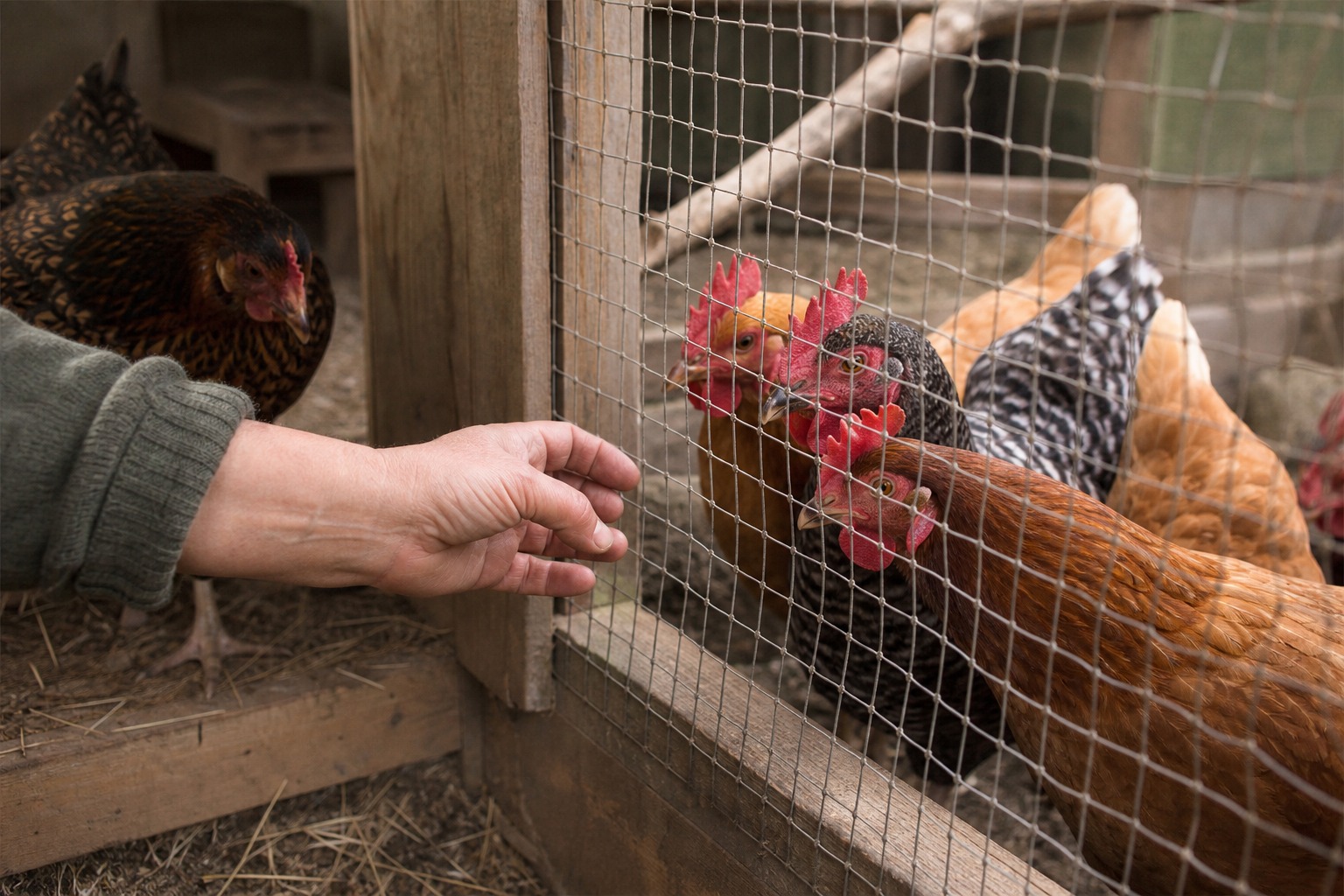
Once quarantine is up and everyone looks healthy, you still don’t just open the gate. You let them meet through a fence first.
Set the newcomers up where your flock can see them but not reach them — a wire divider down the middle of the run, a separate pen pushed up against the existing one, or the new birds in a wire crate set inside the run for a few hours a day. Leave it this way for about a week. The birds get to trade insults through the mesh, sort out who’s who, and get thoroughly bored with each other. Bored is exactly what you want. A newcomer that’s already a familiar face causes far less of a fight than a total stranger.
I run this “see but don’t touch” stage a full week whenever I can. It’s the single biggest difference between an introduction that turns into a brawl and one that turns into a shrug.
Step three: match the numbers and the ages
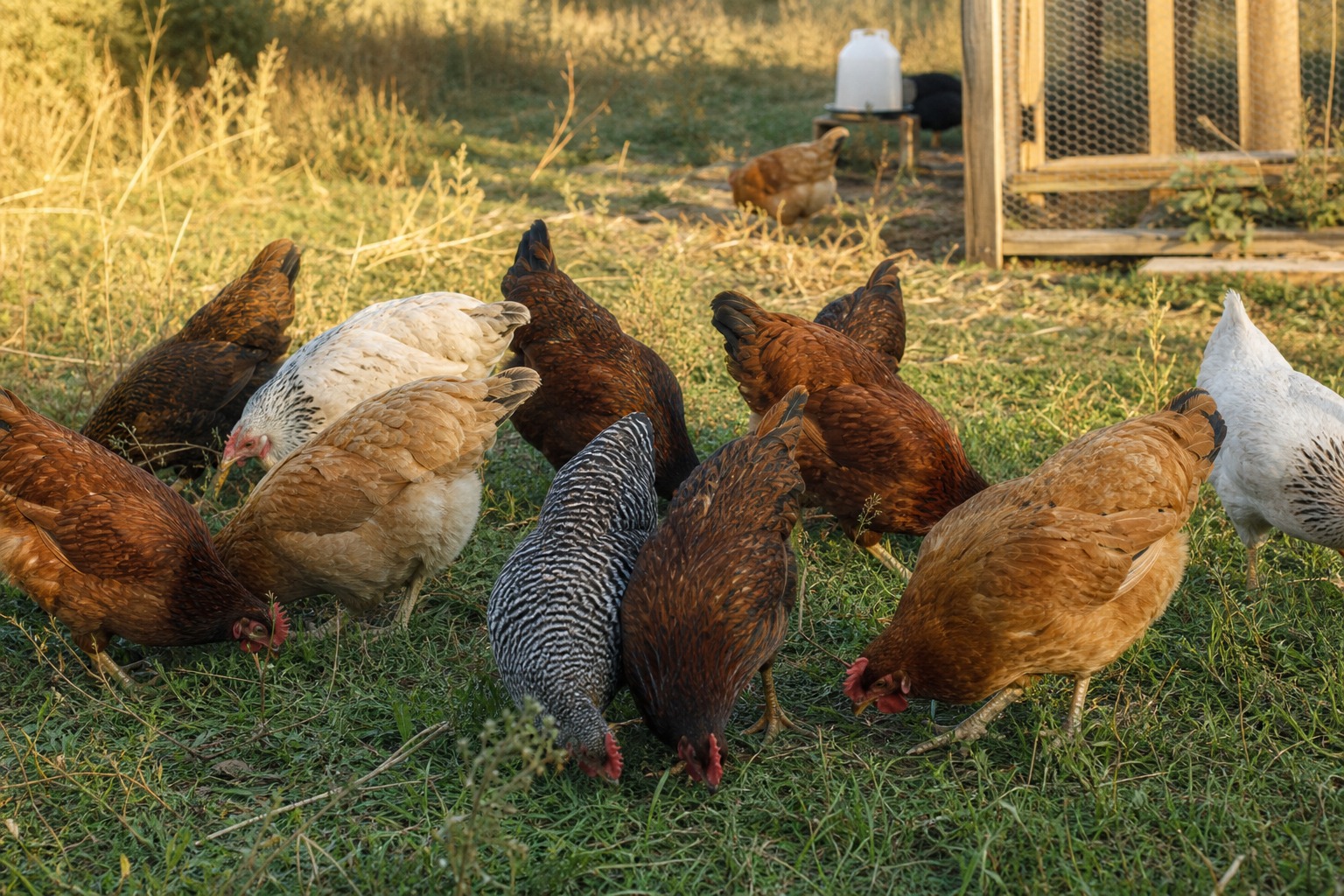
Two things make integration far easier, and both come down to not sending one lonely bird into a crowd.
Add birds in groups, never singly. A single new hen absorbs the entire flock’s aggression alone. Two or three newcomers spread it out and give each other company and backup. If you can, add birds close in size to your existing flock — a full-grown hen can seriously hurt a half-grown pullet, so I don’t mix point-of-lay newcomers in with much younger birds.
Wait until young birds are big enough. I don’t integrate pullets into an adult flock until they’re close to full size, usually around 16 to 18 weeks. Little birds get bullied hard, and a determined hen can do real damage to a chick-sized bird. If your newcomers are young, grow them out in the see-but-don’t-touch pen until they’ve caught up.
Step four: the actual mixing
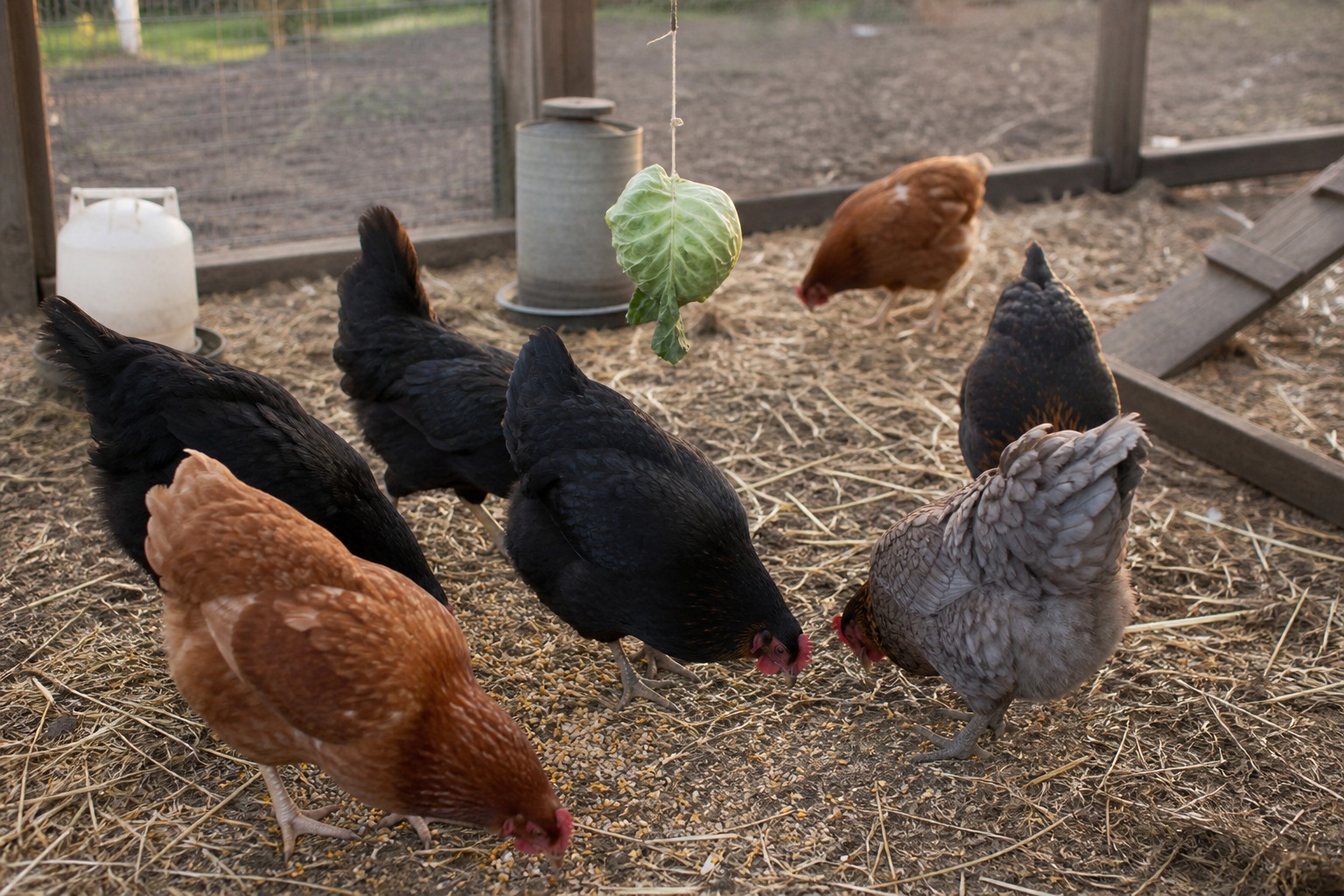
When you finally put them together, stack the deck for peace.
Do it at dusk. The old-timer trick that genuinely works: add the new birds onto the roost after dark, once everyone’s sleepy and settled. Chickens wake up, blink at the new faces, and the shock of a stranger is dulled by the fact that they all just… woke up here together. It’s not magic, but it takes the edge off.
Give them more room and more of everything. Crowding is what turns squabbling into bloodshed. For the first couple of weeks, open up every bit of space you can and set out extra feed and water stations so no bird can stand guard over the only supply. This is why I keep a second galvanized fount going during any integration — two waterers at opposite ends means a bullied bird always has somewhere to drink. Scatter some scratch in a few spots, add a couple of feeders, and put out extra roost space too.
Expect some pecking, and know the line. A new pecking order has to get established, and that means some chasing, some pecking, and some feather-pulling. That’s normal and you should let it happen. What’s not normal is blood, a bird that can’t get away, or one being kept from food and water. If you see blood, pull the injured bird — the sight of it makes the others pile on. Otherwise, resist the urge to hover and rescue. They have to work it out.
Give it two weeks and don’t panic
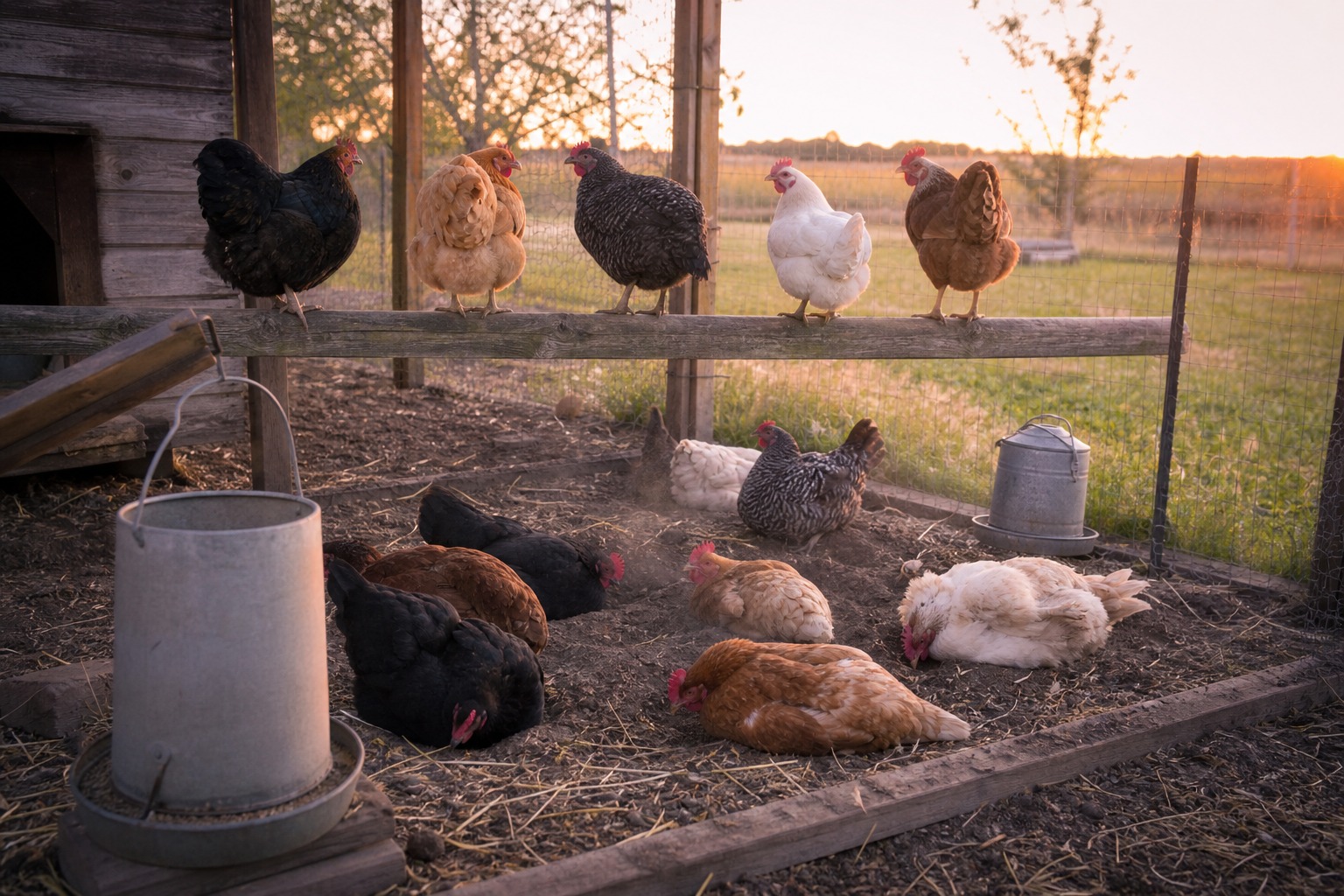
For the first few days it will look like it’s not working. There will be drama at the feeder and a lot of indignant squawking, and your favorite hen will act personally betrayed. Give it two weeks. A flock almost always settles into a new order within that window, and one morning you’ll look out the kitchen window and they’ll just be one flock, scratching around together like nothing happened.
The times it doesn’t settle are usually the times I rushed a step — skipped quarantine, added one lonely bird, or mixed sizes that were too far apart. Slow is fast here. The boring, structured way gets you to a peaceful flock quicker than the fast way ever will.
I walk through the whole first year — brooder to coop to a settled laying flock, and every “is this normal?” moment in between — in my book, Raising Backyard Chickens for Beginners. This post gets your new girls in the door. The book is how you keep the whole flock healthy and laying once they’re all under one roof.
