How to Harvest Medicinal Roots in Fall the Right Way
Fall is the season to harvest medicinal roots — after the tops die back and the plant pulls its strength underground. Here's how I dig, clean, dry, and store them.
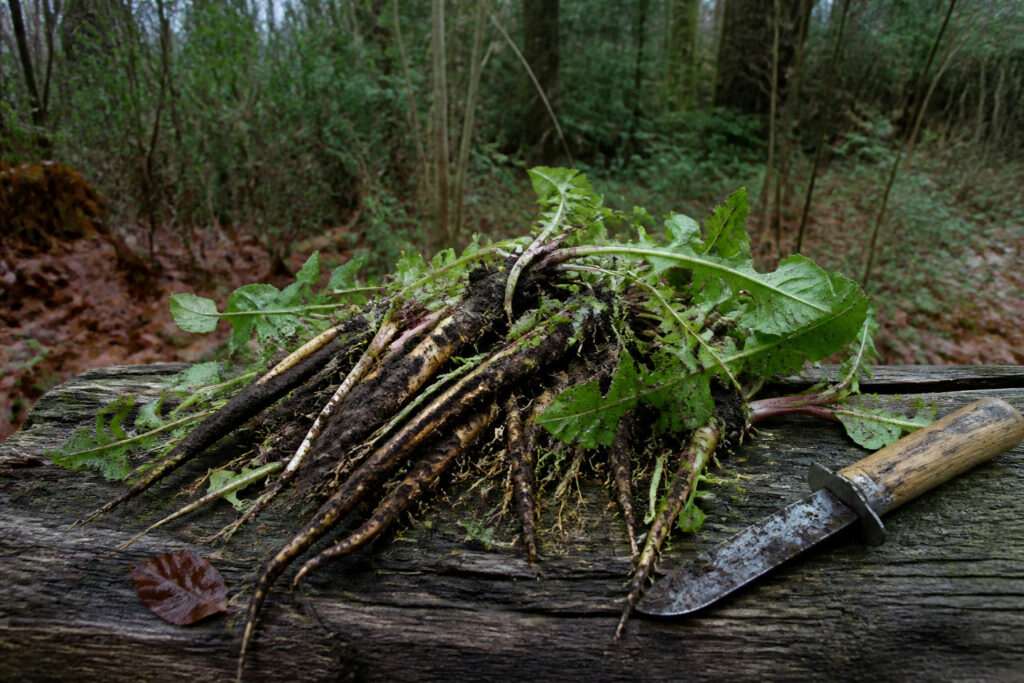
There’s a reason the old books say to dig roots in the fall, and it isn’t tradition for tradition’s sake. All through the growing season a plant sends its energy up — into leaf and flower and seed. Then the days shorten and the tops begin to die back, and the plant pulls everything it has left down into the root to wait out the winter. Dig it then, in that window between the first hard frosts and the ground freezing, and you’re harvesting the root at its fullest.
I’ve been digging roots on the Olympic Peninsula for most of thirty years — dandelion and burdock out of the garden edges, yellow dock from the wet ground below the meadow, nettle root where I cut nettle greens in spring. Fall is when I do the bulk of it, usually from late September through November, whenever the tops have browned and a good rain has softened the ground. What follows is how I go about it, the same as I’d tell a neighbor standing at my garden fence. This is about the harvest and the keeping of roots — how each one was traditionally used is its own long study, and not something I’ll rush here.
Know the plant before you put a knife in the ground
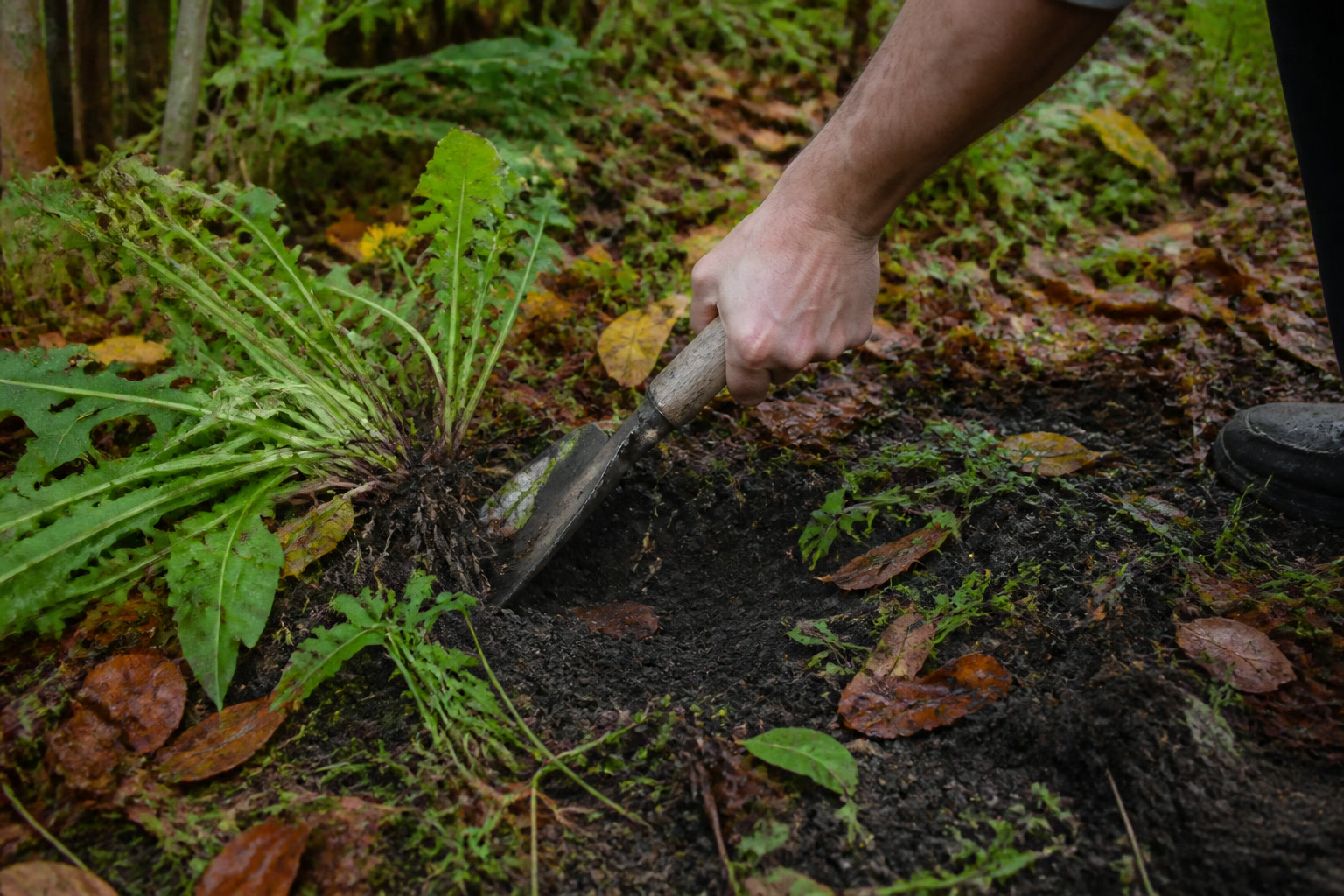
A root is harder to identify than a leaf, and that cuts both ways. By fall the flower is long gone and the leaves may be collapsed and brown, so the easy visual cues you’d have in June aren’t there. The rule I follow is simple: I only dig roots from a stand I marked earlier in the season, when the plant was in full leaf and I could name it with certainty. A tag on a stake, or a photo on my phone, or just a spot I know in my bones — any of those beats guessing at a brown rosette in October.
Said once, plainly: dig a root for medicine only from a plant you can name beyond doubt, confirmed against more than one reliable source and, ideally, an experienced local. A root you can’t identify is a root you leave in the ground. There’s no shame in walking home empty-handed, and there’s real trouble in the other outcome.
The digging tool matters more than you’d think
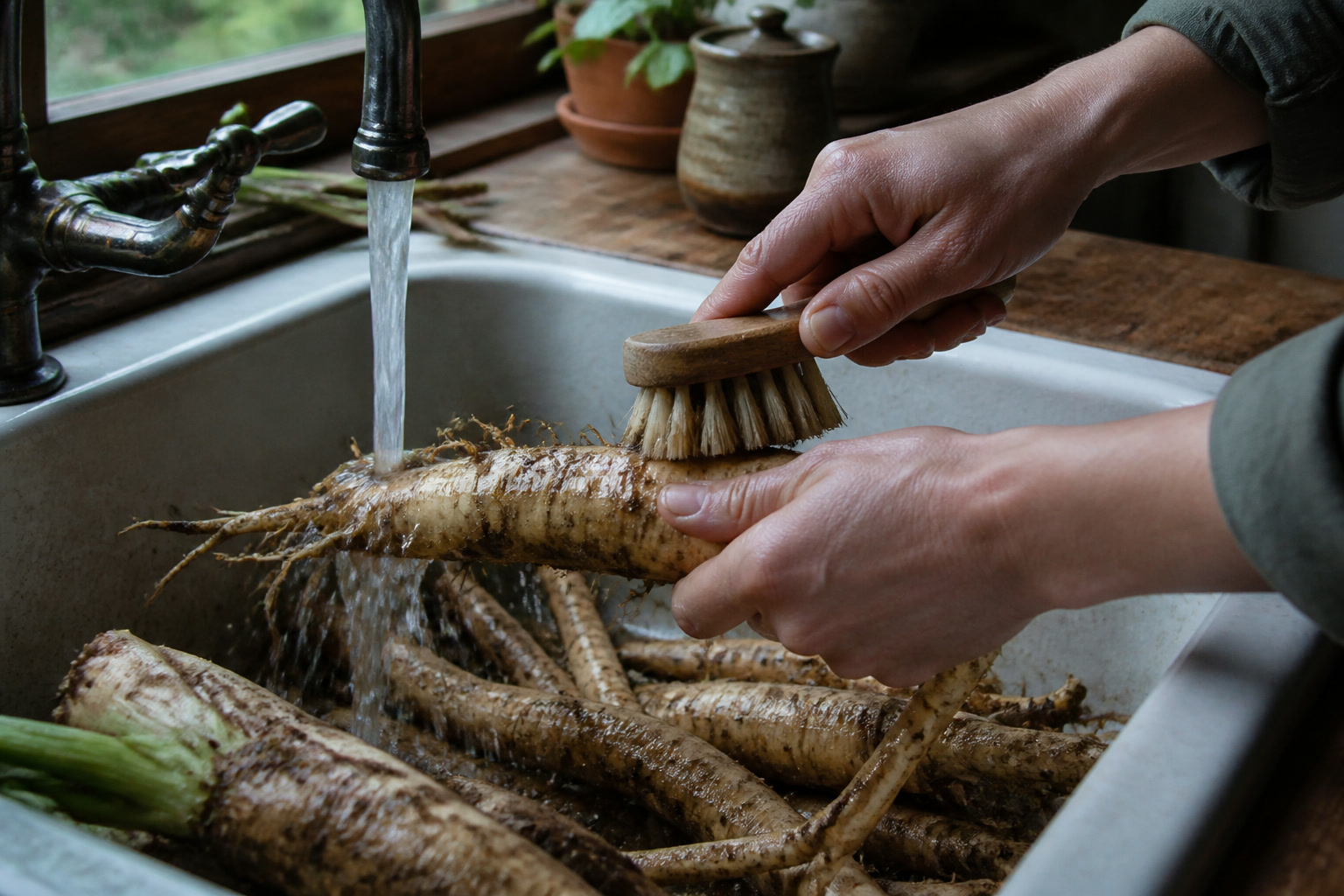
Most root work asks for a narrow, sturdy digging blade — the tool a lot of folks call a hori-hori. You want to drive it straight down alongside the root and lever the whole thing up intact, because a root you snap off halfway leaves the best part in the ground. A stout trowel or a spading fork will do in a pinch; a garden trowel bent at the neck usually won’t. (I don’t have a verified link to point you to for a digging knife yet — I’ll add one here once I’ve got a specific one I can stand behind. For now, use the sturdiest narrow blade you already own.)
Work the soil loose in a ring a good hand’s-width out from the crown before you pull, especially with a taprooted plant like dandelion or dock. Burdock is the humbling one — a first-year burdock root can run a foot and a half straight down into heavy ground, and I have left more than one broken off deep because I got impatient. Loosen more than you think you need to.
Clean and cut while they’re fresh
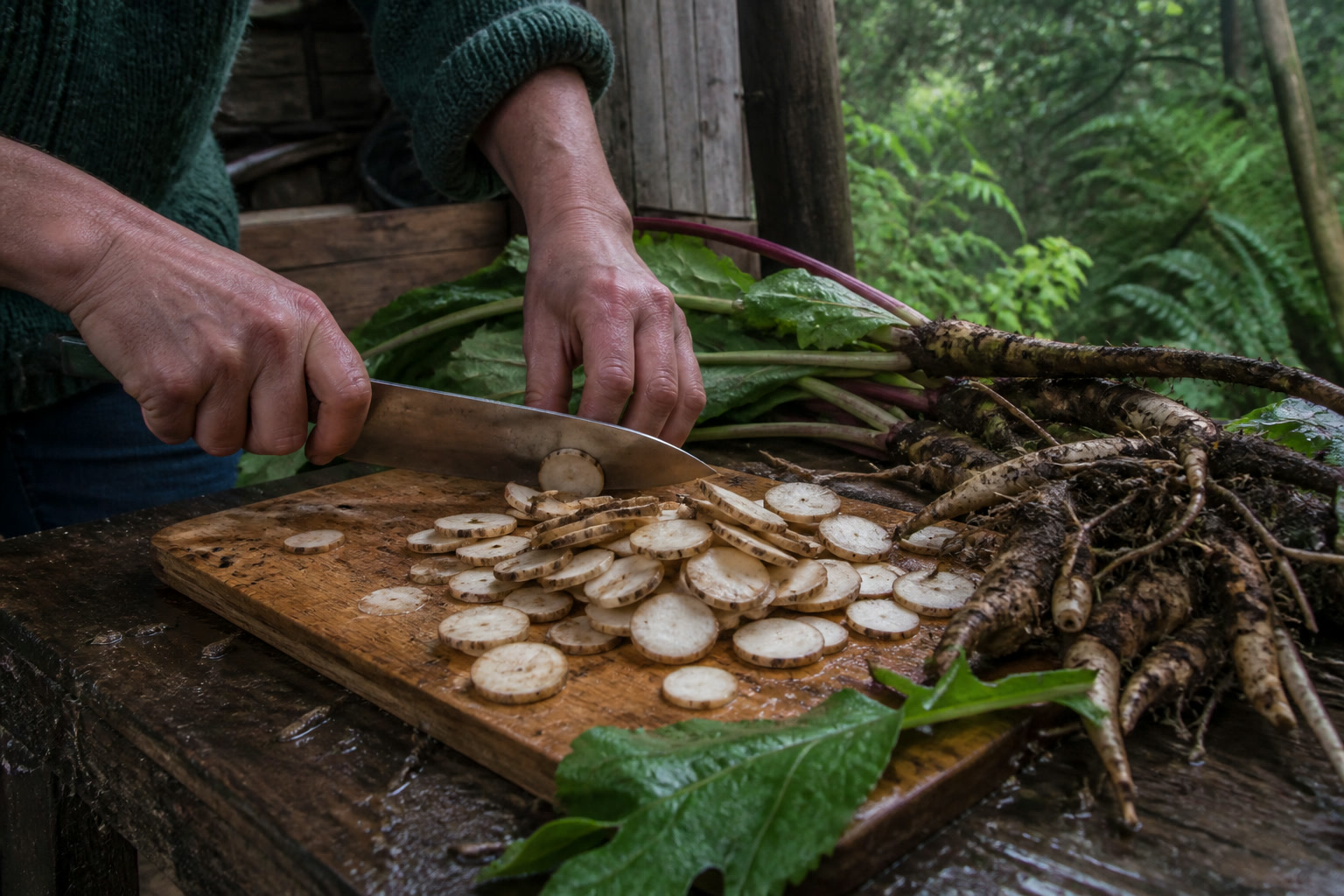
Roots come up caked in soil, and that soil is far easier to get off now than after it’s dried on like concrete. Knock off the loose dirt in the garden, then bring them in and scrub them under running water with a stiff vegetable brush. Get into the crevices — a knuckle of dock root can hide a surprising amount of grit in its folds.
Once they’re clean, slice them while they’re still fresh and pliable. A dried whole root is a genuine chore to cut, sometimes closer to woodworking than kitchen work. Cut thin — quarter-inch coins for slender roots, and split the fat ones lengthwise first so they dry from the inside. Thin pieces dry evenly and fast; thick chunks can mold in the middle while the outside looks done. The same care I put into drying and storing leafy herbs matters double with roots, because their density hides moisture.
Dry them slow, and dry them all the way
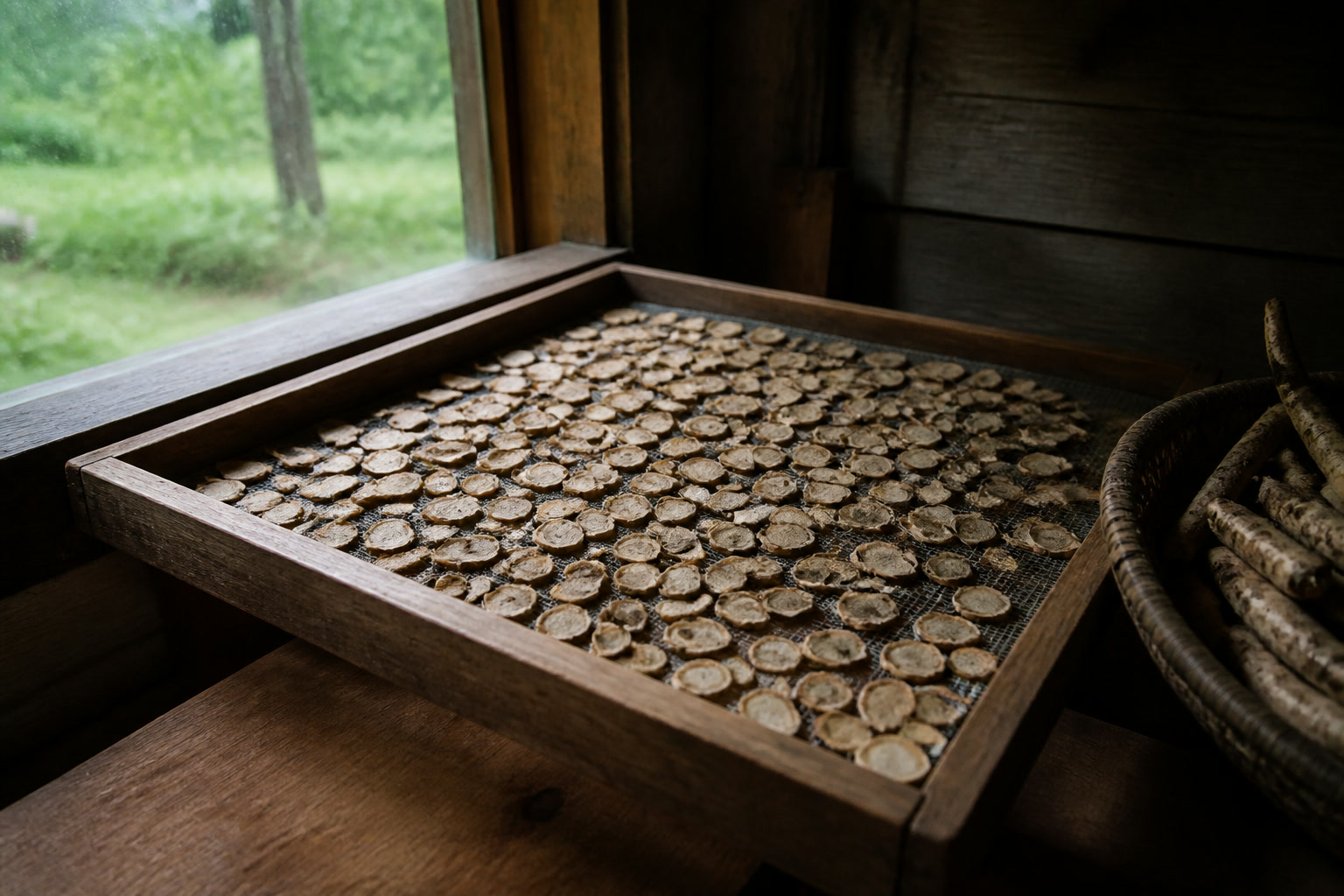
Spread the cut root in a single layer on a screen or a mesh rack, somewhere warm, dry, and out of direct sun. Roots take longer than leaves — often a couple of weeks in our damp coastal air, sometimes more. A dehydrator on its lowest setting, no hotter than about 95 to 105 degrees, is a fair shortcut in a wet PNW autumn when nothing wants to dry on its own; I’ve leaned on mine more than one soggy November.
You’ll know a root is done when a piece snaps cleanly rather than bending. If it still flexes, it still holds water, and water is what turns a stored root moldy by February. When in doubt, give it another few days. This is the step people rush and regret.
Store them dark, and label them — you will forget
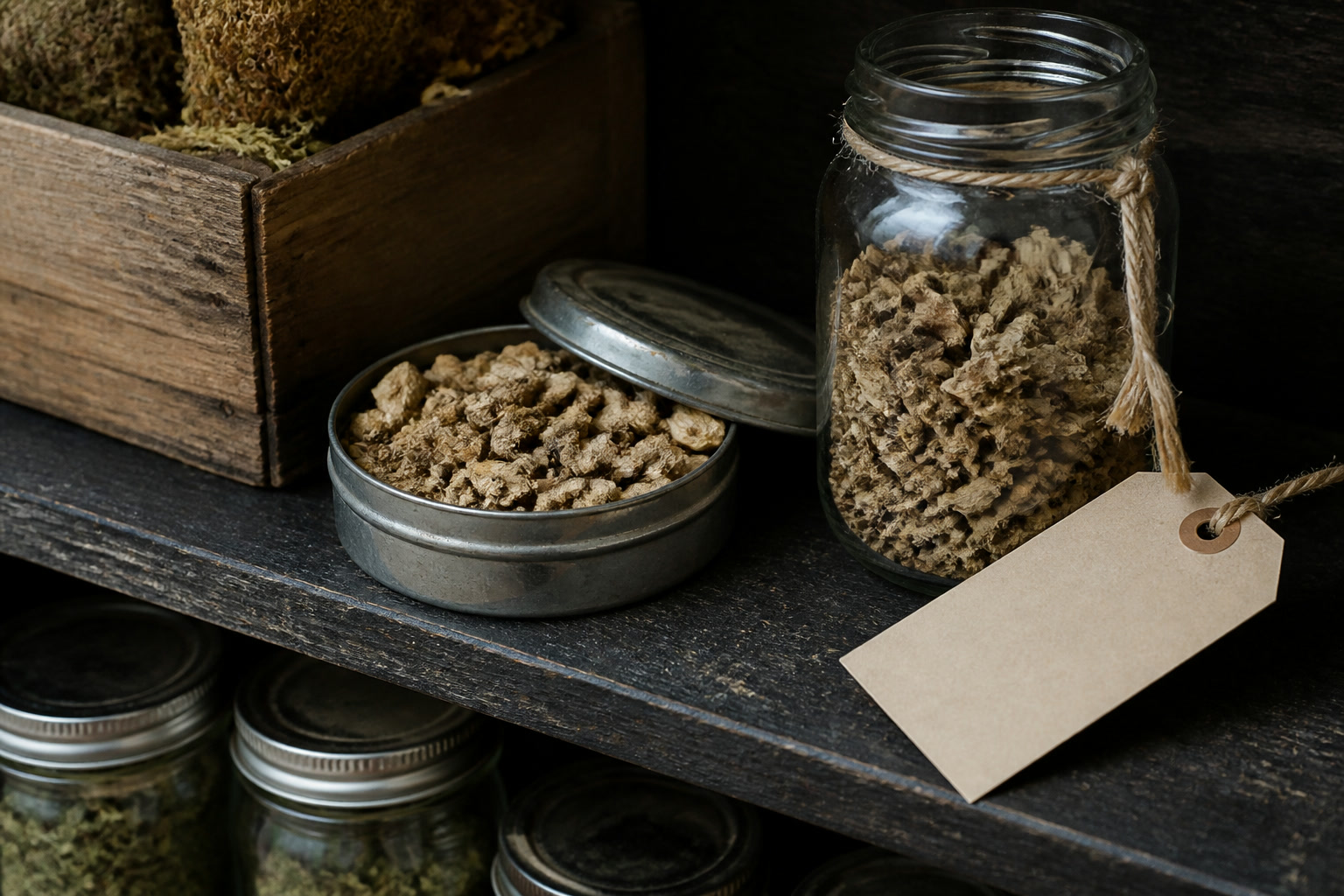
Once they’re bone-dry, store the pieces whole or coarsely broken in a clean glass jar or a metal tin, kept somewhere cool and dark. Whole keeps better than powdered — grind only what you need, when you need it, because a powdered root loses its character fast. Label every container with the plant and the date. I promise you that a jar of unlabeled brown root shavings is a mystery you will not solve in six months. I’ve thrown out good dock root because I couldn’t swear to what it was.
When you’re ready to actually use what you’ve dug, a root usually gives up its virtues to water or alcohol rather than a quick steep — a long simmered decoction strained through cheesecloth, or a patient root tincture that sits for weeks. Dandelion root is the friendliest one to start with, and I’ve written separately about foraging and using dandelion from the first spring greens to the fall root.
Where the digging ends and the knowing begins
Digging a root and drying it well is an afternoon’s craft, and you’ve just learned the shape of it. Which roots are worth harvesting, when each one is at its peak, how the generations before us prepared them and which ones have no business in a jar at all — that’s the longer study, and it’s the part I care most about. Much of it comes from the Coast Salish and other peoples who read these plants long before any settler wrote them down; I cite that knowledge where it belongs and never claim it as my own.
Most of what I know about the roots of this coast is in my book, Pacific Northwest Medicinal Plants — 115 wild herbs, how to identify each one without guessing, when to gather root or leaf, and how they were traditionally used. The digging is the easy part. The book is how you learn what’s worth digging for.
