How to Grow Violas in Containers for Early Spring Flowers
How to grow violas in containers on a balcony: when to sow, the right pot, sun and water, and how to pick the flowers safely to eat. A calm guide for beginners.
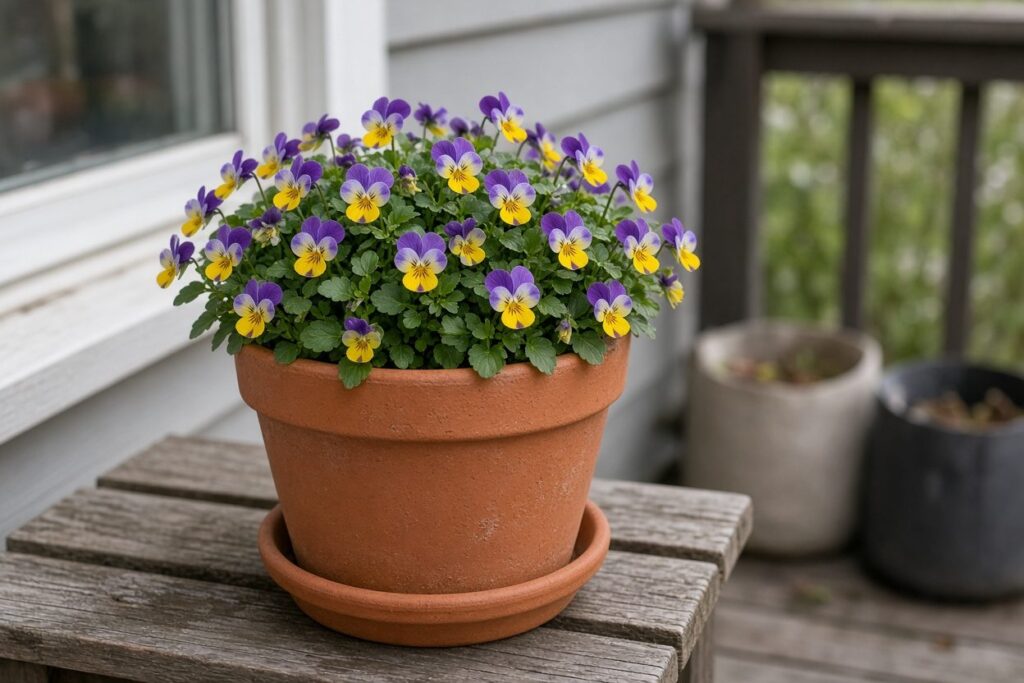
The first viola I ever owned died on a fire escape in August, cooked in a black plastic pot I’d parked in full afternoon sun. I didn’t know yet that violas are a cool-weather flower, and I’d planted mine at exactly the wrong end of the year.
Six seasons on my current balcony later, violas are the first thing blooming every spring. They open while the tomatoes are still seeds in a tray, they shrug off a frosty night, and every single flower is edible. If you have a railing, a windowbox, or one sunny step, you can grow violas in containers. You just have to grow them when they want to grow.
Why violas suit a small space
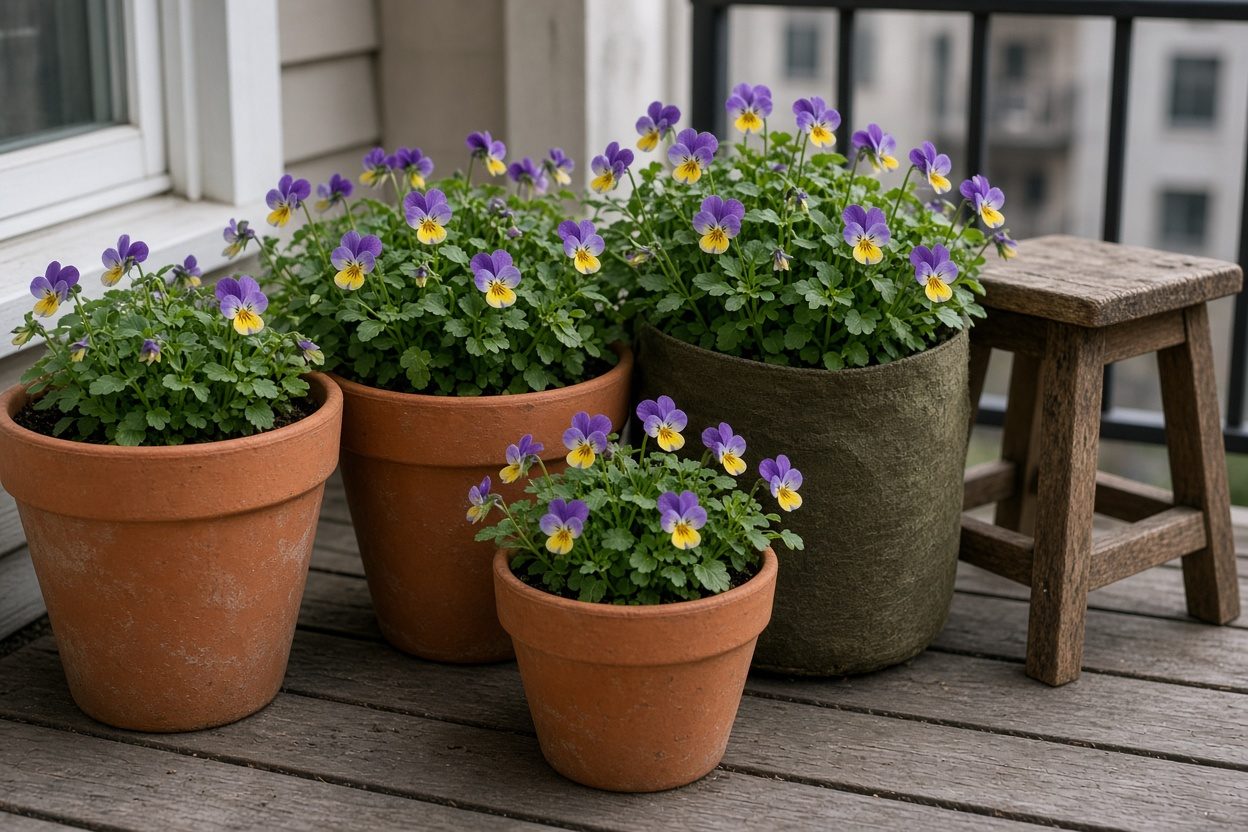
Violas are small plants with a long bloom. A single Johnny-jump-up (Viola tricolor) stays under 8 inches tall and puts out flowers for two to three months in cool weather. Three or four fit in a 12-inch pot, and a standard 24-inch windowbox holds six to eight.
Their roots are shallow, too. A container 6 to 8 inches deep is plenty, which means violas can go in the narrow railing planters that are too shallow for almost any vegetable. That alone earns them a spot on my balcony.
The catch is heat. Once daytime temperatures sit above about 80°F, violas get leggy, flower less, and start to look tired. That’s not you failing. That’s the plant telling you its season is over.
Which violas to grow
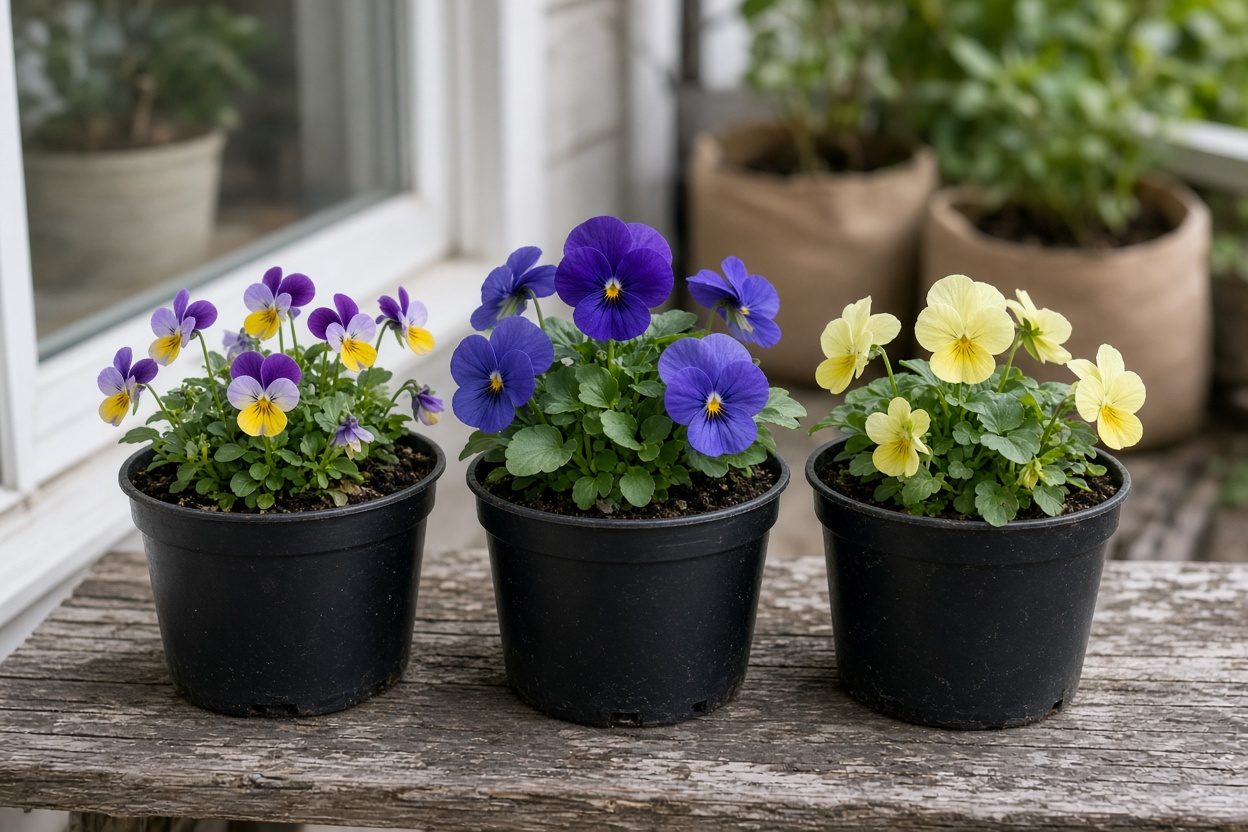
“Viola” covers a few plants, and they behave a little differently in a pot.
*Johnny-jump-ups (Viola tricolor)* are the smallest and toughest. Tiny purple-and-yellow faces, lots of them, and they’ll often reseed into neighboring pots on their own. This is where I’d start.
*Horned violas (Viola cornuta)* have slightly larger flowers in clear single colors, from butter yellow to deep purple. They’re tidy and heavy-blooming, and they handle a little more warmth than the others.
*Pansies (Viola × wittrockiana)* are the big-faced cousins. They’re edible too, but the large flowers take a beating in rain and wind on an exposed railing. I grow a few for show and rely on the smaller violas for eating.
One naming trap: African violets are not violas at all. They’re a houseplant from a different family, and they are not on the eating list.
When to plant

This is the step my fire-escape self got wrong, so here’s the timing that works.
From seed: sow indoors 8 to 10 weeks before your last spring frost. On my Portland-area balcony that means mid-January, which is why I’m thinking about violas now. Viola seeds like darkness to germinate, so cover them with about an eighth of an inch of mix and keep the tray around 65 to 70°F. Expect sprouts in one to two weeks. If you’d like a full walkthrough, I covered starting edible flowers on a sill in how to grow edible flowers from seed indoors.
From nursery starts: buy small plants in late winter or early spring and pot them up once the worst of the hard freezes has passed. Violas handle light frost without complaint. Harden them off for a few days first if they came from a heated greenhouse. My notes on doing that in a tight space are in how to harden off seedlings on a balcony.
In fall: in a mild-winter area like mine, you can also plant violas in September or October. They’ll sit quietly through the cold months, bloom on mild days, and then take off the moment spring arrives.
Potting them up

Fill your container with potting mix, not garden soil, and make sure there’s a drainage hole. Violas hate sitting in wet mix, especially in cold weather when nothing dries quickly.
Space plants 4 to 6 inches apart and set each one at the same depth it grew in its nursery pot. Firm the mix gently and water it in. That’s it. Violas don’t need a big feeding program; fresh potting mix carries them through the first month or two, and a light feed after that is enough.
Sun, water, and stretching the season

In early spring, give violas as much sun as your balcony has. Six hours is ideal. As the days warm up in May, move the pots somewhere with morning sun and afternoon shade. That one shift buys me three or four extra weeks of flowers every year.
Watering is where small pots get tricky. In March a viola pot might go a week without water. In late May the same pot can dry out in two days. I use a soil moisture meter because my finger lies to me when the top of the mix is cold and damp but the root zone is dry. I wrote an honest take on whether the meter earns its spot in do you need a soil moisture meter.
When it’s time to water, a long-spout can lets me tuck the spout under the leaves and water the soil directly. Wet flowers bruise and wet foliage invites mildew, so keeping both dry helps.
For the warm end of the season, self-watering planters are the single best upgrade. The reservoir keeps the mix evenly moist and a little cooler, and cool roots are what keep violas blooming into June. The honest downside: in a cold, rainy March they can stay too wet, so I don’t fill the reservoir until the weather warms. I compared a few styles in the best self-watering planters for small spaces.
Keeping them blooming

Pick the flowers. Every bloom you take is one fewer seed pod, and a viola that isn’t making seed keeps making flowers. If you aren’t eating them, pinch off the faded ones every few days.
When plants start to sprawl in late spring, cut them back by about a third. They’ll often push a fresh flush of flowers in two or three weeks if the weather stays mild.
Watch for aphids on new growth and slugs on rainy nights. A sharp spray of water handles most aphids. For slugs, I go out with a flashlight after dark and pick them off by hand. Otto supervises from the doorway and contributes nothing.
Eating violas safely
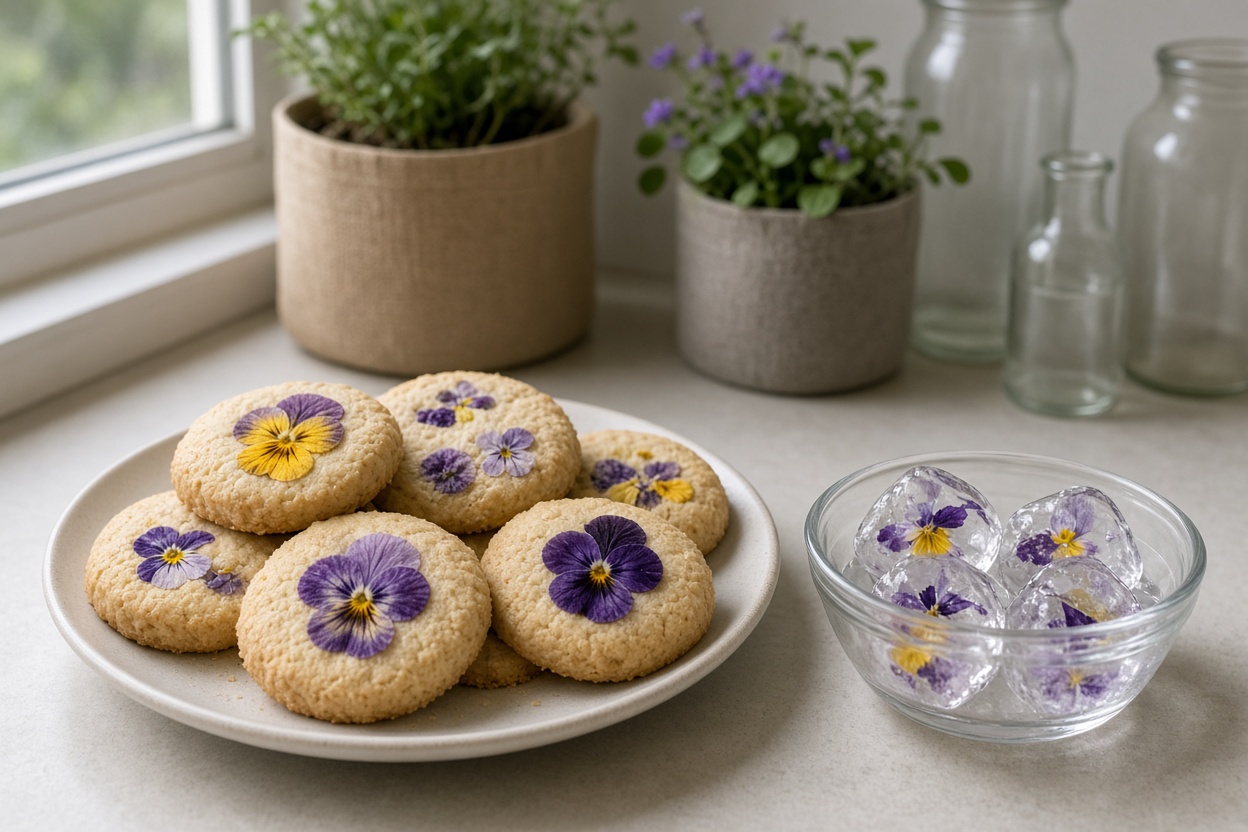
Viola flowers taste mild and fresh, a little like lettuce with a faint sweetness. Johnny-jump-ups are the most flavorful. I press them onto shortbread before baking, freeze them in ice cubes, and scatter them over a plate of greens.
A few rules, stated once:
– Know the plant. Grow a true Viola you can name by its botanical name, and remember that “violet” is a common name shared by plants that aren’t violas.
– Grow it yourself. Never eat flowers from a florist, a supermarket bouquet, a roadside, or a park. Nursery plants may carry systemic pesticides that don’t rinse off, so the RHS advice is to grow store-bought plants on for at least three months before harvesting. Let the first flush of flowers go to the pollinators and the later ones come to you.
– Eat the right part. Eat the flowers. Leave the seed pods and roots alone.
– Start small. Try a few flowers first, especially if you have pollen allergies.
What I got wrong

I planted in summer, so they fried. Later I planted in tiny pots with no drainage, so they rotted in March. And for a couple of seasons I was too precious to pick the flowers, so the plants went to seed by mid-April. Violas are forgiving. They just ask you to work with the cool part of the year, not against it.
If violas are your first edible flower, they won’t be your last. I go through every flower I grow on the balcony, how to tell the safe ones from the look-alikes, and what to do with the harvest in my book, Edible Flowers for Small Spaces. This post is one flower. The book is the whole railing.
