How to Grow Thyme in Containers (Without Drowning It)
Grow thyme in containers on a balcony or sill: the right pot, the gritty mix it likes, how little water it needs, and how to harvest and overwinter it.
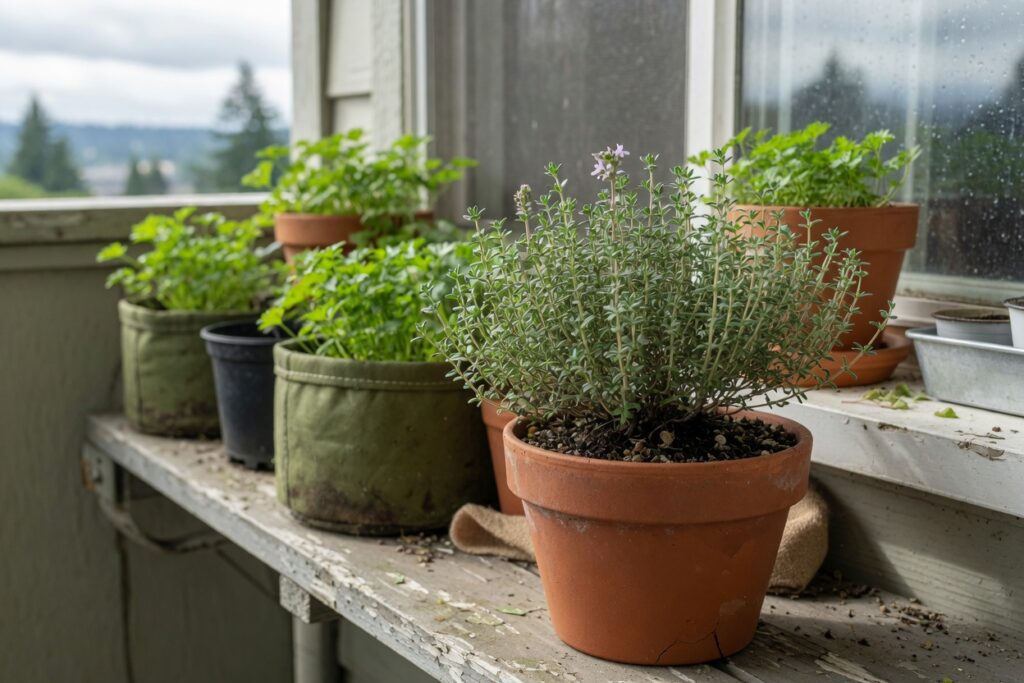
My grandmother kept a pot of thyme on her kitchen sill for what felt like thirty years. Mine, in my first Portland spring, was dead by the second week of June, and it took a drowned pot and a lot of sulking to work out why.
Here’s the thing about thyme: it’s not fussy, it’s just stubborn about one thing. It wants to be left alone. Almost everything that kills a pot of thyme is something we do out of kindness, mostly watering. Once you stop being so nice to it, it will grow on a balcony for years.
You’ll also want a pair of scissors or snips and, for the potting mix, a few handfuls of coarse sand or perlite from any garden shop.
Why thyme suits a small space
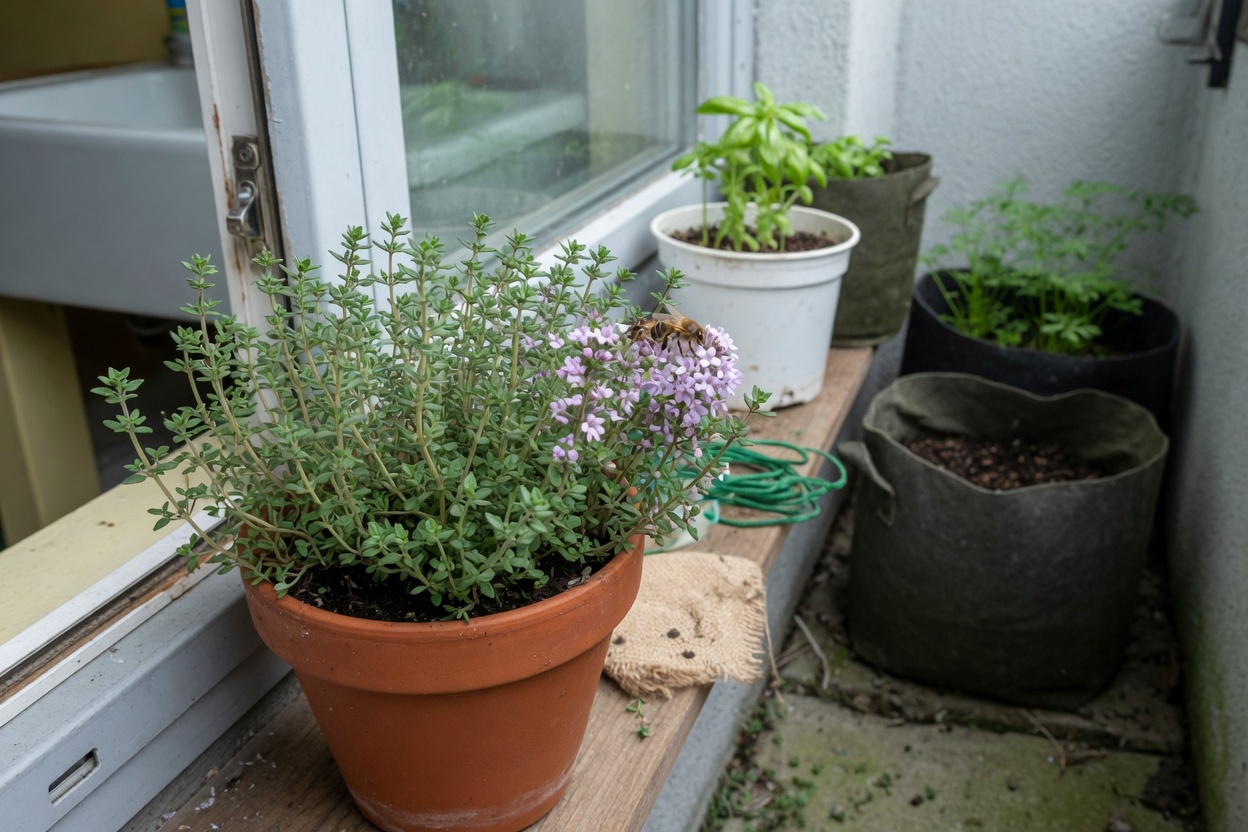
Thyme is a low, woody little plant that tops out at six to twelve inches. One 8-inch pot is plenty, and it looks good next to the kitchen door or on a railing shelf. It’s an evergreen in mild climates, so in the Portland area I can snip it nearly year round. It’s also a pollinator magnet. When mine flowers in early summer, the whole pot hums.
The trade-off is that thyme grows slowly. You won’t get a bushy plant in a month. If you’ve read my notes on growing herbs in containers, thyme is the one that rewards patience more than attention.
Start with a plant, not a seed
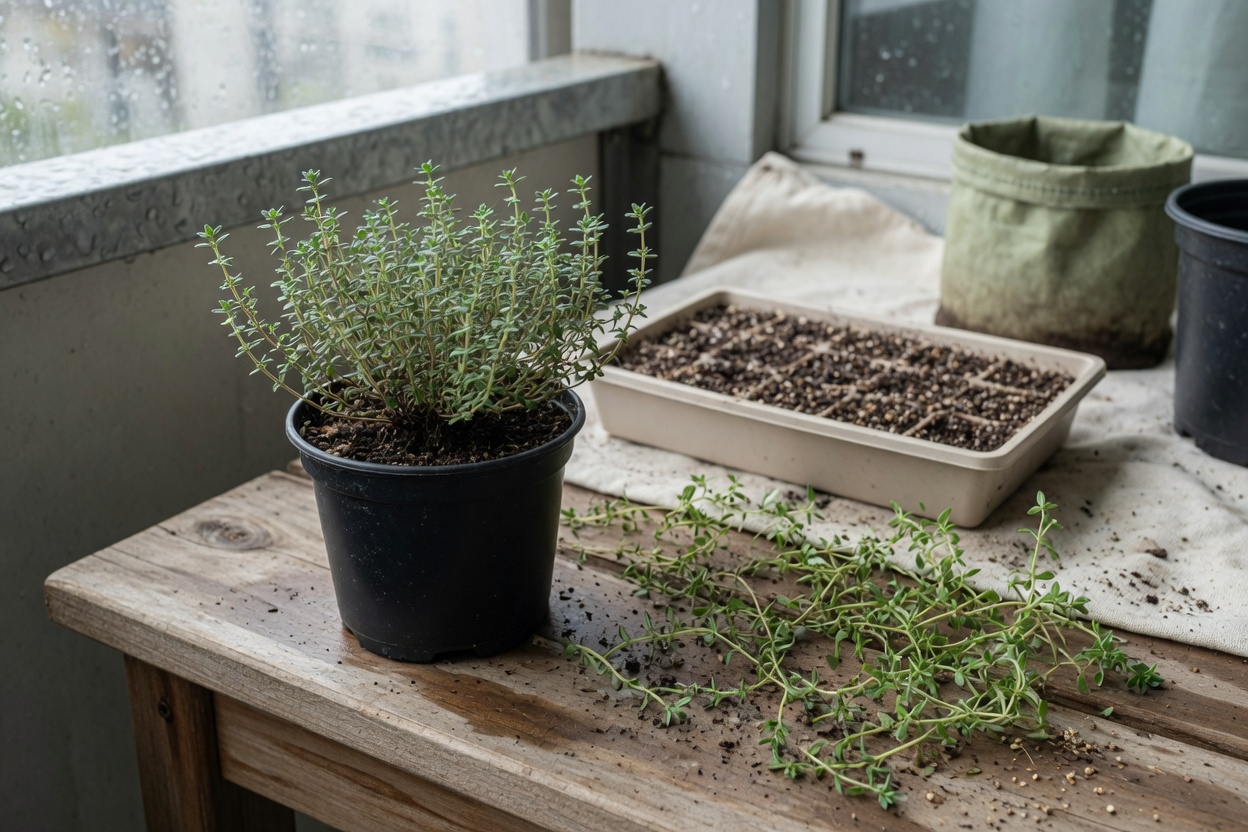
You can grow thyme from seed, and I’ve done it. The seeds are the size of dust and take two to four weeks to wake up, and the seedlings spend a long time looking like green thread. If you’d like to try, sow them on top of damp seed-starting mix, press them in without covering, and keep them near a bright window. Starting indoors in late winter, six to eight weeks before your last frost, gives you a plant for spring. My windowsill method is in how to start seeds indoors on a windowsill.
Honestly, I buy a four-inch nursery plant in spring. It saves three months, and common thyme is rarely expensive. Good varieties for pots: English or common thyme for cooking, ‘Lemon Thyme’ for fish and tea, and a creeping thyme if you want something to spill over an edge. French thyme is a little more refined in flavor and a little less hardy.
The pot and the mix

Thyme comes from dry, rocky hillsides around the Mediterranean. It needs sun and sharp drainage, and it hates wet roots.
Choose a container 8 to 10 inches wide with plenty of drainage. A fabric grow bag is my favorite for this herb, because the sides let air in and water out. If you prefer a pot, terracotta works well and glazed ceramic does not, since it holds moisture. I explain the difference in fabric grow bags vs. plastic pots.
Fill it with potting mix, but don’t use it straight. I mix about two parts potting mix to one part coarse sand or perlite. The result feels a little gritty, which is the point. A rich, moisture-holding mix is how my first thyme drowned.
Sun and placement
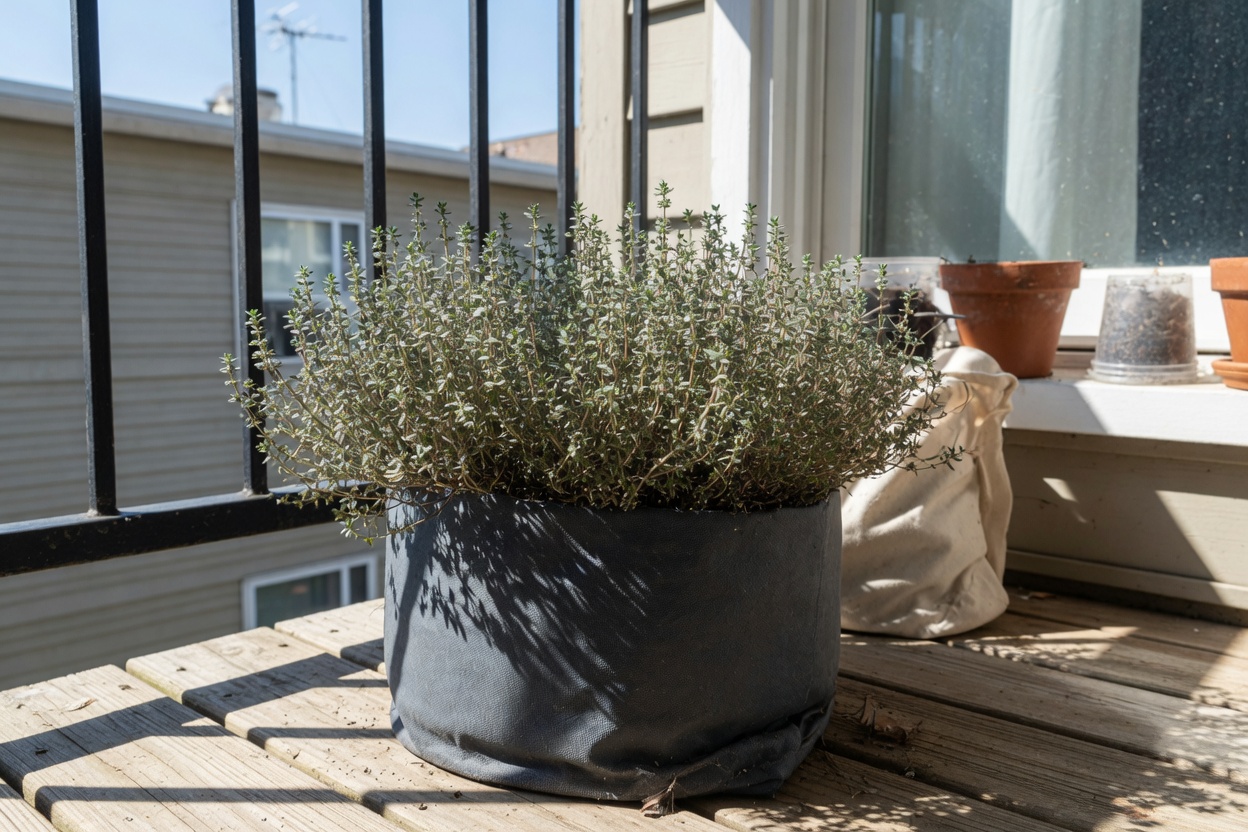
Thyme wants six or more hours of direct sun. A south- or west-facing balcony is ideal. In the Pacific Northwest, where winter light is thin, a pot on a sunny sill indoors will survive but stay small. If you want to try thyme inside through the dark months, how to grow herbs indoors in winter covers the light you’ll need.
Water less than you think
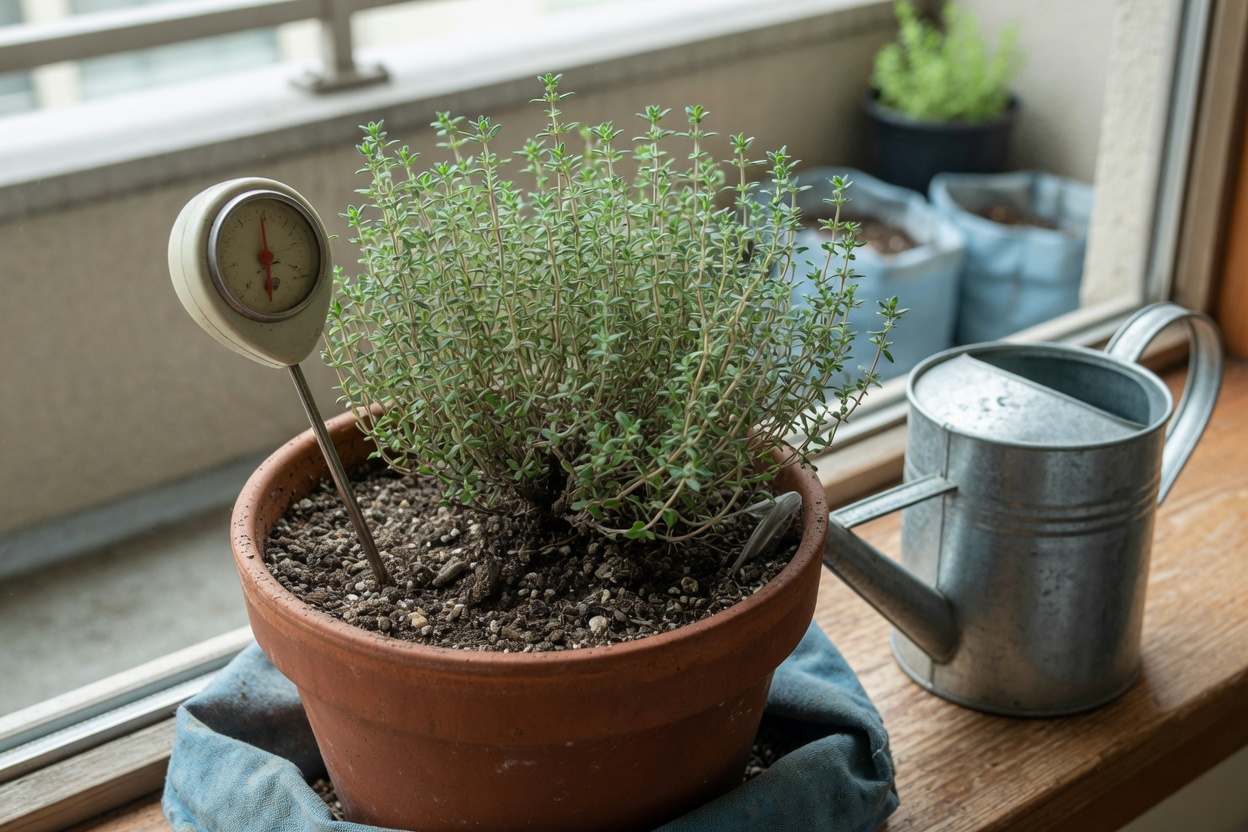
This is the whole game. Water thyme deeply, then wait until the mix is dry a couple of inches down before you water again. In summer that might be every four to seven days in a grow bag. In the cool, wet months it can be every two or three weeks.
Push your finger in. If you feel any damp, wait. A soil moisture meter helps if you aren’t sure, and I wrote about whether it’s worth owning in do you need a soil moisture meter. I’ll admit it’s not a must-have for thyme, just a handy check on a pot you tend to overdo. Use a long-spout can to water at the base; wet leaves in damp weather invite rot.
Yellowing leaves and a mushy base mean too much water. A pot that’s dry and crispy at the tips just needs a drink.
Feeding
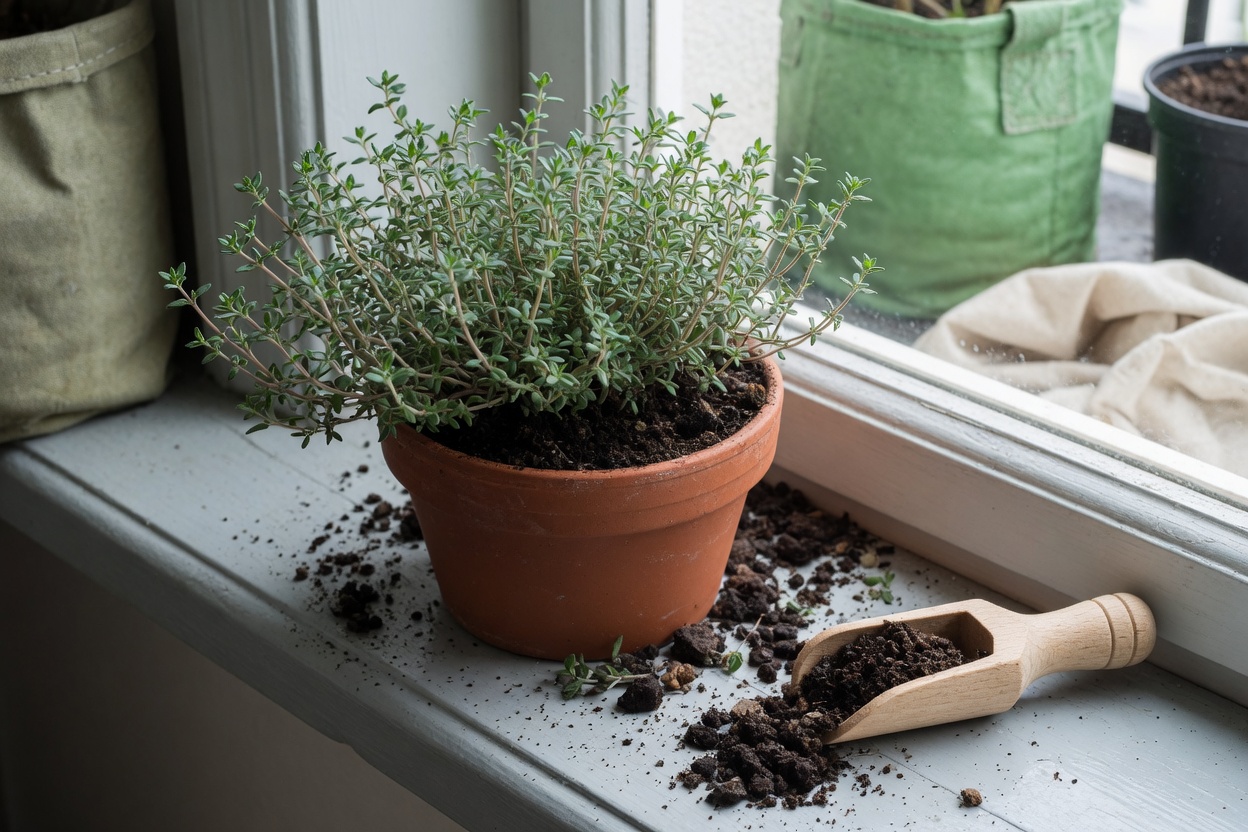
Barely. Thyme grown in rich soil gets leggy and bland. I give mine a light sprinkle of compost or a pinch of granular organic feed once in spring and call it done. If the plant looks pale in midsummer, one more light feeding is plenty.
Harvesting and pruning

Snip stems when the plant is at least four inches tall, cutting just above a pair of leaves. Take no more than a third at a time. Avoid cutting down into the bare, brown wood, because thyme often won’t regrow from it.
Flavor is strongest just before the flowers open. For drying, cut a handful of stems, tie them loosely, and hang them upside down somewhere airy and out of the sun for a week or two. Strip the leaves into a jar once they crumble.
Give the plant a light haircut after it blooms. A trimmed thyme stays compact. A neglected one turns into a woody tangle.
Overwintering

Common thyme is hardy in my area, but our winters are wet, and wet is what kills it. Lift the pot onto feet or bricks so water can drain freely, and tuck it under an eave if you can. In a hard freeze, move it against the house wall. I covered the how-to in how to overwinter container plants.
What I got wrong

I overwatered my first thyme, I planted it in straight potting mix, and I put it in a ceramic pot with one tiny drainage hole. That’s three mistakes in a single pot. None of them was thyme’s fault.
If you’d like a bigger map of what to grow in pots and when, I go through it in my book, Small-Space Big Harvest. It’s the one I wish I’d had on my first balcony.
