How to Grow Spinach in Containers, Even Without a Yard
You can grow spinach in containers on a balcony or windowsill — no yard needed. Here's the pot, the timing, and the watering for tender leaves, not bolted ones.
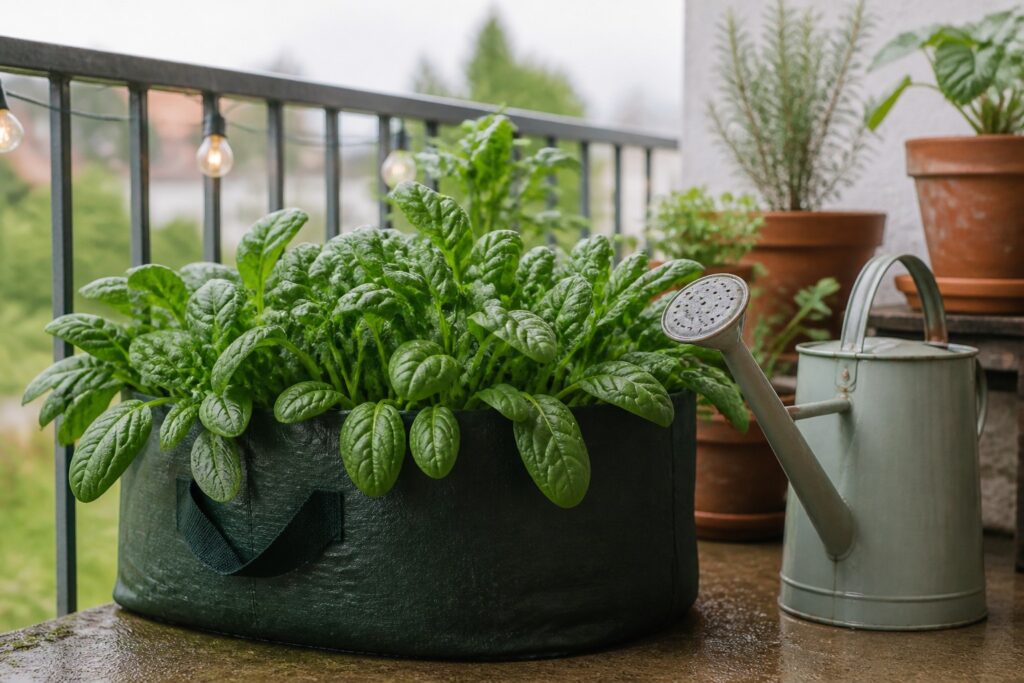
Spinach is one of the best crops there is for a small space, and hardly anyone tells beginners that. It’s shallow-rooted, it’s happy in a wide pot, it doesn’t need deep soil or full-day sun, and it grows fastest in exactly the cool weather when your tomatoes and basil are winding down. If you’ve got a balcony, a step, or a bright windowsill, you can grow it.
The trick with spinach isn’t a green thumb. It’s timing and water. Spinach is a cool-season plant that would rather be a little cold than a little hot, and the whole game is getting it to make leaves before the weather tells it to make seeds. Do that, and you’ll be pulling tender handfuls for weeks off a single pot. Here’s how I do it on my balcony.
One thing I can’t hand you a link for yet is the seed itself. Buy a packet of a bolt-resistant variety — I’ll name a few below — from any garden center or seed rack. When I’ve got a seed listing I actually trust, I’ll add it here.
Pick a wide, shallow pot — not a deep one
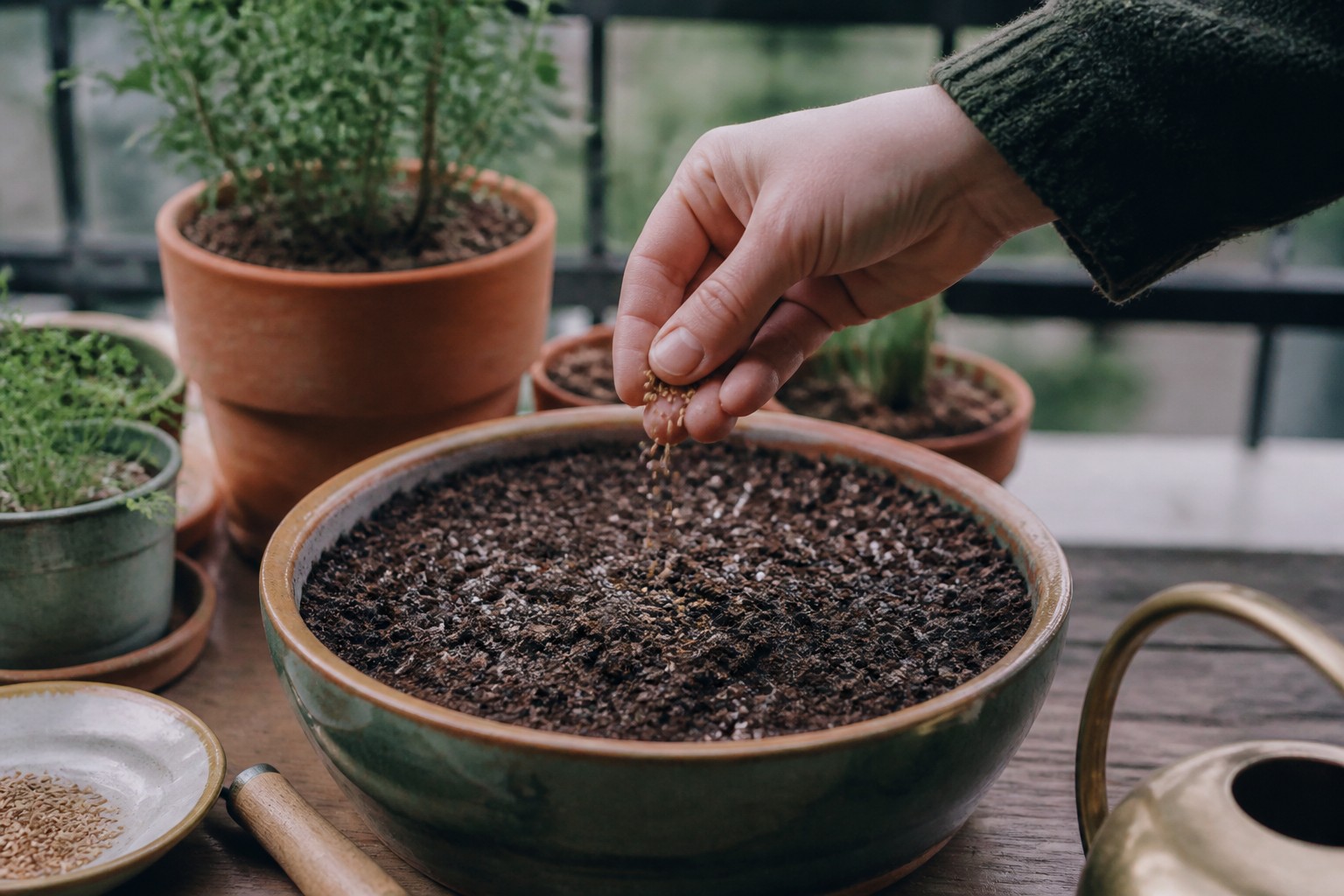
Here’s the thing about spinach: it doesn’t have a long taproot, so you don’t need depth. You need surface. Six to eight inches of soil is plenty; what you want is room to spread out, because you’re growing lots of small plants close together, not one big one.
A wide, low fabric grow bag is my favorite container for it — a 3- or 5-gallon size gives you a nice patch, it drains freely so the roots never sit in water, and the fabric keeps the soil from cooking on a warm afternoon. A window box works beautifully too. Whatever you use, fill it with a light potting mix, not garden soil, and make sure it has drainage holes. Spinach hates wet feet almost as much as it hates heat.
Timing is the whole secret
If you take one thing from this, take this: spinach is a cool-weather crop, and heat makes it bolt — shoot up a flower stalk, turn bitter, and quit. So you grow it in the shoulder seasons, not the middle of summer.
The best window for most people is late summer into fall, sowing about six to eight weeks before your first frost so the plants size up as the days cool. Spinach actually sweetens after a light frost, which is one of gardening’s small gifts. You can also sow in very early spring, as soon as you can work the soil, for a crop before the heat arrives.
If you’re not sure of your dates, your local extension office lists first-frost dates for your area, and it’s worth a two-minute look. Sow with the season turning cool, and spinach is easy. Sow into a heat wave and even a good gardener will lose it.
Sowing, thinning, and the part beginners skip
Scatter or space the seeds about an inch apart and a half-inch deep, then firm the soil over them and water gently with a long-spout can so you don’t wash them into a corner. They’ll sprout in one to two weeks — a little slower if the soil’s still warm, so if you’re sowing in late summer, keep the pot in a shadier, cooler spot until they’re up.
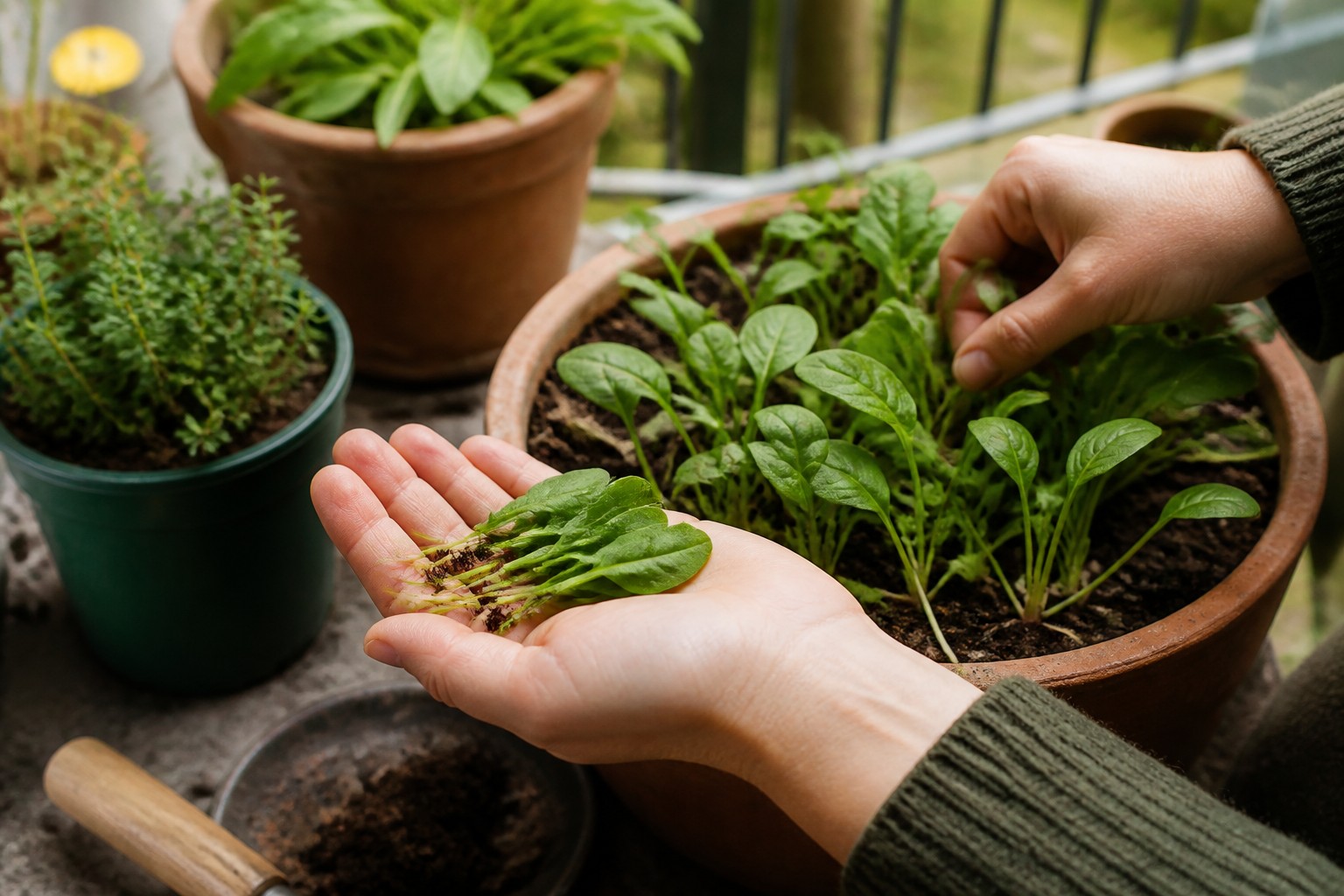
Once the seedlings have a couple of true leaves, thin them so they stand about three inches apart. I know — thinning feels like undoing your own work, pulling up perfectly good baby plants. Do it anyway. Crowded spinach makes small, stressed leaves and bolts sooner; thinned spinach makes broad, tender ones. And the thinnings aren’t wasted — they go straight into a salad. That’s your first harvest, and it’s a good one.
Water is everything with spinach
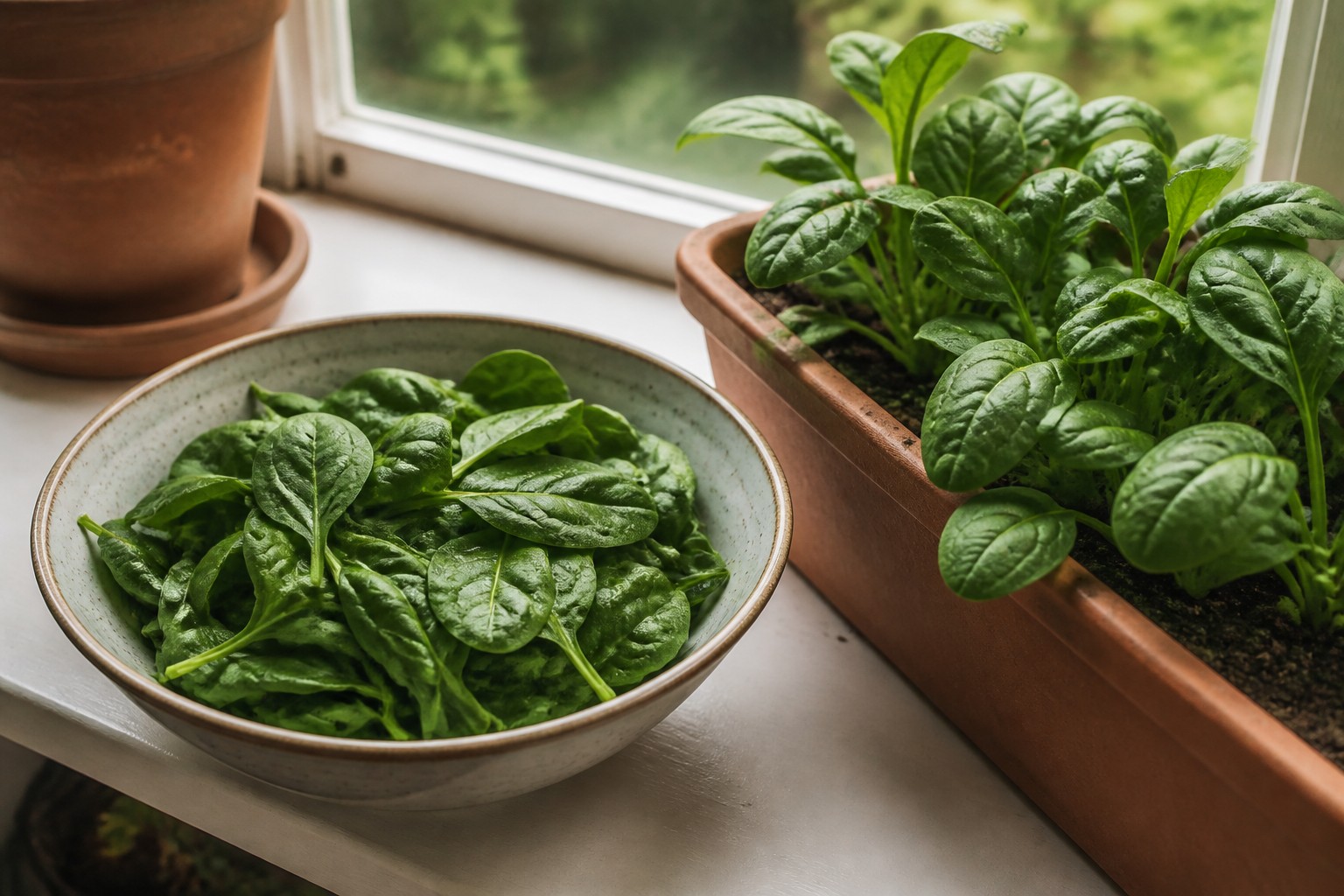
More than any other green I grow in pots, spinach wants steady, even moisture. A container that dries out and then gets flooded is the fastest way to send it straight to seed — the plant reads that stress as “the season’s ending, better make babies.” So the goal is soil that stays evenly damp, never bone-dry, never soggy.
Containers dry out far faster than the ground, so in warmer weather you may be watering daily. This is where a couple of tools save you. A self-watering planter keeps a reservoir under the soil and takes the daily guesswork out of it — genuinely the difference between success and a bolted pot if you travel or forget. And because the surface of a pot can look bone-dry while the root zone is still fine, I keep an inexpensive soil moisture meter in the mix and push it down to root level before I reach for the can. It reads what your eyes can’t.
Harvest little and often
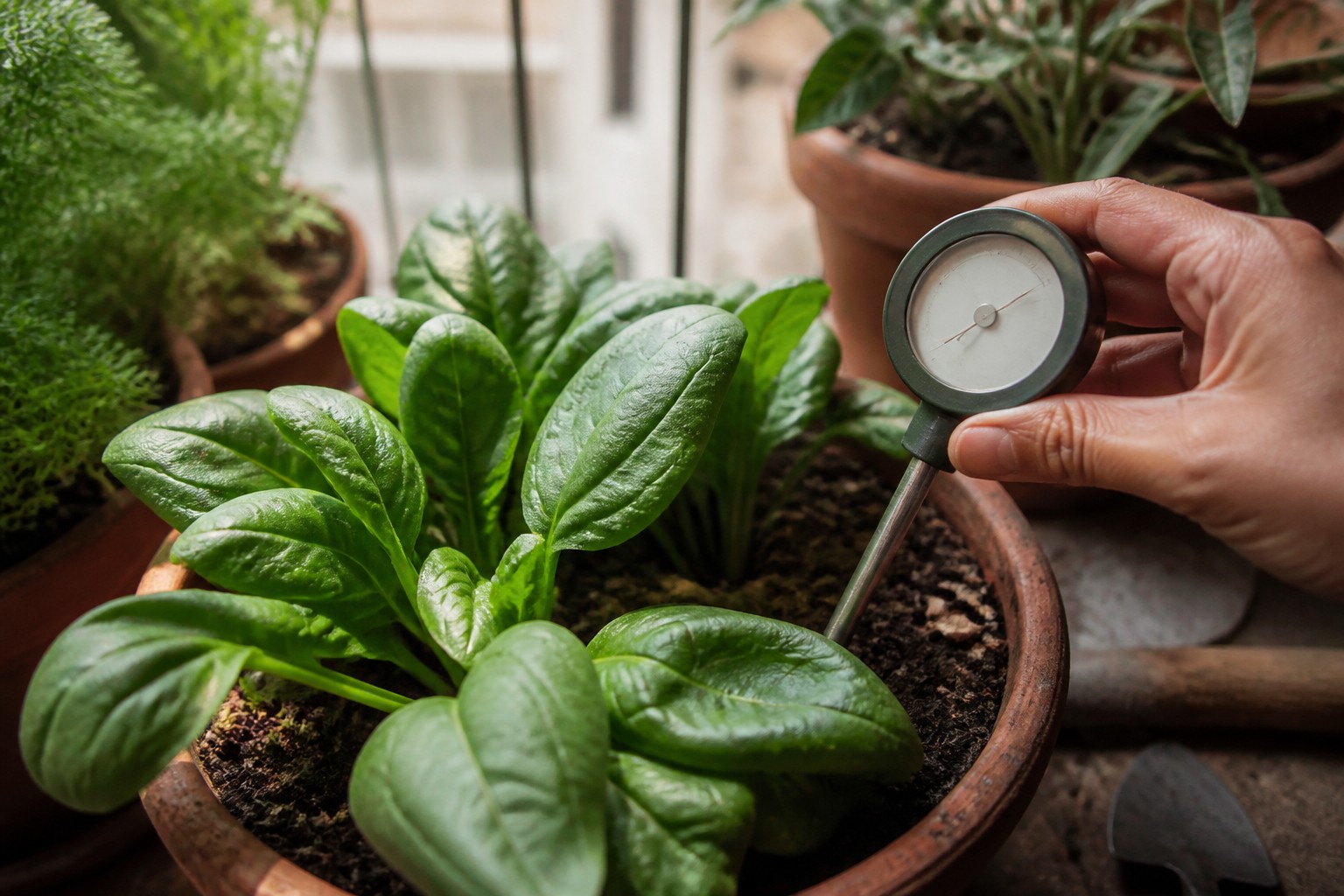
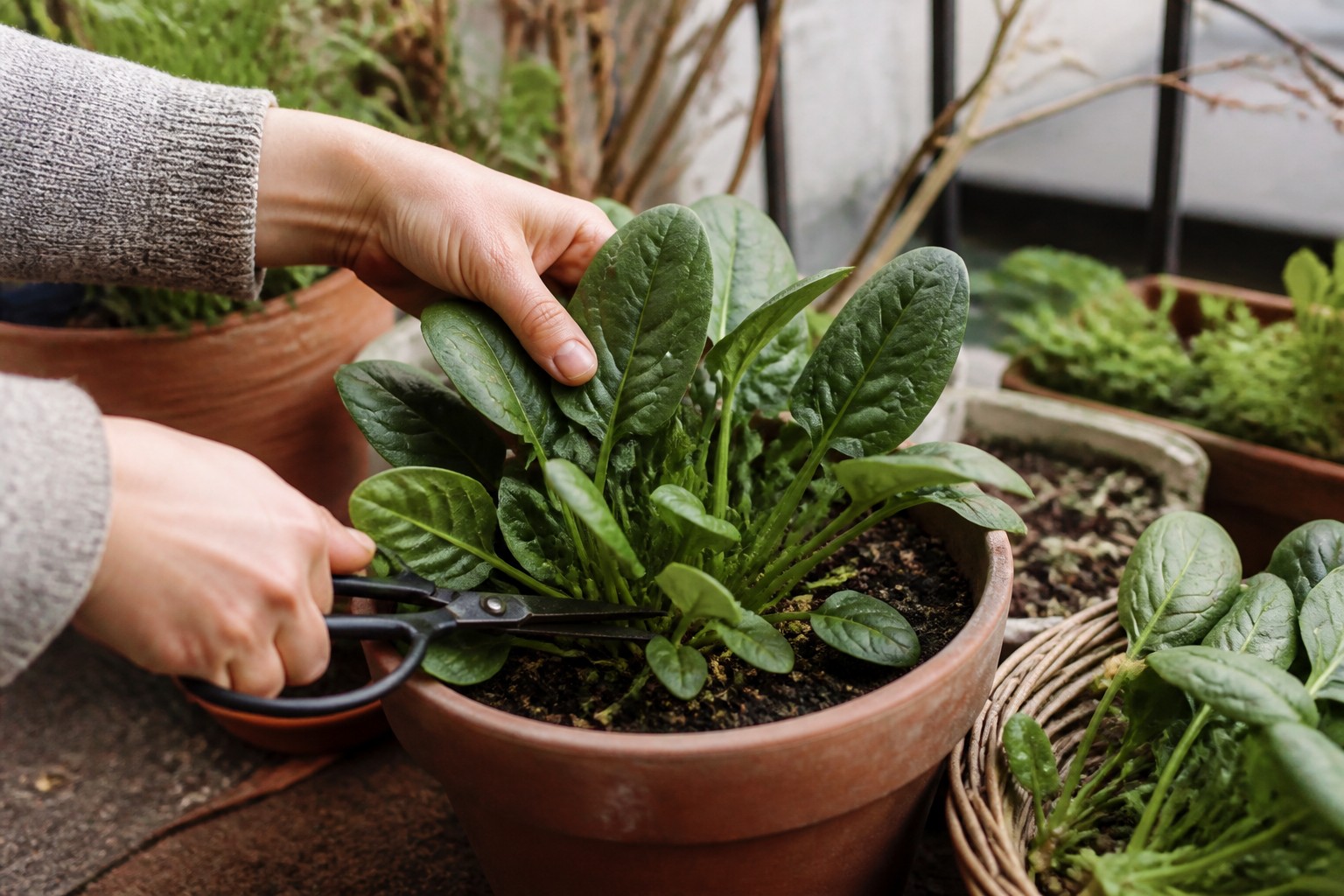
Start picking as soon as the outer leaves are big enough to bother with — usually five to seven weeks from sowing. The move is cut-and-come-again: take the outer leaves from around the edge of each plant and leave the small center growing, and it’ll keep giving you leaves for weeks. Snip or pinch them off; don’t yank, or you’ll uproot the whole thing.
Keep an eye out for the plant starting to stretch tall and grow a pointed center — that’s it deciding to bolt, usually when the weather warms or the plant gets old. When you see it, harvest the whole plant at once before the leaves turn bitter, and start a fresh sowing. Successive small sowings, a few weeks apart, keep tender spinach coming instead of one big glut that all bolts at once. (Otto, my dog, is convinced every low pot on the balcony is a salad bar planted for him personally, so mine grow behind a little barrier — worth a thought if you’ve got a curious animal at ankle height.)
That’s really all there is to it: a wide shallow pot, the cool end of the season, and water you keep even. Spinach rewards a beginner faster than almost anything, and it does it in a footprint the size of a doormat. I go deeper on cool-season greens and how to keep small containers producing right through the shoulder seasons in my book, Small-Space Big Harvest — there’s a whole chapter on getting more out of a few pots than you’d think a space that size could give.
