How to Grow Scallions in Containers (From Seed, on a Balcony)
Scallions are the easiest onion to grow in a pot. Here's how to sow bunching onions in a grow bag, keep them cutting for months, and start them on a windowsill.
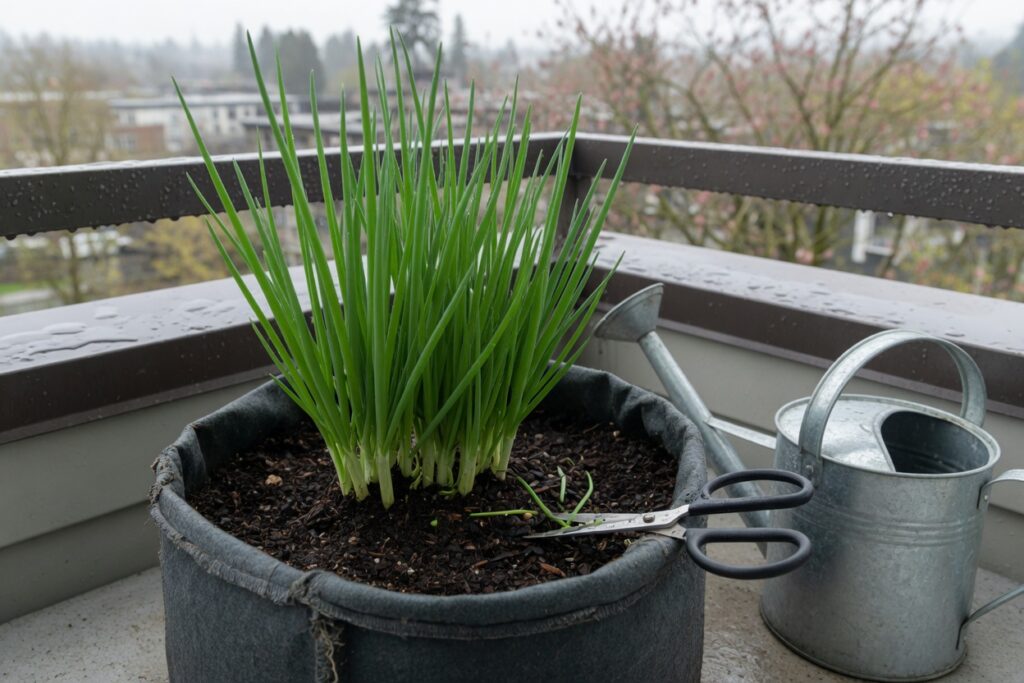
I used to buy a bunch of scallions every Tuesday and pay for the same green tops again the next week. Then one spring I sowed a pinch of seed in a grow bag on the balcony and stopped buying them for most of the summer. It took about ten minutes. I felt a little silly that I hadn’t done it sooner.
Scallions are about as forgiving as a vegetable gets. They don’t need much depth, they don’t mind a crowd, and you can cut them again and again. If you have a balcony, a sunny sill, or even a single deep pot, you can grow them. Here’s how I do it, and when to start, since the best time to begin is a few months out.
Pick the right onion

“Scallion” is a use more than a plant, and this trips up beginners. The ones you want to grow are bunching onions (Allium fistulosum), sometimes sold as Welsh onions or just “green onions.” They grow in clumps of slim stalks and never form a big round bulb. Look for a variety labeled bunching or scallion, with names like ‘Evergreen Hardy White’ or ‘Parade’.
Ordinary bulb onions sown the same way will give you thin green tops, but they’re working toward a bulb, and the stalks come out tougher. Bunching onions are the shortcut.
The container
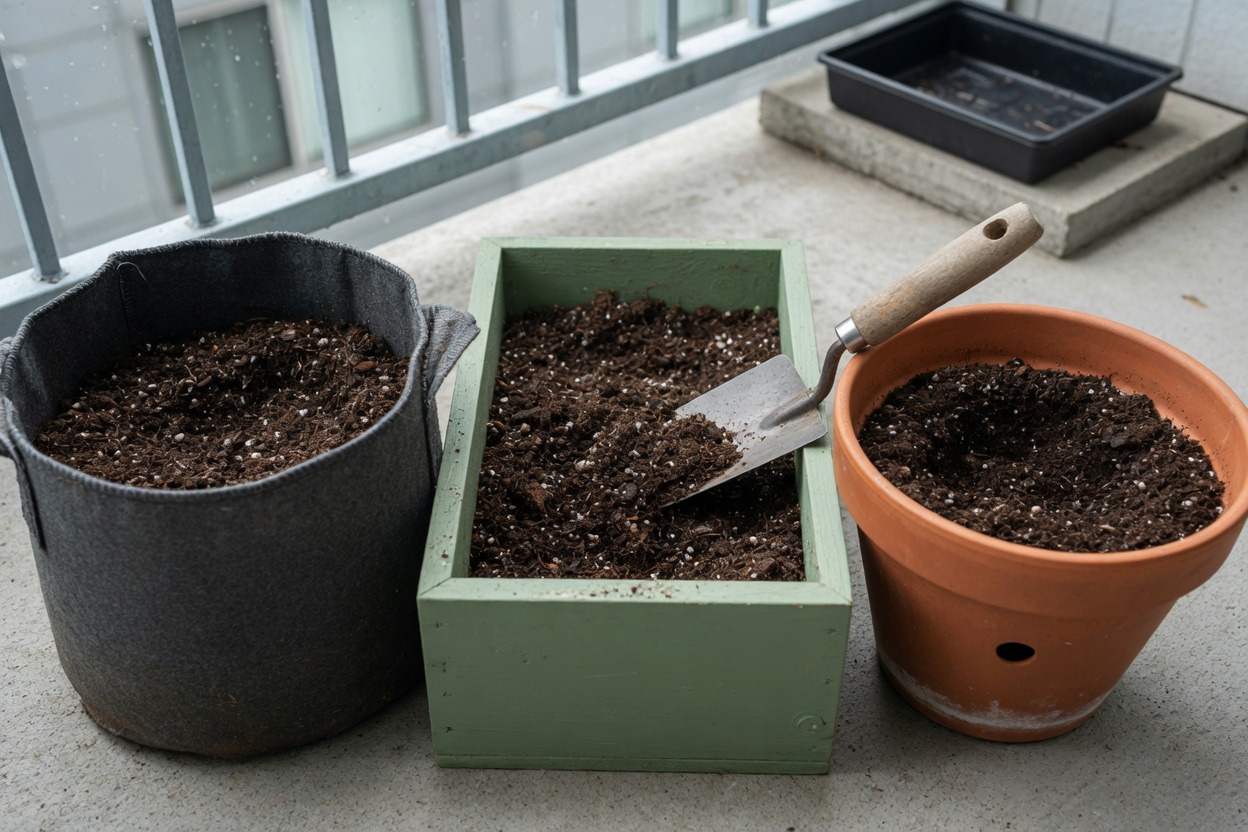
Scallion roots are shallow, so you don’t need much depth: six to eight inches does it. A 5-gallon fabric bag is roomier than necessary, but it gives you a lot of surface for a bigger sowing, and I like how it lets extra water out. A deep window box or a wide pot with drainage holes works just as well. Skip any pot without holes. They sit in water and rot.
Fill it with fresh potting mix to about an inch below the rim. If you’ve reused old mix, I wrote up how to refresh it in how to reuse potting soil in containers.
Sowing

Scatter the seed thinly across the surface, about half an inch apart, and cover with a quarter inch of mix. Press it down lightly with your palm and water gently. Seeds sprout in seven to ten days at room temperature, and the soil should stay evenly damp until then. Never let the top crust dry out in the first two weeks. That’s the one thing that kills them.
Bunching onion seed loses its sprouting power fast, so buy a fresh packet each year. Last year’s leftover seed gave me a patchy row and a lesson.
Thin as they grow. Once the seedlings stand a few inches tall, thin to about an inch apart. Pull the extras and eat them. They’re the tenderest scallions you’ll taste.
Keep it simple on water. Scallions like consistent moisture, not soggy. Push a finger in an inch. If it’s dry, water at the base with your long-spout can. Pots dry out faster than the ground, especially a breathable bag on a sunny balcony, so check daily in warm weather. If you’ve overdone it, how to fix an overwatered container plant walks through the rescue.
When to start
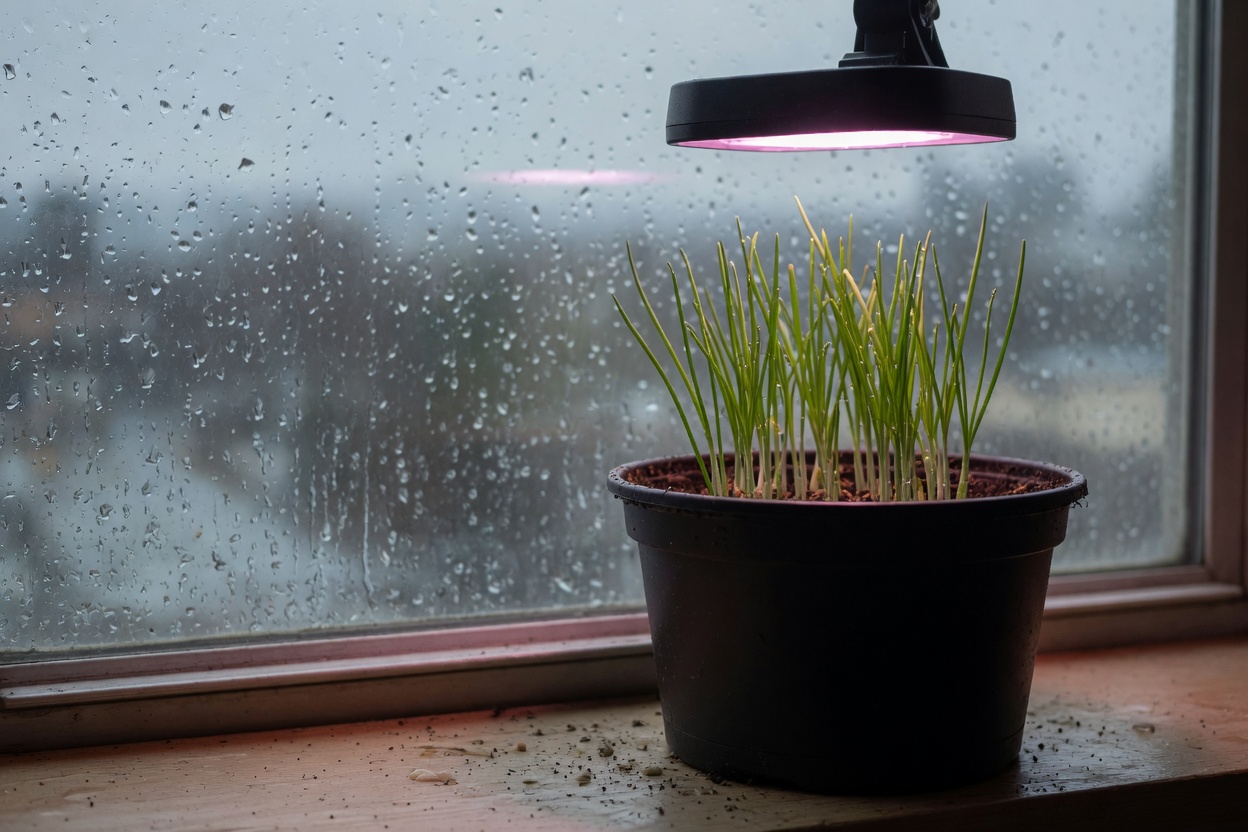
This is where being a season ahead helps. Bunching onions are hardy and don’t mind cool weather, so you have two good windows.
Indoors in winter. Sow in a pot on a bright windowsill, or under a clip-on grow light if your sill is dim. A few hours a day of light isn’t enough for stocky growth. I run the light about twelve hours. I covered the basics in how to start seeds indoors on a windowsill.
Outdoors in early spring. Seed can go into a bag on the balcony as soon as the soil can be worked and the hardest freezes are over, a few weeks before your last frost. Mature plants shrug off a light frost.
Harvest, and keep them coming

You can start snipping when the stalks are pencil-thin and six inches tall, usually about two months after sowing. Cut a few stalks about an inch above the soil with scissors and leave the rest. The stalk grows back. I’ve cut the same pot four times in a season.
For bigger, white-based scallions, pile a little mix up around the stalks as they grow, which blanches the bottom inch or two. Or just let them be. They taste good either way.
If a stalk sends up a round flower head, snip it off and eat it. Left alone, it’ll go to seed and the plant slows down.
If the tips turn yellow

Yellow tips on a few outer stalks are normal as they age, and you can snip them off. If the whole clump yellows, look at your water first. Soggy mix is the usual cause in a pot, and a bag that stays wet in a shady corner will do it. Pale, weak growth on a windowsill is almost always too little light. Move the pot closer to the glass or lower the grow light to a few inches above the stalks.
A couple of honest pros and cons

The upside is plain: you’ll spend almost nothing, they’ll keep producing, and they handle part shade better than most vegetables. Four hours of sun gets you a decent crop. The downside is that a heavy cutting schedule wears a plant out eventually, so I sow a fresh pot every six to eight weeks for a steady supply. And in a heat wave they stall and turn tough, so move the pot out of afternoon sun when it gets very hot.
Feeding is minimal. A light dose of a balanced organic fertilizer once or twice in a season is plenty.
Where to go from here

Once you’ve got scallions going, chives and parsley are the natural next pots. If you want the whole small-space picture, from picking containers to seasonal sowing, it’s in my book Small-Space Big Harvest. It’s written for exactly this: a balcony, a few pots, and not much room.
