How to Grow Rosemary in a Pot (and Keep It Alive in Winter)
Grow rosemary in a pot on a balcony or windowsill: the right container, soil, and watering, plus how to keep it alive through a wet Pacific Northwest winter.

I have killed rosemary three times on my balcony, and each time it was a different mistake, which is the only reason I can tell you what the fourth plant did right. The first one drowned. The second one dried to a brown crisp the week I went to visit my sister. The third sat in a gorgeous glazed pot with no drainage hole and rotted from the roots up while the leaves still looked fine.
The fourth is two years old now and sits at the corner of my railing, a gray-green bush that smells like a pine forest when Otto brushes past it. Rosemary is not hard. It just wants the opposite of what most of us do to our plants, which is to love them with too much water. Here is how I grow it, and how I get it through a Portland winter.
You’ll also want a small bag of coarse sand or perlite for drainage. It’s cheap, and any garden center has it.
Start with a plant, not a seed

Rosemary seed is slow and fussy, and plenty of seeds never come up. If you’re new to this, buy a small nursery plant in spring, ideally when the weather has settled in your area. Look for a plant with firm, green-gray needles and a woody base, with no brown tips and no wet, musty smell at the soil.
You can also root a cutting from a friend’s plant in a glass of water or damp sand, but I’d call that a project for later. A nursery plant gets you cooking with it by summer.
The container that matters

Rosemary comes from dry, rocky Mediterranean hillsides, so the pot has to drain fast. A pot with no hole is a death sentence, no matter how pretty it is. I learned this the hard way.
I use a fabric grow bag in the 3 to 5 gallon size, and a plain terracotta pot works just as well, since the clay wicks moisture out of the soil. Size matters, too. A pot about two inches wider than the nursery pot gives the roots room without sitting in a lot of wet soil. If the pot is far too large, the soil stays wet around the roots and the plant sulks. Go up in size only as the plant outgrows its pot, which I cover in how to repot a root-bound container plant.
The soil blend

Plain potting mix holds more water than rosemary likes. I mix about two parts organic potting mix with one part coarse sand or perlite. Stir it together in a bucket before you fill the bag. The mix should feel loose, gritty, and drain quickly when you pour water through it.
Plant it at the same depth it grew in the nursery pot. Burying the stem invites rot. Tease the roots apart a little if they’re wound in a tight mass, set the plant in, and firm the soil gently around it. Water it in well once, then let it be.
Sun and placement

Rosemary wants six to eight hours of direct sun. My balcony faces south, and the plant sits at the sunniest corner, up against the wall, where the bricks hold some warmth after the sun goes. If your balcony gets less light, choose the brightest spot you have and expect slower growth.
Air movement helps, too. Rosemary hates stagnant, damp air, which is a real issue in our rainy climate, and a plant crowded in among others may get powdery mildew. Give it a little room.
Watering, the part that kills it

Here is the single most useful rule I know: let the soil dry out between waterings. Not bone dry for weeks, but dry down a couple of inches. Push a finger into the soil. If it feels damp, wait. If it’s dry at the knuckle, water slowly and thoroughly until it runs out the bottom, then empty the saucer.
A moisture meter takes the guessing out of it. I stick the probe in, and if the needle sits in the dry zone, I water. If you’re not sure whether you need one, I wrote about that in do you need a soil moisture meter. I’d say it earns its keep with a plant like this.
In summer, a pot in full sun may need water every five to seven days. In the cool, wet months, it might need water every two or three weeks, or even less. Rosemary that droops and yellows in winter is nearly always overwatered, not thirsty.
Winter in a wet climate

In the Portland area, rosemary can often live outdoors all winter in a sheltered spot, and it’s what mine does most years. Pull the pot up against a south-facing wall, under an eave, where it stays out of the worst of the rain. Raise it off the ground on pot feet or a couple of bricks so it drains, and water only when the soil is dry.
In a hard freeze, which here comes only a few nights a year, I move the pot close to the house wall or into an unheated entry. Most rosemary varieties handle brief dips into the low twenties, though some are tougher than others. If you live where winter is colder than ours, plan to bring it inside. My longer rundown is in how to overwinter container plants.
If you bring it indoors, give it the sunniest window you have, and cool is better than warm. A clip-on grow light set a foot above the plant for a few hours a day makes up for the short gray days. Water sparingly, because indoor plants in winter dry out slowly, and keep it away from heater vents. I cover the larger indoor routine in how to grow herbs indoors in winter.
Pruning and harvesting

Snip sprigs as you need them, taking no more than about a third of the plant at one time. Cut just above a pair of leaves, and avoid cutting into bare, woody stem, which often doesn’t regrow. A light trim after flowering keeps the plant bushy.
Fresh sprigs keep for a week or so wrapped in a damp paper towel in the fridge, and rosemary dries well hung upside down in a warm, airy spot.
What I got wrong
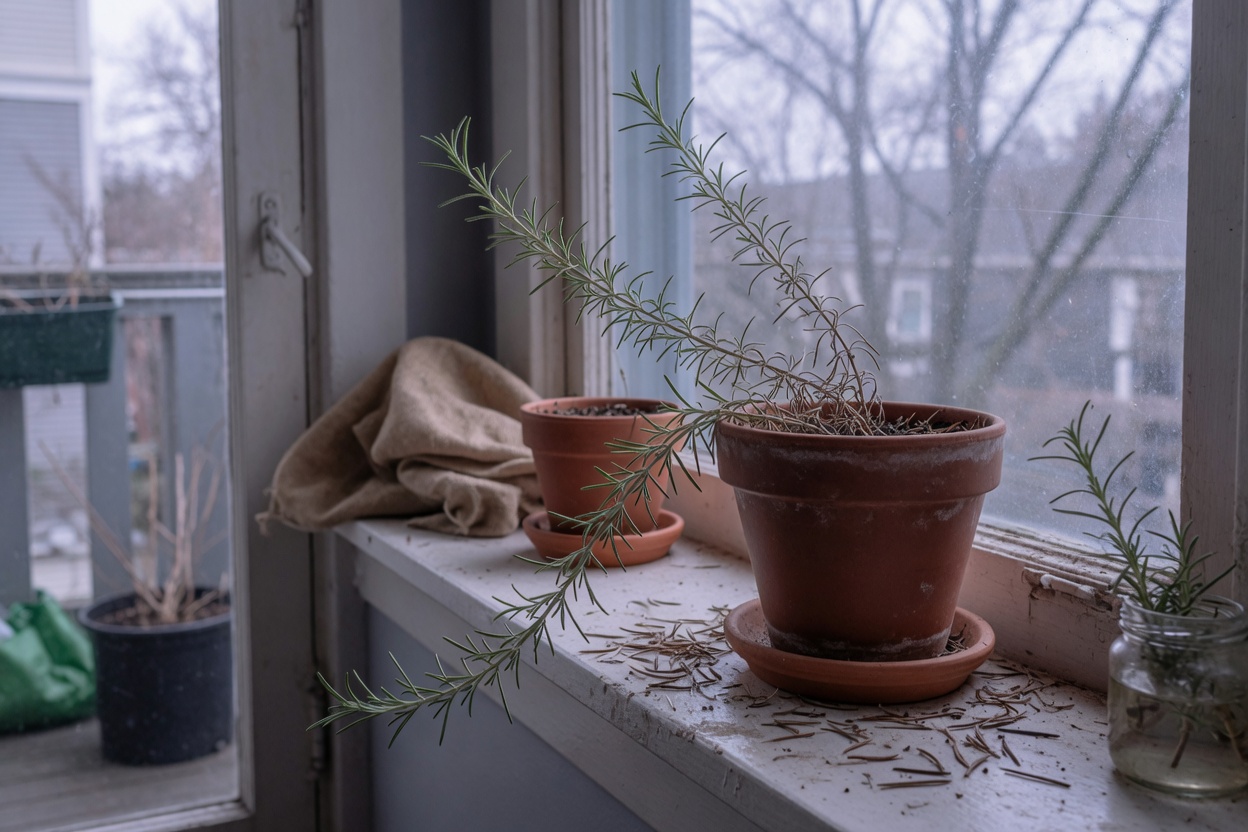
Besides the three dead plants, I once fed rosemary the same rich fertilizer I use on my tomatoes, and it grew floppy and weak. This is a lean-soil plant. A light feeding in spring is plenty, and many years I skip it.
I’ve also tried to keep it on a shady windowsill in January, and it dropped needles in protest. Light is the difference between a rosemary that lives and one that limps.
If you’d like a bigger map of what to grow in pots and when, I go through it in my book, Small-Space Big Harvest. It’s the one I wish I’d had on my first balcony.
