How to Grow Parsley in Containers, Even Indoors in Winter
Grow parsley in containers on a balcony or windowsill: the deep pot, the slow seeds, the light it needs, and how to cut it so it keeps coming back all season.
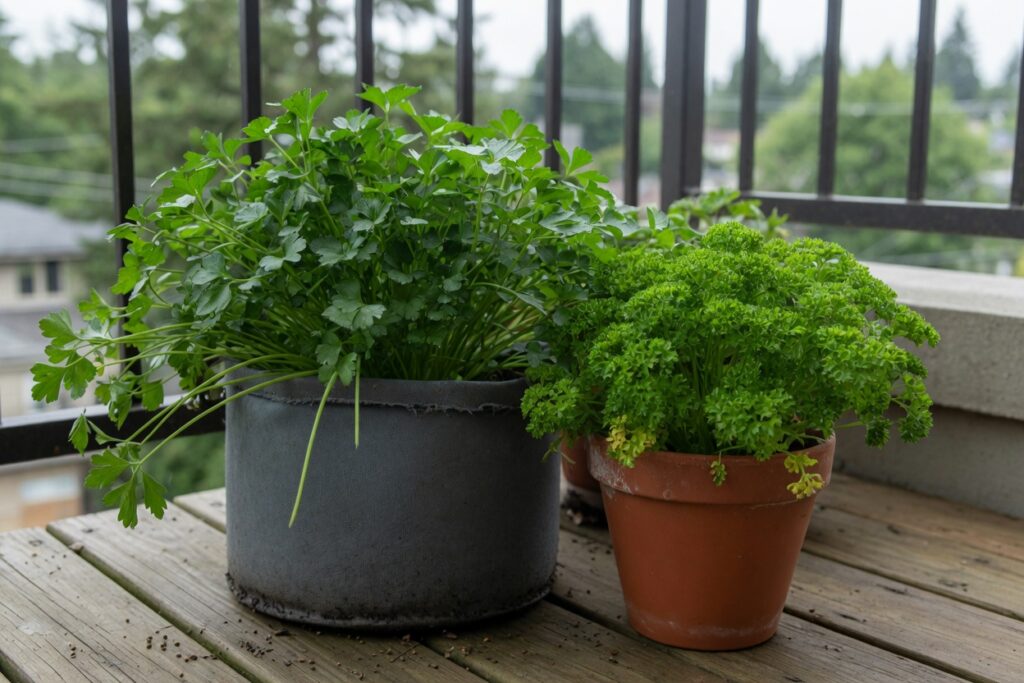
My first parsley died on the balcony railing by mid-July, cooked in a six-inch plastic pot I had set on the hottest corner of the whole six-by-ten. It looked fine on a Tuesday and like wet lettuce by Friday. I blamed the plant for about a week before I admitted the pot was the problem.
Parsley is one of the best herbs a small space can grow, and it is easy to get wrong in exactly one way: it wants a deeper pot than most people give it. Get that right and a single plant will feed you from spring until a hard freeze, and in a mild winter like Portland’s it often keeps going. It will also grow on a sunny windowsill under a small light all winter, which is why I am writing this now, with the cold coming.
Start with the right pot
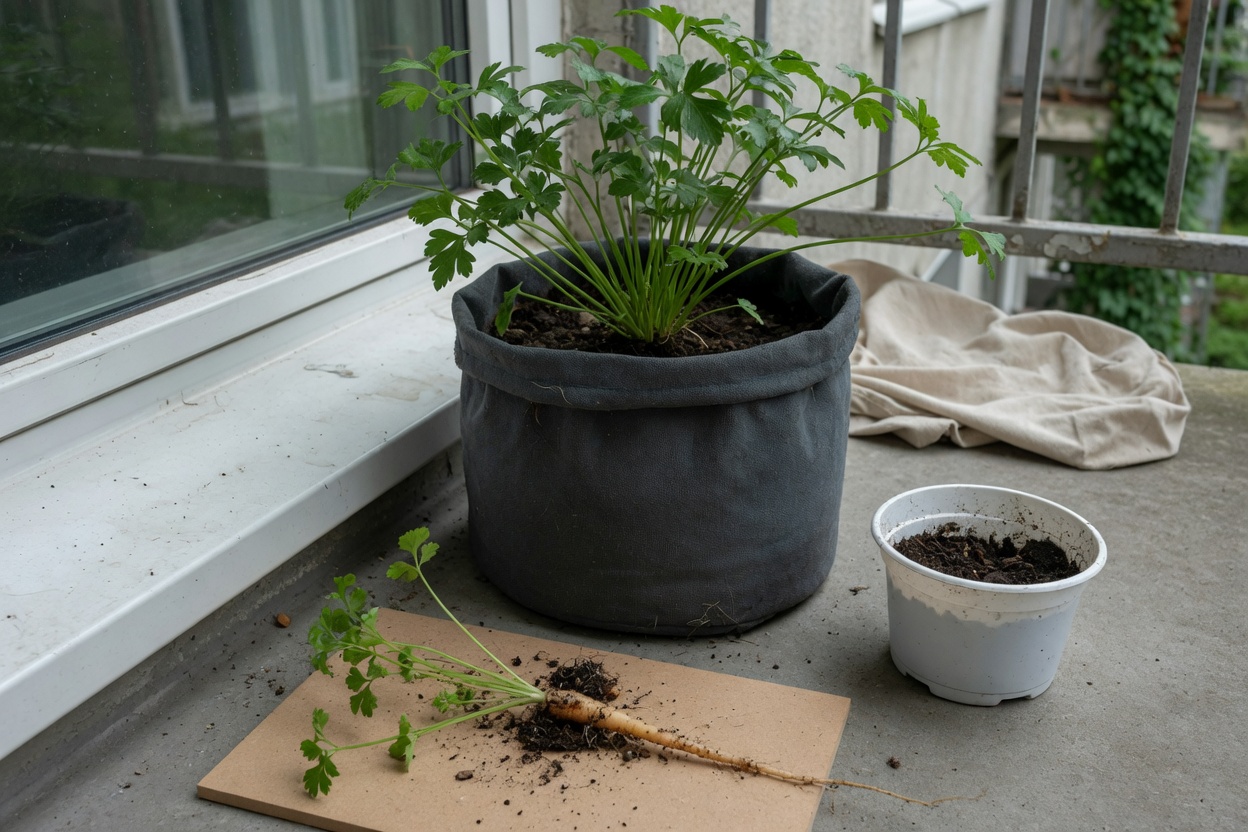
Parsley sends down a long taproot, a bit like a carrot. A shallow pot cramps it, and a cramped parsley plant bolts, sulks, or dries out in an afternoon. Aim for a container at least ten inches deep and ten to twelve across, with drainage holes.
I like fabric grow bags for this, because a deep bag gives the root room and the fabric breathes. They do dry out faster than plastic, especially in July, so be ready to water more often. Pick whichever size gives you that ten inches of depth, and set the bag on a tray so it does not stain the balcony floor. A clay or plastic pot works fine too, as long as it is deep enough.
Fill it with potting mix, not garden soil. Garden soil packs down in a container and drowns roots. Mix is loose and drains.
Seed or transplant?
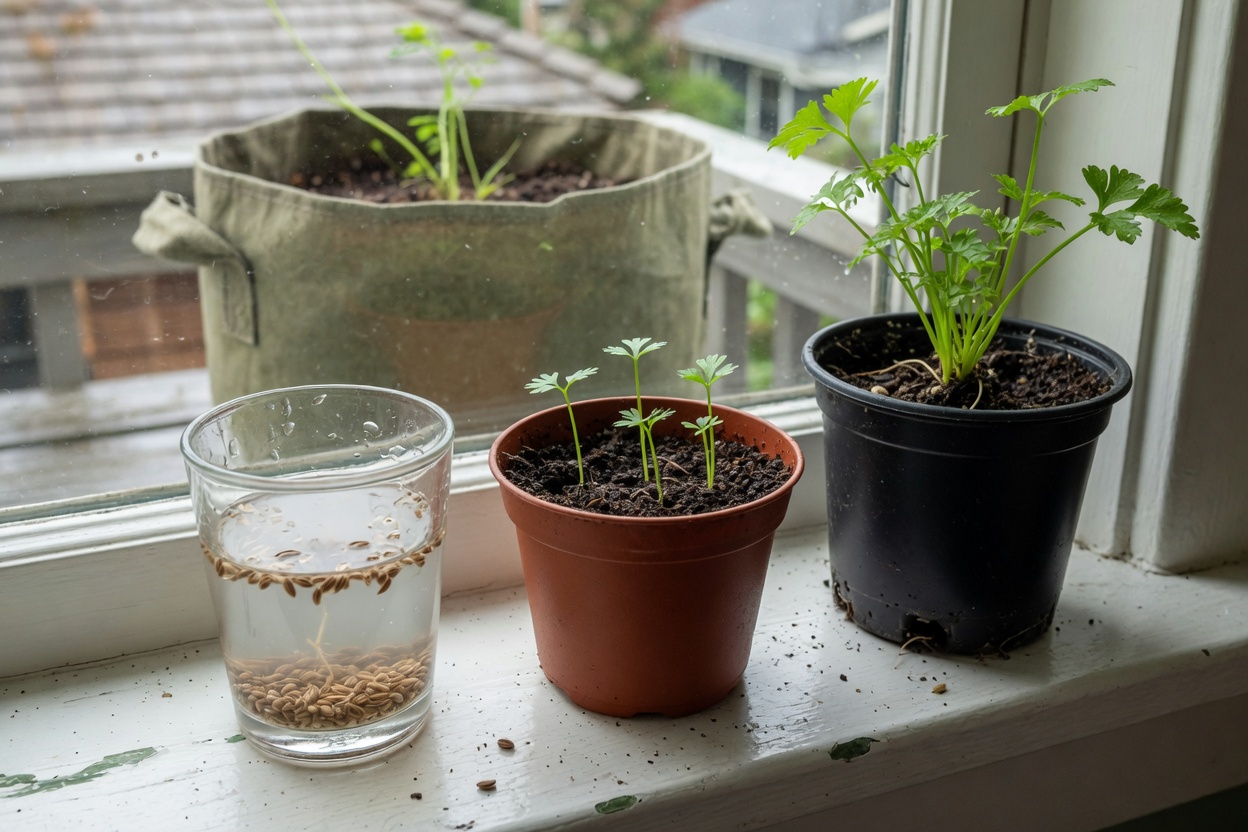
Here is the honest part: parsley seed is slow. It can take three to four weeks to come up, sometimes longer, and a lot of beginners give up and dig the pot out right before it sprouts. Soaking the seed in warm water overnight helps. Keep the soil evenly damp and do not poke around.
If you do not want to wait, buy a small nursery plant. Parsley does not love being moved, so handle the roots gently and do not tease them apart. A transplant gets you cutting in two or three weeks instead of eight. I do both: a nursery plant for now, and seed for next spring.
Curly parsley is the old garnish plant, and it is handsome and tough. Flat-leaf, often called Italian, has more flavor to my taste and is what I cook with. Either one grows the same way. I plant one of each, and Otto has ruled on neither.
Light
Parsley wants about six hours of sun a day, but it tolerates part shade better than most herbs, which makes it forgiving on a balcony that gets light for only half the day. In summer, afternoon shade is a gift. A west-facing rail in July can scorch it, and my first plant is the evidence.
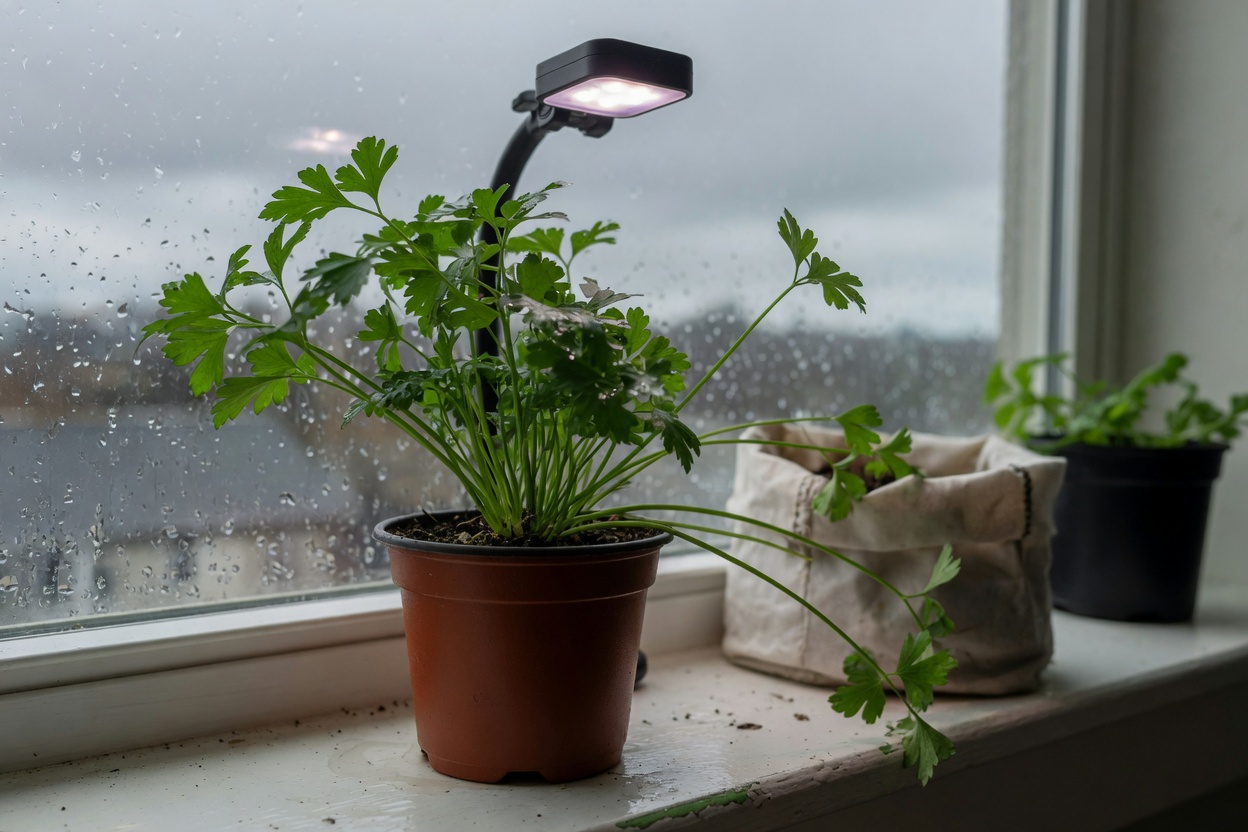
In winter, a south window is the best you can do, and even that may not be enough in Portland from November to February. That is when a clip-on grow light earns its keep. I clamp mine a few inches above the leaves and run it on a timer for ten to twelve hours. It is not pretty, but it keeps the plant alive and cutting. The limit is that it will not make a big lush plant. You get a steady supply of leaves, not a harvest, which is all I need for a pot of soup. If you want the full indoor setup, how to grow herbs indoors in winter goes through it.
Water and feeding
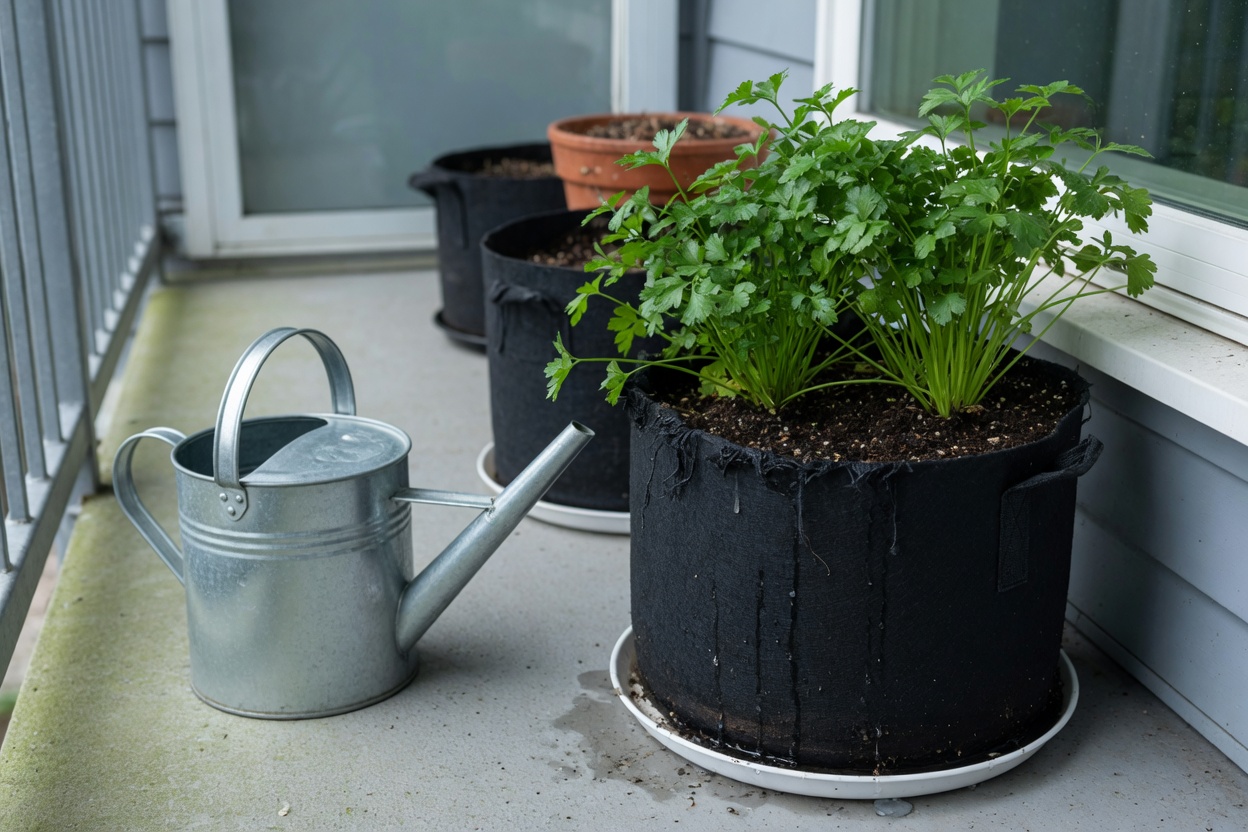
Keep the soil evenly moist, like a wrung-out sponge. Parsley dislikes both a bone-dry pot and soggy feet. Stick a finger in an inch or two. If it is dry, water until it drains from the bottom, using a long-spout can so the water goes to the soil. If you keep wondering whether it is thirsty, do you need a soil moisture meter will save you some guesswork.
Containers wash nutrients out with every watering, so feed lightly. A little granular organic fertilizer such as Espoma Garden-Tone, worked into the top of the soil once a month during active growth is plenty. Too much makes soft, floppy leaves.
How to cut it so it keeps growing
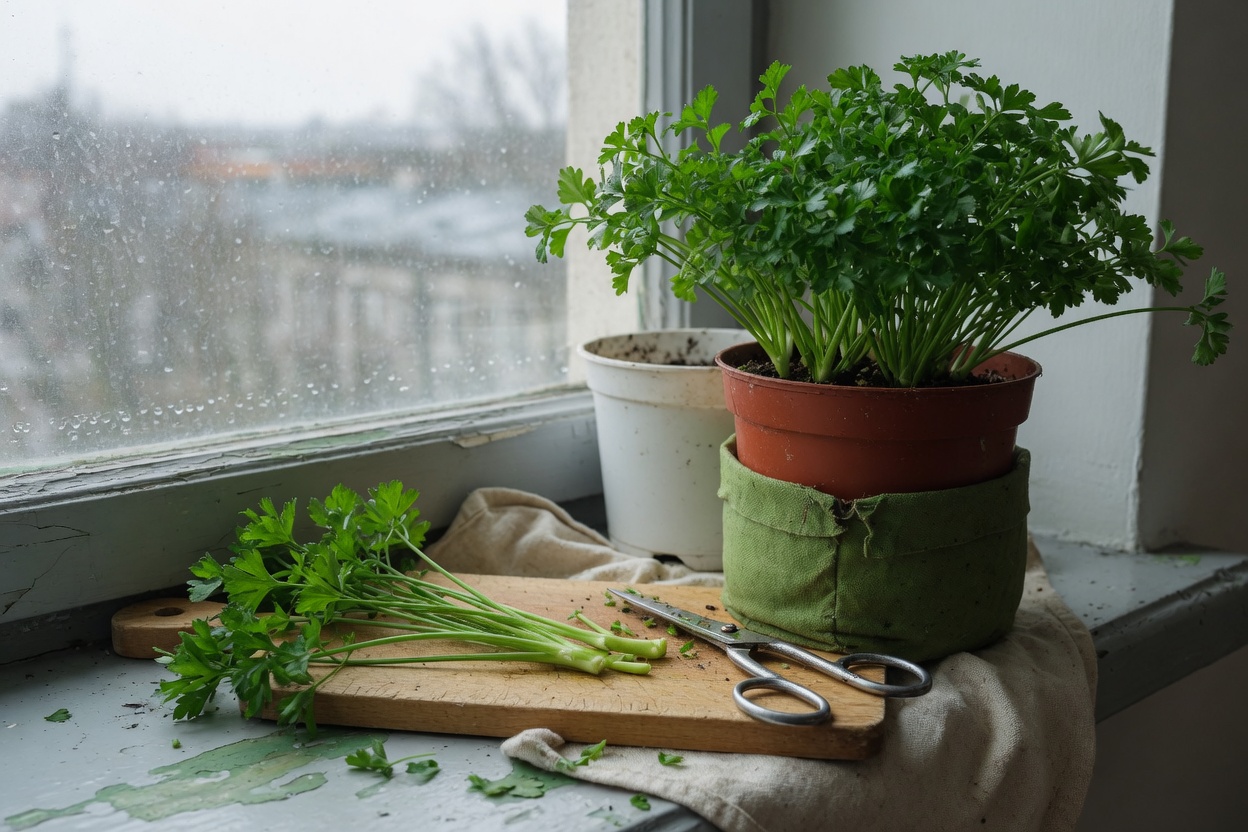
This is the habit that makes the plant last. Cut the outer stems, the older ones, at the base, and leave the center alone. The center is where the new growth comes from. Taking the tops off the whole plant, like you are mowing it, slows everything down.
Take a third at most at a time. You can use it fresh, and any extra goes in a glass of water on the counter like a bouquet, or chopped into an ice cube tray with a little water. Frozen, it is fine in cooked dishes, though not as a garnish.
Problems you may see
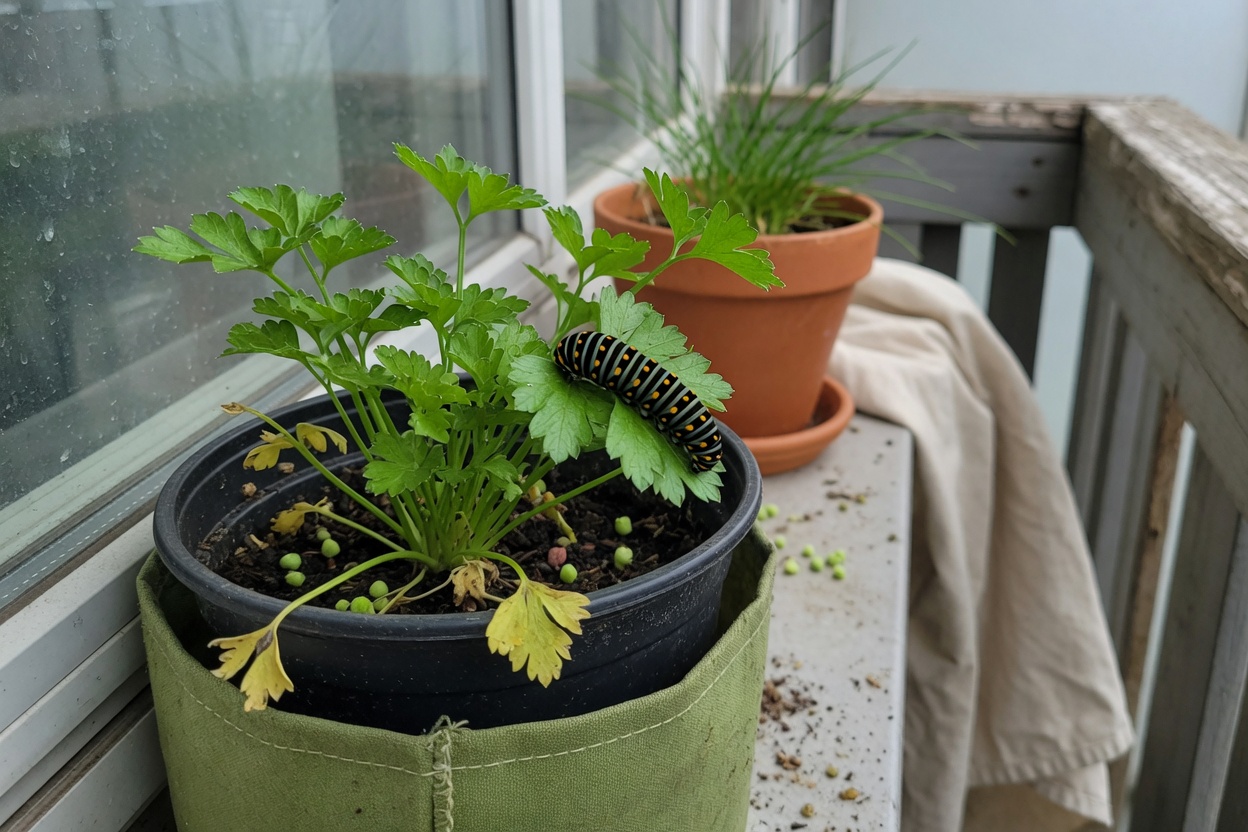
Yellow lower leaves usually mean too much water or a pot with no drainage. Let it dry a bit and check the holes.
Flowering stalks show up in the second year, because parsley is a biennial. Once it bolts the leaves turn bitter. Pull it and start fresh. That is normal, not a failure on your part.
Caterpillars. If you see fat green and black striped caterpillars on the stems, those are swallowtail larvae, and parsley is their food. I move them to a spare plant, or let them have a few stems if I have plenty, and I enjoy the butterfly in the spring. That is a small gentle pleasure, and I would not trade it.
What to grow it with
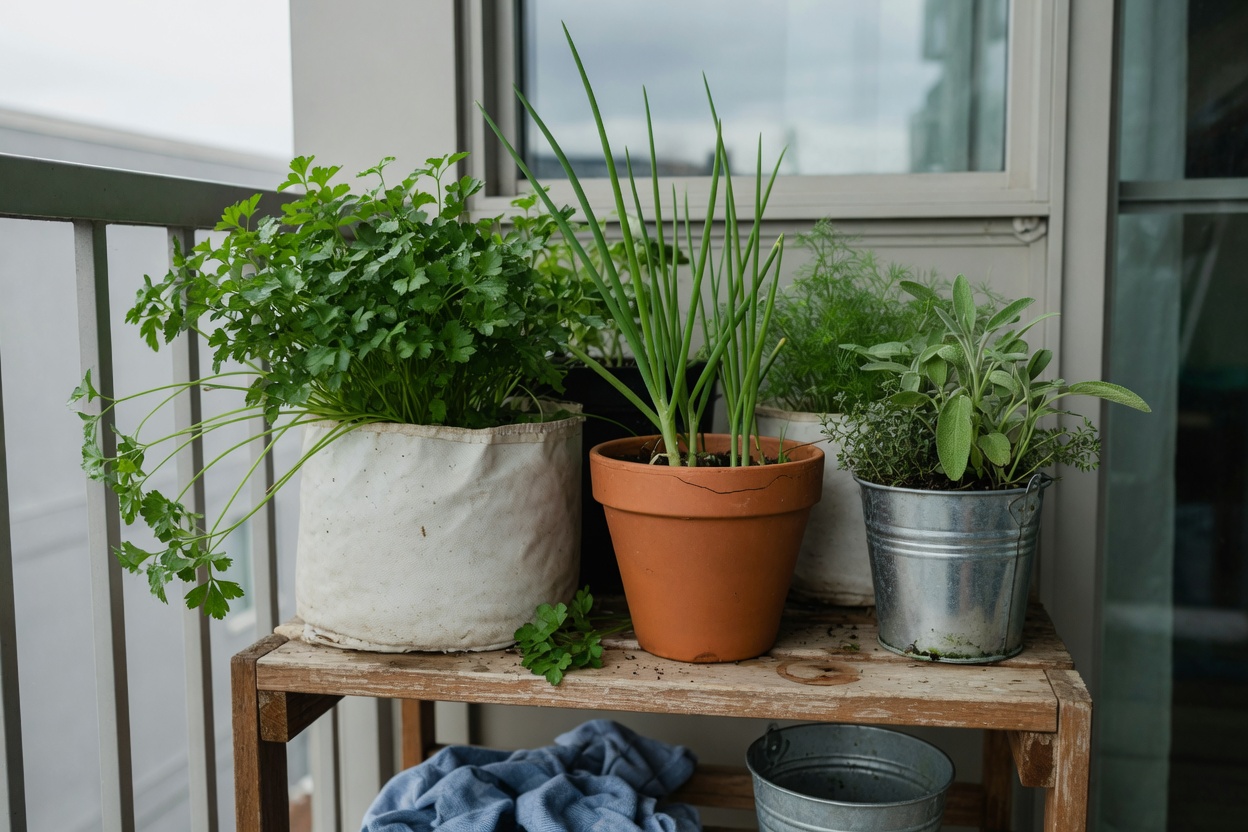
Parsley sits well beside the other things I keep in containers. If you want a second easy herb, how to grow scallions in containers is the same kind of project. For the full small-space system, I wrote Small-Space Big Harvest so a balcony the size of mine can feed you through a whole year.
