How to Grow Mache in Containers (Corn Salad on a Balcony)
Grow mache in containers on a balcony: when to sow in fall or February, how deep the pot needs to be, slow germination, watering, and harvesting whole rosettes.
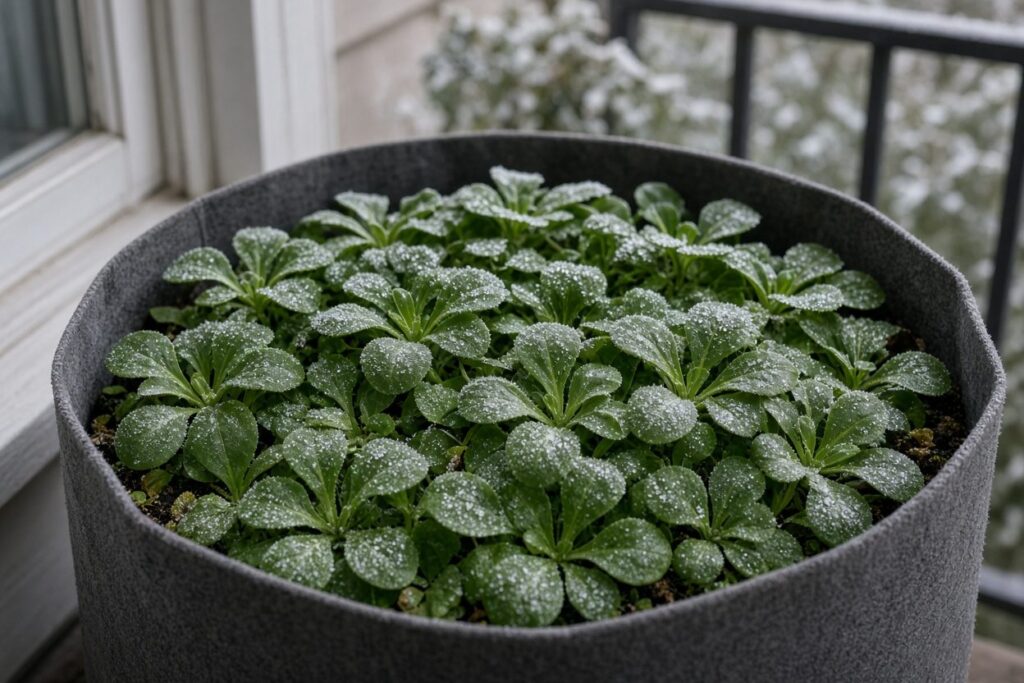
Last February I peeled a stiff, frosted pillowcase off the railing box and found the mâche underneath exactly as I’d left it in December: flat green rosettes no bigger than a coaster, completely unbothered by the cold snap that had flattened my parsley. I cut four of them for lunch with frost still melting off my fingers.
That’s the whole pitch for this plant. Mâche (you’ll also see it spelled mache, or called corn salad or lamb’s lettuce; the botanical name is Valerianella locusta) is a small, mild, faintly nutty salad green that grows in exactly the months when the rest of a balcony goes quiet. It isn’t fast and it isn’t a heavy cropper. But if you want something green to cut in January off a fire escape or a 6×10 balcony like mine, this is the one I’d hand you first.
The one thing I can’t link you is the seed. Pick up a packet from a garden center rack or a seed catalog; I’ll name the varieties I like below.
Honest pros and cons before you start
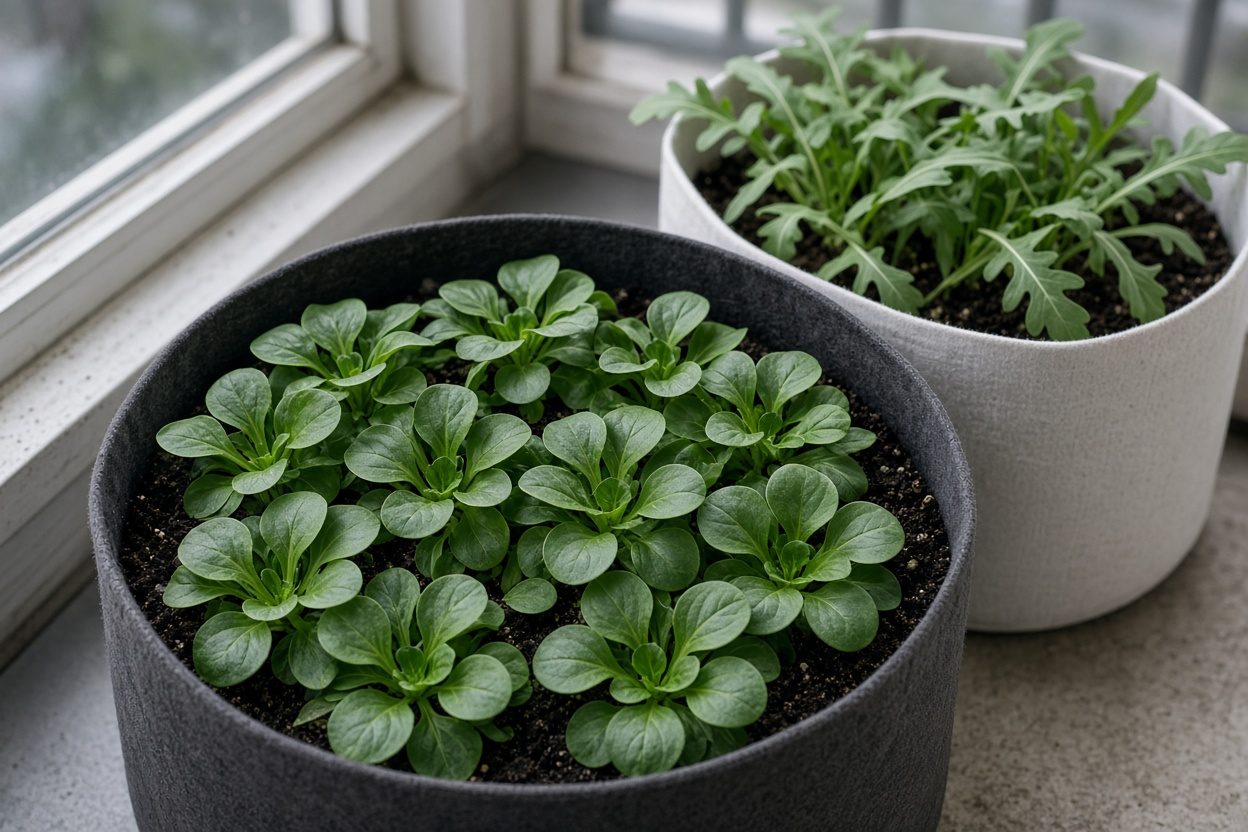
The good: mâche is one of the most cold-tough greens you can grow in a pot. In my Portland-area winters it shrugs off nights in the low 20s with nothing more than a sheet thrown over it. It’s happy in part shade, it needs almost no feeding, and it doesn’t get eaten by much of anything in the cold months. Otto, who treats every low pot as his personal salad bar, finds it boring. I count that as a feature.
The less good: it’s slow, and the yields are small. A 12-inch pot gives me about a dozen rosettes, and each rosette is a few spoonfuls of leaves. That’s three or four good side salads per pot, not a week of lunches. Germination can also be patchy if the soil is warm. And when the days lengthen and warm up in spring, it bolts and it’s done.
If you go in expecting a slow, steady, small harvest in the dead months, you’ll love it. If you want a salad bowl filled every night, grow it alongside arugula, which is faster and fills the gap.
When to sow: fall or February

Mâche wants cool soil to germinate, ideally somewhere around 50 to 60°F. Warm soil is the most common reason it doesn’t come up at all. That gives you two windows in a container.
Fall. Sow from late August through early October in the Pacific Northwest, about six to eight weeks before your first frost. The plants size up through autumn and then simply hold in the cold, so you harvest slowly all winter. If you’re reading this in November, a sowing now will still sprout, but it will sit small until the light comes back and give you an early spring crop rather than a winter one.
Late winter. This is the one I’d plan for right now. Sow in February, as soon as the pot isn’t frozen solid, and you’ll be cutting rosettes in April and early May before warm weather makes the plants bolt. In colder places, push that a few weeks later, into March. Your local extension office can tell you your frost dates in about two minutes.
For varieties, I’ve had good luck with ‘Vit’, which has slightly longer leaves and stands up to the damp, and ‘Verte de Cambrai’, a small, very hardy old French type. Either is fine for a pot.
The container and the mix
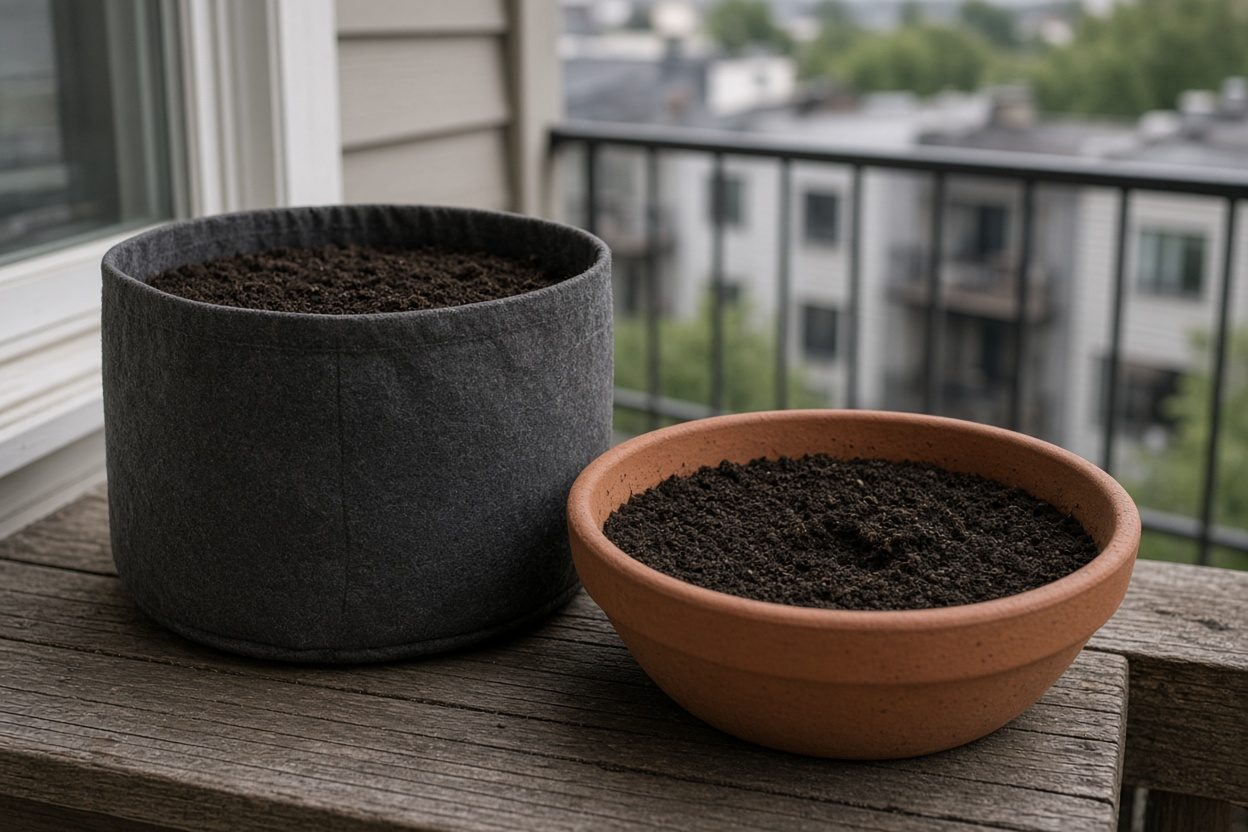
Here’s the thing about mâche: it has a short root system, so depth barely matters. Six inches of potting mix is plenty. What you want is surface area, because you’re growing lots of small plants close together.
A wide, low fabric grow bag is my favorite home for it. It drains quickly, which matters in a Pacific Northwest winter when the rain doesn’t stop for a week. A railing box or a shallow 12-inch terracotta bowl works too, as long as it has drainage holes. If you’re weighing bag against plastic, I compared them in fabric grow bags vs. plastic pots.
Fill it with potting mix and stir in a small handful of Garden-Tone before you sow. That’s the only feeding I do for the whole season. Mâche grows slowly in the cold and doesn’t use much, and too much nitrogen just makes it soft.
Sowing and the slow germination
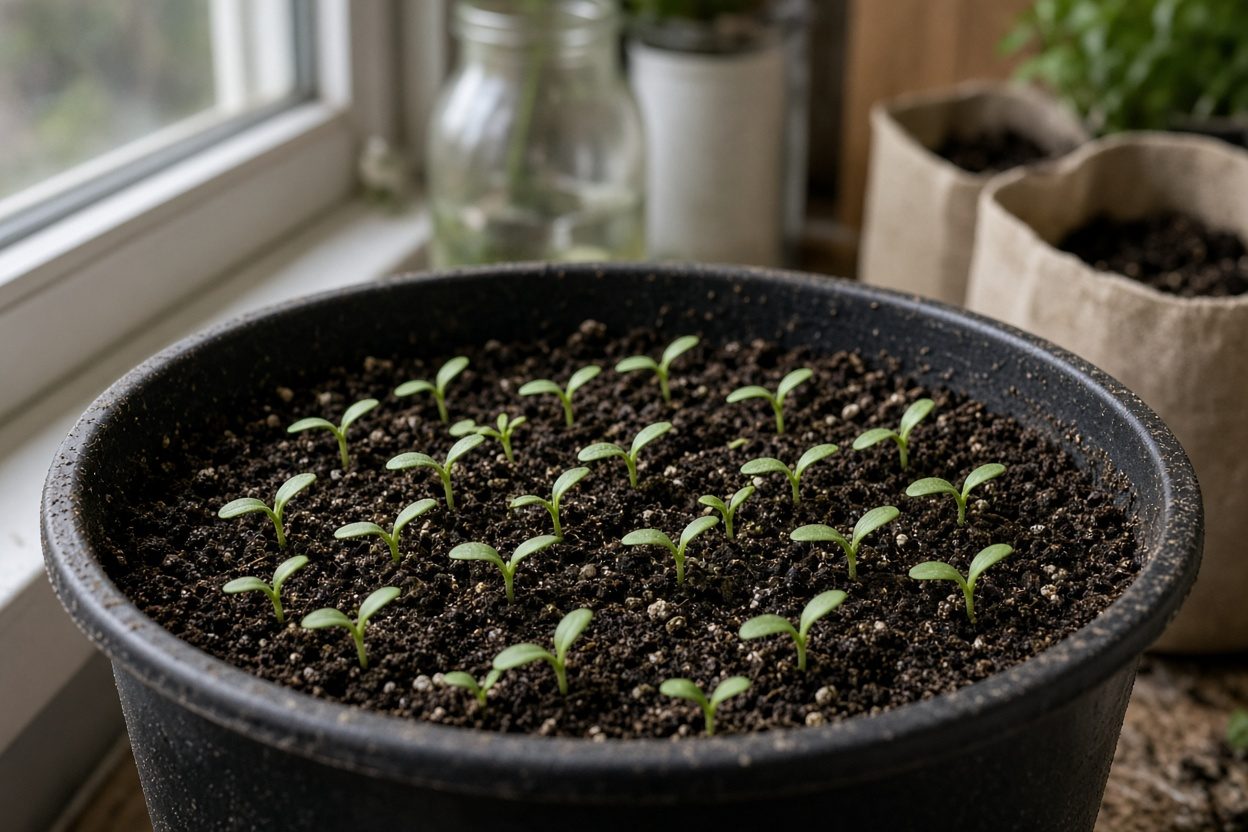
Scatter the seeds about an inch apart across the surface and cover them with a quarter to a half inch of mix. Mâche likes darkness to germinate, so don’t leave the seed sitting on top. Press the surface gently with your palm, then water with a long-spout can so the stream is soft.
Then wait. In cool soil you’ll usually see the first pairs of narrow seed leaves in one to two weeks, and it can stretch to three. This is where I went wrong my first year. I decided the seed was dead after ten days, dumped the pot, and resowed with something else. The mâche came up anyway, mixed in with the radishes.
Once the seedlings have a few true leaves, thin them to about three or four inches apart. Crowded mâche stays tiny. The thinnings are edible, so rinse them and toss them on whatever you’re having.
Watering in the cold months
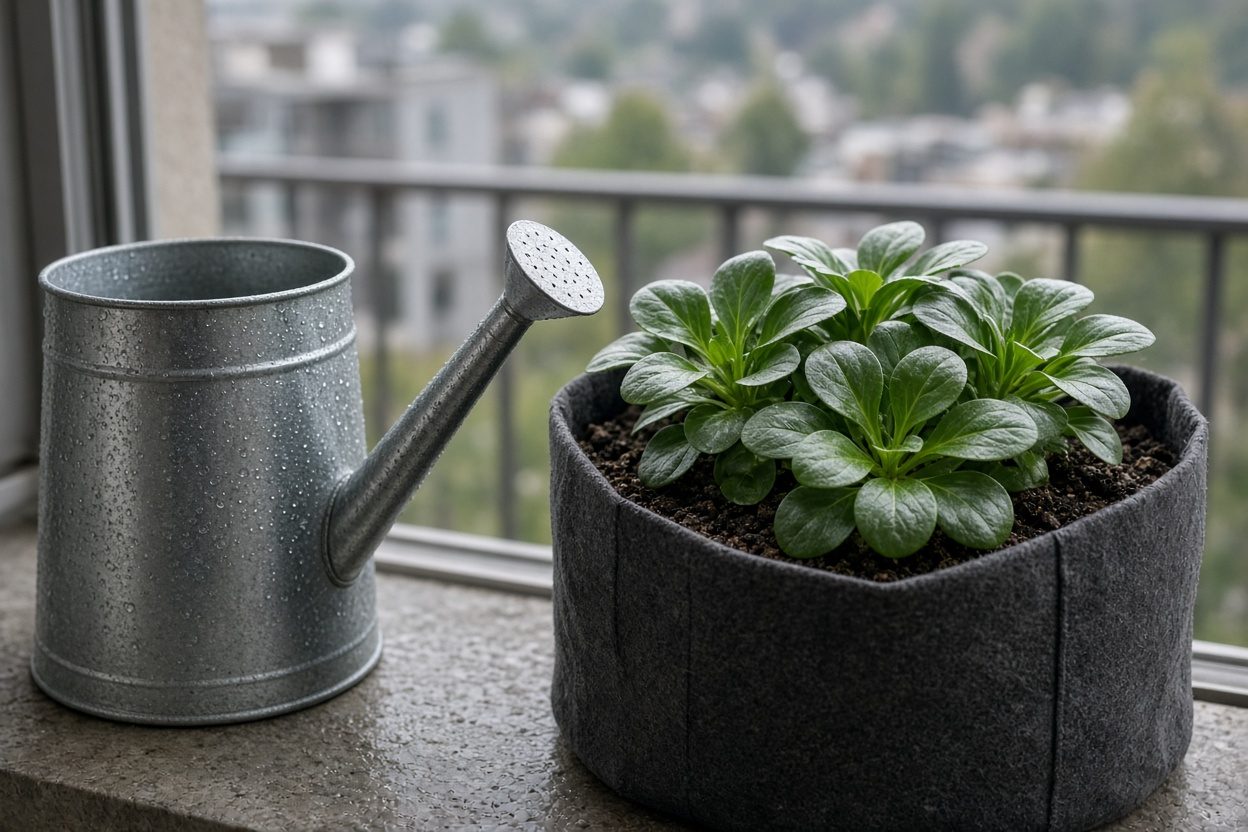
Winter watering is mostly about restraint. A pot of mâche in November or January loses very little water, and a soggy pot in cold weather is how you get rot at the crown. Check before you pour, every time.
I push a soil moisture meter down to root level, which for mâche is only two or three inches. If it reads damp, I leave the pot alone, even if the surface looks dry. Water in the morning on a mild day so the pot isn’t sitting wet through a freezing night. I wrote more about this rhythm in how to water container plants in winter.
The meter isn’t perfect. Mine reads a little high in very fine mix, and it’s one more thing to keep track of. But it has saved more of my winter pots than my finger has.
Frost protection, if you want it

Mâche doesn’t need much. In my experience it handles light frosts bare and only sulks in a hard freeze. When the forecast drops into the teens, I move the pot close to the house wall and drape an old pillowcase or a piece of frost cloth over it overnight. That’s the whole routine. If you’d like the fuller toolkit, it’s in how to protect container plants from frost.
One small thing: don’t harvest frozen leaves. Wait until they’ve thawed on the plant, usually by late morning, or they’ll go limp and glassy in the bowl.
Harvesting whole rosettes
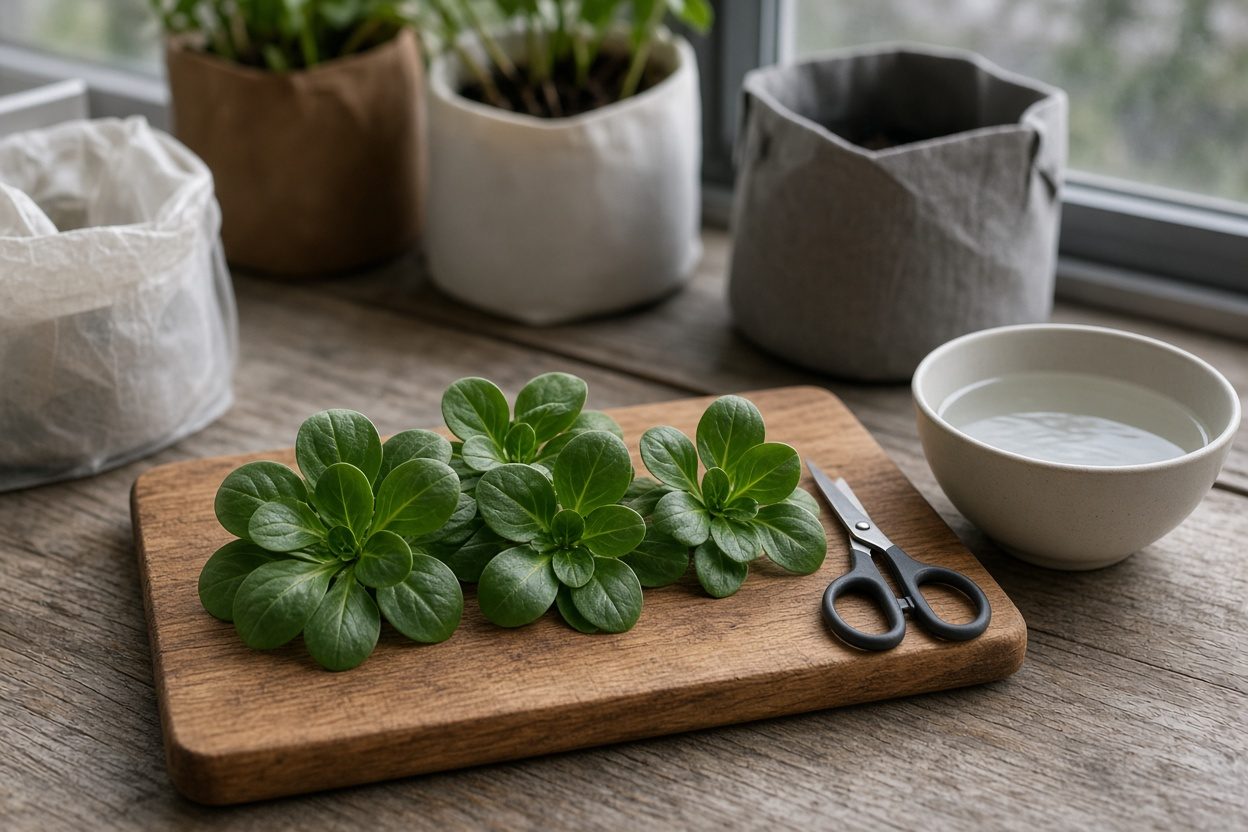
Mâche is ready when the rosettes are about three to four inches across, usually six to eight weeks after sowing in fall and a bit faster in spring. Unlike spinach, it isn’t really a cut-and-come-again green. You harvest the whole rosette.
Slide small scissors or a knife just under the rosette at soil level and lift it out in one piece. Leave the neighbors to keep growing, and pick from the crowded spots first. Grit hides deep in the center, so swish the rosettes in a bowl of cold water twice. They’re tender, mild, and a little buttery, and they’re best dressed simply. My grandmother would have put them next to a boiled potato with a bit of butter and dill, and honestly that’s still how I like them.
When it bolts
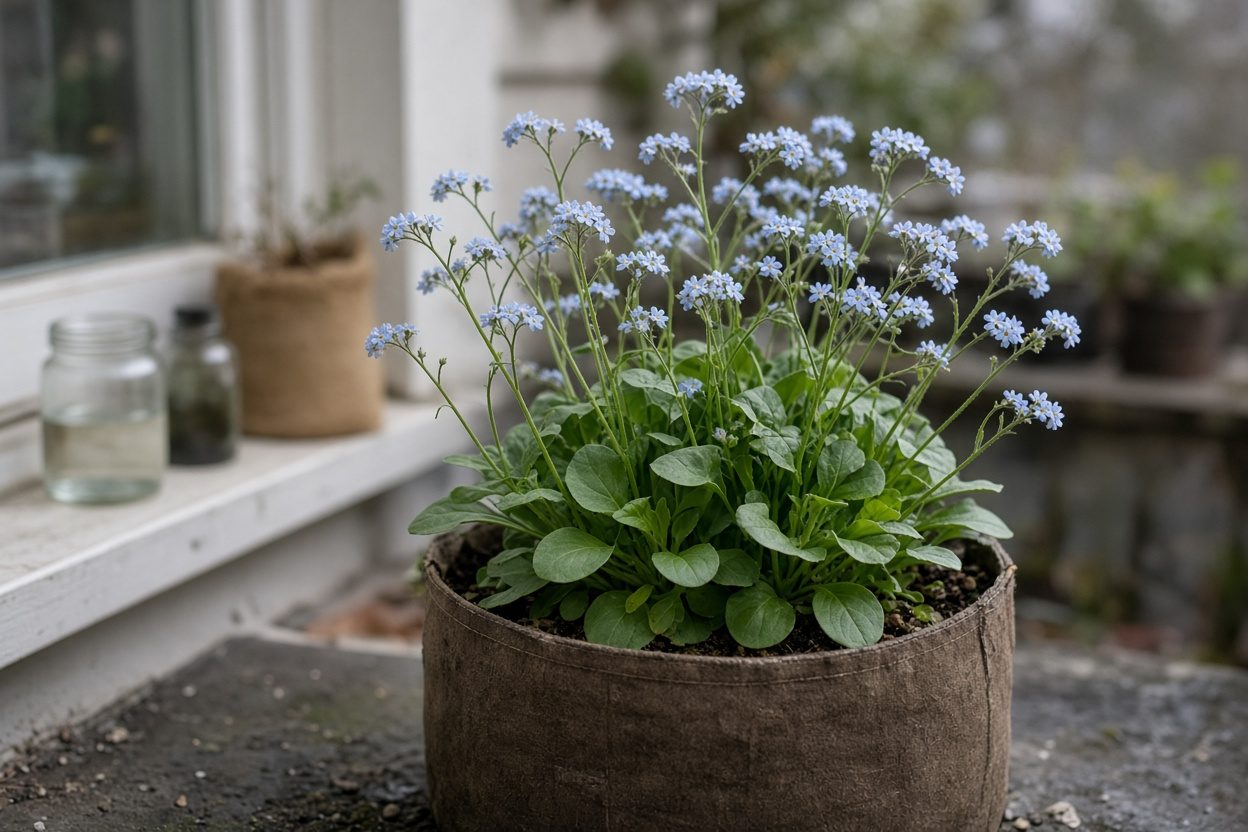
As spring warms and the days stretch, the center of each rosette lifts on a stalk and tiny pale-blue flowers appear. The leaves turn tougher and a little bitter after that. Harvest everything that’s left as soon as you see the rosettes start to stand up.
You can also let one or two go to seed. Mâche self-sows readily, and a pot left alone on the balcony through summer will often surprise you with a fresh crop in fall.
If you’d like a bigger plan for keeping a few pots productive through every season, cold months included, I lay it out in my book, Small-Space Big Harvest. It’s the planting calendar and the pot-by-pot thinking I wish I’d had on that first fire escape.
