How to Grow Kohlrabi in Containers on a Small Balcony
How to grow kohlrabi in containers: when to sow, how many fit in a pot, steady watering for sweet bulbs, and when to harvest. A quick spring crop for balconies.
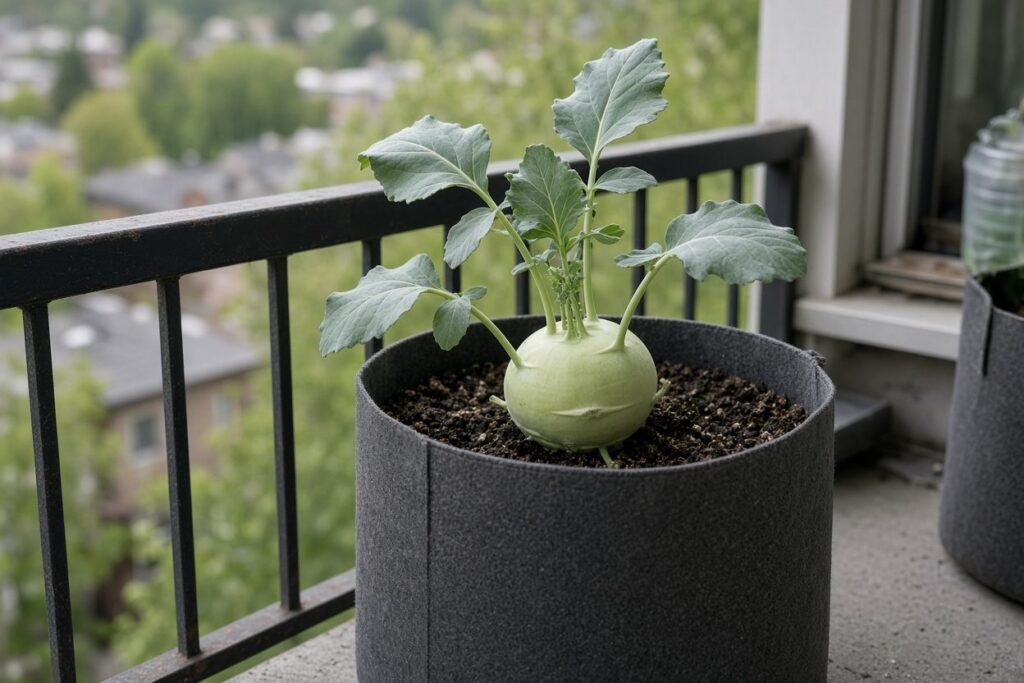
Kohlrabi started as a dare. A grower at the Saturday market handed me a pale green globe with leaf stems poking out of it like antennae and said I could grow one in a window box, and I went home a little skeptical.
She was right. Kohlrabi turned out to be one of the most balcony-friendly vegetables I grow. It’s fast, about seven to eight weeks from seed. It’s compact. And it’s forgiving in the cool, gray spring weather that makes tomatoes sulk. If you’ve never eaten one, picture the sweet, crisp heart of a broccoli stem, with a little radish snap. Here’s how I grow it in pots.
Why kohlrabi suits a small space
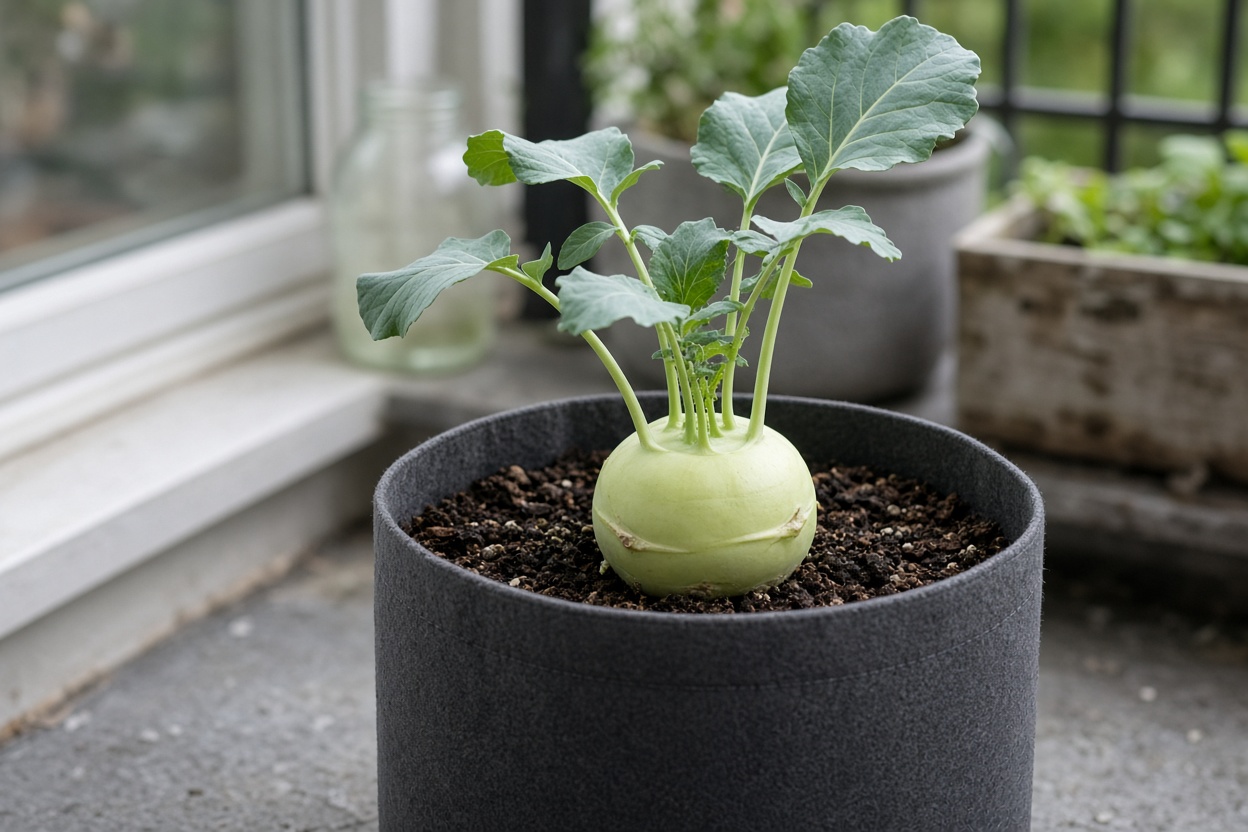
Kohlrabi is a cabbage-family plant, but you don’t wait months for a head. The part you eat is the stem, swollen into a round bulb that sits right on top of the soil. That means it doesn’t need a deep pot, and it doesn’t sprawl.
It’s quick. Most varieties are ready 45 to 60 days from sowing. You can fit a spring crop and a fall crop into one balcony year.
It’s small. Each plant needs about 5 inches of space. A 5-gallon grow bag, roughly 12 inches across, holds four or five.
It’s cool-weather tough. It grows best between about 45 and 75°F and shrugs off a light frost. On a Portland-area balcony that makes it a March and April crop, when not much else is ready to go outside.
Choosing a variety

For containers, I stick to the standard, tennis-ball-size types. ‘Kolibri’ is a purple hybrid that’s quick and dependable. ‘Winner’ and ‘Early White Vienna’ are pale green and just as good. Purple and green taste the same once peeled, so pick the one that makes you happy to look at it.
Skip the giant storage types like ‘Kossak’ for now. They’re bred to grow huge and they need a big pot and a long season. Lovely, but not where I’d start.
Starting seeds
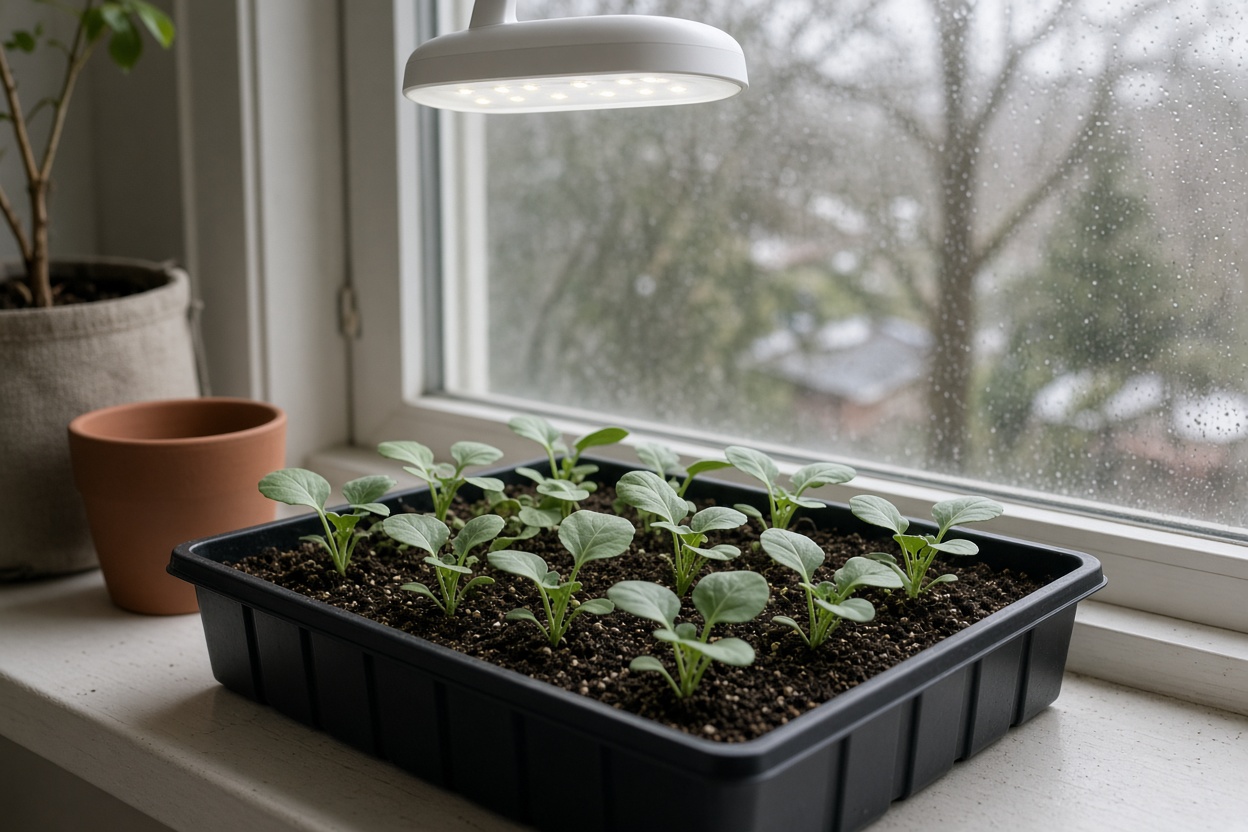
You can sow kohlrabi straight into the grow bag, but I get better, earlier plants by starting them indoors.
1. About 4 to 6 weeks before your last frost, sow seeds a quarter inch deep in damp seed-starting mix. For me, that’s late February.
2. Put them under a light right away. I hang a clip-on grow light a few inches above the tray for about 14 hours a day. Brassica seedlings stretch fast on a windowsill, and a leggy kohlrabi seedling never quite catches up.
3. Keep them cool. Once they’ve sprouted, a room in the low 60s is perfect.
4. Harden them off for a week before they go outside full time. My notes on hardening off seedlings on a balcony walk through it.
They’re ready to move out when they have three or four true leaves, two to three weeks before your last frost.
Planting the container

Fill a fabric grow bag with potting mix, not garden soil. Garden soil packs down in a pot and drowns roots. If you’re curious why I like fabric over plastic for spring crops, I compared them in fabric grow bags vs. plastic pots.
Mix a small handful of Garden-Tone into the top few inches, following the bag. Set the seedlings about 5 inches apart, at the same depth they sat in the tray.
Don’t bury the stem. This is the one planting mistake that matters. The bulb forms just above the soil, and if you plant too deep it can rot or never round out.
Give the pot at least six hours of sun. Kohlrabi will take a little afternoon shade in a warm spell, but a dim north balcony makes small, slow bulbs.
Water steadily, and the bulbs stay sweet

Kohlrabi tells you everything about how you watered it. Steady, even moisture gives you a crisp, sweet bulb. Dry spells followed by a soaking make bulbs crack, or turn them tough and woody.
Fabric bags dry faster than plastic, which is the tradeoff for good drainage. I check every morning by pushing a finger an inch into the mix. If it’s dry, I water slowly with the long-spout can until it runs out the bottom. In a cool April, that’s every two or three days. In a warm May, it can be daily.
If cabbage worms show up (small green caterpillars and the pale white butterflies that lay them), I pick them off by hand and check under the leaves twice a week. A piece of lightweight row cover clipped over the bag stops them entirely if you’d rather not.
When to harvest

Harvest kohlrabi when the bulb is 2 to 3 inches across, about the size of a tennis ball. This is the part I got wrong my first year. I waited for them to get impressive, and they got woody instead. Bigger is not better here.
Cut the bulb off just below the swelling with a sharp knife. Peel the outer skin, which can be tough, especially on purple types. Inside, it’s white, crisp, and juicy.
The leaves are good, too. Young ones cook up like a mild collard green.
How I eat it

Raw, mostly. I slice it thin with a little salt and lemon, or shred it into a slaw with carrot and apple. It’s the first crisp, fresh thing off my balcony in spring, and it disappears fast. Roasted in wedges with olive oil, it goes sweet and a little nutty.
What I got wrong
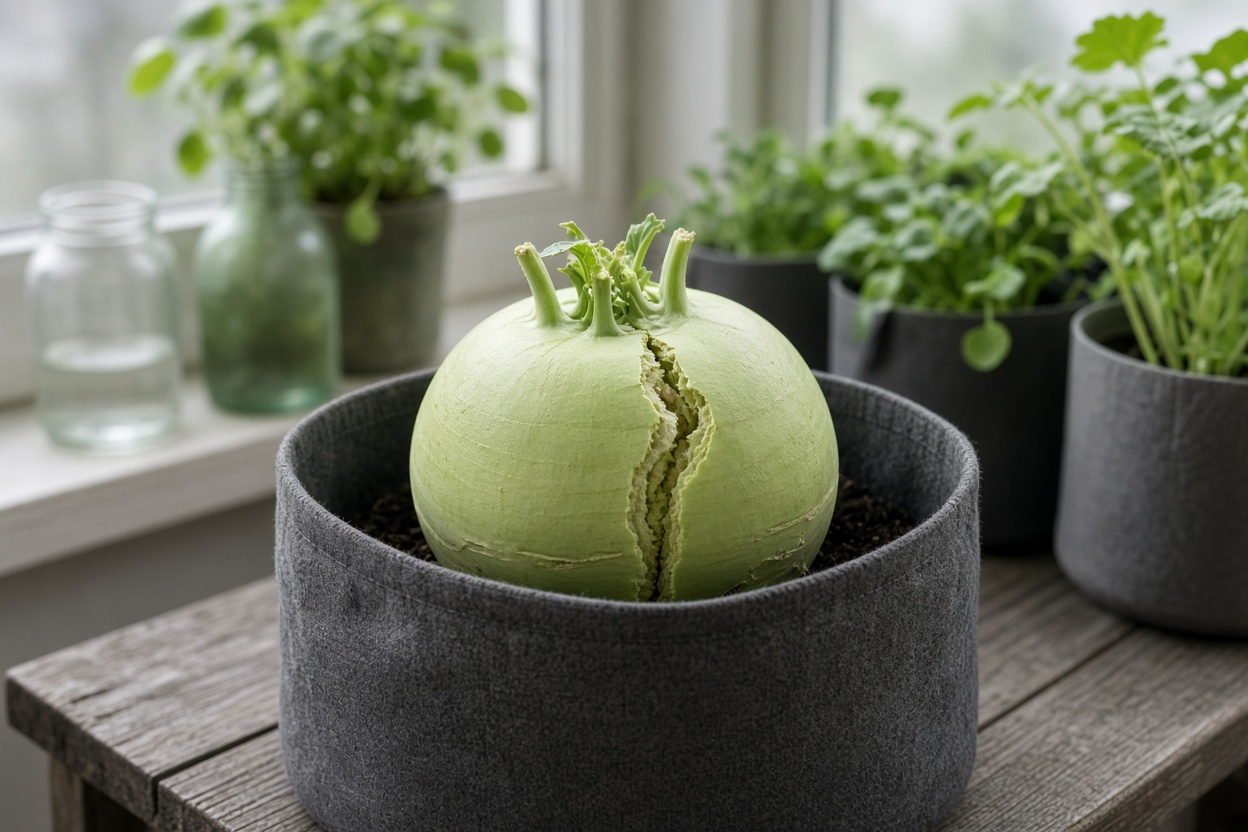
I planted too deep. I let them dry out on the first warm weekend in May and got two split bulbs. And I waited too long, so they turned woody. All of those are easy to fix, which is why I’d hand kohlrabi to any first-year container gardener without a second thought.
If you’d like a plan for what else to grow in pots across the whole year, cool-season crops included, I lay it out in my book, Small-Space Big Harvest. And if kohlrabi wins you over, its cousins are next: my notes on growing cabbage in containers and growing broccoli in containers are good places to go from here.
