How to Grow Kale in Containers (Even Without a Yard)
How to grow kale in containers on a balcony or patio — the right pot size, the best cold-hardy varieties, and why kale gets sweeter after the first frost.
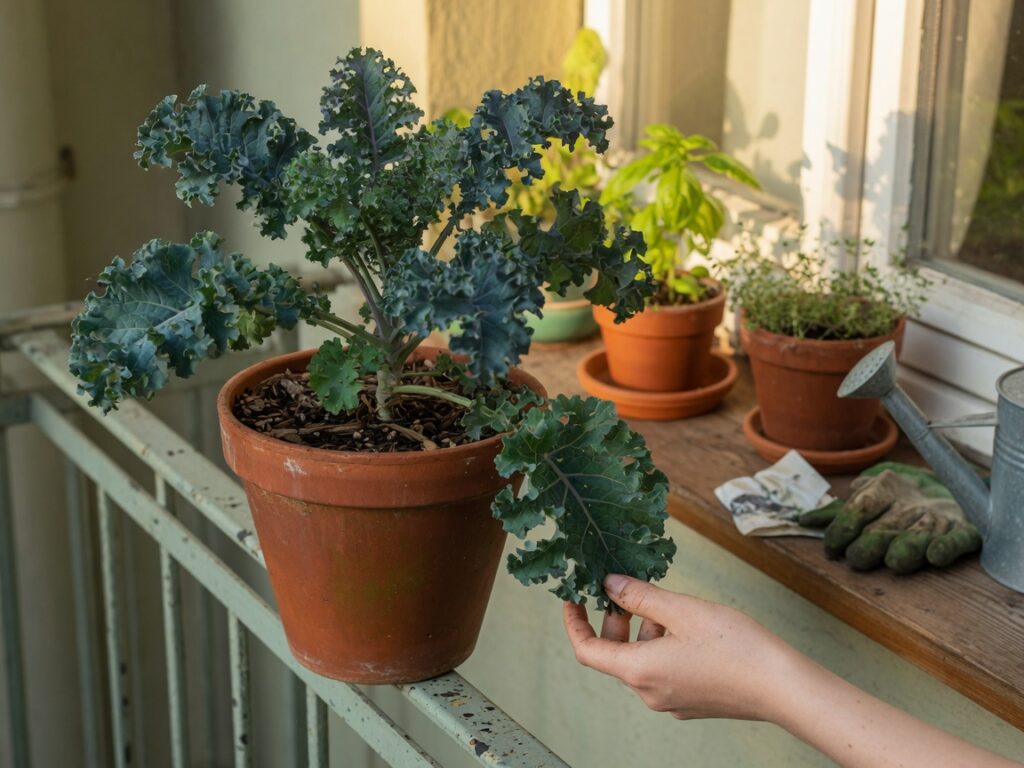
Kale is the plant I’d hand to anyone nervous about growing food on a balcony. It’s hard to kill, it doesn’t mind a pot, and it gives you something to pick for months instead of a single harvest and done. On my little Portland balcony I’ve had a grow bag of it feed us leaf by leaf from October clear into February, through frost and drizzle and the kind of gray week when nothing else out there wants to grow.
Here’s the part that surprises new gardeners: kale actually gets better in the cold. A frost that flattens your basil turns kale sweeter, because the plant makes its own sugars to keep from freezing. So a container of kale isn’t a summer project you’re late for — it’s exactly the right thing to start now, for the season when your balcony would otherwise be bare.
You don’t need a yard for any of this. A single deep pot on a patio, a grow bag by the railing, a windowbox that gets a few hours of sun. Kale scales down to a container beautifully, and I’ll walk you through the whole thing.
Pick a pot with room to grow
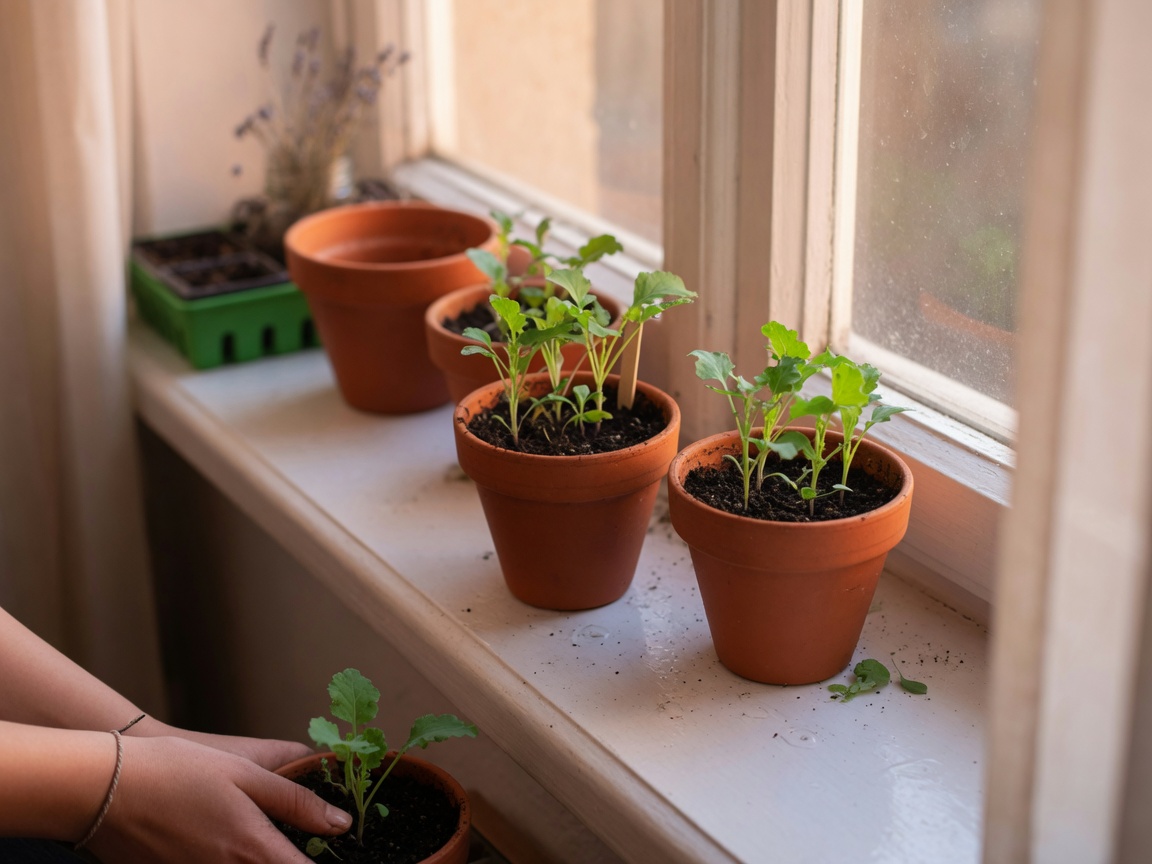
Kale gets bigger than beginners expect. A mature plant can stand two feet tall and just as wide, so the single biggest mistake I see is a pot that’s too small. Give each plant real root room.
My rule: one kale plant per 5-gallon fabric grow bag, or a couple of plants in a wide, deep container of ten gallons or more. Depth matters more than width — you want at least 10 to 12 inches for the roots. A grow bag is what I reach for because it drains freely and you can tuck it anywhere; I go into why over on fabric grow bags vs. plastic pots if you’re deciding. Fill it with a real potting mix, not garden soil — potting mix stays light and drains, and heavy soil in a pot just packs down and drowns the roots.
Make sure whatever you use has drainage holes. Kale in standing water sulks and yellows, and once it does, it’s slow to forgive you.
Choose a variety that shrugs off the cold
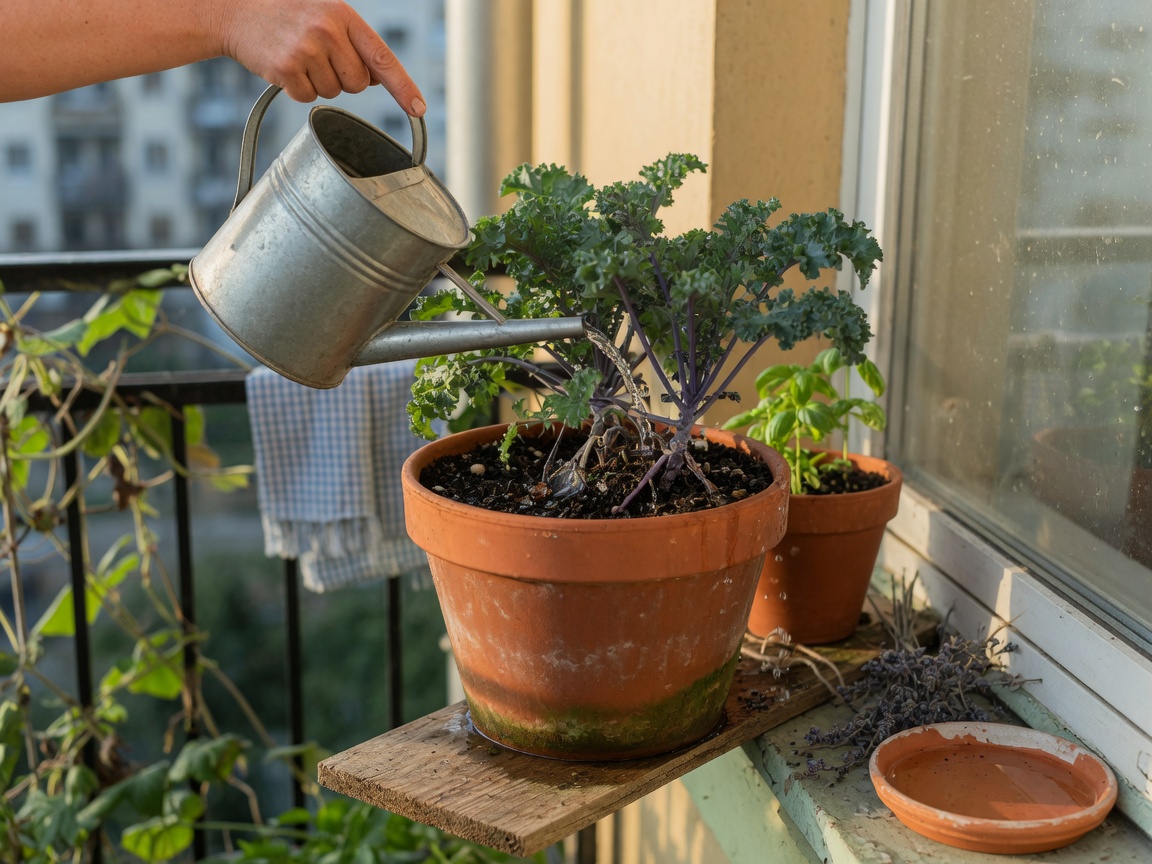
You have two easy paths: seeds or a starter plant from the nursery. In late summer and fall, I’d grab a few starts — you get a head of way sooner, and one healthy start per bag is plenty. From seed, kale sprouts readily and you can start it right in the container; just thin to the strongest seedling once they’re up.
For variety, the cold-hardy ones earn their place on a fall balcony. Lacinato (you’ll see it as dinosaur or Tuscan kale) has those dark, bumpy, flat leaves and handles cold beautifully. Red Russian is tender, mild, and gorgeous with purple stems — my favorite for eating raw. Winterbor and Dwarf Blue Curled are the classic ruffled types and about the toughest things you can grow through a freeze. Any of them will carry a pot deep into winter. If you want the fuller list of what survives a cold patio, I keep one on my best cold-hardy vegetables for fall containers rundown.
Light, water, and feeding — the balcony version
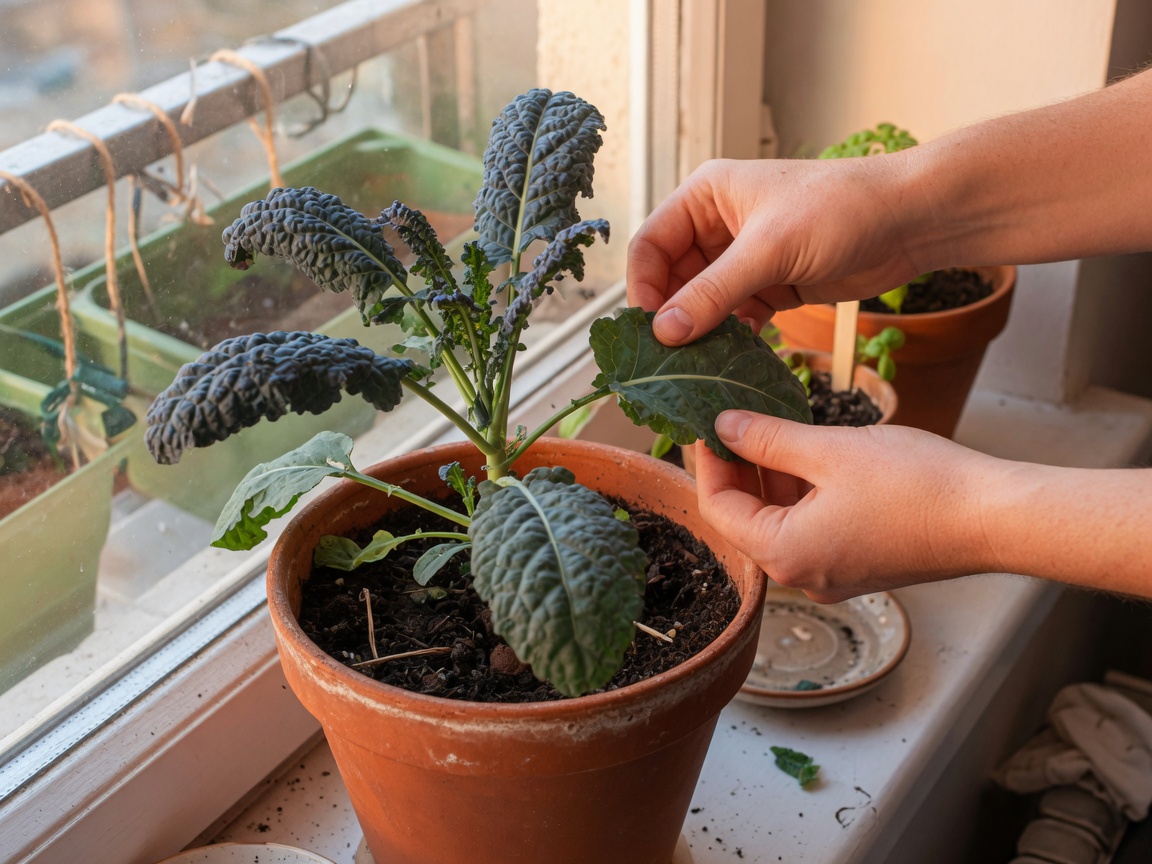
Kale wants sun but forgives some shade. Six hours is ideal; it’ll still produce on four, just more slowly and with smaller leaves. On a north-facing balcony that gets two hours, kale is one of the few food plants that’ll give you anything at all — pick the leafy greens and skip the fruiting crops.
Water is where container growing differs most from a garden bed. Pots dry out fast, faster than the ground ever does, and kale wants steady moisture. But steady isn’t the same as constant-wet — that’s the trap. I check with a soil moisture meter rather than guessing, because the top inch can look dry while it’s still plenty damp down where the roots are, and a probe reading saves you from the overwatering that quietly rots more container plants than any cold snap. Water when the meter (or your finger, two knuckles down) says the pot is drying, and water deeply with a long-spout can until it runs from the bottom.
Feed lightly. Kale is a leafy crop, so it likes a little nitrogen — a balanced liquid feed every couple of weeks through the growing stretch keeps the leaves coming. Ease off once hard cold sets in and the plant slows down. It’s resting, not failing.
Harvest the right way and it keeps giving
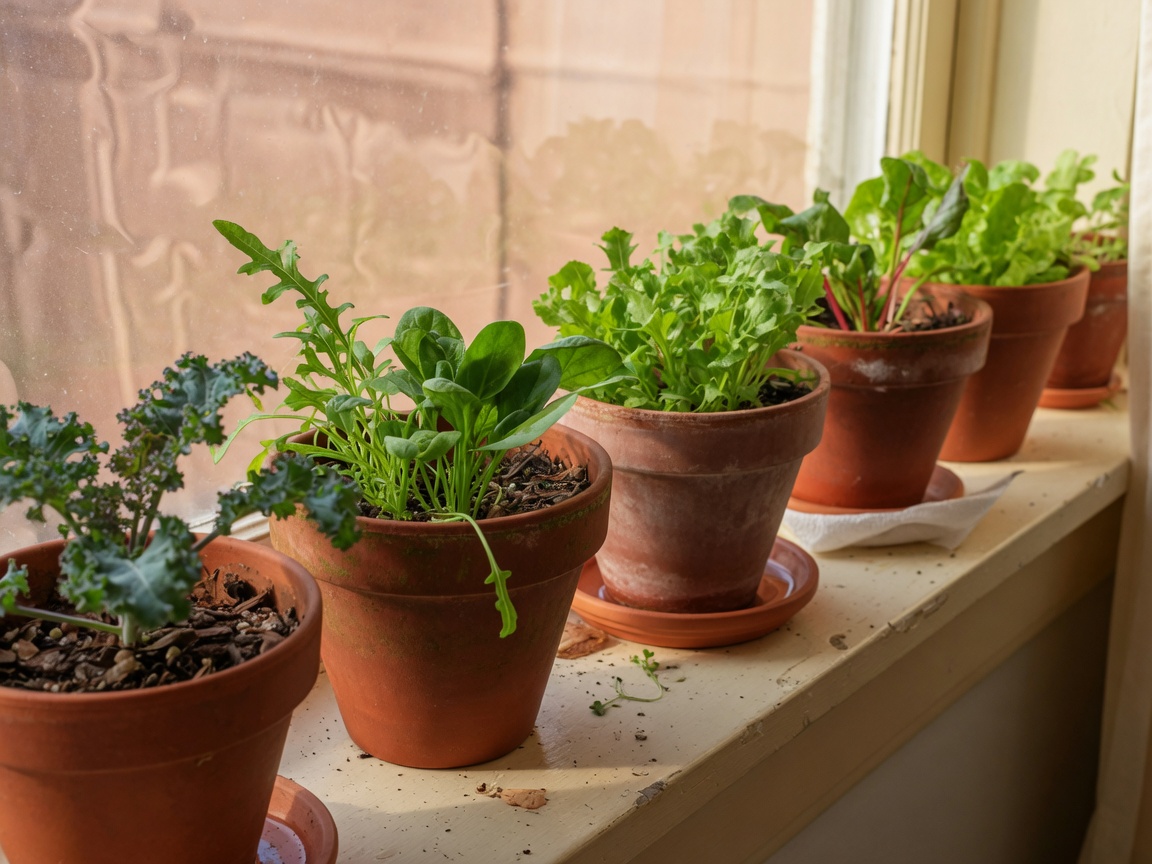
This is the payoff, and the trick is simple: pick from the bottom, never the top. Kale grows from a central point up top, so you take the lowest, oldest, biggest leaves — snap or cut them off close to the stem — and leave the small ones at the crown to keep growing. Do that and a single plant produces for months, going a little taller and more palm-tree-ish as the season goes.
Take no more than about a third of the plant at once and it’ll bounce right back. My scruffy terrier, Otto, is convinced anything I harvest into a bowl is for him, so I’ve learned to pick straight into the colander and keep moving. After the first real frost, taste a leaf raw — that’s when the sweetness shows up, and it’s the reason kale is the one thing I actually look forward to picking in December.
A small productive thing for the cold months
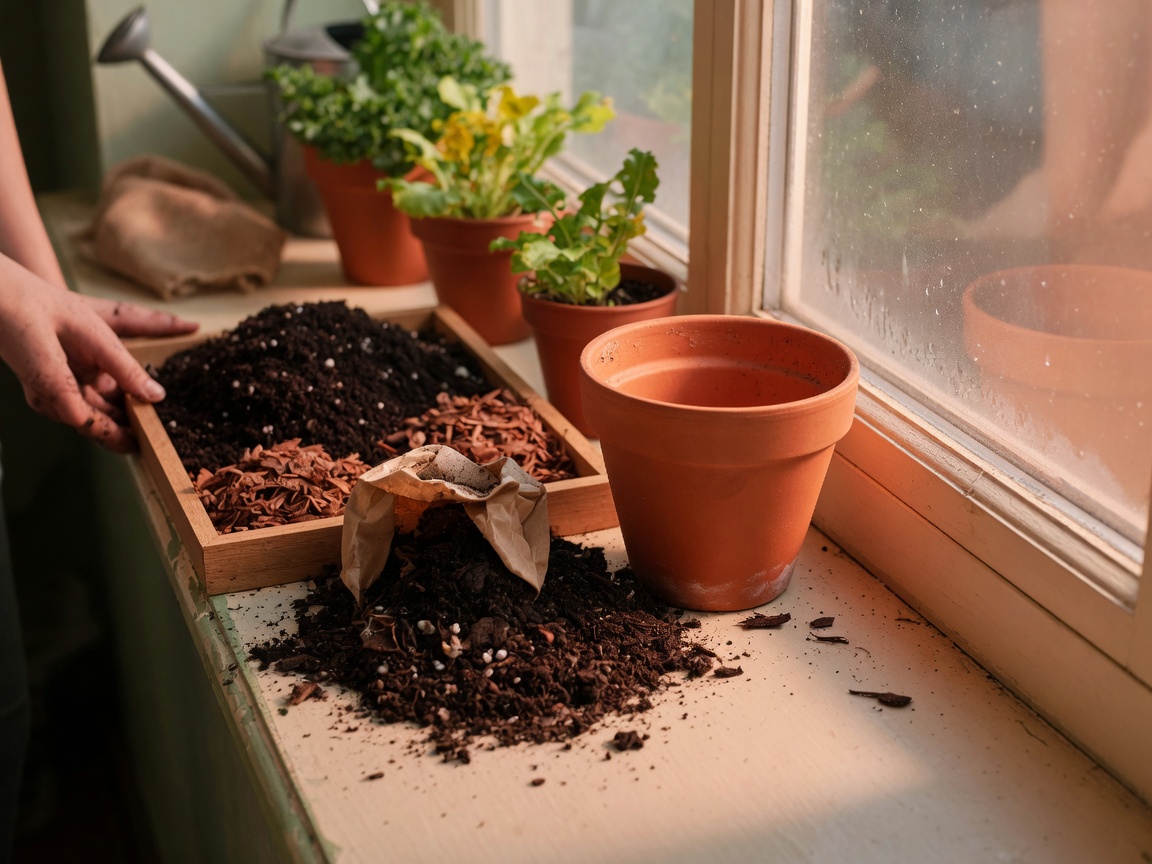
That’s the whole of it. A deep pot, a cold-hardy variety, steady-not-soggy water, and a little patience — and you’ve got fresh greens coming off your own balcony while everything around you has gone quiet for the winter.
If you want the container-by-container playbook for stretching a small space across all four seasons, that’s the heart of my book, Small-Space Big Harvest — real yields from balconies and patios, without a yard in sight. Kale is a lovely place to start. Once you’ve wintered a pot of it, you’ll want to fill the rest of the railing too.
