A Fishing Gift for a Grandchild: A First Kit and a First Day
A fishing gift for grandchild that lasts: a simple first kit, a short first trip to the pond, and the safety basics, from a granddaddy who has done it.
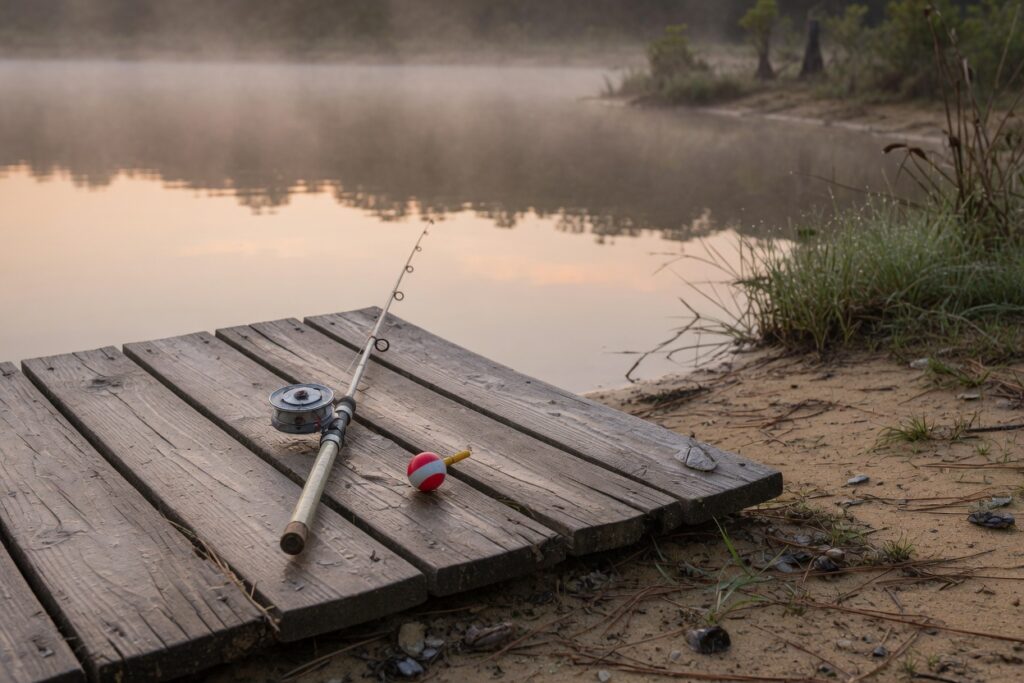
The best gift I ever gave my granddaughter Ruby did not come in a box. It was a Saturday morning in May, a pond bank still wet with dew, and a little red-and-white bobber that went under while she was looking at a butterfly. She squealed loud enough to scare every fish in the cove, and she has asked to go back every week since.
That is what a fishing gift for a grandchild really is. The rod and the tackle are only the wrapping. The gift is the hour you spend beside them on the bank, with nowhere else to be, and a first kit simple enough that nothing gets in the way of the fun.
With the holidays coming, October is a good time to start gathering a kit, so you have it ready and wrapped. A child can open it at the table, and you can promise a trip to the pond when the weather turns kind, or the first warm weekend of spring. Here is how I would put it together, and how I would plan the first day.
From the bait shop or the hardware store, you will also want a small pack of size 8 or 10 hooks, split-shot sinkers, a tub of red worms or crickets, and a child-sized life vest. Those four I leave unlinked, because any honest version of them will do.
Why a push-button combo is the right first rod

I have put cane poles in a lot of small hands, and I will tell you a cane pole is still a fine teacher. But a child who gets a rod and reel of their own feels like a real fisherman, and that matters more than you would think. The Zebco 33 is the kind of combo I have handed to grandchildren and neighbors’ children for years. You press the button with your thumb, swing the rod, and let go at the top of the swing. There is no bail to flip and no spool to backlash.
It is not perfect, and I would not tell you otherwise. The line will twist and curl after a few trips, and you will want to pick off tangles now and then. A child will also let go of the button too late and send the bobber straight up, or too early and drop it at their feet. Both are normal, and both make for laughing. It is a beginner reel, and it will not grow with a child into serious fishing. Most children will outgrow it in a few seasons, and that is a fine problem to have.
Keep the rod’s job small. Teach a short, gentle underhand swing to a spot about ten feet out, and nothing more. If you want to see how I sort out rods for little ones, I wrote about it in the best beginner fishing gear you actually need.
Bobbers, hooks, and the rig that fits in a pocket

The bobber is the real toy in this kit. A child cannot feel a bluegill nibbling, but they can watch a red-and-white float twitch, dance, and finally slide under the water. The snap-on floats are easy for a grown-up to clip on the line at the right depth, and they come off just as easily when you want to change it. Their downside is that a hard pull can slip them if you do not snap them on firmly, and the little ones are easy to drop in the grass. That is the argument for a twelve-pack.
Here is the rig. Clip the bobber on about a foot and a half above the hook, pinch a single split-shot a few inches above the hook, and tie on a small hook, size 8 or 10. A bluegill has a small mouth, and a big hook will only mean missed bites and a sad child. For bait, a piece of red worm the size of a thumbnail is hard to beat.
Now the safety part, and I do not skip it. Pinch the barb on every hook flat with a pair of pliers before you ever leave the house. A barbless hook slides out easily from a fish, and from a shirt, a hat, or a grandfather’s ear. You will lose a fish or two that you would have landed with a barb, and I will take that trade every time a child is swinging a rod beside me. If you want the full method for the little panfish this rig is built for, I laid it out in how to catch bluegill for beginners.
Planning the first trip, which is the real present
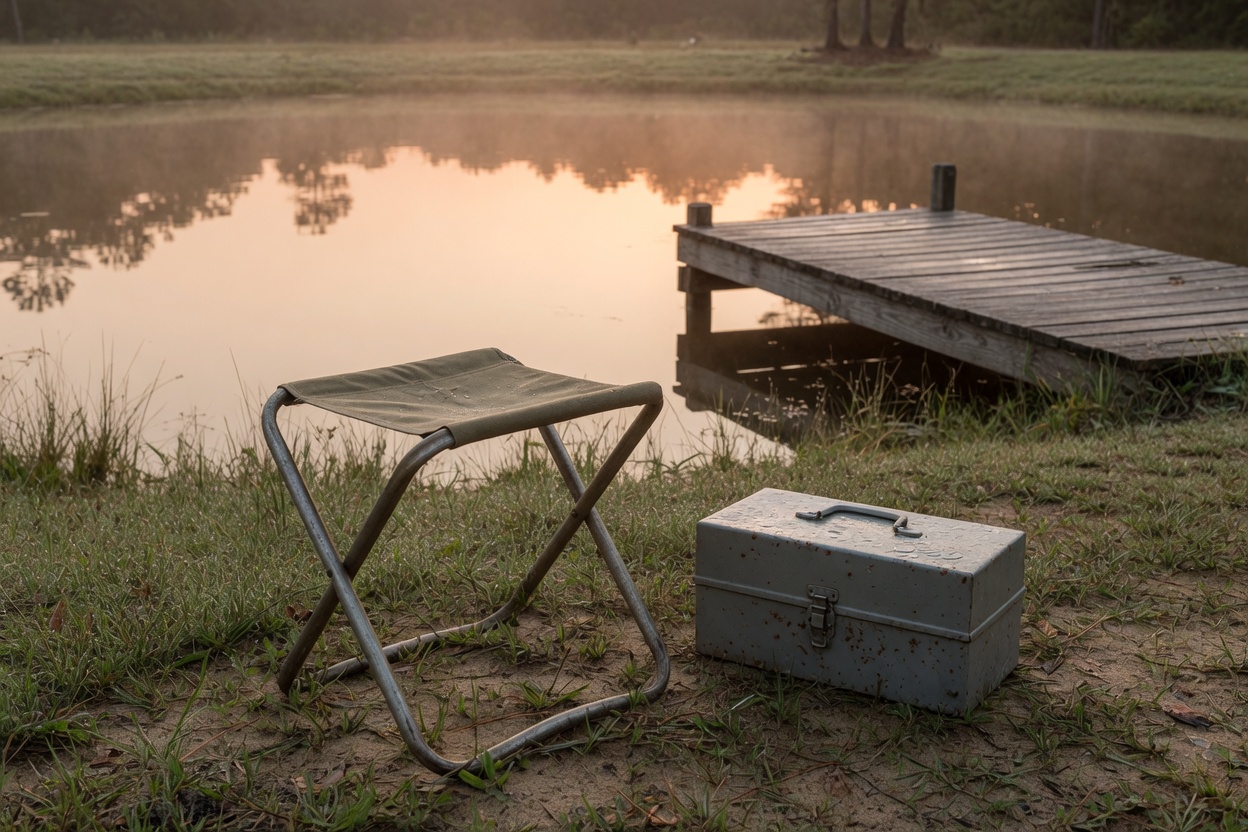
Choose the water with care. A farm pond, a small lake with a gentle bank, or a public fishing pier is better than a big river. You want shallow edges, firm footing, and shade or a dock where bluegill like to gather. If you have a friend with a stocked pond, this is the time to call in that favor.
A life jacket is not optional near water, whether the child swims well or not. Put it on before you step out of the truck, and let them wear it like a badge. Stay within arm’s reach on the bank, and hold the rod hand-over-hand for the first few casts. Bring a hat, water, and a snack, because a hungry child will end a fishing trip faster than any slow bite.
Then keep it short. An hour is plenty, and two hours is a long day for a seven-year-old. I would rather leave while they are still asking for one more cast than sit until they are fussing in the heat. If they spend half the trip poking at a frog or skipping rocks, let them. That is still fishing, as far as a child is concerned.
I walked through the whole teaching rhythm, from the first bite to the first fish in the hand, in how to teach a kid to fish. Read it before the trip, and you will feel easier standing on that bank.
Let them reel in the fish, even a little one
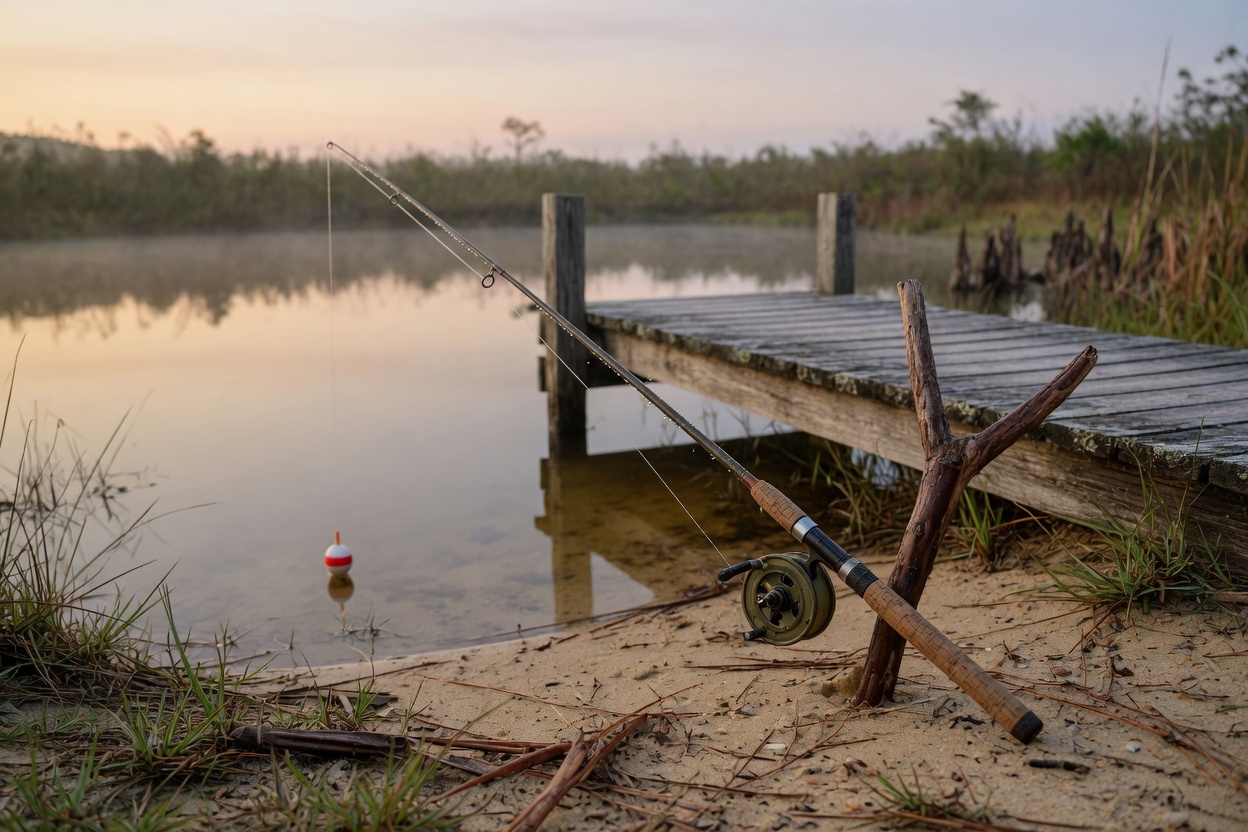
When that bobber goes under, resist every urge to take the rod. Say it low and calm: “Lift now, and reel.” Let the child feel the fish pulling, even if it is a bluegill the size of your palm. It will feel like a whale to them.
Help only where you must. Steady the rod, cup your hand under the fish, and show them how to wet their hands before they hold it. Let them look at the blue on the gill cover and the way the sun catches the scales. Then let it go if they want to, or put it on the stringer if you mean to cook it. Either way, make a fuss. It is the biggest fish in the world for the next five minutes.
And if no fish comes at all, that is not a failure. Tell them a good fisherman hears “not today” as often as “got one,” and plan the next trip before you leave the bank. A child who knows there is a next time will not remember the empty stringer.
Put the day in the journal

A day like this fades fast unless a child has a way to hold on to it. That is why I like to tuck a journal into the kit. When we get home, I sit Ruby down at the kitchen table, and she writes the date, the pond, and what she caught, and draws her fish with her own idea of how many spots a bluegill has. Her handwriting is not neat, and her fish looks more like a pancake, but I would not trade those pages for anything.
If you want to see when the fish are most likely to be biting for that first trip, I put together a free Best Days to Fish starter kit that marks the good days by the moon and the season. It is an old way to stack the odds in a child’s favor.
So wrap the combo, tuck in the floats, and tape a note to the box that says “Saturday morning, you and me.” For the child to write down the day in their own hand, I helped put together My First Catch — A Fishing Journal for Young Anglers, a simple paperback made for young fishermen, and it is a good thing to slip under the paper next to the rod. The rod will wear out someday. The pond and the morning with you will not.
Read the signs. Tight lines, and take a child with you.
