How to Get Your Fishing Gear Ready for Spring This Winter
Get your fishing gear ready for spring on a slow winter afternoon: check the line, clean the reel, test the knife, and be at the water the first warm day.

There’s a stretch of winter, after the holidays and before the first warm spell, when the pond sits flat and gray and there’s nothing to do but wait. I’ve never been good at waiting. So for forty years I’ve spent one slow afternoon in late winter with my fishing gear spread out on a table, and I’ve never once regretted it.
The first warm day of spring comes without warning. The water hits sixty, the bream start moving up to the shallows, and you want to be on the bank, not down in the shed untangling last year’s line. A little work now means you go fishing the day the fish are ready.
You’ll also want a few old rags, a cotton ball, a small bowl, a sharpening stone or steel, and a pencil and paper. Nothing costs much.
Start with the line

Fishing line sits in the weather, and old line gets weak. Monofilament, which is the clear line most spincast reels carry, stiffens and picks up nicks over a season, and a line that breaks on the first good fish is a lesson nobody enjoys.
Pull a few feet of line off the reel and run it between your thumb and finger. If it feels rough, crinkly, or flat in places, it’s tired. Another test: tie it to something solid and give it a firm, steady pull. If it snaps easily, replace it. I put fresh line on every spring, whatever it looks like, because the cost is small and the heartbreak of losing a big fish isn’t.
For panfish, six- to eight-pound test is plenty. If you want a refresher on the knot that holds it, how to tie simple fishing knots for beginners walks through it.
Clean and check the reel

On a spincast reel, the cover pops off the front with the push of a button or the twist of a collar. Take it off and look inside. Wipe away dust, old grease, and any sand or grit with a dry rag. Put one drop of light reel oil on the moving parts, and no more. Too much oil attracts dirt and gums up the gears.
Then wind the reel in and out a few times. It should turn smooth and quiet. If it grinds or catches, look for tangled line, a bent part, or dirt, and clean it again. I covered the basics of how the reel works in how to use a spincast reel for beginners, and the Zebco 33 combo I keep for the grandkids has been simple to look after. Beginner gear earns its keep by being forgiving, and I’ll tell you its limits too. It’s built for panfish and small catfish from the bank, not for a big fish in heavy cover.
Run a cotton ball down the rod
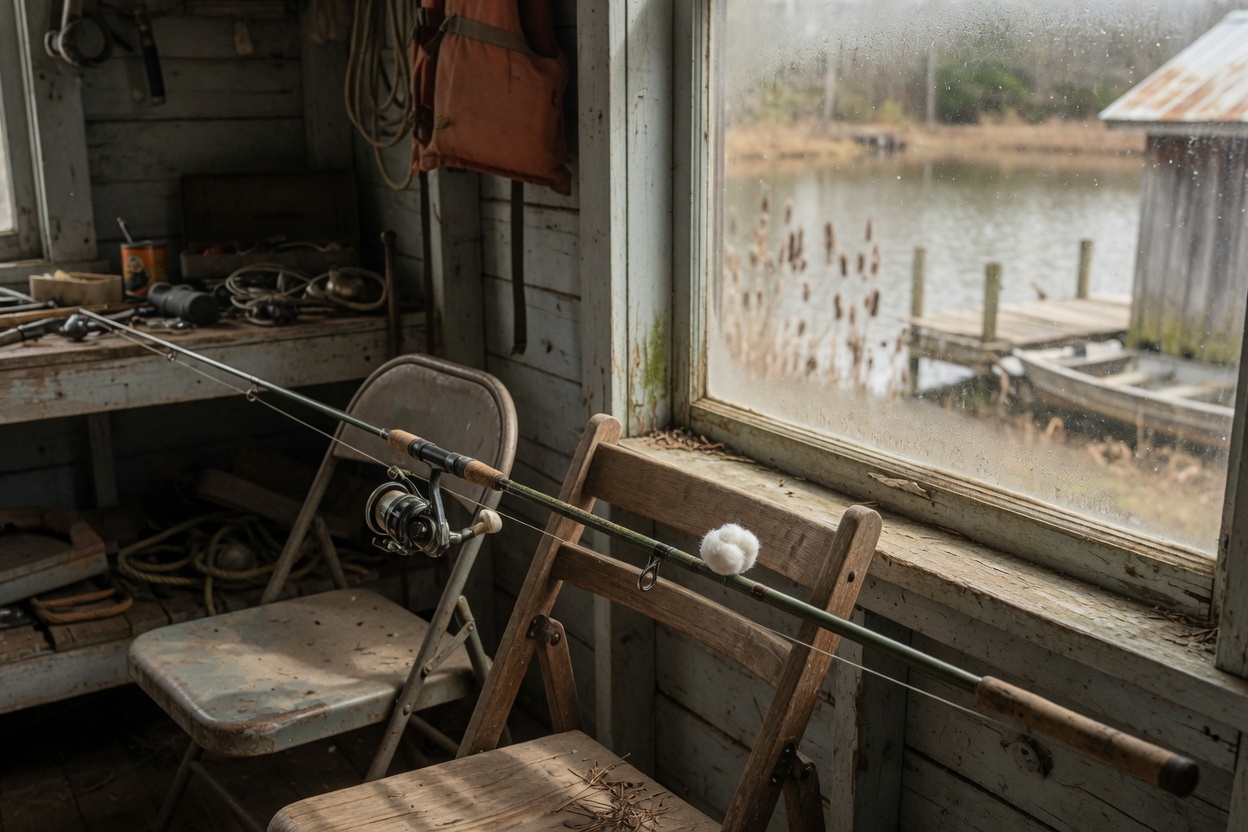
This is an old shop-teacher trick. Pull a cotton ball apart a little and run it through every guide on the rod, those are the little rings the line passes through. If the cotton snags on any of them, the ring has a crack or a rough spot, and it will saw your line to pieces. A rod with a bad guide is worth repairing or replacing before you take it to the water.
Wipe the rod down with a damp cloth, check the handle, and make sure the two pieces of a two-piece rod fit together snug.
Look over the bobbers and the tackle box

Open the box and look at what you have. Hooks rust in a damp season. A rusty hook is weak and dull, and it’s easy to throw away and replace. Sort out what’s left into a few small groups, so you can find it by feel at the bank.
Check each snap-on bobber by pressing the button and making sure the spring still grips the line. A weak spring lets the bobber slide, and then you’re not fishing at the depth you think you are. I wrote about how to set one up in how to rig a bobber for bluegill and crappie. If you’re building a tackle box from scratch, the beginner gear I’d actually buy lays it out plainly.
Sharpen the knife
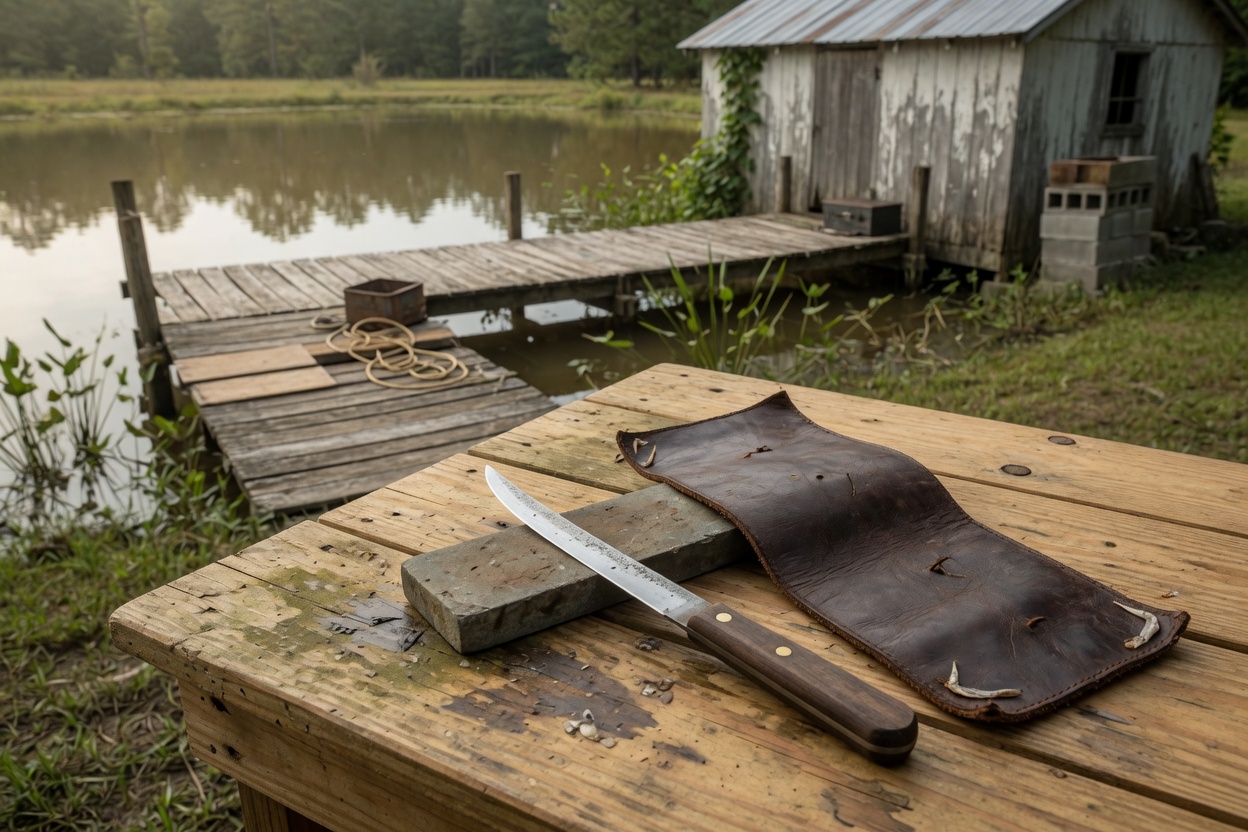
A fish fry starts with a clean fillet, and a clean fillet starts with a sharp knife. Wipe your fillet knife with a damp rag, check the blade for rust spots, and run it a few times across a sharpening steel or a fine stone at a shallow angle, keeping the angle steady on both sides. A dull knife is the one that slips and cuts you.
Keep it dry, wipe it down after every use, and store it in a sheath. I clean a lot of fish on a lot of days, and I never put a knife away wet.
Check your license

Before you leave the table, check your fishing license. In many states they run for a year from the day you buy them or end on a set date, and I’ve seen more than one man turned back at the water because he forgot. Your state wildlife agency’s website will tell you the rules and the dates, and you can usually renew online in a few minutes.
Plan the first trip

Write down what you need to replace and what you want to try this year. Then put the gear by the door. When the first warm spell comes, you’ll be ready.
I keep a record of every trip, with the date, the water temperature, the weather, and what the fish did. After a few seasons you start to see patterns, and that’s how the old folks read the signs. I put together a simple almanac that helps you pick the best days to fish each month by the moon, the weather, and the water. I give it away free. You can pick up the Best Days to Fish starter kit here.
And if there’s a young one around who likes to help, my little journal, My First Catch, gives them a place to write down every fish. The ones who keep a record tend to keep fishing.
Read the signs.
