How to Get Hens to Lay in the Nest Box, Not the Yard
Hens laying outside the nest box? Here's why it happens and how to fix it: box count, lighting, clean bedding, fake eggs, and the training routine that works.

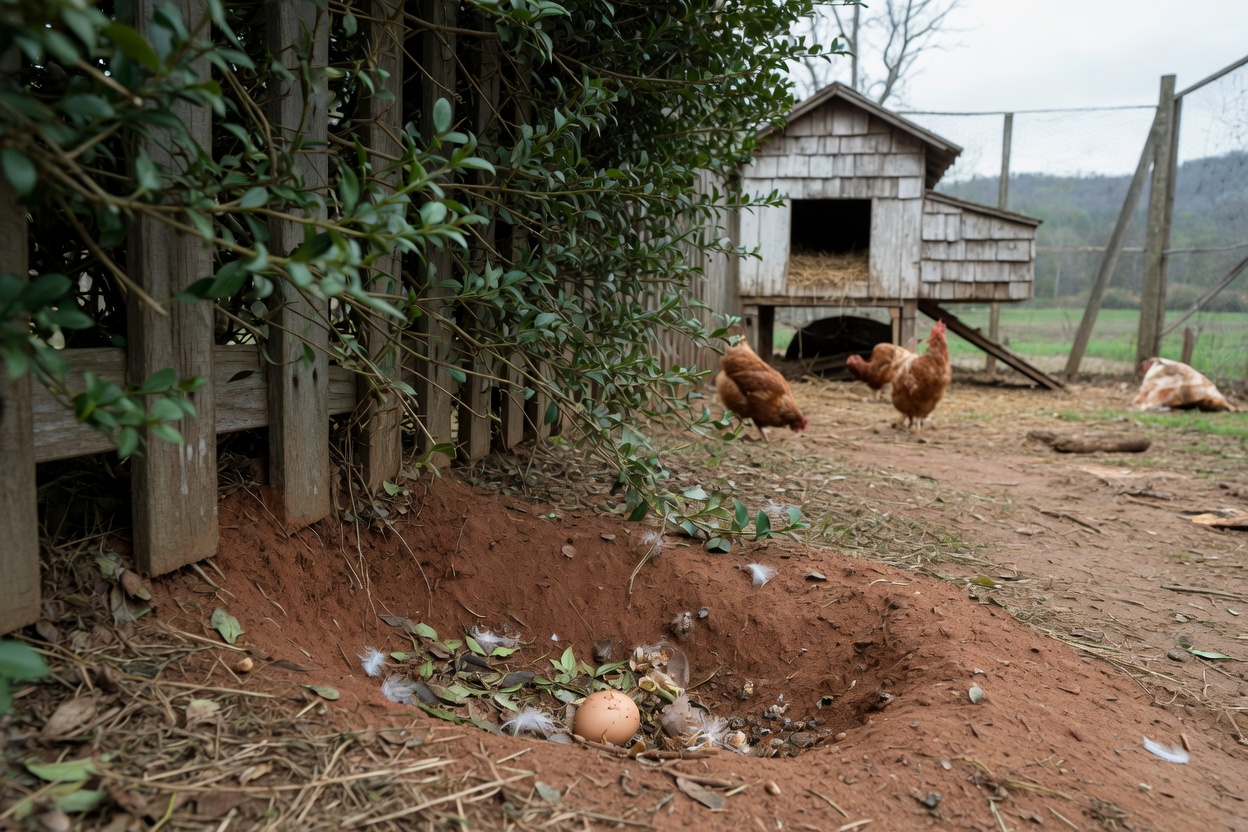
My first spring with a laying flock, I went hunting for a missing egg count and found fourteen eggs in a shallow scrape under the privet at the back fence. Fourteen. One of my Easter Eggers had been quietly laying there for nearly two weeks, and meanwhile the three nest boxes I’d built with my dad sat there, spotless, with not an egg in them. I stood in the weeds feeling personally insulted by a chicken.
If you’ve got hens laying in the corner of the run, under the coop, or in the garden, take heart. It’s one of the most common first-year problems, and it’s almost always fixable. It’s also worth fixing sooner rather than later, because eggs laid out in the open get found by raccoons, snakes, and your own dog, and a hen who gets in the habit of laying in the weeds is a hen who is going to keep doing it.
I’m writing this in October on purpose. Your pullets from this spring are about to start laying, your older hens will restart after the molt, and the days start to lengthen again in late winter. Getting the boxes right now means you won’t be crawling through brambles in March.
Start with what the boxes actually look like to a hen

A hen wants a nest that feels private, dim, dry, and a little cramped. Walk out to your coop and look at your boxes from her level, and be honest about what you see. Here’s what I check first:
How many boxes you have. The rule of thumb is one box for every four or five hens. Hens will happily share one favorite box, so more boxes doesn’t mean better, but too few means the line gets long and somebody goes looking for an alternative.
How big they are. About twelve inches square is right for standard-size birds like Buff Orpingtons and Plymouth Rocks. Too big and two hens squeeze in together and break eggs. Too small and a big girl won’t fit.
How bright and exposed they are. A box that faces a window, or sits in the full light from the coop door, feels unsafe to a hen. That’s the single most common reason I see for a flock going elsewhere. The shade cloth trick works well here, as does simply turning the boxes to face a wall.
How high they are compared to the roost. The nest boxes should sit lower than the roost bars. Chickens always want to sleep at the highest spot available, and if your boxes are the highest thing in the coop they’ll roost in them, and a roosting box is a box full of droppings that no hen wants to lay in.
Keep the bedding deep, dry, and clean
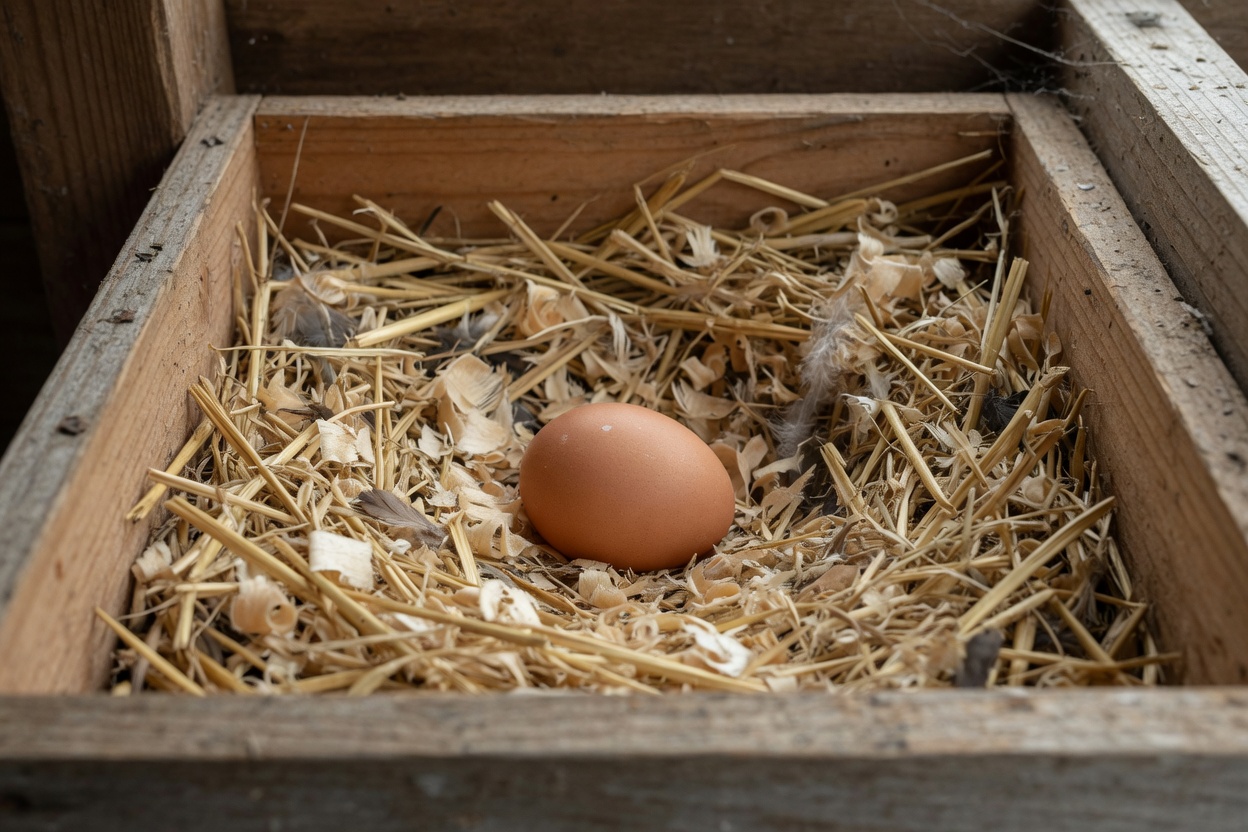
An unpleasant box gets abandoned fast. Fouled, damp, or thin bedding is the second most common cause I hear about in my Facebook messages. I line mine with about three inches of hemp bedding and fluff it every few days. It’s absorbent, it doesn’t pack down flat, and it lets a hen scratch a little nest-shaped hollow, which is exactly what she wants to do. Pine shavings work too if that’s what you already have; the thing that matters is that it’s deep and dry.
Watch your water, too. A leaky or splashy open waterer in the coop wets the floor and the bedding nearby, and that smell and dampness carries to the boxes. Moving to a closed nipple-and-cup waterer fixed that for me, and the coop stays drier overall. I get into the whole routine in How to Collect and Store Fresh Eggs From Your Flock, including how often I check the boxes.
Rule out the quiet culprits
Sometimes it’s not the box. Before you rebuild anything, rule out the following.
Mites or lice. A hen who feels itchy in the nest box will leave it. Check the vent and under the wings at night with a flashlight, and look at the underside of the roost bars. If you see tiny crawling specks, treat the flock and the coop. For anything beyond a mild infestation, a chicken-savvy vet or your county extension office is a better source than I am.
A broody hen. If she’s puffed up, growling, and refusing to leave a box, she’s not misbehaving; she’s broody. I wrote up what to do about a broody hen, and it’s a different problem from the hen laying outside.
Stress or a predator scare. A hawk overhead, a fox at the fence, a rooster who’s too enthusiastic: any of them can send a hen looking for a hidden spot. If your hens suddenly changed habits, walk the perimeter and look for signs.
Too young. Pullets typically start laying somewhere around eighteen to twenty-two weeks, and the first eggs often turn up in odd spots, because the hen herself isn’t sure what’s happening. If you want the timeline, When Do Chickens Start Laying? lays it out.
Retrain them: the routine that worked for me

When I figured out what was wrong with my Easter Egger, I did four things over about a week, and she was back in the box by the end of it.
1. Put fake eggs in the box. Ceramic or wooden eggs, or even a couple of golf balls, tell a hen “this is where eggs go.” Hens are strongly drawn to lay where eggs already are.
2. Block off the old spot. I stuffed the scrape under the privet with branches and propped a pallet against it so she couldn’t get in. Don’t just fill it; make it unavailable.
3. Keep the flock in until midday. Most hens lay in the morning. Keep them in the coop until late morning for a week or so, and by the time they come out, the egg is where it should be. It’s a nuisance, but it’s a short one.
4. Collect often, and leave the fake eggs. Take the real eggs daily and leave the decoys. The point is to build a habit, and habits take a few days.
If you have a young hen who is still figuring it out, you can gently pick her up in the evening and set her in a nest box, then close the coop. Do that for a few nights and she’ll usually get the idea.
One honest note about expectations

Some hens simply like to hide eggs, and a free-ranging flock will always produce one or two stash nests. I’ve stopped taking it personally. If you have a big yard and a few determined layers, you will occasionally find an egg in the hosta, and that’s normal. What you’re after is a flock where most of the eggs come out of the boxes most of the time. If you’ve got that, you’re doing fine.
If you want more on setting up a first-year coop, the egg timeline, and the other things that go sideways in a first flock, that’s what I cover in Raising Backyard Chickens for Beginners. It’s the book I wish I’d had the spring I spent a week hunting eggs in the brambles.
