How to Forage and Brew Conifer Needles for Winter Tea
How to forage conifer needles for tea — the Douglas fir and spruce I brew all winter, the deadly yew to never mistake for them, and how to put the needles up.
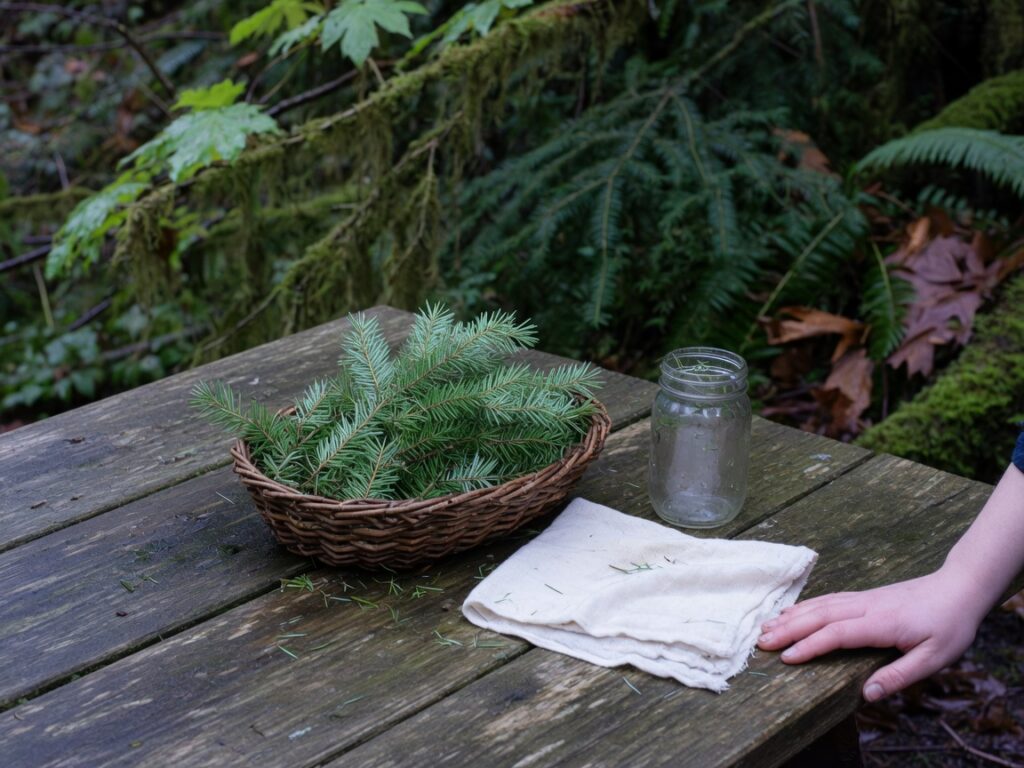
When the deciduous world goes bare and brown out here, the evergreens are the ones still holding green, and they carry a good, honest tea right through the darkest part of the year. I’ve brewed conifer-needle tea on the woodstove most winters of my adult life. It’s bright and resinous, faintly of citrus, and it tastes like the woods behind my place outside Sequim smell after a rain. Best of all, the trees don’t go dormant and don’t hide — the needles are there all winter, and once you can tell your safe trees from the one you must never touch, it’s one of the surest cold-season gathers this coast offers.
That “one you must never touch” is the whole reason to slow down and learn this properly, so I’ll get to it before anything else. This is a plant you have to identify with certainty, not almost-certainty. But it isn’t hard once someone shows you what to look at, so let me do that.
One rule first, and I’ll say it once because you’re an adult: never brew or eat any part of a wild plant on the strength of a book, an app, or a single source. Confirm it against more than one reputable guide and, better, an experienced local who can put the branch in your hand. When in doubt, throw it out.
The one you must never brew: Pacific yew
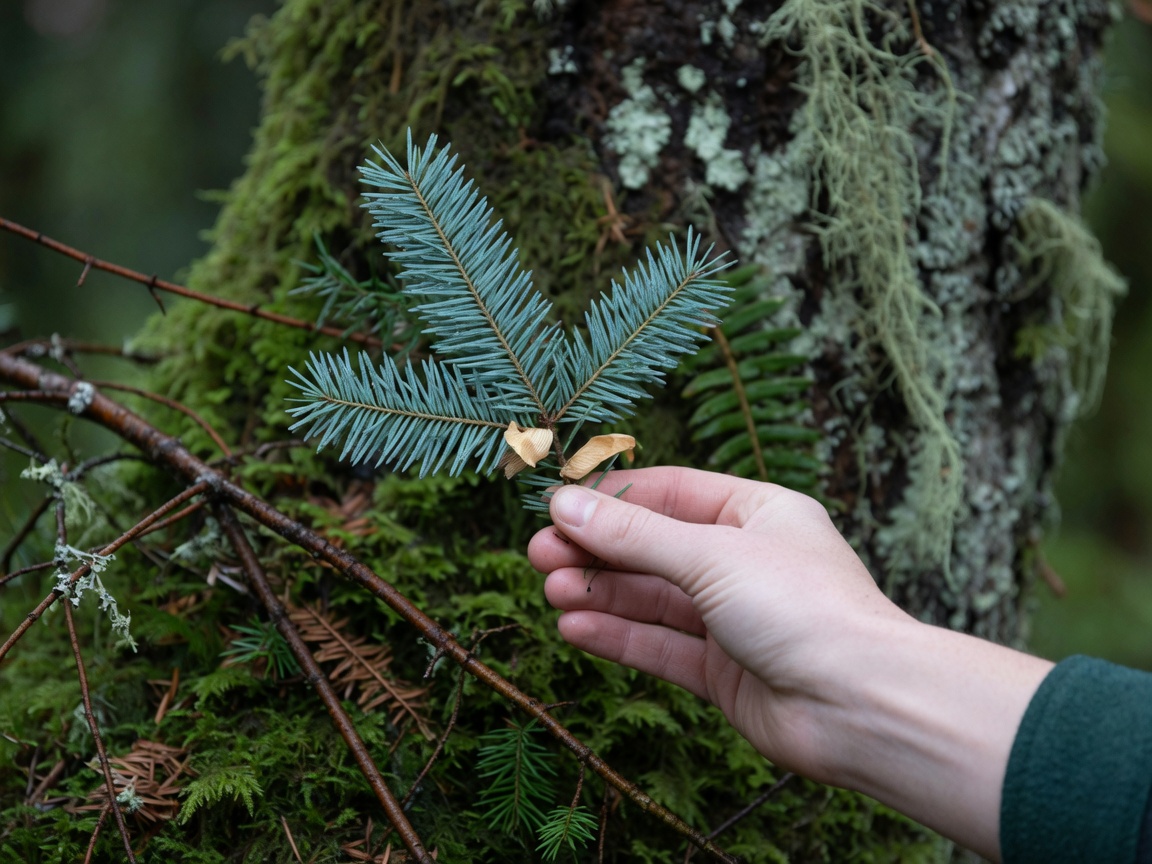
Before I name a single tea tree, learn the one that will hurt you. *Pacific yew (Taxus brevifolia) is poisonous in every green part, and its needles must never go anywhere near your kettle.* It grows right here in these same wet woods, often in the understory beneath bigger trees. The needles are flat, soft, and dark green with a paler underside, arranged in two flat rows along the twig, and in season the tree carries a single soft red berry-like cup — that red aril is a warning flag, though it isn’t always present in winter. If a low, shrubby evergreen has flat soft needles and you’re not certain what it is, you walk away. There is no winter tea worth guessing at.
And don’t let a name spook you: *western hemlock the tree (Tsuga heterophylla) is a fine, safe conifer* and has nothing whatever to do with poison hemlock or water hemlock, which are deadly but are herbaceous roadside weeds, not evergreen trees. Same word, entirely different plants. Once you’ve got the yew fixed in your mind as the one to avoid, the rest of this is easy.
The conifers I actually brew
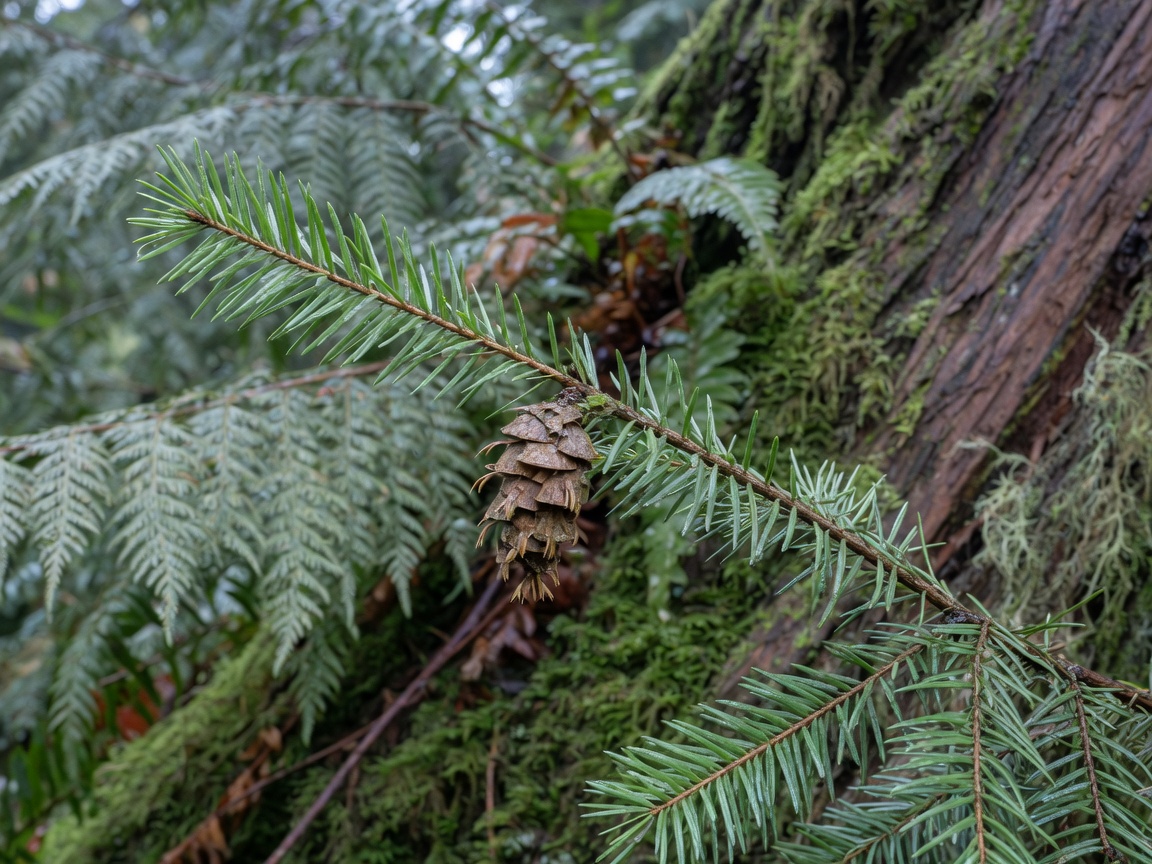
Three evergreens make my winter tea, and all three are common across the Peninsula. *Douglas fir (Pseudotsuga menziesii) is my everyday one — soft, flat, single needles set all around the twig, a sweet citrus-resin smell when you crush them, and the giveaway is the little three-pointed “mouse-tail” bract that sticks out of its cones. Sitka spruce (Picea sitchensis) grows toward the coast, and its needles are stiff and sharp and square — roll one between your fingers and it turns, where a fir needle stays flat. Spruce will prick you; that sharpness is part of the ID. Western hemlock the tree (Tsuga heterophylla)* has short, flat, uneven needles and a soft drooping top, and it makes a gentler, milder cup.
Snap a needle from any of the three and it should smell green and resinous and clean — that bright conifer smell is the tea you’re after. If it smells rank, sour, or of nothing, stop and check your tree again. Smell is a good backup, never a substitute for the visual ID.
Where and when to gather
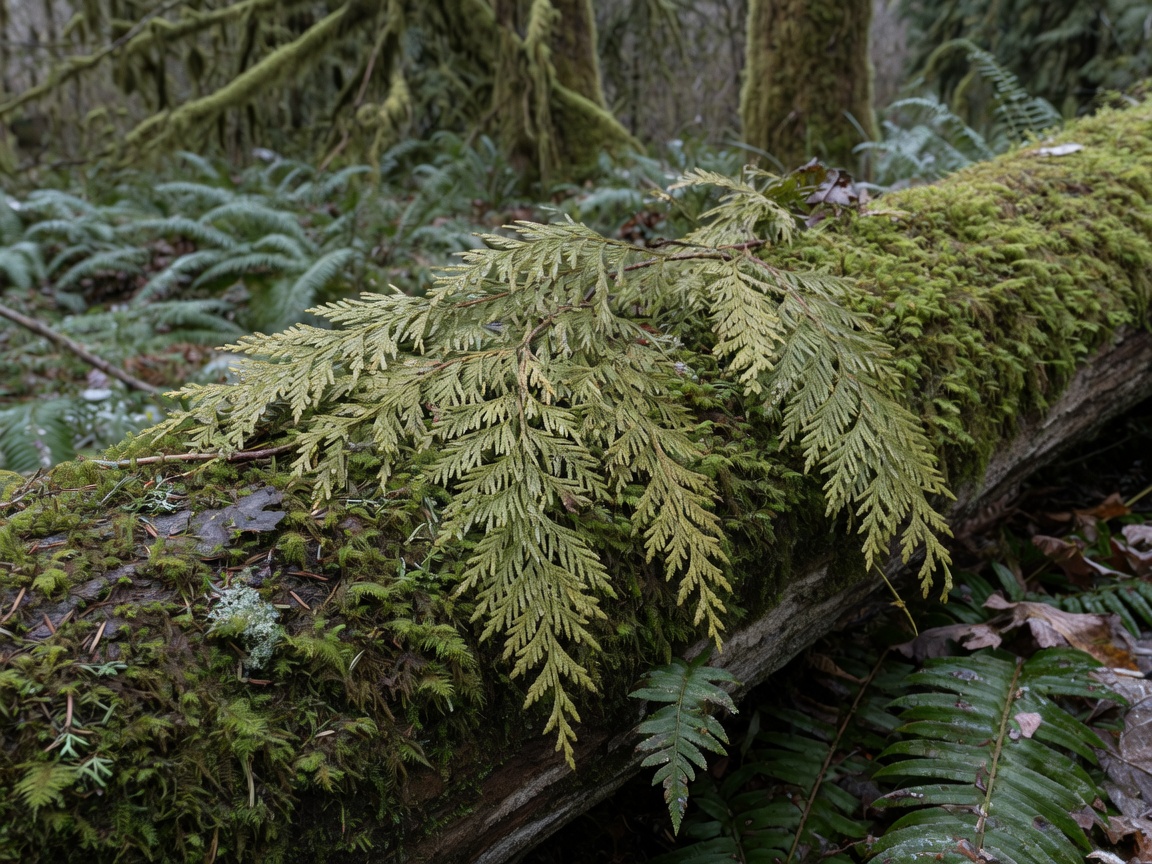
You can gather needles any time all winter, which is the beauty of it. I take a little from my own Douglas firs and from trees along the forest-service roads on the rain-shadow side, always a modest amount from any one tree — a small handful of the softer branch tips, snipped clean, never stripping a branch bare. The tender new-growth tips are sweetest, but in the depth of winter the mature needles brew a perfectly good cup; you’re just after a small handful, not a basketful.
Take from healthy trees away from roadsides that get sprayed or salted, and leave the tip buds alone where you can — that’s next year’s growth. A few minutes and a pocketful is a week of tea.
Brewing the tea — steep, don’t boil
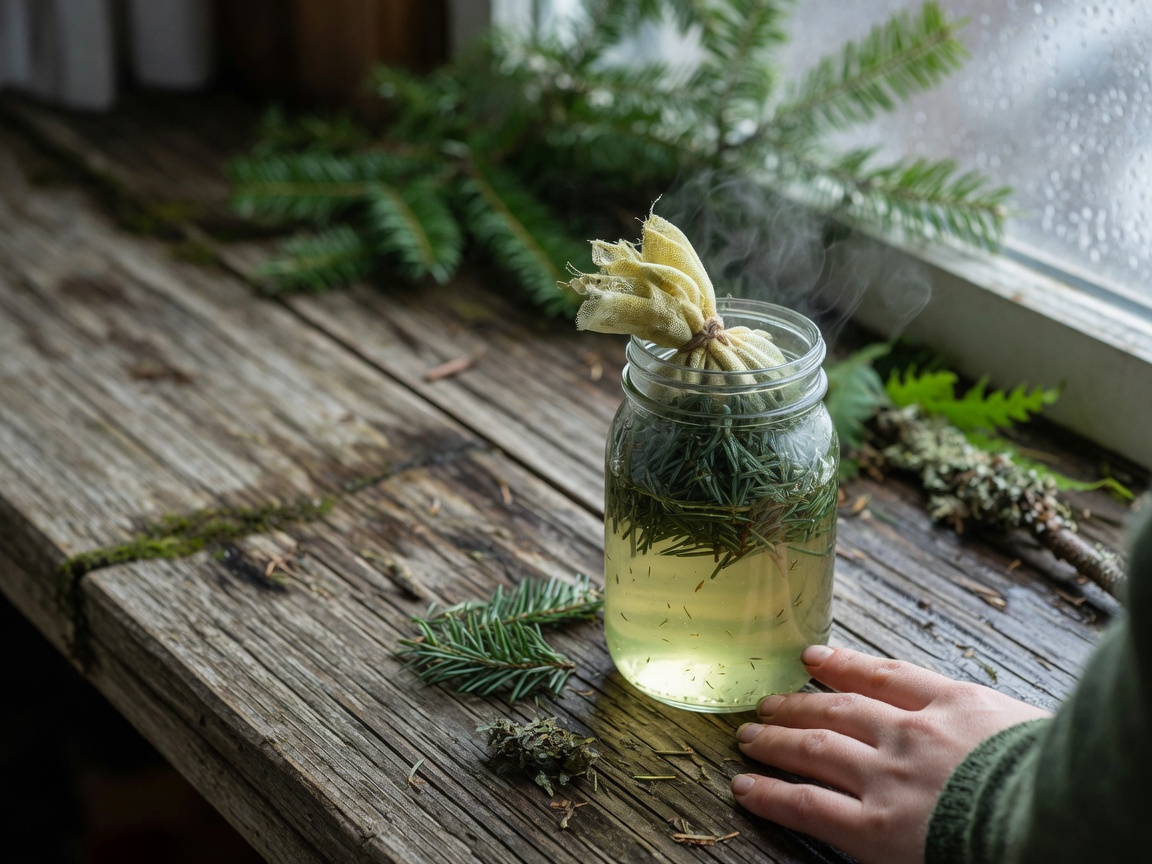
Here is the one technique that matters: steep the needles, don’t boil them. Boiling drives off the bright, delicate part of the flavor and cooks out the fresh green character you went to the trouble to gather. Chop or bruise a small handful of clean needles, pour water that’s just off the boil over them, cover, and let them steep five to ten minutes. Then strain the tea through a square of cheesecloth to catch the needles and any fine bits, and drink it plain or with a little honey.
The Coast Salish peoples of this coast, including the S’Klallam, used the needles and boughs of several of these conifers long before any settler wrote it down; I learned about it from books, and I’ll point you to Nancy Turner’s Food Plants of Coastal First Peoples as a careful, Tribe-collaborative source worth your shelf. I drink it because it’s good and because it’s here in the cold when little else is — I’ll leave the traditional uses at that, framed as tradition, and let you read further before you lean on it for anything more. If you’d like the general method for other foraged brews, I laid it out in my post on how to make herbal tea from foraged plants.
Putting the needles up for the winter shelf
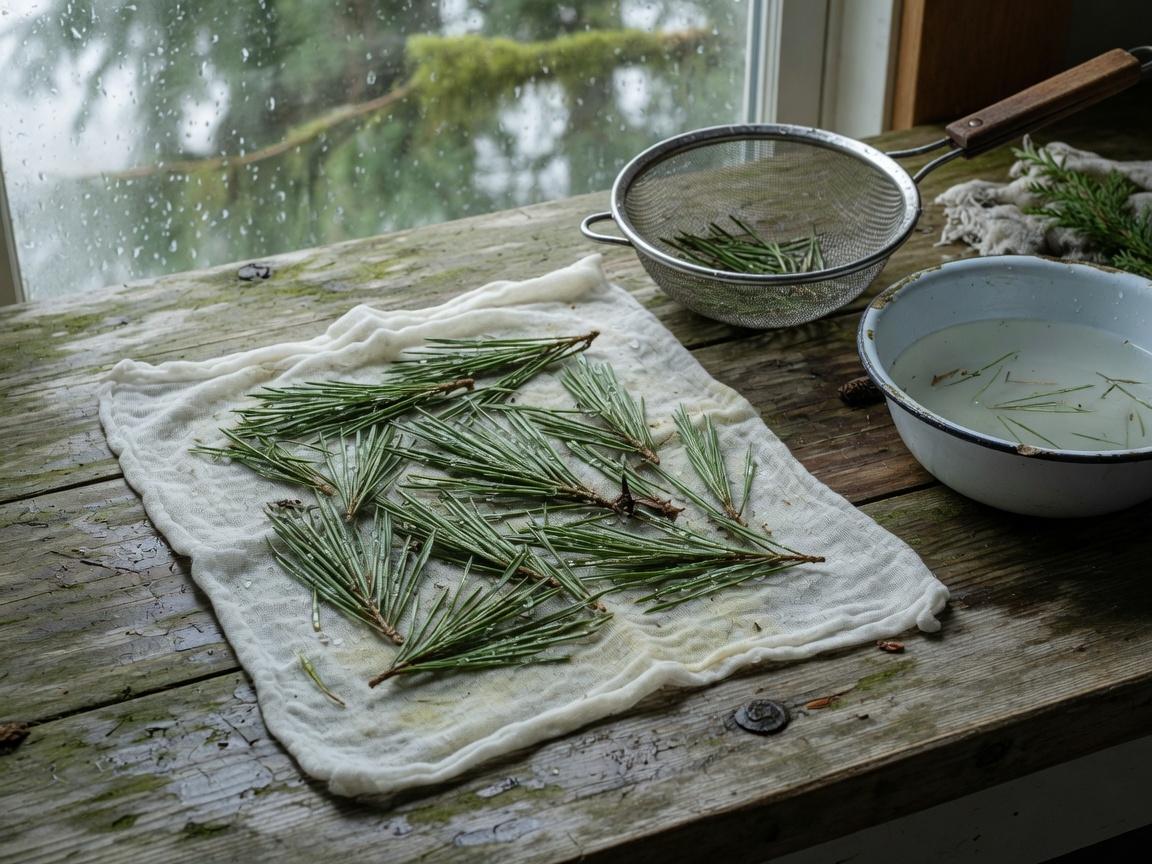
Gather more than a day’s worth and you’ll want to keep some. Dry clean needles in a single layer, out of direct heat, until they snap rather than bend, then store them in a clean jar in the dark and label it with the tree and the date. You will not remember in three months. I promise you that.
The needles are good for more than the cup, too. On a wet day too foul to be anywhere but the kitchen, I’ll warm a jar of dried needles gently in jojoba oil to draw out the fragrant resin, strain that oil through cheesecloth, melt in beeswax pellets at about an ounce of wax to a cup of oil, and pour it into two-ounce tins. A fir-scented tin on the shelf and a jar of dried needles by the stove is a good winter’s worth of work from a few minutes’ gathering.
Which conifer, gathered where, and — most of all — the hard, certain line between a fir and a yew: that’s the part that takes longer than one post, and it’s the part I care most about. I put all of it into my book, Pacific Northwest Medicinal Plants: 115 wild plants of this coast, how to know each one without guessing, when to gather it, and how the generations before us used it. The evergreens don’t close for winter. The book is how you learn to read them safely.
