How to Forage and Use Yellowroot in the Southern Mountains
Yellowroot grows along mountain creek banks. Learn to identify Xanthorhiza, dig a little root the kind way, dry it, and use it the old traditional ways.
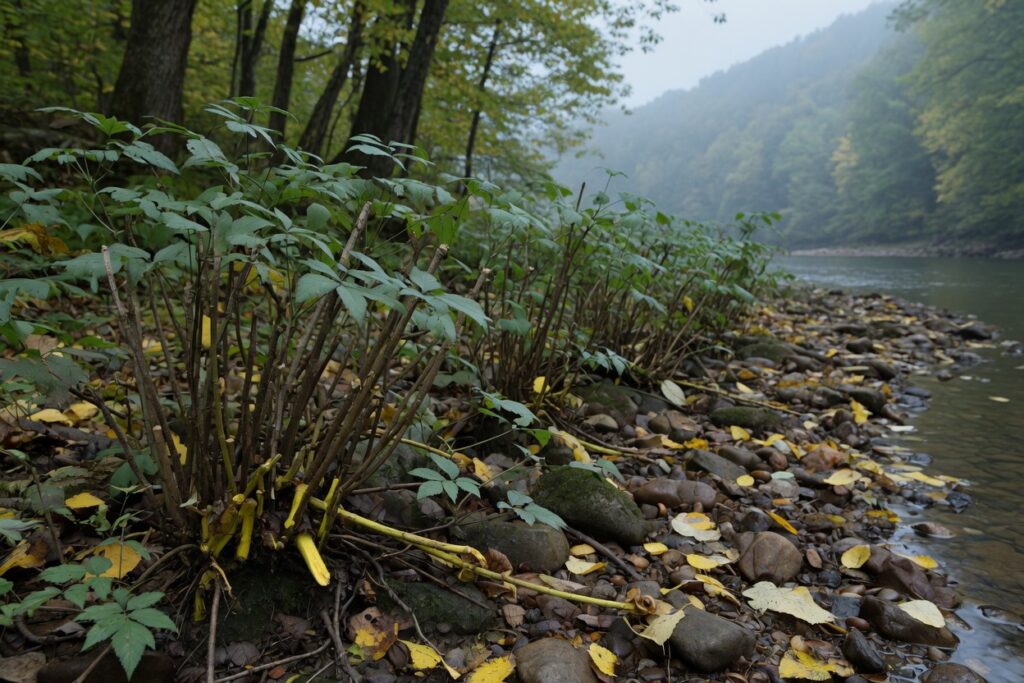
There’s a low, leafy shrub that grows in thick colonies along the creek banks in the coves, and it gives itself away the moment you scrape it. Underneath the dull bark, the root and the wood are the brightest yellow you will ever see in a plant. We always called it yellowroot, and the botanists call it Xanthorhiza simplicissima. The Latin name even says it: xantho for yellow, rhiza for root.
I’ve dug a little yellowroot from the same creek bank for most of my life, and I’m going to tell you how to find it, how to take some without hurting the stand, and the two plain ways it’s been prepared in these mountains. This is a plant for the cool months, when the digging is easy and the leaves have dropped. It’s also one to learn this winter so you’re ready when it flowers in April.
Know it before you cut it
First, the rule I follow with every wild plant: never use one on the word of a single book, app, or article, this one included. Check it against several good guides and, if you can, a person who has dug it. When you’re unsure, leave it standing.
Yellowroot is a shrub, usually a foot or two tall, that spreads by creeping roots into dense mats along streams and on moist, shaded banks, from the foothills up into the mountains. The leaves are compound, with five toothed, glossy leaflets, clustered at the top of the stems like an umbrella. In April, before the leaves are fully out, it sends down small, drooping clusters of tiny dark purple-brown flowers. They’re easy to miss. In fall the leaves turn a clear, warm yellow.
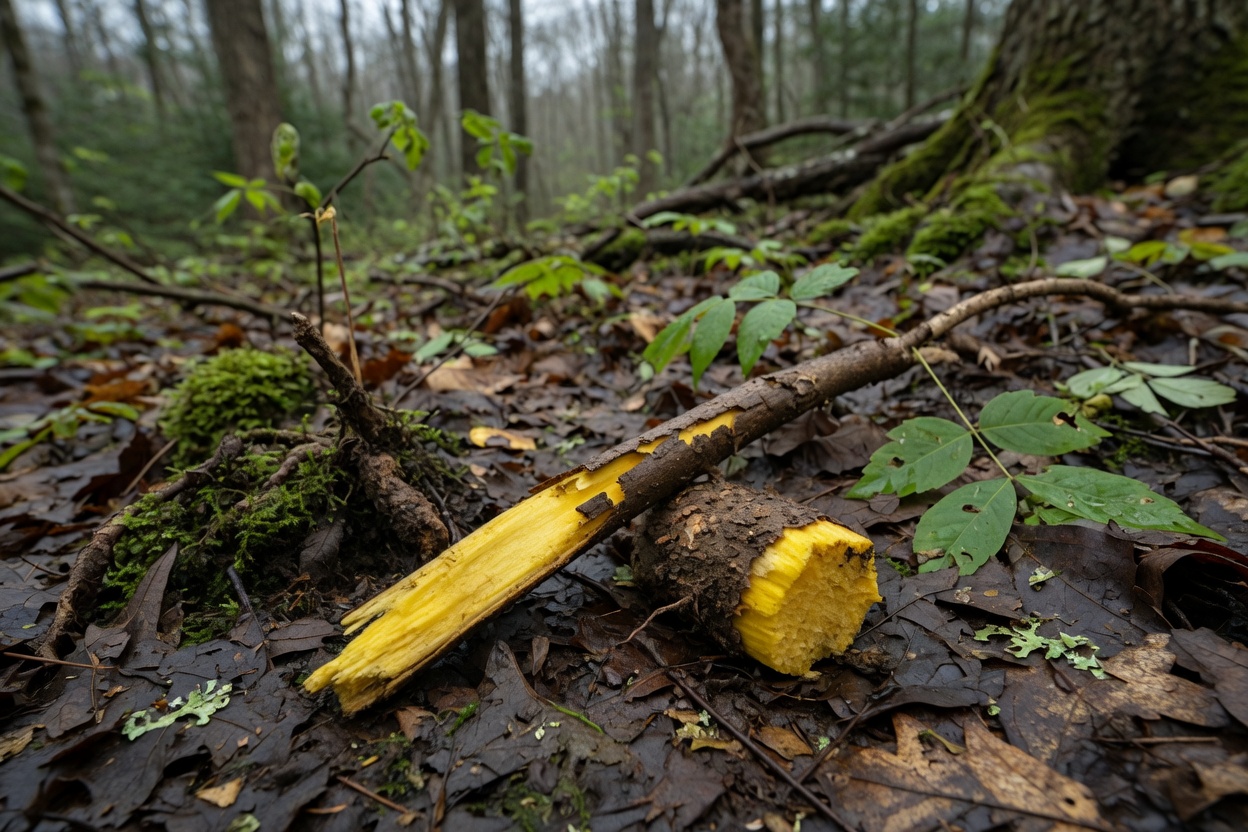
The proof is the inside. Scrape the bark of a stem or a root with your thumbnail, and the green layer underneath is a vivid yellow. Nothing else along a creek will do that.
Be careful, though, of the plants that grow in the same places and can fool you. Goldenseal also has a yellow root, but it’s a woodland herb with a single hairy, lobed leaf, and it’s at risk from overharvest, so you should never dig it. Yellowroot is a woody shrub with compound leaves and grows in colonies on creek banks. If you aren’t certain which you have, leave it alone. My notes on dangerous look-alikes of Appalachian medicinals will help you build the habit.
Where you can and can’t dig
Ask first. If it’s on private land, get the owner’s permission. On public land, the rules differ by agency. The Great Smoky Mountains National Park, for instance, doesn’t allow gathering plants, and national forests often want a permit. A phone call to the ranger district takes ten minutes and saves you a fine.
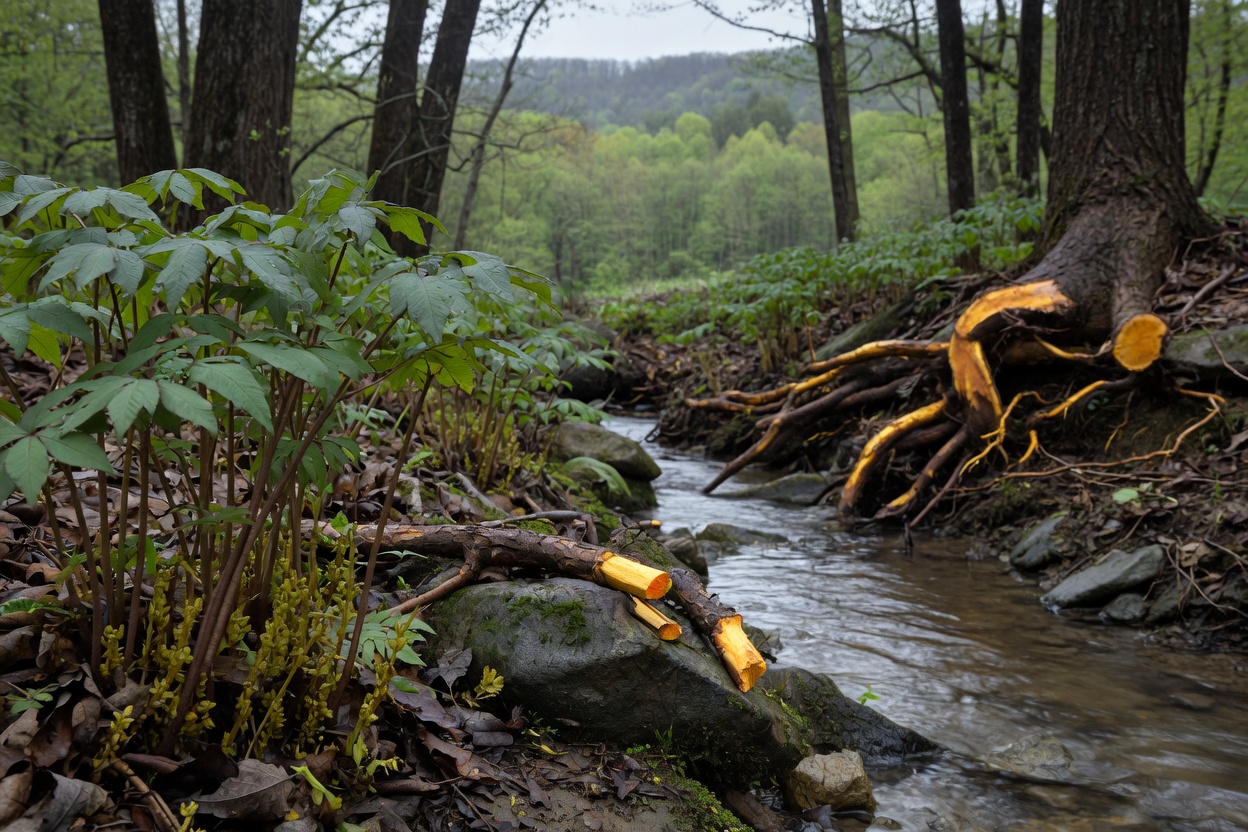
Pick a clean stretch of bank. Creek water carries whatever is upstream, and a roadside bank gets what the road crew sprays, so go farther up the creek. And a creek bank is also soil that’s held in place by the roots you’re about to disturb, so work gently.
How to dig a little and leave the rest
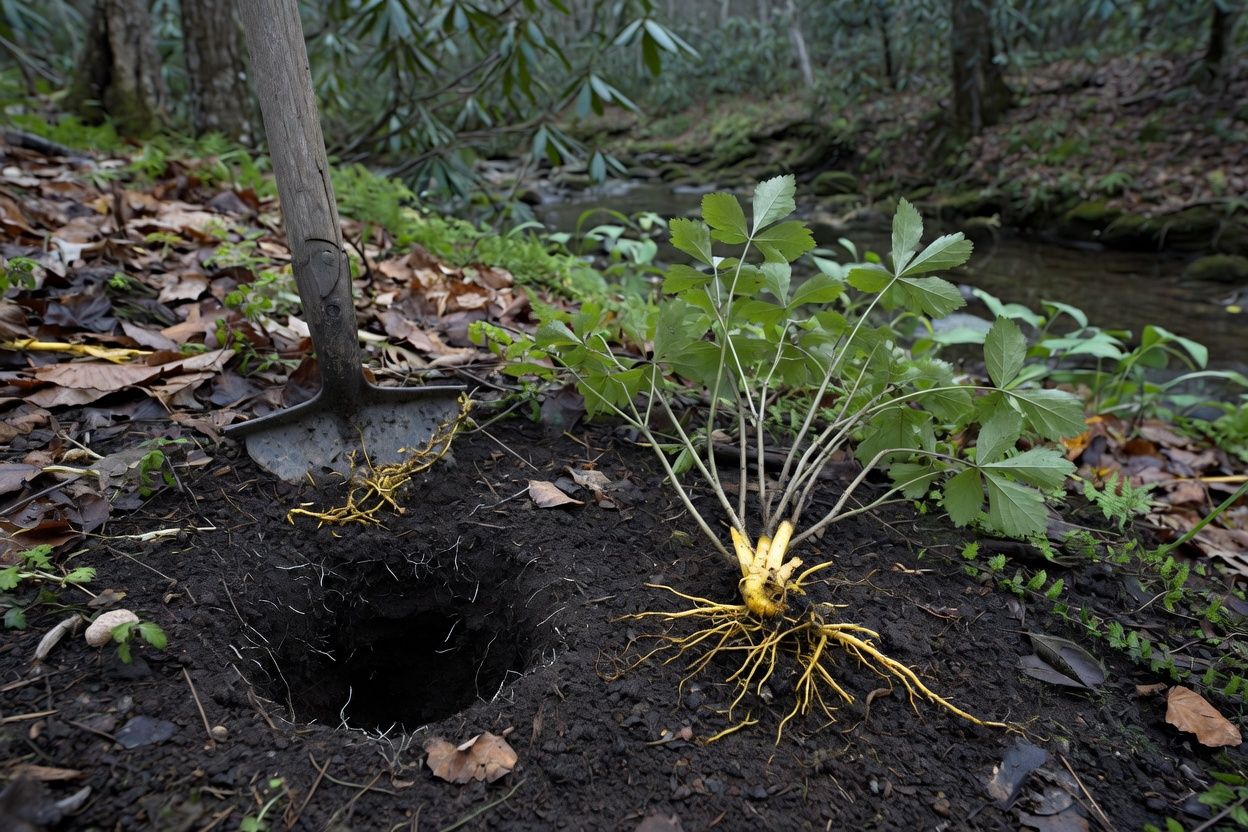
Yellowroot isn’t scarce, but it’s slow to recover from a heavy hand, and the bank it holds is worth protecting. Here’s how I take some without hurting the colony:
1. Choose a thick stand. A thin patch isn’t worth it. Pick a mat with plenty of stems.
2. Work from the edge. Don’t dig the middle. Find a runner at the outside of the colony and follow it back a foot or so.
3. Cut, don’t rip. Use the hori-hori to sever a section of the yellow root, leaving the main plant connected to the rest.
4. Take a small portion. I follow the rule of thumb my family always used: take no more than a third of what’s there, and leave the rest to carry on. For a plant I’m using only a little of, I take far less.
5. Firm the soil back. Press the bank closed over the hole and put the leaf litter back.
The cool months, from late fall through early spring, are the best time. The plant isn’t putting energy into leaves and the ground is soft.
Cleaning, cutting, and drying
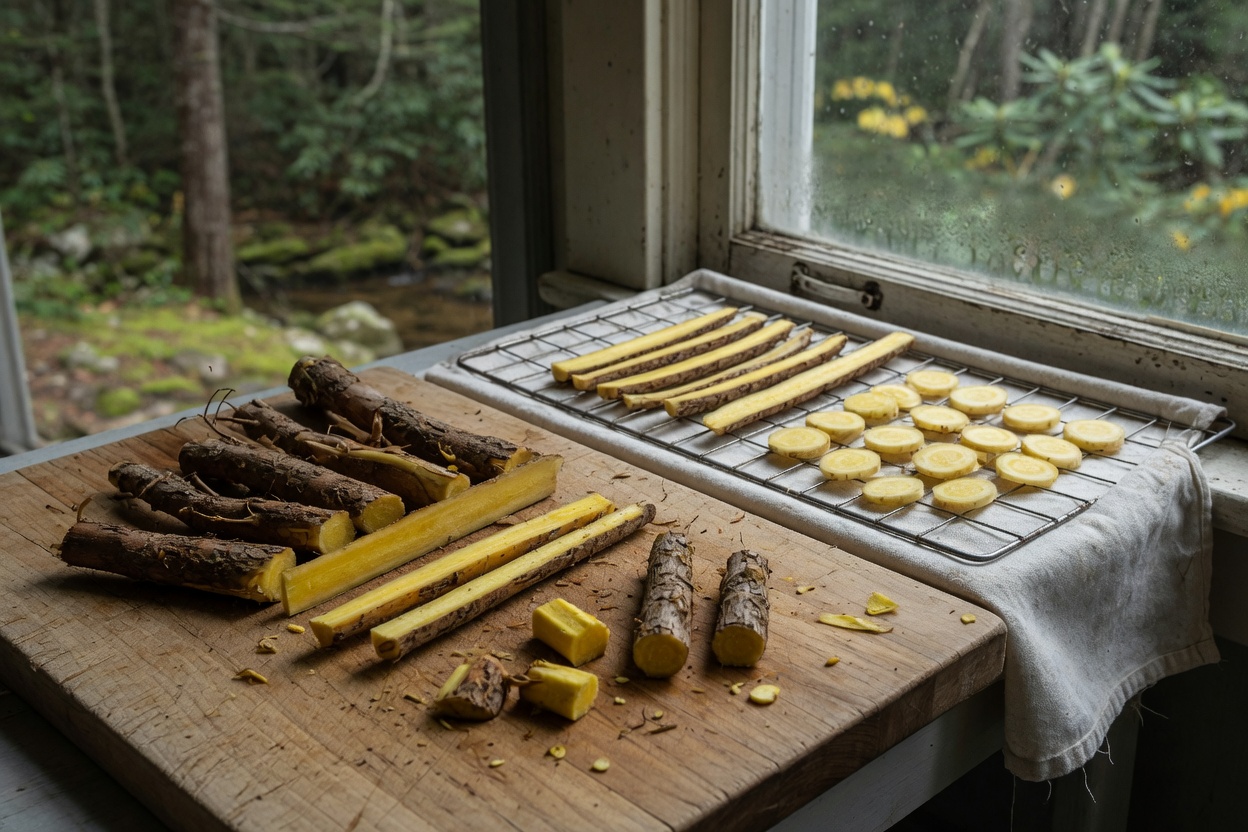
Wash the roots in cold water with a stiff brush. Don’t peel them. Roots this woody dry better chopped, so cut them into thumb-joint pieces while they’re still fresh, because once they’ve dried they’re nearly as hard as hickory.
Spread the pieces on a screen or a clean cloth in a dry, airy place, out of the sun. Mountain winters are damp, so give them two to three weeks, until the pieces snap clean. A root that isn’t completely dry will mold in the jar. Once it’s ready, pack it into a clean mason jar, label it with the plant and the date, and keep it cool and dark. Dried this way it holds for about a year. I wrote up the rest of the routine in how to store mountain herbs through a humid winter.
Two traditional ways it’s been prepared
What follows is traditional-use information: how people in these mountains have prepared this root, and nothing more. It isn’t medical advice, it doesn’t claim that yellowroot treats anything, and I won’t give you doses. The Cherokee knew this plant long before anyone wrote it down, and their use of it is recorded in published sources such as Hamel and Chiltoskey’s Cherokee Plants and Their Uses, which I’d send you to for the details rather than offering my own paraphrase. Yellowroot carries the same bitter yellow compound that goldenseal and Oregon grape are known for, and plants like that have traditionally been avoided during pregnancy and while nursing. If you take prescription medication or have a health condition, talk to someone qualified before using any wild root.
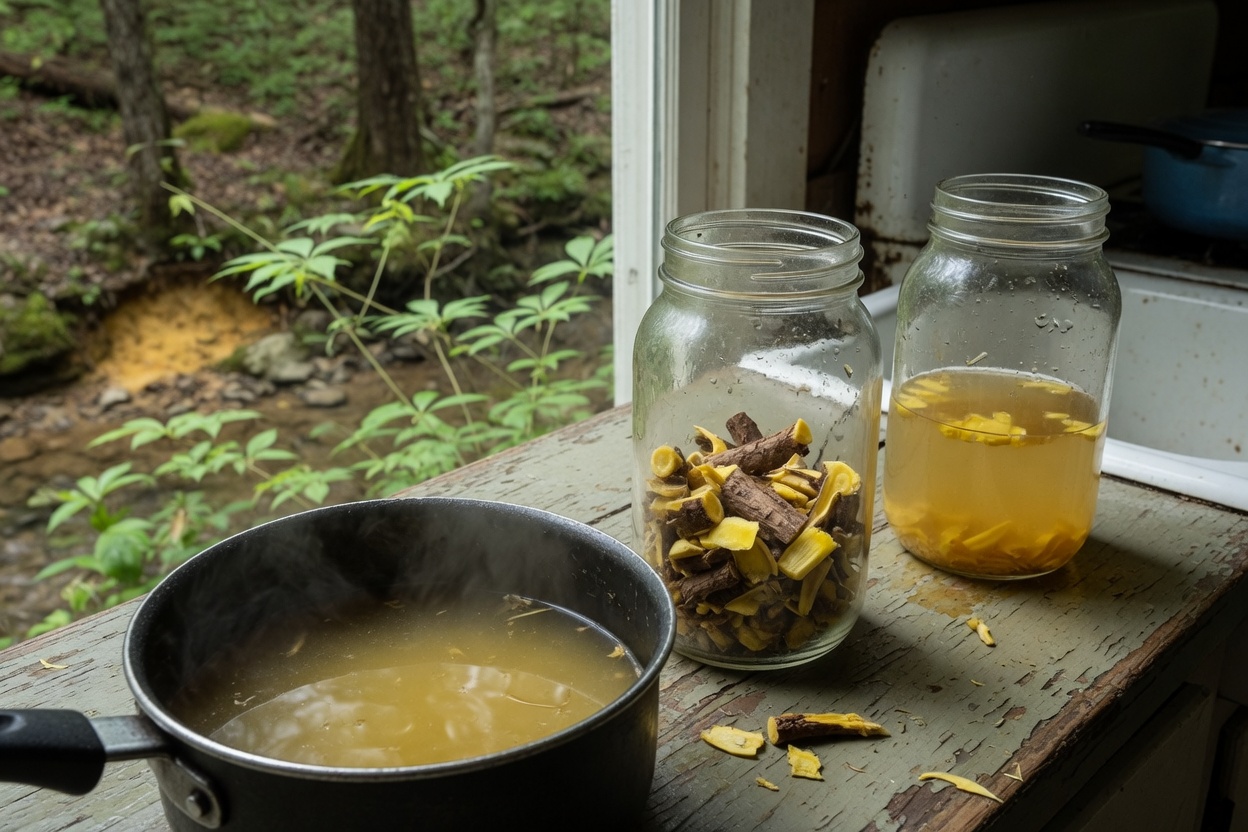
A bitter decoction. A woody root wants simmering, not steeping. A small handful of dried, chopped root in a quart of water, brought to a boil and then simmered gently with the lid on for twenty to thirty minutes, makes a deep golden, very bitter liquid. Strain it through cheesecloth while it’s hot. The old way was a small amount, taken now and again. Bitter is the honest word, and it isn’t a flavor everyone grows to like. I lost a pot once by walking away and letting it boil dry, which smells about as pleasant as you’d think.
A soaked root infusion for the cabinet. Some families kept a jar of chopped dried root covered in raw apple cider vinegar, shaken now and again for a few weeks, strained and bottled, and used in small amounts. It keeps well. Use a plastic lid, or put a piece of plastic wrap under a metal one, since vinegar eats the metal.
What’s worth knowing next

Making a decoction takes an afternoon. Knowing yellowroot from its neighbors, knowing when and where to take it, and knowing which of the plants beside it are the ones to leave alone takes years of walking the same creek. If you’d like a head start on the roots of the fall, my piece on foraging burdock root in Appalachia covers another cool-weather dig.
The rest of what I know about the mountain plants I grew up with is in my book, Appalachian Medicinal Plants: how to identify each one without guessing, when to gather it, and what the people here did with it before us. Yellowroot is a fine one to learn first. The creek has a lot more to teach.
