How to Forage and Use Sycamore Bark Along Appalachian Creeks
Sycamore bark in Appalachia: how to know the creek-bank tree in winter, gather bark only from fallen limbs, dry it, and make a simple traditional decoction.
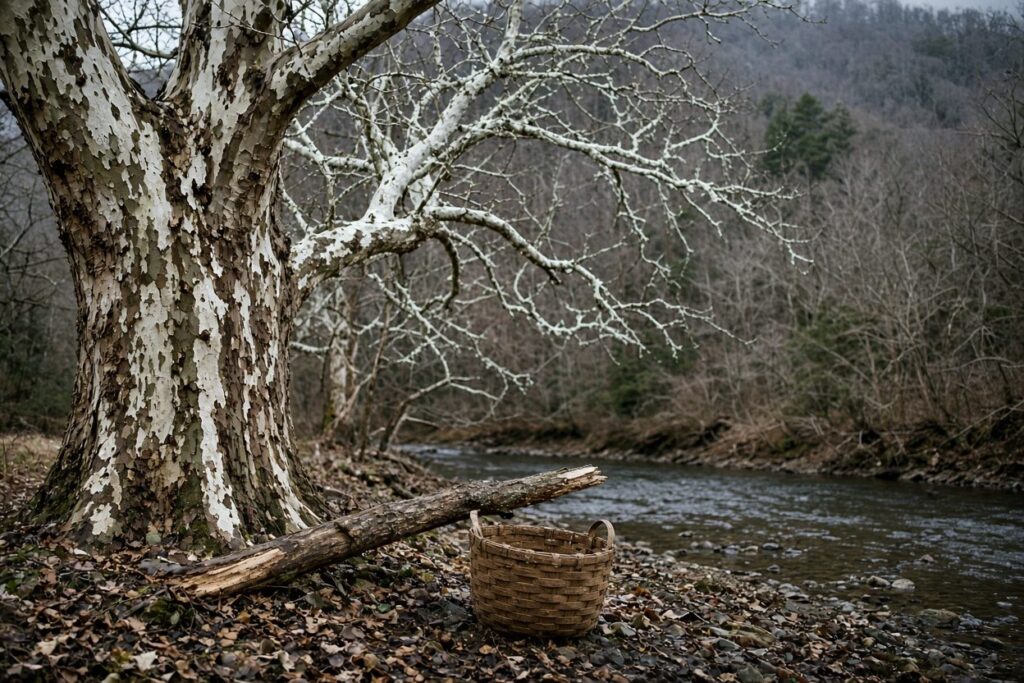
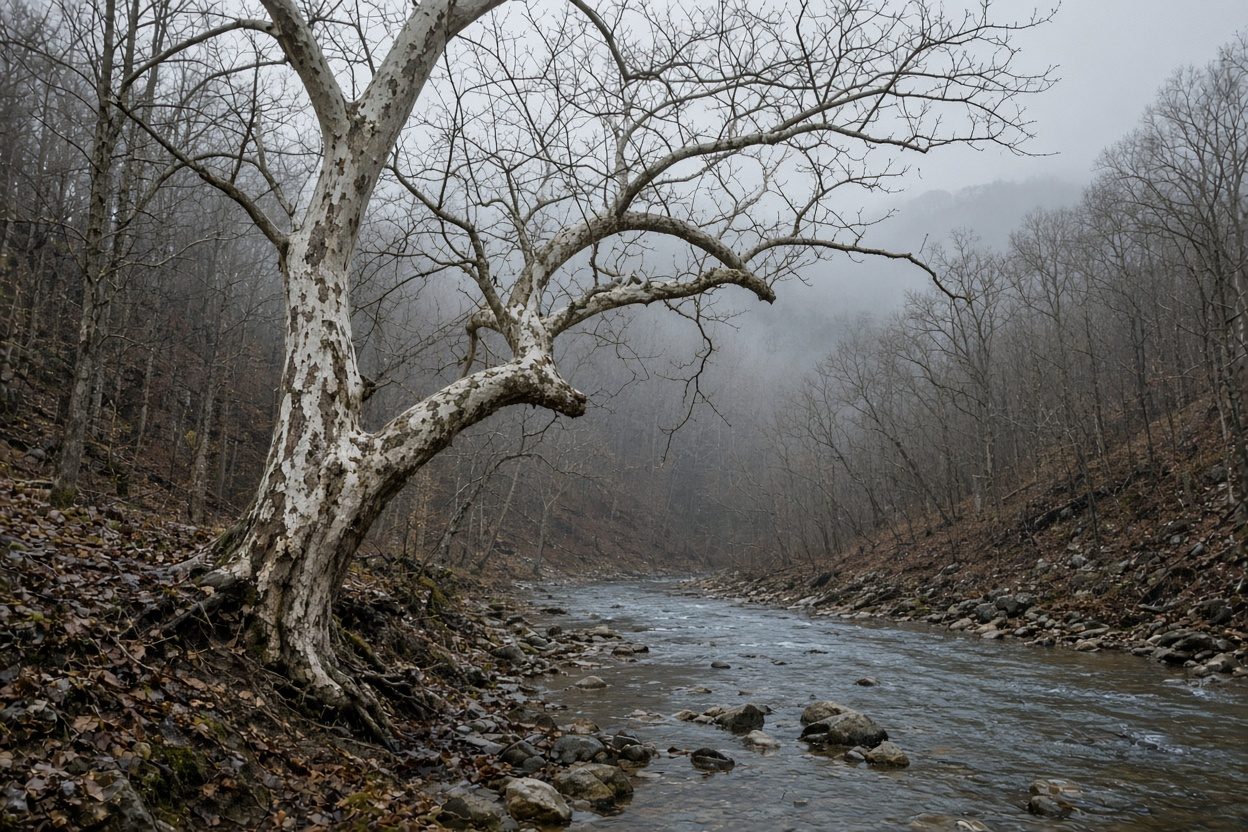
The big sycamore at the creek mouth below our place drops a limb most winters, and when it does I go down with a basket and gather the bark before the rain gets into it. My grandmother called that tree the old ghost, because on a gray January afternoon its top limbs stand out white against the ridge like something left over from a dream. She was not a fanciful woman. She just called things what they looked like.
American sycamore, Platanus occidentalis, is the great creek tree of the southern mountains. If you have followed a branch of the French Broad or any of the little creeks that feed it, you have walked under one. It is easy to know, generous with what it sheds, and a good tree to learn bark work on, because it teaches you the first rule of gathering bark: take what the tree has already let go.
A basket, a pair of gloves, and something to wipe your hands on round it out. Creek banks in January are cold work.
Know the tree before you take from it

I will say this once and trust you with it: never use any wild plant on the strength of one book, one app, or one article, this one included. Confirm it with more than one good guide and, if you can, an experienced local forager. When in doubt, leave it.
Sycamore is one of the few trees you can name from a quarter mile off in winter. The bark on the trunk and lower limbs flakes away in thin, irregular plates, leaving a patchwork of tan, olive, gray, and cream. Higher up, on the younger limbs, the bark peels away to smooth, bone-white wood. That white crown is the thing to look for.
Up close, look for the seed balls. Round, brown, about the size of a big marble, they hang on long stems all winter and fall apart into fluffy seeds by spring. The leaves, when you find them dried on the ground, are big and broad, with three to five shallow points, a little like a maple’s but coarser.
It wants water. You will find it on creek banks, river bottoms, and wet flats, almost never on a dry ridge.
One caution on the tree itself. The fine fuzz on young sycamore leaves and the down inside the seed balls can irritate your eyes and your throat if you are breaking them up in a pile. Work with bark, not with seed balls, and don’t stand downwind of a pile of crushed ones.
Gather only what the tree has dropped
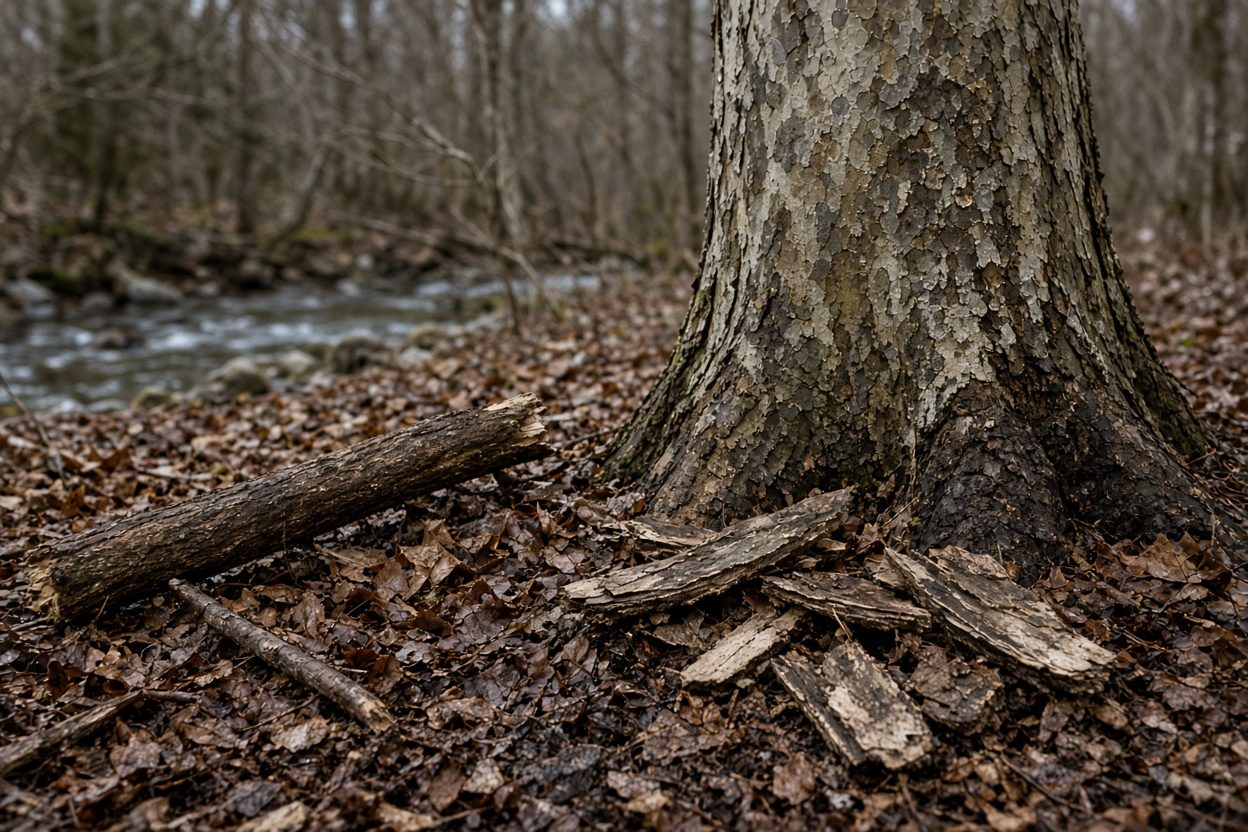
Sycamore sheds bark on its own every year, which is how it gets that patchwork look. I do not peel bark off a standing, living sycamore, ever, and I would ask the same of you. Stripping bark wounds a tree, and a creek-bank sycamore already has enough to contend with from floods and ice.
There are two good sources of bark without harming anything:
– Fallen limbs after a storm. Winter wind and ice bring down limbs, especially from the older trees. A freshly fallen limb, no more than a few days on the ground, is the best material you will find.
– Pruned limbs. If a neighbor is trimming a sycamore off a fence line or a barn roof, ask for the cuttings.
The plates that have already flaked off and lain in the creek leaves for months are not much good. They are mostly dead outer bark and usually moldy. Fresh limbs are what you want.
Gather on your own land or with permission. On national forest land in western North Carolina, small-scale gathering for personal use is governed by the forest’s rules and sometimes needs a permit, so check with the district office before you pick up so much as a stick. Avoid trees beside busy roads, below a parking lot, or along a creek that takes runoff from a field you don’t know.
Taking bark from a fallen limb
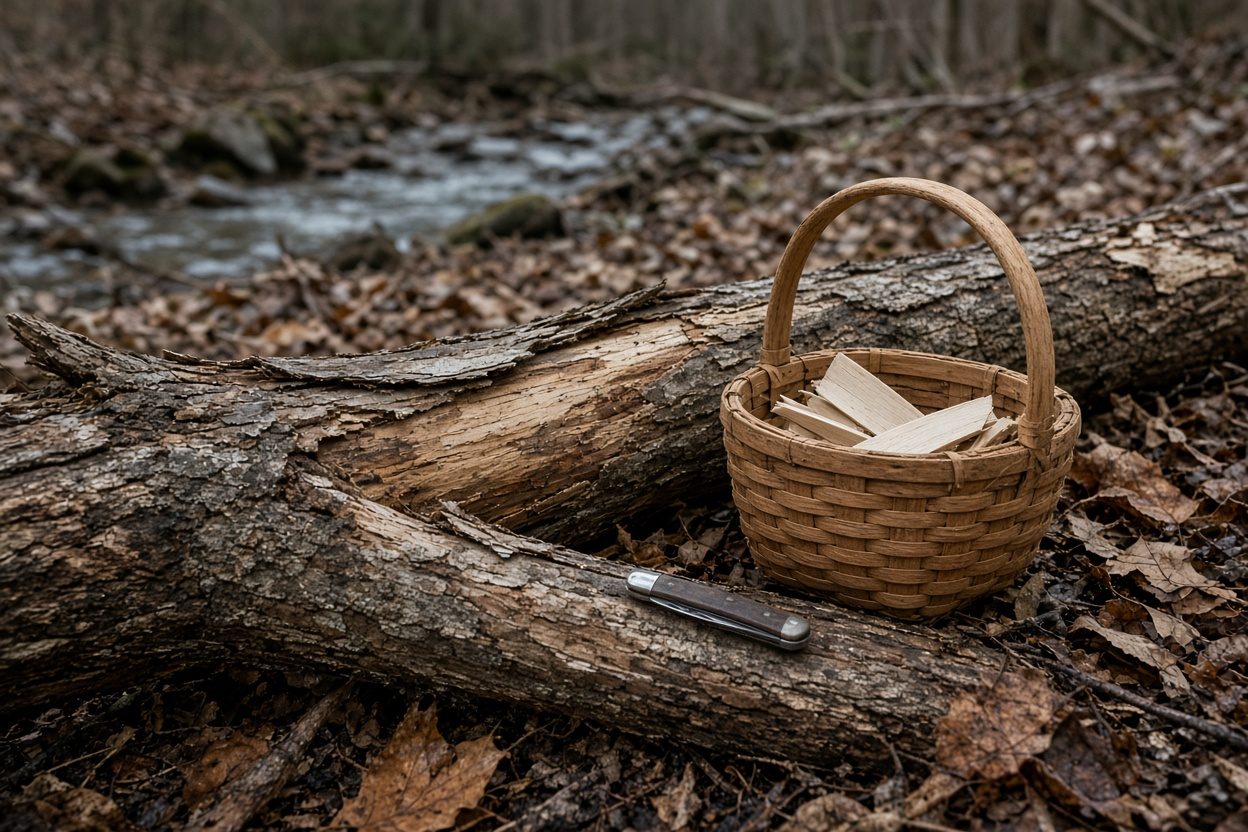
Work on limbs about wrist thick or smaller. Brush or scrape off the moss and creek grit with the back of the hori-hori. Then slip the edge under the bark and lift it in strips. On a fresh limb, the outer bark and the inner bark beneath it will often come up together. The inner bark is the paler, softer layer right against the wood, and that is what the old preparations used.
Take a basket’s worth and leave the rest of the limb to rot back into the bank. That is where the salamanders live.
Drying and storing
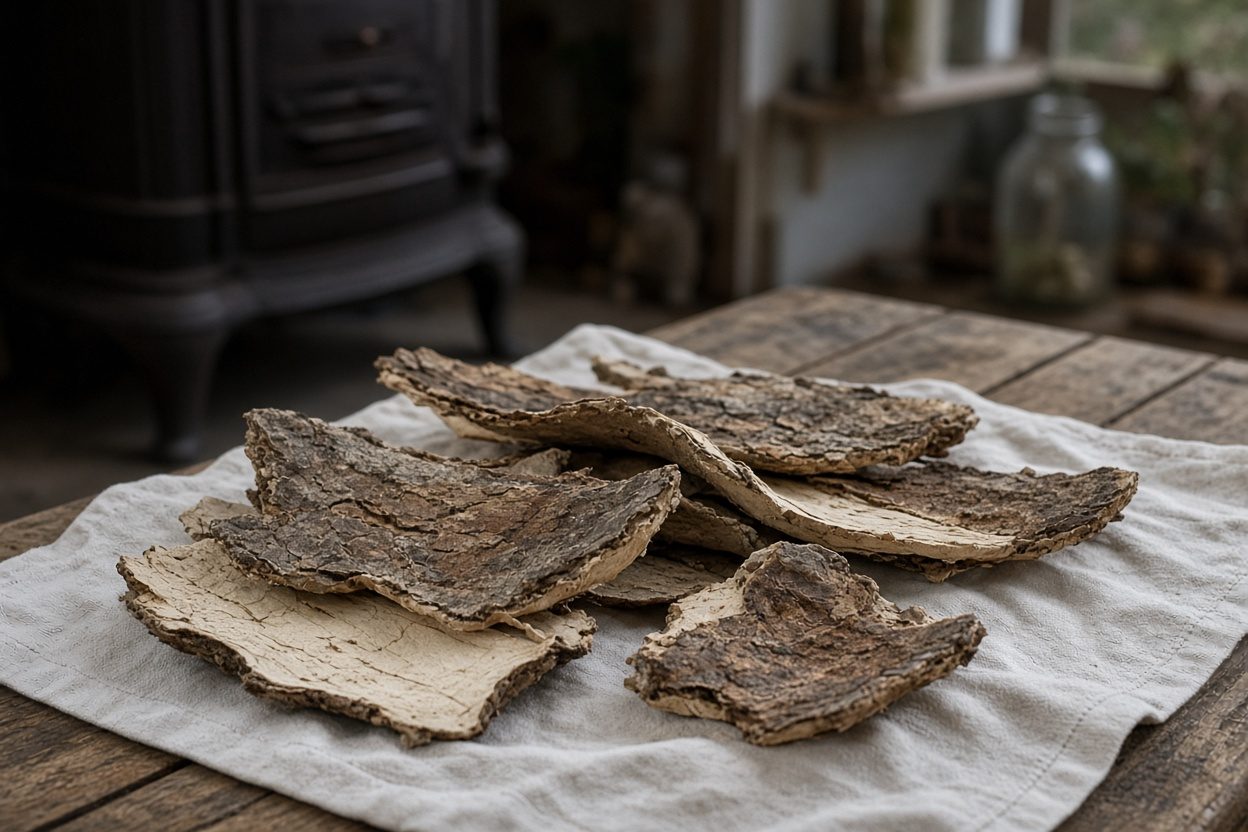
Bring the bark home and cut or break it into pieces about an inch long while it is still pliable. Once it dries, it goes hard as a shingle.
Spread the pieces in a single layer on a screen or a clean towel, somewhere warm and airy and out of the sun, and lay cheesecloth over them. Up here, near the wood stove is best. Turn them daily. In a week or so they should snap clean when you bend one.
Pack them into a mason jar, label it with the tree, the creek, and the date, and keep it in a dark cupboard. Our mountain damp is hard on dried bark, and I go over how I fight it in how to store mountain herbs through a humid Appalachian winter.
A simple sycamore bark decoction

Bark needs simmering to give anything up. This is the plain decoction the old folks made from most of the barks they used.
1. Put a small handful of dried bark pieces in a stainless or enamel pot with about two cups of cold water.
2. Bring it slowly to a simmer, cover, and keep it barely bubbling for about twenty minutes.
3. Let it sit off the heat for ten minutes, then strain it through a doubled layer of cheesecloth.
The liquid comes out a clear reddish-tan, and it tastes plainly of bark: woody, a little bitter, and puckery from the tannin. Use it the same day. Pour what is left on the compost.
How sycamore bark has been used
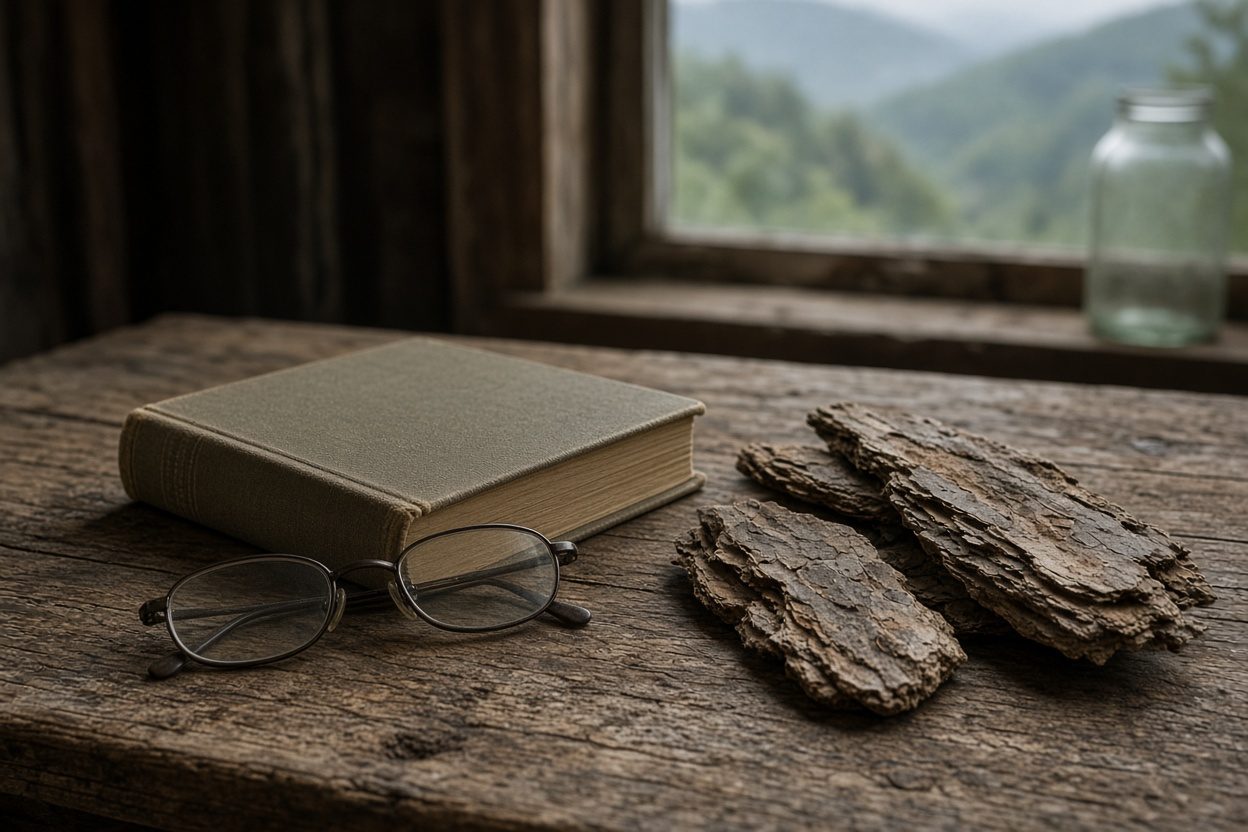
Cherokee use of sycamore is recorded in the ethnobotanical literature, including Paul Hamel and Mary Chiltoskey’s Cherokee Plants and Their Uses. The Cherokee knew this tree long before my people came up these creeks, and I send readers to that source for what the Cherokee themselves recorded, rather than repeat it secondhand.
In the settler folk tradition I grew up in, sycamore bark was one of the astringent barks, used much like white oak, in teas and as a wash. My grandmother made a strong bark tea from a fallen limb now and then for washing, the way she made one from oak. I share that as family history and as the record, not as advice. I make no claim that sycamore bark treats anything, and I give no amounts for anyone’s health. If you are pregnant, nursing, or on medication, leave strong bark teas alone. For anything that worries you, see a doctor.
What I’ve gotten wrong
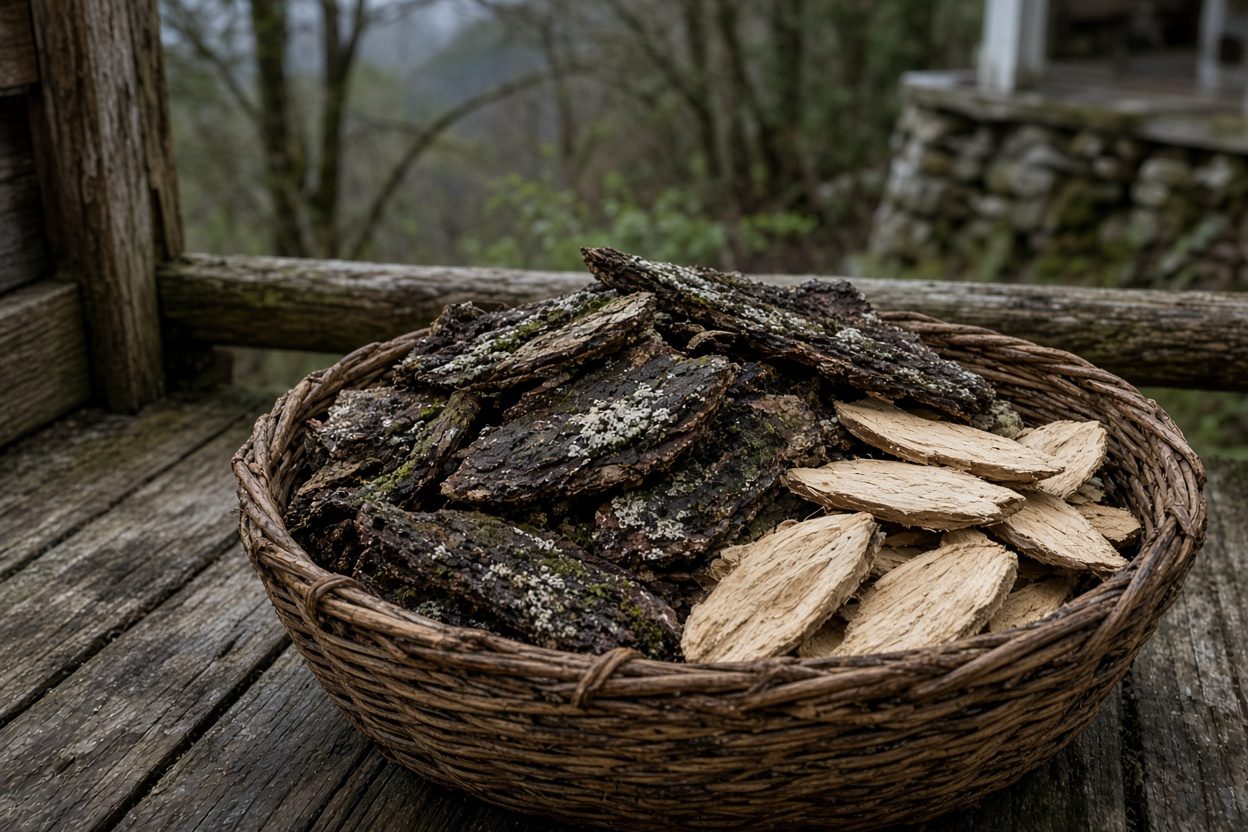
I once filled a whole basket with the loose plates around the base of that big tree, because they were easy to pick up. They had been lying in wet leaves since the fall, and when I brought them in by the stove the kitchen smelled like a cellar by morning. Fresh limbs only. The tree is generous, but it is not that generous.
Where the bark ends and the knowing begins
Bark work is a good teacher, because it makes you slow down and think about the tree before you think about the jar. Knowing which trees can spare what you take, which ones look alike in winter, and when to leave a tree be, is most of this craft.
I walk through it plant by plant in my book, Appalachian Medicinal Plants: how to identify each one without guessing, when to gather, and how to do it so the mountain still has it for the next person. If you’d like to keep going with barks, my notes on how to forage and use white oak bark and wild cherry bark in Appalachia are good next stops.
