How to Forage Sweet Birch Twigs in Appalachia for Winter Tea
How to forage sweet birch twigs in Appalachia: spot the tree before leaf drop, harvest small twigs legally, then dry or cold-steep a wintergreen-scented tea.
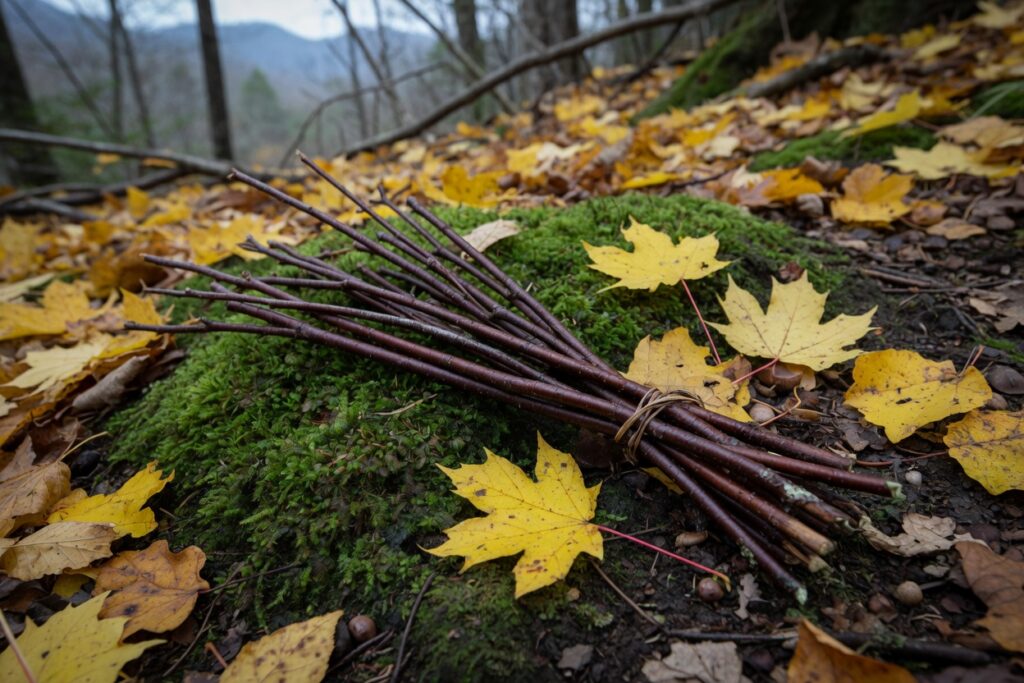
Scratch the bark of a thin birch twig with your thumbnail and hold it to your nose. If the smell is sharp, sweet, and unmistakably wintergreen, you are holding sweet birch, and you can find it in most cove hardwood forests from the Blue Ridge down through the Smokies. That scent is the whole reason mountain families have kept this tree in mind for a long time, and it is the reason I walk my own north-slope trees every October before the leaves come down.
October is the month for finding and marking, not for cutting. The leaves are still on, the tree is easy to name, and by January it will be a bare gray stick among a hundred other bare gray sticks. A twig tea is a winter job, but the work starts now.
Know the tree before you touch it
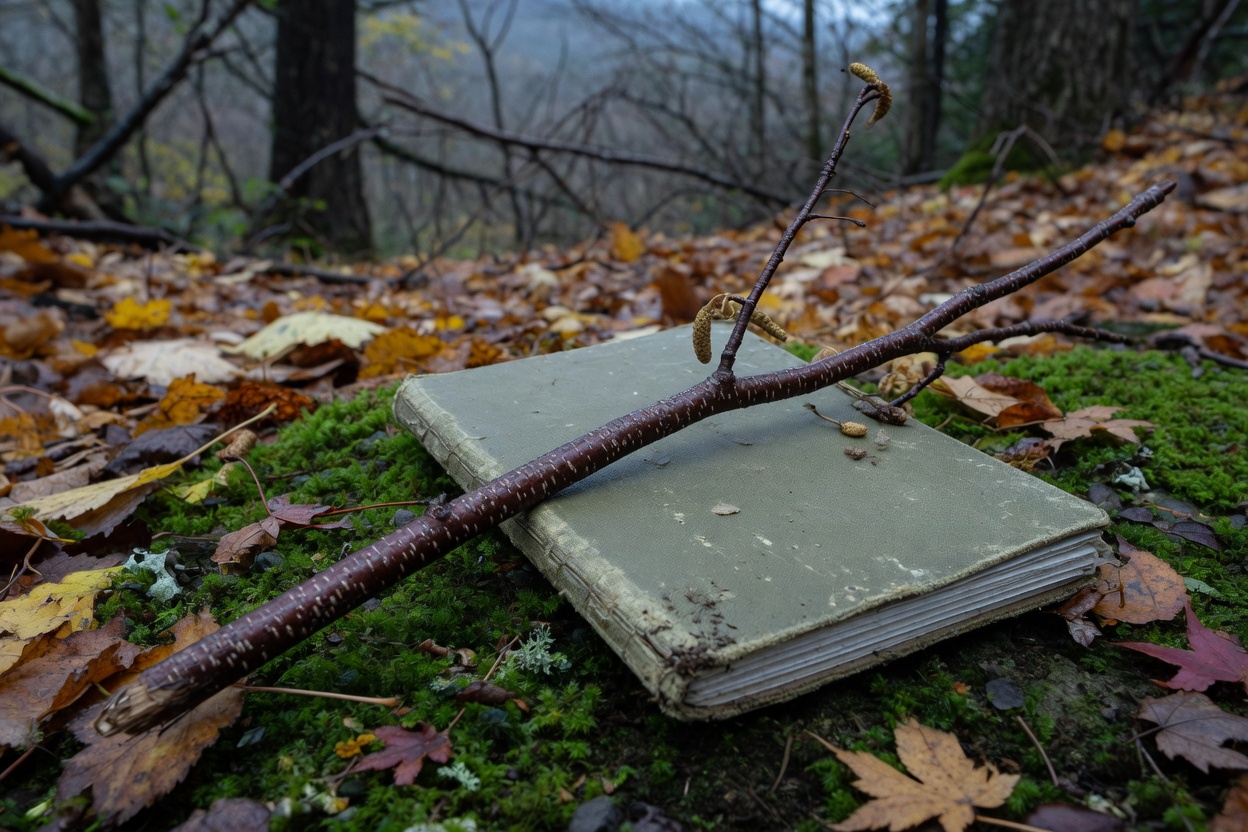
Sweet birch, Betula lenta, goes by black birch and cherry birch in the mountains, and the cherry name is a fair warning. Young trunks and branches have smooth, dark reddish-brown bark with short horizontal pale lines, and from ten feet away it can pass for a wild cherry. On older trees the bark darkens and breaks into big irregular plates.
The leaves tell you the most in fall. They are oval, pointed at the tip, finely toothed along the edge, and turn a clear butter yellow. Sweet birch likes the moist, rich soil of coves and lower slopes, though I find it climbing well up the ridges too.
The scratch test is the deciding cue. Bend a small twig until it snaps, or shave a bit of bark with your pocketknife, and smell it. Sweet birch gives you wintergreen right away, strong enough that some of my grandchildren think it is candy. One honest note: yellow birch, Betula alleghaniensis, smells much the same, but it has shiny silvery-gold bark that peels in thin curls. If you can tell them apart by bark, good. If not, you are not ready to harvest either one yet.
The look-alike caution
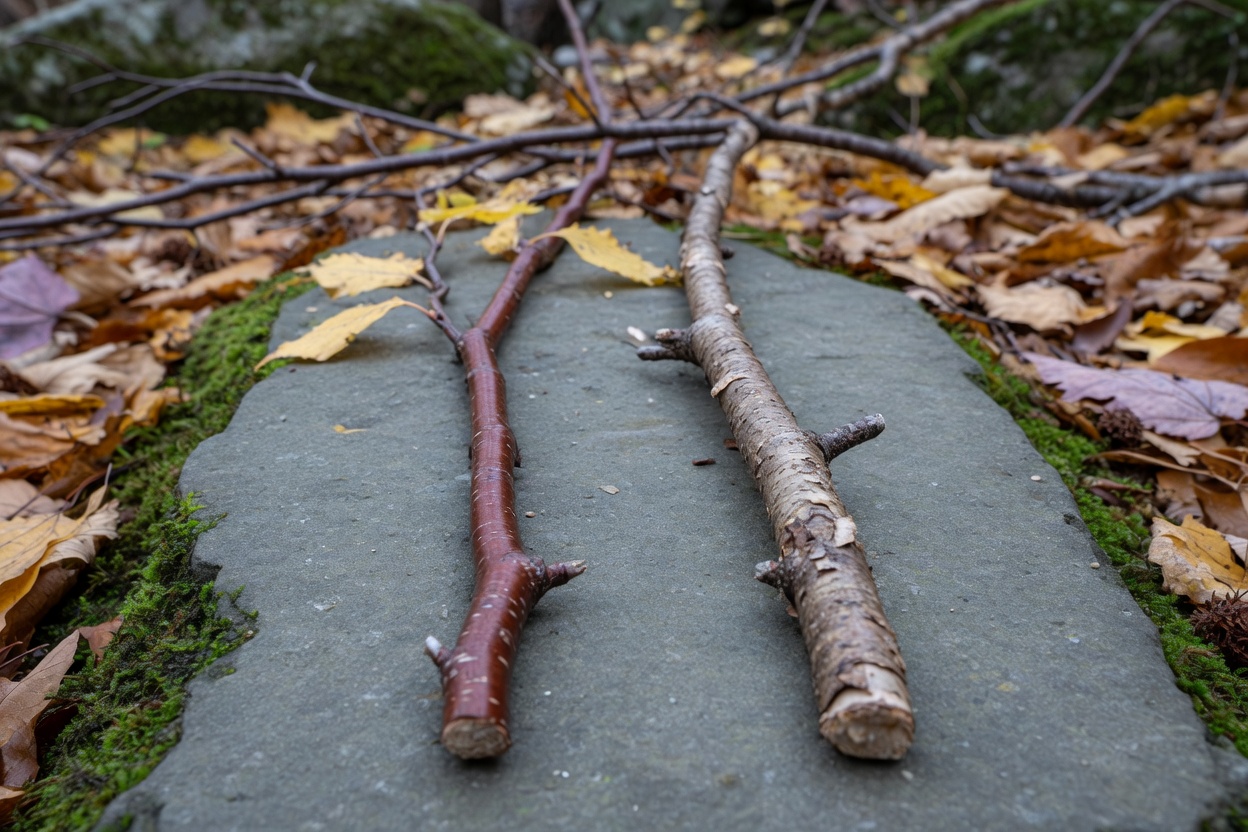
Wild black cherry, Prunus serotina, grows right beside sweet birch and has very similar young bark. A scratched cherry twig smells bitter, like almond extract, not like wintergreen. That bitter-almond smell is your signal to put the twig down and walk away. Cherry twigs are not for this use.
I will say here what I say in my own kitchen. Do not harvest anything you cannot identify, and that means checking more than one reputable source and, if you can, walking the tree with an experienced local forager. My guide to dangerous look-alikes goes through the pairs that trip people up. Smell is a good cue, but it should confirm what bark, leaf, and habitat already told you, not stand alone.
Once the leaves fall, you will lean on bark and twig alone. I wrote up that skill in how to identify Appalachian medicinal plants in winter, and I would read it before you go back to a marked tree in January.
Where you may gather, and how much to take
Land permission comes first, and it differs by owner. National parks, including Great Smoky Mountains National Park and the Blue Ridge Parkway, prohibit gathering plants, so a pocketful of twigs from either is a violation, not a gray area. National forest rules vary by forest and by district, and several of the forests in NC, TN, VA, and GA ask for a permit or limit personal-use gathering. Call the district ranger office for the forest you plan to walk and ask exactly what is allowed. On private land, ask the owner and thank them with something from your shelf.
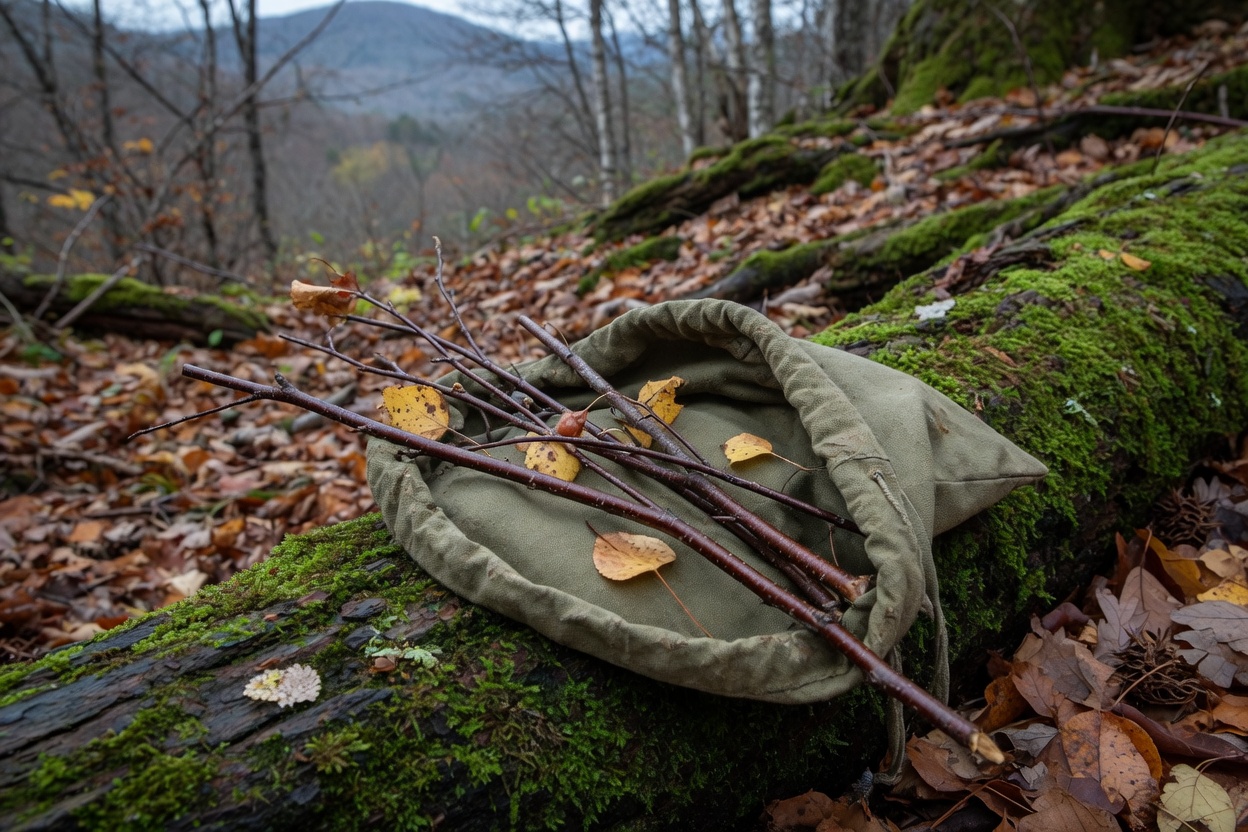
Then harvest like someone who wants the tree to be there next year. Take only small twigs, the thin ones about the thickness of a pencil or smaller, and cut them cleanly just above a bud or a side branch. Never strip bark off a trunk or a limb, since girdling a tree kills it. I take a few twigs from several trees and leave most of every crown untouched, and I do not go back to the same tree two winters running.
Dry them or steep them fresh

Winter is the time to cut because the tree is dormant, and the twigs are clean and easy to handle. I cut mine from December through February, on a dry day.
For drying, snip the twigs into pieces about as long as your finger, bundle a few with kitchen string, and hang them in a dry, airy spot out of direct sun. My drying shed works, but a kitchen rafter or a cool back room is fine. They are ready in two to three weeks, when the twigs snap crisply instead of bending. Drying does mellow the scent, and I will be plain about that: the fresh twig is the loudest, and a dried bundle is gentler and woodier.
For a cold infusion, which I like best on a mild winter day, break fresh or dried twigs into short pieces and pack a handful loosely into a clean wide-mouth pint jar. Fill it to the shoulder with cool water, put on the lid, and leave it on the counter overnight. In the morning, pour it through a doubled square of grade-90 cheesecloth to catch the bark flecks.
For a warm tea, pour just-off-the-boil water over the same kind of twig pieces, cover the cup, and let it sit until the color and scent come up. The taste is light and a little sweet, nothing like candy, more like a cold morning in the woods. Honey is not cheating.
A one-time safety note

The wintergreen scent in sweet birch comes from compounds related to salicylates, the same family as aspirin. For that reason this is not a tea for children, and not for anyone who takes blood thinners or has an aspirin sensitivity. That is the whole warning, and I will not repeat it every paragraph. If you are unsure whether it applies to you, leave it out.
I share this as a tradition and a taste, nothing more. Mountain households have steeped birch twigs for generations, and I learned the tea from my grandmother’s kitchen. I make no claim about what it does for the body, and nothing here is medical advice.
Storing what you put up

Keep dried twig pieces in clean, bone-dry mason jars with tight lids, in a dark cupboard away from the stove. Humidity is the enemy in our mountains, and a damp jar will mold before you notice. If you need a refresher on keeping herbs dry through a wet winter, my post on storing mountain herbs through a humid Appalachian winter covers it. Label each jar with the date and where you cut.
Fresh twig pieces keep a day or two in the refrigerator in a closed jar. After that I would dry them or let them go.
A few honest cons before you start. The yield is small, the scent fades faster than you expect, and the twig tea is a subtle thing, not a bold one. If you want a stronger wintergreen flavor from a plant that stays green all winter, I wrote up wintergreen in Appalachia, and the mild side of sweet birch pairs well with spicebush twigs in the same jar for a different cup.
If you want the deeper resource, I give birch and its look-alikes a proper treatment in my book, Appalachian Medicinal Plants: how to identify each plant, when to gather, how to harvest without harming the stand, and how the mountain families put them up. This post is one tree and one cold month. The book is how you learn the rest of the woods behind your house.
