How to Forage and Use Sitka Spruce Tips in the Pacific Northwest
Learn to find, harvest, and use Sitka spruce tips in the Pacific Northwest: how to identify the tree, avoid yew, and make spruce tip tea, honey, and oil.
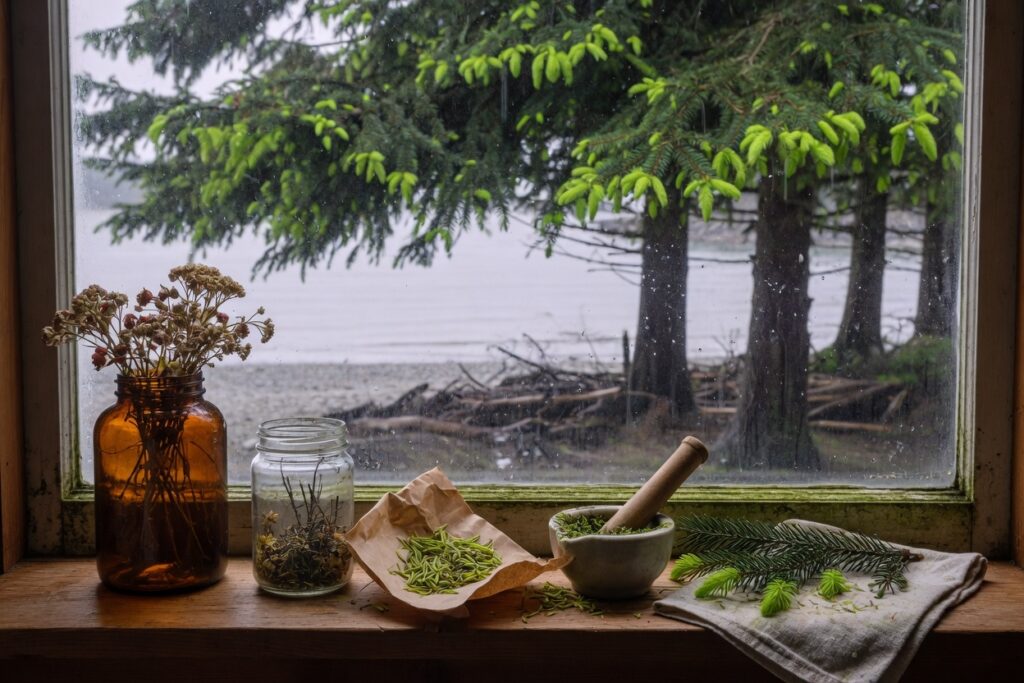
The first week of May, along the saltwater edge west of Sequim, the Sitka spruce put out new growth the color of a lime. For about two weeks the branch tips look like tiny green paintbrushes, each one still wearing a papery brown cap. I have picked them there for more than twenty years, and I still time my trip by the weather, not the calendar.
You can’t pick spruce tips in October, so why write about them now? Because this is the season to scout. The trees are easy to find and mark when the understory has died back, and by April you’ll know exactly where to go. Here’s how I find them, harvest them, and use them.
The rest of what you need is a paper bag, a pair of clean fingers, and a good guide to your local conifers.
Know the tree first
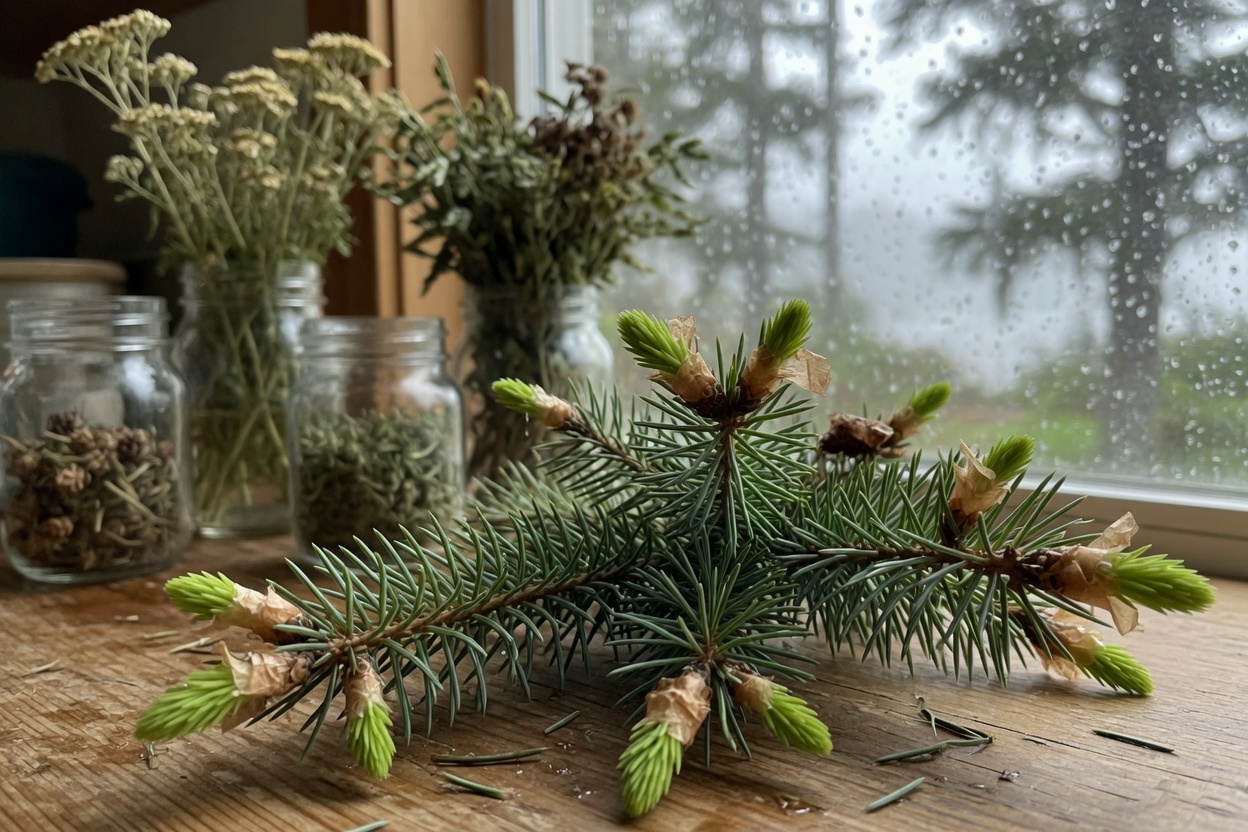
Sitka spruce (Picea sitchensis) is a big tree of the coastal fog belt, and on the Olympic Peninsula you’ll find it along the outer coast and the Strait of Juan de Fuca where the air stays damp. It likes salt air and low ground. If you’re inland on drier slopes, you’re probably looking at Douglas-fir, which is a different tree with a different tip.
Here’s the rule I teach every beginner: spruce is square, fir is flat, pine is in bundles. Pull a single needle off a spruce twig and roll it between your thumb and finger. A spruce needle rolls, because it’s stiff, four-sided, and sharp enough to poke you. A fir needle lies flat. Pine needles come out of the twig in clusters of two, three, or five.
The bark of a mature Sitka spruce is gray-brown and breaks into thin scaly plates, not the deep furrows you’d see on a Douglas-fir. The cones are papery and small compared to a fir’s. Use all of these together. One feature alone isn’t enough.
The lookalike you must avoid
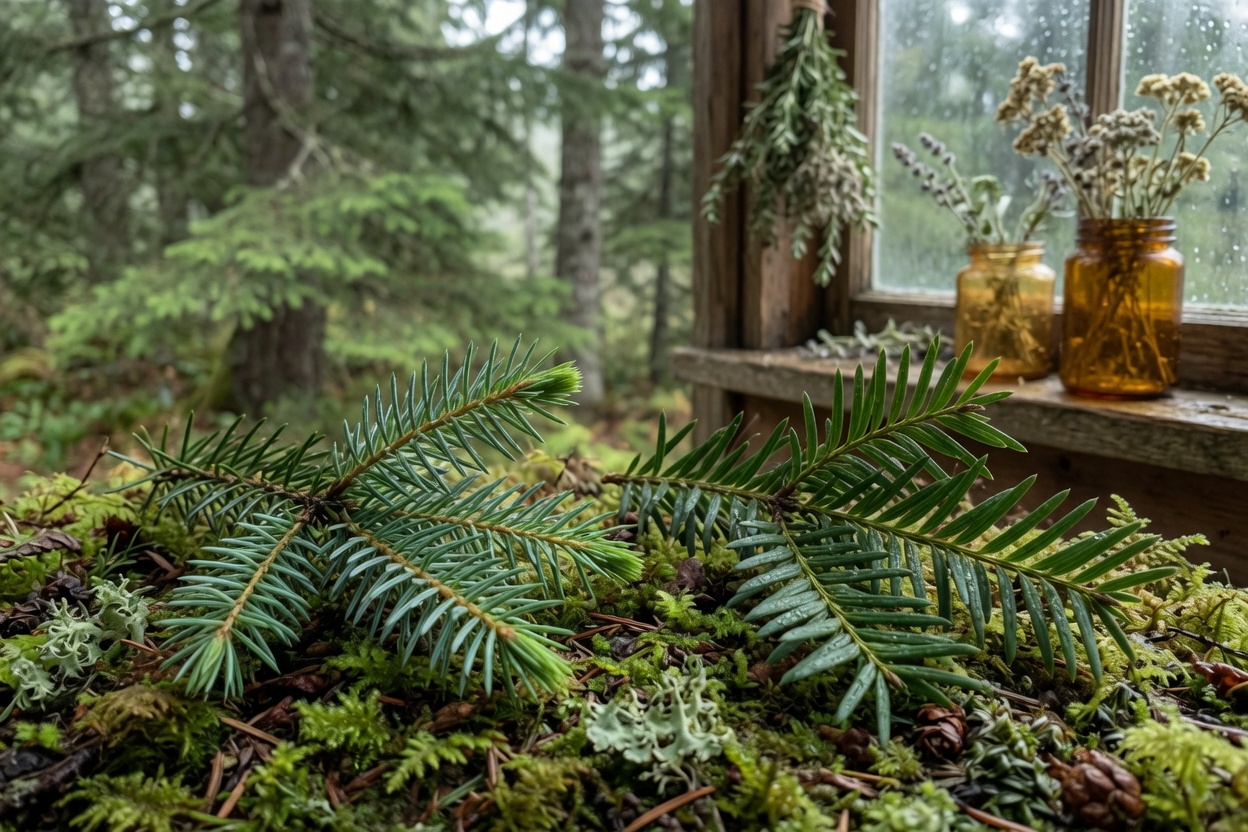
Pacific yew (Taxus brevifolia) grows as a small understory tree in the same damp conifer forests, and it is toxic. Its needles are flat and soft, with two pale stripes underneath, and they sit in two neat rows along the twig. A yew has no resin smell, and it doesn’t make cones. In fall it carries small red, cup-shaped arils.
If the needle is flat and the twig smells like nothing in particular, leave it. That’s the rule I follow. Never eat any wild plant on a book, app, or single source alone. Confirm with multiple reputable guides and an experienced local forager, and when in doubt, throw it out.
When and how to harvest
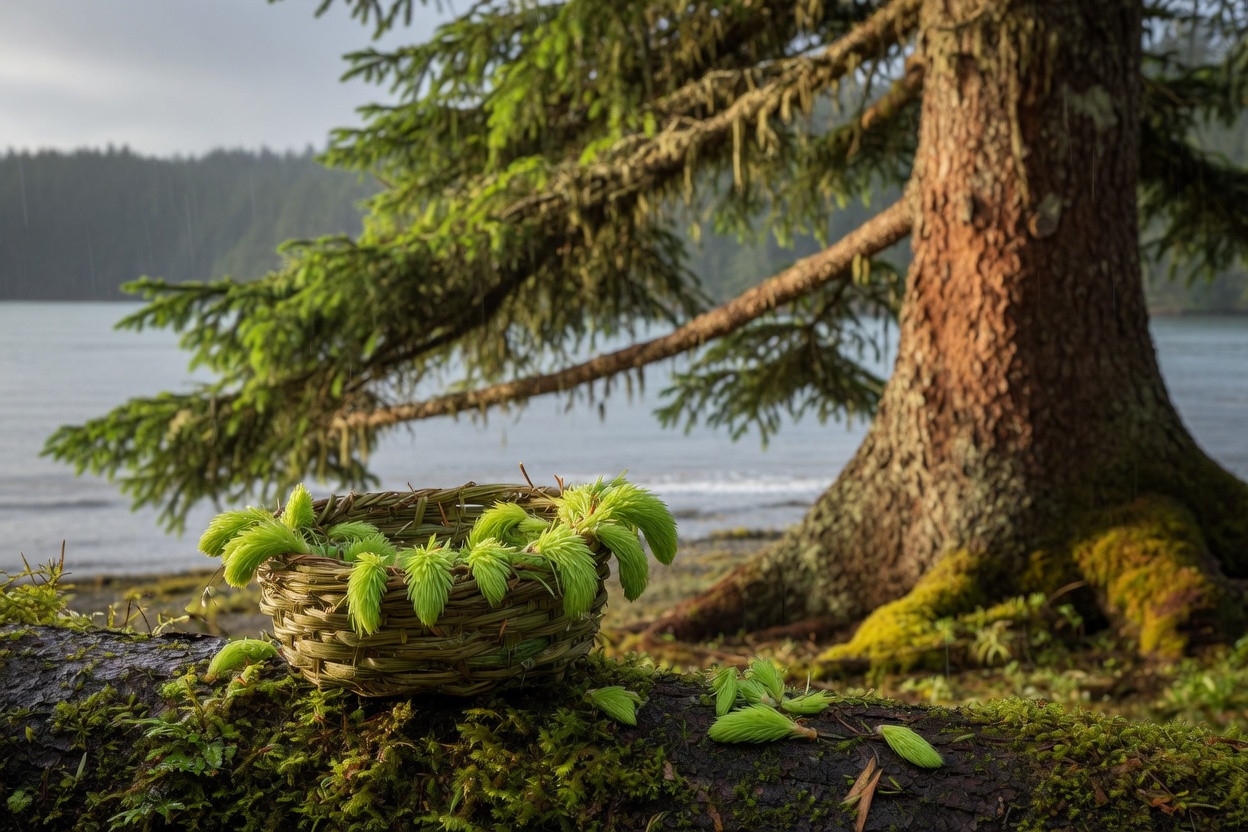
In my part of the Peninsula the tips are ready from late April through May, a little later at higher elevation. You want the new growth when it’s still soft and bright green, before the needles spread out and harden. The brown papery husk at the tip will often fall off if you rub it.
Take only a few from each tree. Pick tips from the outer ends of lower branches, never the leader at the very top of a young tree, and never strip one branch bare. I take no more than a small handful from any one tree, then move on. A tree that loses its leader can grow lopsided for years. The Peninsula has plenty of spruce, and there’s no reason to be greedy with any single one.
Check the land you’re on. Many state and county lands allow personal-use harvest of small amounts. National parks, including Olympic, generally do not. Private land needs the owner’s permission.
Put the tips in a paper bag, not a plastic one, so they don’t sweat. Shake out any bugs and bits of bark when you get home. They keep a few days in the refrigerator, or you can freeze them on a tray and bag them afterward.
Using them
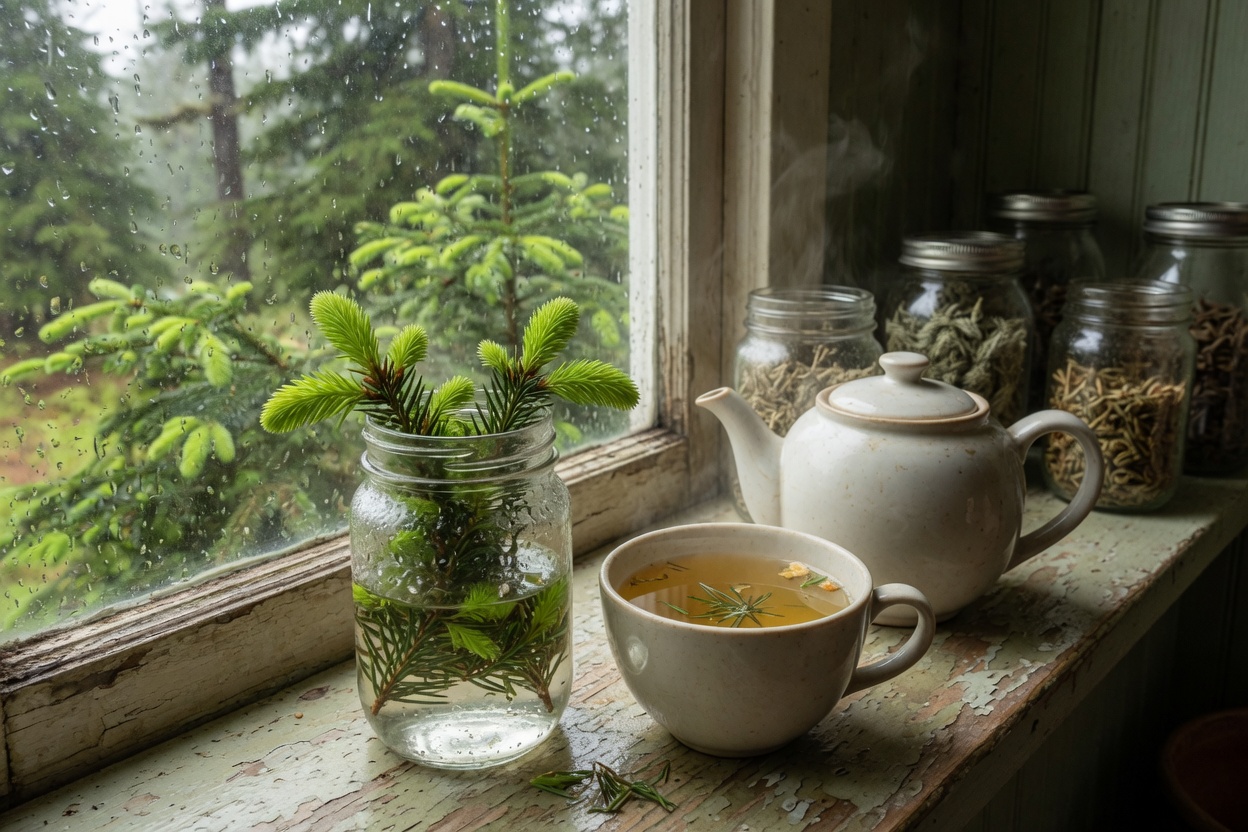
I keep this simple. This isn’t a cookbook, and the tips do their best work without much fuss.
Spruce tip tea. Put a spoonful of fresh tips in a pint jar, cover with just-boiled water, and steep for ten minutes or so. It tastes of citrus and pine resin. I strain it through cheesecloth because the little husks float. If you’d like more on brewing conifers, I wrote about how to forage conifer needles for tea.
Spruce tip honey. Pack a jar loosely with fresh tips and cover with raw honey, stirring to push out air pockets. Leave it a few weeks, turning the jar now and then, and strain through cheesecloth. It’s the same method I use in how to make herbal honey. Keep the tips fully under the honey, since an exposed piece can mold. I lost a jar my second year to exactly that.
Infused oil. Dry the tips first, since fresh plant material in oil can spoil. Cover a jar of dried tips with jojoba oil, set it somewhere warm for two to three weeks, and strain through cheesecloth. It smells like a Christmas tree after rain. Melt a little beeswax into the oil and you have a plain hand balm. The method is the same one in how to make an herbal infused oil.
Dry them. Spread the tips on a screen in a warm, airy spot until they snap. They lose some of the bright citrus note, but they keep a pleasant resin flavor for tea. Store them the way you’d store any dried herb. How to store dried herbs so they last has the details.
A little history
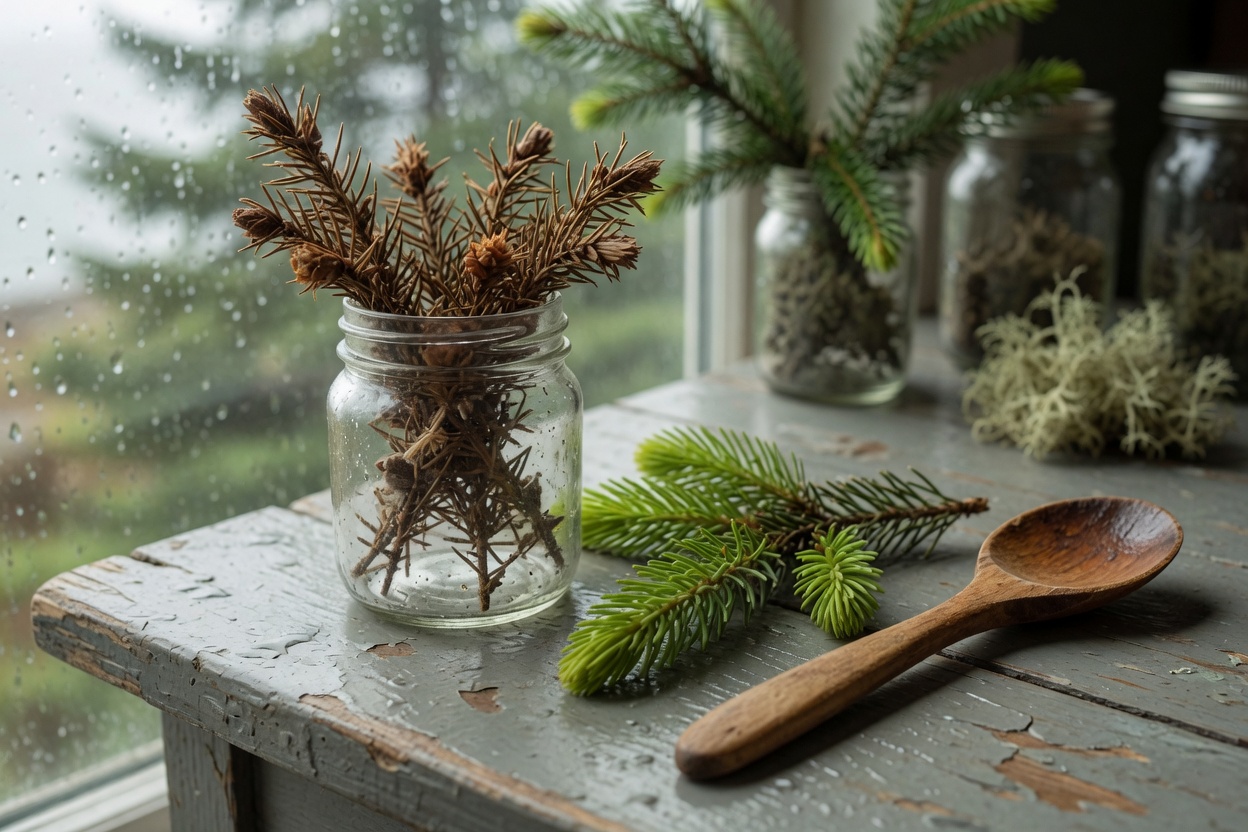
Coastal peoples of the Northwest and Alaska ate the young shoots and the inner bark of spruce, and the Tlingit and Haida are among those documented in published ethnobotany, including Nancy Turner’s Food Plants of Coastal First Peoples. I’m sharing what I learned about this tree from reading and from non-Indigenous teachers. The people who knew it first are over there, and I credit them.
Spruce tips are traditionally brewed as a seasonal tea and a flavoring. I don’t make claims about what they do for anyone’s body. I make tea with them because I like the taste of April in a cup.
Scout now
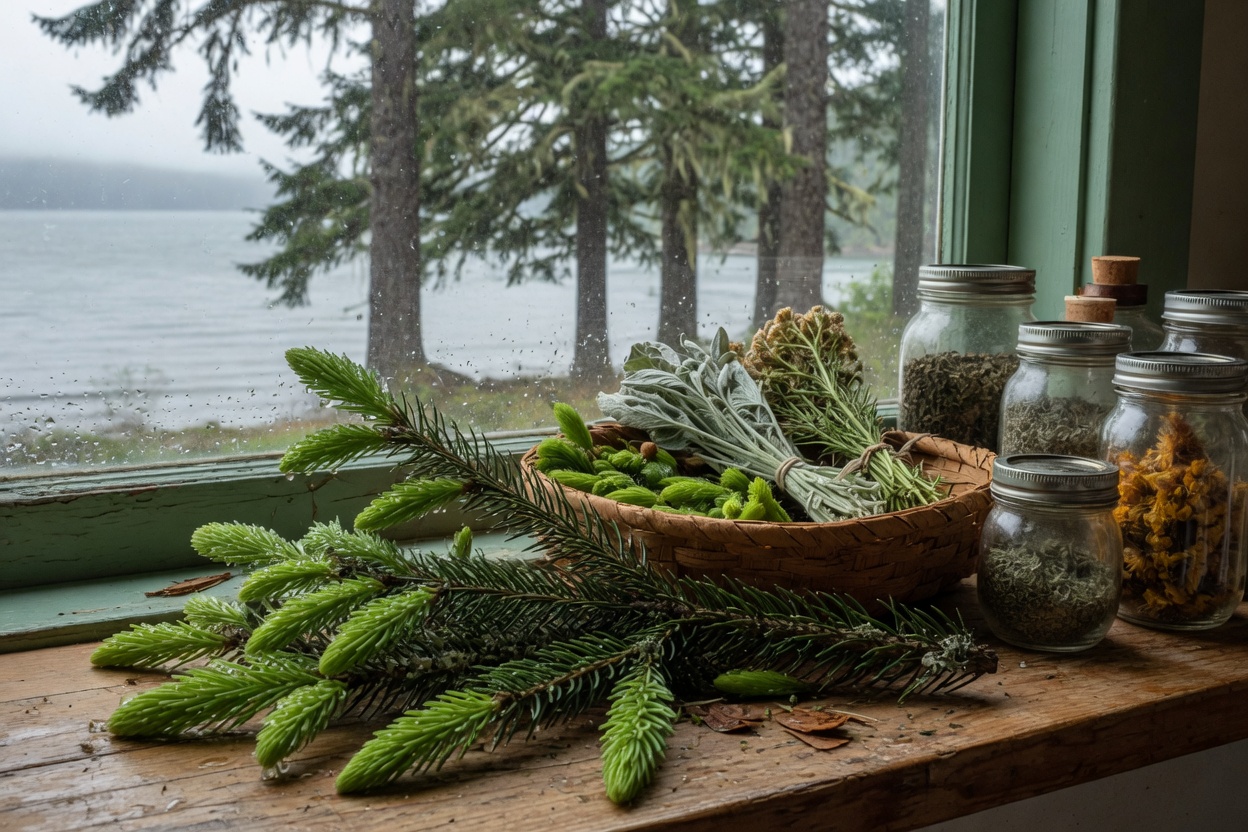
Walk the shoreline or the spruce stands this winter with a notebook. Mark the trees with a note or a photo of a landmark, check which ones have easy-to-reach lower branches, and note where public land ends. When the bright green tips arrive in spring, you’ll be ready.
If you’re building a home apothecary around what grows near you, I cover more spring plants in what to forage in the Pacific Northwest in spring. It’s worth a read before the season turns.
I go deeper on identification, safe harvest, and the plants that grow in these woods in my book, Pacific Northwest Medicinal Plants.
