How to Forage and Use Pacific Madrone Bark in Winter
How to forage madrone bark the right way: gather it from storm-fallen limbs, never a living tree, then dry it, make a simple bark tea, and store it for winter.
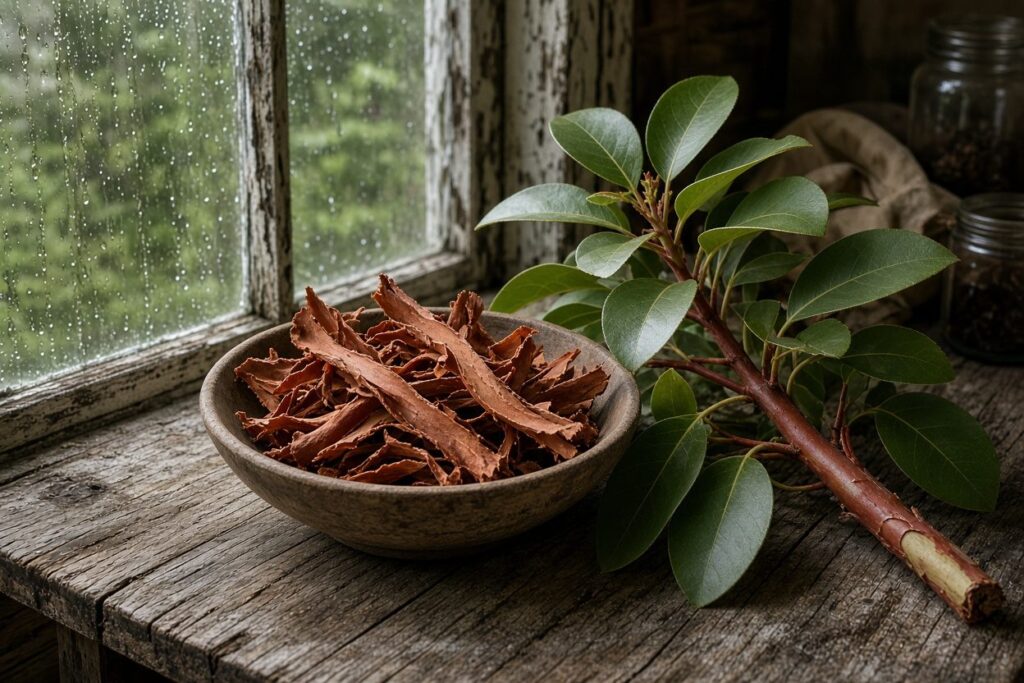
The November windstorm that took our power out for two days also dropped a madrone limb across the bluff trail above Dungeness Spit, and I spent the next morning sitting on it with a paper sack, peeling the loose red bark into curls. A neighbor walking her dog asked whether I was allowed to do that. Fair question. The answer is yes, from a limb on the ground, and no, from the tree it came off.
Pacific madrone, Arbutus menziesii, is the tree that makes people on the rain-shadow side of the Peninsula feel lucky. It leans out over salt water on the driest bluffs we have, and its bark is the color of cinnamon. It is also a tree in trouble across much of its range, which shapes everything about how I gather it. Here is how I do it, start to finish.
A paper sack, a soft brush, and a pair of gloves round it out. You do not need a saw. If a limb is too big to work by hand, it is too big for you to be wrestling on a bluff.
Know the tree before you touch it

One line, said plainly: never prepare or use any wild plant on the strength of a single book, app, or article, this one included. Check it against more than one reputable guide, ideally with an experienced local forager beside you. When in doubt, leave it.
Madrone is one of the easier trees in the Northwest to know, and that is a gift. It is a broadleaf evergreen, so in winter it still carries thick, leathery, glossy leaves two to five inches long, dark green on top and pale beneath. The bark on young limbs is smooth and reddish-orange. Each summer it peels away in thin, papery strips and curls, exposing a smooth skin underneath that starts out pale green-yellow and reddens as it ages. In fall and into winter you may see clusters of small, bumpy, orange-red berries.
Its home is dry, sunny, rocky ground: the bluffs above the Strait, the San Juans, the gravelly slopes around Puget Sound. If you are standing in a wet cedar bottom, you are not standing near a madrone.
Where to gather, and the rule I don’t bend
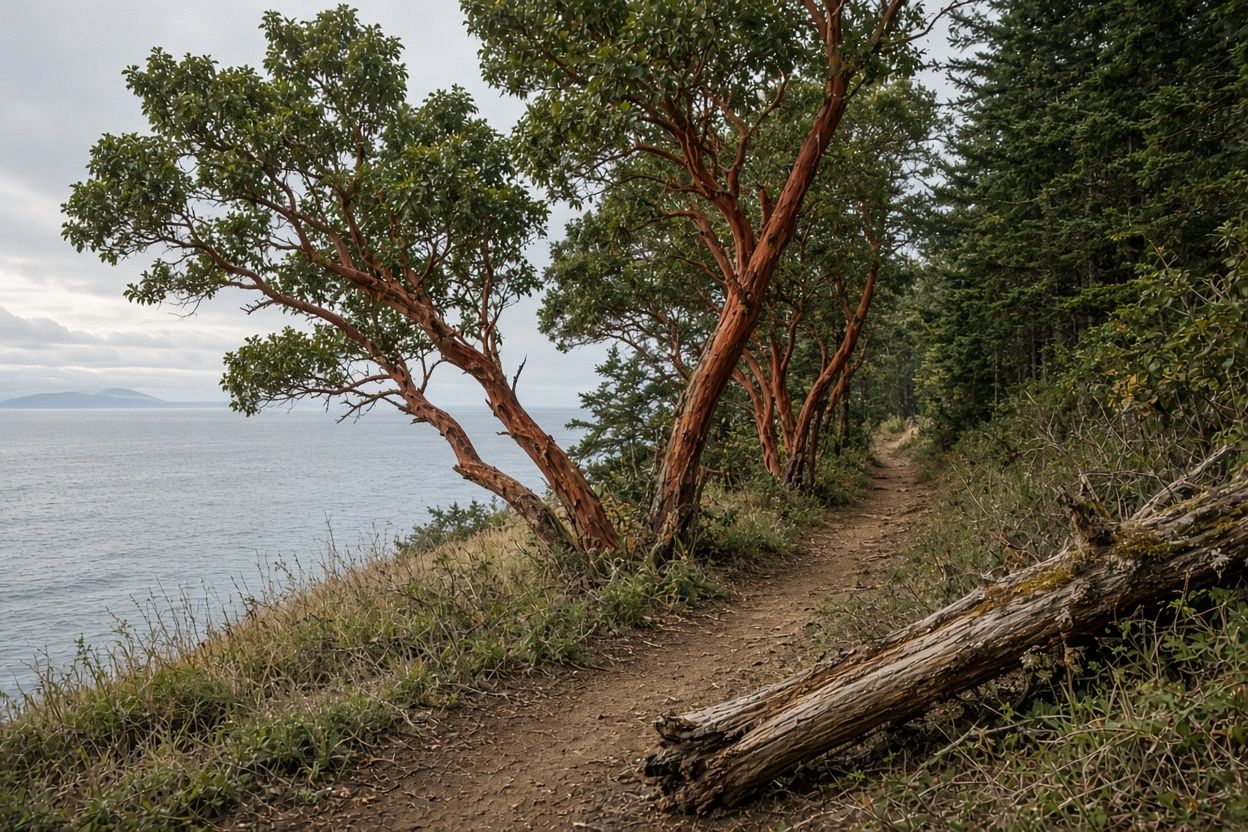
Madrone across the Pacific Northwest has been hit hard by drought stress and fungal cankers and leaf blights. A healthy tree can shed its bark on its own schedule. A tree that has a strip of bark peeled off by a person has an open wound in a season when fungal spores travel on every wet wind.
So my rule is simple. I never take bark from a standing, living madrone. Not a strip, not a curl hanging loose that looks like it wants to come off. I gather only from limbs that have already come down, usually after our late-fall and winter storms, and only where I have permission. On public land, check the rules for the specific park or forest before you pick up so much as a twig. Many parks do not allow gathering at all.
A fresh windfall is what you want. A limb that has lain on the ground through two months of rain grows mold under the bark, and you will smell it before you see it.
Gathering bark from a fallen limb
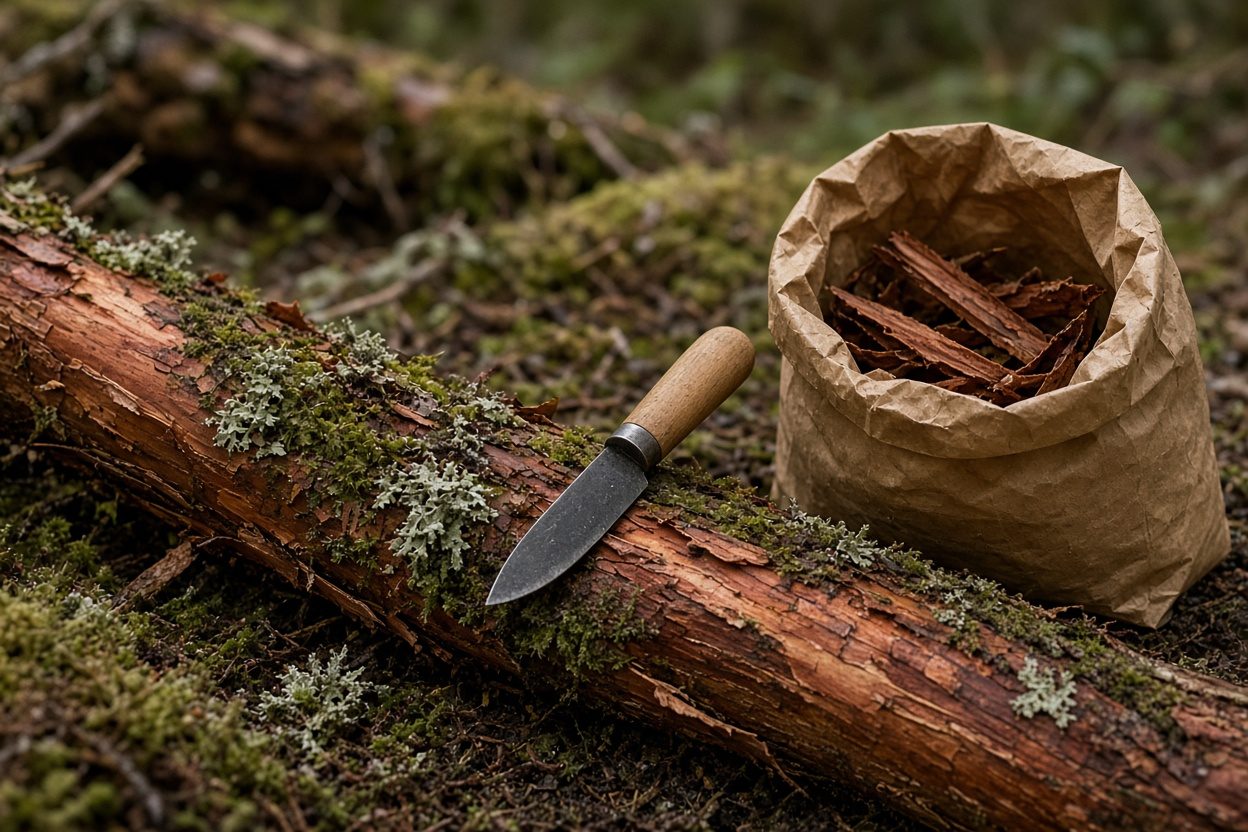
Work on limbs no thicker than your wrist. On those, the bark is thin and comes away in long ribbons.
Brush off the moss, lichen, and grit first. Then slide the edge of the hori-hori under a lifted edge of bark and peel toward you, letting the curl come off in one piece where it will. On a fresh limb the outer red bark often separates from the paler layer underneath. I keep both, in separate piles, and label them.
Take what you need and leave the rest of the limb where it lies. Madrone wood breaks down into good habitat for beetles and fungi, and a bluff trail does not need to look picked over.
Drying and storing it
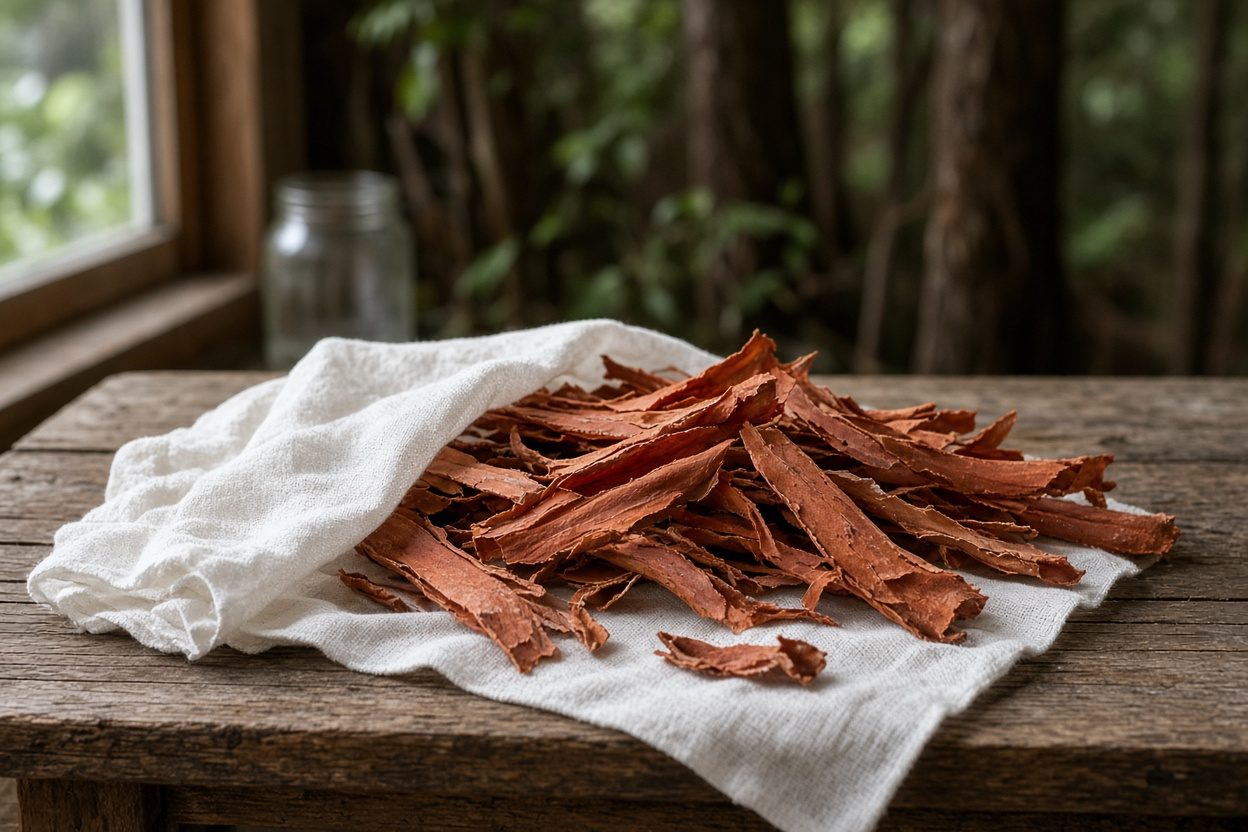
Bring the curls home the same day. Spread them in a single layer on a screen or a clean cotton towel, somewhere warm, dry, and out of direct sun, and lay a sheet of cheesecloth over the top to keep dust off. Turn them once a day.
Thin curls are brittle in four or five days by a wood stove, longer in a cool room. They are ready when they snap rather than bend. Break them into pieces about an inch long and pack them loosely into a wide-mouth jar. Write the tree, the place, and the date on a strip of masking tape. Kept dark and dry, my jars hold their color and their sharp, woody smell for well over a year. I wrote more about why light and damp are the enemies in how to store dried herbs so they last.
A simple madrone bark tea
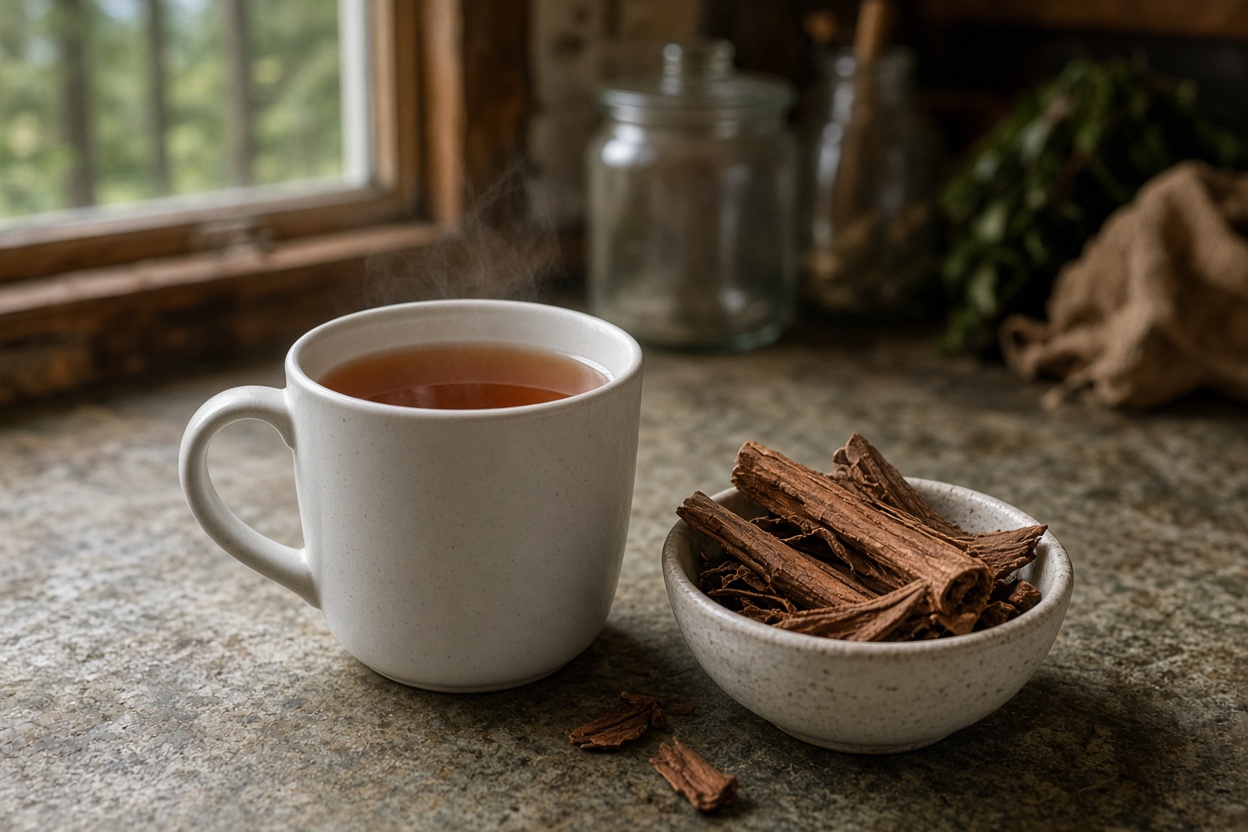
Bark is tough material, so it wants a simmer, not a steep. This is a basic decoction, the same method I walk through in how to make an herbal decoction from roots and bark.
1. Put a small handful of dried bark pieces in a stainless or enamel pot with about two cups of cold water.
2. Bring it slowly to a simmer, cover, and keep it barely bubbling for fifteen to twenty minutes.
3. Turn off the heat and let it sit another ten minutes. The water goes a deep reddish-brown.
4. Strain it through a doubled layer of cheesecloth, squeezing the bark to get the last of it.
The taste is woody and strongly puckering, the way an over-steeped black tea grips the inside of your cheeks. That puckering is the tannin, and it is the reason this bark has a place in the old herbals. Make it fresh. A jar of decoction left on the counter overnight is a science project by morning.
How madrone has been used
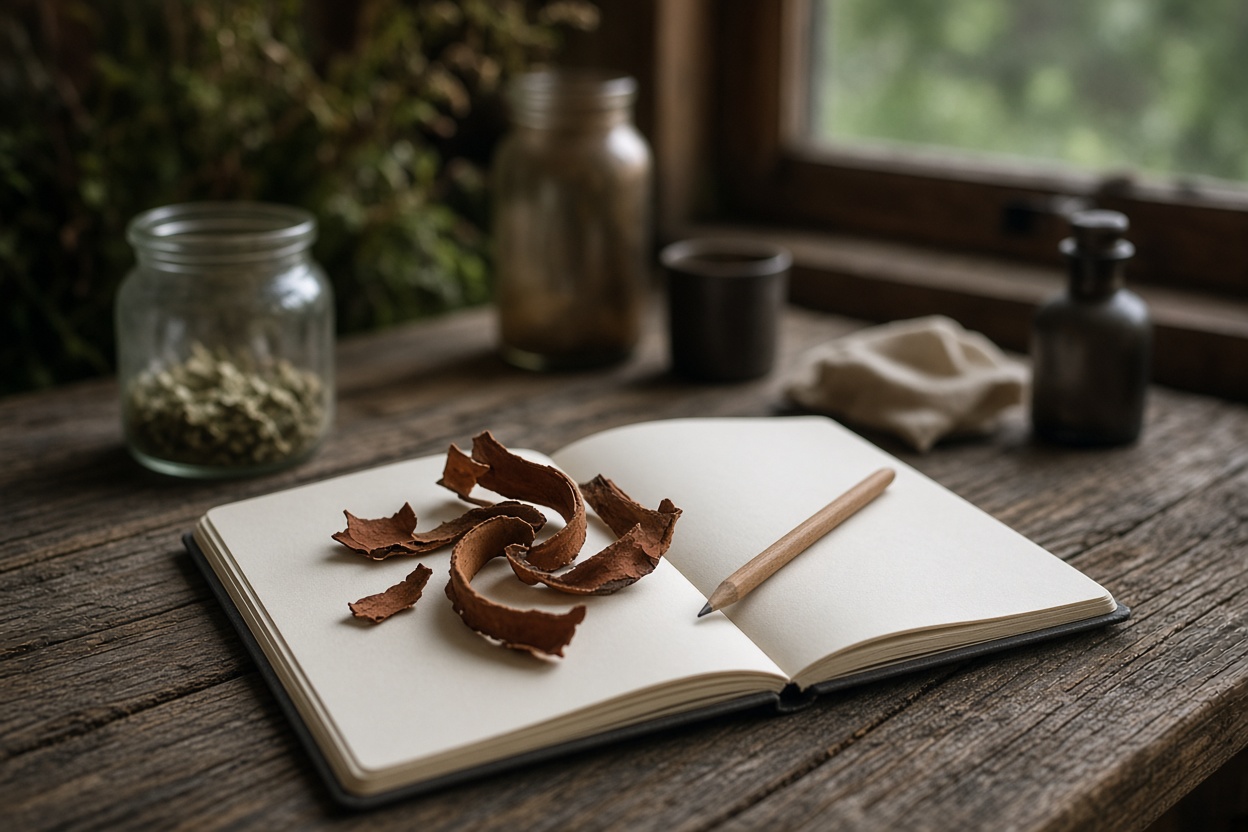
Madrone bark and leaves turn up in the ethnobotanical record of the Coast Salish world and other peoples of the Pacific coast, and in later settler herbals, most often in astringent teas used as washes and gargles. For the details, go to the published sources: Erna Gunther’s Ethnobotany of Western Washington and Nancy Turner’s work with Coastal First Nations are where I learned what I know of it, and the people who knew this tree first deserve to be read in their own record, not paraphrased by me.
I share all of that as history. I do not claim that madrone bark treats anything, and I do not give amounts for anyone’s health. If you are pregnant, nursing, or taking medication, leave strong tannin teas out of your routine and talk to a qualified practitioner. For anything that worries you, see a doctor.
The bark also makes a lovely tan-to-rust dye for wool, which is how a good share of my winter windfall gets used.
What I’ve gotten wrong
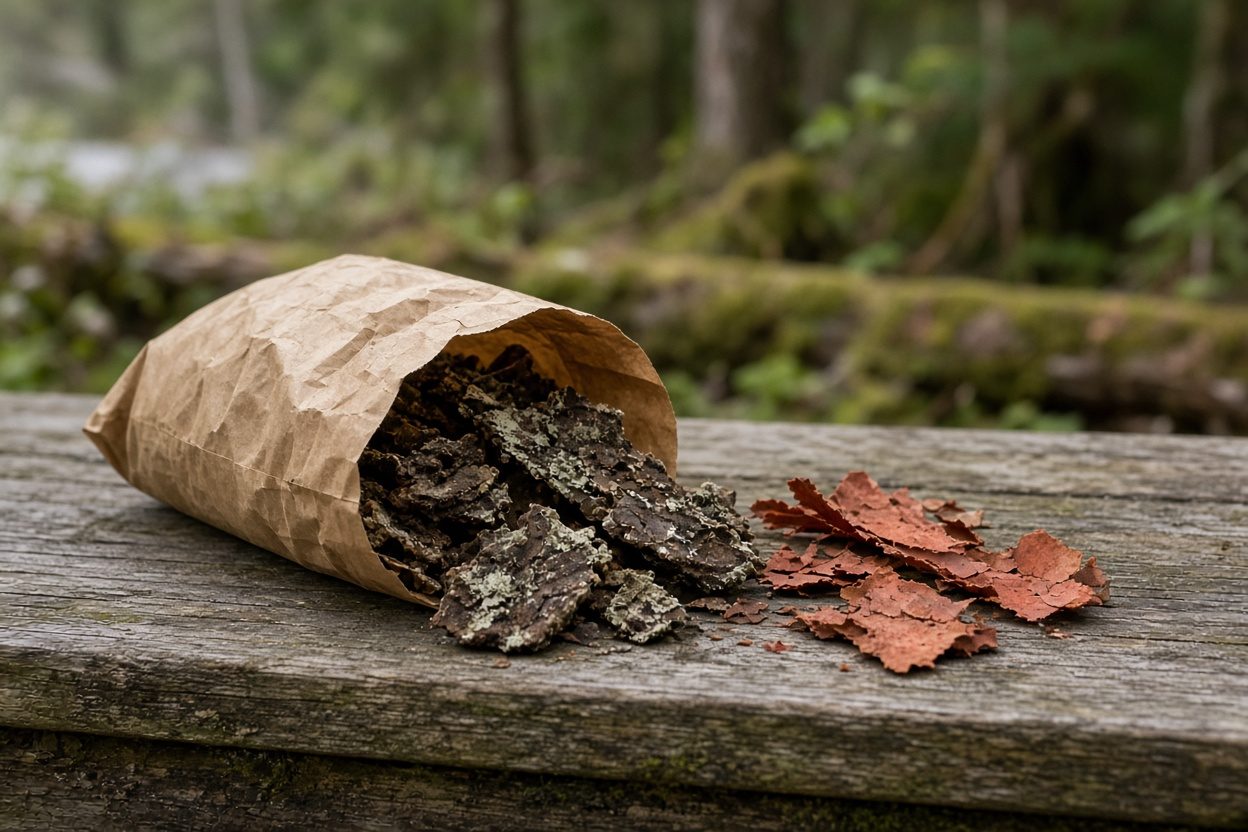
The first winter I tried this, I picked up curls that had been lying on the ground since August. They looked fine. They smelled like a basement by the second day on the screen, and the whole tray went on the compost. Fresh limbs only, and dry them thin.
Going further

A downed madrone limb is an easy lesson in a hard truth about foraging: the plant has to come first. Knowing which trees and plants can spare what you take, in which season, and how to tell them from their neighbors in every month of the year, is the slow part of this work. It is also the part I care most about.
I walk through it plant by plant in my book, Pacific Northwest Medicinal Plants: how to identify each one without guessing, when to gather it, and how the people before us prepared it. If you have a taste for bark work now, my notes on how to forage and use red alder bark are a good next walk.
Learn it before you need it.
