How to Forage and Use Oxeye Daisy in the Pacific Northwest
Tell oxeye daisy from its look-alikes, learn when to pick the young leaves and flower heads in spring, how to dry them, and how folk herbals have used them.

The first oxeye daisies I ever gathered came off the shoulder of a county road outside Sequim, on a June afternoon when I was twenty-six and my teacher told me to go find “the white daisy that isn’t a chamomile” and not come back until I could say how I knew. I came back two hours later with a full bag and a wrong answer. She tipped the bag out, picked up one flower, turned it over, and showed me the leaves. That was the lesson.
Oxeye daisy is one of the most common roadside flowers in western Washington and Oregon, and it is easy to get wrong because half a dozen white-petaled, yellow-eyed plants look like it from a car window. November is a good month to learn it, with the stems standing brown and the basal rosettes already showing, because the plant tells you more in the cold than it does in a June field of white.
What you are looking for

Oxeye daisy is Leucanthemum vulgare, a perennial that comes up in clumps from a shallow, creeping root. It stands one to three feet tall. Each stem carries a single flower, about an inch and a half across, with a flat yellow center and a ring of white petals that look a little ragged at the tips.
The leaf is what separates it from the others. The lower leaves are spoon-shaped and scalloped, with rounded teeth along the edge, and they sit in a tight rosette at the base. Leaves further up the stem are narrower, clasping the stem, and toothed or lobed more shallowly. Crush a leaf and it has a sharp, slightly resinous smell. Chamomile and the mayweeds have feathery, finely divided leaves, nothing like that. If the foliage is fine and ferny, you have the wrong plant.
Here is the line I give everyone, and I give it every time. Never gather a wild plant on one source alone. Check your identification against at least two good field guides, then against someone who knows the plants of your area. When in doubt, throw it out. I wrote a full walkthrough of what to rule out in how to identify common poisonous plant lookalikes, and it is worth reading before you carry a bag anywhere.
Where it grows, and why to scout now

Oxeye likes open, sunny, disturbed ground: roadsides, old pastures, power-line cuts, the edge of a hayfield. It is not native here. It came from Europe, and in parts of the Northwest it is classed as a noxious weed, which matters for two reasons. You can gather it with a clear conscience, since you are doing the land no harm. And you should never carry seed or root pieces to a new place, because it spreads. Shake out your bag and dispose of the leftovers in the trash, not the compost.
In November and December, look for the rosettes. They stay green through most of a western Washington winter, small and glossy, with that scalloped spoon shape. Mark a patch with a photo and a landmark. A field of flowers in June is hard to scout after the fact, and the places you like in winter are the places you will want in May.
Check who owns the ground. Roadside ditches are often sprayed, and so are power-line and rail corridors. Don’t gather from anywhere herbicide has been through, and ask a landowner before you step through a fence.
When to pick
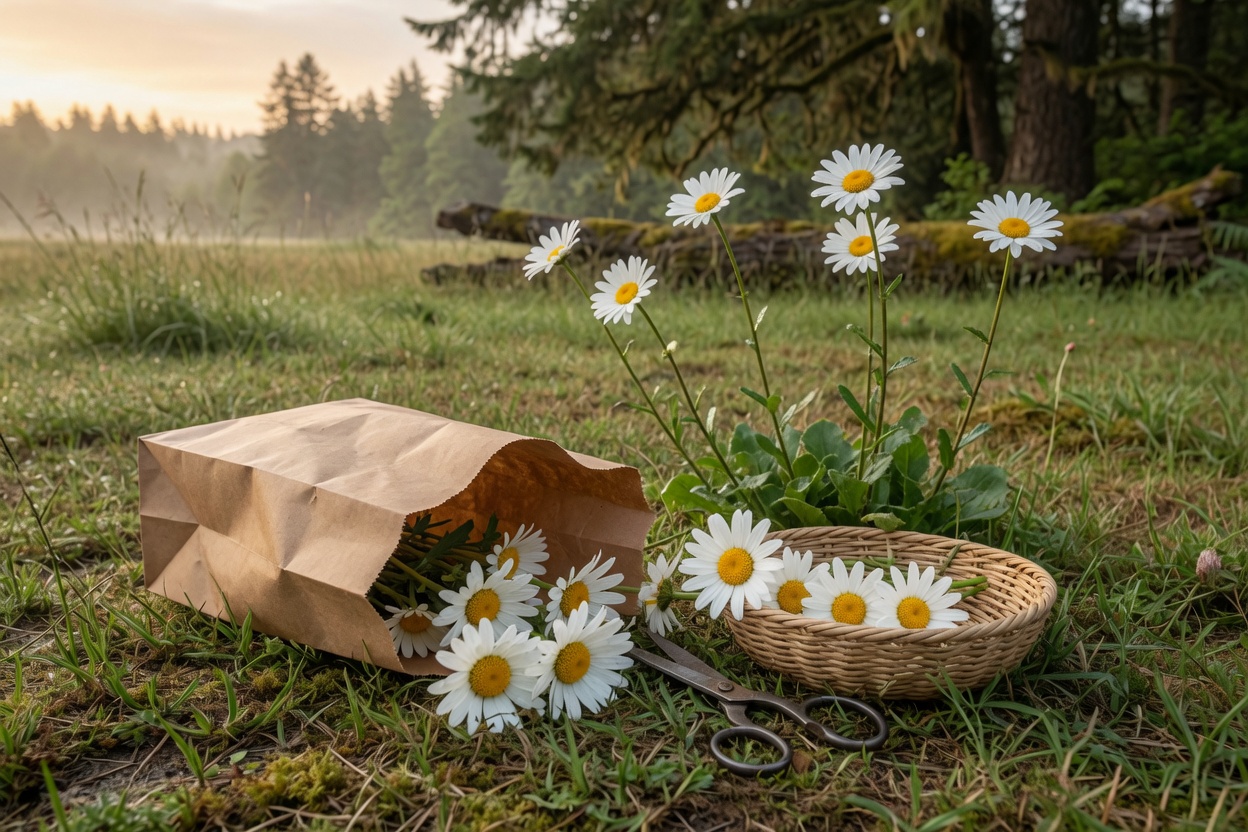
I gather in two windows. The young basal leaves go first, in March and April, while they are small and tender and before the flower stalk starts to rise. They have a sharp, green, slightly bitter taste, and I use them the way you would use any strong salad green, a few leaves at a time.
The flower heads come in late May and June, picked on a dry morning once the dew is off and the petals are fully open. Pick the heads with a short bit of stem, from plants that look clean and healthy. I take no more than a third from any one stand. Because the plant is so abundant in this country, that is more restraint than the patch needs, but it is a habit I keep for every plant I gather.
Drying
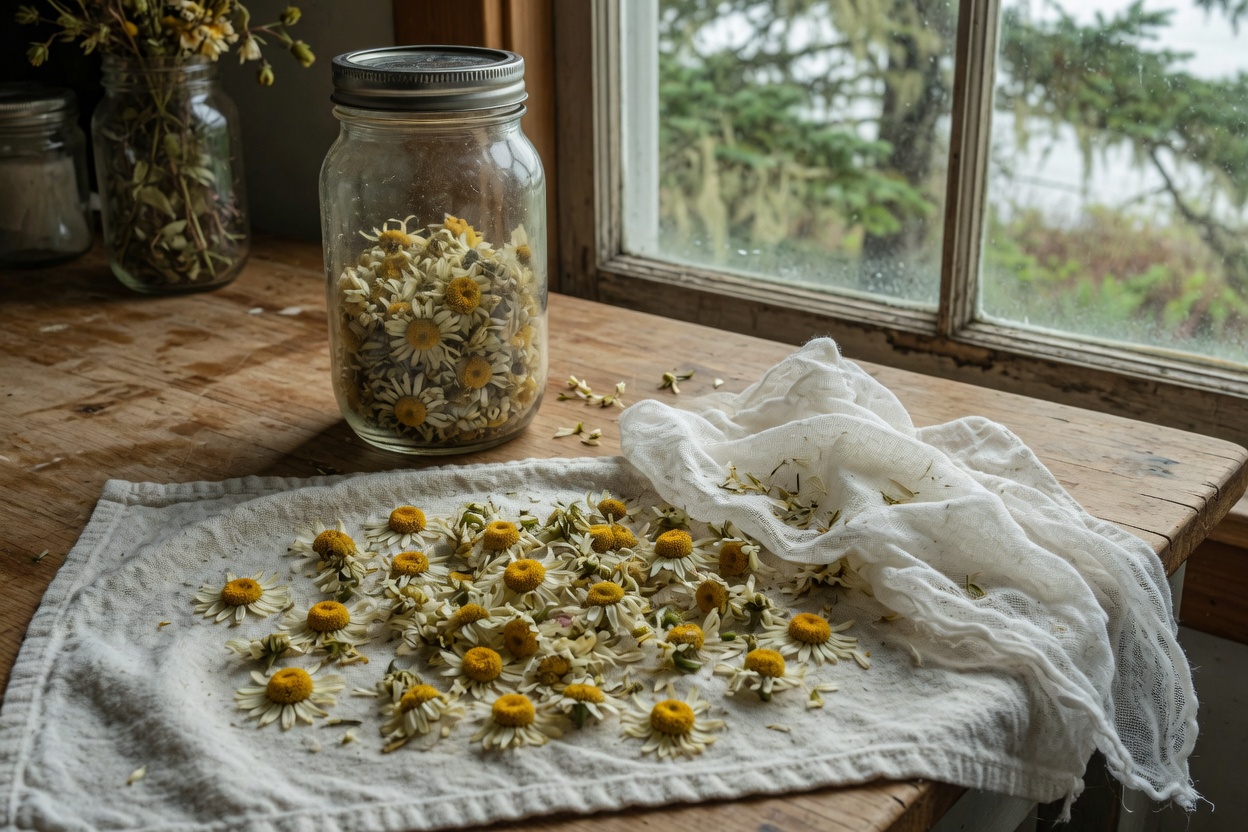
Lay the flower heads in a single layer on a clean cotton towel or a screen, and cover them loosely with cheesecloth to keep dust and flies off while the air still moves. Keep them out of direct sun. On the dry side of the Olympics they are crisp in three to five days. On a wet week I give them a few hours on a tray in an oven barely warm, with the door cracked.
A flower head is dry when the petals crumble and the center snaps cleanly. If it bends, it will mold. Pack it loosely in a wide-mouth mason jar, label it with the plant and the date, and put it in a cupboard. My notes on keeping a shelf of dried plants in good shape are in how to store dried herbs so they last.
How it has been used

Oxeye daisy has a long record in European folk herbals, which is where it came from. Old herbals describe the flower heads steeped as a tea and the young leaves eaten as a spring green, and some mention it as a plant gathered around midsummer. That is the extent of what I can responsibly say about it. I don’t tell anyone what it will do for them, and I would be careful with anyone who does.
In my own kitchen it is a modest tea. I steep a small pinch of dried flower heads in a mug of hot water, covered, for about ten minutes, and strain it through a scrap of cheesecloth. It tastes green and a little bitter, with a faint resinous edge. I blend it with dried mint or a little dried dandelion petal to soften it, as I describe in how to make herbal tea from foraged plants.
One caution I take seriously. Oxeye daisy belongs to the aster family, along with ragweed, chamomile, and chrysanthemum, and people who react to those plants can react to this one. If you are allergic to ragweed or daisies, skip it. If you are pregnant, nursing, on medication, or treating a health condition, ask a qualified practitioner before adding any herbal tea to your routine. This is traditional use, not advice.
Honest notes on the tools
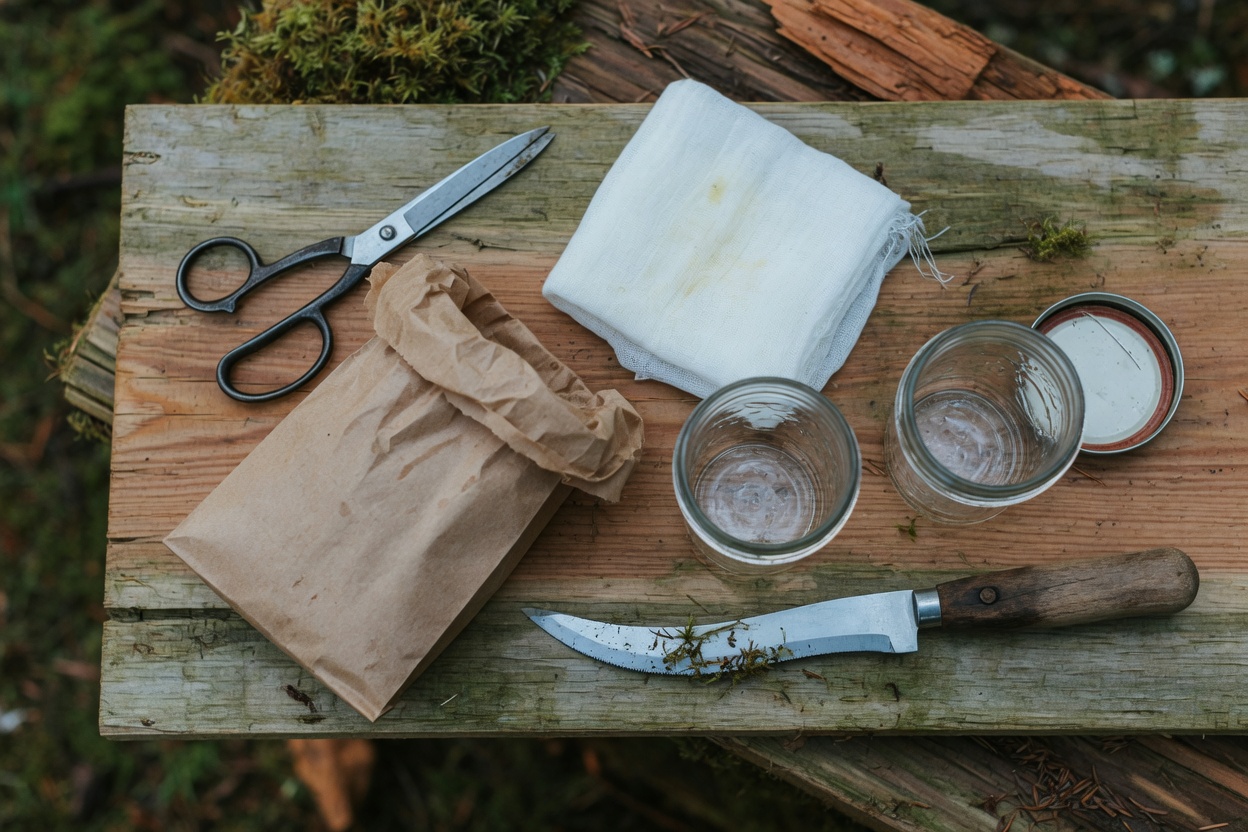
You don’t need much to gather daisy. Scissors or your fingers do the picking, and a paper bag or a basket keeps the flowers from sweating, which a plastic bag will do in a quarter of an hour. The cheesecloth and the mason jars are the pieces that earn their keep, since they work for every other plant you will dry. The hori-hori is a tool I carry everywhere, and it is useful here only if you want to lift a whole rosette to study the leaf and root together. For a handful of flowers off a roadside, skip it.
Where to go from here
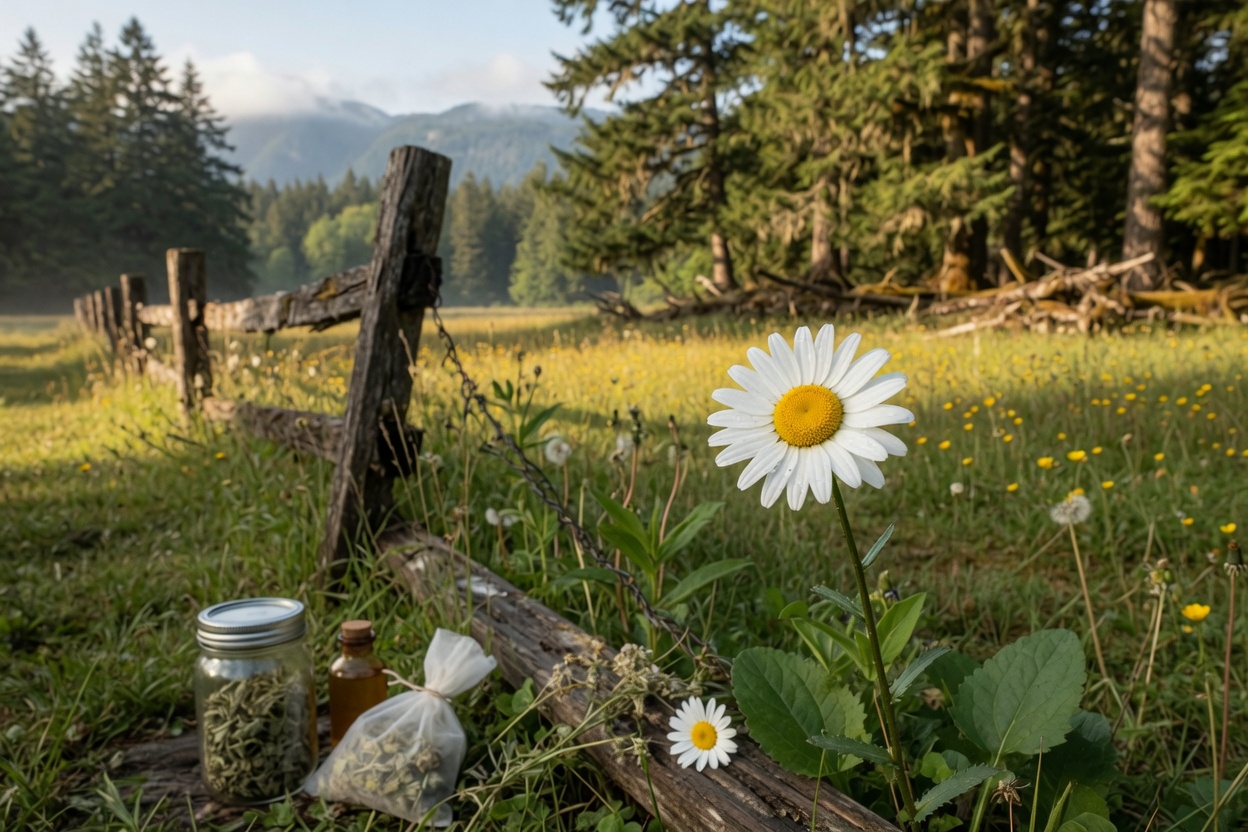
Walk a sunny field edge this month and look for the green rosettes. Learn the scalloped leaf in the cold, and you will not need a second guess when the flowers open. Then come back in late May with a bag and some patience.
Oxeye daisy is one of the many plants I teach, with the identification features, harvest windows, and look-alikes laid out so you aren’t guessing, in Pacific Northwest Medicinal Plants. If this post sent you out to look at a patch, the book is the thing to keep in your pack: Pacific Northwest Medicinal Plants.
