How to Forage and Use Mountain Mint in the Appalachians
How to forage mountain mint in the Southern Appalachians: telling it from pennyroyal and other mints, when to gather, how to dry it, and how it is steeped.
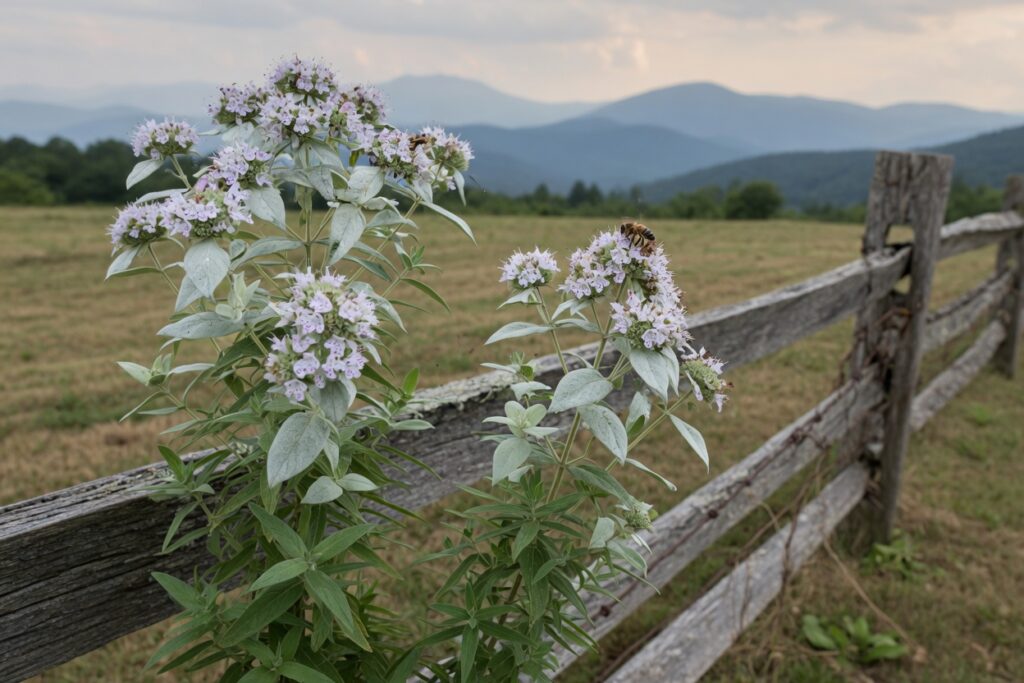
The mountain mint at the bottom of my grandmother’s old pasture was always loud with bees in July, so loud you could hear it from the gate. She would send me down with a paper sack and tell me to take only what the bees did not mind giving up. I did not understand until I was grown that she meant a third, and that she was counting.
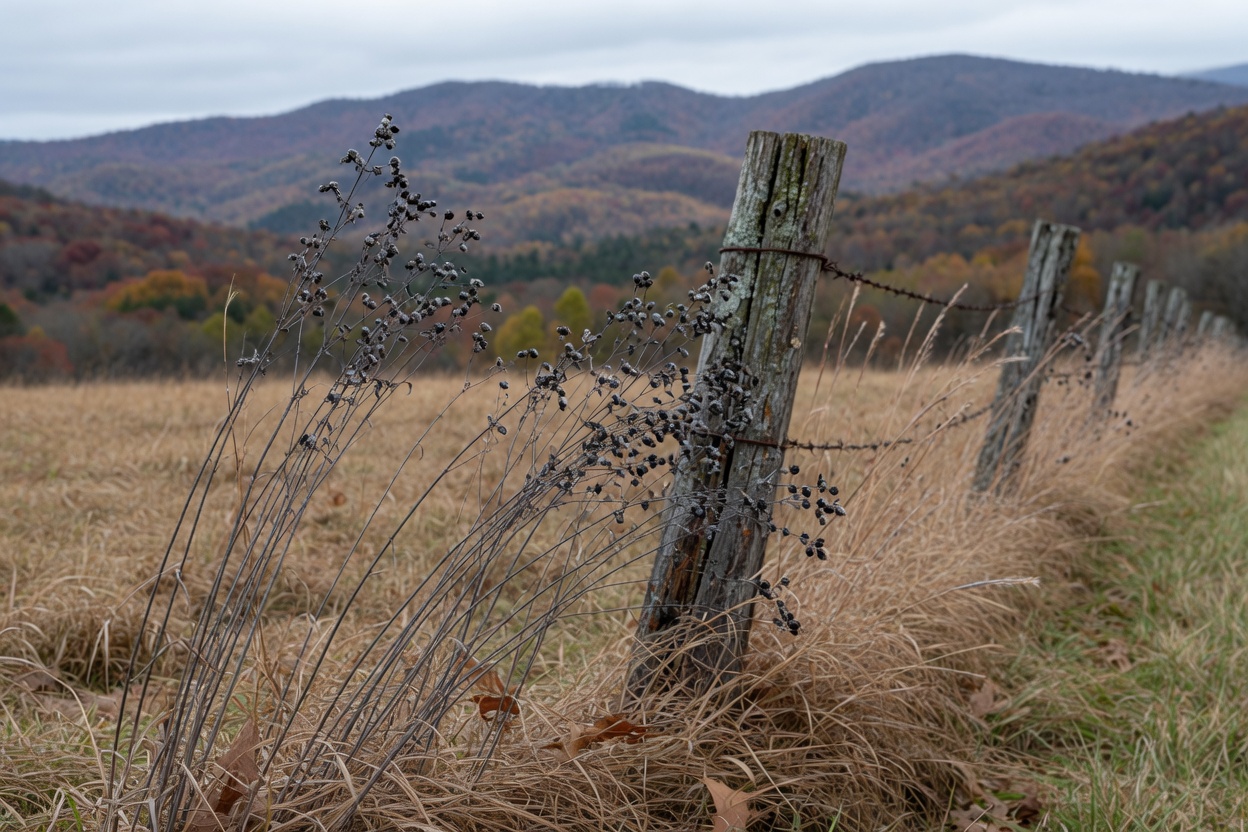
Mountain mint is a summer plant, and it is October. I am writing it now on purpose. The stems stand dry and gray through the cold months, and the seed heads make the patches easy to find when everything else has gone to sleep. Mark them now and you will walk straight to them in June.
What it looks like
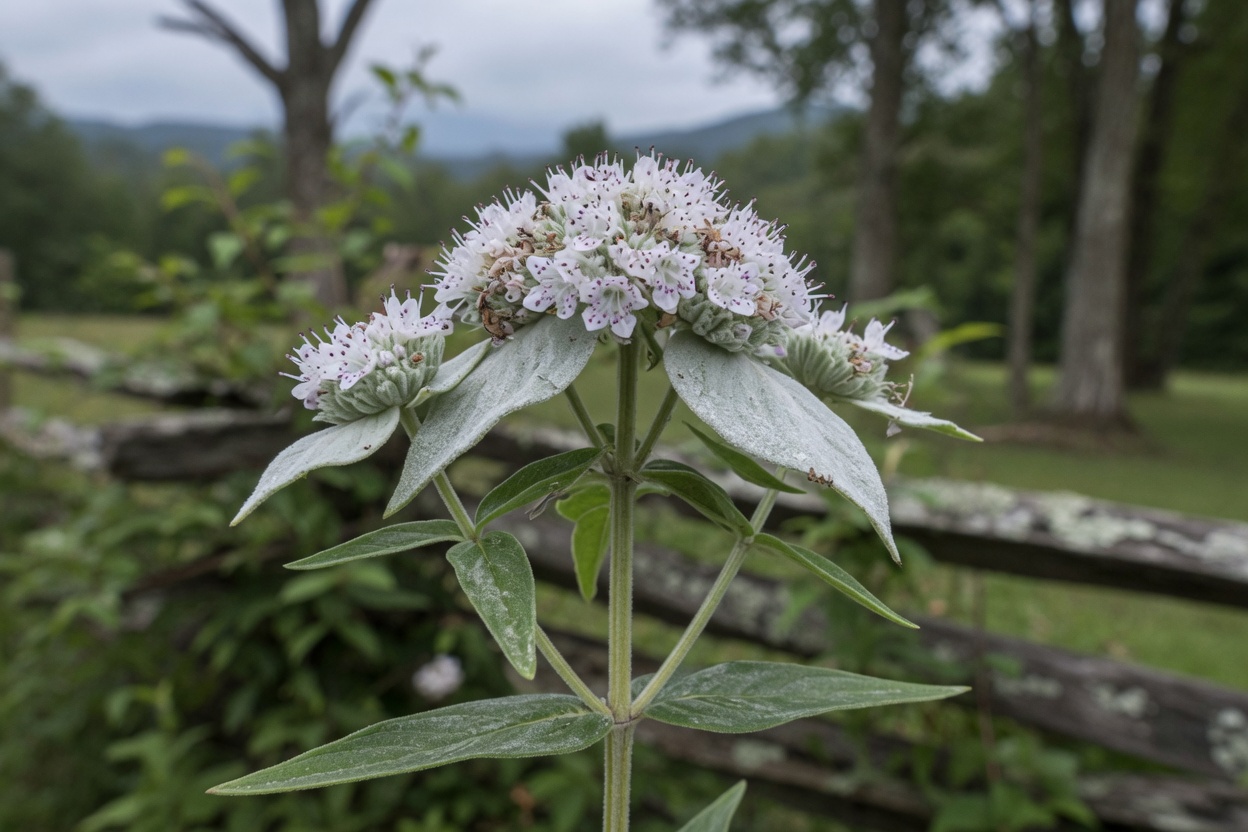
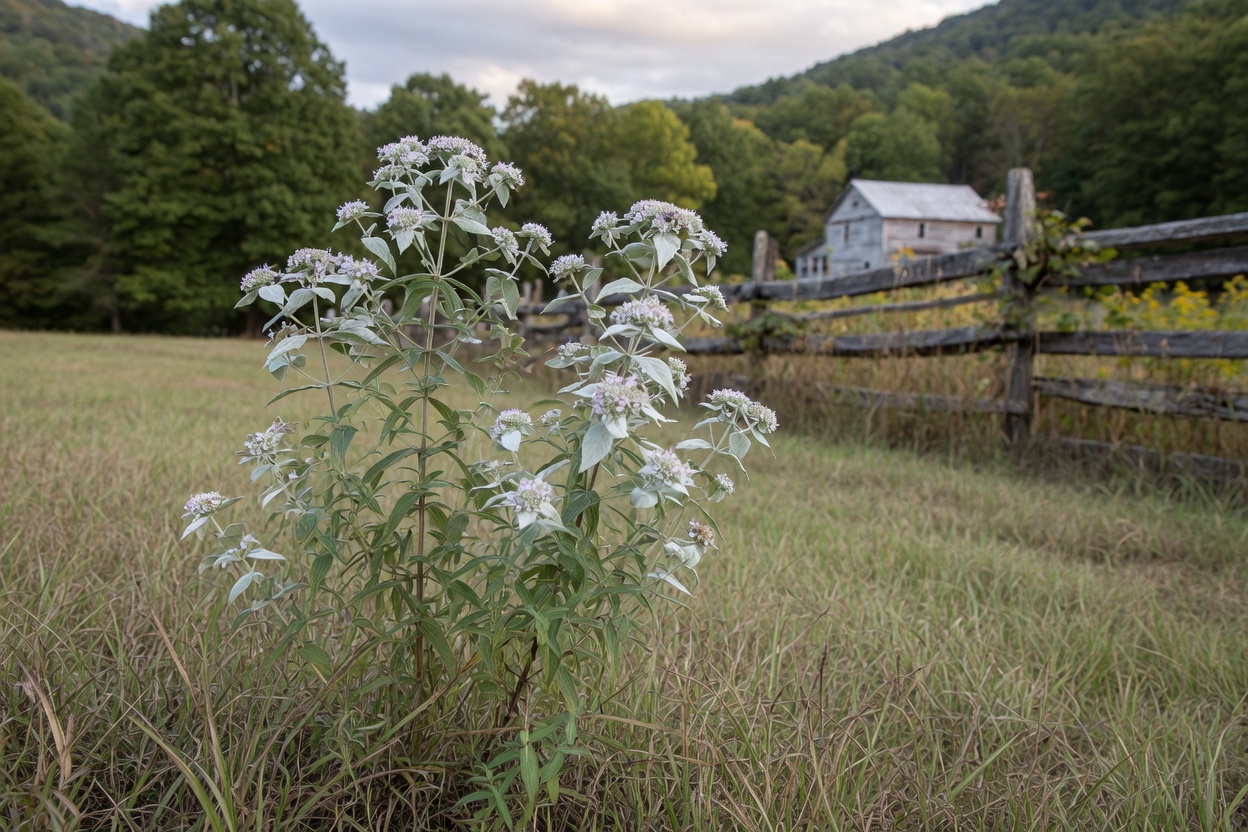
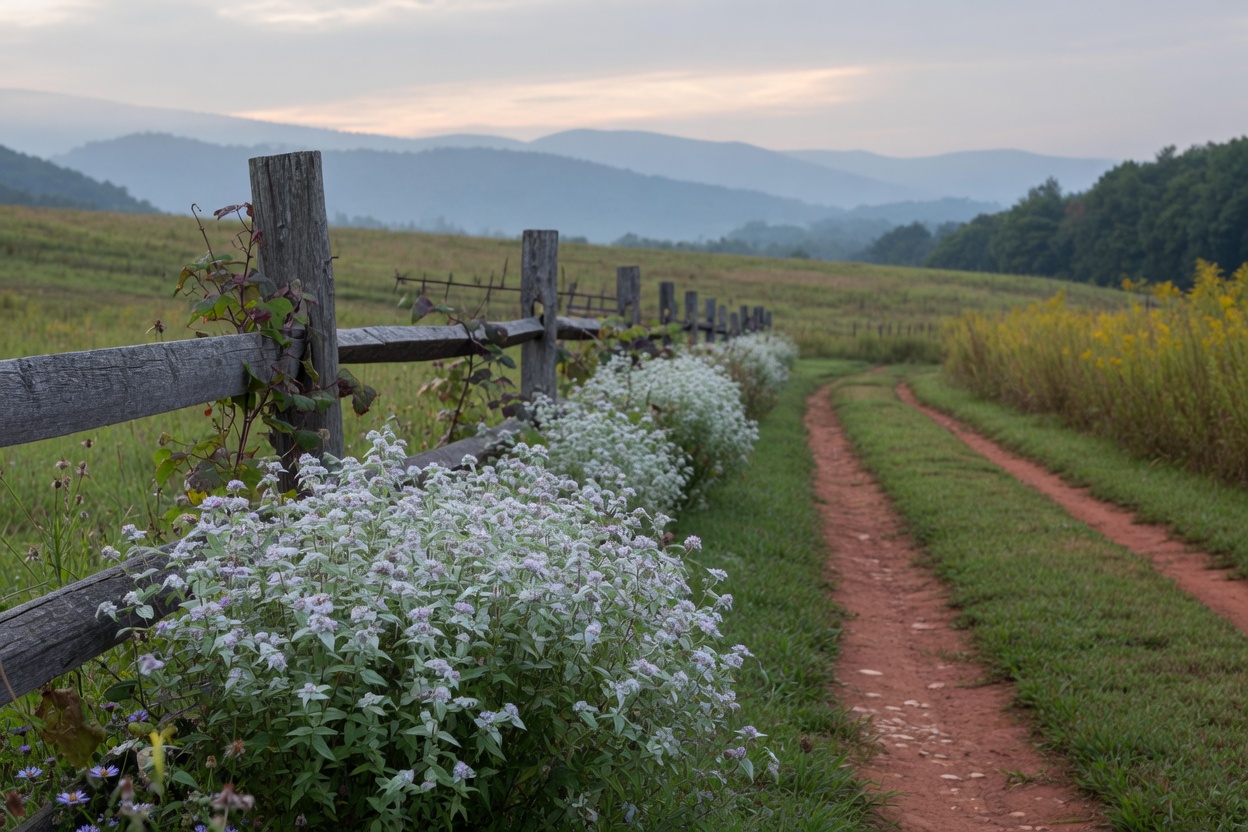
Mountain mint is a group of plants in the genus Pycnanthemum, and the ones I see most often in the southern mountains are hoary mountain mint, P. incanum, and narrowleaf mountain mint, P. tenuifolium. They grow in clumps two to three feet tall in open, sunny ground. The stems are square, as in all the mints. Run a stem between two fingers and you feel the corners.
The leaves are narrow, opposite one another, and in the hoary kind the upper leaves are dusted silvery white as if somebody had shaken flour over them. That silvering is the plant’s signature. In July and August the tops carry flat clusters of small white flowers speckled with lavender, and every pollinator in the county comes to them. Crush a leaf and the smell is sharp, cool, and clean, stronger than garden spearmint, with a little camphor behind it.
A square stem and a minty smell are not enough to name a plant. Never use a wild plant on a book, an app, or a single source alone. Match it against more than one good guide, then against someone local who knows it by sight. When in doubt, leave it.
The look-alike that matters
The mint family is mostly friendly, and it still has one member I want you to know by name. American pennyroyal, Hedeoma pulegioides, grows in dry woods and thin pastures here, smells strongly minty when crushed, and has a square stem. It is a small, low plant with tiny leaves and little lavender flowers in whorls up the stem. Pennyroyal has a long folk history, and the oil in it is also known to be toxic in quantity. Mountain mint is taller, silvered on top, and carries its flowers in flat heads rather than in rings up the stem.
If your plant is low, small-leaved, and ringed with flowers up the stalk, it is not what I am describing in this post. Leave it where it stands. My page on dangerous look-alikes of Appalachian medicinals is the one to keep open on your phone.
Where to look, and why now
Mountain mint likes sun and thin soil: old pastures, power-line cuts, the dry edge of a woodland opening, a gravel bar above a creek. I find it between about 1,500 and 3,500 feet, and nearly always where the land has been cleared at some point and left alone.
This is the reason for an October post. In the fall the dead stalks still stand, gray and brittle with their little seed heads, and a patch you would walk past in a green June is plain as a signpost. Pin it on your phone. Take a photo with a fencepost or a tree in it. Come back in summer to a place you already know.
Mind the ground, too. Do not gather from power-line cuts that get sprayed, from roadsides, or from any field you cannot vouch for. Ask permission on private land. National forest and state land have their own rules on gathering, and your ranger district can tell you what is allowed before you carry a sack out.
When and how to gather
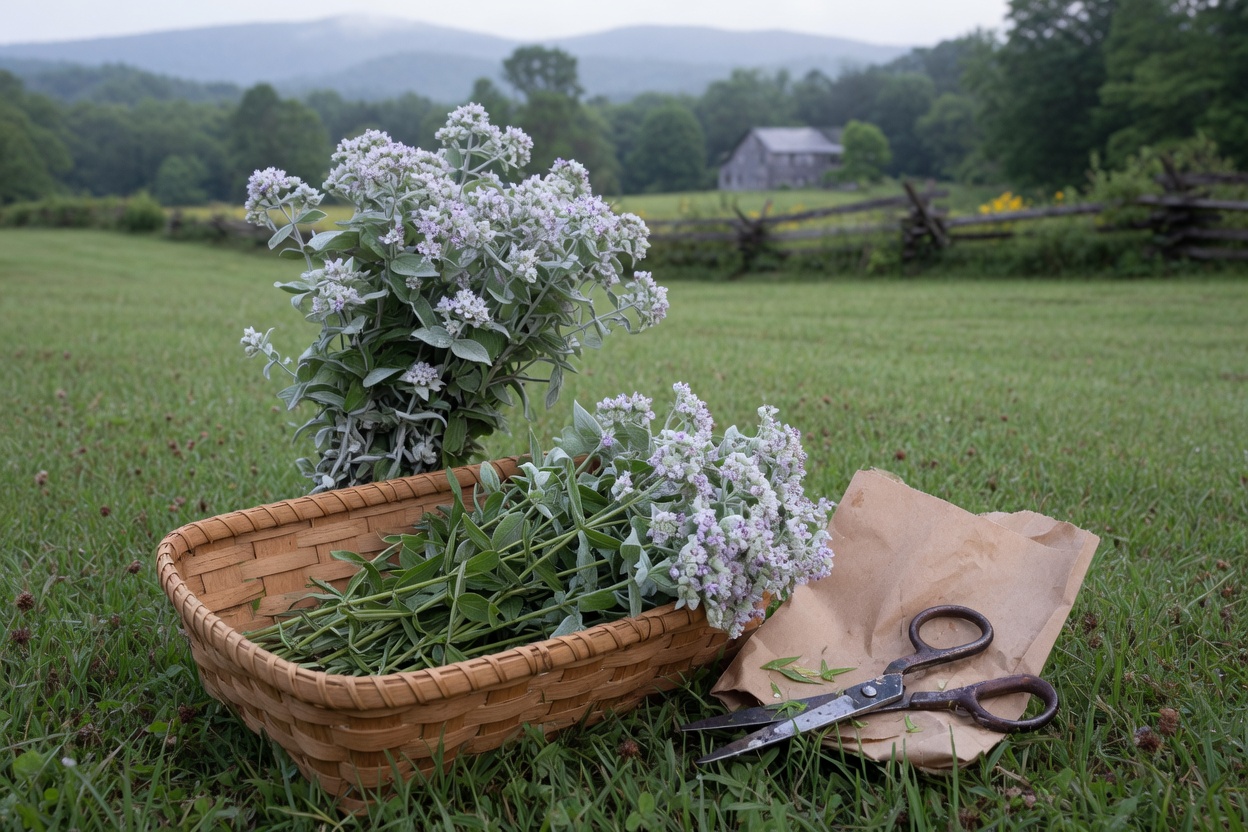
I pick in the mornings of July, once the dew is off, as the flower heads start to open. The plant is strongest then. I cut leafy stems about a third of the way down with scissors, never more than a third of any clump and never the whole stand, so the plant comes back next year and the bees are not left with nothing. This is the same stewardship rule I use for everything I gather: take a third, leave two.
Bring a paper sack or an open basket. A plastic bag sweats the leaves in minutes and they go black.
Drying it
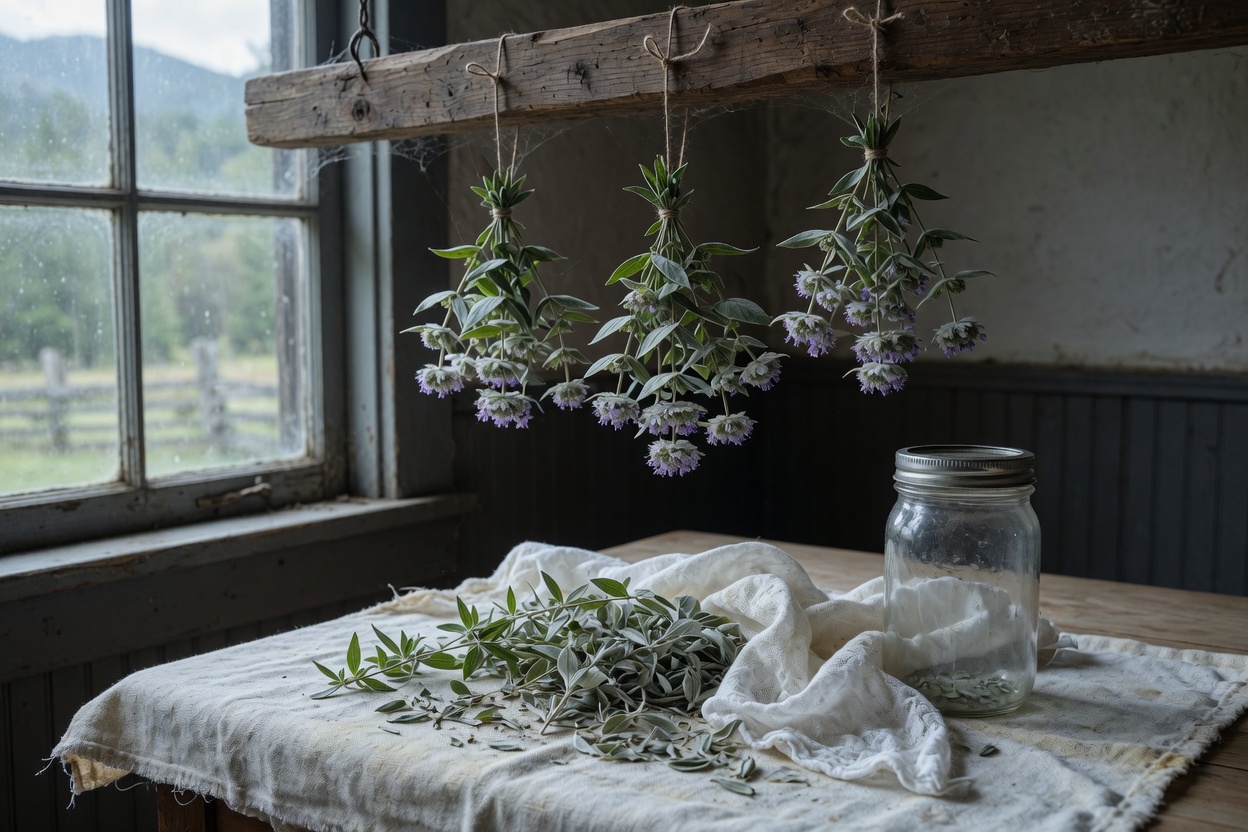
Tie the stems in small loose bundles, or lay them in a single layer on a clean cotton towel or screen. Cover loosely with cheesecloth to keep dust and flies off while the air moves through. Keep it out of direct sun, in a dry, shaded spot.
In a mountain July they are crisp in three to five days. In a damp spell they will take longer, and a few hours in a barely warm oven with the door cracked will save a batch from mold. Mint is dry when the leaf crumbles to a rustle and the stem snaps clean. If it bends, it is not done.
Strip the leaves from the stems and keep them as whole as you can. Crumbling early loses the smell. Pack them loosely in a mason jar, label it with the plant and the date, and put it in a dark cupboard. A jar stays pleasant for about a year.
How it has been used
Mountain mints grow throughout the Eastern mountains, and Cherokee ethnobotany documents many plants of this region, among them mints. I am not going to put words in anyone’s mouth about specific uses of this one. The published sources are the place to start, and I credit them for what is known: Hamel and Chiltoski’s Cherokee Plants and Their Uses and the work of the Museum of the Cherokee People. I learned what I know from my family and from books, and I say so.
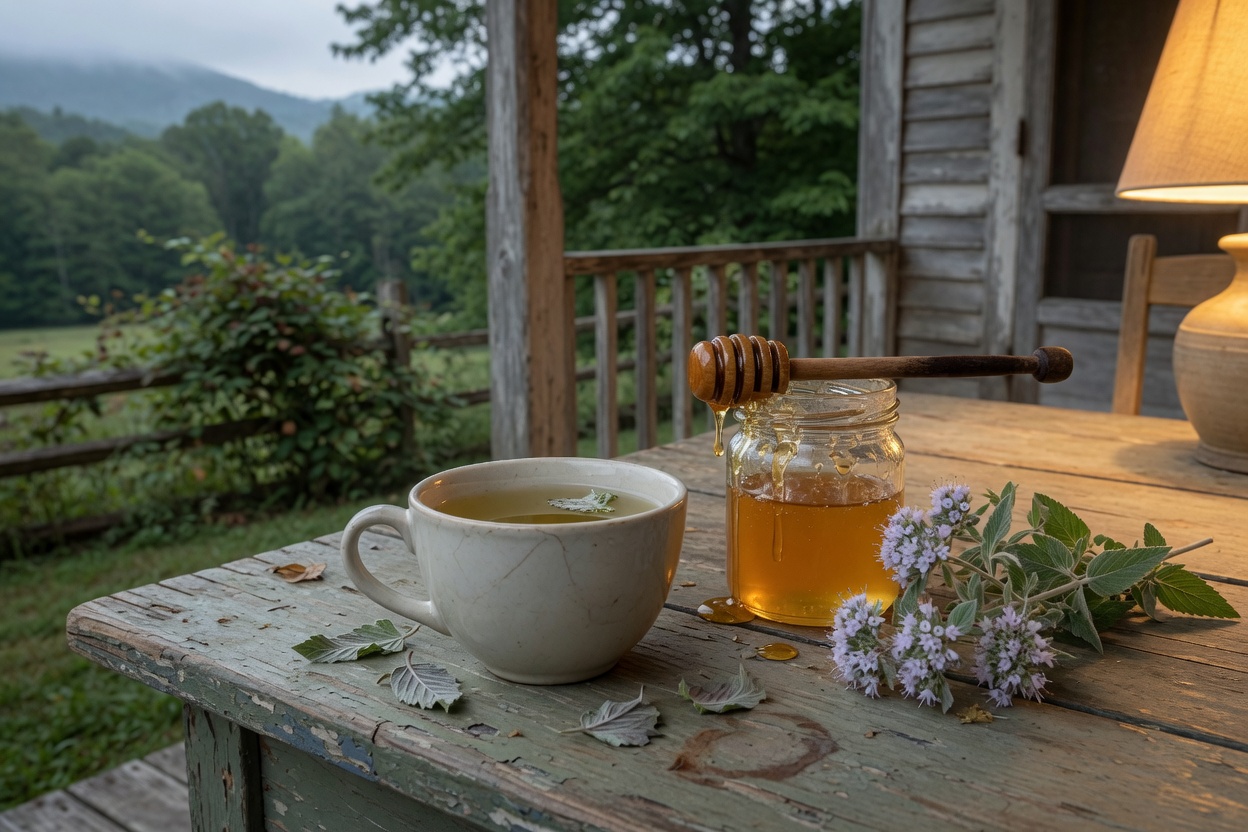
What I can tell you is the household use. The dried leaf makes a sharp, cooling tea, brighter than peppermint. I steep a heaped teaspoon in a cup of hot water, covered, for about ten minutes, and strain through cheesecloth if I do not want leaf in the cup. My grandmother mixed it with a little honey on cold evenings. Folk herbals have long described the mints as warming and settling, and that is the tradition, not a promise.
I do not tell anyone what the tea will do for them. If you are pregnant, nursing, on medication, or treating a health condition, ask a qualified practitioner before you add any herbal tea to your routine, mountain mint included. This is traditional use, not advice.
Honest notes on the gear
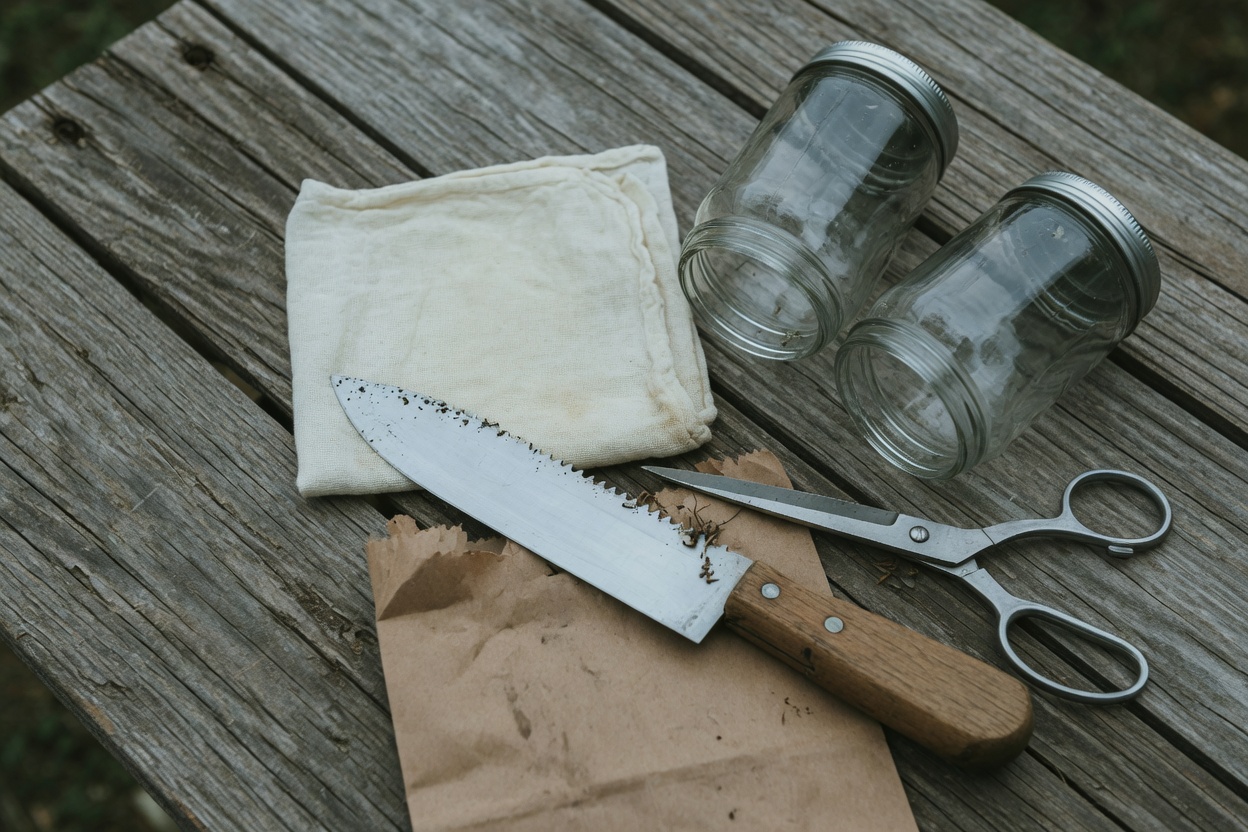
You do not need much. Scissors, a paper sack, and a clean cloth will do for the harvest. The jars and cheesecloth are the pieces that earn their keep, since they serve every other plant you dry this year. The hori-hori is optional here. I use mine to divide a clump from my own bed in early spring, since mountain mint spreads by runners and wants thinning every few years, but I would not dig a wild stand for it, and if you are only gathering leaves you can skip the purchase.
Where to go from here
Walk your pastures and field edges this month and mark the dry stalks you find. In July, go back with a sack and a patient hand and take only what the bees will not miss. When you are ready for the whole mountain apothecary, from the plants to the preparations and the look-alikes, the book I wrote for it is Appalachian Medicinal Plants.
