How to Forage and Use Elecampane Root, From Flag to Dig
How to forage elecampane root in the Pacific Northwest: mark it in summer, dig in early spring, tell it from foxglove, then dry and store it the old way.
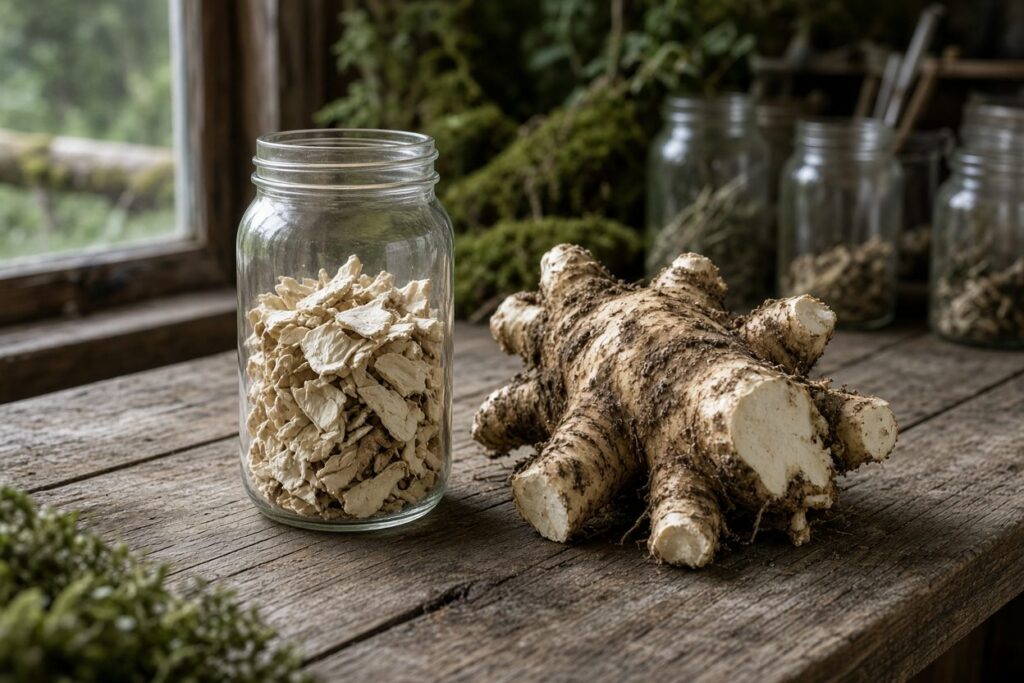
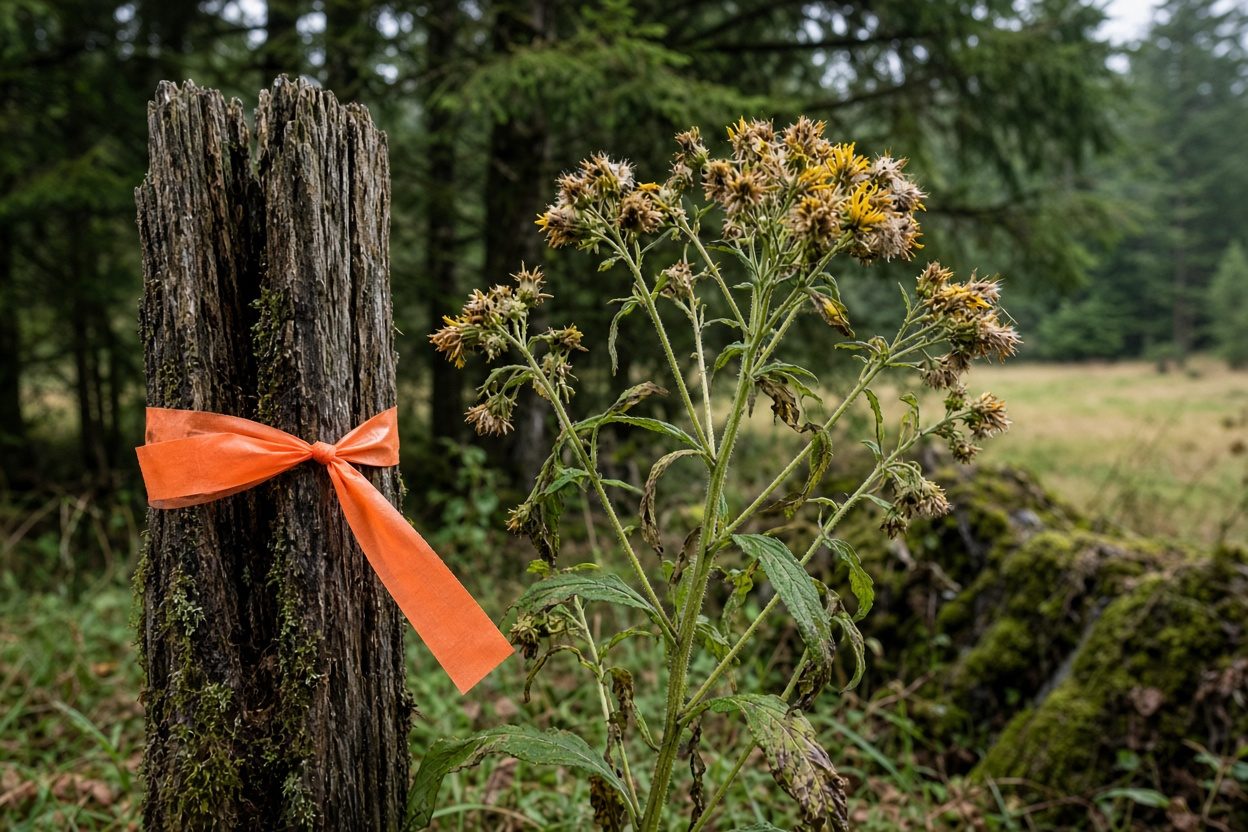
The first elecampane I ever dug grew against a sagging fence line on an old homestead lot near the Dungeness, and I only found it again because I had tied orange flagging tape to the fence the August before, when it stood taller than my husband with ragged yellow flowers at the top. By March there was nothing to see but a cluster of big gray-green leaves lying on the wet ground. Without the tape I would have walked past it, or worse, dug the wrong thing.
That is most of what you need to know about Inula helenium. It is easy to recognize in summer and easy to confuse in spring, and spring is when you want the root. So this is a plant you learn across two seasons. Here is how I do it.
Add a bucket, a stiff vegetable brush, and a roll of flagging tape. The tape is the most important tool on this list and the cheapest.
What elecampane is, and where it grows here
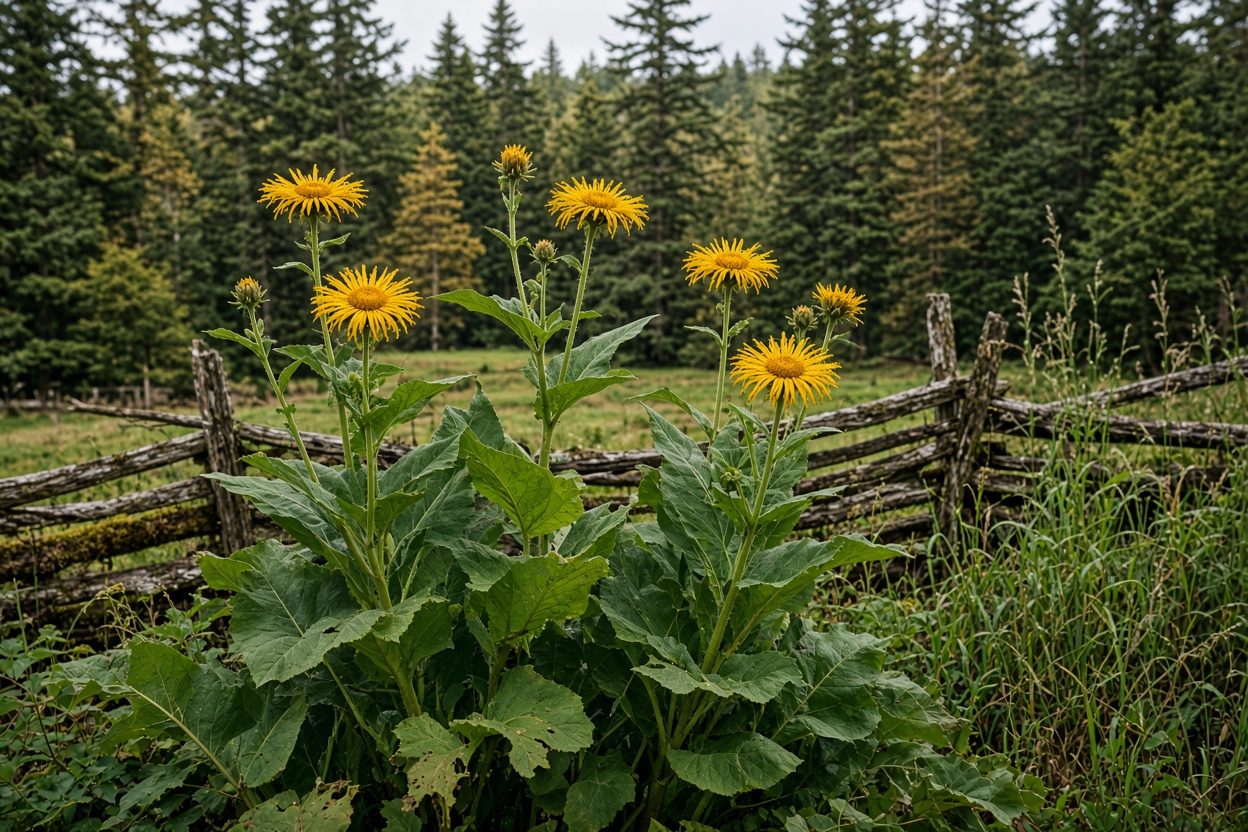
Elecampane is a big perennial in the aster family, native to Europe and western Asia, brought over by settlers who grew it in kitchen gardens. It escaped, as garden plants do, and you will now find it around old homesteads, along damp field edges, in ditches at the back of farms, and in the corners of yards where somebody’s great-grandmother planted it and nobody has dug it out since. On the Peninsula I see it most in the low, wet ground east of Sequim and along a few back roads toward Chimacum.
Because it is a naturalized garden plant, a lot of people grow it on purpose. I keep two crowns at the edge of my hoop house so I am not dependent on anyone’s fence line. If you find a stand on private land, ask before you dig. Most folks are happy to have a root or two taken from a plant they consider a weed.
Learn it in summer, mark it, dig it in spring
Say this part plainly, once: never dig or prepare any wild plant on the strength of one book, one app, or one article, this one included. Check it against more than one reputable guide and, better, walk it with an experienced local forager. When there is any real doubt, leave it in the ground.
In July and August elecampane is hard to mistake. The flowering stalks reach five or six feet. The flowers look like small, shaggy sunflowers, bright yellow, with thin ray petals that tend to look a little untidy. The leaves are large and toothed, rough on top and soft and velvety underneath, and the upper leaves clasp the stem. Crush a leaf or scrape the root and you get a sharp, camphor-and-violet smell that you will remember.
In early spring, all you have is the basal rosette, and that is where people get into trouble. Several plants in our region make big, fuzzy, gray-green spring rosettes, and one of them is foxglove (Digitalis purpurea), which grows in every logged clearing and roadside west of the Cascades and is seriously poisonous. Comfrey and young mullein can look similar too.
My rule is simple. I do not dig an elecampane rosette unless I saw that exact plant in flower the summer before and marked it. Tie tape to a stake or a fence post beside it in August. Come back in March. Dig the plant under the tape, and nothing else. That one habit takes the guesswork out of the whole business.
When and how to dig
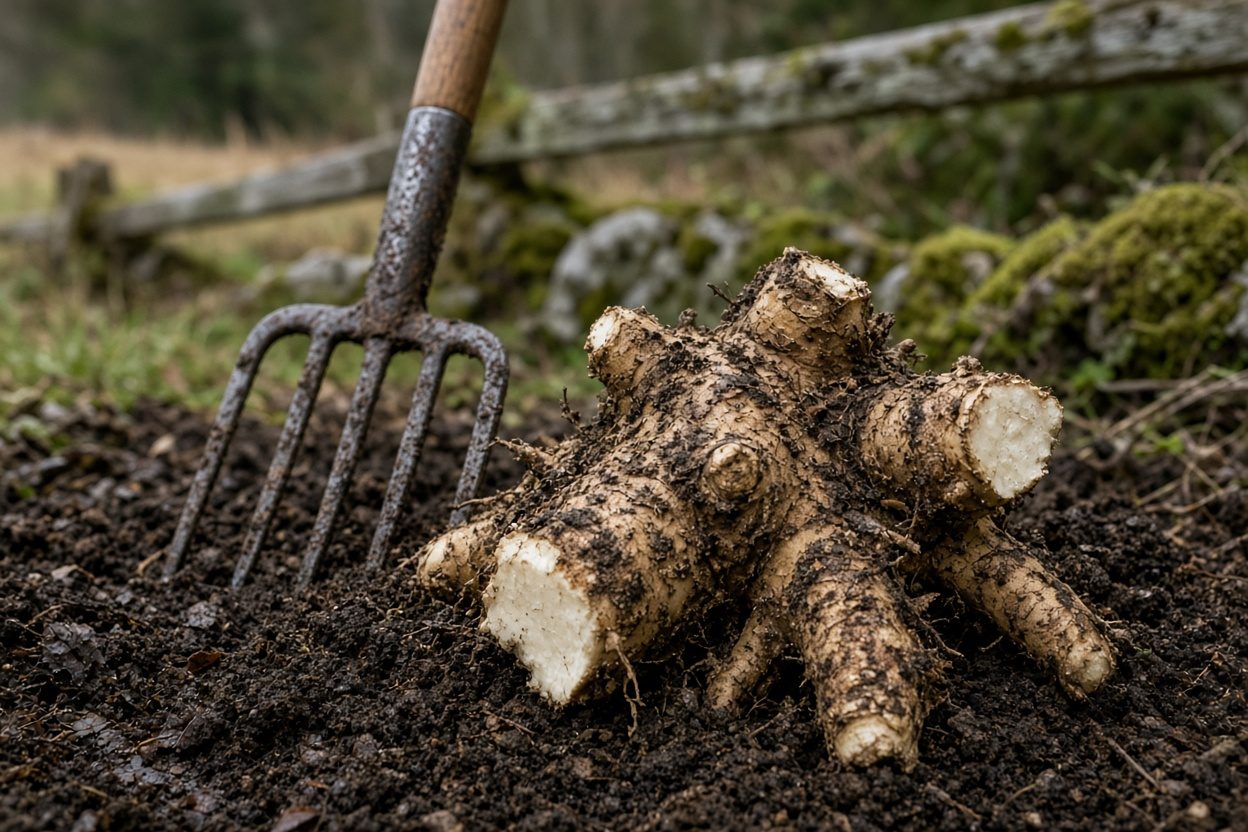
The traditional time to dig elecampane is in the fall of its second year or in early spring before the new leaves push up hard. In our maritime climate I dig in late February and March, when the ground is soft and the root has not yet spent its stored energy on new growth. I wait for at least the second year so the root is worth the trouble.
Start a good hand-span out from the crown. Work the hori-hori straight down in a ring around the plant, rocking it to loosen the soil, then lever under the crown and lift. A mature root is a thick, knobby mass with fleshy side roots, brown on the outside and creamy white inside. You do not need all of it. I take a section with several side roots and set the crown back in the hole with a portion of root attached. It will regrow, and the stand will be there next year.
If you’d like the longer version of root digging in general, I wrote it up in how to harvest medicinal roots. The timing differs a little, but the technique is the same.
Cleaning and drying the root
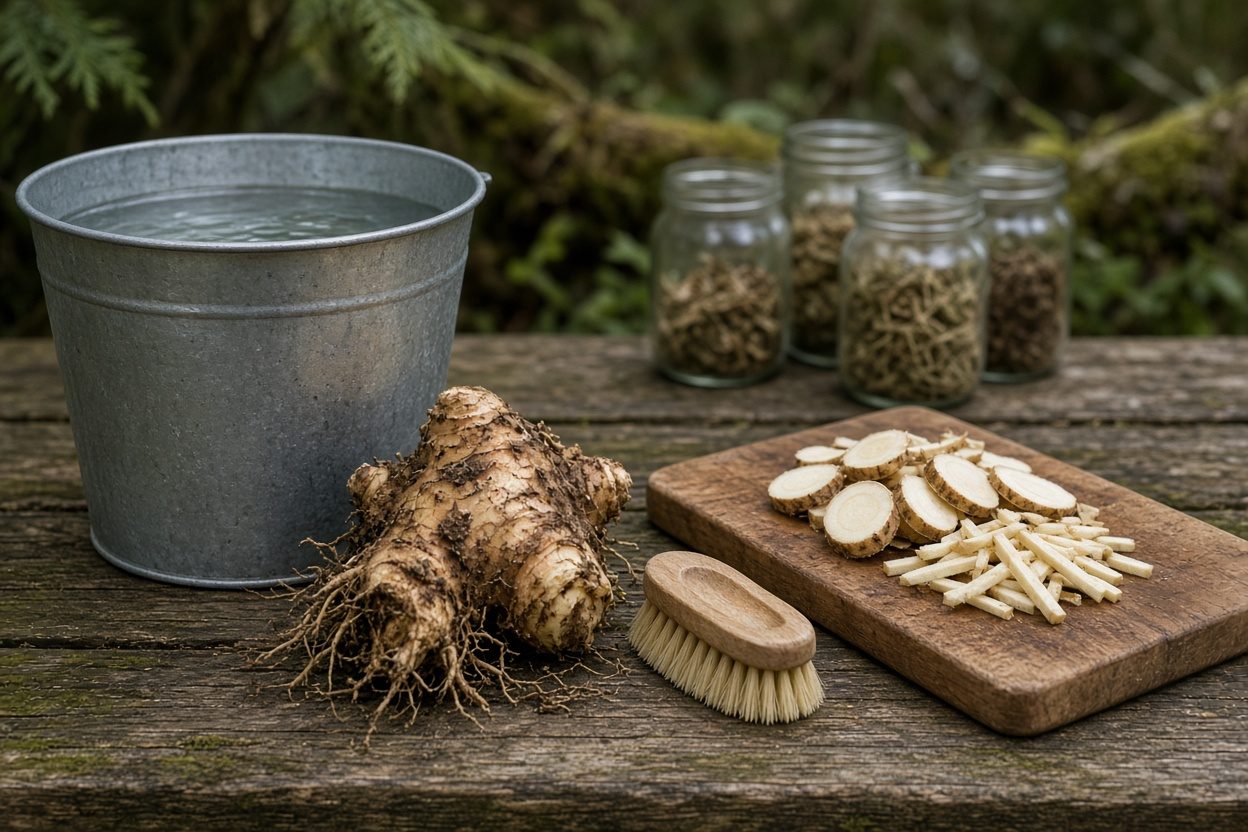
Elecampane holds a lot of soil in its folds. Soak the root in a bucket of cold water for ten minutes, then scrub it with a stiff brush until the water runs clear. Trim off any soft or dark sections.
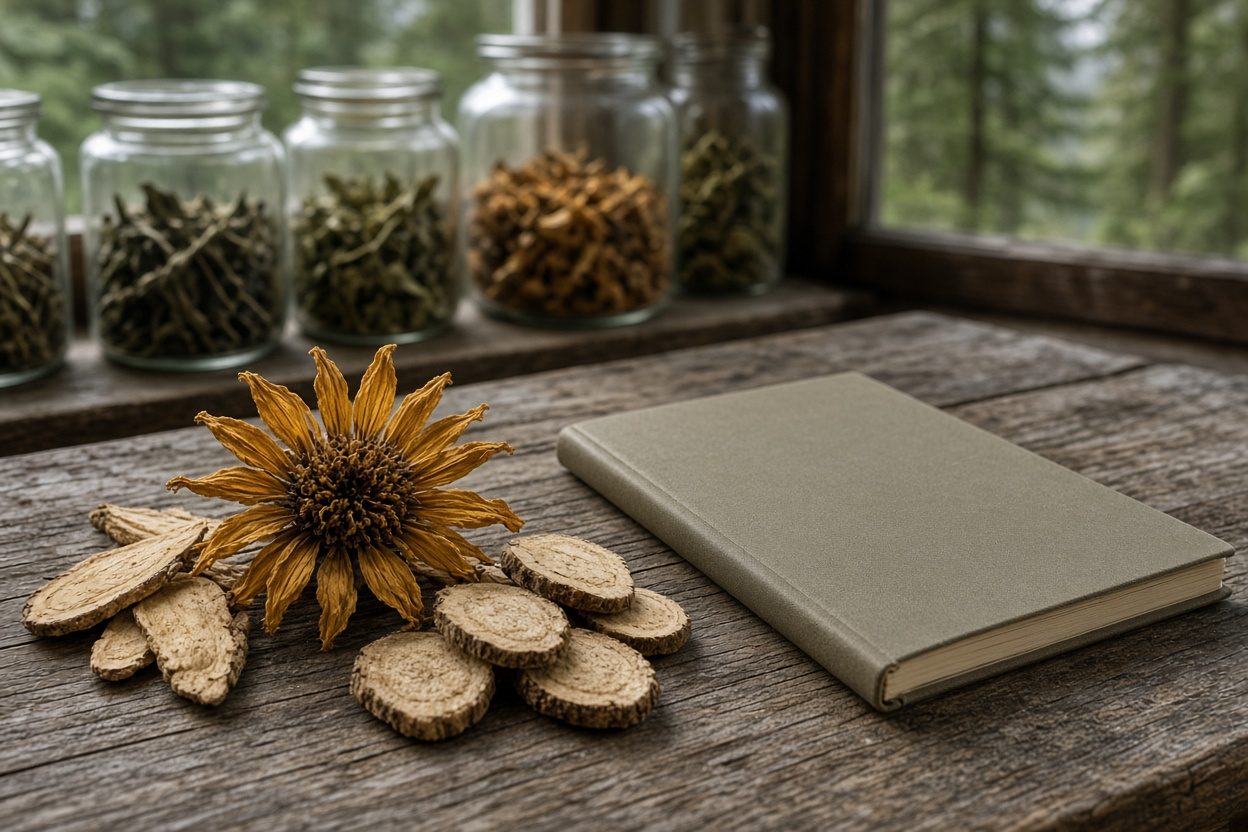
Here is the step people skip and regret. Cut the root while it is fresh. Slice the thick parts into rounds about a quarter-inch thick and split the side roots lengthwise. Elecampane dries very hard, and a whole dried root is close to impossible to cut. I learned that the year I dried a big root whole and spent an afternoon trying to break it with a hammer. It did not go well for the root or the hammer.
Spread the slices in a single layer on a screen or a baking rack in a warm, dry, shaded room with some air moving. They take a week or two to dry fully. They are ready when a piece snaps cleanly instead of bending.
Storing it
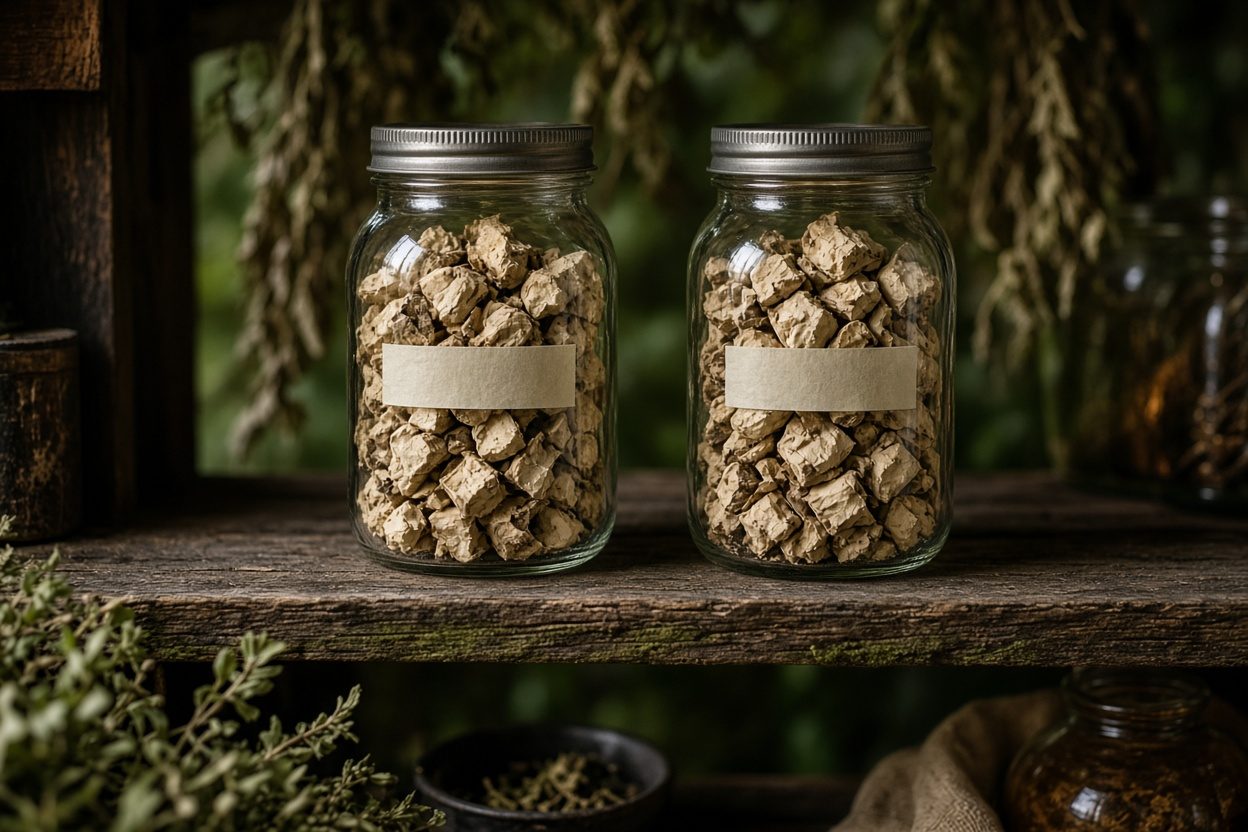
Pack the dried pieces into a wide-mouth mason jar, label it with the plant, the place, and the date on a strip of masking tape, and keep it out of the light. Stored that way, I find dried elecampane root keeps its smell and bite for a good year or more. For more on keeping dried plant material from fading, see my notes on how to store dried herbs so they last.
How it has been used traditionally
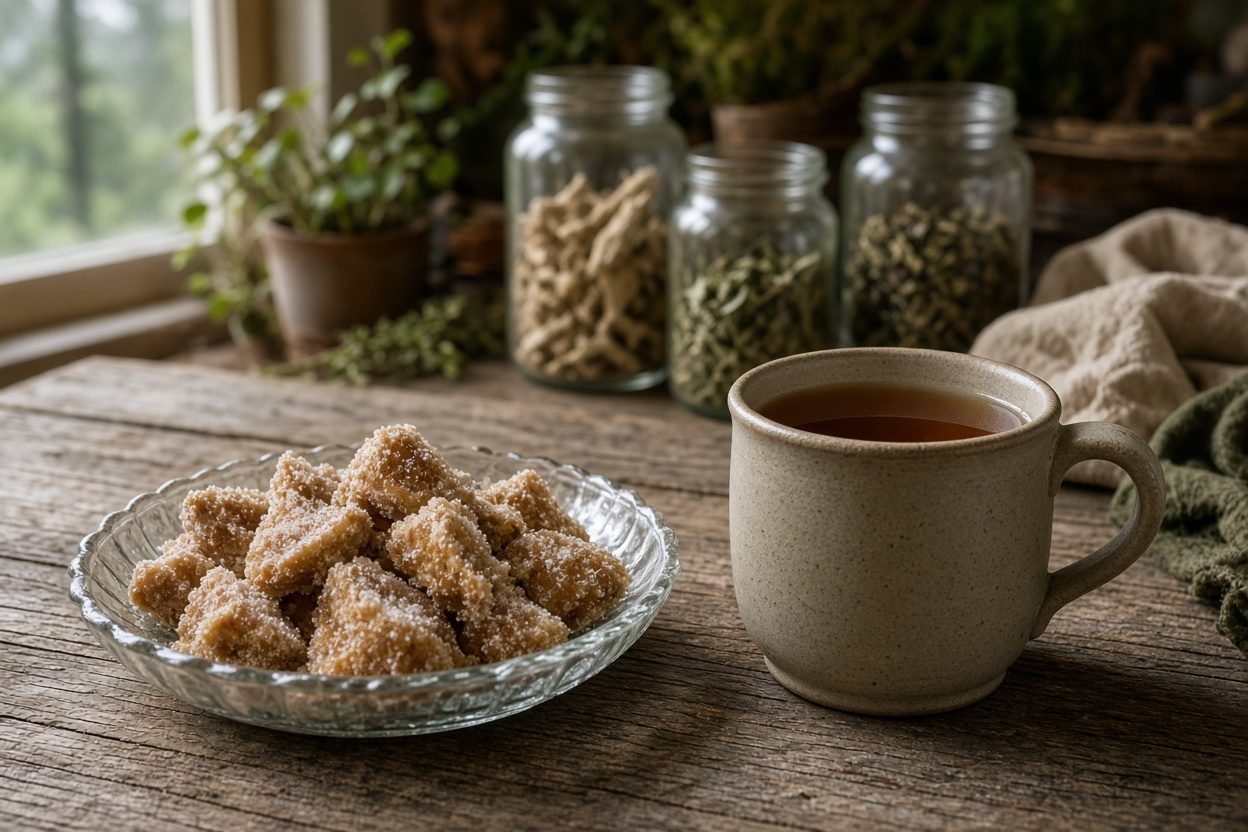
Elecampane has one of the longest histories of any plant in the European herbal tradition. Old herbals describe it as a warming, aromatic root traditionally used for the chest and lungs in cold weather, and it was commonly candied in sugar or steeped in honey in Europe for centuries. Its name is also where the word inulin comes from, the starchy fiber the root stores in large amounts.
I share that as history, not advice. I do not claim it treats anything, and I don’t give amounts. The way I prepare it is the way my teacher in Port Townsend did: a slow simmer of the dried root as a decoction, strained through cheesecloth, or a few pieces steeped in raw honey for a month. The taste is bitter, resinous, and a little floral, and nobody would call it pleasant. My step-by-step for simmering roots is in how to make an herbal decoction from roots and bark.
A few cautions from the traditional literature are worth knowing. Elecampane is in the same family as ragweed, so people with that allergy often react to it. Folk sources advised avoiding it during pregnancy and nursing. For anything involving a real health concern, see a qualified practitioner.
The honest pros and cons
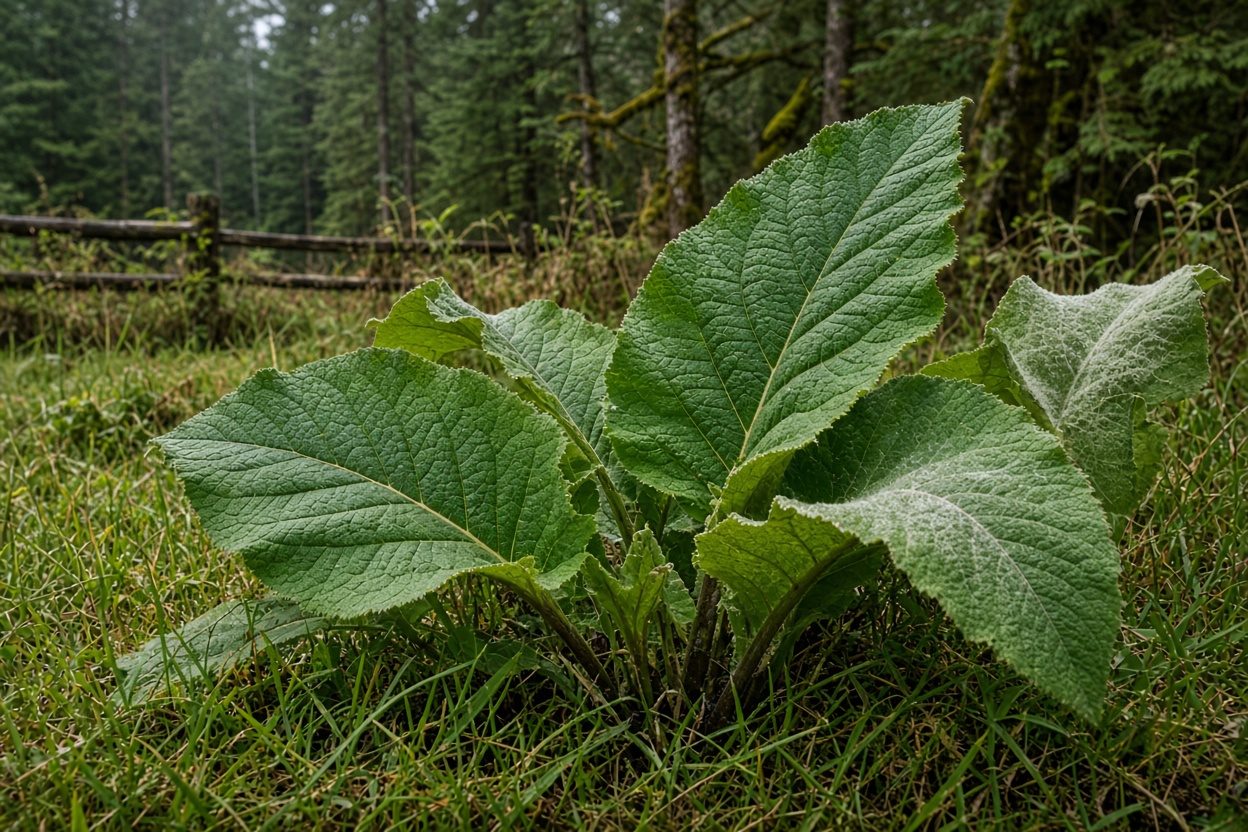
Elecampane is generous. One established plant gives you more root than a household can use in a year, and it comes back. The cons are real too. It is a two-season plant, so you need patience and a marker. The spring rosette has a dangerous look-alike. And the root is so hard once dried that if you skip the fresh slicing, you will regret it all winter.
Going further
Elecampane is one of the plants that taught me to stop trusting a single glance in spring. Every plant I gather has a season when it is easy to know and a season when it is easy to get wrong, and learning both is the actual work.
I walk through that work plant by plant in my book, Pacific Northwest Medicinal Plants: how to identify each one across the seasons, when to gather it, and how it has been prepared by the people who used it before us. And if you are digging roots this spring, read my honest review of the Nisaku hori-hori before you buy one.
Flag it in August. Dig it in March.
