How to Forage Bloodroot, the Mountain Way (and When Not To)
How to forage bloodroot in the southern Appalachians — how to know it, why to take little or none, the ethical harvest, and how the mountain people used it.
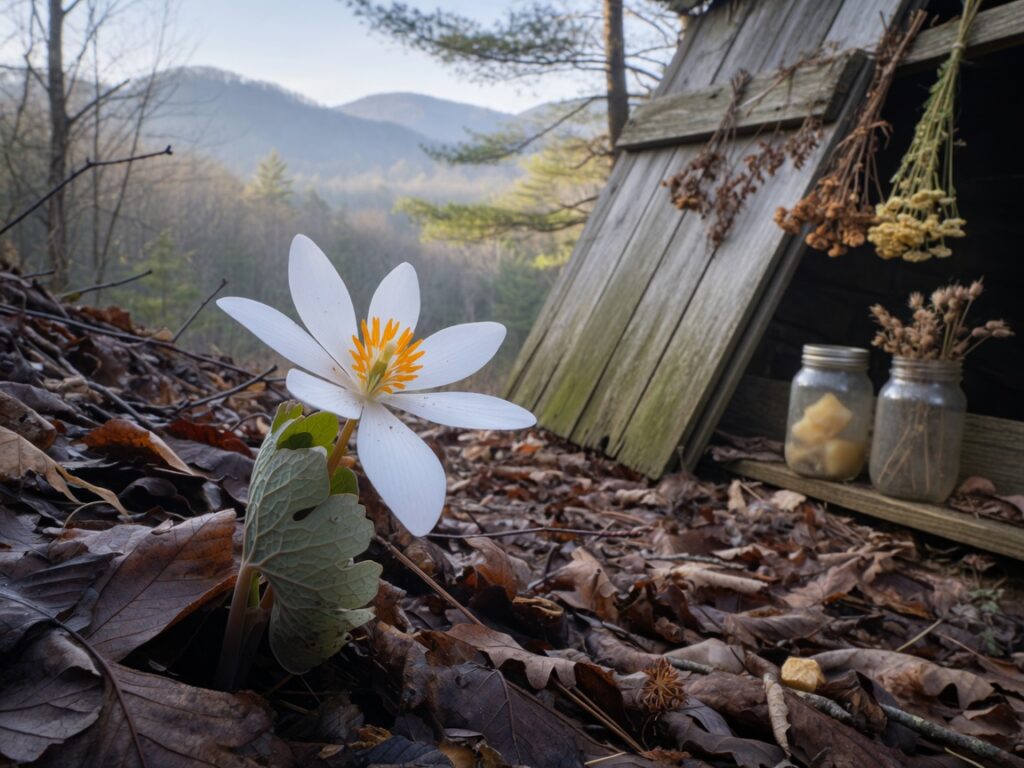
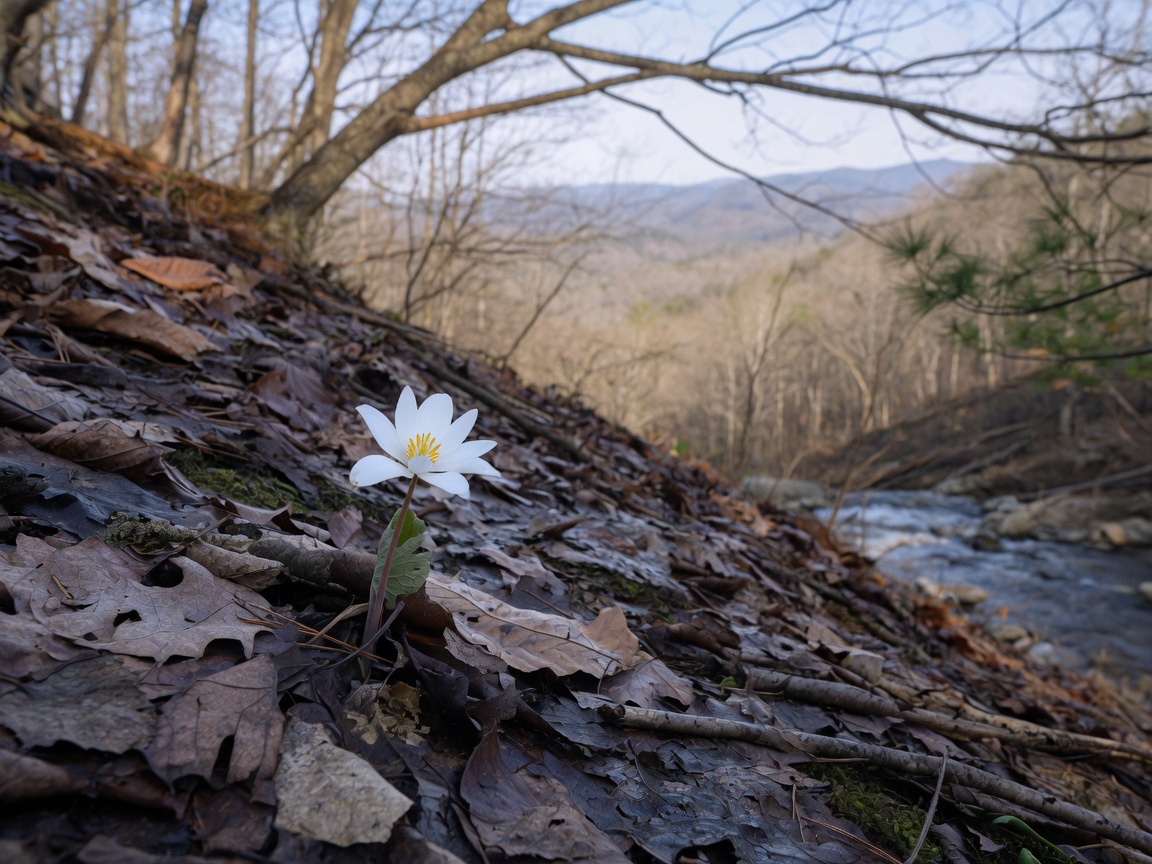
There is a morning in April, usually the third week, when the bloodroot opens on the north slope above the creek, and it is one of the first things I walk up to see every spring. The flower is a clean white star — eight or ten petals, sometimes more — sitting an inch or two above the leaf litter before much else has greened up. By the time the dogwoods are in bloom it is already gone. Break the root and it bleeds a red-orange sap the color of old iron, and that sap is the whole reason the plant carries the name it does.
Bloodroot — Sanguinaria canadensis, what the old people around here called red puccoon or bloodwort — grows all through the southern mountains, in the rich cove woods and along the shaded creeks. It is lovely, it is not hard to learn, and it is one of the plants a beginner is most tempted to dig and most likely to harm by digging. So I am going to spend as much of this as I can telling you how to know it and when to leave it be, and only a little on gathering. Know it first, respect it second, and take a root only if you understand what the taking costs.
How to know bloodroot on the mountain
Bloodroot is a spring ephemeral, which is a fancy way of saying it does its whole year’s business in a few weeks before the trees leaf out and shade the forest floor. Here in Madison County that window is late March into April, earlier down low and later up on the cold north slopes.
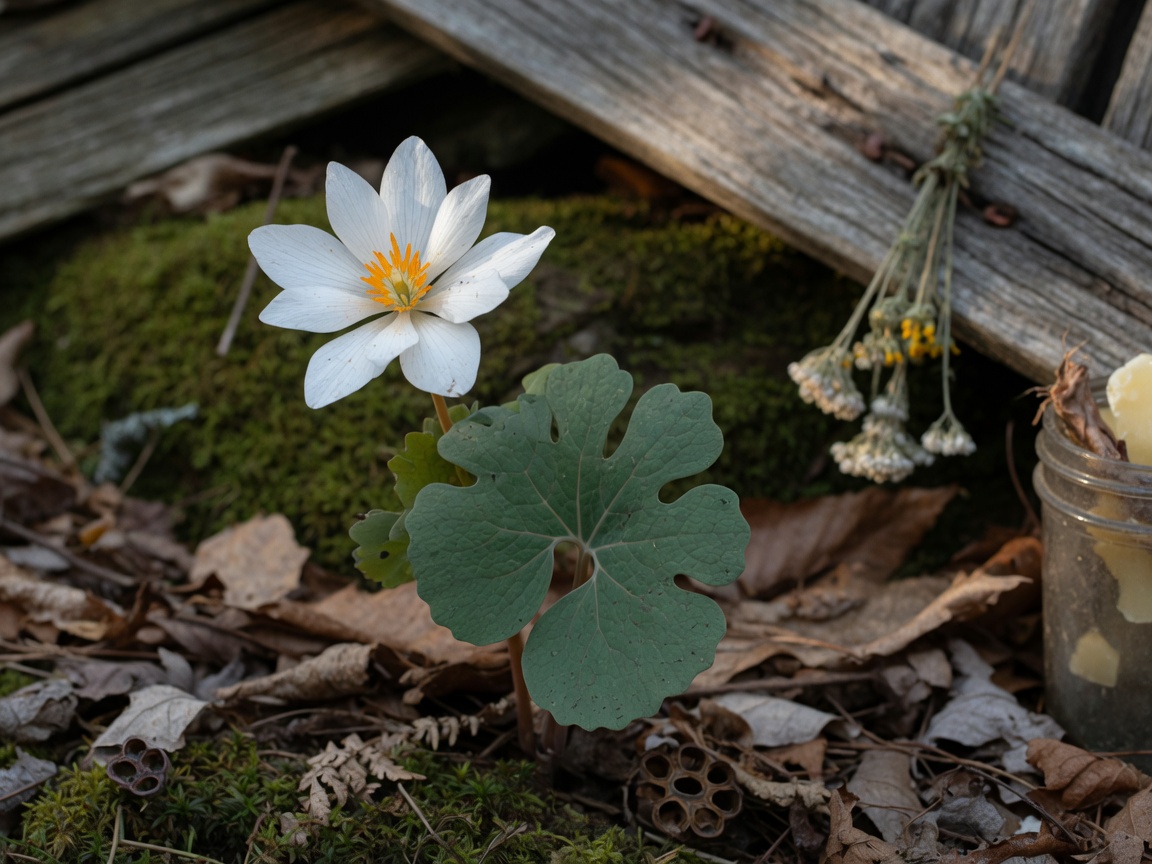
Each plant sends up a single flower on its own stalk and a single leaf, and the two come up wrapped together — the leaf furled around the flower bud like a hand around a candle. The flower is white, with eight to twelve petals and a cluster of orange-gold stamens in the center. It opens in sun and closes at night, and it does not last: two or three days, sometimes only one, and then the petals drop. The leaf is the part you’ll see longest — grey-green, round, deeply scalloped into lobes, growing larger through spring before it too dies back by summer.
The sure sign, if you have any doubt, is the root. Bloodroot grows from a knobby rhizome that runs just under the leaf litter, and when it’s nicked or broken it weeps that red-orange sap. Nothing else on our mountain does that. But do not go breaking roots just to check — that sap test costs the plant, and I’ll get to why that matters.
Where it grows, and the look-alikes to rule out
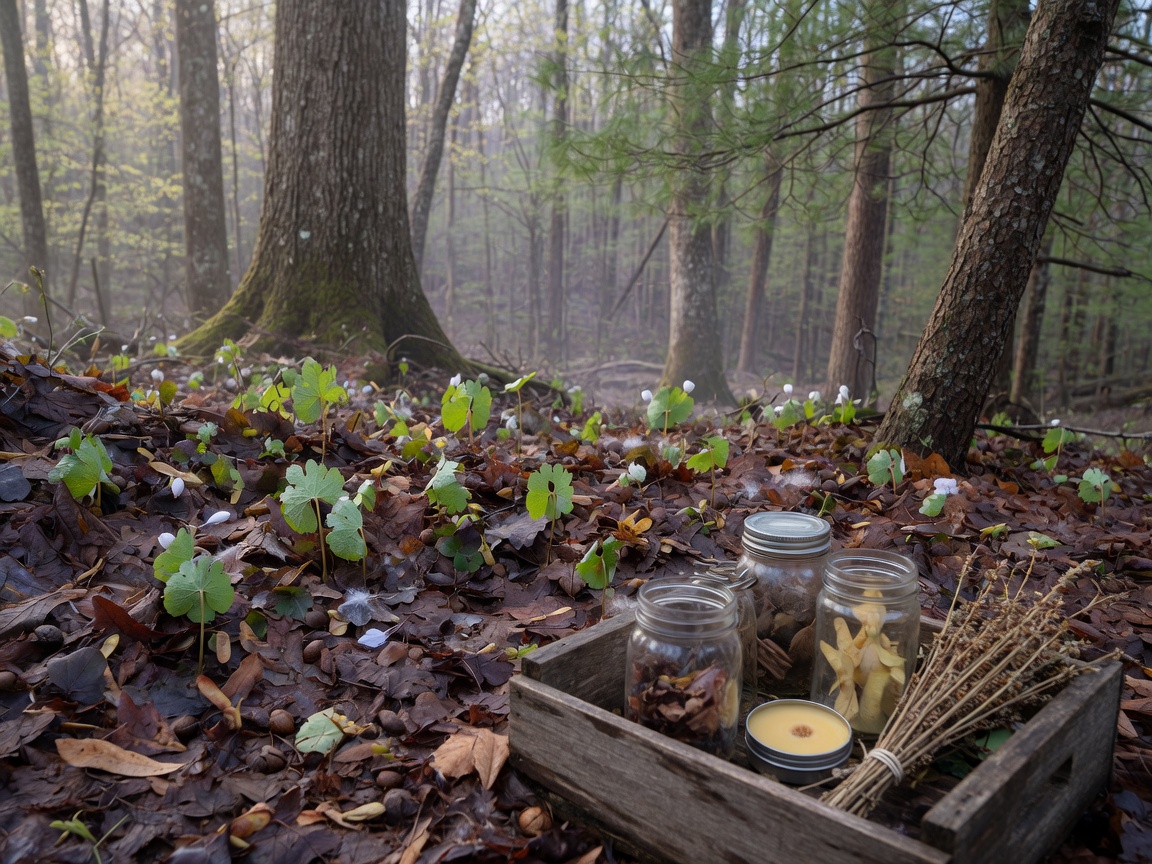
Look for bloodroot in rich, moist, hardwood cove forest — the same ground that grows trillium, trout lily, and black cohosh — on north- and east-facing slopes and along creek banks where the soil is deep and the leaf mold is thick. It grows in colonies, not as scattered singles, because of how it spreads: the seeds carry a little oil body that ants haul back to their nests, and that slow, ant-by-ant dispersal is why a good stand takes many years to build. If you’d like a fuller picture of what’s coming up alongside it, I wrote a companion piece on what to forage in Appalachia in spring.
Bloodroot has few dangerous look-alikes, but a beginner can still tangle it up. Twinleaf (Jeffersonia diphylla) carries a white spring flower and a lobed leaf that fool people at a glance, though its leaf is split cleanly into two halves like a butterfly. Rue anemone and hepatica bloom white in the same woods at the same time. None of these will match all of bloodroot’s marks at once — the furled single leaf, the eight-to-twelve-petaled white star, and above all the red-sapped rhizome.
Here is the one safety line I’ll ask you to carry, and it holds for every wild plant, not just this one: never rely on a book, an app, or a single source alone. Confirm what you’ve found against more than one reliable guide and, if you can, an experienced local. When in doubt, leave it. Bloodroot is not a plant you eat, and as you’ll see, it is not one you should be putting on your skin or in your body either — so there is no rush that justifies a guess.
Why bloodroot is a plant to take little of — or none
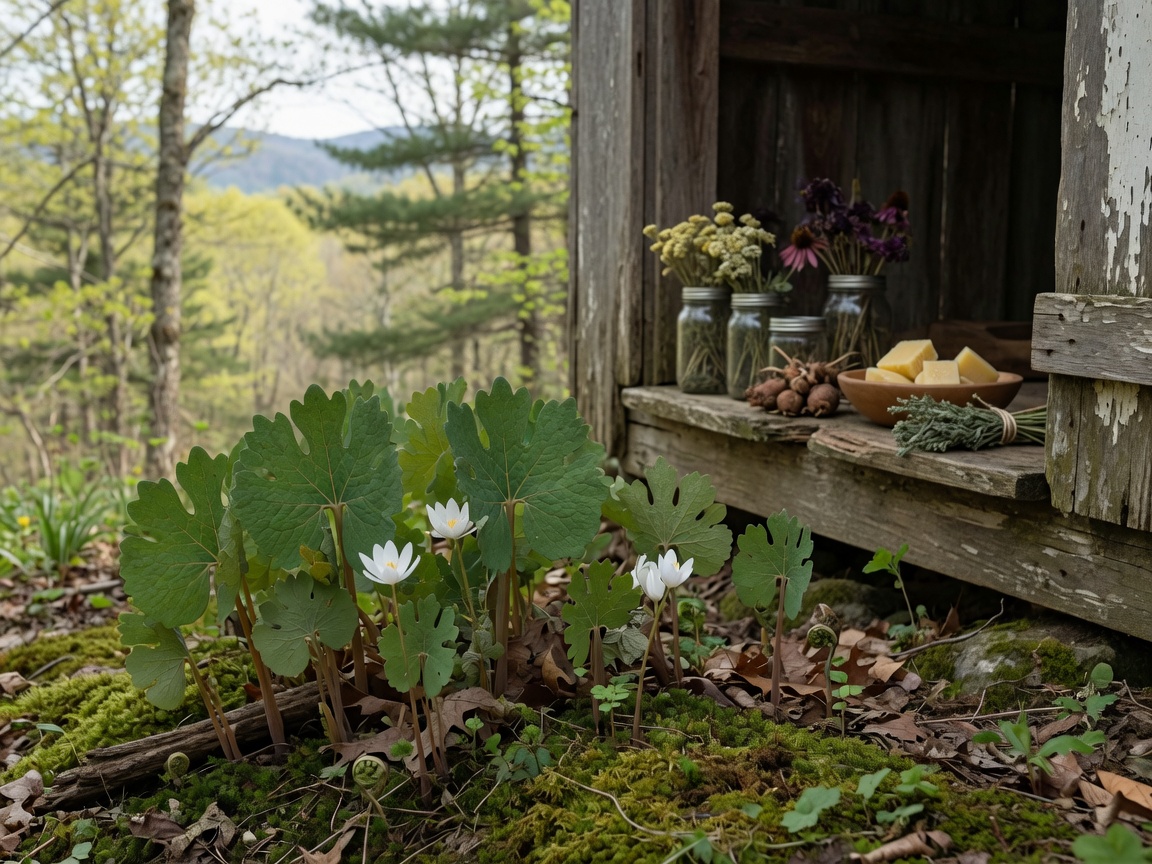
I’ll be plain with you: I mostly leave bloodroot in the ground now, and I’d rather you did too.
The trouble is that you cannot harvest bloodroot the way you gather a leaf or a berry. The medicine and the color are both in the rhizome, and to take the rhizome you kill the plant. A colony that took fifteen or twenty years to build up can be dug out in an afternoon, and it does not come back the next spring the way ramps or nettles will. Bloodroot isn’t legally regulated in North Carolina the way wild ginseng is, but it belongs to the same worried company — ginseng, goldenseal, black cohosh, ramps — the at-risk Appalachian medicinals that the old stewardship rules were made for. The mountain people who did this right never dug a small stand out, never took the last of anything, and put the seed back. That restraint is not new environmentalism; it’s how you keep having a plant to come back to.
So if you gather bloodroot at all, take a very little from a large, thriving colony, never from a small one, and scatter the ripe seed where you dug. Better still, if you want bloodroot for a dye pot or a garden, buy nursery-propagated stock and grow your own — it settles happily into a shady bed. I hold the same line on ramps, and I laid it out in how to forage and use ramps if you want the fuller version of the take-a-little rule.
How the mountain people used it (and what I won’t tell you to do)
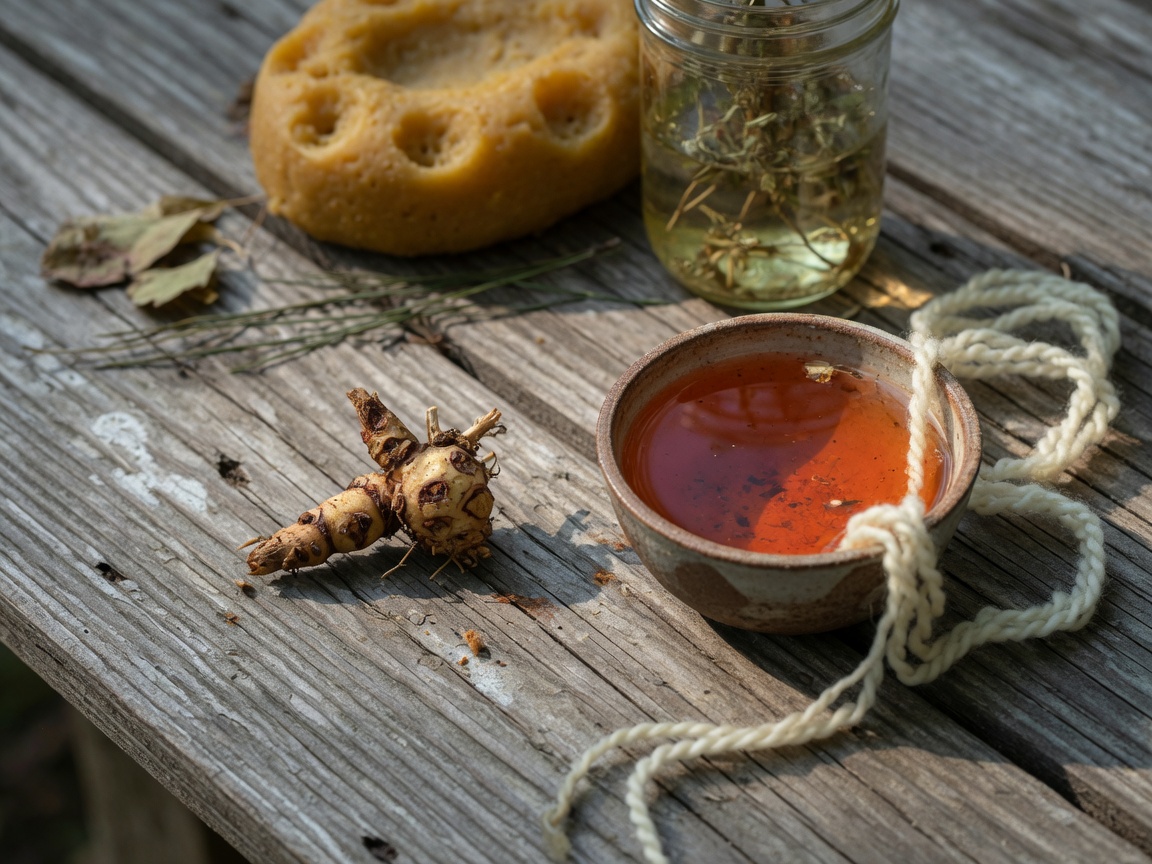
Bloodroot has a long history in these mountains, and honesty about that history means naming both what it was used for and why I keep my distance from most of it.
The Cherokee, whose homeland this is, used bloodroot as a dye and in traditional medicine long before any settler dug the first root; that knowledge came first, and I credit it plainly rather than claim it. (The plant uses documented in Hamel and Chiltoskey’s Cherokee Plants are a good, sourced place to read further.) The Scots-Irish granny-women and yarb doctors I descend from learned alongside that tradition and used the red sap mainly as a dye — for baskets, for wool — and folk medicine reached for it as a so-called blood tonic and in various skin applications.
That last part is where I stop and tell you the truth as I know it. Bloodroot’s active compound, sanguinarine, is caustic — an escharotic, which means it destroys living tissue. It is the very ingredient in the “black salve” products that have burned holes in people’s skin, and it has no business being taken internally by anyone dosing themselves at home. I keep a little dried root for the dye pot and for teaching what it looks like. I do not put it on skin, I do not take it, and I would not tell you to. Traditional use is worth knowing and worth recording. It is not a prescription, and this one in particular is a plant to admire far more than to swallow.
If you gather a little
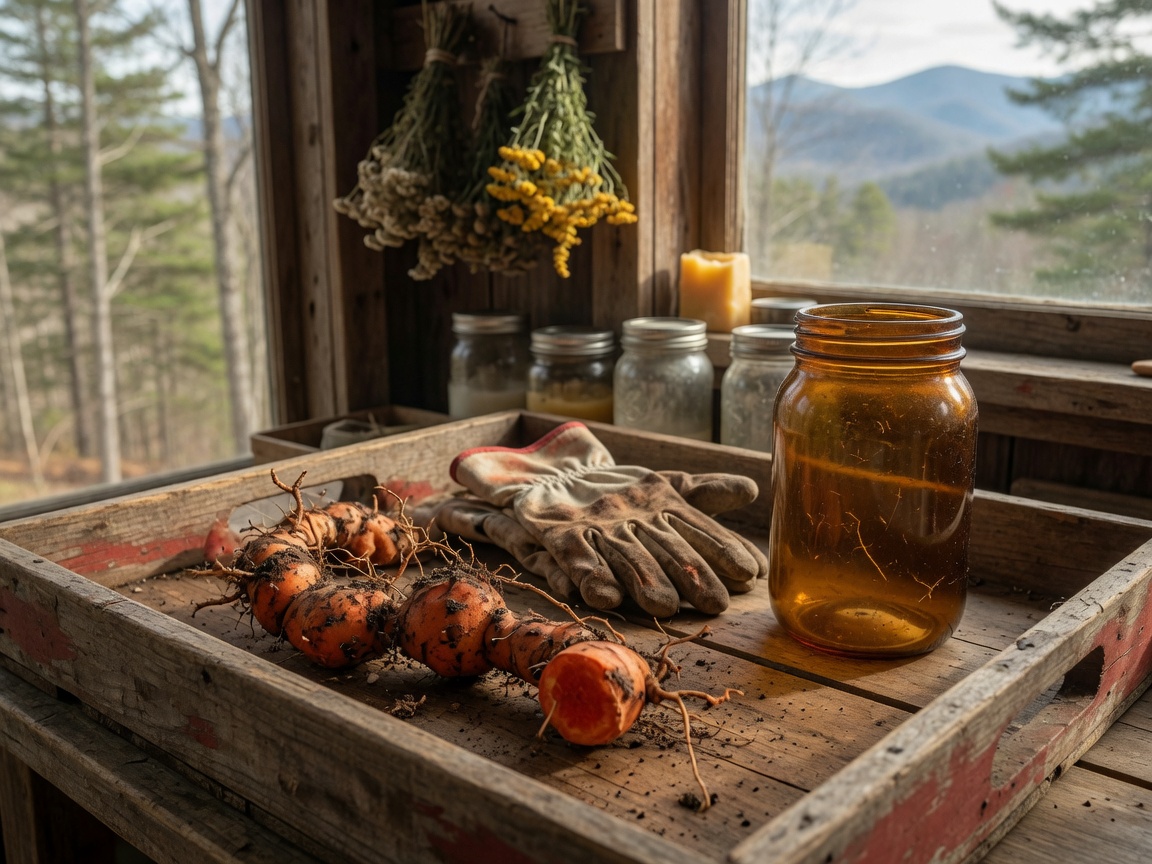
Say you’ve found a broad, healthy colony and you want a small amount of root for natural dye. Dig in fall, after the plant has set and dropped its seed, when you take the least future from the stand — and take only a root or two. Wear gloves, because the sap stains skin and everything else a stubborn orange. Brush the soil off, split the rhizome, and dry it slowly in a single layer somewhere airy and out of the sun until it’s brittle, then store it whole in a labeled jar away from light. Label it plainly, poison and all, so nobody in the house mistakes it for something benign.
If your interest runs to the preparations the old apothecary made — the tinctures, the drying, the straining through cheesecloth — I keep the general methods, and my honest account of the batches I’ve ruined learning them, in how I make a mountain root tincture. Bloodroot is one I demonstrate there only as tradition, never as a home remedy to take.
Most springs, the best thing I do with bloodroot is walk up the north slope, find the first white flower open in the cold leaf litter, and leave it exactly where it stands. There is a kind of gathering that is only looking, and with this plant it is usually the wiser kind.
If you want to go deeper — the full picture of bloodroot and the other at-risk roots of these mountains, how to know them, and how the folk tradition used and stewarded them — that’s the heart of my book, Appalachian Medicinal Plants. It’s the long version of everything I learned on my hands and knees in these coves, written for people who want to know what grows behind the house and how to treat it with the respect it’s owed.