How to Forage and Use Beech Bark in Appalachia, Without Harm
How to know the American beech in Appalachia, why you never strip a living tree, how to gather fallen bark and twigs for winter, and how folks used it.
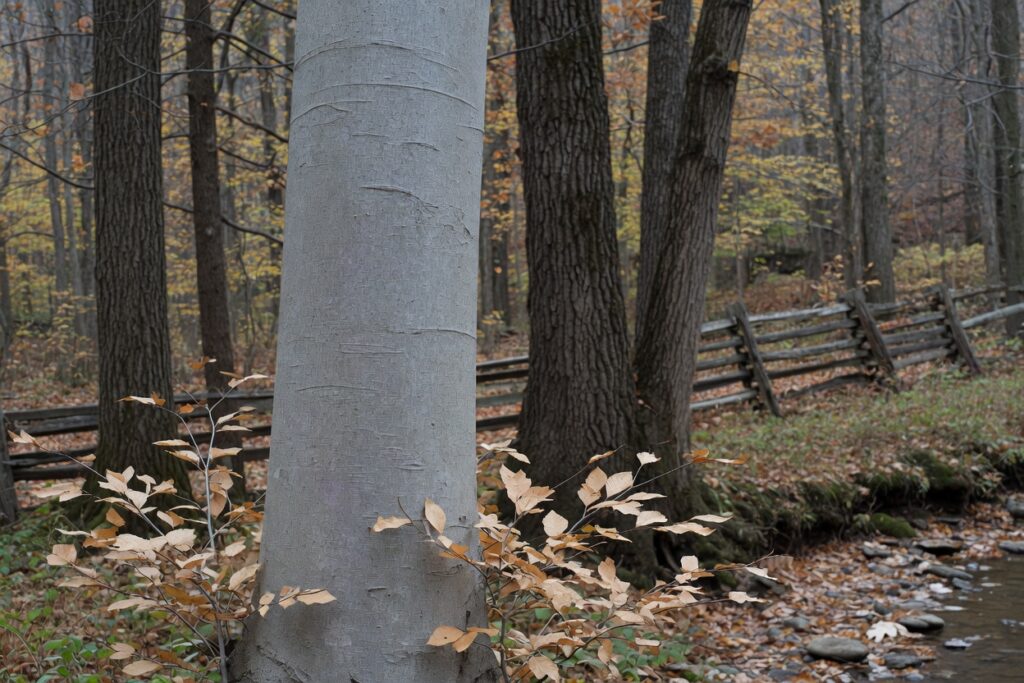
Every beech in the cove behind my house carries somebody’s initials, cut in the smooth gray bark by a courting couple or a bored boy, and the scars have gone black and swollen with the years. My own are up there somewhere, from a summer I’d rather not discuss. I tell you that because the first thing to know about gathering from a beech is that the tree remembers everything you do to it.
That’s why this isn’t a how-to-strip-the-bark post. It’s a how-to-know-the-tree, and how-to-take-only-what the woods has already let go of. Late October is a good time to learn it, with the leaves going copper and the smooth gray trunks standing out against the oaks and hickories like pillars in an old church.
You’ll want a sack or a basket and a pair of gloves. Everything else you can do without. This is a plant you pick up, not a plant you dig.
How to know a beech
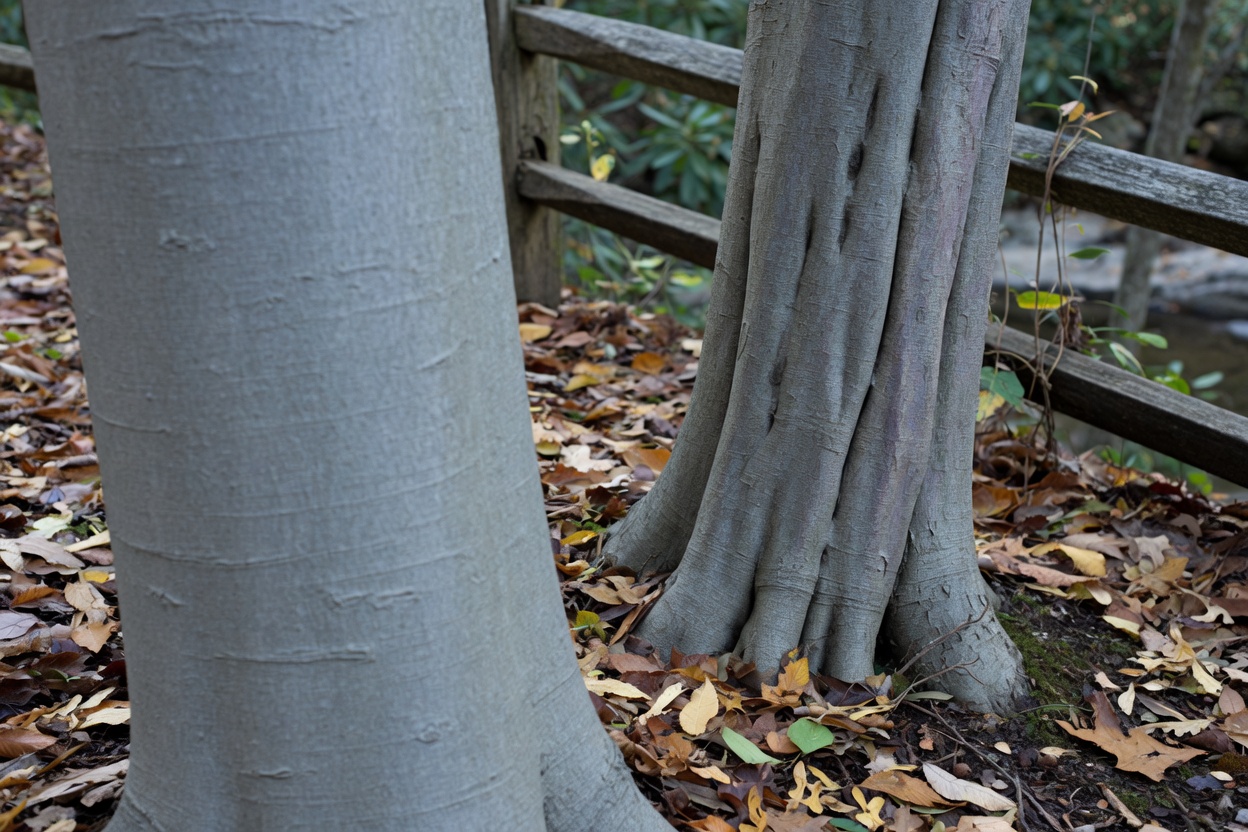
Look at the bark first. American beech (Fagus grandifolia) has a smooth, silvery-gray bark that looks like the skin of an elephant, tight and unbroken even on a big old trunk. Few other trees in these mountains look like it. It stays smooth for a hundred years or more, which is why it’s the tree everybody carves.
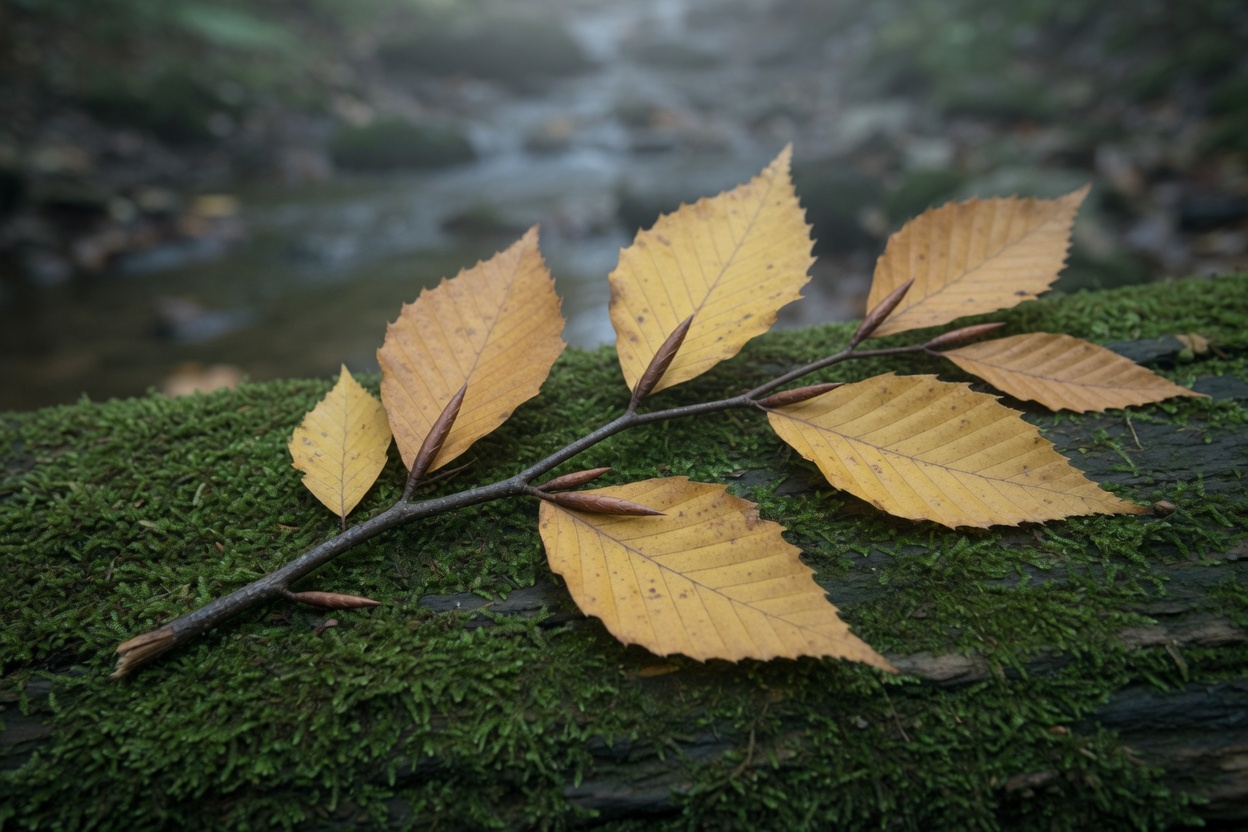
The leaf is the second clue. It’s oval, with a pointed tip and a coarsely toothed edge, and the veins run straight and parallel from the midrib to each tooth, like the ribs of a fish. It turns a clear yellow and then a coppery tan in fall, and young beeches hold those dry leaves on all winter, rattling in the wind long after every other tree has dropped its own. That’s the easiest way to spot one in January.
The buds are the third. In winter, beech buds are long, slender, and pointed, an inch or so in length, like a sharpened cigar. Nothing else around here has buds shaped like that.
The nuts are small, three-sided, and held in a prickly husk that opens in four parts. They’re food for bears, turkeys, squirrels, and grouse, and a good mast year feeds the whole cove. I leave every one.
The look-alikes
Say this part plainly, and I say it every time: never use a wild plant, or any part of a tree, on the strength of one book, one app, or one article, this one included. Match it against more than one good guide, and then against someone local who knows it by sight. When in doubt, leave it.
Hophornbeam and American hornbeam grow in the same coves, and folks sometimes take them for beech. American hornbeam, called musclewood or blue beech, has smooth gray bark too, but the trunk is fluted and ridged like a flexed arm, and it’s a much smaller tree. Its leaf has a doubly toothed edge. Hophornbeam has shaggy, shredding bark in thin strips.
Young sweet birch and yellow birch have bark that peels in curls and smells of wintergreen when you scratch a twig. A beech does not peel and does not smell of anything.
If the bark isn’t smooth and tight, it isn’t beech. My page on dangerous look-alikes of Appalachian medicinals is a good one to keep open while you learn.
Why I don’t strip it, and what I do take
Beech bark is thin, and the tree’s living layer sits just under it. Strip a patch, and you open the tree to rot and insects, and you’ve likely killed the section. Cut all the way around and the tree is done.
There’s a bigger worry, too. Across the Appalachians, beech bark disease has been killing older beeches for decades. A scale insect makes tiny wounds in the bark, a fungus gets in, and the tree cankers and dies. Many of the big old trees in my own holler are gone. The ones that remain are worth protecting, and I won’t put one more cut on them.
So here’s how I gather. I take only what has already fallen.
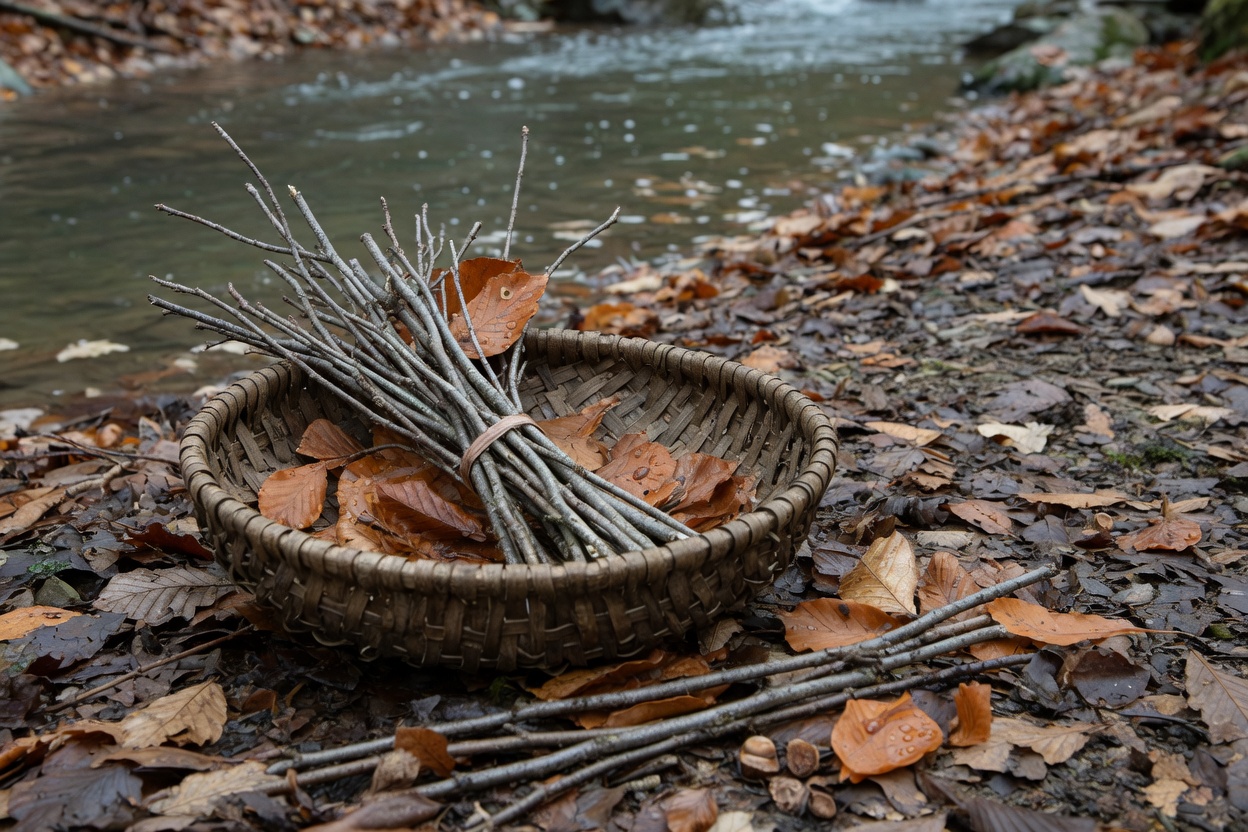
Windfall limbs and twigs. After a storm I walk the cove with a sack. Small fallen twigs and limbs carry bark and are free for the taking. Pick up what’s down, and leave what’s standing.
A few fallen leaves. In October and November the leaves are on the ground in drifts. I gather a basket of the dry ones, because a leaf is something the tree gives up every year on its own.
Nothing from a diseased tree. If the trunk is covered in white wooly patches, or pocked with black cankers, leave it be. I don’t gather from it, and I don’t carry anything from one stand to another.
Ask permission on private land. On national forest ground, check the district’s rules on gathering before you carry anything out, since they differ from place to place.
Drying and keeping it
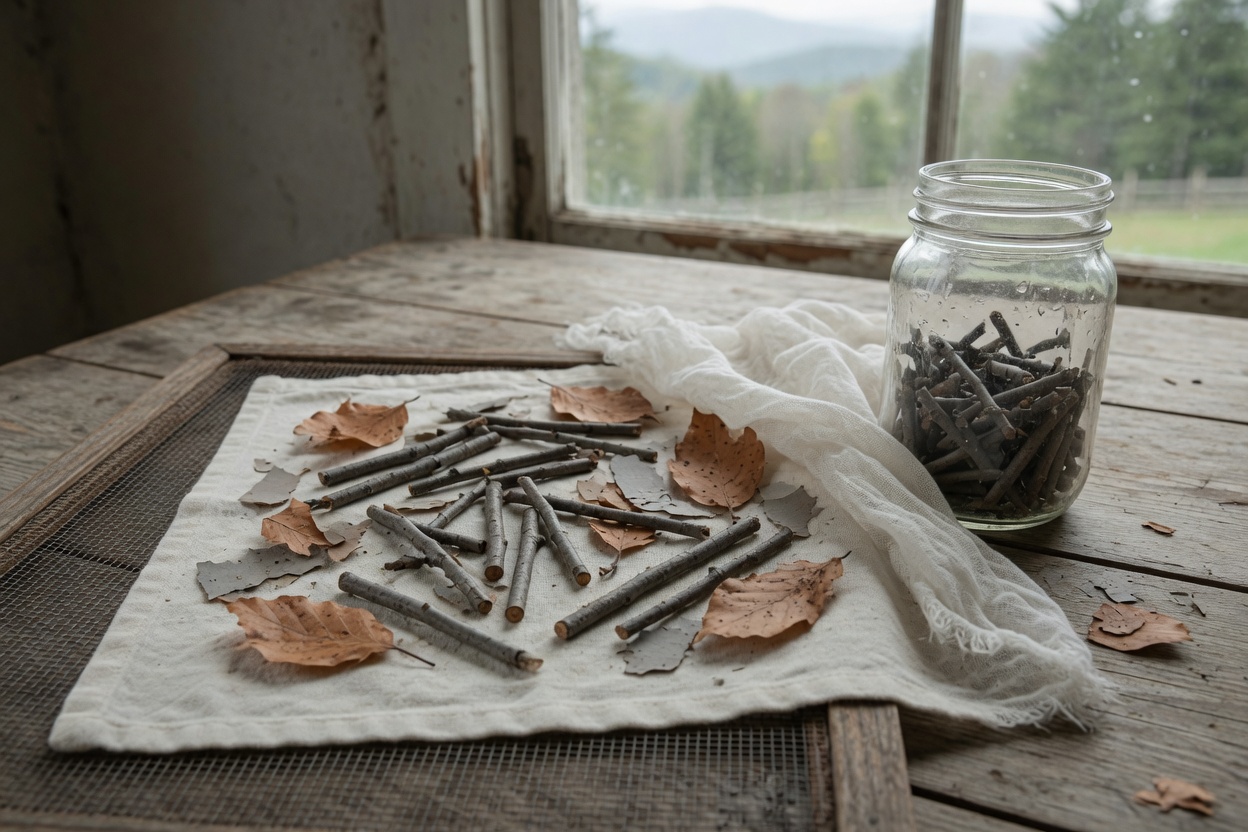
Wash the pieces quickly, if they need it, and pat them dry. Break the bark and twigs into pieces about as long as your finger. Spread them in a single layer on a screen or clean cloth, and lay cheesecloth loosely across to keep dust and flies off. In a dry, airy room out of the sun, thin twigs take a week or two to dry through, and the leaves go crisp in about three days. They’re ready when they snap and don’t bend.
Store the dry pieces in a mason jar with the plant and date written on a label. Keep it in a cupboard, away from light and heat. Use it up within a year, and discard anything that smells musty.
If you’re newer to this, my notes on bark in the dormant season are in how to forage and use tulip poplar bark and how to forage and use persimmon bark, and the two make a good pair with this one.
How it has been used
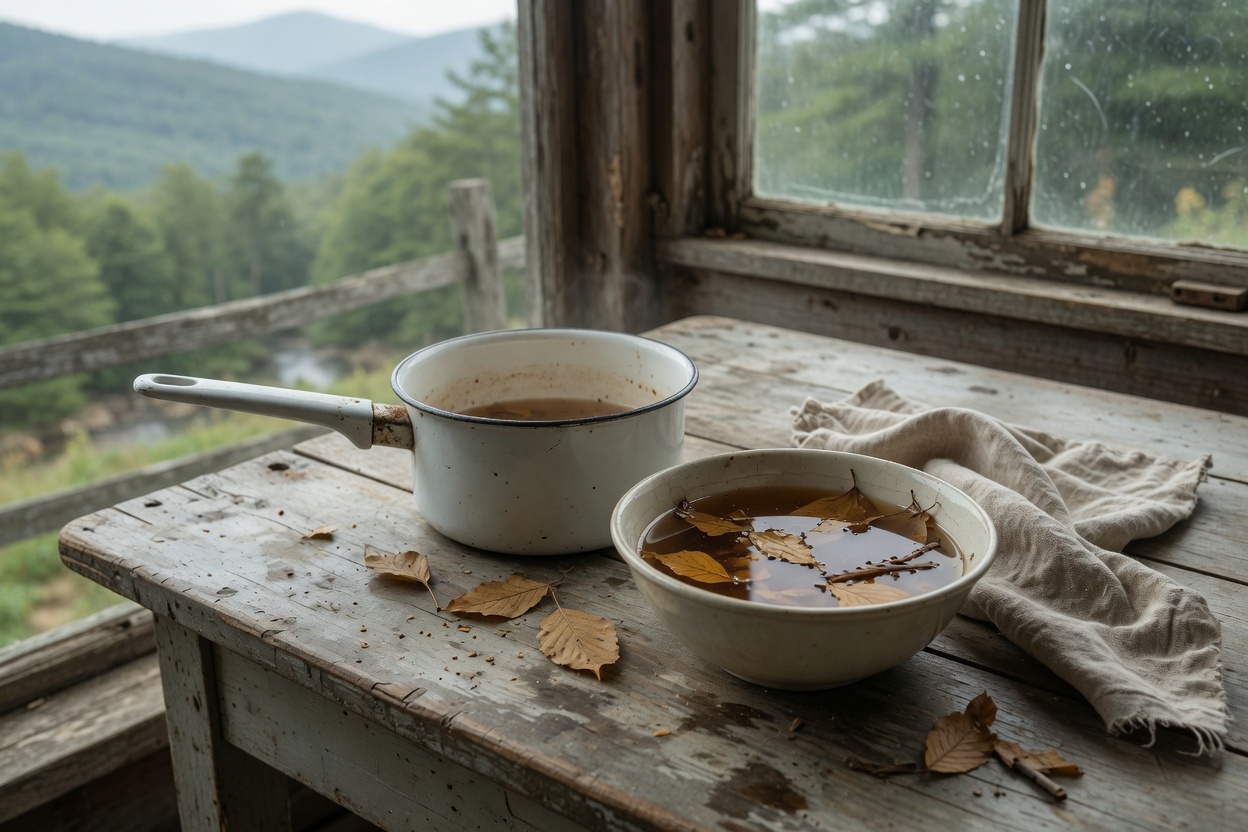
I’ll tell you what the old folks did, and I’ll be plain that it’s history, not advice. Mountain people steeped beech leaf and bark in water and used the cooled liquid as a wash, and old herbals record the leaf as a poultice for sores and burns. The bark was also boiled into a tea in some households. My grandmother knew the beech more as the tree where the squirrels gathered than as a medicine chest.
I make no claim about what any of it does for the body, and I’d distrust any page that does. I don’t give amounts. If you have a real health concern, see a qualified practitioner. If you’re pregnant or nursing, or you take any medication, I’d leave a plant you’ve just learned out of your cup. This is traditional use, not a recommendation.
I should say, too, that I’m sharing a settler-mountain use of the tree, handed down in my own family. Other peoples in these mountains, the Cherokee among them, knew the beech long before us. Where I draw on published Cherokee sources I will name them. I will not claim that knowledge as mine.
What I got wrong
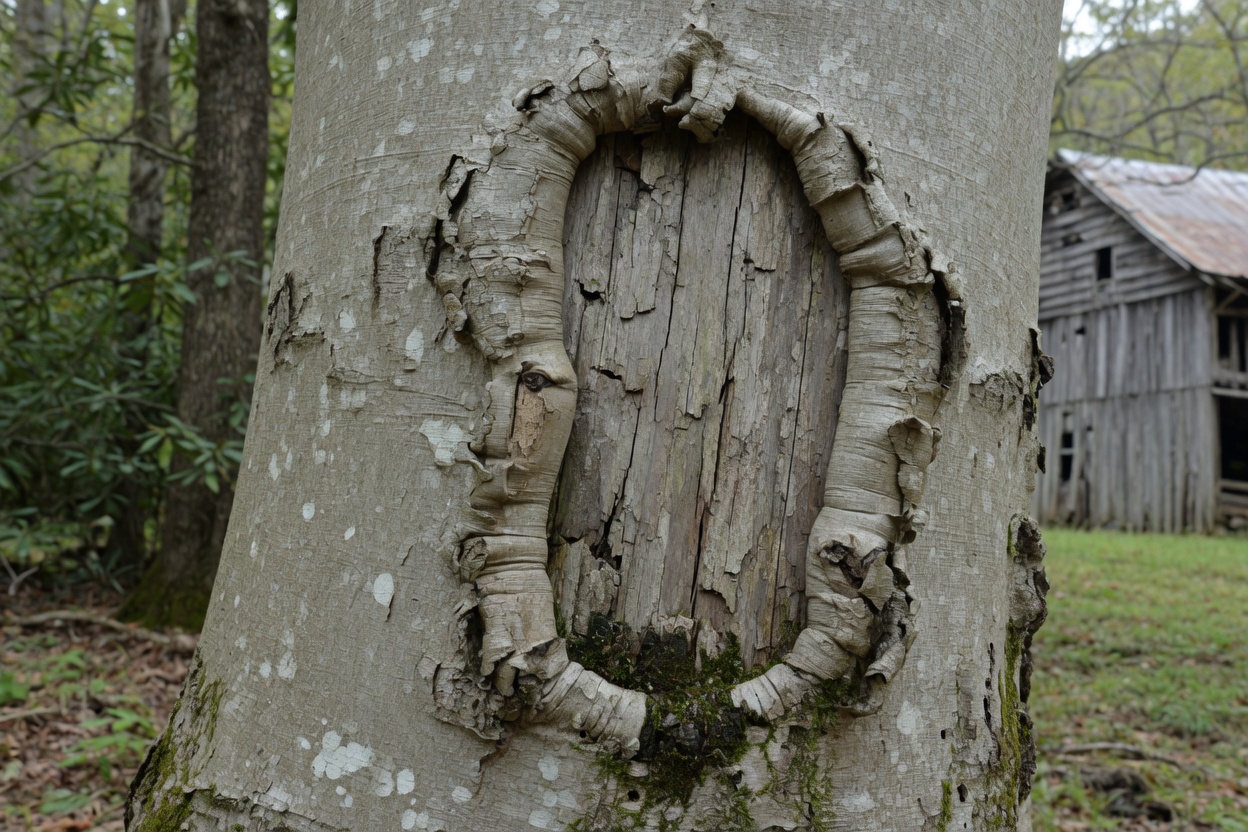
When I was young, I cut a strip of bark from a living beech behind the barn because I wanted a quick piece for a drawing salve. The scar never healed over properly, and thirty years later the tree has a dead hollow where my knife went. I think of it every time I pass.
I’ve also dried a basket of damp twigs in a closed shed and found them furred with mold a week later. Dry them where the air moves, and don’t pack them until they snap.
Where to go from here
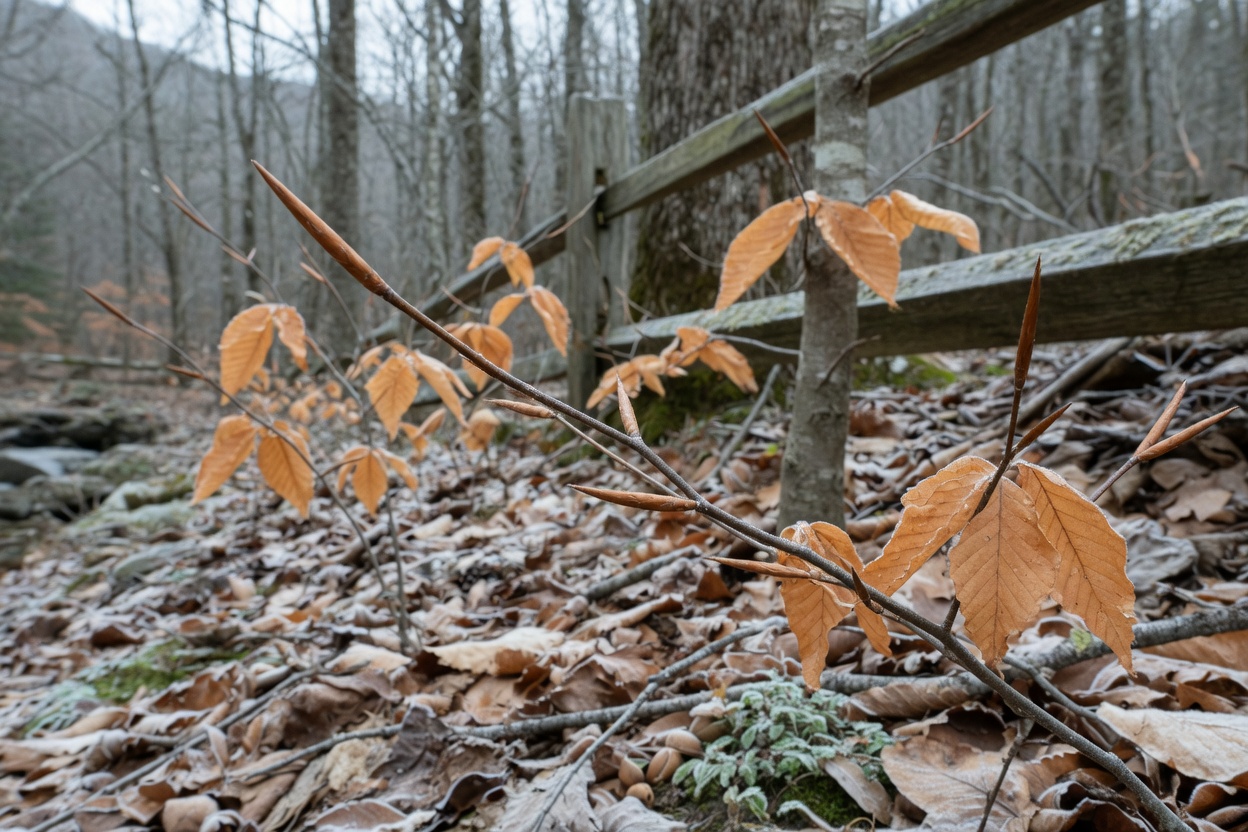
Walk to a beech this week and look at the buds, the bark, and the parallel-veined leaf, and write them down. You’ll know the tree on sight by January, with its copper leaves rattling in the cold.
If you’d like the mountain plants laid out one at a time, with how to tell each from its kin and how to gather it without harm, that’s what I put into Appalachian Medicinal Plants, and you can find it here: Appalachian Medicinal Plants. And for what to look for in the other seasons, my notes on what to forage in Appalachia in spring are a good place to go next.
