How to Forage and Steward Black Cohosh in Appalachia
How to identify black cohosh, when it's ethical to dig, and how the mountain tradition of stewarding this at-risk root actually works — from a Madison County home apothecary.

Black cohosh is a plant my grandmother taught me to leave alone more often than she taught me to dig it. That sounds backward for a woman who kept a home apothecary her whole life, but it’s the truest thing I can tell you about this root before we go any further. Black cohosh is one of the plants this mountain has given away too freely for too long, and a body who digs it without a plan for what’s left behind isn’t practicing the tradition — she’s ending it.
Actaea racemosa, called black cohosh or black snakeroot, grows up a tall wand of small white flowers in early summer, rising three to six feet out of the rich, shaded soil of a north-facing cove or a hardwood slope. Around here it’s often called bugbane, for the smell of the bloom, which is not a pleasant one up close. By fall the flower stalk has dried to a dark, wiry seed head, and that’s the marker I look for when I’m out walking a cove I know holds a stand.
One thing first, and I’ll say it once because you’re grown: never dig or use a wild root on the strength of one book or one person’s word alone. Confirm your identification against more than one reliable source, and against someone who can put the plant in your hand. When in doubt, leave it standing.
Knowing the plant before you touch the ground
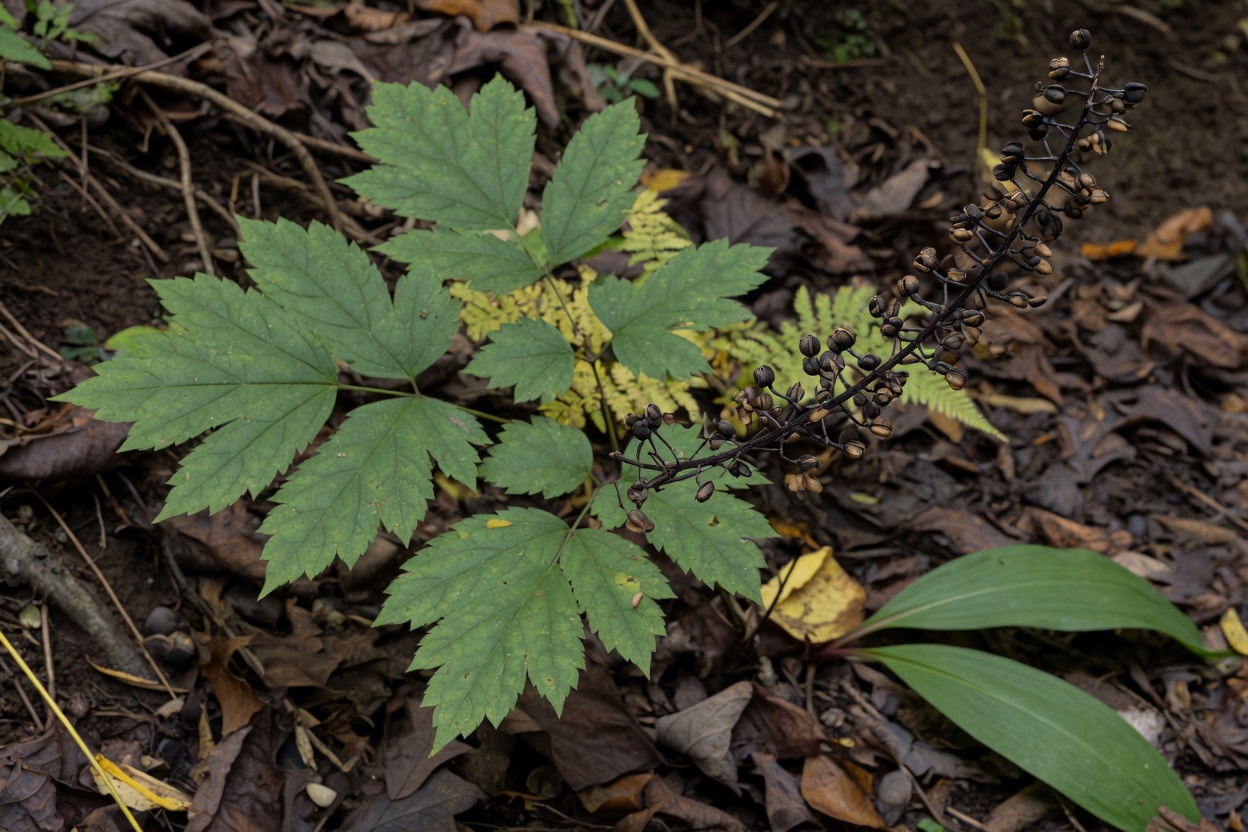
Black cohosh favors the same rich, shaded coves where you’d find ramps and bloodroot — deep leaf litter, a north or east slope, hardwoods overhead. The compound leaves are large and toothed, and in June the stalk sends up its long white bottlebrush bloom well above the surrounding understory, tall enough to spot from a good distance once you know to look for it.
The seed heads in fall are the tell I trust most for a late-season walk: a dry, dark, branching stalk with rattling seed pods where the white flowers stood in June. Mark stands when you see them blooming and come back to them by memory — I keep a running note in the back of my garden book of which coves hold black cohosh, the same way my mother kept hers.
Why this root gets a different rule than most

Black cohosh takes years to reach a size worth digging, and wild stands across the southern mountains have thinned hard from decades of commercial over-harvest feeding the herbal supplement trade. It sits on the same at-risk list as ginseng, goldenseal, and bloodroot in my part of the world, and it earns that spot honestly. A stand dug bare doesn’t come back in your lifetime or your grandchildren’s.
So here is the rule I hold to, the one my grandmother held to before laws ever caught up to it: dig from a stand of a dozen plants or more, never a lone one. Take a third at most, never more, and always the largest, oldest roots — leave the young plants to seed the ground again. Replant a piece of the crown with an eye or two on it back in the hole you dug, tamped in with the same soil you took it from. Where the state requires a harvest season or a permit for wild-harvested medicinals on public land, know the rule before you carry a trowel onto it. Most of what I dig, I dig from family land where I’ve watched the same stands for thirty years and know exactly what they can give up.
Digging it right, when you decide to dig at all

I dig in the fall, after the seed has set and dropped, using a hori-hori to work around the root at an angle rather than straight down, which keeps me from slicing through roots I mean to leave. The root itself is a dark, knotted, almost black mass with a distinctive bitter smell when you cut into it — nothing else in these coves smells quite like it, which is a useful confirmation once you’ve got a piece in hand.
Rinse the dirt off, split larger pieces so they dry evenly, and lay them out on screens in a warm, airy spot out of direct sun. Fully dried root will snap rather than bend, and it keeps for a year or better stored in a sealed jar out of the light.
What the tradition actually does with it

The Cherokee, whose homeland this is, used black cohosh for a range of purposes long documented in Tribe-authored and scholarly ethnobotanical sources, and the settler granny-women who came later learned much of what they knew about mountain roots alongside Cherokee neighbors and adapted it into their own practice. I didn’t learn this plant from Cherokee teachers directly — I learned it from my grandmother and from books, and I credit the people who knew it first rather than claim their knowledge as mine.
In my own family’s practice, black cohosh root has always gone into a simple tincture, chopped small and covered completely in high-proof alcohol in a jar, kept in a dark cupboard for six to eight weeks and shaken every few days, then strained through cheesecloth into clean mason jars for the shelf. That is traditional use, passed down and practiced, not a prescription — I’ll say plainly that black cohosh is a plant with real effects, and anyone dealing with a serious condition belongs with a doctor, not a home tincture.
What I tell my granddaughter
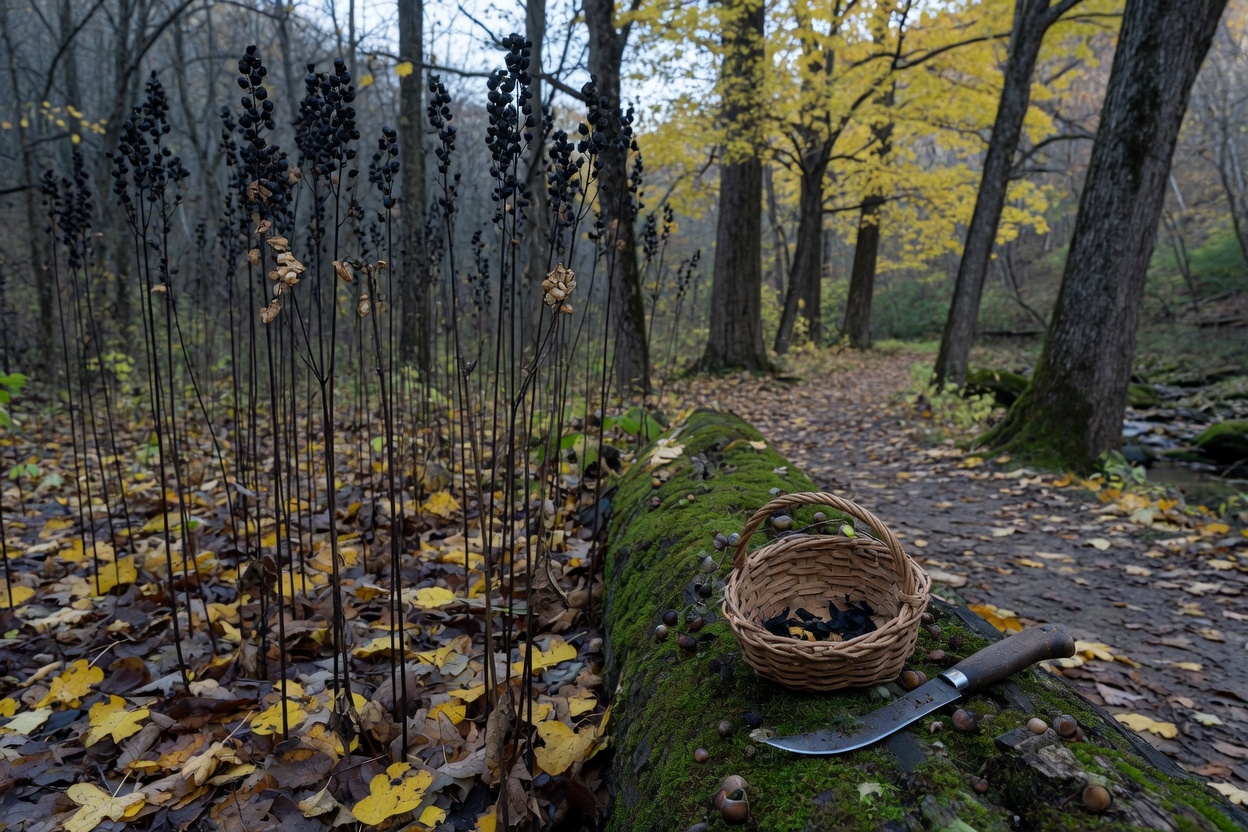
My granddaughter can already spot a first-year black cohosh plant faster than I can these days, and the thing I want her to carry forward isn’t the recipe — it’s the restraint. A mountain woman who digs everything she finds hasn’t learned the tradition at all; she’s just taken the last of it. Leave two-thirds. Mark the stand. Come back next year and see if it held.
I go deeper on black cohosh, along with the rest of the at-risk roots and the traditional preparations that use them, in my book, Appalachian Medicinal Plants — a hundred-some plants of these mountains, how to know each one honestly, and how the generations before us stewarded what they gathered. The stand is still out there this fall, seed heads rattling. Go slow, and leave more than you take.
