How to Save an Overwatered Container Plant Before It Dies
How to rescue an overwatered container plant: the signs everyone misreads, how to dry out a soggy pot and trim root rot, and how to keep it from happening again.
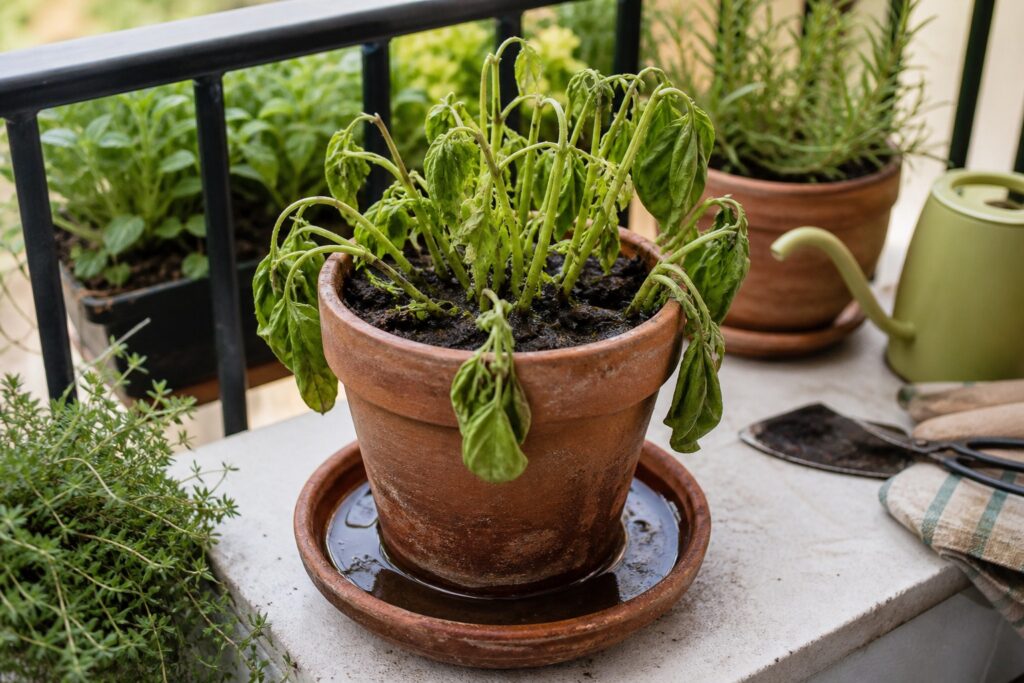
Your plant is drooping, so you water it. It droops more. So you water it again. And somewhere in there, without meaning to, you’ve loved it half to death.
Here’s the thing nobody quite believes until it happens to them: overwatering kills more container plants than forgetting to water ever will. I’ve drowned my share — a whole pot of basil my second summer, sitting in a saucer of water I kept dutifully topping up, wondering why it looked worse every day. The plant wasn’t thirsty. It was suffocating. And the fix is almost the opposite of what your instinct tells you to do.
The good news: a soggy pot is rescuable if you catch it before the roots are gone. Let me walk you through how to tell what’s actually wrong, how to dry a plant out and save it, and how to stop doing it in the first place.
First, make sure it’s actually overwatered
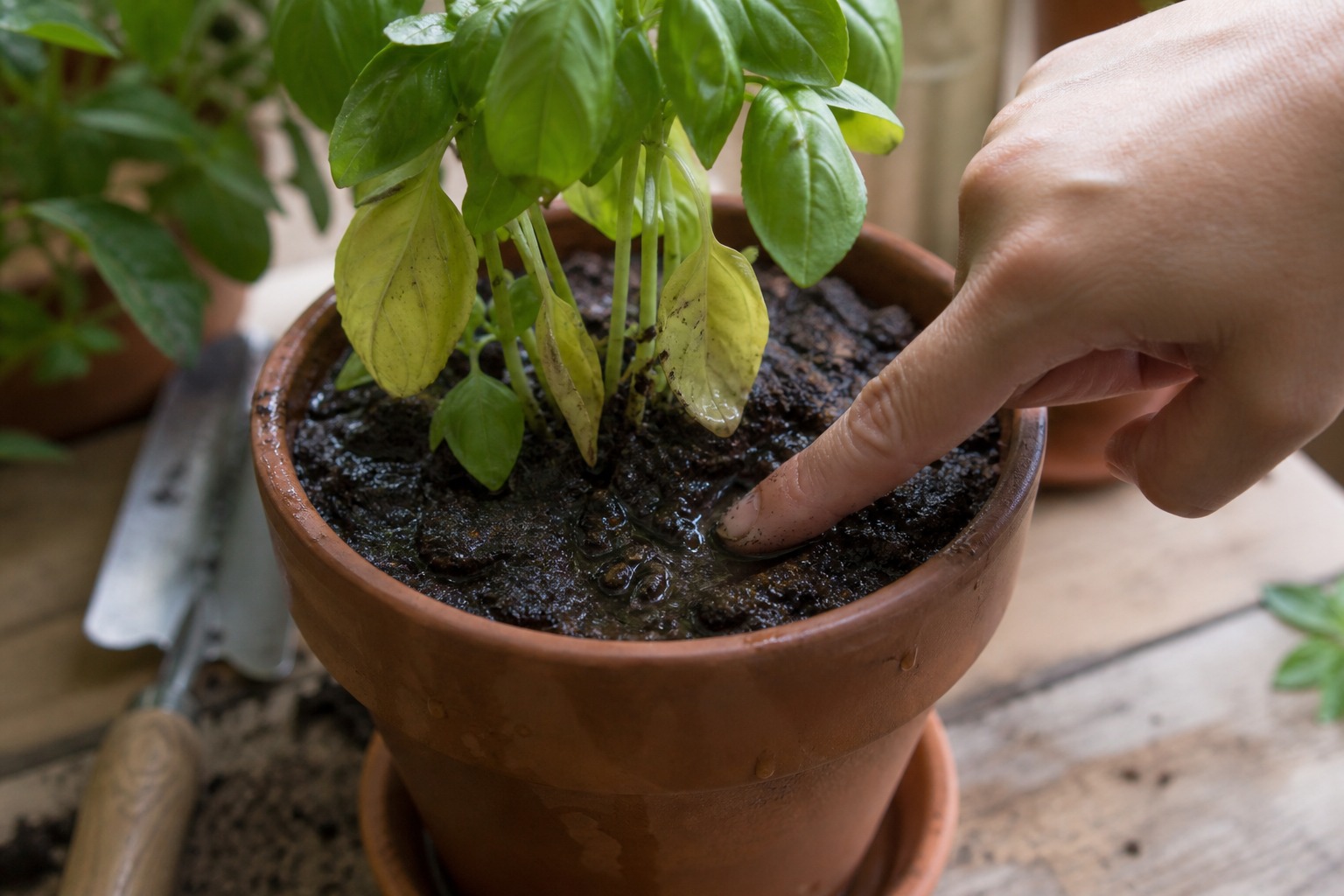
The cruel trick of overwatering is that it looks exactly like underwatering. A drowning plant wilts, droops, and yellows — the same signs as a thirsty one. So people water more, and make it worse.
Don’t water on looks. Check the soil first. Push a finger two inches into the pot, or better, push a soil moisture meter down to the root zone. If it reads wet down there and the plant is still wilting, you have an overwatering problem, not a thirst problem.
The other tells, once you know to look for them:
– Yellowing leaves, often the lower ones first, sometimes dropping while still soft and green-yellow rather than crisp.
– Soft, mushy stems at the base, or a general limp-all-over look instead of dry, papery edges.
– Soil that stays wet for days and never seems to dry between waterings.
– Fungus gnats — those tiny flies rising off the pot — or a green, mossy, or white crust on the soil surface. Both love constantly-wet soil.
– A sour, swampy smell when you get close to the soil. Healthy soil smells earthy; drowning soil smells off.
If you’ve got wet soil plus any of those, stop watering right now. That’s step one, and for a mild case it may be the only step you need.
The rescue, from mild to serious
For a mildly soggy pot: move it and let it breathe. Set it somewhere brighter and airier — plants use more water in good light, so a bright spot actually helps the soil dry. Get it off any saucer that’s holding standing water, and tip out anything that’s collected. Then leave it alone until the top couple of inches are genuinely dry before you even think about watering again. Nine times out of ten a mild case turns the corner in a few days of restraint.
For a pot that stays waterlogged: check the drainage before anything else. A pot with no drainage holes, or holes plugged with roots or a stuck-on saucer, is a bucket — water goes in and never leaves. If there are no drainage holes, that’s your whole problem; the plant needs to move to a pot that has them. If the holes are clogged, clear them.
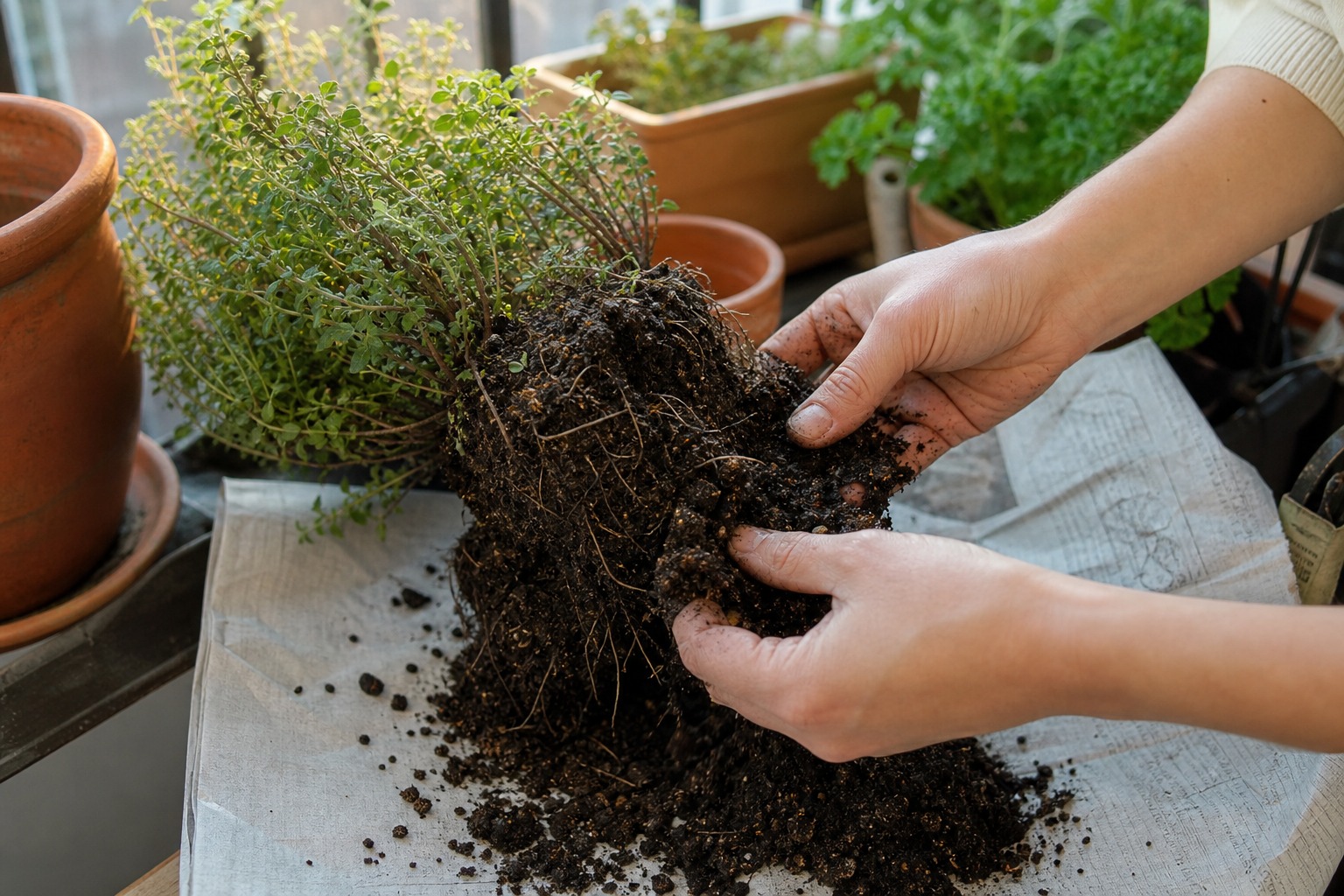
For a plant that’s crashing — mushy base, collapsing, that swampy smell: it’s time to unpot and look at the roots, because you’re likely dealing with root rot. Slide the plant out and gently knock the wet soil off the root ball. Healthy roots are firm and pale, white or tan. Rotted roots are dark brown or black, slimy, and they’ll fall apart or pull away in your fingers, sometimes with a smell.
Snip off every rotted root with clean scissors — don’t be shy, rotted roots are already dead — and keep the firm pale ones. Then repot into fresh, dry potting mix (not the old soggy stuff, and not garden soil, which packs down and drowns roots in a pot). Choose a container only a little bigger than the roots; an oversized pot holds a reservoir of wet soil the small root system can’t drink, and you’re right back where you started. Water it lightly once to settle it, then let it dry out properly before the next drink.
Not every plant comes back — if the roots are entirely gone to mush, sometimes the kindest thing is to start over. But I’ve saved far more than I’ve lost by catching it and trimming in time.
Why it happens in pots especially
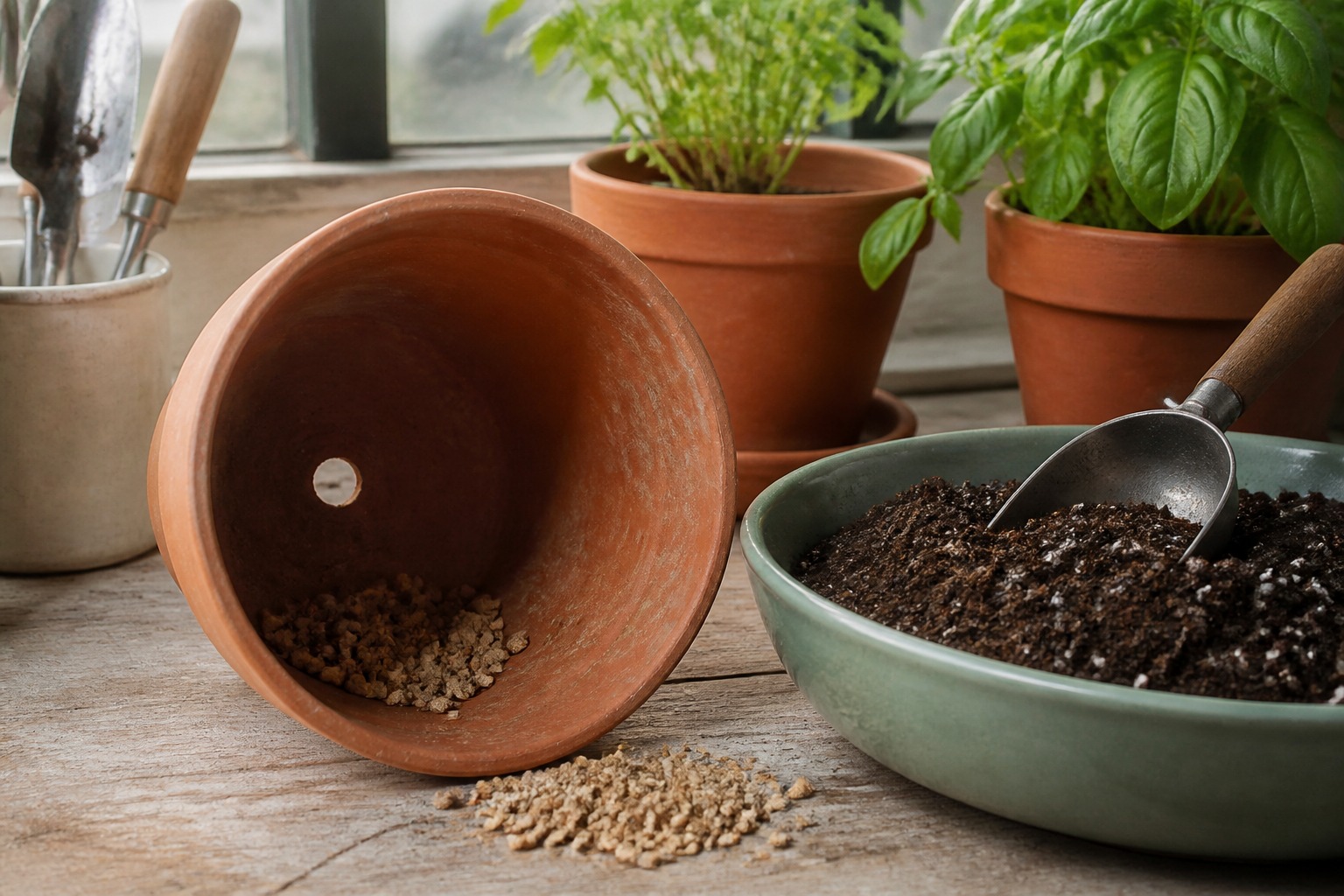
Containers are their own thing, and it’s worth understanding why they drown so you stop blaming yourself.
A plant in the ground has endless soil to wick water away and air pockets to breathe. A pot doesn’t. Water sits in that finite volume of soil until the plant drinks it or it evaporates, and a too-big pot or a pot without good drainage just holds it there against the roots. Roots need air as much as water; sit them in constant wet and they can’t breathe, they rot, and then the plant can’t take up water — which is why a rotting plant looks so much like a thirsty one.
Two container-specific culprits cause most of it: a saucer full of standing water, and a pot that’s too big for the plant. Fix those two and you’ve prevented most overwatering before it starts.
How to stop drowning your plants for good
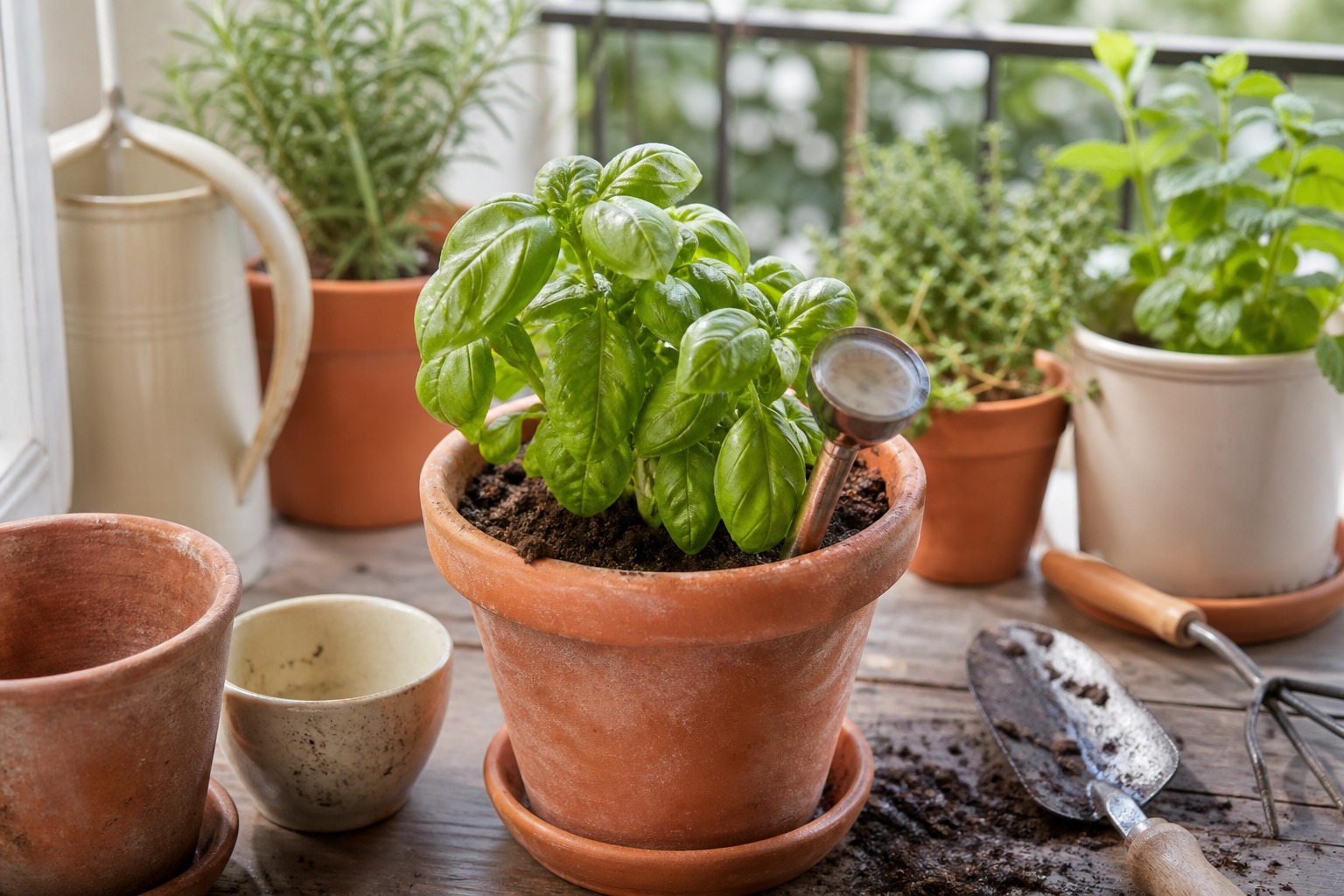
Prevention here is mostly about knowing, not guessing.
Water the plant, not the calendar. “Once a week” is how pots die — a cool cloudy week and a hot windy one need completely different amounts. Check the soil every time and water only when the top inch or two is dry. A moisture meter takes the guesswork out entirely; so does your finger.
When you do water, water deeply, then leave it. Slow and thorough until it runs from the drainage holes, then don’t touch it again until it’s dry. A long-spout watering can lets you get water to the soil at the base without flooding the crown or the leaves. Deep-but-infrequent beats a little every day.
Let the pot breathe. This is where fabric grow bags quietly earn their keep — the fabric drains freely and lets air to the roots from all sides, so it’s genuinely hard to overwater one. For the plants I chronically fuss over, a fabric bag has fixed the problem outright.
Meter the water instead of dumping it. If you tend to over-love a particular pot, a terracotta watering spike with a bottle releases water slowly, only as the soil dries — a small buffer against your own heavy hand.
And empty the saucer. Always empty the saucer. A pot standing in water is a pot you’re overwatering by default, no matter how careful you are with the can. (Otto has learned that a drooping plant means I’ll be out on the balcony poking at soil for a while, and he supervises the whole operation from the warm tile.)
Overwatering is the most common way a beginner loses a container plant, and it’s also one of the most fixable. Check before you pour, drain what won’t drain, and trust a dry spell more than your worry.
I go deep on watering, pot sizes, drainage, and keeping a small-space garden alive through the whole season in my book, Small-Space Big Harvest. This post is how to save the pot that’s drowning right now. The book is how to keep every pot on the balcony thriving from spring to frost.
