How to Fish With Crickets for Bluegill: A Beginner’s Guide
Learn how to fish with crickets for bluegill: keeping crickets alive, hooking them so they stay on, a simple bobber rig, where to fish, and how to set the hook.
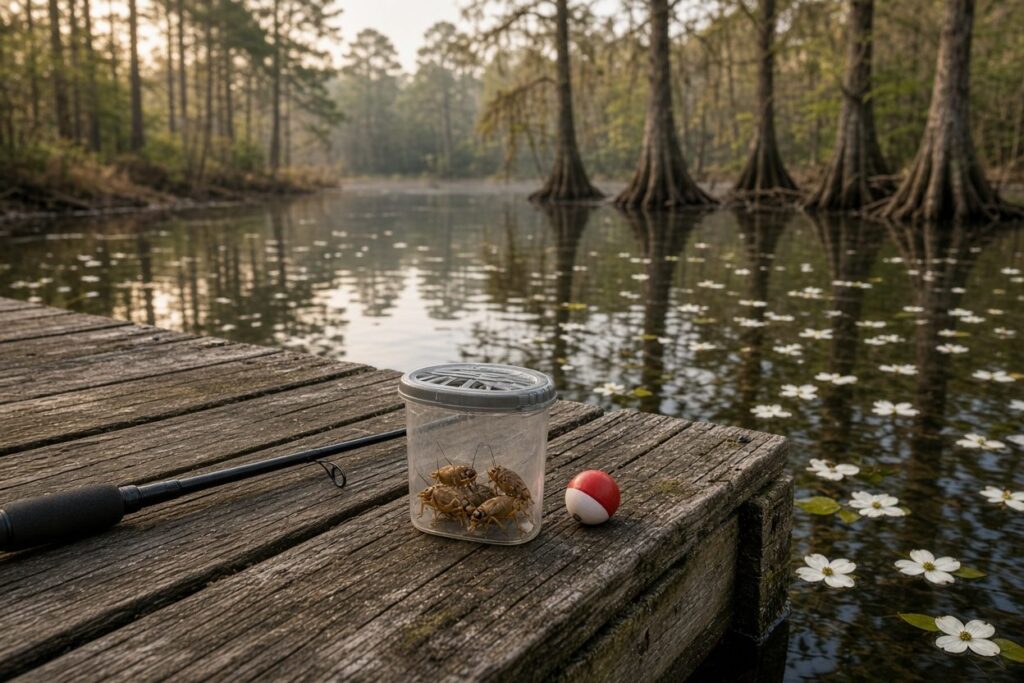
When I was a boy, my daddy kept a cricket box made from a coffee can and a square of window screen on the back porch, and every Saturday in May it sang until we carried it down to the pond. He said a cricket was the honest bait. A worm will catch anything that swims, but a cricket is for bream, and the bream know it.
I still believe him. When the dogwoods have dropped their blooms and the water in the shallows is warm to your hand, there is no better way to fill a stringer with bluegill than a live cricket a foot under a bobber. It is simple fishing, and it is a fine way to teach a beginner. Here is how I do it.
You’ll also want a pack of small, light-wire hooks, a few split-shot sinkers, a cricket tube or cage from the bait shop, and a bucket or stringer for your fish. I’ll leave the hooks to your tackle box.
Why crickets work
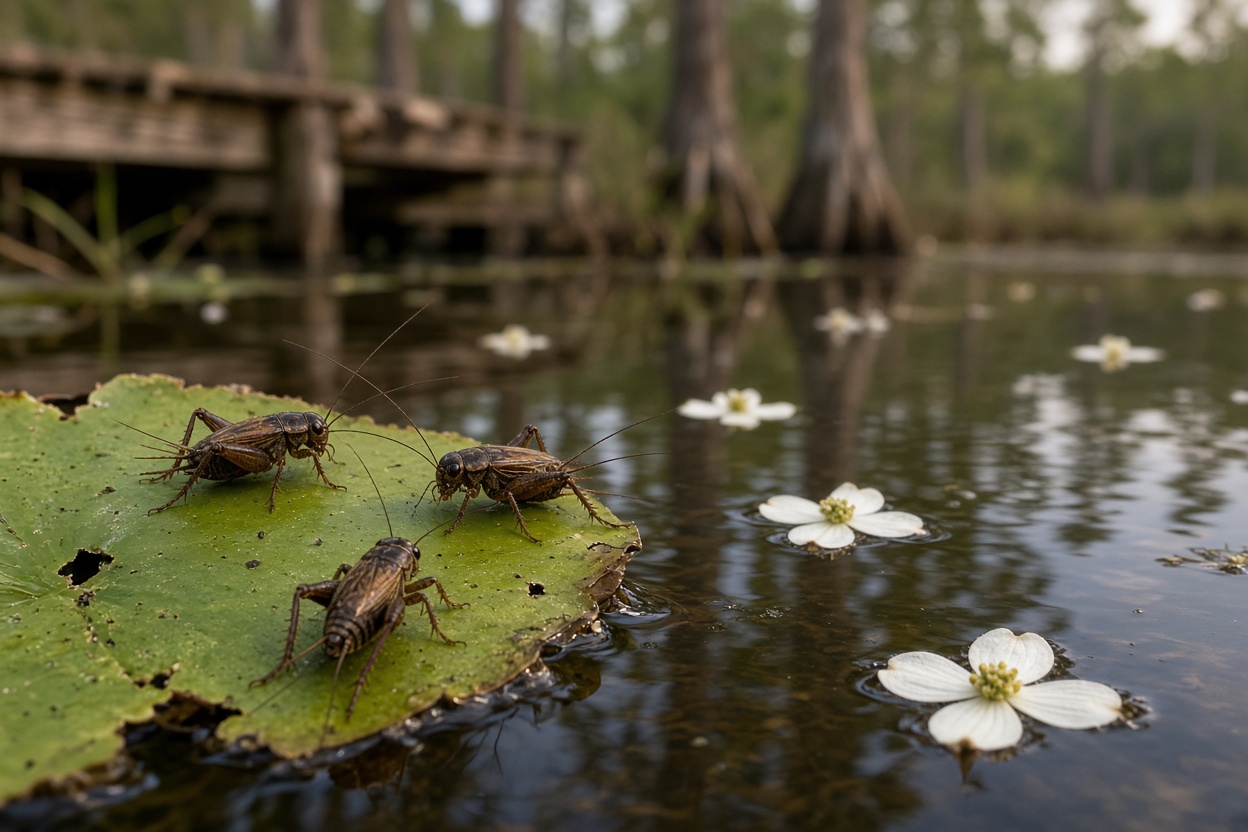
A cricket is a big, juicy meal for a bluegill, and it is one they see every summer when bugs fall off the bank and land in the water. It kicks a little when it hits the surface and keeps moving under it. That small motion is what brings a fish up out of the shade.
Crickets also save you some trouble. They are big enough that the tiny fish can’t strip them off the hook as easily as a piece of worm, so you spend more time fishing and less time rebaiting. And the bigger bluegill seem to prefer them.
When to fish crickets
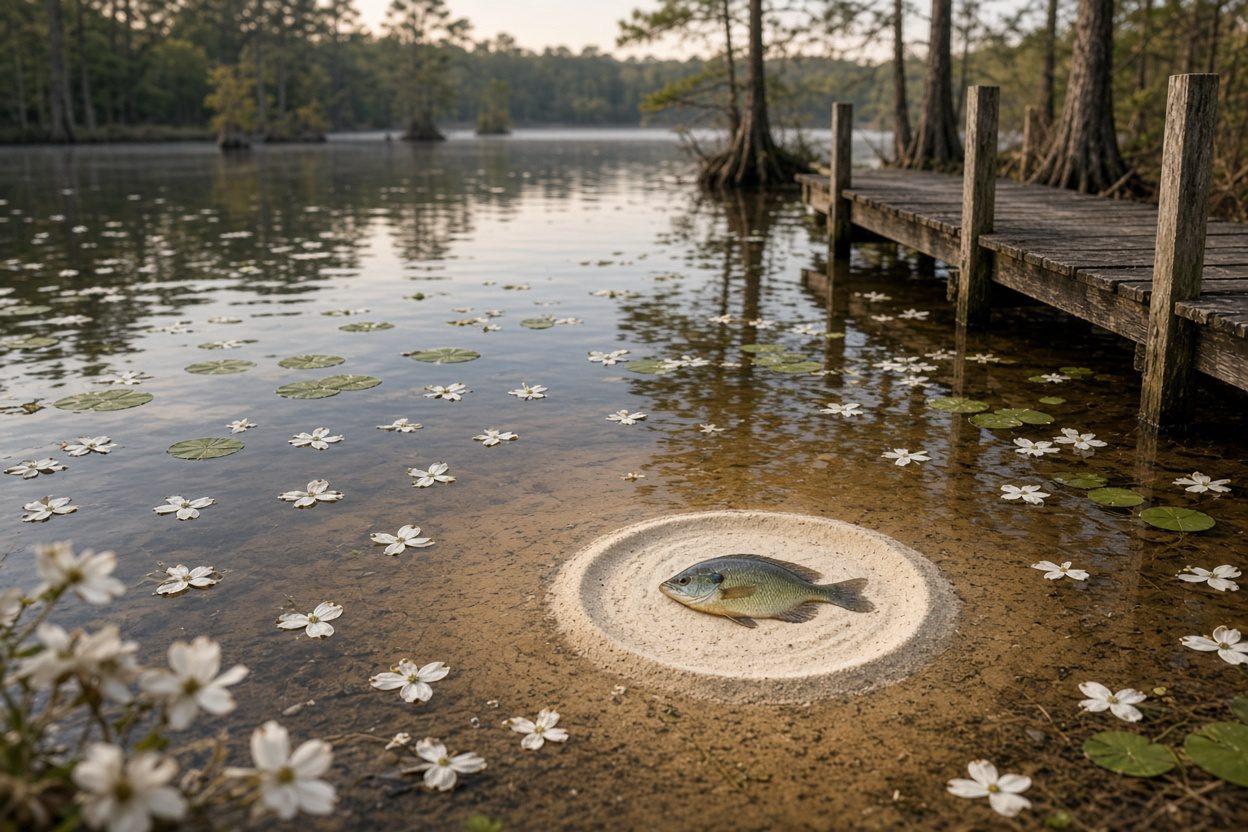
The old folks fished crickets from the time the bream started bedding until the first cool nights of fall. That usually lines up with water around 65 to 70 degrees, which in our part of eastern North Carolina means May and June for the best of it. When you see round, pale saucers in the shallow water near the bank, a few feet across, those are bluegill beds. That’s when the moon and the water have both come right.
A cricket is good bait all summer after that. In the hottest part of July and August, fish it early in the morning or late in the evening, in the shade, and a little deeper.
Keeping crickets alive
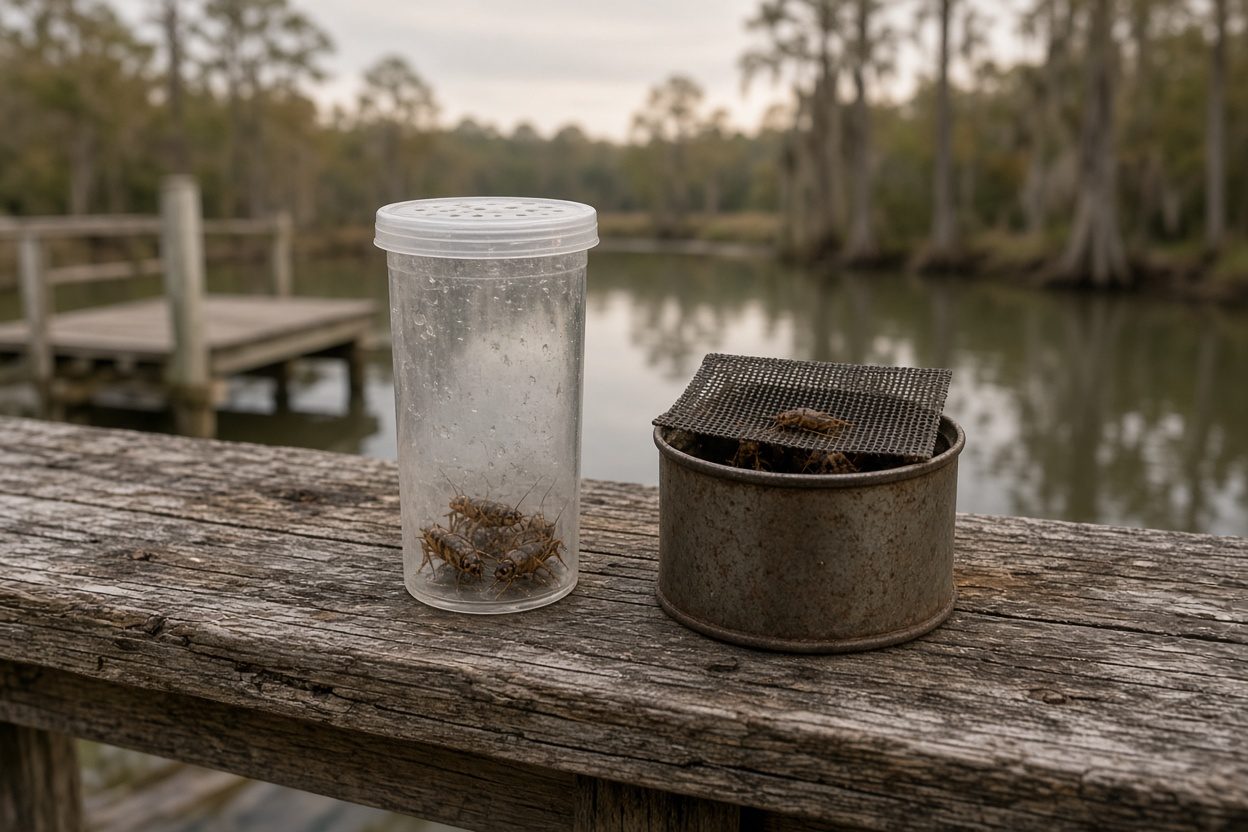
This is where most beginners lose their bait before they ever wet a line.
Buy a cricket tube or cage. Most bait shops sell crickets by the dozen or the hundred in a cardboard box or a plastic tube. A tube with a funnel top lets you shake one out at a time without the rest escaping across your truck seat. I have chased more crickets around a truck cab than I care to admit.
Keep them cool and shaded. Heat kills crickets fast. Never leave them on the dashboard or in a closed truck in the sun. On the bank, set the tube in the shade.
Keep them dry, but give them moisture. Crickets drown in standing water. Put a slice of potato or apple in the cage so they can drink from it, and a pinch of cornmeal or chick feed so they can eat. A batch handled that way will last you most of a week on the porch.
Hooking a cricket so it stays on
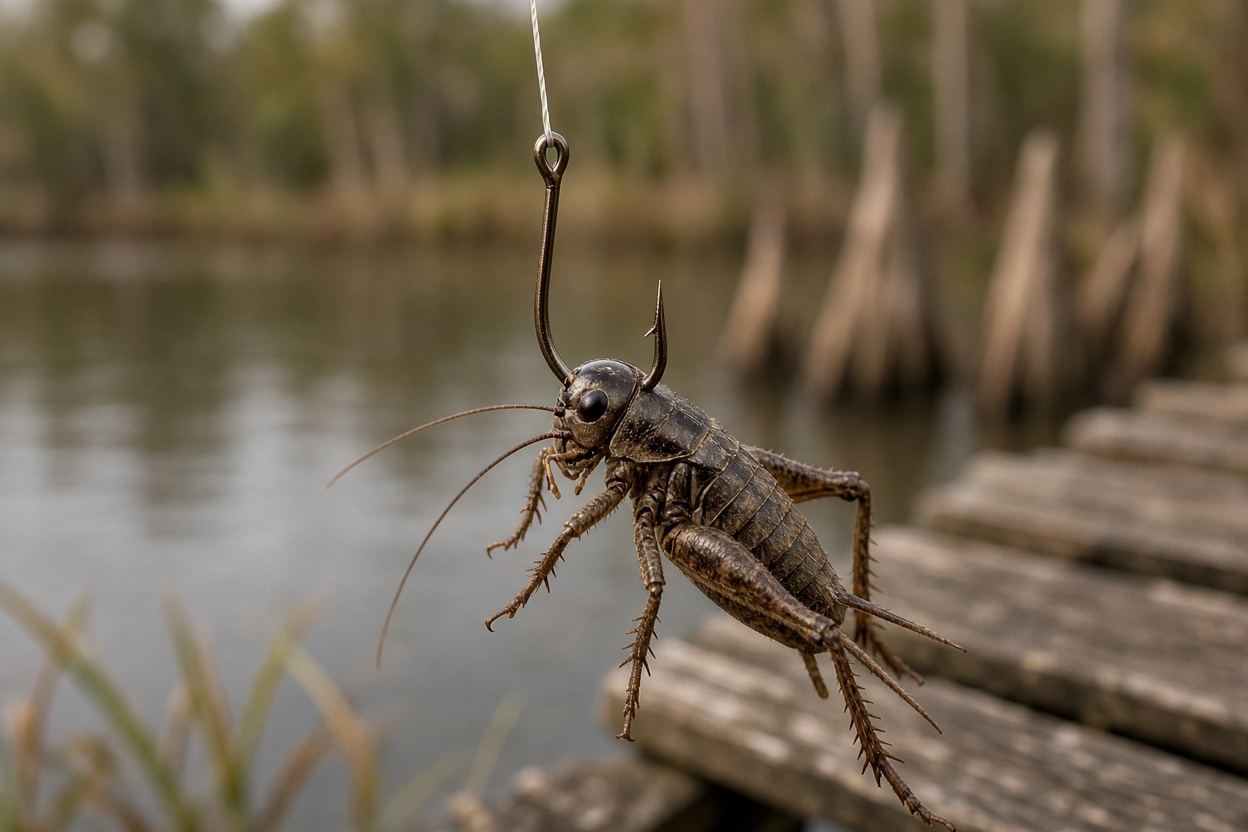
Crickets are fragile, and that is the whole trick. Hook them wrong and they come apart on the cast.
Use a small hook, a size 8 or 10, with light wire. A big, thick hook kills the cricket and the fish can see it.
Hold the cricket gently and slide the point of the hook in just behind its head, under the hard collar, and out the other side. That collar is the toughest part of the bug, and hooking it there leaves the cricket alive and kicking. Some folks thread the hook up through the underside instead. Either way works. The one way that doesn’t is through the soft belly, because that cricket will fly off on your first cast.
The rig

Keep it simple. Tie your hook on with a plain knot, then pinch one small split shot about six inches above it to help the cricket sink. Clip a snap-on float on the line so the cricket hangs about a foot under the surface to start. If you’re not getting bites, slide it up a few inches at a time until you find the fish. I go into setting the depth in how to rig a bobber for bluegill and crappie.
Casting, and where to put the cricket
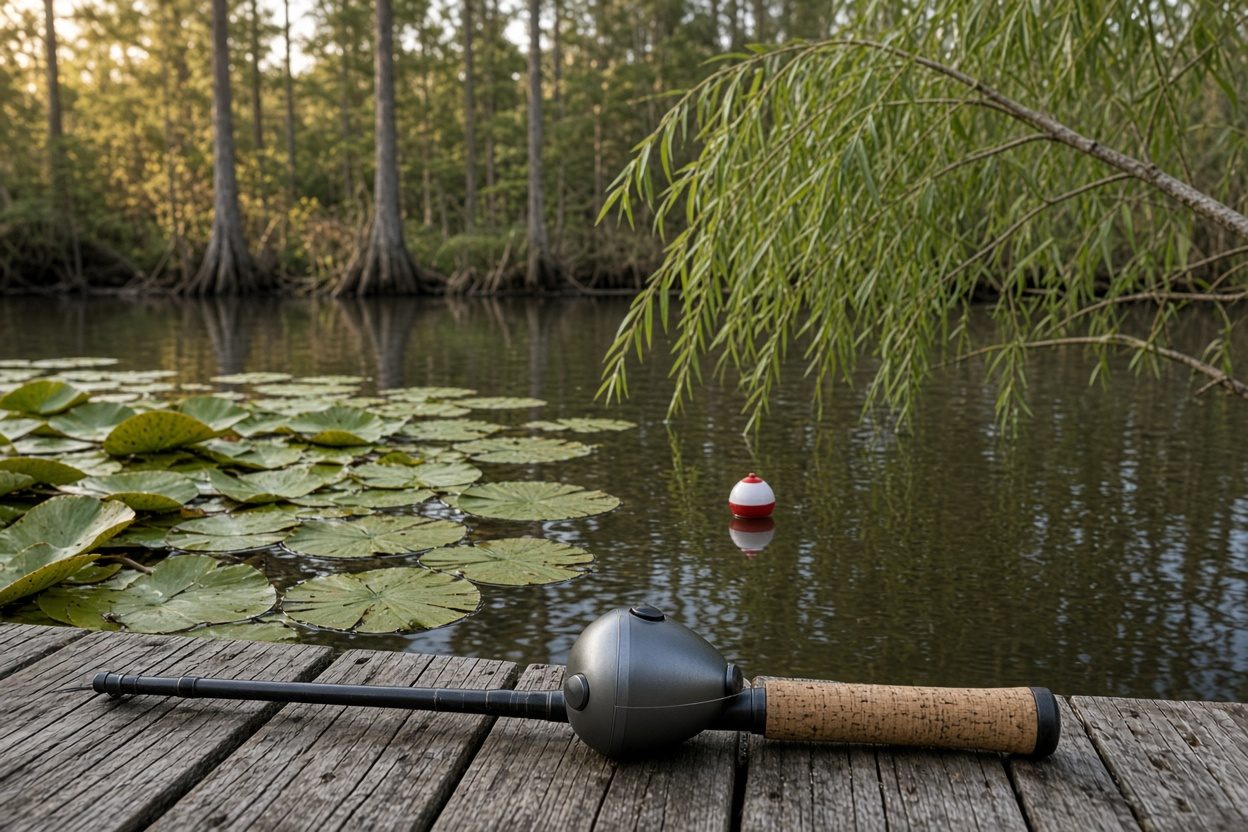
Here is the part I always tell young people: don’t throw it, lob it. A hard cast snaps the cricket off before it ever reaches the water. With the spincast combo, hold the button, bring the rod back easy, and let go of the button as you swing forward. You want the cricket to land soft. If you’re new to the reel, I wrote about it in how to use a spincast reel for beginners.
Put the cricket where a bluegill would wait for a bug to fall: the shade of a dock, a laydown tree, the edge of the lily pads, under the willows where they lean out over the water. If you can see the beds, cast past them and let the bobber drift over the edge. Don’t fish right on top of them and spook the whole bed.
When the bobber moves

A bluegill bite on a cricket is a lively thing. The bobber shivers, dances, then slides off sideways or ducks under. Don’t snatch it at the first twitch, because that’s often a small fish pecking. When the bobber goes under and stays under, lift the rod tip firmly and reel. A small hook in a bluegill’s mouth doesn’t need a big hookset.
If your crickets keep disappearing without a bite, check them. Little fish will steal the legs and leave you a bare hook. Keep a fresh cricket on.
Keep what you’ll eat

Know your state’s limits and carry your license. Keep what your family will eat at supper and let the rest go back. A mess of bluegill fried in cornmeal is one of the best meals the water gives, and there’s no need to take more than you’ll use. I wrote more about bluegill this time of year in how to catch bluegill in the spring.
Passing it on

My grandson Isaiah caught his first real bluegill on a cricket when he was seven, on the dock behind the house, while his little sister Ruby kept the cricket tube safe in her lap. He still talks about it. If there’s a young angler in your life, my journal My First Catch was made for that day: My First Catch. And if you’d like to plan your trips by the moon, the weather, and the water, I put together a free guide. Grab the Best Days to Fish starter kit.
Read the signs.
