How to Fish a Pond at Dusk: A Beginner’s Evening Bite Guide
Fishing a farm pond at dusk: why the evening bite works, where to stand, what to rig, how to stay safe in fading light, and which fish to expect from the bank.

Audra will tell you I’ve never once been home for supper on a good evening. She’s right. There’s an hour on my pond, just as the sun drops behind the pines and the water goes the color of weak tea, when the bluegill come up shallow to feed and the whole bank wakes up. I’ve stood in that light for forty years and I still lose track of time.
If you work all day, dusk may be the best fishing hour you’ve got. It’s cooler, it’s quieter, and the fish are hungry. Here’s how I fish it, what I carry, and the plain safety sense you need when the light starts to go.
You’ll also want hooks, a small pair of pliers, and a light, which I’ll get to. I won’t point you at a particular hook. Any small bait hook in size 6 to 8 does fine.
Why dusk works
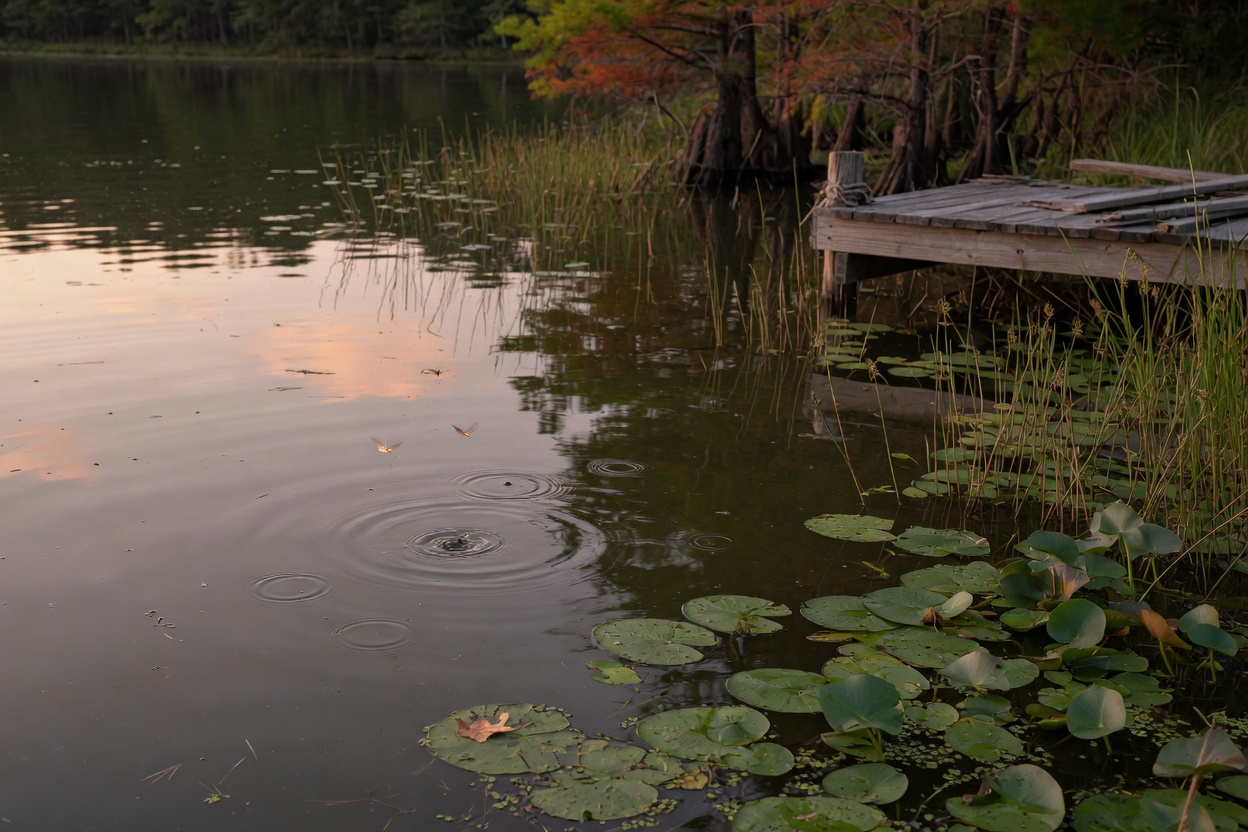
Fish feed when it’s easy and when they feel safe. Low light gives them both. Bluegill and other panfish slide out of deeper water and cruise the shallows looking for insects and small bait. Bass and catfish do the same. A hot afternoon sun pushes fish toward cover and deep shade; the evening lets them out.
I fish dusk most in the warm months, and in autumn the bite is good for the first hour or so before dark, when the water is still holding a little of the day’s warmth. Cold, bright days like we get in winter move the best bite to the middle of the afternoon instead. I wrote about that in how to fish a pond in cooler weather.
Get there before the light goes
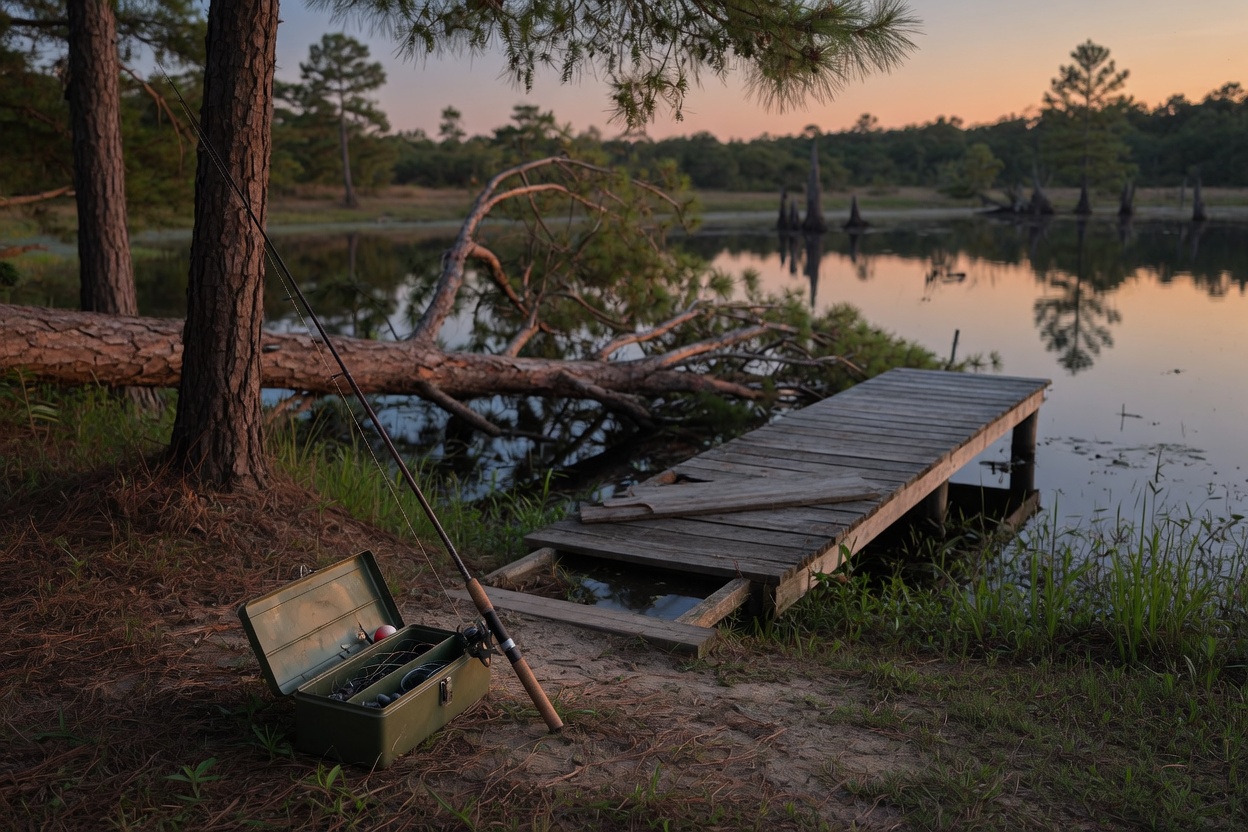
Arrive an hour or so before sunset. Walk the bank in daylight first, even if you know the pond, and pick your spot while you can see. Look for shade along the east bank, a fallen limb, a weed edge, or a dock. Fish like something to hide against. Note any low branches behind you that’ll catch a cast, and any soft or slick ground at the water’s edge.
Set your gear down in one place you’ll remember. Fumbling for a dropped hook in the dark is how you end up with one in your thumb.
The rig I use
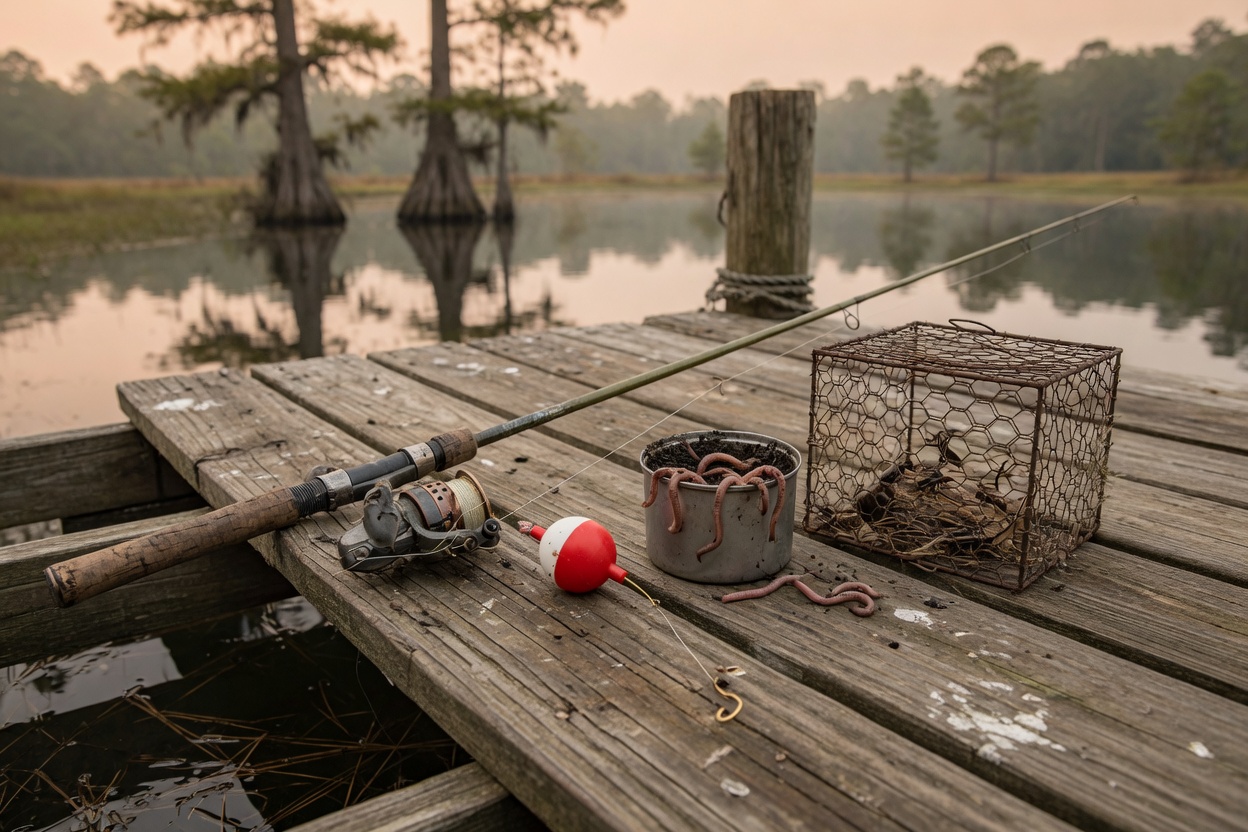
Keep it simple. Tie on a small hook, clip a snap-on float about two feet above it, and bait with a worm or a cricket. In the evening the fish are up shallow, so I fish the bobber higher than I would at noon. I cover the full setup in how to rig a bobber for bluegill and crappie, and if the knot is the part you’re unsure about, see how to tie simple fishing knots for beginners.
A spincast combo like the Zebco 33 is a good fit for this. You push a button, you cast, and there’s no backlash to untangle in poor light. It’s no good for a long cast across a big lake, and a more experienced angler will outgrow it, but for a pond bank it does everything a beginner needs. The snap-on floats can slip during a hard cast, so give them a tug after you set them.
Cast short and quiet

Cast lightly toward the shaded edge and let the bobber settle. Don’t throw it into the middle of the pond. The fish are close to the bank at dusk, and a heavy splash will scatter them. Stand back from the edge when you can, and keep your voice down. Sound and shadow carry across still water.
When the bobber twitches, wait. When it slides under and stays, lift the rod tip and reel. In the evening the bites come in a rush, then go quiet, then come again. Be patient with the quiet.
Who you’re likely to catch
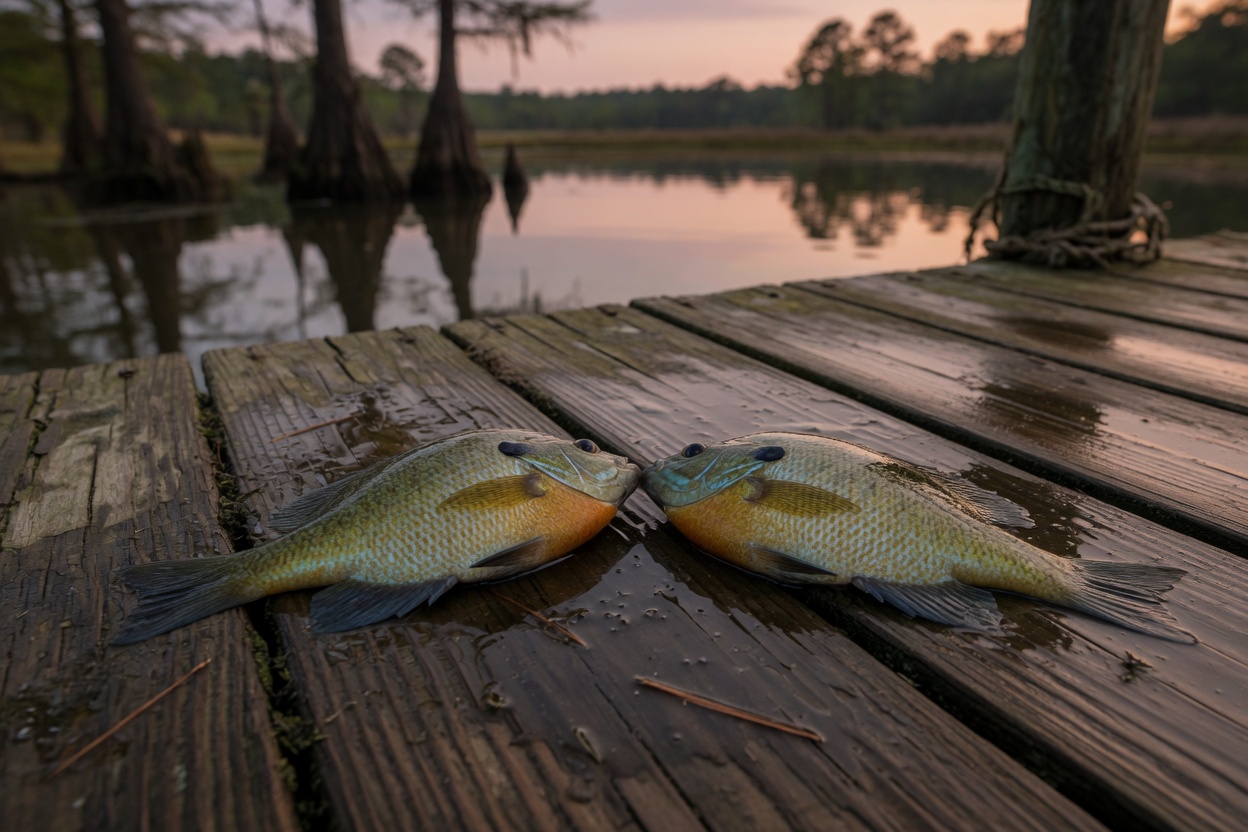
From a Coastal Plain pond bank, expect bluegill and shellcracker near the shade, crappie if they’re up near cover, and channel catfish and bullheads if you fish a worm near the bottom. A big bass may take a bluegill-sized bait, which is a surprise worth having. For more on the panfish, see how to catch bluegill for beginners.
Know your state’s rules. Most require an adult license and set size and creel limits, and your wildlife agency’s website will say exactly what applies on your water. Keep what you’ll eat, put the rest back gently.
Safety when the light goes
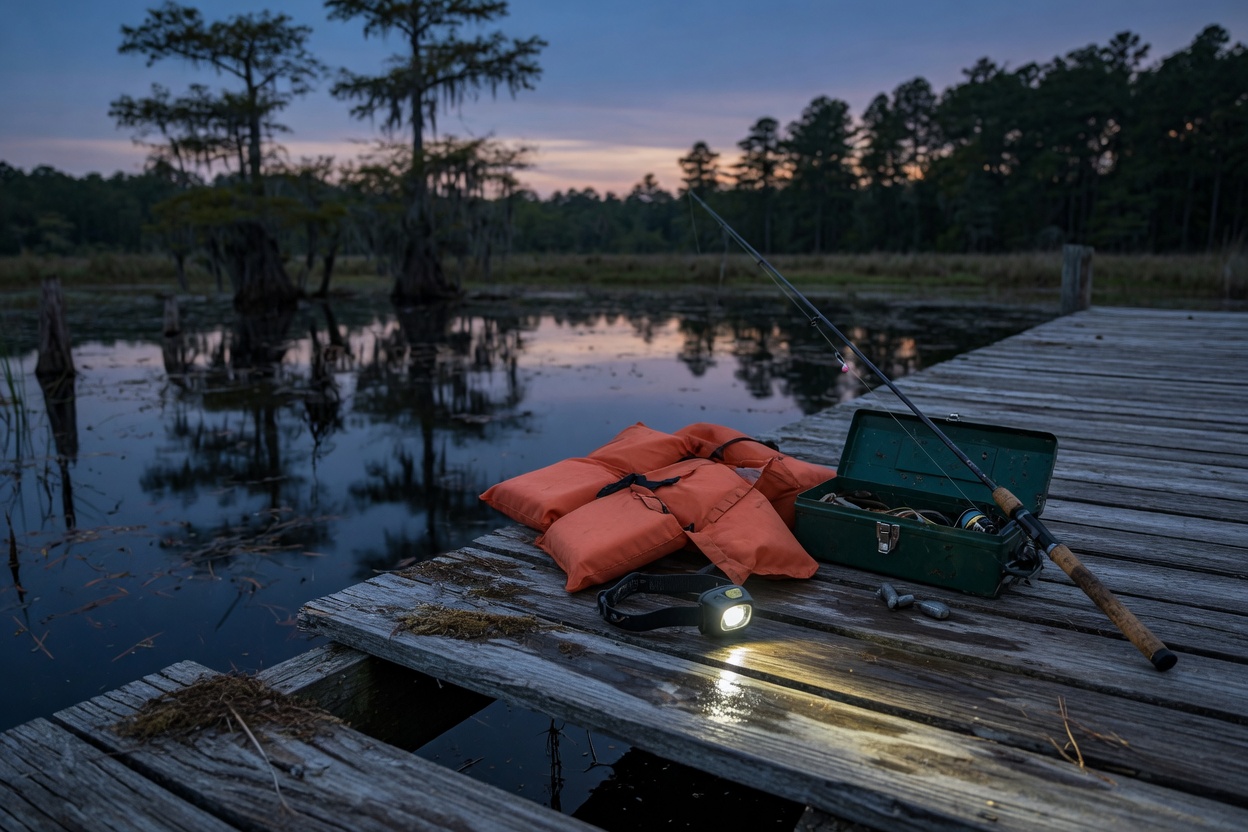
This is the part I won’t skip. Fishing at dusk is easy to enjoy and easy to get hurt in.
– Carry a light. A headlamp keeps both hands free. Test it before you leave the truck.
– Tell someone where you’re going and when you’ll be back, especially if you’re by yourself.
– Watch your footing. Wet banks are slick, and dropoffs are hard to see in the dusk. Don’t wade in poor light.
– Mind the bugs and the snakes. Long pants and shoes you can walk in are better than sandals once it cools down. Watch where you put your hands and feet near the brush.
– Go home at dark if you’re new. There’s no shame in it. The fish will be there tomorrow.
If you’re bringing a child, keep them close, keep them in a life jacket near deep water, and keep the evening short. A kid’s attention fades with the light. My notes on bringing a youngster are in how to teach a kid to fish.
The part that matters most

Go on a night you don’t have to rush. Stand still and watch the water until you see the rings. That’s your sign.
If you’ve got a young one who’d like something to keep, my book My First Catch is a fishing journal made for young anglers: My First Catch. And if you’d like to plan your trips by the moon and the weather the way my daddy did, I put together a free guide. Grab the Best Days to Fish starter kit.
Read the signs.
