How to Fish a Pond After a Thunderstorm: Safety and Bite
Fishing a pond after a thunderstorm: when it's safe to go back, how the water changes, where panfish and catfish bite, and a simple rig for muddy water.
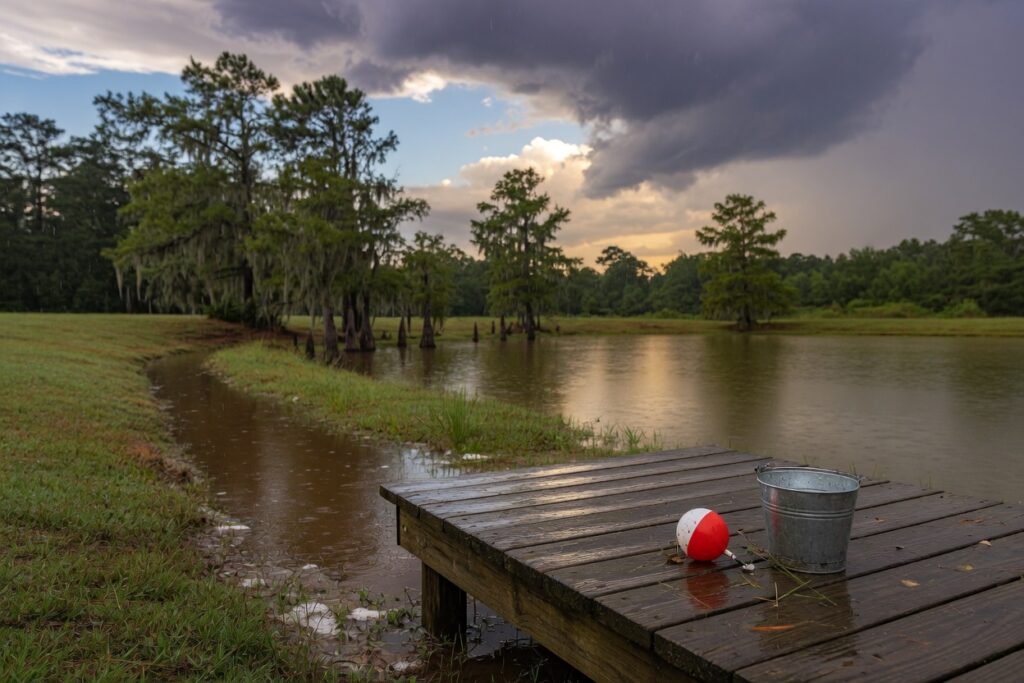
My daddy had one rule about thunder: the first rumble ended the fishing, no argument, no matter how well they were biting. He would walk the cane poles up off the bank like he was putting out a fire, and we sat in the truck until the sky had finished talking.
I have kept that rule for sixty years and I’ll hand it to you before anything else. If you hear thunder, you are done and you leave the water. What I want to talk about is the other half of the day, the hour or two after the storm has passed and the pond is dripping and strange. That is some of the best fishing a beginner can find, and it is also where people get careless.
You will also want small bait hooks, a bucket of worms, and rubber boots. The boots matter more than the hooks.
The rule that comes first
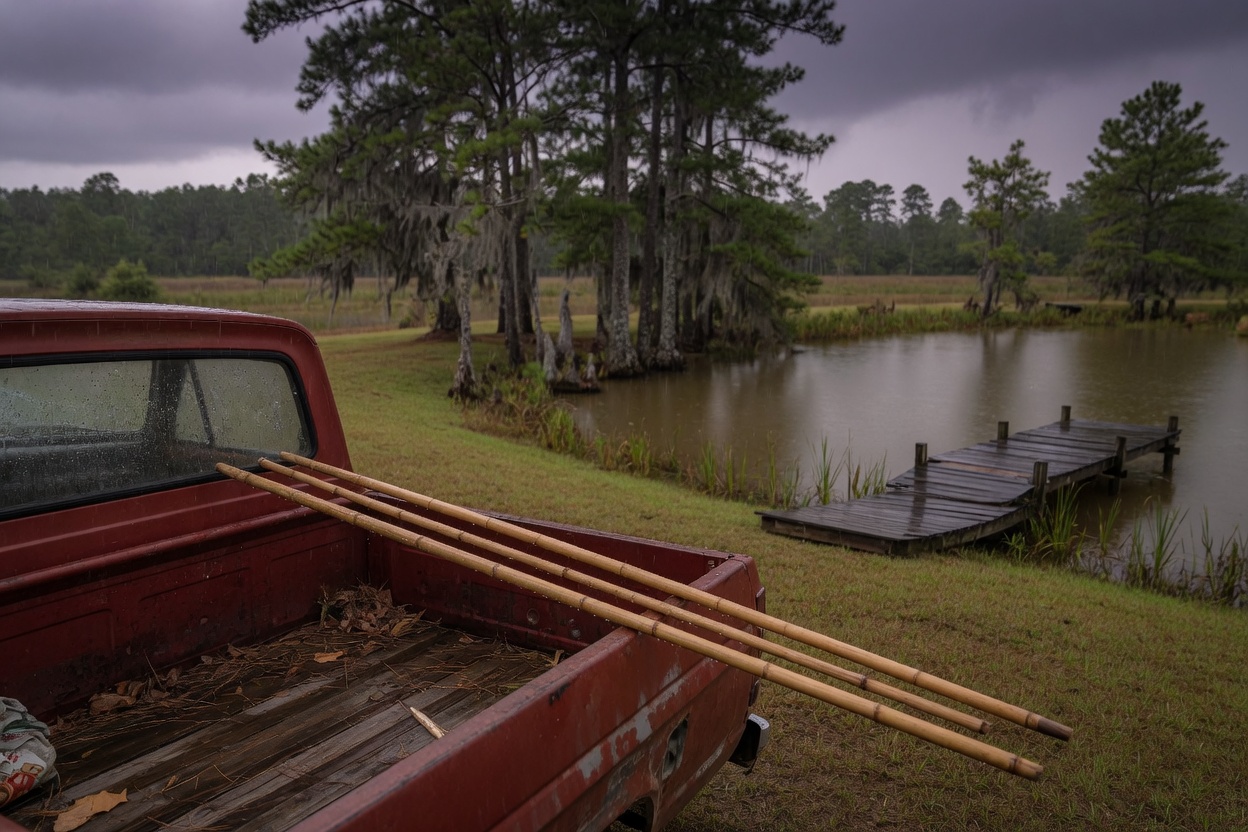
Lightning can strike a long way from the rain. The National Weather Service’s advice, which I follow, is that when you hear thunder you are close enough to be struck. Get off the water and into a car with the windows up or into a solid building. Do not stand under a lone tree. A fishing rod held up in the air is about the worst thing you can carry across an open bank.
Then wait. The common guidance is thirty minutes after the last thunder you hear before you go back out. I count it by my watch, not by how bright the sky looks. If thunder starts up again, the clock starts over. A fish is not worth a bolt of lightning, and I have never once regretted waiting.
Why the fish bite after a storm

A storm does a lot of work on a pond in a short time. Rain runs off the fields and carries worms, insects, and bits of food down the bank and into the water. Cooler rain drops the surface temperature. The barometer, which falls before the storm, climbs again afterward, and in my experience the fish settle down and feed once it does. I won’t tell you that is a law. Some days it holds true and some it doesn’t, which is why I keep a fishing log. My grandson Isaiah keeps one too, and he’ll tell you the pattern showed up more often than not.
What you can count on is that the water looks different. It may be stained brown where runoff came in, and clear again out in the middle. Fish tend to lie along the edge where the muddy water meets the clear, waiting for the food the storm delivered.
Check the pond before you fish it

Walk the bank first, slowly. A storm can change a bank overnight.
– Look for washouts and undercut edges. A saturated bank can give way under your boots. Stay back from the lip.
– Look for downed limbs and debris on the water. They snag line, and some of them are good fish cover if you can reach them safely.
– Find where the water is coming in. A ditch or a low spot that feeds the pond is a fine place to fish, as long as the footing is sound.
– Check the level. If the pond is over its banks or running through the overflow fast, stay home.
– Watch for snakes and wasps. Rain pushes them up out of low ground, and the bank is where they end up. Look before you step or reach.
If a creek feeds your pond, skip it that day. Moving water after a storm runs fast, cold, and dangerous.
Where to fish
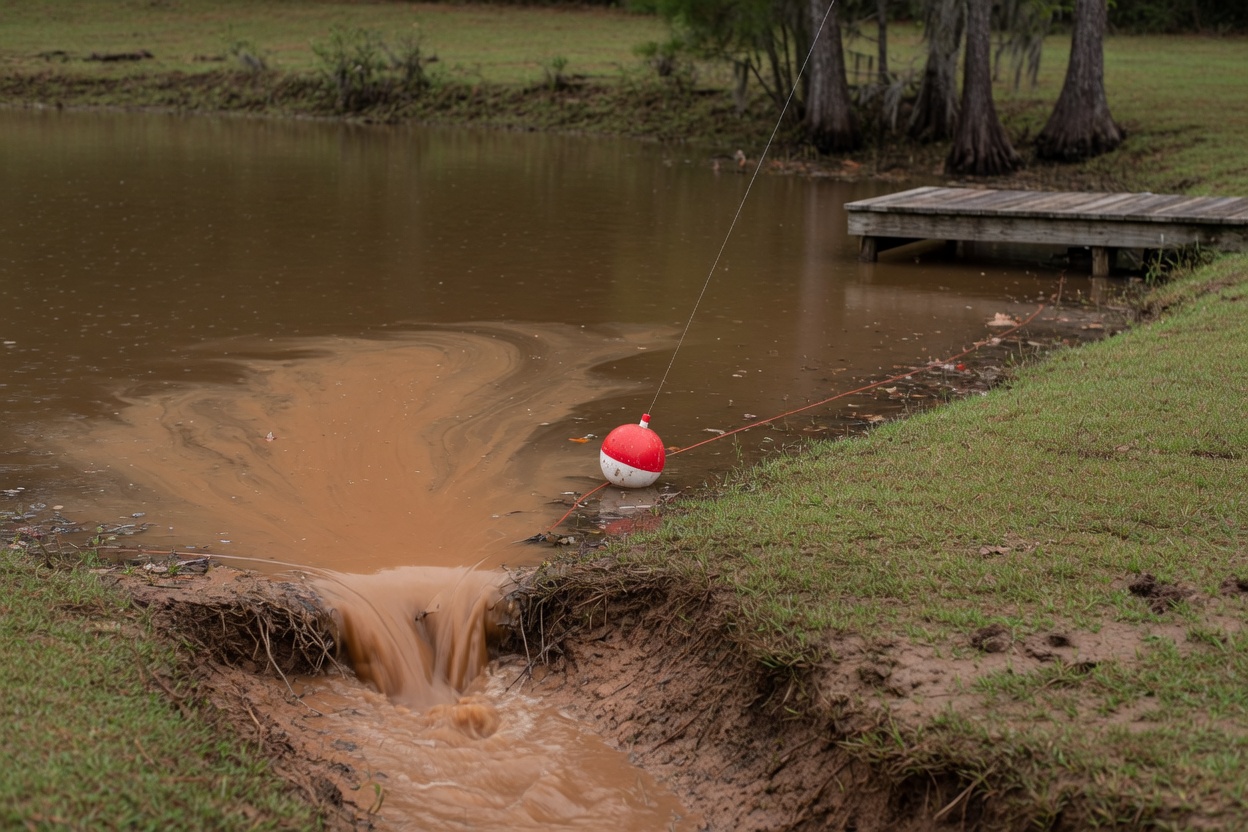
Start near the inflow, on the side where the stained water enters, and cast along the line where the color changes. Fish a worm a foot or two under a snap-on float, set shallow, since the bluegill and shellcracker move up toward the food in the brown water. For a channel catfish or a bullhead, fish a worm near the bottom, where they hunt by smell in murky water.
If the whole pond is muddy, work the edges and the calmer coves, and use a stronger-smelling bait. A fat nightcrawler beats a tiny bit of worm when the water is stained. For the basic worm rig, see how to fish with worms for beginners, and if your float keeps sliding, how to rig a bobber for bluegill and crappie walks through it.
The rig
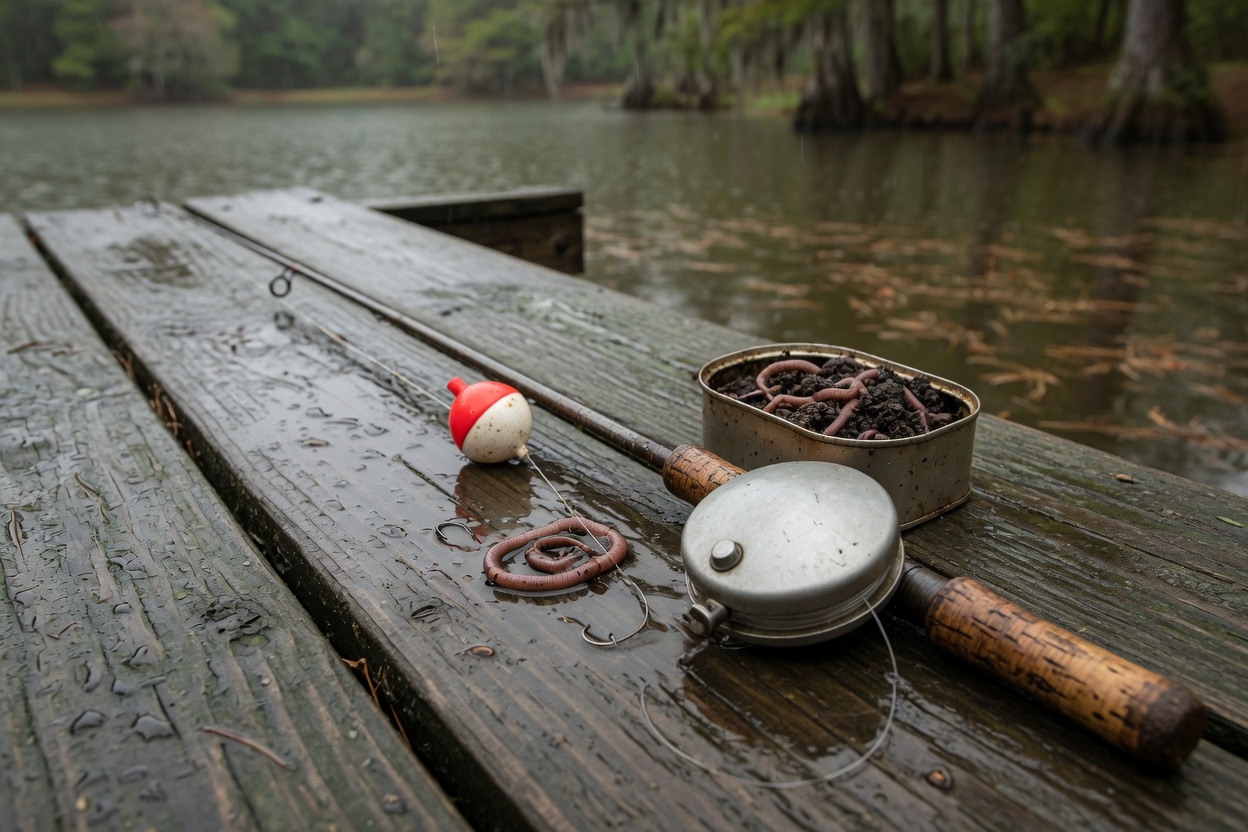
Keep it plain. Tie a small bait hook, clip a bobber a foot or so above, and thread on a worm. A spincast combo like the Zebco 33 is what I put in a beginner’s hands. You push the button, you cast, and wet line doesn’t tangle the way it can on an open reel. It is no tool for a long cast across a big lake, and a seasoned angler will outgrow it, but for a pond bank it does the job. The snap-on floats can creep on a hard cast, so give them a tug after you set them.
Cast quietly. After a storm the fish are close to the bank, and a heavy splash sends them off.
When to call it off
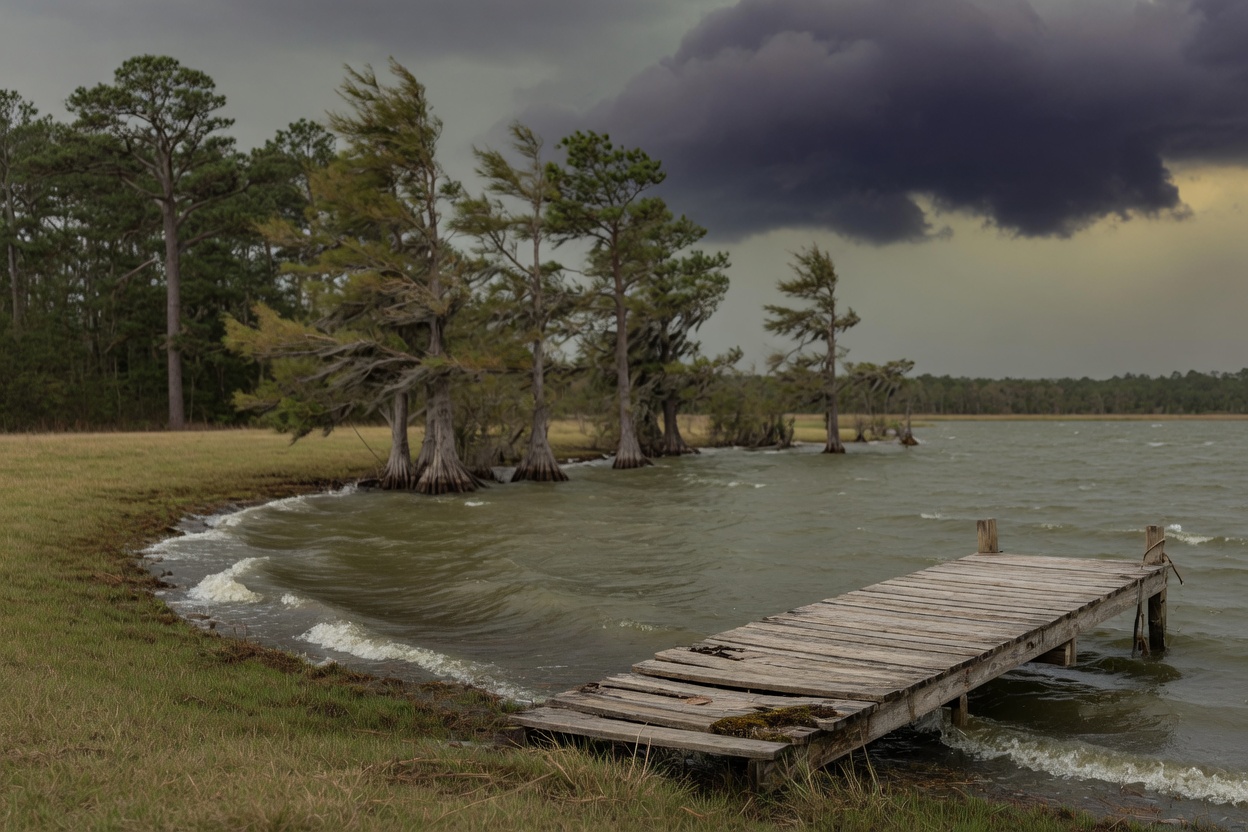
Go home if you hear thunder again, if the wind picks up hard, if the water is rising, or if the bank feels soft underfoot. The pond will still be here Saturday. If you are bringing a child, keep them back from the edge, put a life jacket on them near any depth, and shorten the trip. I wrote about starting young ones in how to teach a kid to fish. For a gentler day on the water, see how to fish a pond during a spring rain, which covers a soft rain rather than a storm.
Know your state’s rules, too. Most need an adult license and set size and creel limits, and your wildlife agency’s website will tell you what applies to your water. Keep what you’ll eat, and put the rest back gently.
The part that matters most
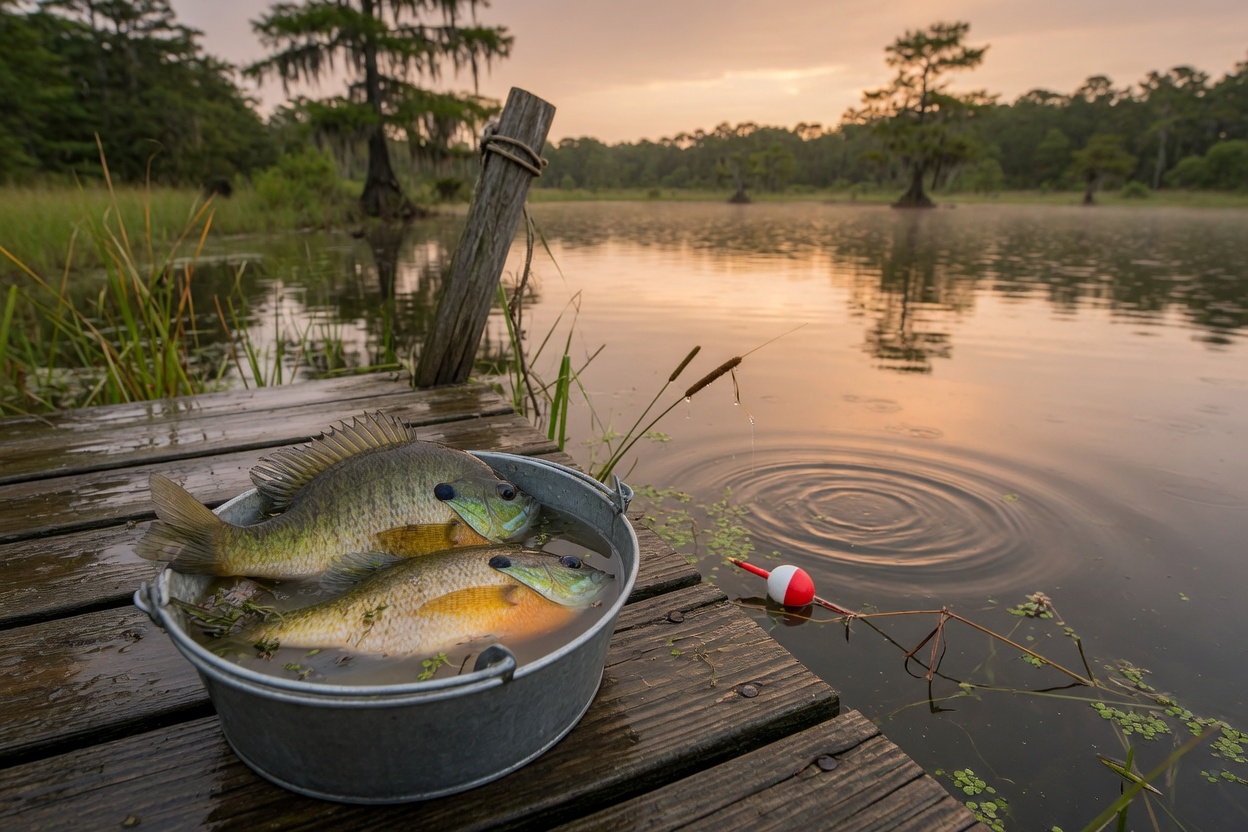
Stand a little back from the water after the rain and watch it settle. Wait for the first ring to show. That’s your sign.
If you have a young one who’d like something to keep, my journal for young anglers, My First Catch, has room for every first fish. And if you would like to plan your trips by the moon and the weather the way my daddy did, I put together a free guide: the Best Days to Fish starter kit.
Read the signs.
