How to Fish a Farm Pond After a Cold Front Moves Through
Fishing slows after a cold front, but it doesn't stop. Learn how to read the sky, slow down, go deeper, and still fill the cooler on a farm pond all season.

You know the morning. The wind has swung around out of the northwest overnight, the sky is a hard clean blue, and there’s a bite in the air that wasn’t there yesterday. You’ve got the cane poles in the truck and a cup of crickets, and you’re sure it’s going to be a good day because the weather is so pretty.
It won’t be, not at first. Those bluebird days after a front come through are some of the hardest fishing of the year, and I’ve sat on the dock many a morning watching a bobber that never moved. But a hard day isn’t a lost day. After forty years on my pond, I’ve learned what the fish are doing after a front and how to meet them where they are.
What a cold front does to the water
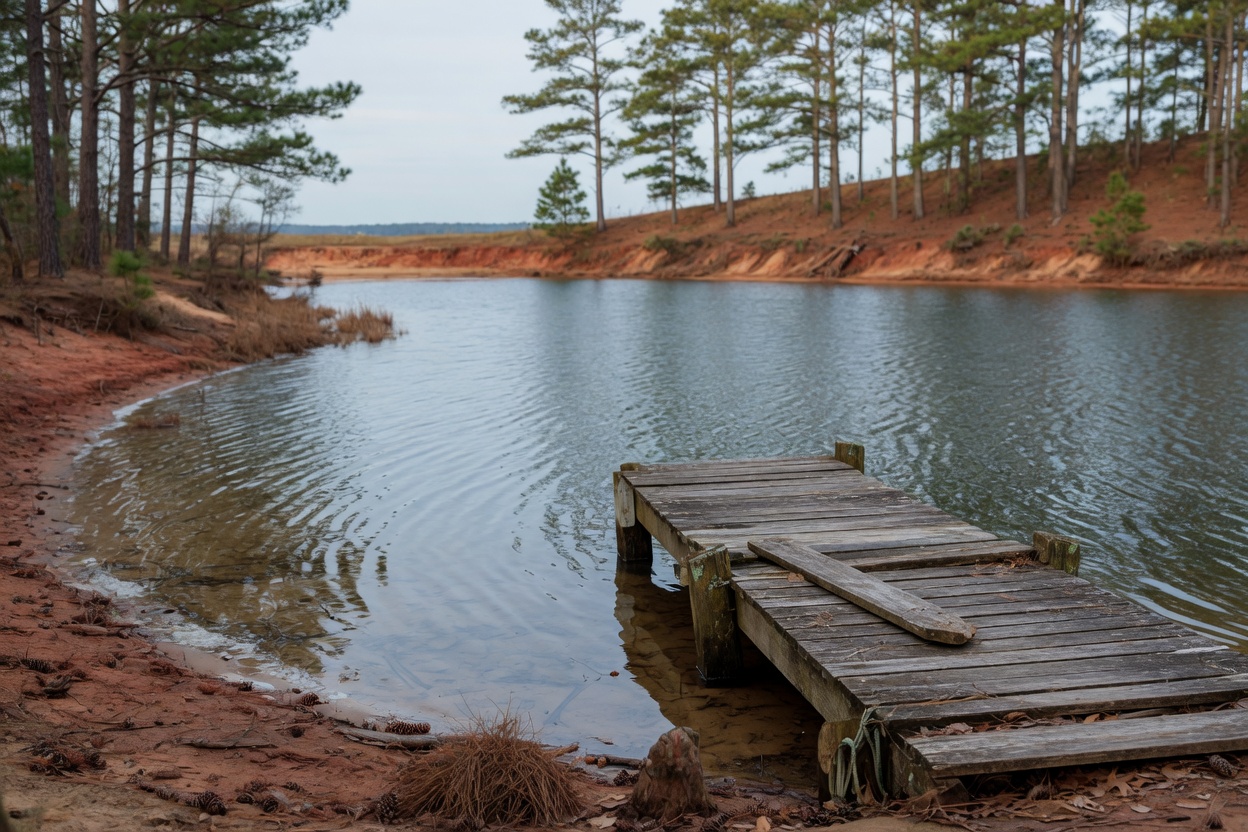
When a front moves through, the barometer drops ahead of it and then climbs fast behind it. The temperature falls, the wind shifts, and the skies clear. All of that lands on the pond at once.
The fish feel it. The surface water cools in a hurry, the bright sun pushes light deep into the water, and the fish pull back. Bluegill that were crowding the shallows the day before slide out to deeper water or tuck tight against cover. They’re still hungry, but they’re not in a hurry about it. A fish that was feeding hard on a warm, cloudy day now wants to hold still and conserve itself.
This is why folks come home from the pond after a front and say the fish quit biting. They didn’t quit. They moved, and they slowed down.
Give it a day or two

If you have the choice, the best thing you can do is wait. The fish usually settle back into a pattern a day or two after the front passes, once the weather steadies and the barometer stops climbing. A stable, mild afternoon on day three often fishes better than the first morning after the front.
But most of us fish when we can, not when the conditions are perfect, so here’s how I handle the hard days.
Go slow

Everything I do after a front comes down to slowing down.
Use smaller baits. A whole nightcrawler is a lot to ask of a sluggish bluegill. Pinch off a piece, or fish a single cricket or a small worm on a light hook. Smaller, easier bites get more attention than big ones.
Fish it still. Wait longer between moves. Where you’d normally twitch a bait or reel it in and recast every minute, let it sit for several minutes in one spot. Cold fish don’t chase.
Keep your line light and your touch light. The bites on a cold-front day are soft. A bobber may only dip or lean to the side, and if you wait for it to go under you’ll miss half of them. Watch it closely.
Go deeper, and find the sun

Fish that left the shallows are still somewhere nearby. Look for the nearest deeper water, such as the drop-off at the end of a dock, the edge where the bank falls away, or the deepest corner of the pond near the dam. In a small farm pond, the deep water is usually by the dam, and it often holds fish after a front.
Set your bobber so the bait hangs a foot or two deeper than you would on a warm day. If you aren’t getting bites, move it deeper again. A fish that is holding near the bottom won’t rise for a bait floating well above it.
Then pay attention to the sun. The sunny side of a pond warms up faster than the shady side, and even a degree or two matters on a cold day. A bank that takes the afternoon sun, or a shallow cove sheltered from the wind, can draw fish in once it has warmed. I wrote about how to read water temperature for fishing, and it’s worth a look because temperature explains most of what the fish do.
Fish the warmest part of the day

On a cold morning, I don’t rush out at first light the way I would in summer. I’ll wait until the middle of the day, from late morning into the afternoon, when the sun has had time to warm the top of the water. That’s when the bite, if there is one, tends to come. If you’re deciding between a frosty sunrise and a mild early afternoon, take the afternoon.
I covered this more in how to fish a pond in cooler weather, and it’s the same idea that carries through the whole cool season.
Don’t forget the wind

The wind that comes behind a front can be sharp and steady out of the northwest. Fishing into it is no fun, and a bobber is hard to read on choppy water. Look for the bank that is out of the wind, where the water lies calmer. You’ll see your bobber better, and the sheltered water is often a few degrees warmer.
Dress for it

Take a hat and a good jacket, and bring something warm to drink. A cold, miserable angler stops paying attention. The slow, patient fishing that works after a front rewards a person who is comfortable enough to sit still.
Keep what’s right, and keep it cold

A few good fish on a hard day are worth taking home. Keep them on ice right away. If you’ve never kept your catch properly, how to keep your catch fresh until you get home will help, and so will how to freeze fresh-caught fish if you end up with more than one meal.
Read the signs

My daddy didn’t have a barometer on the wall, but he knew when a front was coming by the feel of the air, the way the birds went quiet, and the light going flat before the wind turned. He read the signs, and he taught me to. The more you watch the weather and the water together, the less the hard days surprise you.
I put together a simple almanac that helps you pick the best days to fish each month by the moon, the weather, and the water. I give it away free. You can pick up the Best Days to Fish starter kit here. I also wrote a little more about reading the signs for the best days to fish.
And if there’s a young angler in your house who is learning these things, my little journal, My First Catch, gives them a place to write down what the weather did and what the fish did about it. The ones who keep a record learn faster.
Read the signs.
