How to Fish a Creek for Panfish From the Bank: A Simple Guide
Learn how to fish a creek for panfish from the bank: where the bream hold, how to approach the water, a simple float rig, and how to take a grandchild along.

There’s a creek at the back of my property, past the pond and down through the pines, that I’ve fished since before my children were born. It’s no more than twenty feet across in most places. Blackwater, the color of strong tea, with sand bars and root tangles and a pool at every bend. People drive past it every day on the county road and never look down.
I look. In late winter, when the pond is still cold and sluggish, that creek is where the first bream of the year start to bite. If you have access to a small creek, and plenty of people do, it is one of the best and cheapest places to learn to fish. I’ll tell you how I do it.
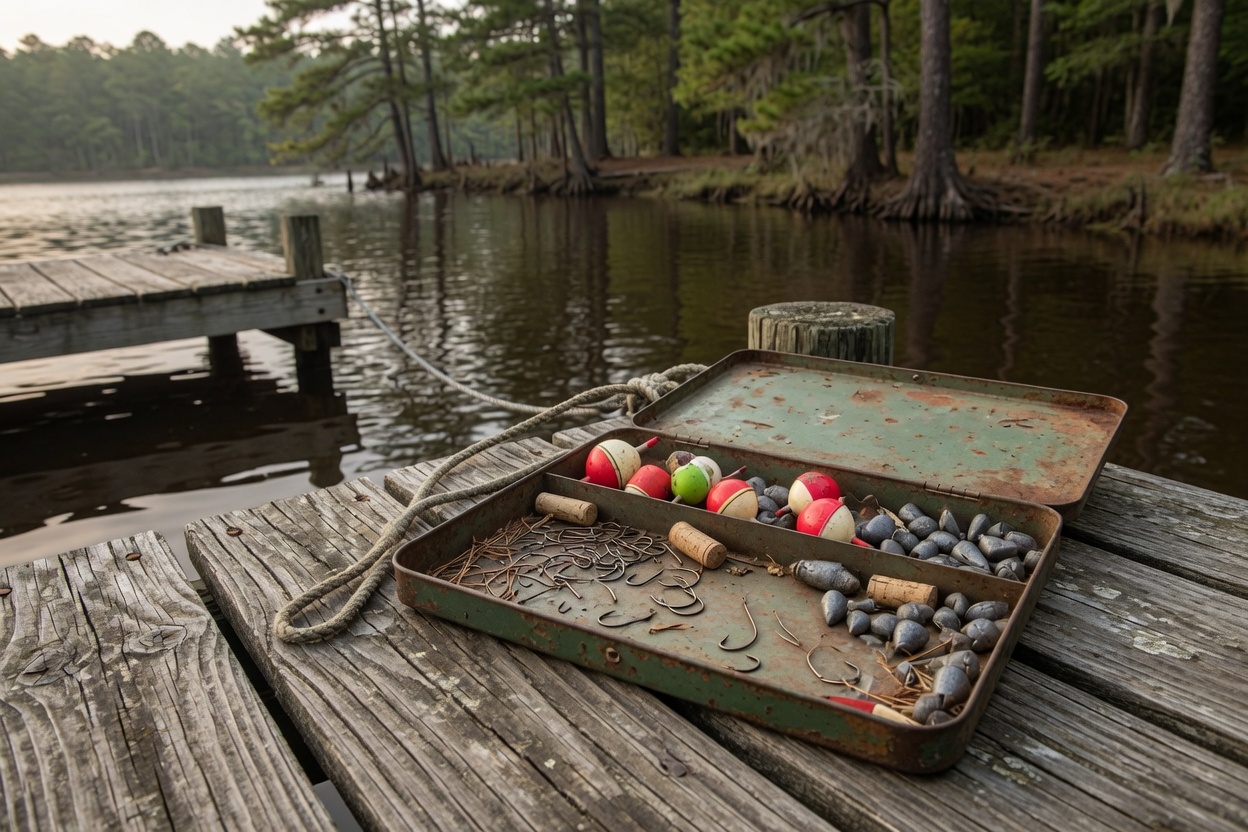
Along with those I carry a few small hooks, some split-shot weights, and a container of live crickets or red worms. I haven’t picked out a hook or sinker I’d tell you to buy by name, so I won’t link one. Any small light-wire hook, a size 6 to 8, will do.
Why a creek
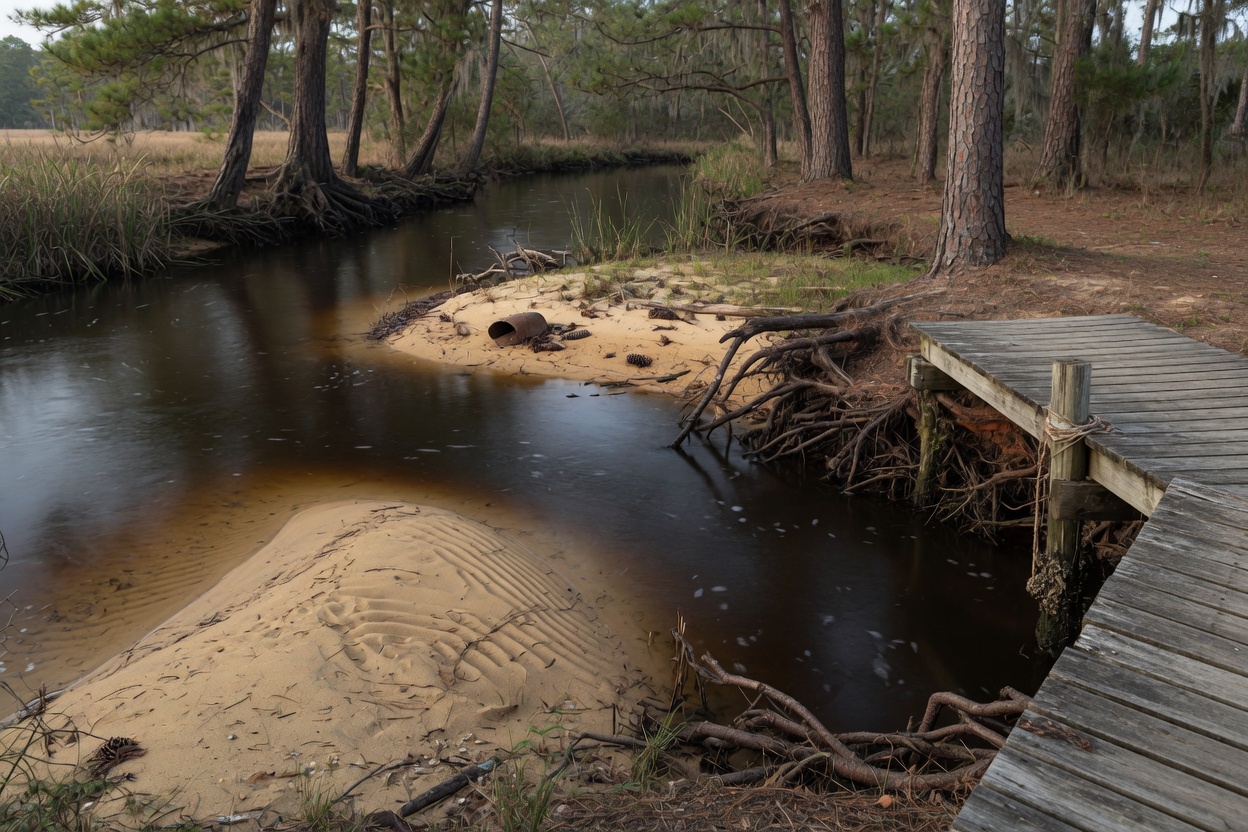
A pond holds fish wherever it likes. A creek is smaller and simpler, and the fish tell you where they are. Moving water carries food, and the fish line up to wait for it in the slow places. Learn to read three or four spots and you can catch fish on any creek in the county.
Where the bream are

Behind a laydown. A fallen tree or a log jam breaks the current, and fish sit in the slack water behind it. This is the first place I’d try.
The inside of a bend. The current slows on the inside curve and drops sand and food. The outside of a bend runs faster and deeper, so work the inside first.
Under an overhang. An undercut bank shades the water, and bluegill and redbreast sunfish tuck in there out of the sun and away from the birds. Cast near it, not onto it.
Below a riffle. Where the water spills over shallow gravel, the pool right below it holds fish waiting for what the riffle sends down.
Skip the long straight run with the current running fast and nothing to hide behind. Fish don’t wait there.
Come in quiet
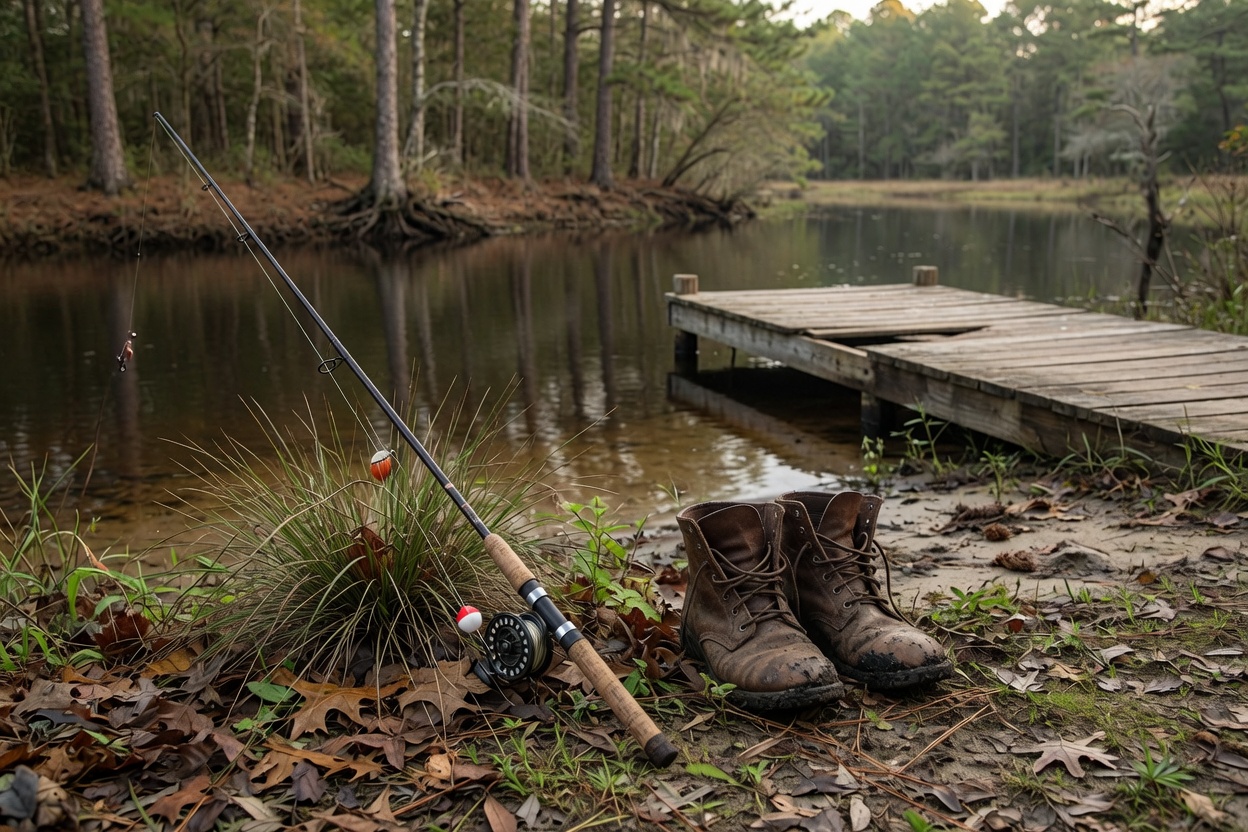
A creek fish can see you. Even tea-colored water is shallow enough that a shape moving on the bank gets noticed, so the way you walk up matters as much as your bait.
Walk slowly and keep low. Don’t stomp on the bank, because you’ll send shock through the ground into the water. Stay back from the edge when you can and cast from a few steps away. If the sun is behind you, your shadow will fall across the water, so shift your position until it doesn’t.
I fish upstream when the bank allows it. Fish face into the current, watching for food, so they’re looking away from you. Come at them from downstream and they don’t see you until it’s too late.
The rig
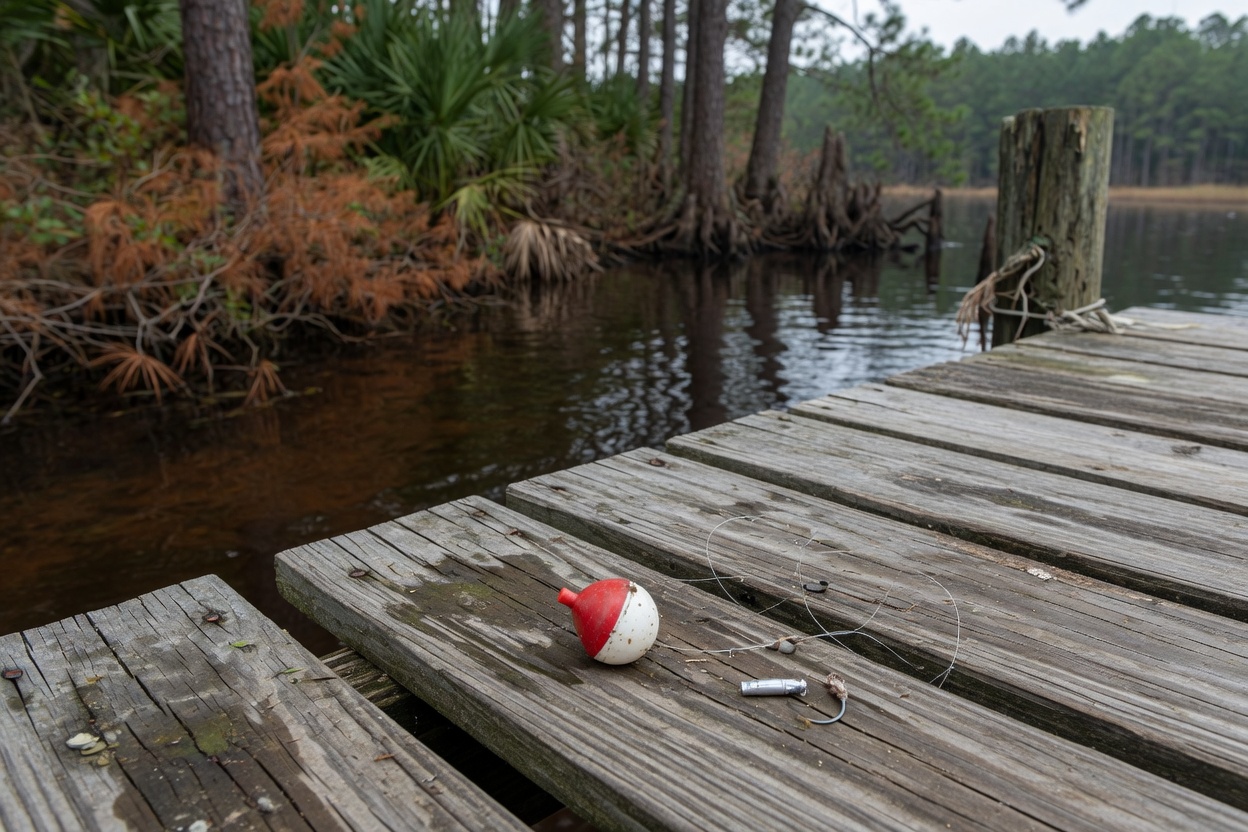
Keep it plain. A light line, a small hook, and a float.
Tie on a size 6 or 8 hook. Pinch a split-shot weight onto the line about a foot above it. Clip a snap-on float on the line so the bait hangs a foot or two below the surface, depending on how deep the pool is. In a creek, I’d start shallow and go down only if nothing bites. If you need the details of setting a float right, I covered it in how to rig a bobber for bluegill and crappie.
For bait, a cricket or a small piece of red worm is hard to beat. Thread the worm on so the hook is covered and a bit of the tail wiggles free. You want the bait to look alive.
If you’ve not used a closed-face reel before, my spincast reel guide walks you through it. A spincast combo like the one I mentioned is about as simple as fishing gets. Press the button, swing the rod gently, let go. Underhand flips are plenty in a creek. You’re only reaching a few feet.
Working the water
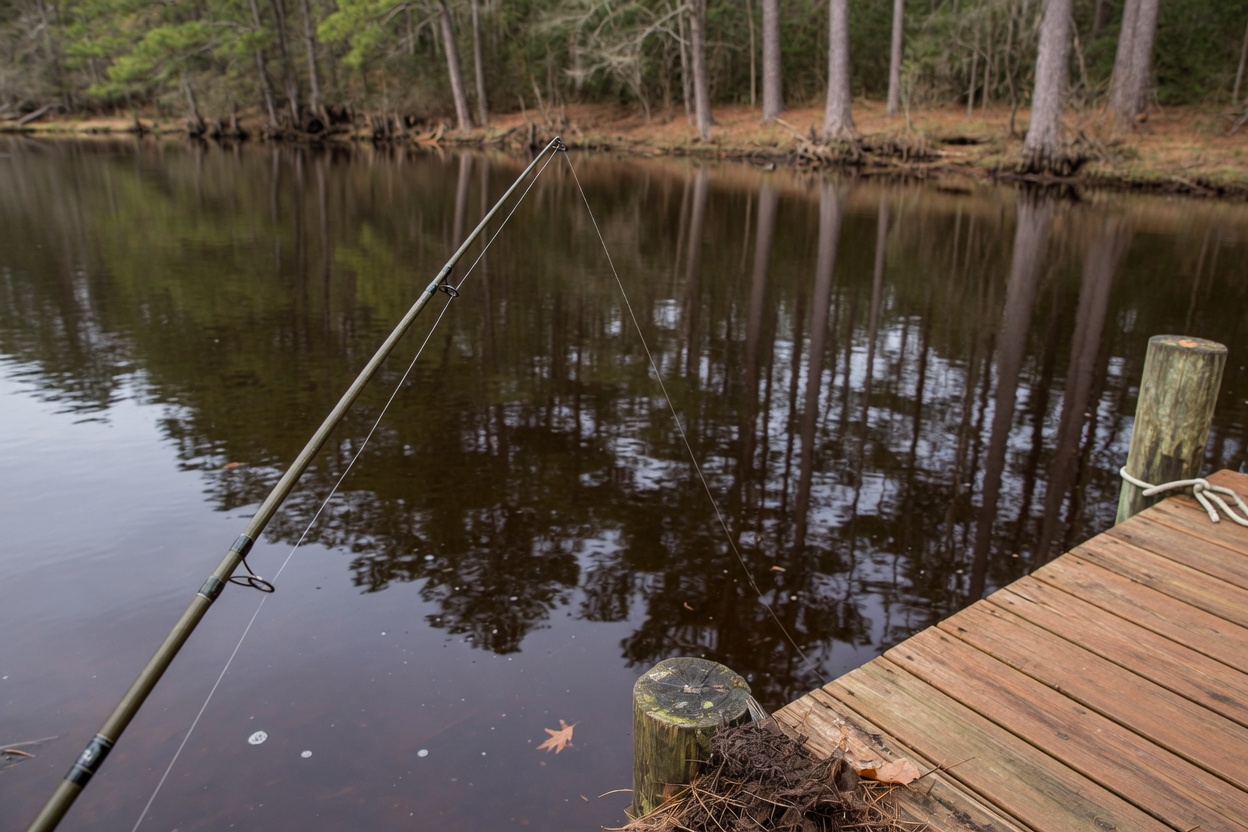
Drop the bait just upstream of your target and let the current carry it into the spot. Keep your line fairly tight, and watch the float. When it dips, bobs, or slides off sideways, wait a heartbeat, then lift the rod tip. Don’t snatch. Bream are small, and a hard yank takes the hook right out of the mouth.
If nothing bites in five or ten minutes, move. A creek is made for walking. Try the next bend, the next laydown. The fish that are going to bite generally bite in the first few drops.
If you catch a few, keep what you’ll eat and put the rest back. A mess of six or eight panfish feeds a family. I wrote in how to keep your catch fresh until you get home to keep them cold, and a small cooler with ice is all you need. When you’re ready to clean them, how to clean a fish for beginners will take you through it, and a sharp fillet knife makes it easy.
A few things I’d check first
Get your fishing license. In North Carolina that means an inland license from the Wildlife Resources Commission, and most states are similar. Know whose land you’re on, and ask permission before you cross a field to reach the water. A creek bank can be slick, so wear shoes that grip, and stay out of the water when it’s running high and muddy after a hard rain. Watch your footing, and in warm weather, watch where you put your hands.
Take a youngster along

My grandson Isaiah is twelve now, and he learned on this creek. He liked it better than the pond. The fish are small, the bites come fast, and there’s always something around the next bend. If there’s a child in your family, a creek is a fine classroom. I wrote a small journal for young anglers called My First Catch, where a young angler can record every fish. The ones who write it down tend to keep fishing.
I also put together a simple almanac of the best days to fish each month, by the moon and the weather and the water. It’s free. You can pick up the Best Days to Fish starter kit here. A creek is a quiet teacher if you pay attention to it.
Read the signs.
