Chicken Boredom Busters for a Long Winter in the Coop
Chicken boredom busters for winter — how a Tennessee keeper keeps a cooped-up flock busy, foraging, and out of trouble on the short, cold days.
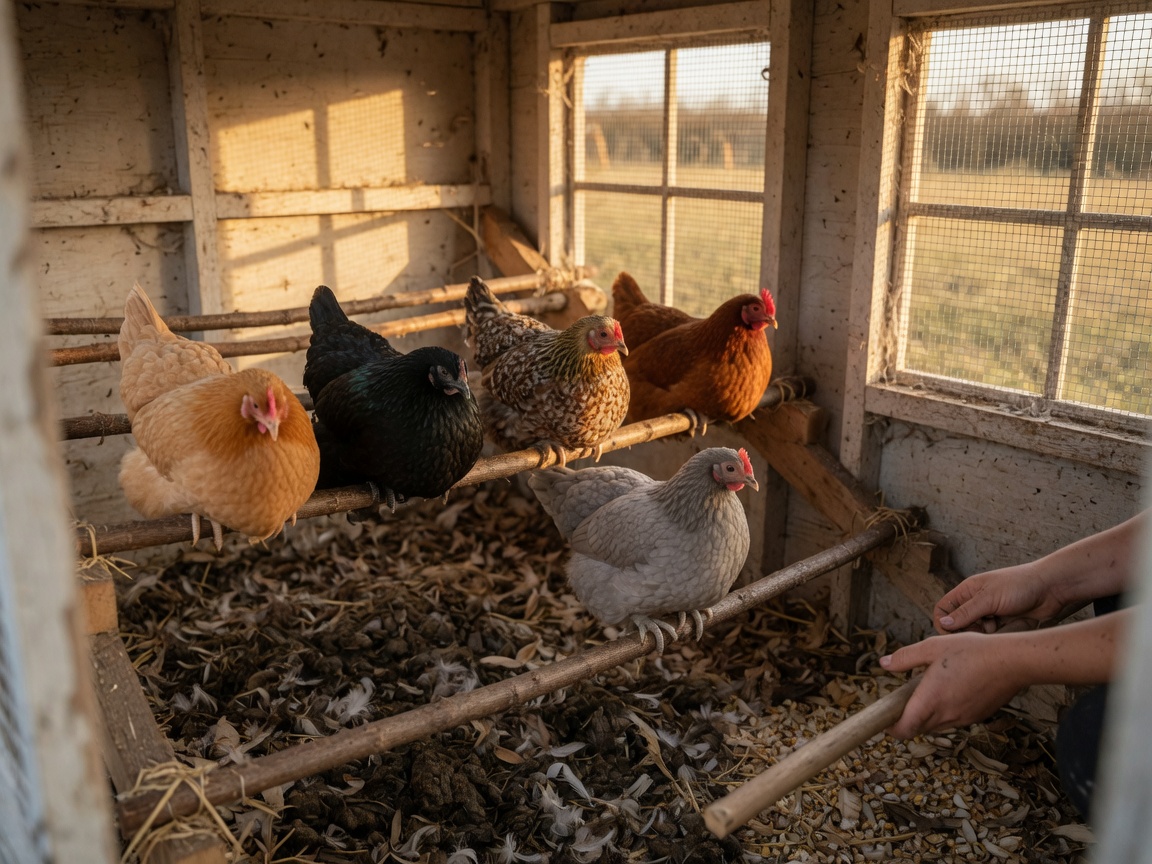
Bored chickens are destructive chickens. The first winter a hard cold snap kept my girls inside for the better part of a week, I came out to find two of them pulling feathers off a third, and an egg getting eaten before I could collect it. Nobody was sick. They were just stuck, restless, and looking for something to do — and a cooped-up flock with nothing to peck at will invent a project, usually a bad one. Feather-picking, egg-eating, and squabbling all spike in winter for the same reason: too many birds, too little space, too few hours of daylight, and nothing to keep their heads busy.
The good news is that winter boredom is one of the easiest flock problems to head off, and most of the fix costs nothing. The single biggest thing you can do is stop thinking of winter as “keep them in the coop” and start thinking of it as “get them back outside.” A chicken that’s out scratching in the run is a chicken that isn’t picking on her sisters. Everything else is a bonus on top of that.
Get them out of the coop first
Most winter boredom is really weather refusal. Chickens hate wind and hate stepping onto wet or snowy ground, so on a raw day they’ll bunch up in the coop and take their frustration out on each other rather than go out into a run that feels miserable. Fix the run and you fix most of the problem.
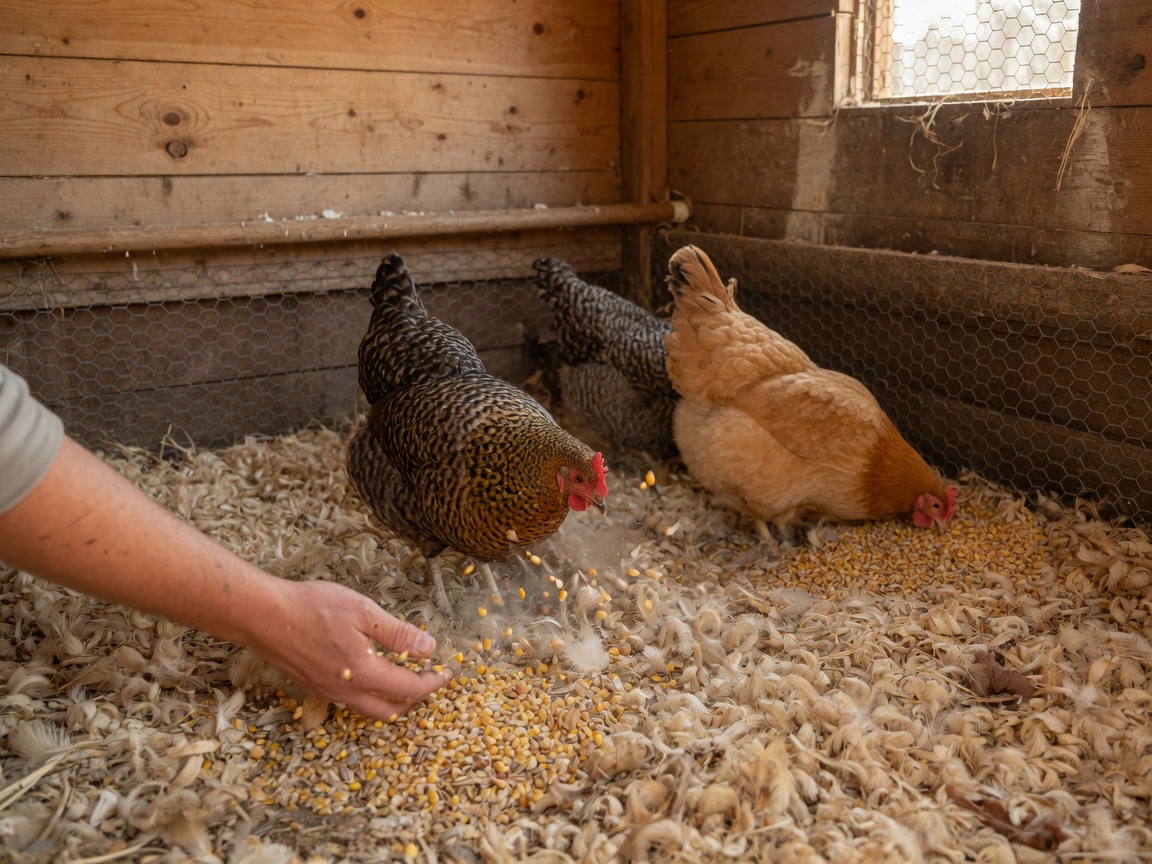
Block the wind. I zip-tie a panel of the knitted shade cloth I use in July onto the windward side of the run come November — it cuts the wind without cutting the light, and it’s the difference between the girls standing at the pop door refusing to come out and the girls actually going out to scratch. Throw down a thick layer of dry leaves, straw, or pine shavings over the mud and snow so they’ve got something dry to stand on, and toss a scoop of scratch grain into it. Now they’ve got a reason and a place to forage, and they’ll spend the short daylight hours working that litter over instead of working each other over.
Keep the water out there too. A nipple-and-cup waterer or a DIY horizontal-nipple bucket in the run keeps them drinking where they’re already busy, and — because it’s a closed system they can’t tip or splash — it keeps the coop floor dry, which matters more in winter than any other season. If you run the deep litter method, wet bedding is the whole enemy, and I break that down in my deep litter method for a winter coop post.
Scatter the food, don’t just fill a feeder
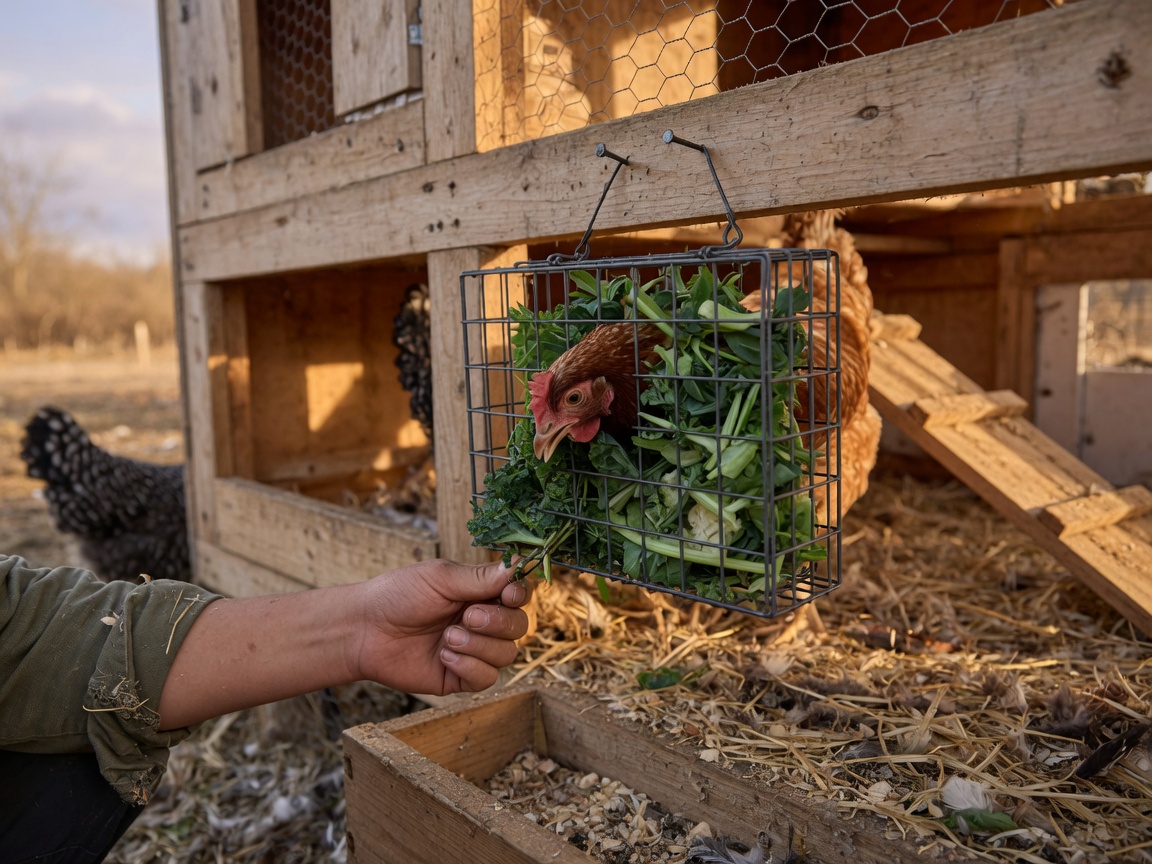
A full feeder is boring. Foraging is not. The oldest trick in the book — and still the best one — is to stop making food easy. Instead of topping off the trough, take a handful of scratch grain, dried mealworms, or that morning’s kitchen scraps and scatter them across the litter so the girls have to hunt. A flock will happily spend an hour turning over bedding for a cup of cracked corn, and every one of those minutes is a minute they’re not bored.
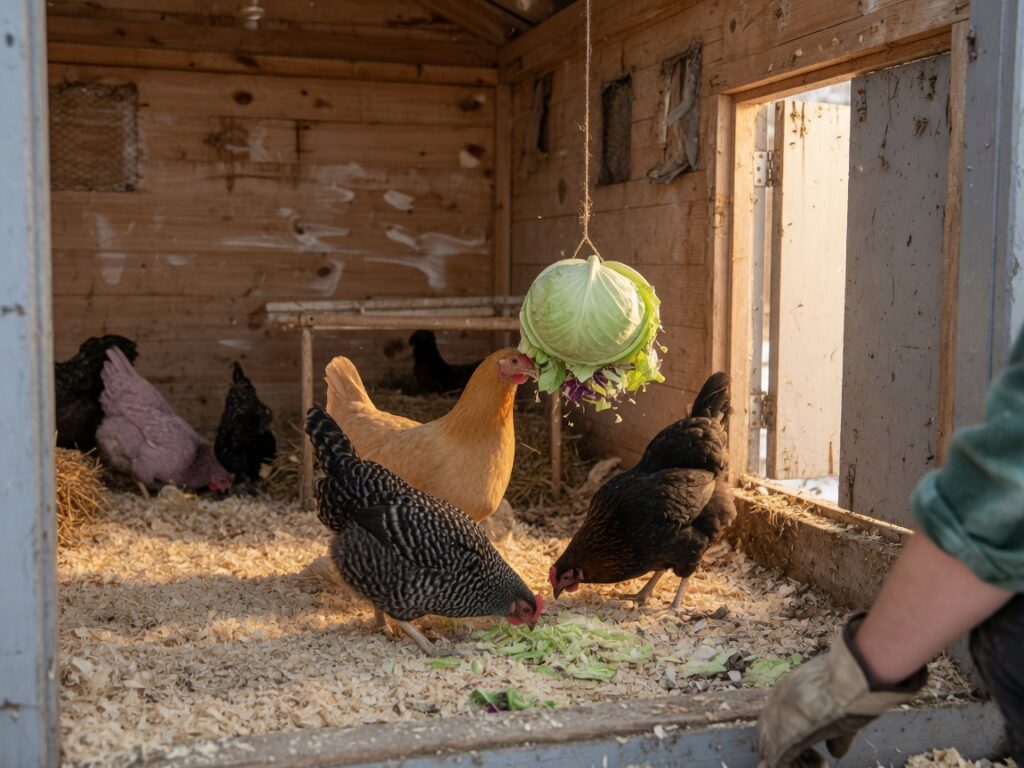
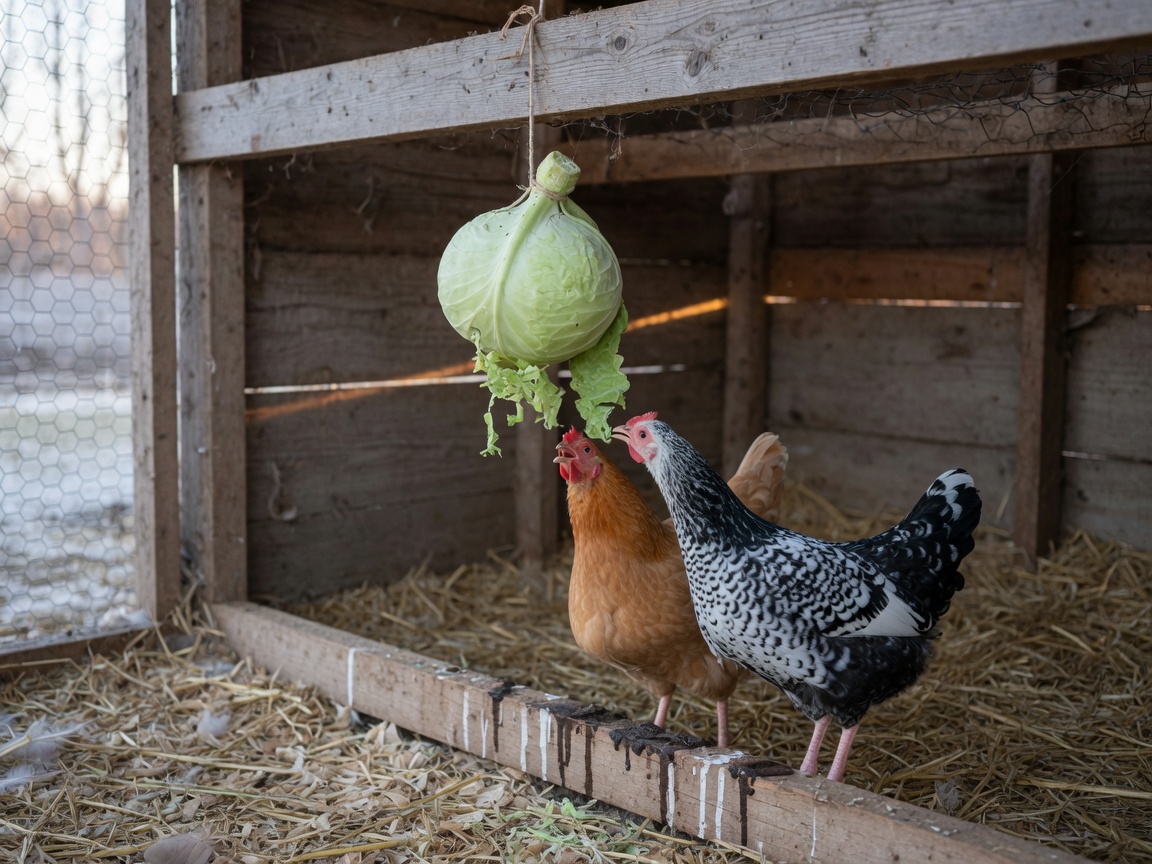
Hang a head of cabbage from a string at pecking height and you’ve built the classic chicken tetherball — they’ll bat it, chase it, and pick it clean over a couple of days. A flock block or a compressed treat block does the same job hands-off if you’d rather buy the enrichment than rig it. I’m not going to hand you a tested product link for the mealworm treats, flock blocks, or a hanging treat toy, because I haven’t run those specific listings through my own coop yet and I won’t point you at gear I haven’t used — but any of them work, and a plain head of cabbage from the grocery works just as well. The principle is what matters: make them work for it.
One honest caution on treats. Scratch, mealworms, cabbage, and blocks are snacks, not dinner — keep the whole lot to no more than about ten percent of what they eat in a day, and make sure a good layer feed is still the base. Winter birds already burn energy staying warm; don’t let boredom-busting turn into a junk-food diet.
Give them things to climb, dig, and dust in
Vertical space beats floor space for a bored flock. A couple of extra low roosts, a stump, a sturdy branch wedged across the run, even an overturned crate gives them somewhere to hop up, perch, and reorganize the pecking order without a fight. Chickens are happier with options.
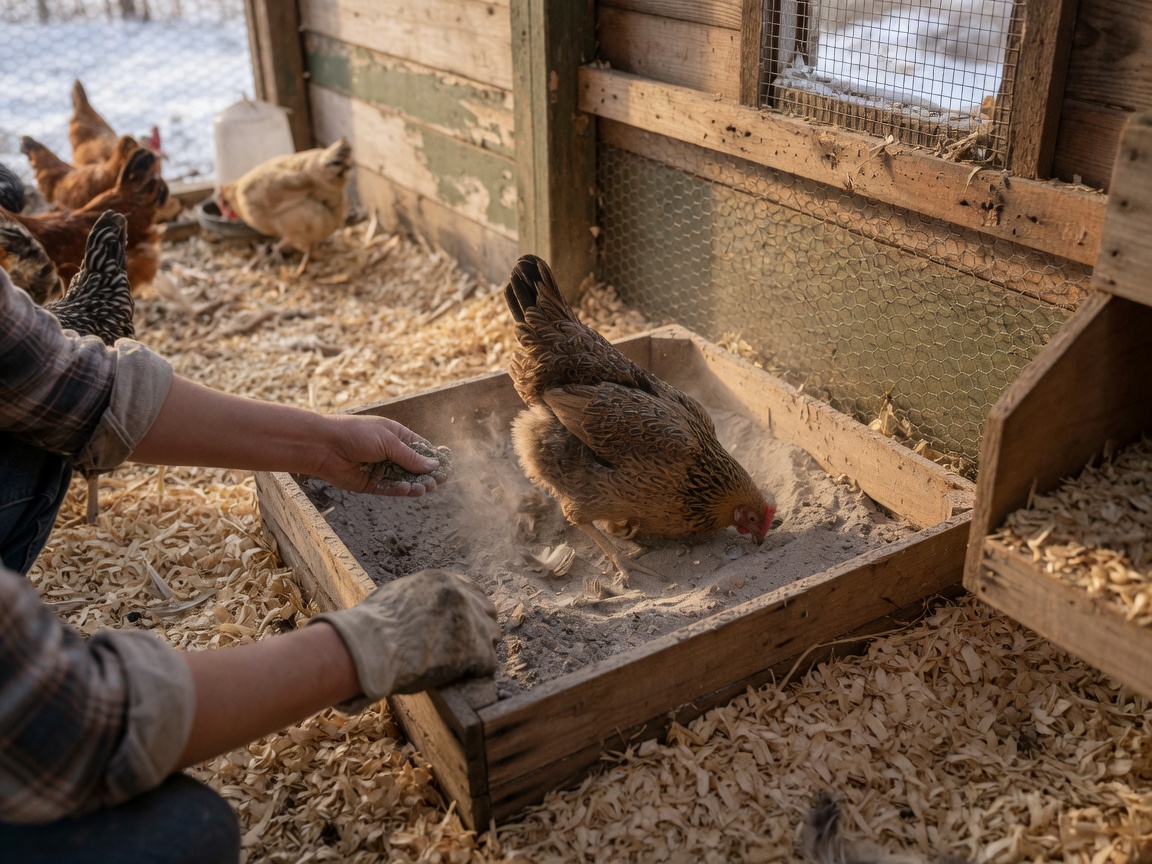
Do not skip the winter dust bath. A hen that can’t dust-bathe is an itchy, irritable hen, and irritable hens pick. When the ground’s frozen or soaking, they lose their natural bathing spot, so give them a new one: a shallow tub, a busted-up tote, or a corner box filled with dry dirt, a little sand, and a handful of wood ash from a clean fire. Mine will line up for it. It keeps mites down, keeps the girls occupied, and keeps them out of trouble — three problems, one plastic tub.
The winter-boredom problems worth watching
Keep an eye out, because a bored flock tells on itself. Feather-picking — one hen missing feathers from the back or vent while the others look fine — usually means crowding, boredom, or too much protein-poor filler. Egg-eating starts by accident with a cracked egg and turns into a habit fast, so collect often and give them enough to do that they’re not loitering by the nest boxes. Both problems are far easier to prevent with enrichment than to break once they start.
And remember that the whole flock slows down in winter for reasons that have nothing to do with boredom — shorter days mean fewer eggs and lower energy, which I get into in why chickens stop laying in winter. A calm, occupied flock rides that stretch out fine. A bored one turns it into a season of small disasters. If you’re still setting the coop up for the cold, my keep chickens warm in winter without heat post is the companion to this one — a warm, well-ventilated coop and a busy, foraging flock are the two halves of an easy winter.
I walk through the whole first winter — bedding, boredom, water, feed, and what’s normal versus what’s a problem — in Raising Backyard Chickens for Beginners. Keeping the girls busy is the trick that saves your feathers and your eggs. The book’s the piece that gets your whole flock through to spring in good shape.