How to Catch Crappie in Winter, Step by Step
How to catch crappie in winter from the bank or a small pond: where they hold in cold water, the slow presentation that works, and the best hours to go.
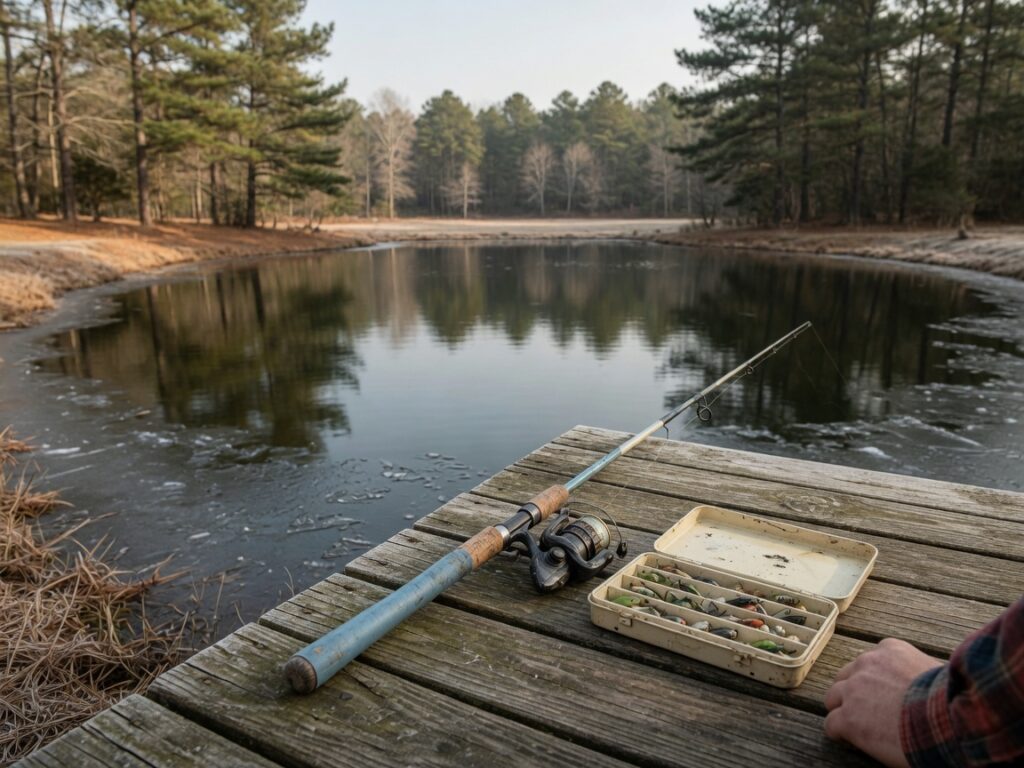
Most folks put their poles up when the weather turns cold, and that’s a shame, because winter is one of the finest times of the year to catch a mess of crappie. The fish are still there. They’ve just moved, and they’ve slowed down, and if you slow down with them, you can fill a cooler on a January afternoon while everybody else is waiting on spring. My name is Silas Whitfield, and I’ve fished my pond and the creeks around it through more winters than I care to count. Let me tell you what the cold does to a crappie, and how to catch him anyway.
Here’s the thing to hold onto first. A crappie is cold-blooded, same as any fish, so the cold water slows his whole body down. He isn’t going to chase. He isn’t going to feed all day. But he still has to eat, and in winter he does it in short, quiet windows, tight to cover, on the days the signs are right. Everything below comes back to those two facts: he’s slowed down, and he’s grouped up.
Where the crappie go when it turns cold
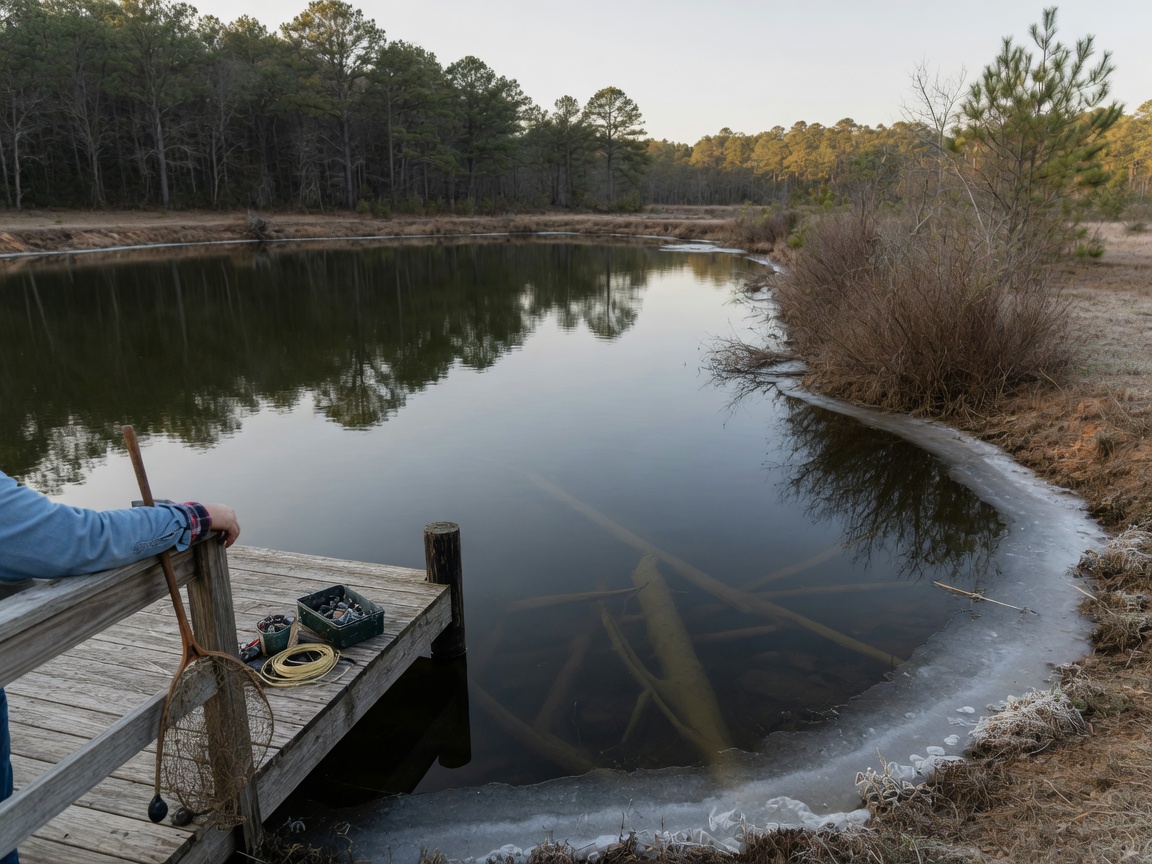
In the warm months crappie roam. In winter they leave the shallows and pull out to the deeper, more settled water, and they stack up — often a whole school hanging together in one small spot. Find that spot and you can catch a dozen without moving your feet. Miss it by twenty yards and you’ll swear the pond’s empty.
What you’re looking for is deeper water next to cover. On a farm pond, that’s the deepest hole, the old creek channel running through it, a brush pile somebody sank years ago, or standing timber if you’ve got it. On a bigger lake it’s the same idea — channel edges, bridge pilings, sunken brush in fifteen to twenty-five feet. The crappie hang suspended in that water, not on the bottom — maybe halfway down, maybe a little deeper. That suspending is the part beginners miss. They fish the bottom all day and never get up to where the fish are actually holding.
If you fish one pond all the time the way I do, you already know your deep spots. Start there.
Slow down, and fish small
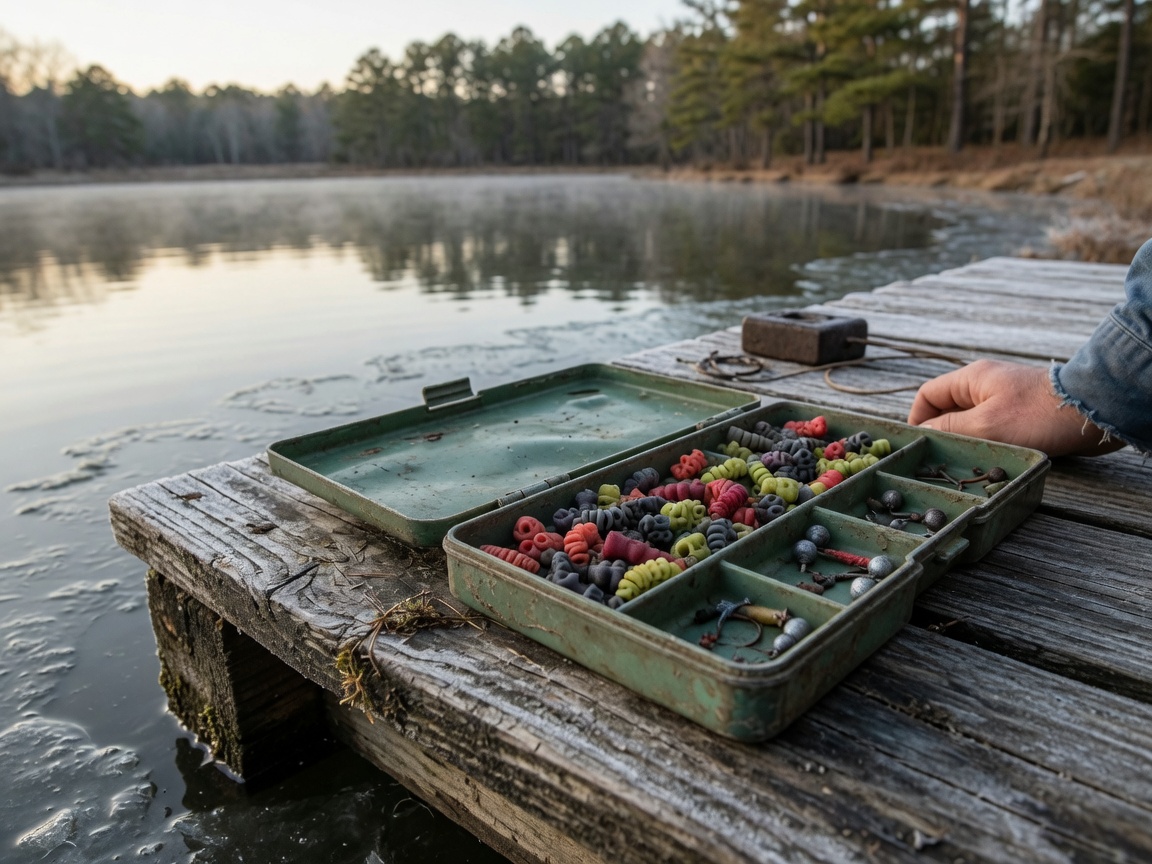
A winter crappie will not run down a fast bait. So you give him a slow one, small, held right in his face.
The two presentations I lean on are simple. The first is a small jig — a little marabou or soft-plastic body on a light jighead — worked slow and easy, with tiny lifts and long pauses. Not a jerk. Think of it as barely making the bait shiver. Most of your winter bites come on the pause, or on the drop, when the bait is just hanging there. If you’re not sure you got bit, you probably did. Lift into it.
The second, and the deadliest in truly cold water, is a live minnow under a slip bobber. You set the bobber stop so the minnow rides right at the depth the fish are holding, and then you let it sit. Do nothing. That’s the whole method, and it’s hard for restless folks. The minnow does the work, the bobber tells the tale, and when it eases under, you lift. A slip bobber lets you fish deep and still set your depth exactly, which is why it beats a fixed bobber in winter.
Whichever you use, the rule is the same: small bait, slow motion, and get it to the right depth. Depth is everything now. If you’re marking nothing, change your depth before you change anything else — go a couple feet deeper, then a couple shallower, until you find the level they’re sitting on.
The best hours, and the days worth going
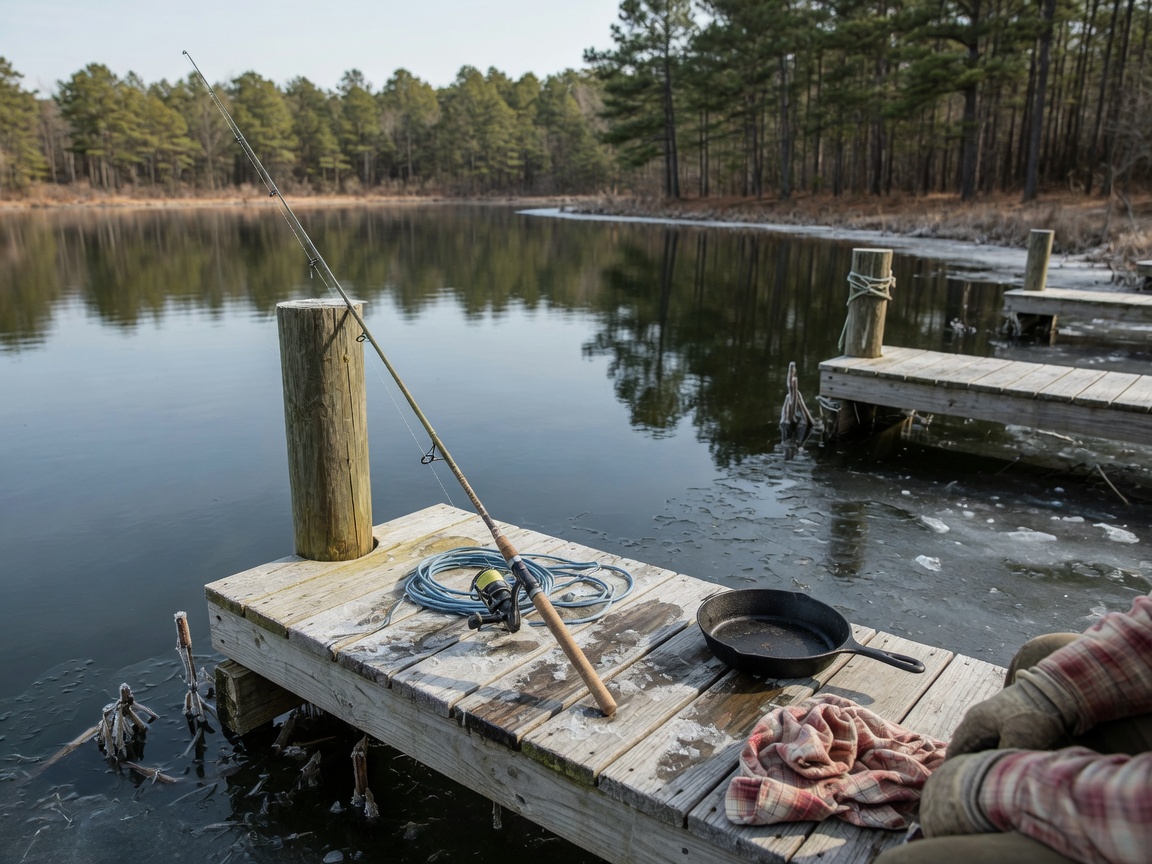
In summer I tell you to fish first light and last light. Winter turns that on its head. In the cold, the best fishing is often the warmest part of the day — late morning through the afternoon, once the sun’s had time to put a little warmth on the water. The fish feed in that warm window and go quiet again by dark.
And winter is where reading the signs earns its keep, because the fish feed on far fewer days than they do in spring. What you want is a stretch of stable, mild weather — two or three warm days in a row, a soft south wind, the water settling and warming a degree or two. That’s the day to go. The day to stay home is right after a hard cold front blows through: bright bluebird sky, the temperature dropped overnight, the barometer high. The crappie will lock down and sulk, same as they do in summer after a front, only worse. A warm rain coming is often better than a clear cold snap that just left.
So you stack it, same as always. A stable warm spell, the afternoon sun on the water, and a school you can find holding tight to deep cover — that’s a winter crappie day. One of those signs is a maybe. All of them together is the day you don’t miss.
Keep it simple, and dress for it
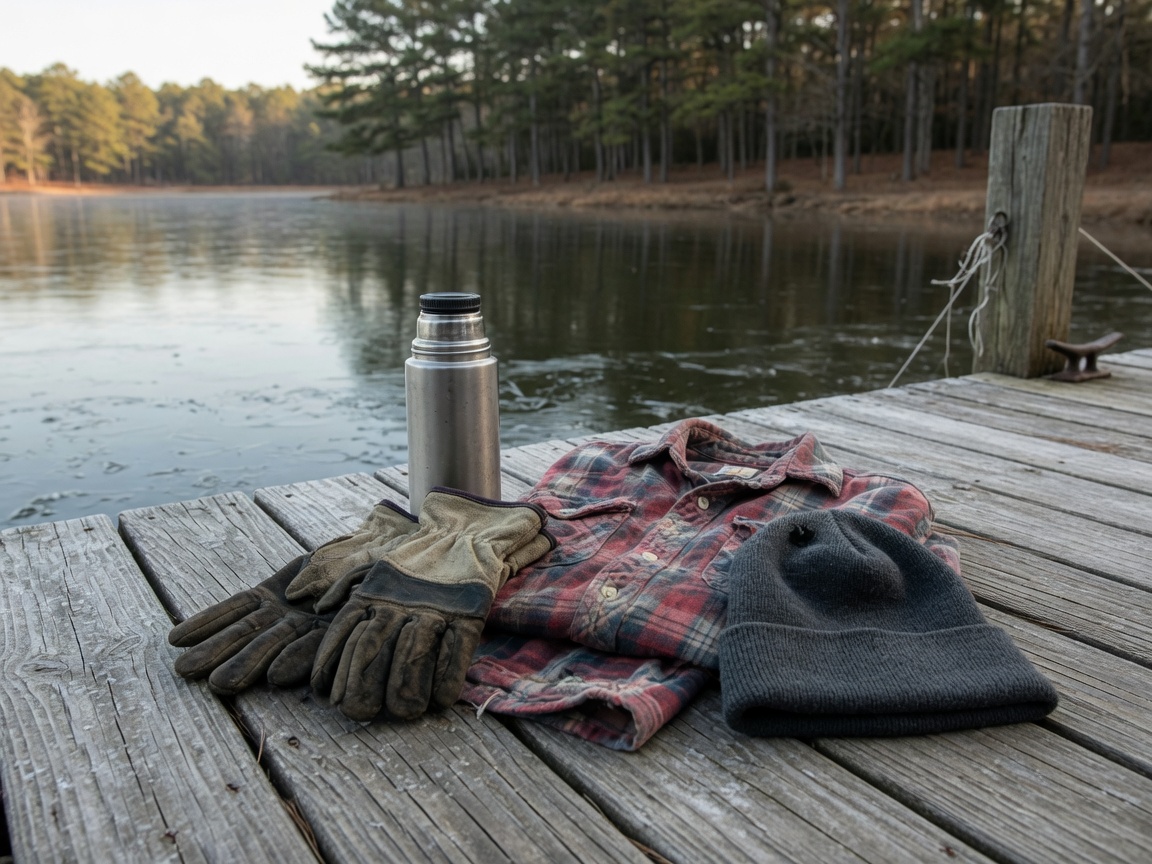
You don’t need electronics or a boat full of gear to catch winter crappie off a bank or a dock. You need to find deep water near cover, fish small and slow at the right depth, and pick a mild, settled day. That’s it. My granddaddy did it with a cane pole, a minnow, and a cork, and he came home with supper.
The one thing I’ll press you on is dressing warm and being patient. Winter crappie fishing is a quiet, still kind of fishing — you’re not covering water, you’re waiting on a school to turn on. Bring a thermos, dress in layers, and give a good spot time before you give up on it. The bite may not come until the afternoon sun’s been on the water an hour. Wait for it.
Bundle up and go
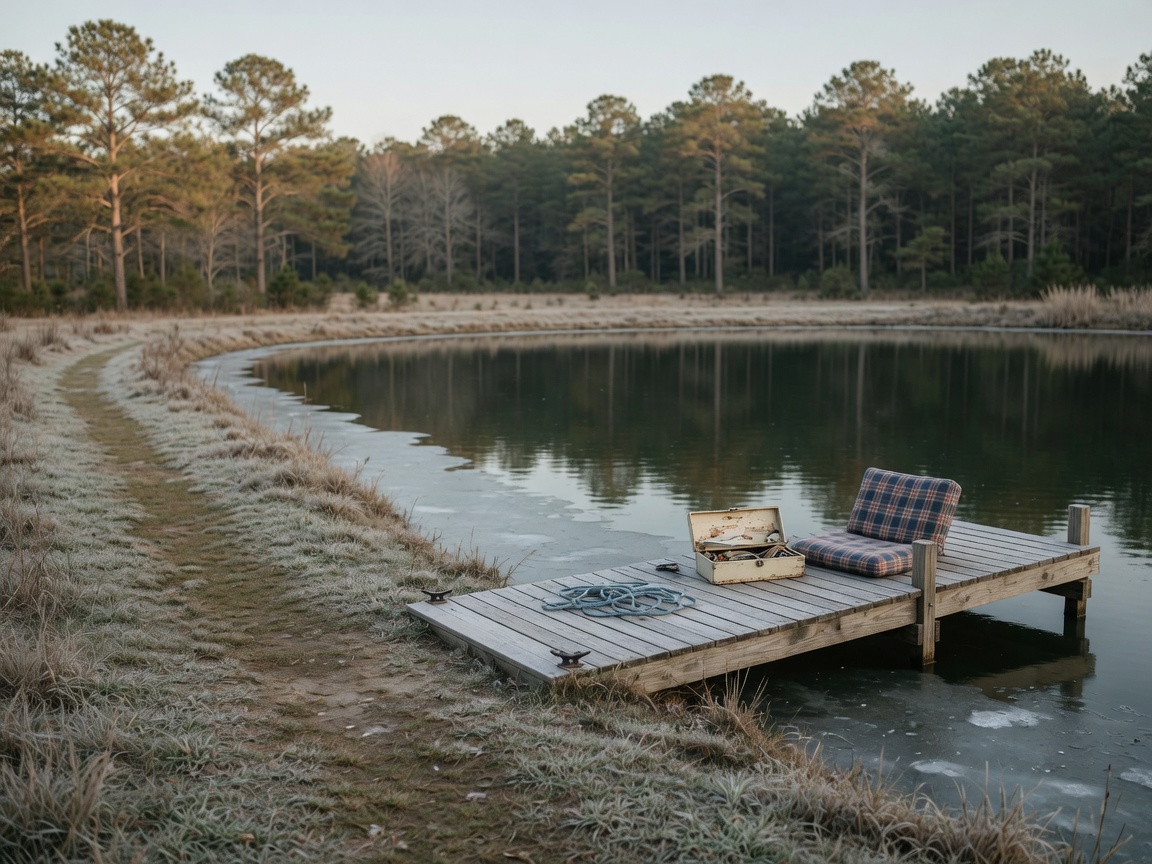
Winter crappie is patient man’s fishing, and it rewards the fellow who understands what the cold has done rather than fighting it. Find them deep and grouped, feed them something small and slow at their exact depth, and go on the mild settled days when the sun’s out. Do that and you’ll be eating fried crappie in February while your neighbors are still telling you they’ve got their poles put away.
I keep a little almanac from my own pond, and I put together a simple one you can use for yours — it marks the best days to fish each month by the moon and gives you a plain checklist for the weather and the water, which is exactly what you need to pick your winter days right. I give it away free; you can pick up the Best Days to Fish starter kit here. And if you’ve got a grandchild you’d like to bring along on one of those mild afternoons, a crappie is about the friendliest fish there is for a young angler to catch — I made a little keepsake for exactly that, My First Catch — A Fishing Journal for Young Anglers, so a child can set down their first fish and remember it.
Read the signs. Tight lines — and I’ll see you at the water.
