How to Catch Channel Catfish in Winter, From the Bank
Channel catfish don't stop biting in winter — they just move deep and slow down. Here's how to catch channel catfish in winter, straight from the bank.

Most folks put their rod up once the leaves are down, and I understand why. The bluegill go quiet, the crappie scatter, and a cold morning on the bank doesn’t sound like much fun. But the channel cat never got that memo. He’s still down there, still eating, just slower and deeper than he was in August. I’ve pulled a good many winter cats out of my own pond and out of the creek below it, and I can tell you plain — winter catfishing isn’t a different sport. It’s the same fish, doing the same thing, just at half speed.
That’s the whole secret, and it’s worth saying twice, because it changes everything you do. A catfish in January isn’t refusing to eat. He’s just not going to chase anything, and he’s not going to waste the little energy his slowed-down body has on a fast meal that might get away. Fish to that, and you’ll fill a cooler on days your neighbors swear the pond’s gone dead.
Why a channel cat keeps eating when everything else quits

A catfish is cold-blooded, same as every fish in your pond, and cold water slows his whole body down — his heartbeat, his digestion, how hard he’ll work for a bite. But he doesn’t stop needing to eat. He just gets patient about it, and he gets particular. In the warm months a catfish will run down a bait moving fast through open water. In the cold months, he wants it sitting still, close enough that finding it costs him almost nothing.
That’s the difference between a fisherman who catches winter catfish and one who goes home skunked. The bait has to come to him. He’s not coming to it.
Find the deepest water on your pond or creek
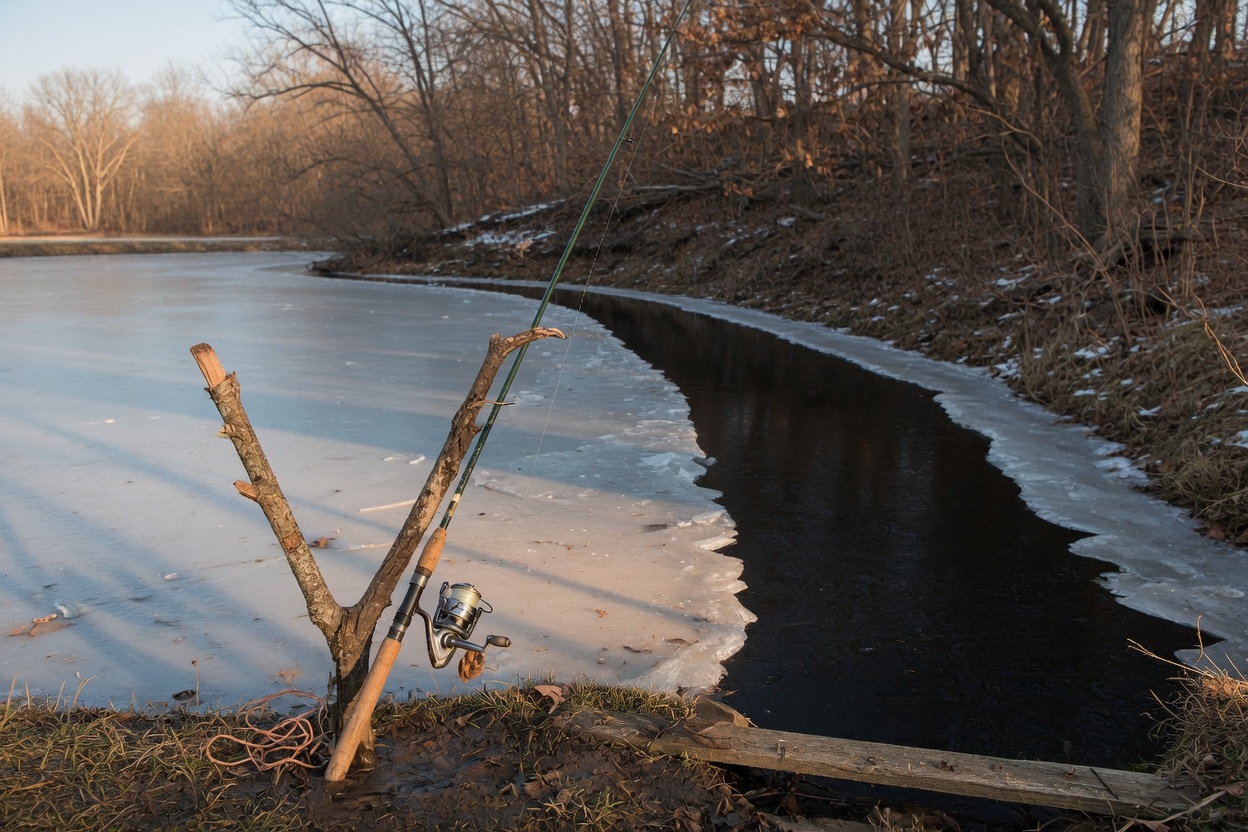
The first thing I look for in cold weather is the deepest hole I know of — the old creek channel that used to run through the field before the dam went in, a bend where the bank drops off sharp, the deep water below a culvert or a drain pipe. Channel cats pull into that deep, stable water in winter the way we pull a chair up close to the stove. It doesn’t swing hot and cold the way the shallows do, and that steadiness is worth more to a catfish in December than any meal.
If you don’t already know where the deep water is, walk your bank on a clear day and look for the signs — the far side where the water goes dark and doesn’t show bottom, a spot where the old fence line used to cross before the pond filled it, the mouth where the creek feeds in. I marked mine years ago with a low branch on the bank across the water, so I can always find that hole again without a boat or a fish finder.
Fish slow, fish still, and let the bait do the work

Once you’ve found the hole, forget most of what you know about summer catfishing. No slow drift, no working the bait around. You’re going to cast it out, let it settle on bottom, and leave it be.
Cut bait is what I reach for in cold water — a chunk of shad, herring, or even a piece of hot dog will take a winter cat, cut fresh so the scent bleeds out into that cold, slow water. A catfish hunts by smell more than sight in winter light, and a strong scent sitting still does more work for you than motion ever will. A simple bottom rig carries it fine — I go through the whole rig, the sinker, and the hook size in my post on catching channel catfish from the bank, and every bit of it still applies here. The only change in winter is patience. Cast it, set your rod, and give it real time — twenty, thirty minutes isn’t too long to wait on one bite when the water’s cold. A twitching rod tip after all that stillness is one of the finest things in fishing.
Fish the warm part of the day, not the cold hours

Here’s where winter catfishing turns the rest of what I’ve taught you upside down. In warm weather I send you to the bank at first light and last light, because that’s when the heat’s off the water and the fish move shallow to feed. In cold weather, that rule flips clean over.
A winter pond warms slowest right at dawn and fastest through early afternoon, once the sun’s had a few hours to work on it. That small rise — even two or three degrees — is enough to wake a sluggish catfish up and get him moving toward the bait. So I fish winter cats from late morning into mid-afternoon, on the warmest, sunniest part of the day I can find, and I don’t bother getting up in the dark for it. There’s no shame in a nine o’clock start in January. The signs still matter here too, same as any other season — a warm afternoon with the barometer holding steady beats a cold front blowing through every time. I lay out how I read a day generally in reading the three signs, and the same logic holds a catfish’s interest in the cold just the way it does a bluegill’s in the spring.
Dress for the bank, not just the fish

One more thing, and I say it every winter because it matters. You can do everything right on the water and still have a miserable morning if you didn’t dress for it. Layer up, keep your feet dry, and bring something hot to drink. A folding stool beats standing two hours on a cold bank, and a pair of gloves you can still tie a hook with is worth more than anything in your tackle box. I’ve sat plenty of long, quiet winter afternoons on my own bank, coffee going cold beside me, waiting on that one slow pull. Dress right, and you’ll enjoy the wait instead of fighting through it.
A cooler of cats on a day nobody else was fishing

There’s a particular kind of satisfaction in coming home with a mess of catfish on a gray January afternoon, when half the county’s decided fishing season is over till spring. It isn’t luck. It’s knowing the fish never left — he just moved deep, slowed down, and started waiting on somebody patient enough to come find him. Fish the deep water, fish it still, fish it warm in the day, and dress like you mean to stay a while.
I keep a simple almanac for my own pond that marks the days worth bundling up for, by the moon and the weather both, and I give a version of it away free. It’ll help you pick your winter mornings the same way it helps me pick mine — grab the free Best Days to Fish starter kit here and keep it by the door all winter long.
Read the signs. Tight lines — and I’ll see you at the water.
