How to Catch Bluegill in Winter From the Pond Bank
How to catch bluegill in winter from the bank: where they hold in cold water, the tiny bait and light rig that works, and when to go. Plain beginner advice.

The first cold morning of December, I walked down to the pond with my coffee and found the water steaming and the bank stiff with frost. Not a ripple anywhere. Any beginner would call it a wasted trip. I baited a hook the size of a fingernail, set a bobber, and was holding a bluegill within the half hour.
Cold water slows a bluegill down, but it does not send him away. He is still in the pond, still hungry enough to eat something small and easy, and he is a good deal more patient than the fellow on the bank. If you learn where he goes and what he will accept, winter is a fine and quiet time to fish.
What cold water does to a bluegill

In summer I find bluegill in the shade and along the edges. When the water drops into the forties and low fifties, as it does in our eastern North Carolina ponds from December into February, they pull off the edges and settle where the water holds steadier. Their appetite drops with the temperature. A bluegill that would chase a cricket across the shallows in June will now let it drift by unless it comes close and comes slow.
That is the whole lesson of winter panfish: they will still eat, but they will not travel far for it. Put a small bait right in front of the fish, move it very little, and wait.
Our ponds rarely freeze hard enough to matter, so this is open-water fishing off the bank.
Where they hold when the water is cold

Look for the deepest water you can reach from the bank. On a farm pond that usually means the old dam end, where the bottom drops away, or the hole out in front of the drain pipe. A laydown or a brush pile that sits beside a drop-off is better still. Bluegill hold tight to something, and in winter that something is nearly always sitting in the deeper water.
I fish about three to six feet down in the cold months, and closer to the bottom on the coldest days. That is a good deal deeper than the foot I use in May, and it is the change that catches most new winter anglers by surprise. If you want to see how I set a bobber to ride at that depth, I wrote it out in how to set up a deeper winter panfish rig with an adjustable bobber.
If a spot gives you nothing in twenty minutes, move a few steps along the bank and try again.
The rig: small, light, and slow

Everything shrinks in winter. Use a hook in the size 8 to 12 range, smaller than you would in summer. Pinch on one or two tiny split-shot a foot or so above the hook, just enough to keep the bait down and your bobber standing upright. Buy the smallest split-shot the shop sells and a card of light-wire bait-holder hooks, and look for the size printed on the card. Those are the parts I am not linking, because I have not checked a particular listing I would stand behind.
For line, lighter is better in cold, clear water. Four-pound test is what I like. Many beginner combos come spooled with something heavier, so read the label on the spool. If yours is heavy, spool on a few dozen yards of four- to six-pound monofilament before winter.
Now the honest part about the gear. A spincast combo like the Zebco 33 is about the most forgiving outfit a beginner can hold. You press the button, let go, and it casts. There is nothing to tangle. It reaches the deeper water off the dam without any trouble, and it is what I would hand a grandchild. But at five and a half feet it is a stiff, heavy stick for a quarter-inch bite on a hook this small. You will miss some of the lightest ones that a limber little pole would show you. I take that trade every time for a beginner, because the outfit that lets you keep fishing beats the one that frustrates you.
For the bobber, the snap-on floats do the job. They clip onto the line anywhere, so moving your bait from four feet to six is a matter of seconds. The drawback is that a round float, if it is a big one, can be too heavy for a shy winter bite. Use the smallest one in the pack, and if the bobber sits too high in the water, add one more piece of split-shot until only the tip shows.
Bait and bite: live, tiny, and patient

Winter bluegill want something small and alive. A red wiggler, a piece of one about as long as your thumbnail, is what I use most. A wax worm works well too, and I keep a small tub in the truck. Thread it on so the hook point is covered and the bait can still wiggle.
Cast it beside the cover, let the bobber settle, and leave it alone. Then lift the tip of your rod an inch and let it fall back, very slowly, every minute or so. That small movement is often what wakes a fish up.
The bite is subtle. Summer bluegill drag the bobber under. Winter bluegill barely move it. Watch for the bobber to lean, lift slightly out of the water, or sink a fraction of an inch. Any of those is a fish. When you see it, do what I always tell the grandkids: don’t snatch. Reel the slack in and give a smooth, short lift. If you want the basics of rigging and setting the hook before you try it in the cold, my post on how to catch bluegill for beginners is the place to start.
When to go, and how to dress for it
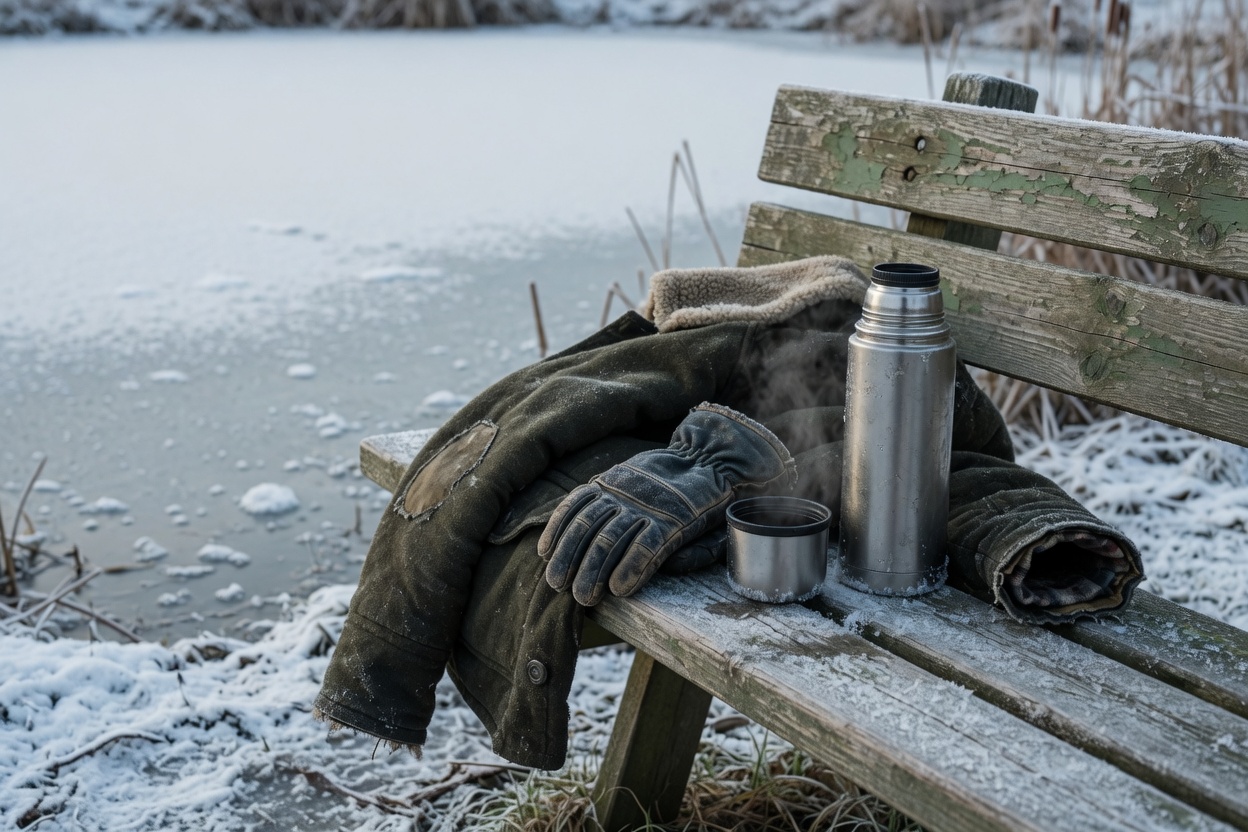
Winter reverses the summer clock. The best hours are not first light but the warmest part of the day, roughly ten in the morning until mid-afternoon, when the sun has had time to take the edge off the shallows. Just after a few mild days is better than the day after a hard freeze, and a cold snap that drops the water quickly can turn the bite off completely. I would rather wait a day and go when it is sunny. I keep a running record of these things for my pond, and my post on the best days to fish in winter walks through how I read the weather and the moon.
The other thing is that you are standing still, and standing still on a cold bank is where beginners give up. Wear a real coat and a hat, layer under it, and wear waterproof boots or two pairs of socks. Bring a thermos of something hot. I have a bag I pack for these mornings, and everything I put in it is written out in how to pack a cold-weather bank fishing bag.
Keep a small towel in your pocket, and warm your fingers now and then. Cold hands make a poor hookset.
Keeping a few, and the rules that go with it
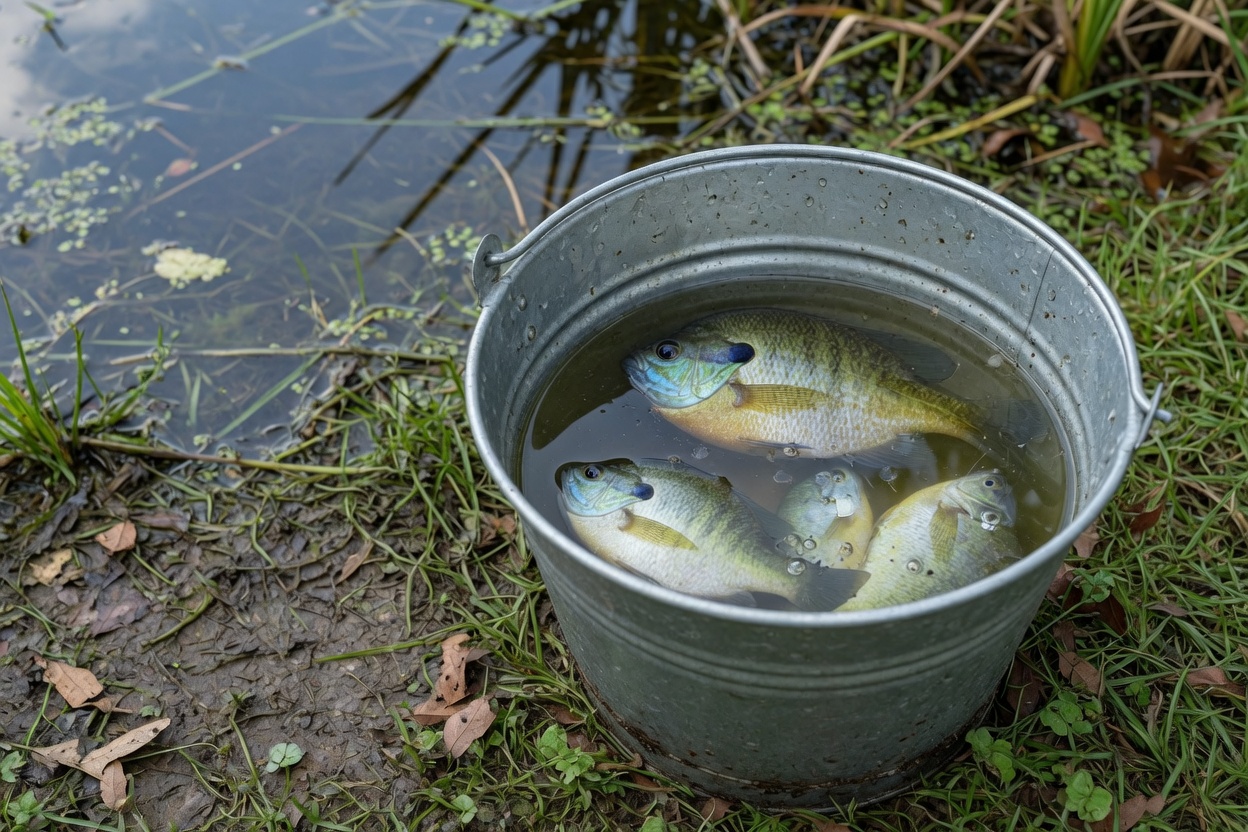
Bluegill from cold water eat very well. The flesh is firm and sweet, and a mess of hand-sized fish fried in cornmeal is a fine winter supper. Keep the bigger ones and put the smallest back. Keep them on ice as you go.
Limits, size rules, and license requirements are set by the state and can change, and they can differ from a public lake to your own private pond. Before you keep any fish, check the current freshwater rules with the North Carolina Wildlife Resources Commission, or your own state’s wildlife agency if you live elsewhere. That takes five minutes, and I would rather you did it than trust my memory. When you are ready to clean what you catch, a flexible fillet knife like the Kershaw Clearwater does small bluegill cleanly, and I laid out the steps in how to clean a fish for beginners.
The next cold morning

Nothing about winter bluegill fishing is hard. It is slow. Find the deeper water, shrink your hook and your line, fish a small live bait without hurrying it, and go in the warm part of the day.
If you would like to plan your trips by the weather and the moon, as my daddy and granddaddy did, I put together a free almanac you can use. Pick up the free Best Days to Fish starter kit here. And if there is a young one who wants to come along, a warm day and a shallow bluegill is a good way to begin. I helped put together My First Catch — A Fishing Journal for Young Anglers, a simple paperback journal for a child to write and draw what they caught. It is written for kids, not adults, so it fits best as a gift for a young angler in your family.
Read the signs. Tight lines.
