How to Care for Chickens During an Ice Storm (Before and After)
An ice storm is hard on a backyard flock. Here is how to prep the coop, keep water open, protect the run, and check your hens before and after the glaze hits.

The ice came in the second week of January the year Hannah was eight. By four in the afternoon the coop door was glued shut with a quarter inch of glaze, the power was out across Knox County, and I was standing in the yard with a kettle of hot water and a very bad feeling. The girls were fine. I was the one who had not planned.
An ice storm is different from a cold snap. Cold, your flock can handle, and I’ve written about how in how to keep chickens warm in winter without heat. Ice is about locked doors, frozen water, slick ground, broken limbs, and no power. Here is what I do now, and what I wish I’d done that first January.
You’ll also want a headlamp, a bucket, a stiff scraper, and a bag of coarse sand. None of that is a product I need to send you off to buy.
Before the storm
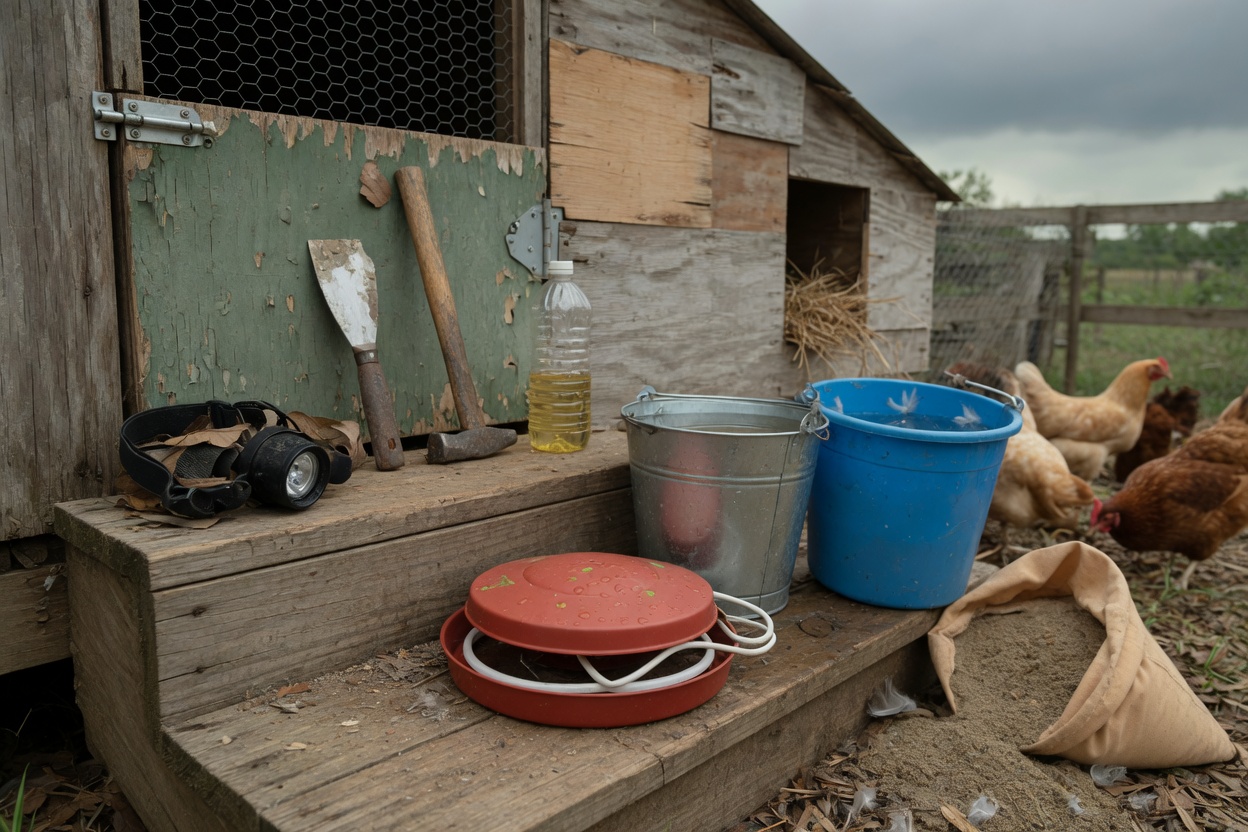
When the forecast says freezing rain, I give myself a day if I can. The goal is simple: a coop that stays dry, enough water to last, and a way in and out that doesn’t depend on a door that can freeze shut.
Check the latches. Cam-lock latches are the right choice for predators, but they can ice over. Rub a little cooking oil or a thin film of silicone on the moving parts, and keep a hammer or a putty knife near the door. Don’t force a frozen latch with your hand on it. Tap the ice off.
Fill and stage water. Fill the galvanized fount and set it on the heated base. The base keeps the water open while the power is on, which is great, and useless when it fails. So I also fill two or three extra buckets with water and stash them in the house or a warm garage. A bucket of water that stays liquid is worth more than any gadget in a long outage.
Refresh the bedding. Add a few inches of hemp bedding to the floor and the nest boxes. Dry bedding is the single best insulation you have. Wet litter freezes, lets ammonia build, and chills feet. I covered this in more detail in how to winterize a chicken coop, and it goes double before ice.
Feed up. Top off the feeder with their regular layer ration. A full crop at dusk keeps a hen’s internal furnace running through the night. A handful of scratch at bedtime is fine, and I do it, but don’t swap their feed for it.
What not to do

I want to say this plainly because it’s the mistake that burns coops down. Do not hang a heat lamp. Do not run a space heater in the coop. Do not light anything. Dust, bedding, and an extension cord make a fire waiting to happen, and chickens are much hardier than we are. A healthy, dry, draft-free flock handles cold well. Fire and fumes kill more birds than ice does.
If the power goes out, never run a generator inside or near the coop or in a closed garage. Carbon monoxide kills. Keep it outside, away from the building, and run cords carefully.
During the storm

Ice storms are about patience. I put the girls to bed early, closed the pop door, and left it alone. They don’t need me out in the glaze. If the run is coated, I keep the birds in the coop until the worst has passed, rather than watching them skate.
Check on them when it’s safe to walk, and use the headlamp, not a candle. Count heads, look for anyone hunched and fluffed in a corner, and make sure the air smells fresh. A closed coop in an ice storm can get stuffy, so keep the high vents open and the low ones shut so moisture escapes without a draft on the roost.
If the heated base has gone dead, swap to your reserve water. Break the surface ice on the fount with a spoon, or pour in warm water from a kettle. Warm water, not hot, since hot can crack some containers.
Slick ground and the run

Once the ice stops, your run is a skating rink. Chickens have scaly feet that grip well on rough surfaces and not at all on glaze. I scatter coarse sand, pine shavings, or wood ash across the run and the ramp so the girls can walk without slipping. Hold off on rock salt. It irritates feet and is bad for birds that peck at the ground.
Look up, too. Ice-heavy limbs and wires come down. Walk the perimeter before you let the flock out, and check that the fencing and the hardware cloth are still standing. A fence that’s been crushed by a branch is an open invitation for a fox, and I’ve seen that happen the morning after a storm. If you want a refresher on what good hardware cloth looks like, see predator-proofing the run with hardware cloth.
Checking the girls afterward

The first morning, I look each bird over. I check combs and wattles for pale or gray patches that can signal frostbite, which I cover in how to prevent frostbite on chickens. I look at feet and legs, and at how they’re walking.
Make sure everyone has drunk. A hen who has gone a day without water may turn up listless, and a little OTC electrolyte in her water for a day or two can help her get back to normal. Follow the label, and don’t go beyond it. If a bird looks truly off, call a chicken vet or your county extension office. I’m a keeper, not a veterinarian.
What I’d do differently now
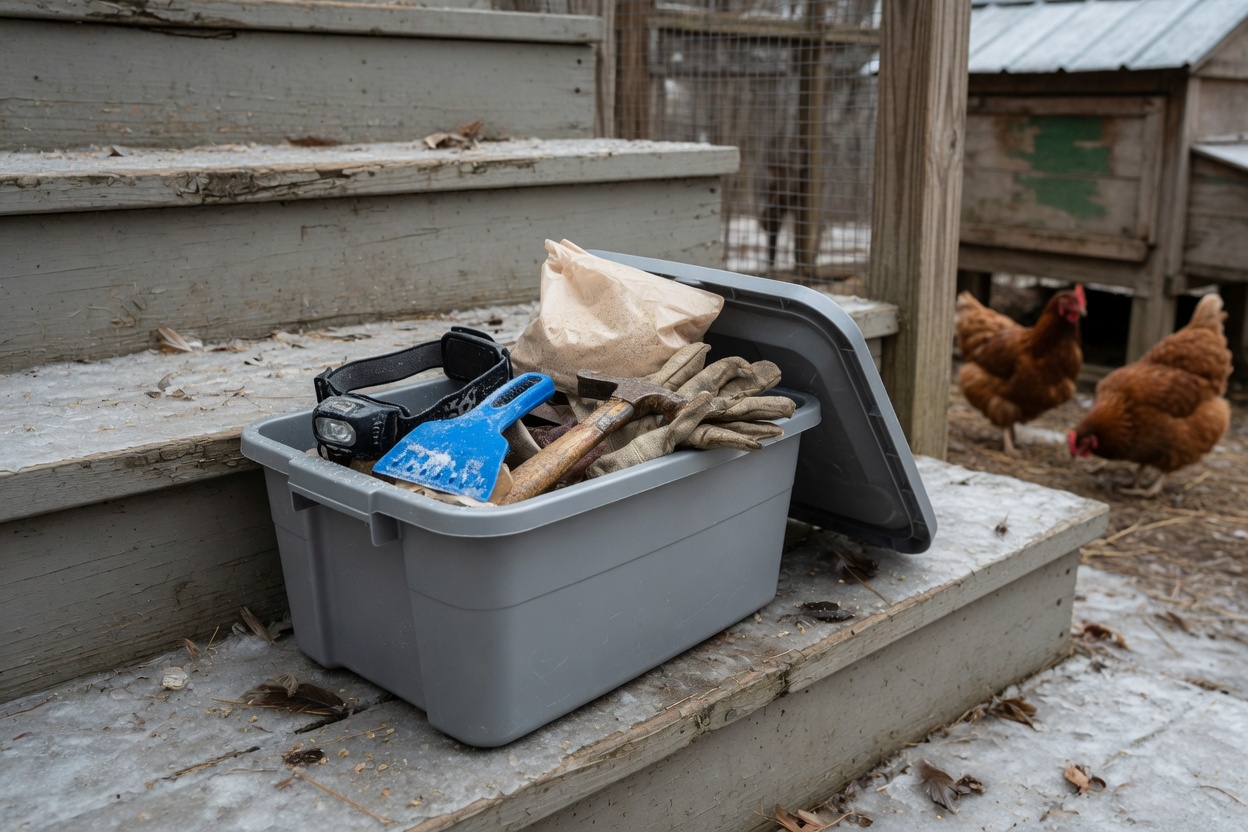
That first January, I lost nothing but a good bit of sleep. But I’d have had a spare bucket, oiled latches, and sand by the door. These days I keep a “storm bin” by the back steps with a headlamp, a scraper, a hammer, a pair of gloves, and a bag of sand. It takes ten minutes to put together and saves an hour of panic.
If you’re still building out your first-winter kit, I put the whole year in one place in my book, Raising Backyard Chickens for Beginners. There’s a chapter on weather that covers exactly this.
Know your girls.
