How to Bait a Hook with Nightcrawlers: A Beginner’s Guide
Learn how to bait a hook with nightcrawlers the right way: how much worm to use, how to thread it, how to keep bait lively, and which fish like a whole crawler.
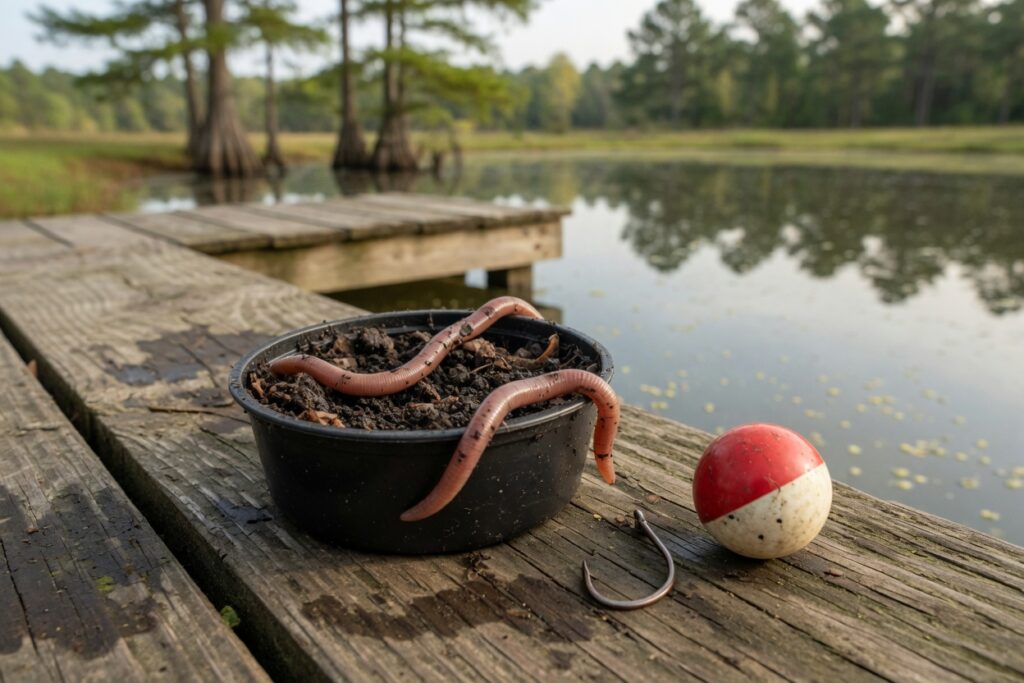
Isaiah was nine when he told me he didn’t see why a grown man needed to give a lesson in putting a worm on a hook. Then he threaded a nightcrawler on like a sock, cast it, and watched the whole thing fly off into the pond on the first throw. He looked at me. I looked at the water. Neither of us said a word.
I have baited a few thousand hooks in my life, and I still think putting a worm on well is the first real skill in fishing. Do it right and the fish take it. Do it wrong and you feed the pond. Here is how I do it, start to finish.
You’ll also want a small container of nightcrawlers, a few bait-holder hooks in sizes 6 to 10, and a rag to wipe your hands. I’ll leave the hooks to your tackle box.
What a nightcrawler is

A nightcrawler is a big earthworm, often six inches or more when it stretches out. They come out of the ground at night after a rain, which is how they got the name. You can buy them at a bait shop, gas station, or big-box store, or you can pick them off a lawn with a flashlight after a good rain. They are tougher and livelier than the little red wigglers, and fish can find them from a long way off.
That size is the problem for a beginner. A whole crawler on a small hook is too much worm for a small fish. Most of what you will catch in a pond is bluegill and other panfish, and they have small mouths.
Match the worm to the fish

– For bluegill and other panfish: use a piece, about an inch to an inch and a half. Pinch or tear the crawler in thirds and bait each piece separately. One worm makes three baits.
– For bullheads and channel catfish: a whole crawler, or a good half, is not too much. Catfish like the smell and the size, and they swallow it down.
I tell the young ones to think about what fits in the fish’s mouth, not what looks good on the hook.
Baiting a hook, step by step

1. Take a worm out and give it a moment. A lively worm is a good worm. A limp one is half dead and won’t draw fish.
2. Tear off the piece you want with your fingers. Don’t worry about the worm; it will keep moving.
3. Start at the end of the piece and push the hook point in through the thick part of the body.
4. Thread it up the hook shank like you’re sliding a bead onto a string, about an inch, then let the rest hang. A bait-holder hook has little barbs on the shank that keep the worm from sliding off.
5. Leave a short tail free to wiggle. That motion is what gets noticed.
6. Check the point. The hook tip should still be free, with just a bit of the worm bunched around it, not buried under it.
For a whole crawler for catfish, hook it once through the middle and let both ends dangle, or thread it on twice for a bigger bait. If the worm balls up on the hook, it’s too thick. Cut it down.
Rigging it up
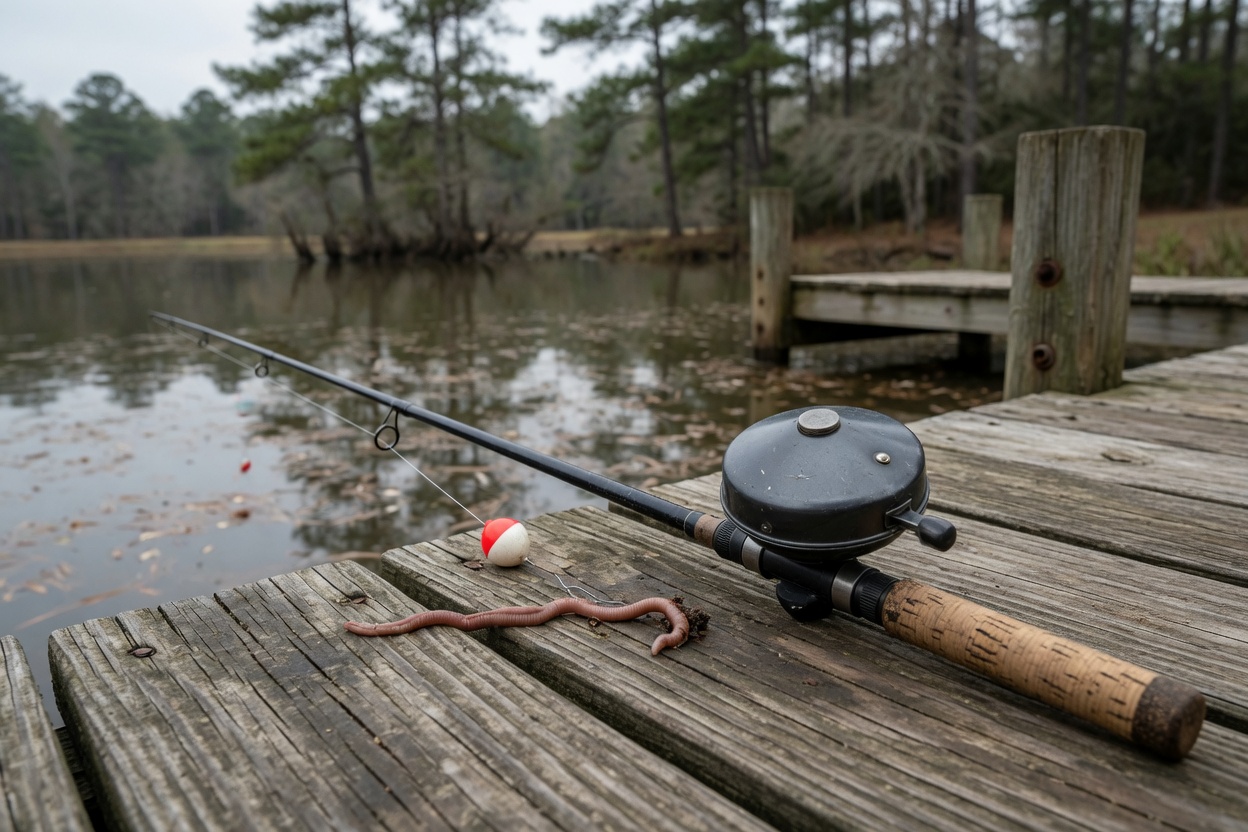
Tie the hook on, clip a snap-on float on the line about two feet above, and cast it out near cover. If you need the rigging in full, I wrote the steps in how to rig a bobber for bluegill and crappie.
A spincast combo like the Zebco 33 makes casting easy: press the button, swing, let go. It isn’t the reel for long casts across a lake, and someone who sticks with fishing will outgrow it, but for a pond bank it does the job. The bobbers can slide on a hard cast, so give one a tug to check it.
Keeping worms alive

– Keep them cool. Heat kills them. A closed container in the shade, or a small cooler, does better than the tailgate in the sun.
– Keep them damp, not wet. A little loose, damp bedding or soil in the container is enough.
– Don’t leave them in the sun on the bank. I tuck my container under a bush.
– Leftover worms can go in a cool place for next trip, or you can release them in your garden. Don’t dump them in the pond.
Common mistakes

Too much worm for a small hook is the biggest one. Next is a hook buried in the worm, so the fish bites and misses. And a dead or tired worm gets ignored. If you’re not getting bites, check your bait first, then your depth. If you want more on that, how to fish with worms for beginners covers it.
Know the rules

Most states require a fishing license for adults, and some limit the kind of bait on certain waters. Your state wildlife agency’s website will tell you what applies. Be a good neighbor on the bank, and take your line and trash home.
Teaching a youngster

Baiting a hook is a great job for a child to learn, as long as an adult stays close. Let them feel the worm and watch it move. If you’d like tips on getting a young one started, I wrote how to teach a kid to fish. For a keepsake, my journal My First Catch gives young anglers a place to record what they caught: My First Catch. And if you like to plan trips by the moon and the weather, I put together a free guide. Grab the Best Days to Fish starter kit.
Fit the worm to the fish.
