Growing Herbs in Containers: A Beginner’s Windowsill Kit
Growing herbs in containers is the easiest place to start — no yard needed. The simple windowsill kit and the handful of habits that keep them thriving.
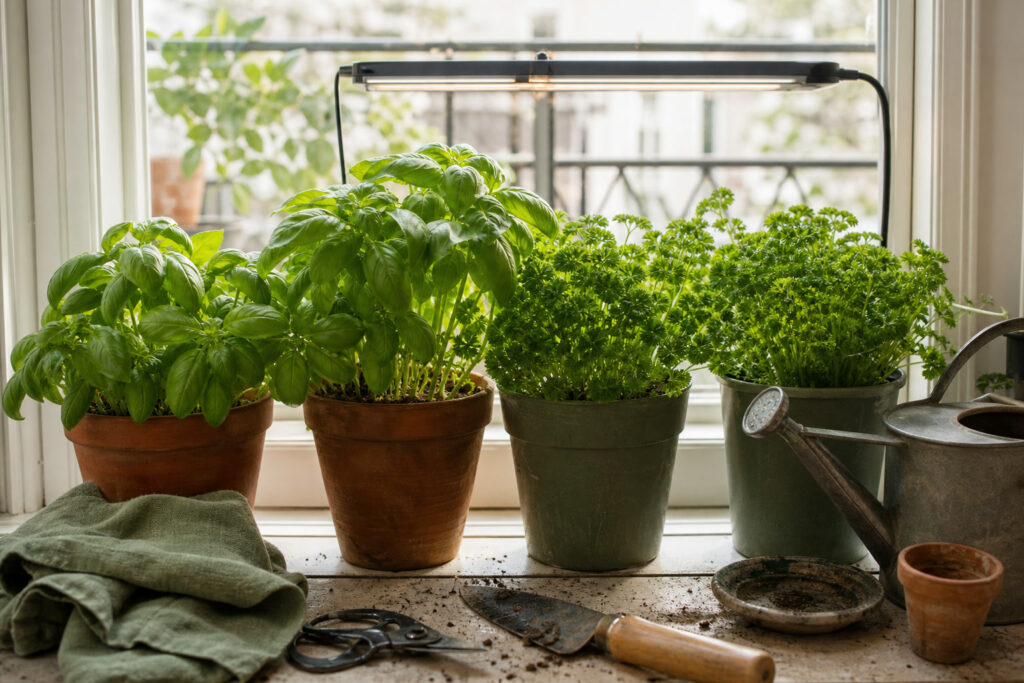
A pot of herbs on a windowsill is the gateway drug of small-space gardening. It’s cheap, it’s fast, and it’s the one thing you’ll actually use almost every day — snipping basil into pasta, parsley over eggs, chives onto a baked potato.
It’s also where I started, and where I failed first. I killed more basil than I’d like to admit before I understood that herbs in pots aren’t houseplants you water once a week. Once a few small habits clicked, the windowsill turned into the most-used corner of my whole balcony. Here’s the kit and the handful of things that actually matter.
Start from seed — it’s cheaper and easier than you think
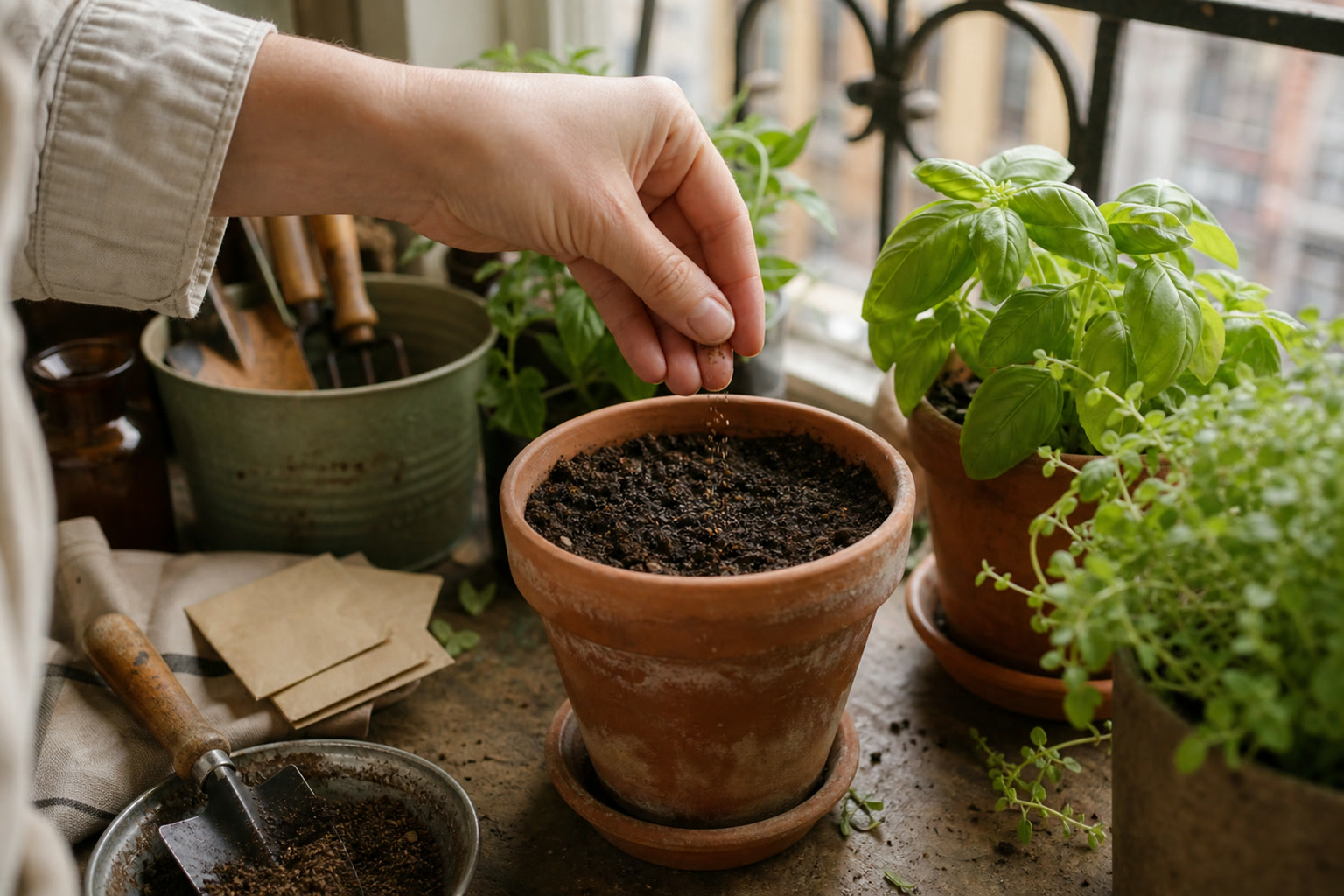
You can buy a sad little grocery-store herb plant, but a culinary herb seed collection costs about the same as one of those and gives you basil, parsley, chives, cilantro, dill, and more, season after season.
Herbs are some of the most beginner-friendly seeds there are. Basil sprouts in under a week in warm soil. Chives and parsley are slower but completely undramatic. Cilantro grows so fast it’s almost rude. Start a small pinch of each — you don’t need a whole packet at once — and you’ll have more than a windowsill can hold.
Sow into moist mix, barely cover the seed, and keep it from drying out until it sprouts. That’s the whole trick to germinating herbs.
A few notes on the easy ones, since a collection gives you choices. Basil wants warmth and the most sun of the bunch — it’s the diva, but a productive one. Chives are nearly indestructible and come back year after year in their pot, so they’re the best return on a single sowing. Parsley is slow to germinate (give it two to three weeks and don’t give up) but then steady for months. Cilantro is the sprinter that bolts to seed in summer heat, so sow a little every few weeks rather than all at once if you want a steady supply. Start with whichever you actually cook with — there’s no prize for growing herbs you won’t eat.
Use potting mix and let the pot breathe
The cheapest mistake, and the one I see most, is using garden soil or scooping dirt from somewhere. In a container it compacts into a brick, chokes the roots, and holds water until things rot.
A bagged organic potting mix stays light and drains properly, which is exactly what herbs want. Most culinary herbs hate wet feet far more than they mind a dry day.
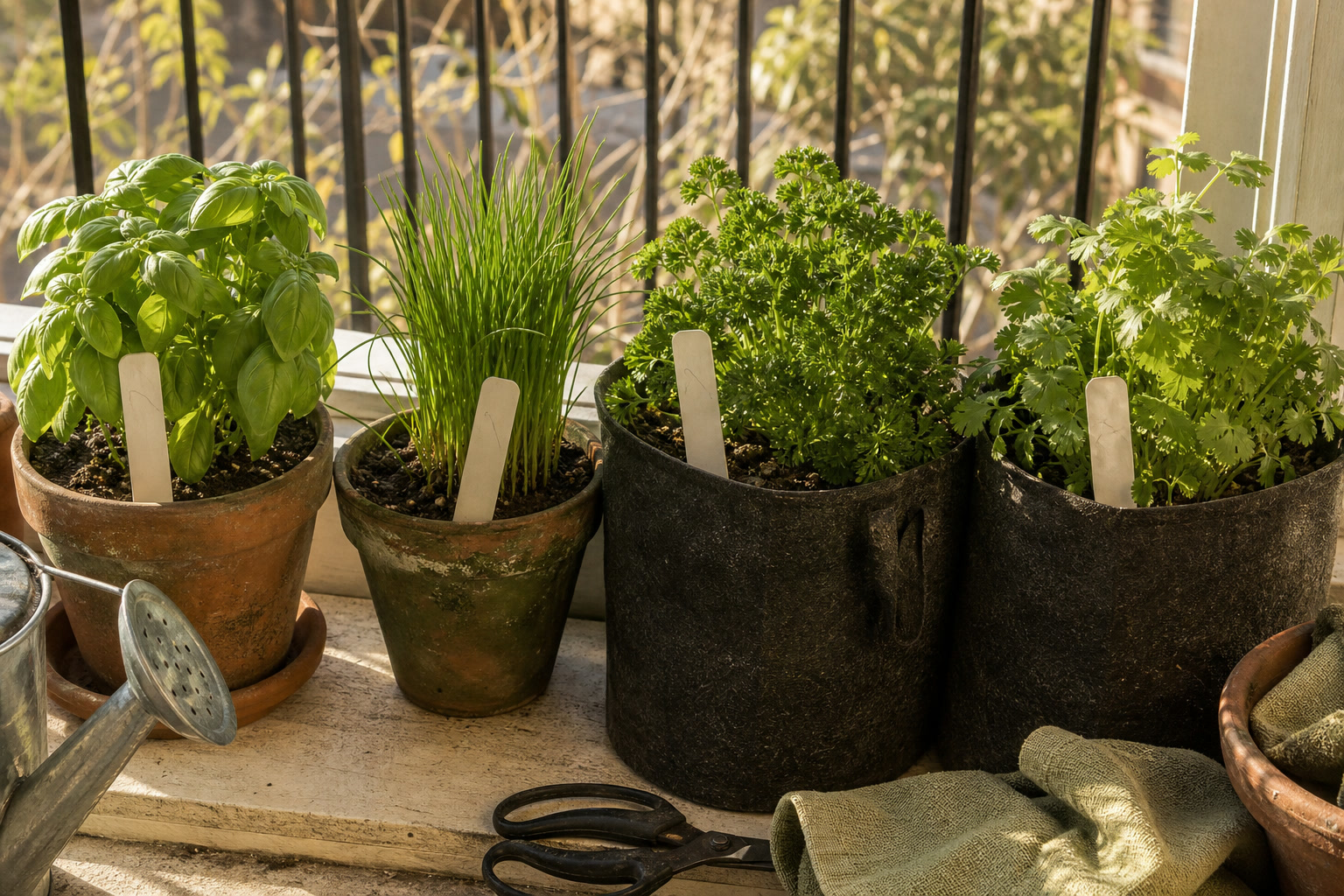
I grow my herbs in fabric grow bags or small pots for the same reason. The fabric breathes, the roots get air, and the bag forgives the overwatering nearly every beginner does at first. A one- to two-gallon container is plenty for a single herb; basil and parsley like a bit more root room than chives.
One pot per herb is the easy way to start. Herbs have different water and light appetites, and giving each its own pot means you can move the thirsty ones and the sun-lovers around independently.
Almost no windowsill gives enough light
This is the part that quietly dooms a lot of kitchen herb gardens. A herb wants six or more hours of real sun, and a typical windowsill — even a bright one — gives a fraction of that, all from one direction. The plant stretches, goes pale and leggy, and the leaves thin out and lose flavor.
A clip-on grow light closes the gap for very little money. Clip it above the pots, run it for twelve to fourteen hours a day on its timer, and your basil stays stocky and full instead of reaching for a window it can’t reach. If your windowsill genuinely gets six-plus hours of direct summer sun, you may not need one — but most apartment windows don’t, and a leggy basil is the tell.
The habit that actually keeps them alive: harvest hard
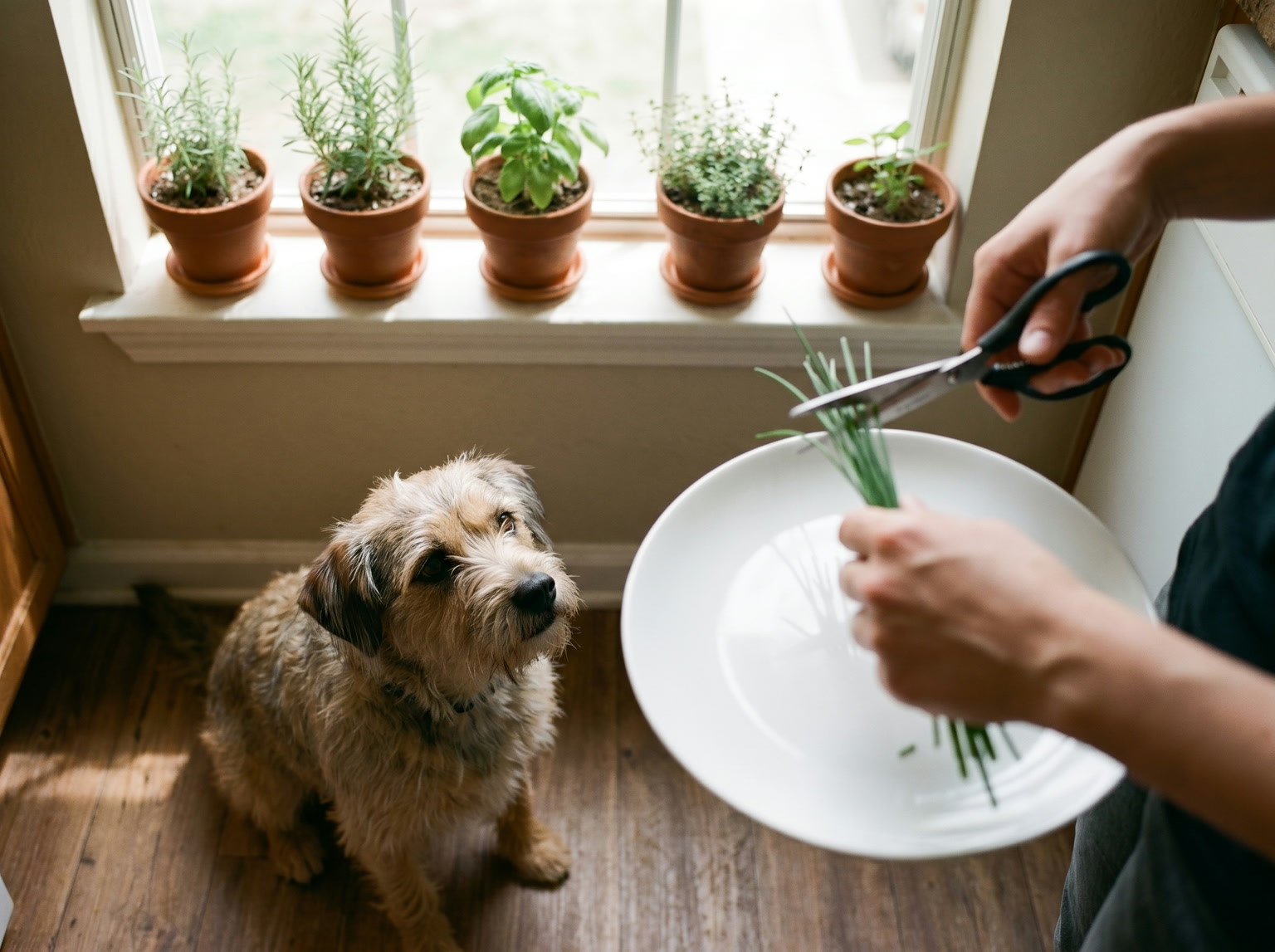
Here’s the thing that changed everything for me. Herbs don’t want to be left alone to grow tall and admired — they want to be cut. Constantly.
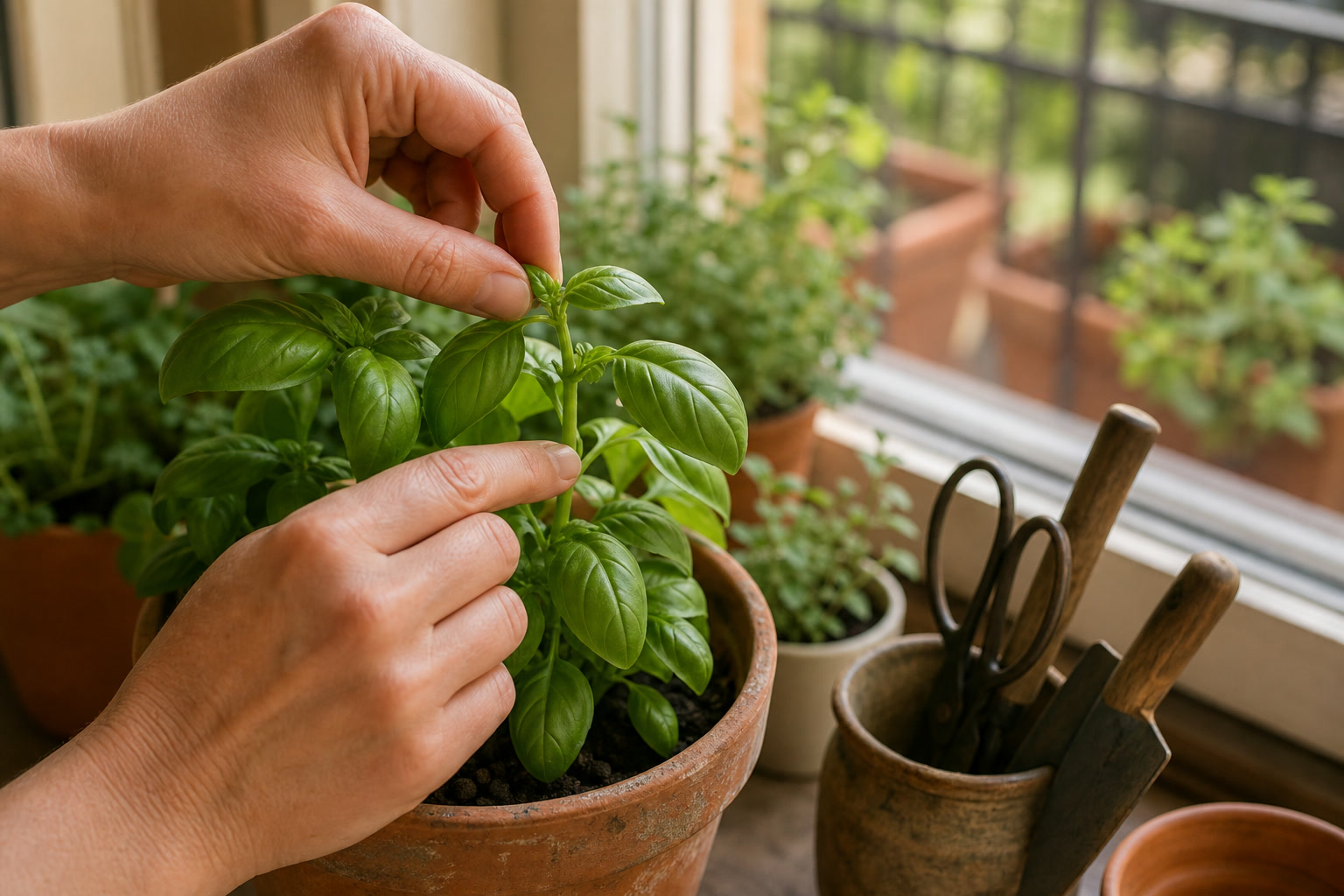
Pinch basil from the top, just above a pair of leaves, and it branches into two stems where there was one. Keep pinching and one plant becomes a bush. Stop pinching and let it flower, and it decides its job is done and the leaves turn bitter. The same logic holds across most leafy herbs: cutting is what keeps them productive.
So harvest more than feels polite, especially early. A windowsill of herbs you actually cook with weekly stays healthier than one you treat like decoration. The plant reads regular harvesting as a reason to keep making leaves.
The two ways I’ve killed herbs, for the record, were both about water and both avoidable. The first was drowning them — a pretty pot with no drainage hole that turned into a swamp, and the basil rotted from the roots up. Every container you grow in needs a hole in the bottom, no exceptions; a grow bag solves this by design. The second was the opposite, letting a south-window pot bake dry on a hot week while I wasn’t paying attention. Herbs are forgiving of a lot, but a pot that swings between swamp and desert will defeat them. Aim for evenly moist, check with your finger rather than a schedule, and you’ve cleared the two biggest hurdles.
Snip what you need with kitchen scissors, water when the top inch of mix feels dry, and give the leaves real light. That’s the whole job. None of it needs a yard — just a sunny sill, a few pots, and the nerve to cut your basil harder than you think you should. Otto supervises from the warm spot below the window, ever hopeful that one of these green things is for him.
I lay out the full small-space growing season — herbs, greens, and what to plant when in what size pot — in Small-Space Big Harvest. This is the windowsill herb starter. The book is the whole productive balcony.
