Fabric Grow Bags vs. Plastic Pots: Which Should You Use?
Fabric grow bags vs pots — I've grown in both on the same balcony for six seasons. Here's the honest trade-off, what each one is genuinely better at, and which I'd pick.
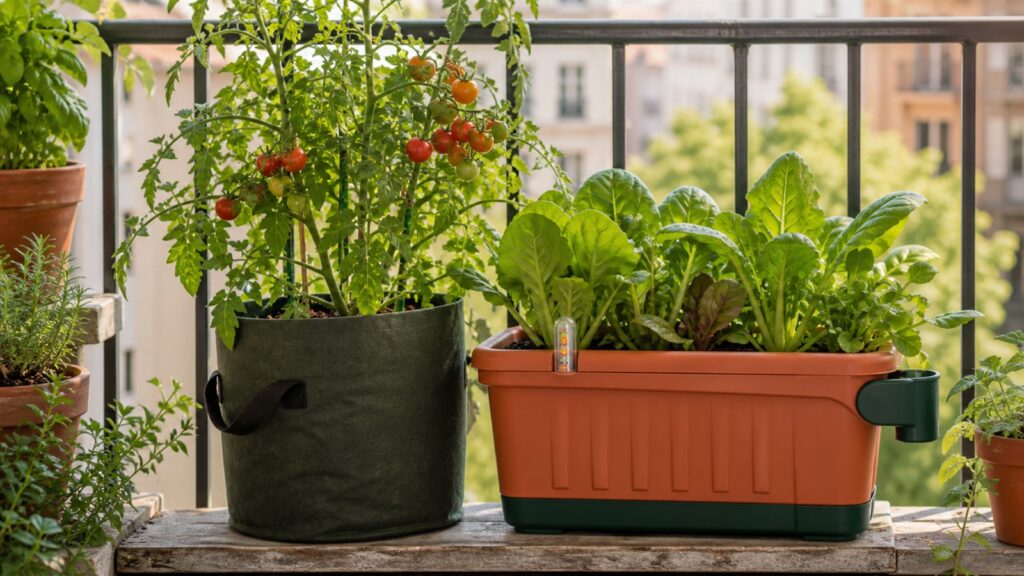
Every spring, the same question lands in my inbox from someone about to buy their first round of containers. Grow bags, or pots? They’ve seen the fabric bags all over Instagram and they want to know if the hype is real before they spend the money.
Here’s the honest answer after six seasons of growing in both on the same small balcony: neither one wins outright. They’re good at different things, and the right pick depends less on which is “better” and more on what you’re growing and how often you can actually water. I’ve killed plants in both, and I’ve had my best-ever tomato harvest in one and my best-ever lettuce in the other. Let me save you the trial and error.
The one difference everything else flows from
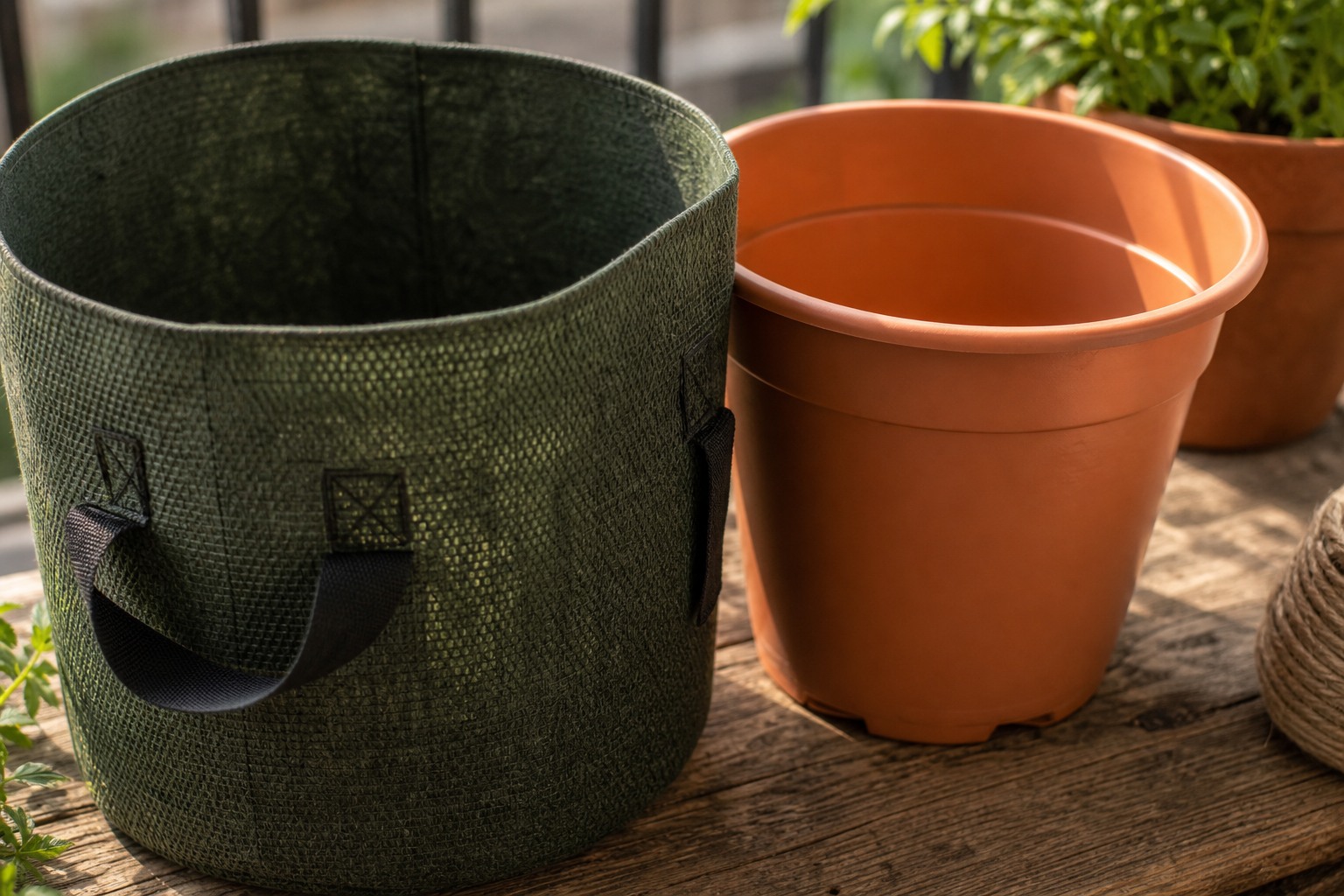
Both hold soil and grow plants. The real split is the walls.
A plastic pot has solid sides. Water can only leave through the drainage holes at the bottom, so the soil stays wet longer and the pot is slower to dry out. A fabric grow bag has porous woven sides that breathe. Air moves through the whole root zone, and water evaporates out the sides as well as the bottom.
That single fact — solid walls versus breathable walls — drives every trade-off below. Once you understand it, you can predict how each container will behave without me telling you.
Where fabric grow bags genuinely win
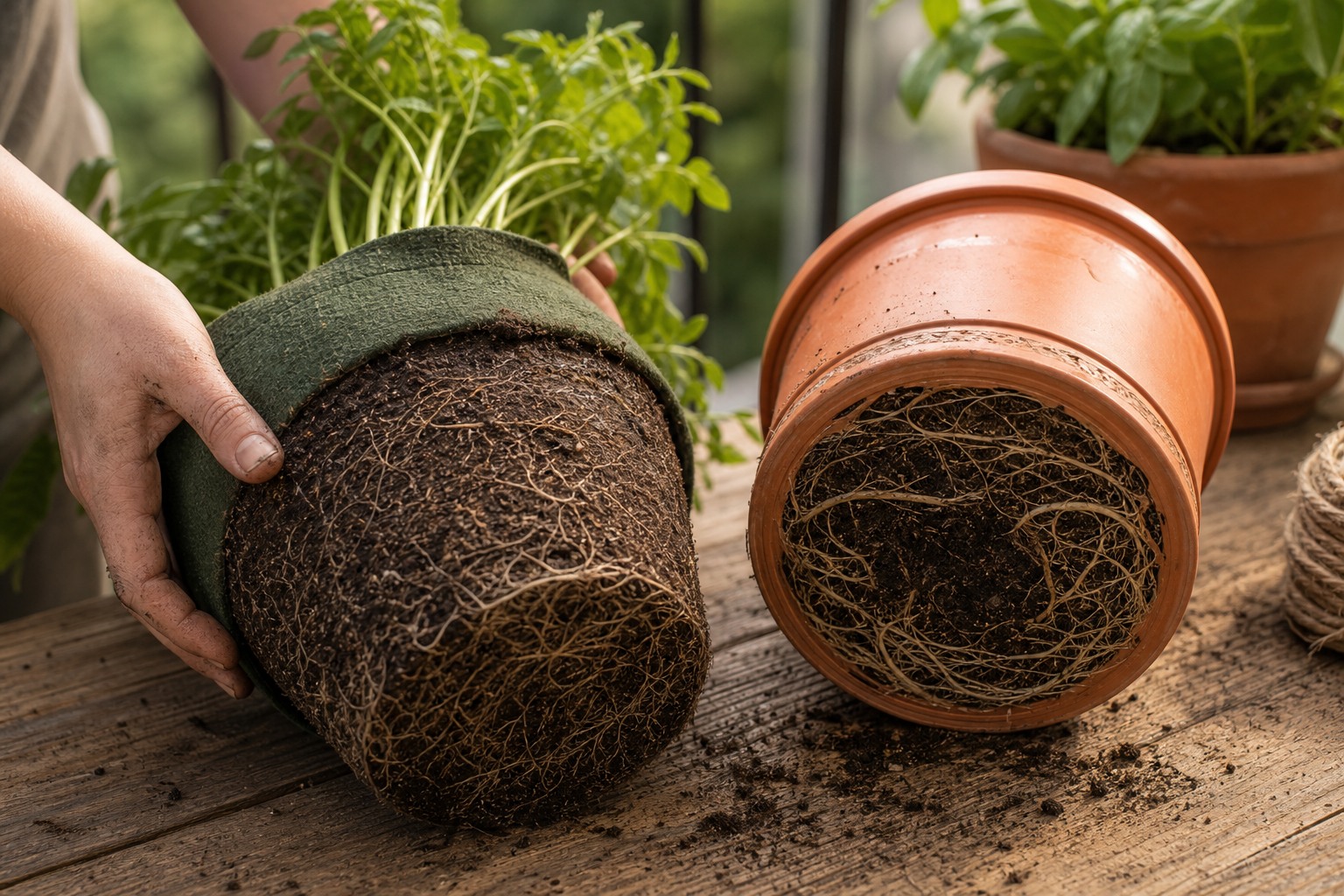
They grow better roots. This is the real reason I love them. When a root hits the breathable side of a fabric bag, it meets air and stops, then branches into a dense, fibrous root ball instead of circling the pot the way it does in plastic. Gardeners call it “air pruning,” and it’s not marketing — my tomatoes and peppers are visibly sturdier in fabric.
They never waterlog. Because the sides drain and breathe, it’s very hard to drown a plant in a grow bag. For anyone whose instinct is to overwater — and overwatering kills more container plants than neglect does — that forgiveness is worth a lot.
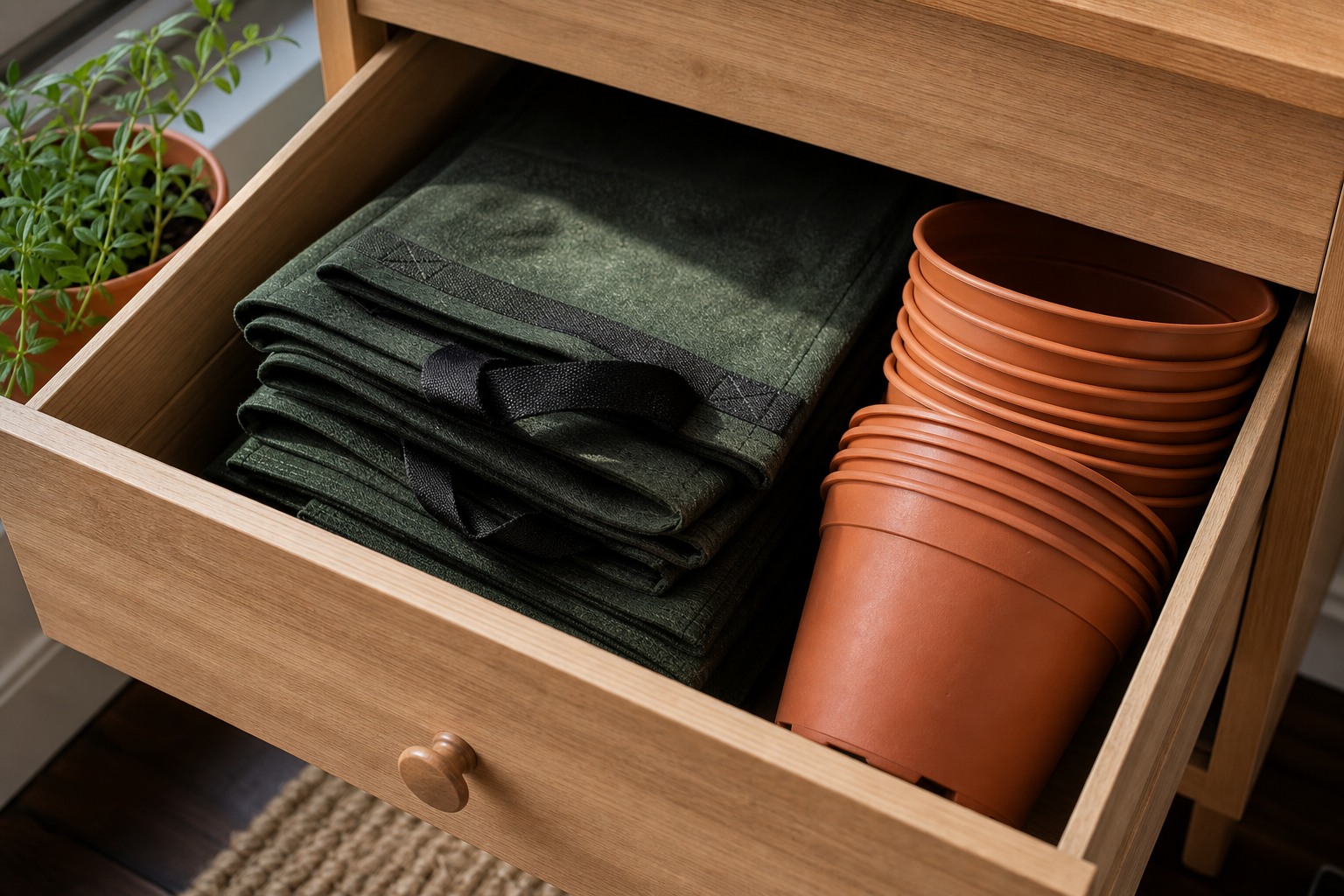
They store flat. At the end of the season they empty, shake out, and fold into a drawer. On a balcony where winter storage is a real constraint, a stack of folded bags beats a tower of rigid pots every time.
They’re cheap and light. A set of fabric grow bags costs a fraction of good pots, and an empty one weighs nothing — which matters if you, like me, rearrange the balcony three times a summer.
Where they’ll frustrate you
They dry out fast. Really fast. Those same breathable sides that keep roots happy also lose water from every surface. In cool spring weather it’s a non-issue. In a hot July it means watering a grow bag once and sometimes twice a day, while a plastic pot beside it is still damp. If you travel or forget, this is the deal-breaker.
They flop when empty and slump when wet. A grow bag has no rigid shape. Filling one solo is a slightly comic two-hand job, and a big one full of wet soil isn’t something you’ll want to lift and move.
They don’t look tidy. This is minor, but honest — a row of soft fabric sacks reads more allotment than tidy patio. I don’t care; you might.
Where plastic pots earn their place
They hold water. The solid sides are a genuine advantage in heat and for anyone who can’t water every day. A plastic pot forgives a missed afternoon that a grow bag won’t.
They’re stable and movable. A rigid pot stands on its own, stacks, and can be dragged into shade or lifted onto a shelf without collapsing. On a windy balcony, that rigidity matters.
The reservoir upgrade solves the watering problem entirely. My favorite version of a plastic pot is a self-watering planter, which adds a water reservoir in the base. The soil sips from it as it dries, so a full one carries a thirsty plant through a hot day — sometimes two — without me. For a busy person growing tomatoes or greens, that reservoir is the single biggest labor-saver on my balcony.
Where plastic frustrates me: roots circle the smooth inside wall instead of branching, cheap thin pots crack in cold and go brittle in UV after a couple of summers, and dark plastic in full sun heats the root ball more than fabric does. Solid walls cut both ways.
So which should you buy?
Here’s how I actually decide, and how I’d tell a friend across the railing to choose.
Grow bags if: you can water daily (or it’s spring and cool), you’re growing root-hungry plants like tomatoes, peppers, or potatoes, and you need to store everything flat over winter. Potatoes in a grow bag are almost cheating — at harvest you just tip the bag out.
Plastic pots — ideally self-watering — if: you travel, you can only water every few days, you’re on a hot exposed balcony, or you’re growing anything that resents drying out between drinks, like lettuce and most leafy greens.
Honestly? I run both, and I’d gently suggest you do too. My tomatoes and potatoes live in fabric; my salad greens and the pots I can’t reach on a workday live in self-watering planters. You don’t have to pick a side. You have to match the container to the plant and to your own watering habits.
The tool that makes either one work
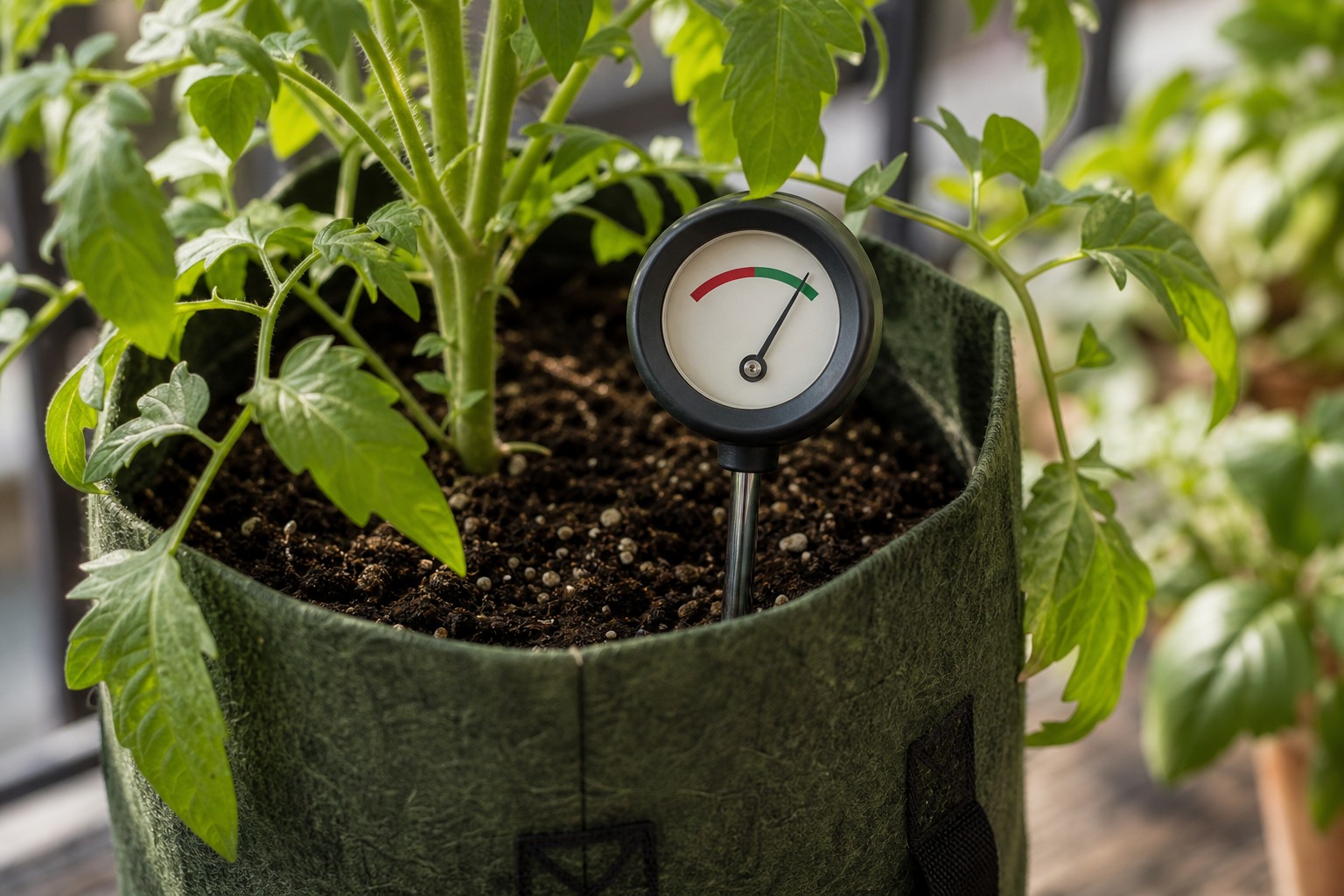
Whichever you choose, the failure mode is the same: getting the water wrong. Grow bags punish under-watering; plastic pots punish over-watering. A soil moisture meter takes the guessing out of both. You push the probe to root level, read dry-moist-wet, and water only what needs it. The simple no-battery kind is all you need. And a long-spout watering can gets water to the soil under the leaves in a crowded arrangement — you’ll use it more with thirsty grow bags, but it earns its keep with either.
Match the container to the plant, keep the water right, and you genuinely can’t go too far wrong. Start with two of each if you’re not sure. By the end of one season your balcony will have told you which you reach for.
I walk through exactly what to grow in what — pot sizes, soil, the whole small-space setup — in Small-Space Big Harvest. This post is the container question. The book is everything you put in them. (Otto, for the record, has strong opinions about neither, provided the calendulas remain within sniffing distance.)
