The Best Watering Can for a Container Garden
The best watering can for a container garden isn't the prettiest one — here's the long-spout can I reach for on my balcony, and the tools that help.
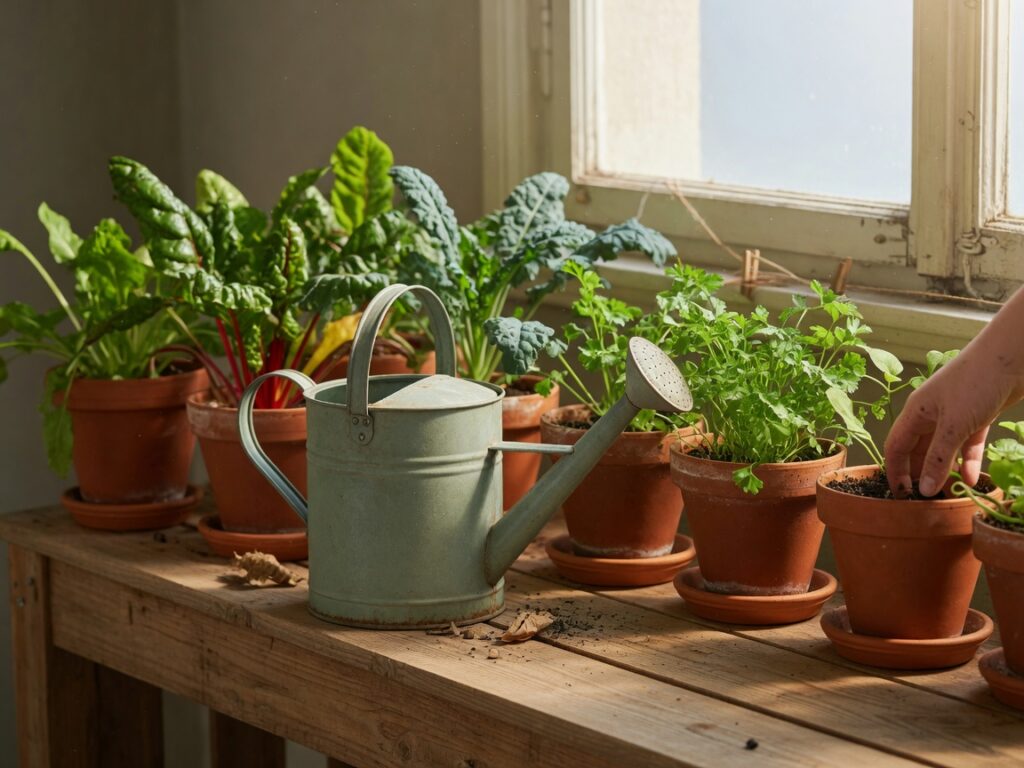
You do not need ten watering cans. You need one good one.
I know that’s not what a “best watering cans” roundup usually says. But I’ve watered a small balcony garden for six seasons now, and the truth is that most of the cute enamel cans in the garden-store window are the wrong tool for pots. They’re too small, they pour too fast, and the short spout means you’re watering the leaves instead of the soil. So let me tell you what actually works in a tight space — the one can I reach for, what to look for if you buy a different one, and the few tools that mean you have to fill it less often.
Why a container garden needs a real watering can
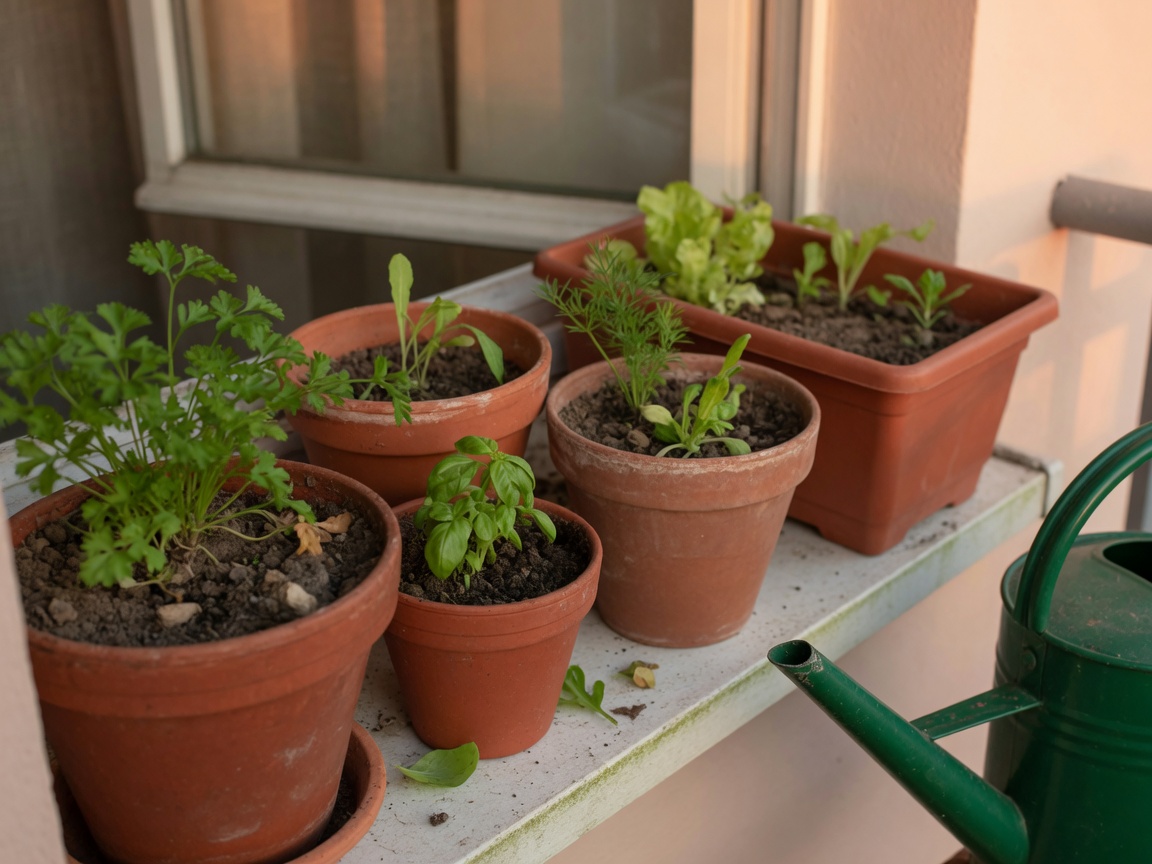
Watering pots is different from watering the ground, and it’s why the pretty little cans fail. A pot holds a few quarts of soil sitting up in the air, drying out from every side. When you water it, you want the water to go into the soil, slowly, all the way through until it runs from the drainage hole — not to sheet off the top and over the rim.
A short-spout can makes that hard. You have to tip it high, the water comes out in a rush, and half of it lands on the foliage or splashes out of the pot. On a balcony, that splash is also your downstairs neighbor’s problem, which is its own reason to aim better.
So the thing that actually matters in a container-garden can isn’t the color. It’s the spout.
The long-spout can — my pick
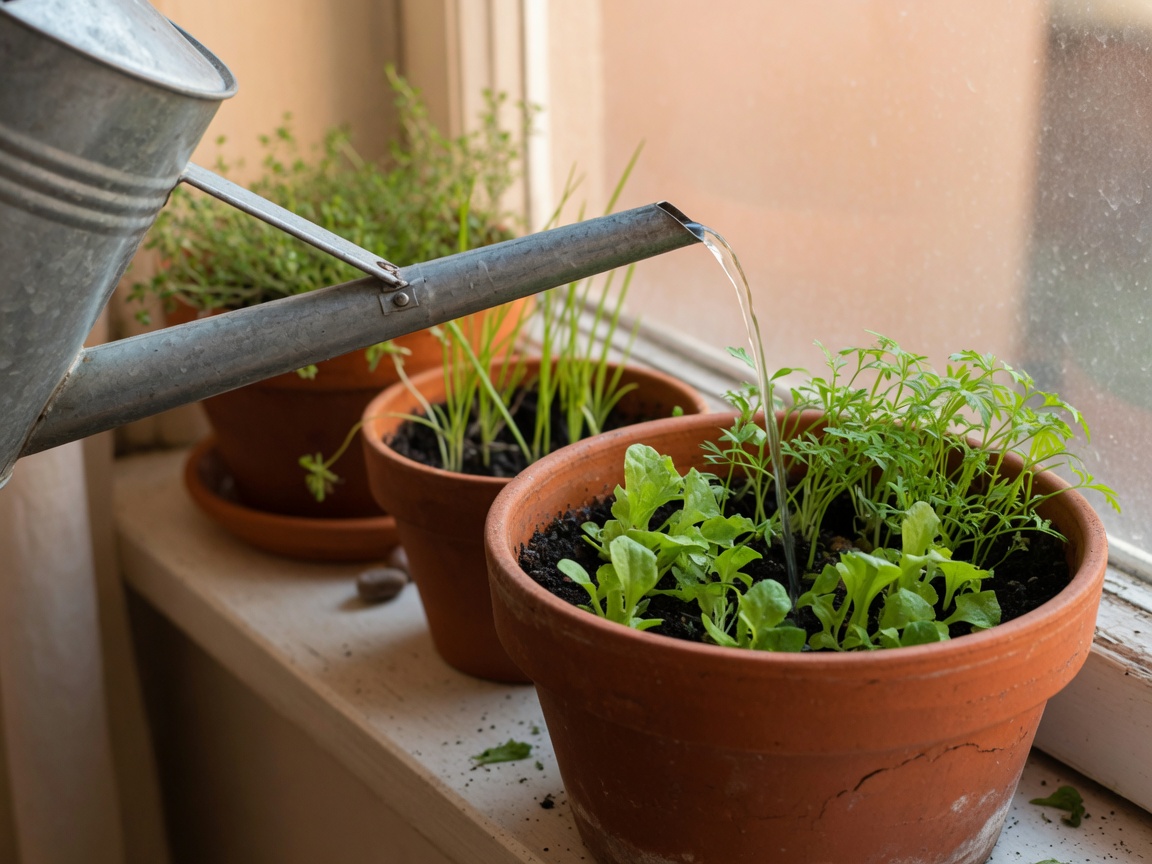
The long-spout watering can is the one I keep by the balcony door and reach for every morning. The long, narrow neck does one thing beautifully: it lets you slip the spout in under the leaves and pour right at the soil line, slowly, so the water soaks in instead of running off. For a crowded balcony where pots are jammed close and plants flop over their rims, that reach is the whole game.
What I love: the control. I can deep-water a tomato at its base, top up a reservoir planter through its little spout, and get to the back pot without knocking the front one over. A slow, aimed pour also means I’m actually watering deeply — down to the bottom roots — instead of giving everything a shallow splash that evaporates by noon.
Where it falls short: capacity. A long-spout can is usually on the smaller side, so on a hot day with a lot of pots you’ll be refilling. I don’t mind — the trips are the “fifteen minutes a day” that let me actually look at my plants — but if you have a big patio, buy the largest long-spout version you can still lift comfortably when it’s full.
If you buy a different can, look for three things: a long neck for reach, an honest capacity you can actually carry full (water is heavy — a full two-gallon can is about sixteen pounds), and a removable rose, the perforated sprinkler head. You want the bare spout for pots and the gentle rose for one job in particular.
The one job the rose is for: seedlings
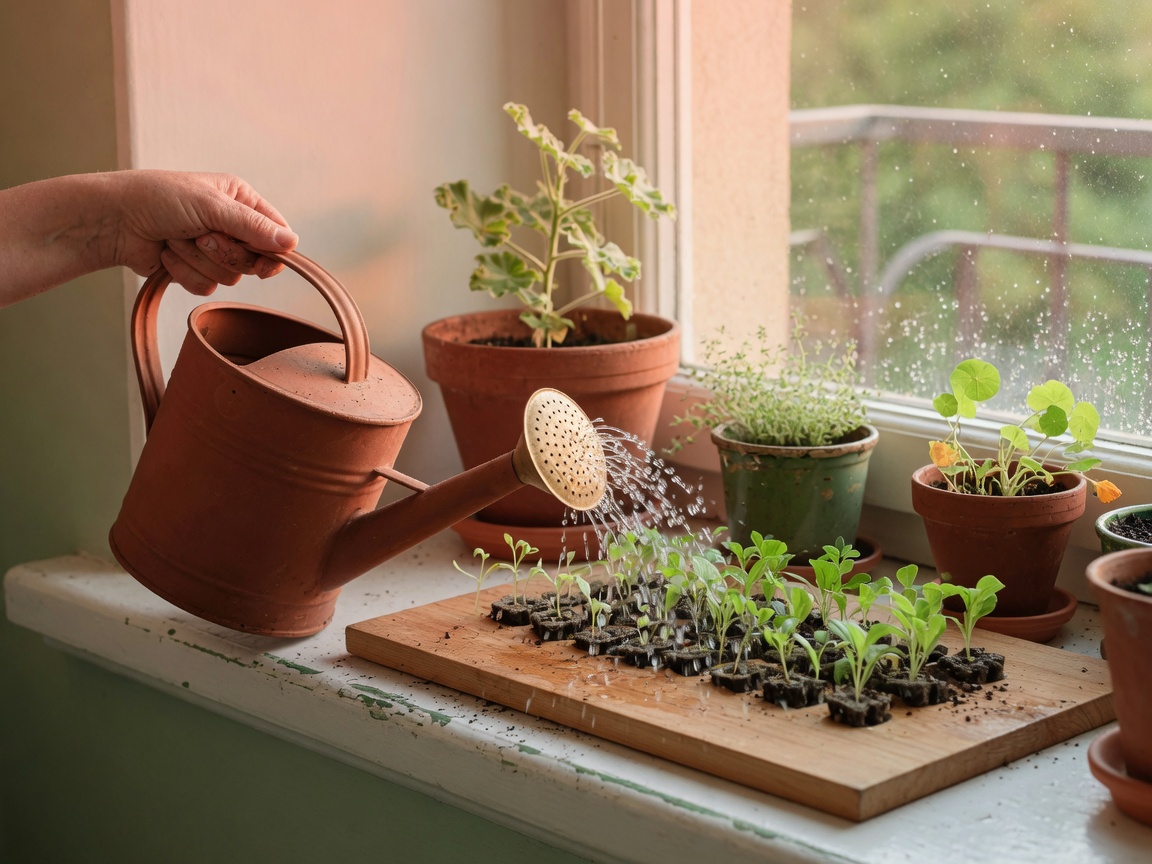
Here’s the exception to the bare-spout rule. When you’re watering just-sown seeds or tiny seedlings, a direct pour from the spout will wash the whole thing sideways and float your seeds into one corner. That’s what the rose is for — snap it on and it turns the pour into a soft rain that settles seedlings instead of blasting them.
So one can, two modes: bare spout for established pots, rose for the nursery tray. It’s the only watering can most small-space gardeners will ever need.
Water less often: spikes and reservoirs
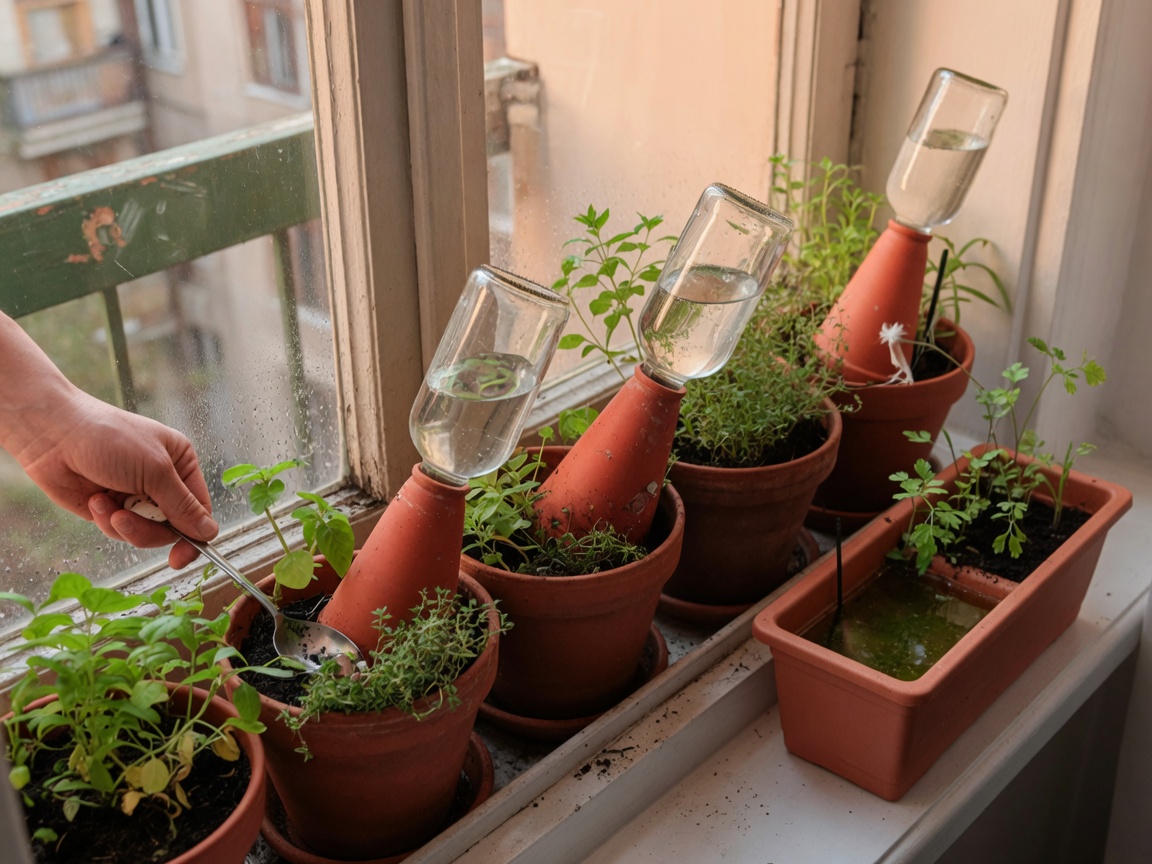
A good can solves the how. These two solve the how often, which on a hot balcony is the real problem — pots can go from soaked to bone-dry between breakfast and dinner.
For pots I’ve already planted and don’t want to disturb, terracotta watering spikes are the cheap fix. You push the unglazed clay spike into the soil, invert a filled bottle into it, and the clay releases water slowly as the soil around it dries. Soak the spike for an hour before its first use or it’ll wick a whole bottle dry in a day and you’ll think it’s broken. It isn’t — it’s just thirsty. Spikes are what get me through a long weekend away, and I lean on them hard for a vacation watering setup.
For the genuinely thirsty plants — tomatoes, leafy greens, anything that wilts if you look away — a self-watering planter with a built-in reservoir does the daily evening-out I used to do by hand, badly, twice a day. You fill the reservoir, the soil wicks up what it needs, and a full one buys you a day or two. I go deep on which plants belong in one (and which will rot in one) in my guide to the best self-watering planters. The short version: thirsty plants love them, and Mediterranean herbs like rosemary and lavender hate them.
Don’t let the can lull you into drowning things
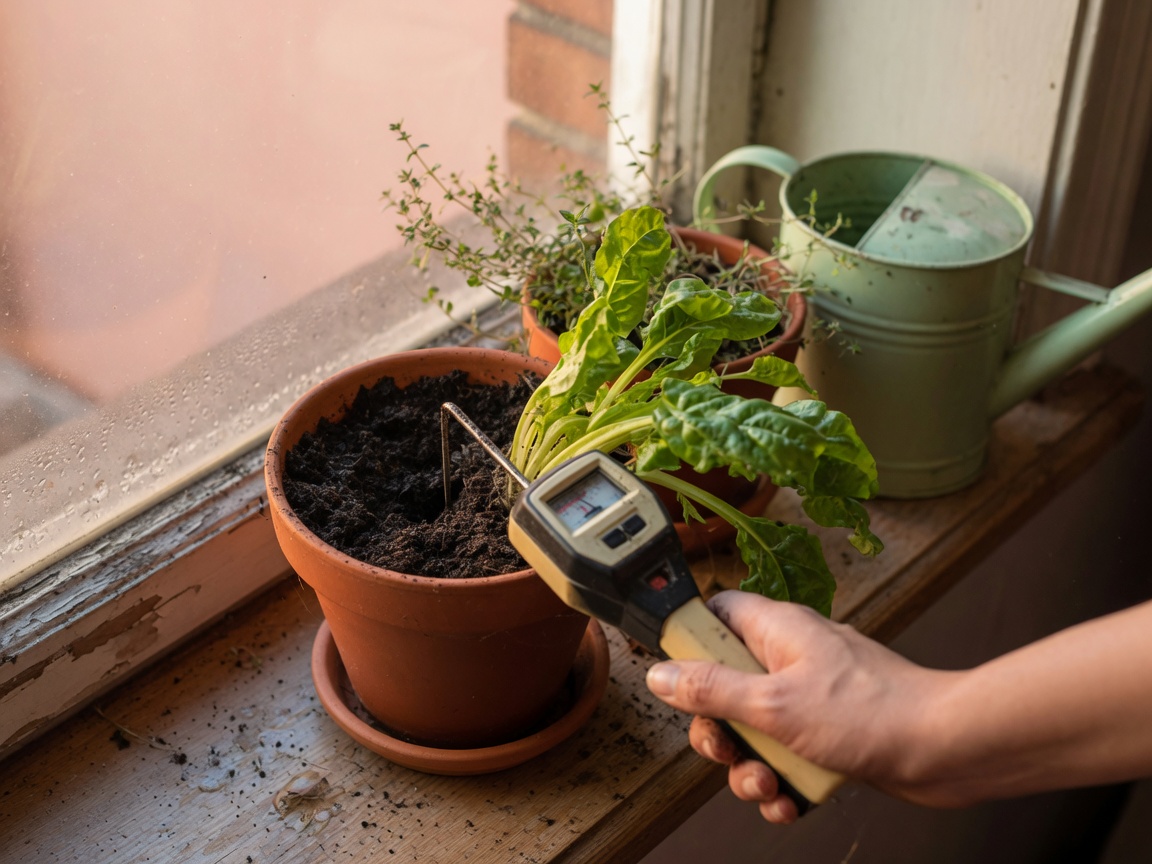
The one real risk once you’ve got good watering tools is the opposite of drought: overwatering. It’s the number-one killer of container plants, and it’s easy to keep pouring on a cool, damp week when the plant isn’t actually drinking.
A cheap soil moisture meter settles the argument. Push the probe down to root level, read dry-moist-wet, and only water when the soil has actually drawn down. The no-battery kind is all you want — I’ve never needed anything fancier, and it’s saved far more of my plants from drowning than it ever saved from drought. I make the whole case for it in do you need a soil moisture meter.
So here’s the whole watering kit for a small space: one long-spout can with a rose for the reach and the seedlings, spikes for the pots you can’t babysit, a reservoir planter for the thirsty ones, and a meter so you water on fact instead of worry. That’s a system that holds up through a hot week and a long weekend, and it costs less than the fancy enamel can you were about to buy.
I put the whole calm, mostly-self-sufficient small-space garden together — what to grow, in what, and how to keep it alive without hovering — in Small-Space Big Harvest. This post is the watering shortcut. The book is the whole balcony. (Otto, who supervises every morning watering in case a stray drop needs investigating, prefers the long-spout can because it doesn’t startle him.)
