The Best Vegetables to Grow on a Shady Balcony
The best vegetables for a shady balcony — the leafy greens, herbs, and roots that actually crop in three or four hours of sun, and the ones to skip. Six seasons in.
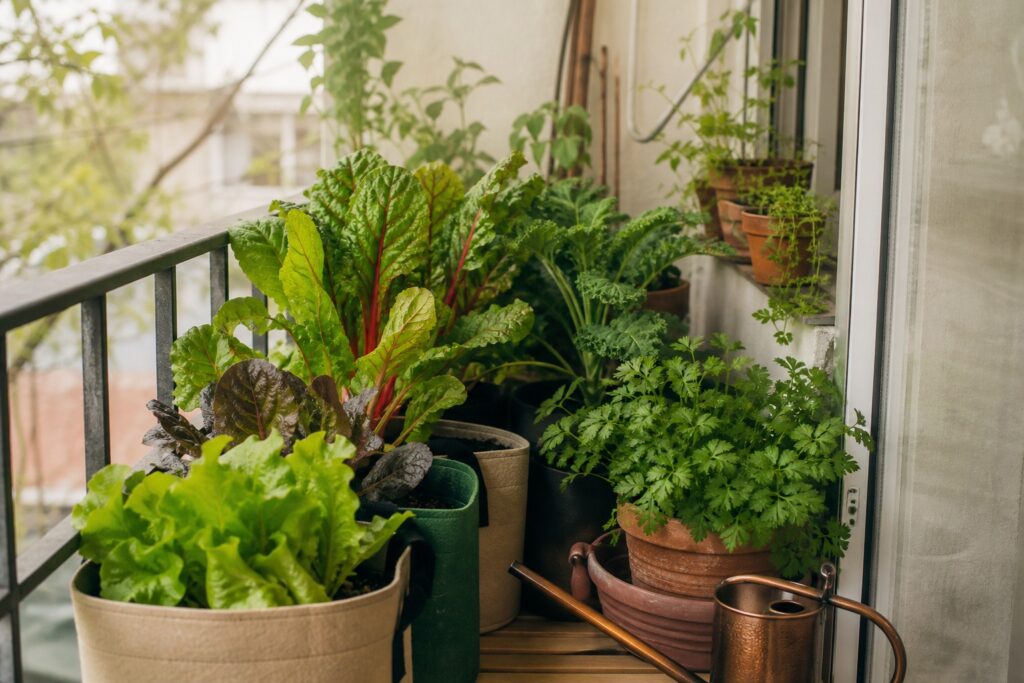
“My balcony only gets a few hours of sun — can I grow anything?” It’s the most common question in my inbox, and the answer is yes. Not everything, but a lot more than you’d think.
Here’s the thing about shade. Most garden advice is written for people with a sunny yard, so the moment you have a north-facing balcony or a spot the neighboring building steals the afternoon from, you’re told you’re out of luck. You’re not. My own balcony loses its sun by early afternoon, and I’ve eaten out of it for six seasons. You just grow the right things — the plants that were never after a full day of sun in the first place.
Let me tell you what actually crops in three or four hours of light, what to skip so you don’t waste a season on it, and the small setup that makes shade growing work.
First, know your real number
Before you plant anything, count your hours. Go out at 9 a.m., noon, and 4 p.m. on a sunny day and note whether your growing spot is in sun or shade. Add up the sunny hours. That number tells you what’s possible.
Three to four hours of direct sun — or a spot that’s brightly lit all day but never gets direct sun — is genuinely workable for a lot of vegetables. Below about two hours, you’re into leafy-green-and-herb territory only, and that’s still a real harvest. The plants below are sorted roughly that way, most-forgiving first.
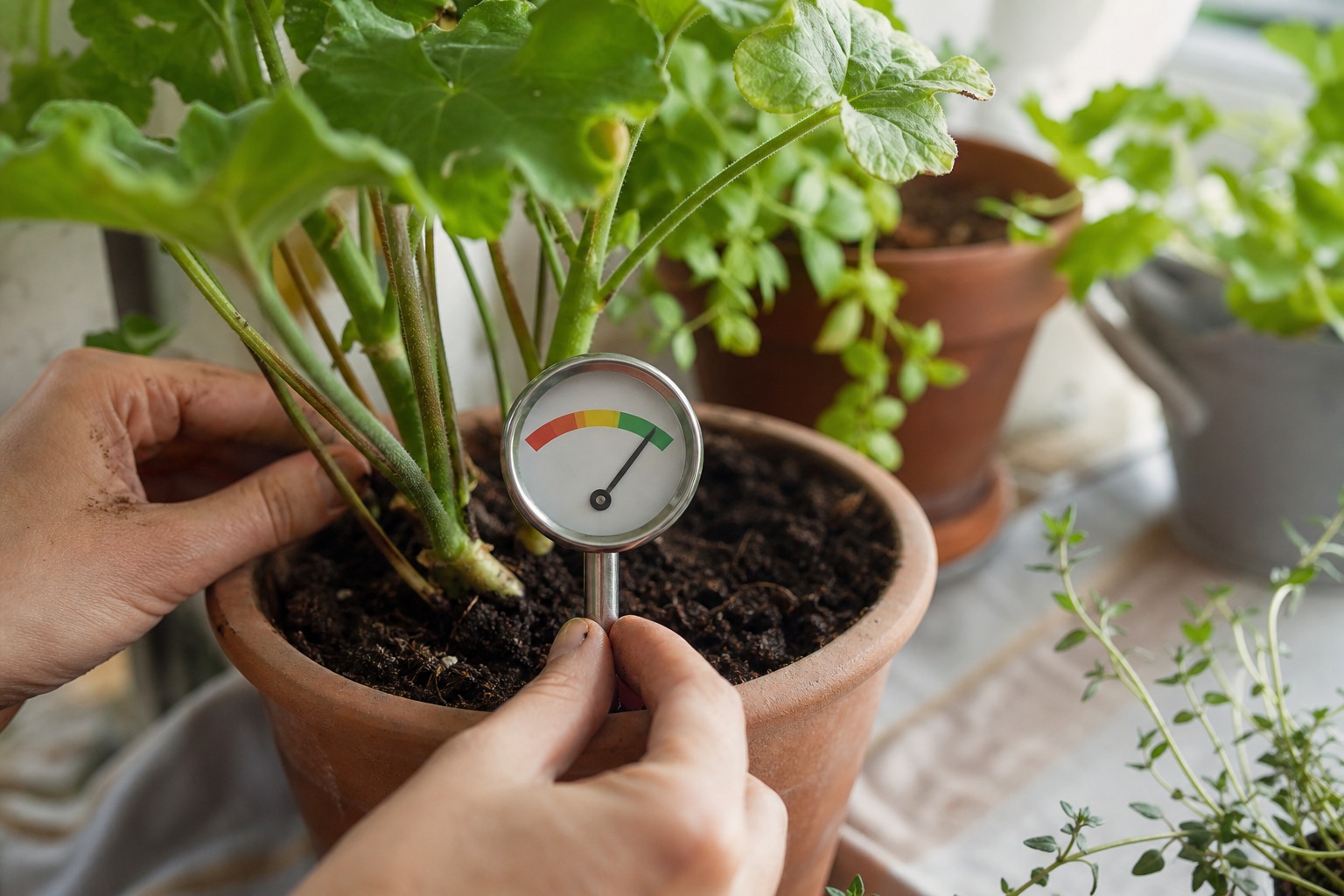
One rule for all of it: shade changes how you water. Pots in shade dry out much more slowly than pots in sun, so the instinct to water every day will rot your roots. Overwatering kills more shade-balcony plants than anything else. I check with a soil moisture meter — push the probe to root level, and only water when it reads dry. It’s the single best two-minute habit for growing in low light.
The leafy greens — your best crops by far
If your balcony is shady, leafy greens are where the real yield is. They don’t want to bolt in blazing sun anyway, so a cooler, part-shade spot actually keeps them tender and productive longer than a hot one would.
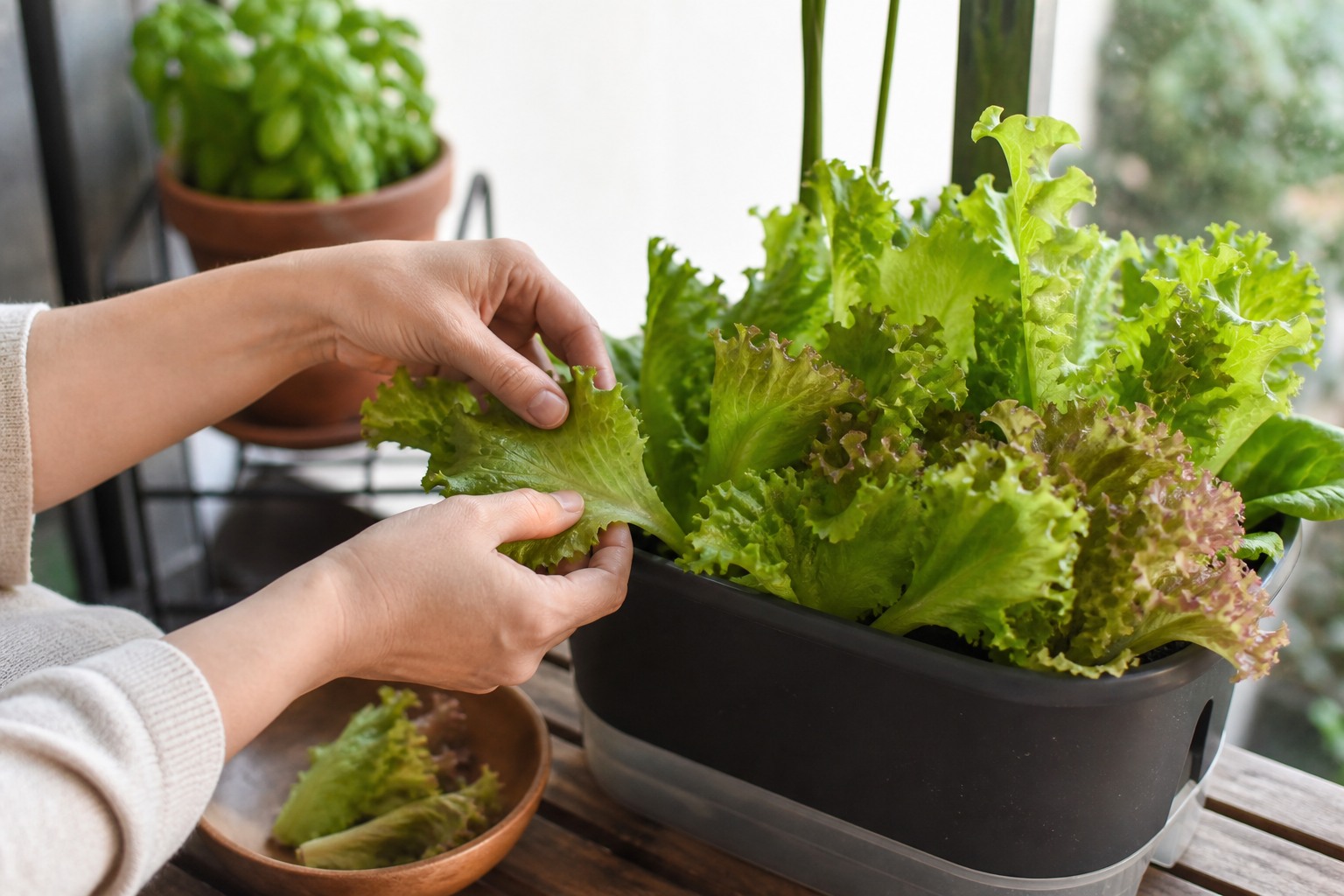
Loose-leaf lettuce. The easiest thing on this list. Happy in three to four hours of sun, quick to crop, and you harvest outer leaves so one planting feeds you for weeks. A self-watering planter is perfect for lettuce, because it keeps the steady, even moisture that keeps leaves sweet instead of bitter.
Spinach, arugula, and Asian greens. Spinach and arugula are cool-shade lovers that bolt fast in heat, so a shady balcony is a gift to them. Mizuna, bok choy, and tatsoi are the same — fast, tender, and content in modest light. Sow a pinch every couple of weeks and you’ll never be without a salad.
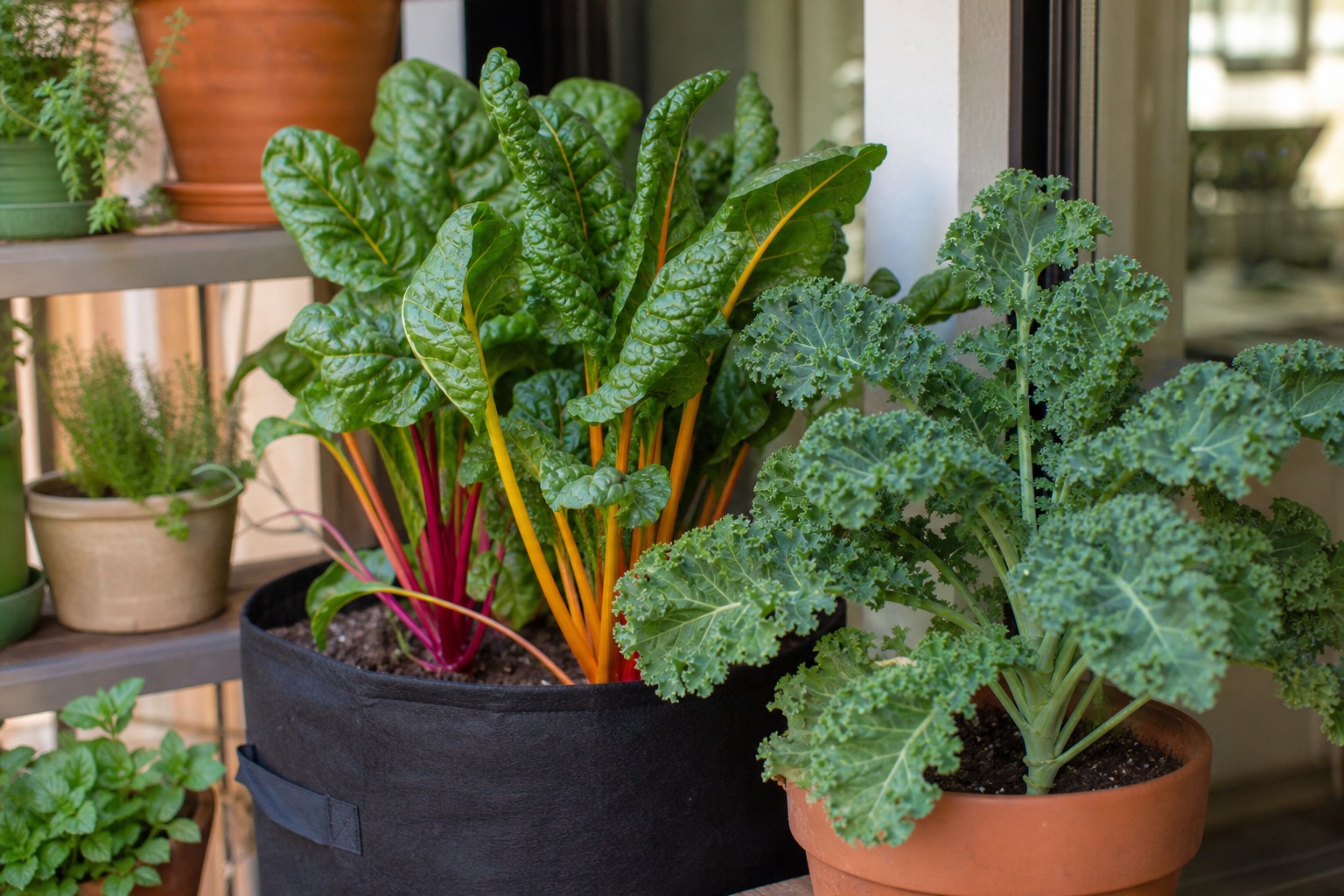
Swiss chard and kale. The workhorses. Both crop in four hours of sun, both keep going for months, and both are cut-and-come-again, so a few plants in a grow bag will feed you through the season. Chard is prettier; kale is tougher. I grow both.
Herbs that don’t need a blaze of sun
Not every herb needs full sun — that’s a myth that costs shady balconies a lot of flavor.
Parsley, chives, cilantro, and mint all do well in part shade. Mint honestly prefers it, and it’s so vigorous you should keep it in its own pot or it will bully everything else. Parsley and chives are near-permanent residents on my rail. Cilantro, like the greens, actually lasts longer out of hot sun before it bolts.
Basil is the exception. It genuinely wants sun and warmth, and it will sulk and go leggy in shade. If basil is your must-have, that’s the one plant I’d give your single brightest spot to — everything else here is more forgiving.
Roots and a few surprises
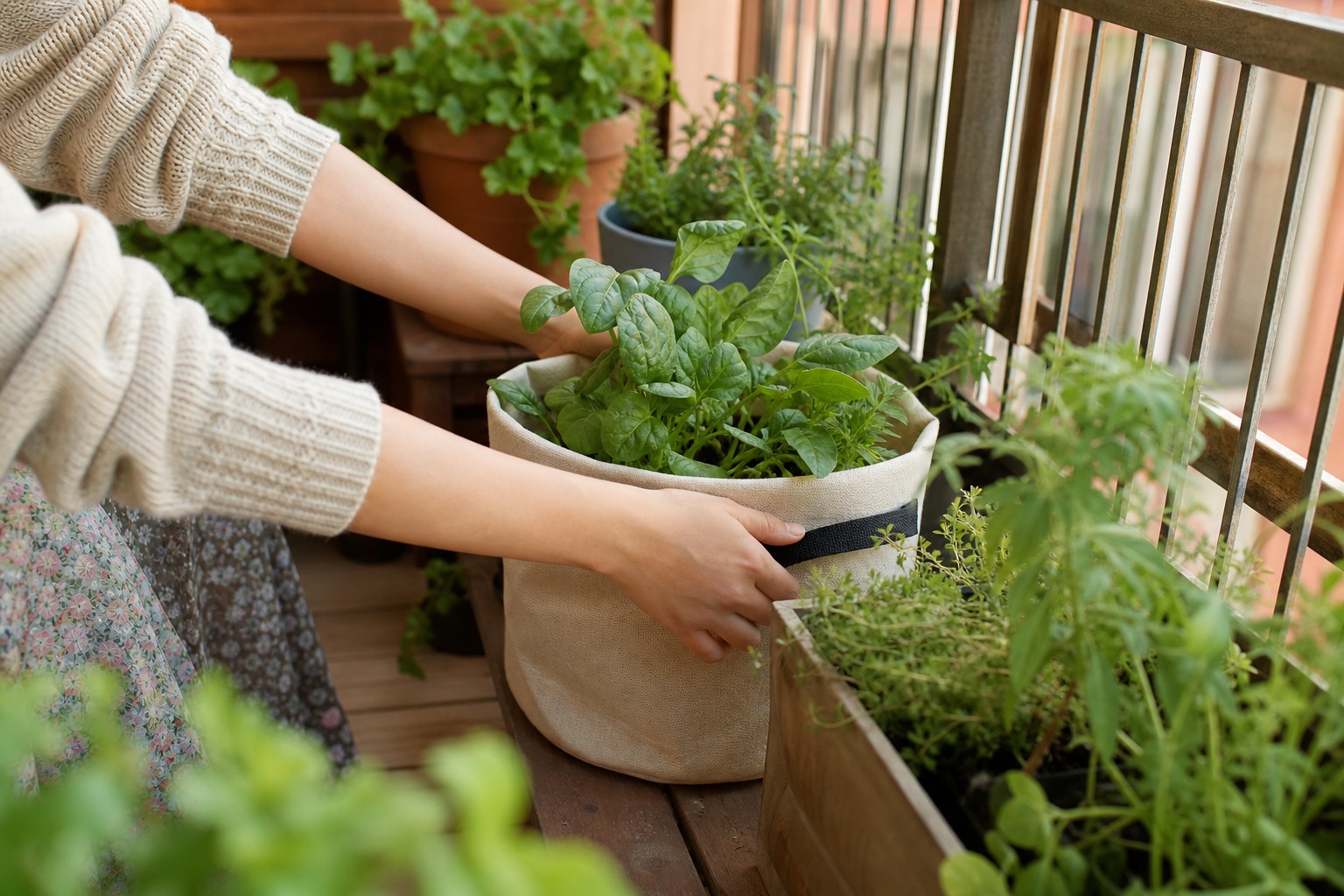
You can push past greens if you have three or four hours.
Radishes are fast and tolerant, ready in about a month, and fine in part shade. Scallions (bunching onions) are nearly indestructible and take low light without complaint. Peas — the shelling and snap kinds — will crop in four hours of sun on a cool balcony, and they climb, so they use vertical space you weren’t using anyway. Beets and carrots are possible in the four-hour range too, just slower and smaller than they’d be in full sun. Manage your expectations and you’ll still get a bowl.
What to skip (so you don’t waste a season)
I’d rather save you the disappointment I earned myself.
The sun-hungry fruiting crops don’t work in real shade: tomatoes, peppers, eggplant, and anything in the squash and cucumber family. These need six-plus hours of direct sun to set and ripen fruit, and in four hours they’ll grow a sad, leggy plant and give you almost nothing. I killed a whole season once trying to prove otherwise with a cherry tomato on a north wall. It grew three feet tall and produced four tomatoes. Believe the plant, not your optimism.
If fruiting crops are the dream, that’s a reason to hunt down your sunniest square foot and commit it to one tomato — not to spread thin trying to force the shade.
Make the light you have go further
Two small moves stretch a shady balcony.
Shuffle your pots. This is why I grow so much in fabric grow bags — they’re light enough to move to the brightest corner as the sun tracks across the season, and they fold flat over winter. A rigid pot full of wet soil stays where it lands; a grow bag comes with me.
Reach everything easily. In a crowded, shuffled-around arrangement, a long-spout watering can gets water to the soil under the leaves at the back without you knocking pots over to reach them. A small thing that saves a lot of muttering.
Grow the greens, respect your real sun number, water less than your instinct says, and a shady balcony will feed you more than you expected. Otto supervises mine from the one warm patch of sun, entirely unbothered that it’s the exact spot I’d like for the basil.
I lay out the whole small-space system — pot sizes, soil, what to grow where — in Small-Space Big Harvest. This post is the shade question. The book is everything else you can grow in a space smaller than a yard.
