The Best Supplies for Starting Seeds Indoors (Small Space)
The best supplies for starting seeds indoors on a balcony budget: the light, mix, meter, and watering can I trust, plus honest notes on what each one can't do.

My first seed-starting shopping trip was a mess. I walked out of the garden center with a kit that had a plastic dome, a bag of “premium soil,” and a free packet of marigolds. Three weeks later I had a tray of gray, flattened seedlings and a windowsill that smelled faintly of basement.
Six seasons on, I start most of what goes onto my Portland balcony indoors, and my supply list has shrunk to a handful of things I actually reach for. Here’s that list, with the honest version of what each one does well and where it lets you down.
If you’re new to all this, start with my windowsill seed-starting walkthrough for the how-to. This post is the shopping list.
The grow light: the supply I’d buy first
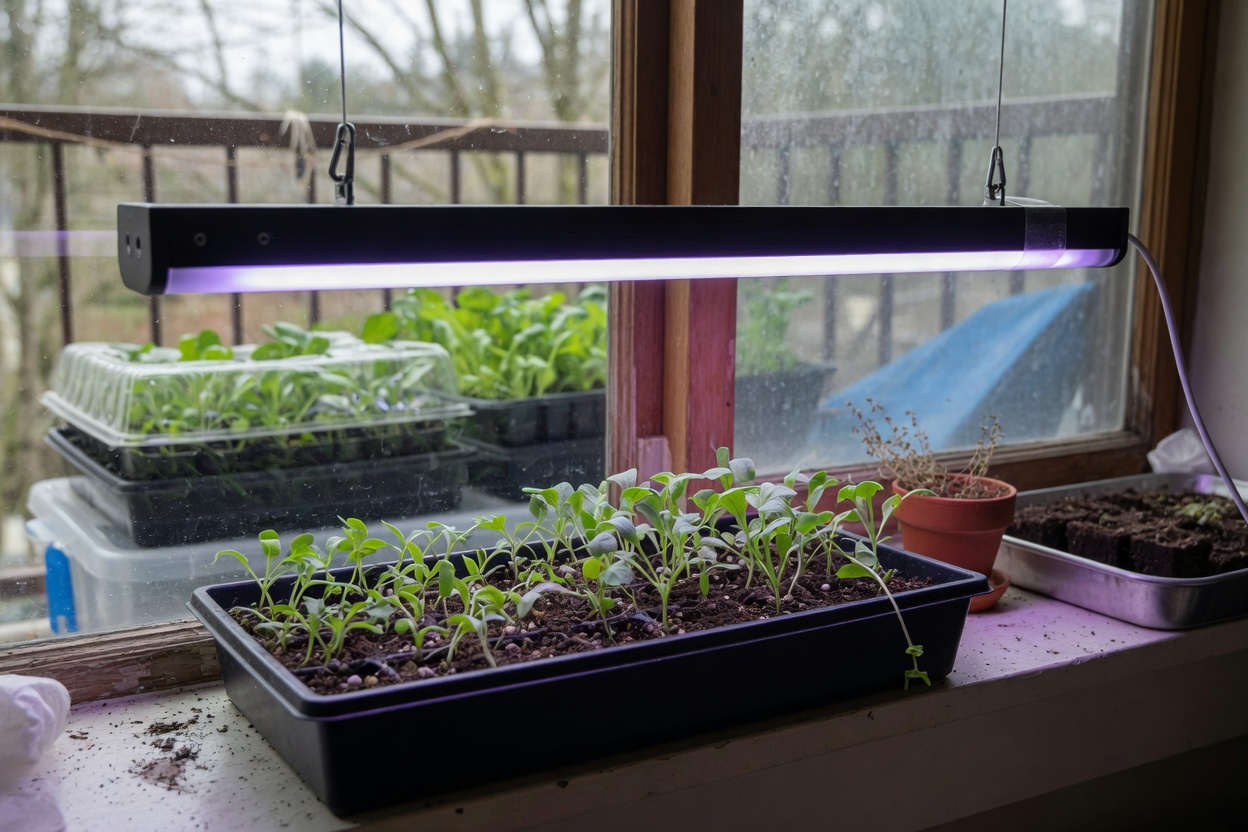
A bright window feels like plenty of light. It isn’t. Light comes from one side, so seedlings lean toward the glass, and the days in early spring are short. The result is long, pale, floppy stems that never quite recover.
A clip-on grow light fixes that for a renter’s budget. I clip mine to a shelf above one tray and keep it a few inches over the seedlings, raising it as they grow. The cool white light is the kind that suits leafy growth, and the seedlings come up squat and dark green instead of stretched.
What I like: it clips on and comes off, so there’s nothing to drill and nothing to leave behind when you move. The gooseneck bends where you need it.
What it can’t do: it lights one tray, maybe two small ones. If you want to start forty tomato plants for the neighborhood, you’ll outgrow it. It also isn’t the answer to every lighting question, and I wrote a whole separate piece on how to choose a grow light for starting seeds if you want the details on spectrum and distance.
Seed starting mix: not the same as potting soil
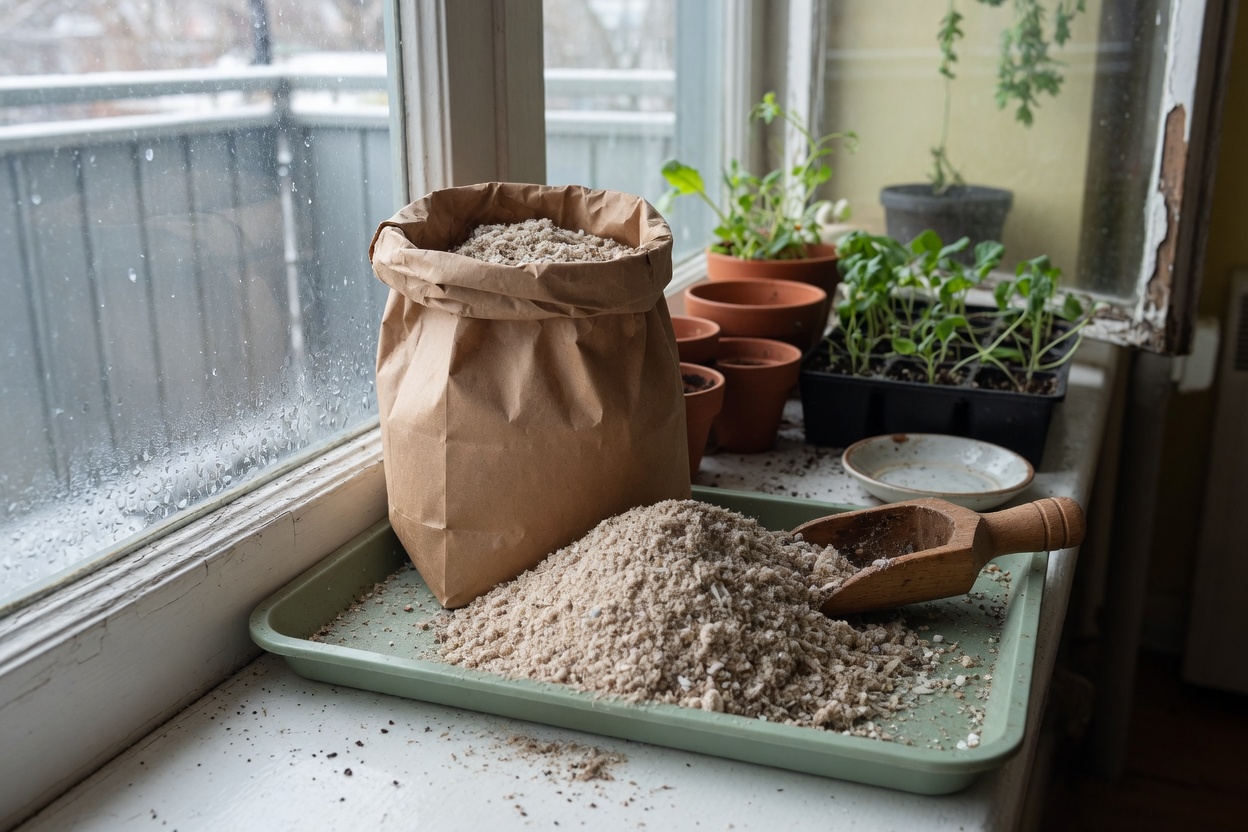
Here’s the mistake I made on that first trip. Potting mix is coarse, a little chunky, and often packed with slow-release fertilizer. Tiny roots struggle to push through it, and it holds water in clumps where seedlings rot.
Seed starting mix is finer and lighter. Roots slide through it, and it holds moisture evenly without turning into a swamp. I use the Espoma organic one, and a 16-quart bag has lasted me a full spring of tomatoes, peppers, onions, and herbs with some left over.
What I like: it’s forgiving. Seeds sprout evenly and the mix is easy to wet down in a bowl before you fill anything. Aim for the feel of a wrung-out sponge.
What to watch: the bag is bulky for a small apartment, and the mix dries out faster than potting soil once the top inch warms up under a light. Check it every morning. Also, it has very little food in it, which is fine for the first couple of weeks and a problem after that. Once seedlings have a few true leaves, they need to move on.
A long-spout watering can for seedling hands

Watering is where seedlings die. A heavy stream from a kitchen glass buries the seeds, knocks over the seedlings, and splashes mix across the leaves.
A long-spout watering can lets you aim a thin, slow stream right at the base of a plant, or pour into the tray underneath. That’s my preferred method anyway: fill the tray, let the mix drink from below for ten minutes, and pour off the rest.
What I like: the long neck reaches over a crowded shelf without tipping things, and it does double duty on the balcony later in the season.
What it can’t do: it’s not magic. Pour too fast and you’ll still make a mess, and a full can is heavy when you’re reaching up to a shelf. I fill mine halfway for seed-starting season.
A soil moisture meter, with a caveat
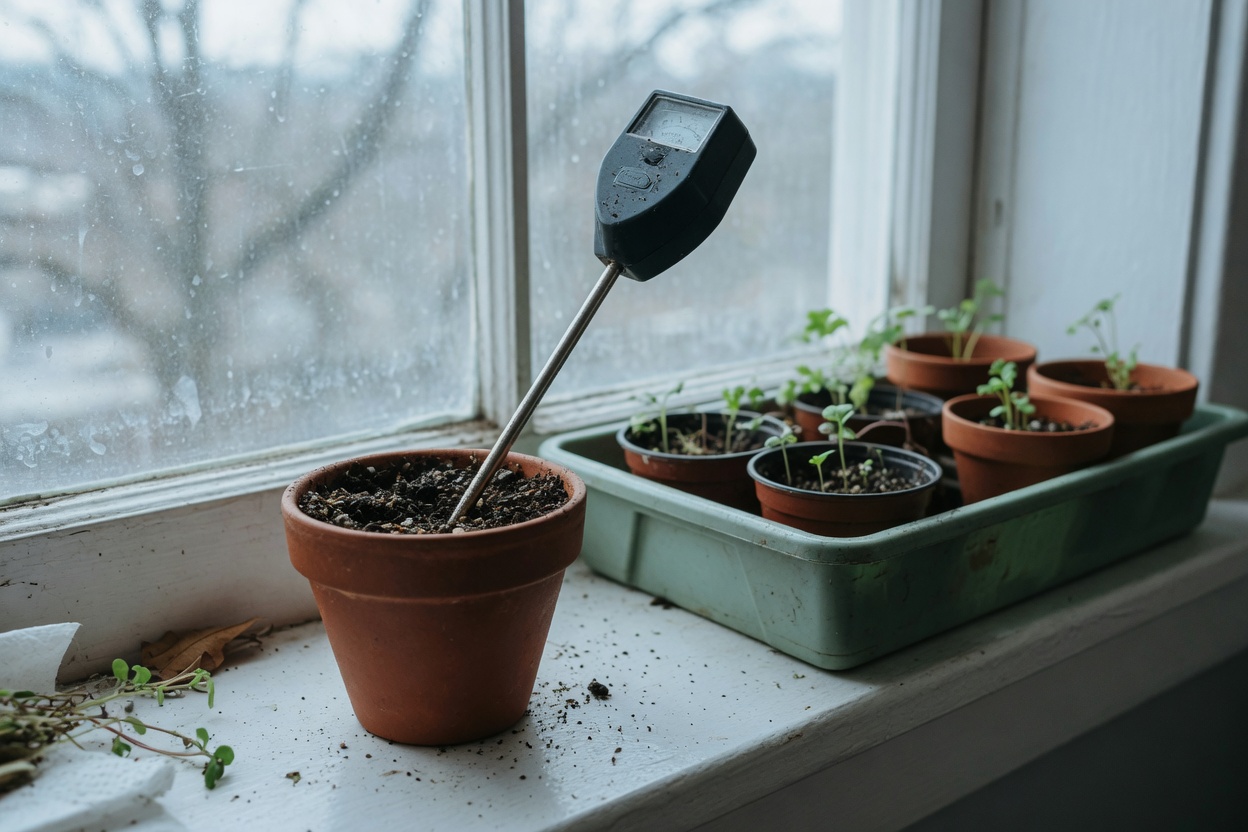
I’ll be honest: I don’t use my soil moisture meter on a tray of tiny seedlings. The probe is too big for a small cell, and pushing it in would tear up roots.
Where it earns its place is on the next step, when seedlings graduate to 3- and 4-inch pots. At that stage overwatering is the main killer, and a probe that tells you dry, moist, or wet at root level beats guessing with a fingertip. The no-battery kind has never failed me, because there’s nothing in it to fail.
What I like: it’s cheap, small, and settles arguments with myself about whether a pot needs water.
What to know: read it in a few spots, not just one. It’s a guide, not a verdict, and it reads best in mix that’s already damp. For the full story on whether you need one at all, see my take on whether a soil moisture meter is worth it.
Potting mix for the move-up

Seedlings that stay in starting mix too long turn yellow and stall. Around the time they have two or three sets of true leaves, I move them up into organic potting mix in a slightly bigger pot. It has the body and a bit of food a growing plant needs.
I keep an 8-quart bag around, and it’s enough to pot up a few dozen small starts. It’s also what I use for the first container on the balcony. For tomatoes specifically, my tomato seed-starting guide walks through when to pot up and how deep.
What to know: it’s coarser than starting mix, so don’t sow seeds in it. Think of the two bags as two steps, not substitutes.
What I’d skip, or buy later
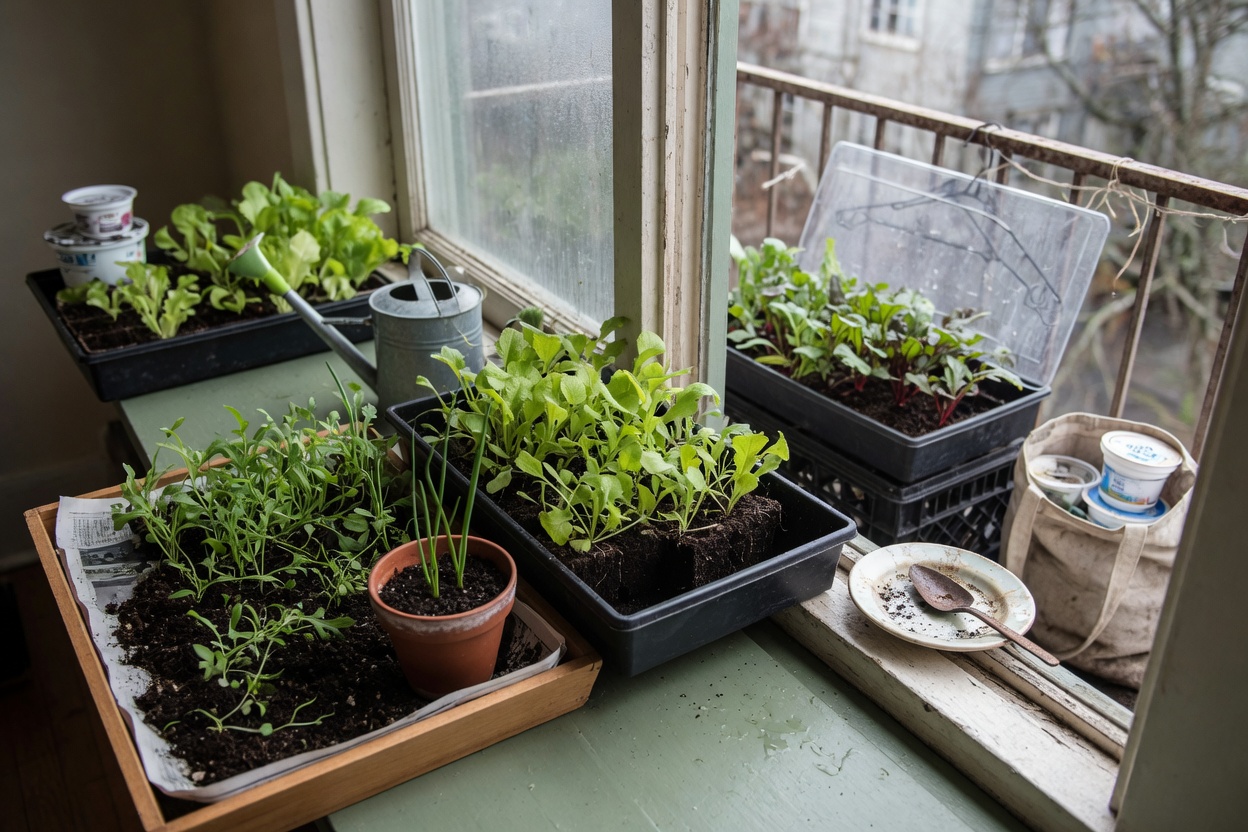
Two things people always ask about: seed trays with domes, and heat mats. Both are useful, and I use both, but I’d call them second-tier. Any shallow tray or even a clean takeout container with drainage holes will hold seed cells, and a heat mat only matters if your home runs cool in the room where you sow. I’d rather you spend your first few dollars on light and good mix.
Skip the fancy stuff entirely until you’ve done one round. The bag of seeds, the mix, and the light will teach you what you actually need.
If you’re starting something particular, I’ve written the how-to for onions from seed, and for something you can eat in two weeks, microgreens on a windowsill are the fastest win.
My bare-minimum kit

If I had to start over on a single shelf, I’d buy these in this order:
1. A grow light, because it solves the biggest problem.
2. Seed starting mix, because it solves the second biggest.
3. A long-spout watering can, because it keeps seedlings alive once they’re up.
4. Potting mix and a moisture meter, when it’s time to pot up.
That’s the whole list. Everything else is a nice-to-have, and none of it has to happen in a day.
I go deeper on planning a small growing space around what you start, from sowing dates to what actually fits on a balcony, in Small-Space Big Harvest. This post is the supply list. The book is the whole season. (Otto, who supervises every seed tray at nose height, says the shelf should be one level higher.)
