The Best Heated Chicken Waterers for Winter (Honest Picks)
The best heated chicken waterer setups for winter, from a keeper who's iced over more than one. What actually keeps flock water thawed — plus the cheap DIY route.
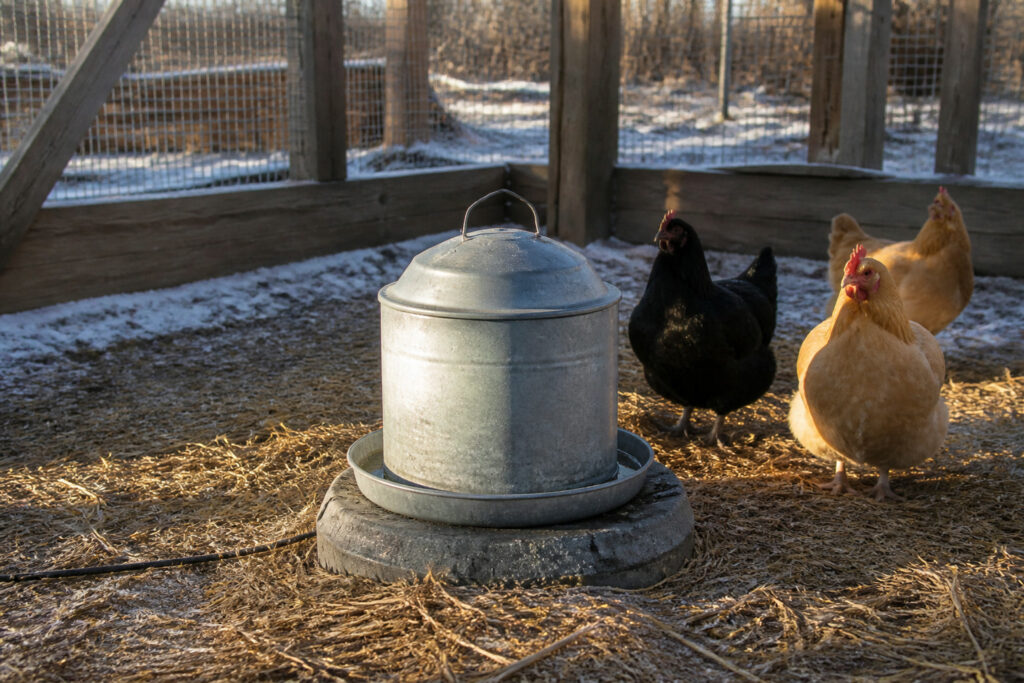
The first winter I kept chickens, I hauled a fresh bucket of water out to the run every morning before work and cracked the ice out of the old one with the heel of my boot. By January I was doing it twice a day. Knox County doesn’t get Minnesota cold, but it gets cold enough, long enough, that open water in a plastic waterer turns into a solid disc overnight. The girls stood around it looking at me like I’d done it on purpose.
If you’re staring down your first real cold snap, let me save you the boot-cracking. Chickens need liquid water every single day of winter — they eat more, and they can’t run their bodies or lay much of anything if they’re rationing sips off a half-frozen puddle. So this is the one piece of cold-weather gear I tell every new keeper to sort out before the first hard frost, not after.
Here’s the honest version of the roundup, because I’d rather tell you the truth than sell you a gadget: the reliable winter setups I’ve landed on are less about a single magic “heated waterer” and more about pairing the right vessel with a little heat. Below are the three I’d actually put in your run.
The workhorse: a metal fount on a heated base
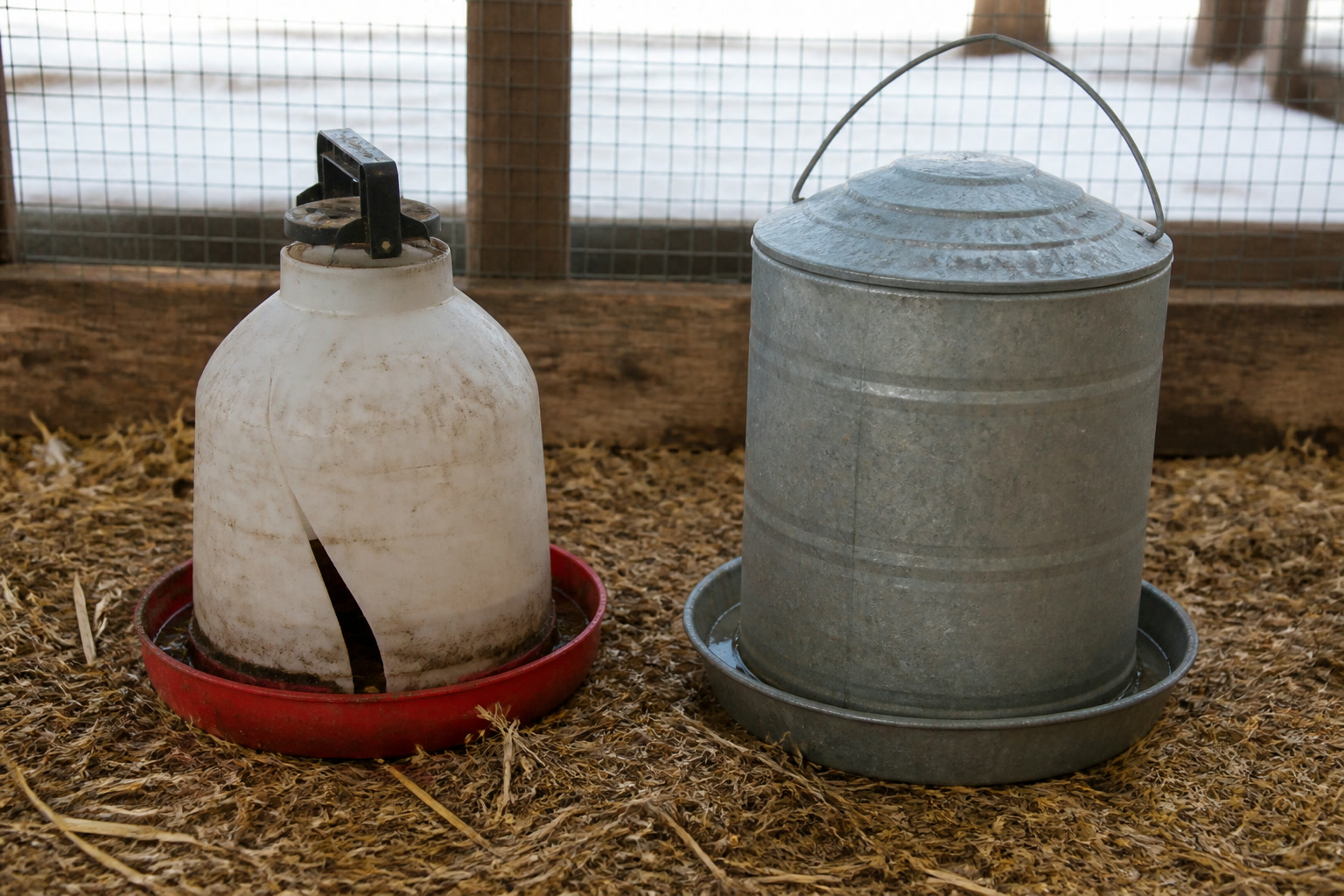
If you want the closest thing to set-it-and-forget-it, this is it. A flat, thermostatically controlled heated base sits under a metal fount and only kicks on when the temperature drops near freezing, so it isn’t running your electric bill all winter. It’s what I run now, and it’s why I stopped cracking ice.
The part that matters, and the part I got wrong the first time: put a metal fount on that base, not plastic. I set a plastic one on a heated base my first year and came out to a warped, leaking mess and a puddle frozen across the coop floor. A galvanized double-wall metal fount takes the gentle bottom heat the way it’s meant to and holds three gallons, which is plenty for a small flock through a short winter day.
I’ll be straight with you here, because it’s the whole point of an honest roundup: the heated base itself is the one piece in this article I can’t hand you a tested link for yet — I’m still running down a specific one I’d stake my name on, and I won’t point you at something I haven’t used. What I can tell you is the shape of what you want: a flat thermostatic poultry base rated for the wattage your run size needs, with a cord you can route safely. Buy the fount now, and pair it with a base you trust locally or online once you’ve read the reviews with your own eyes.
The clean-water route: nipple-and-cup, moved indoors-warm
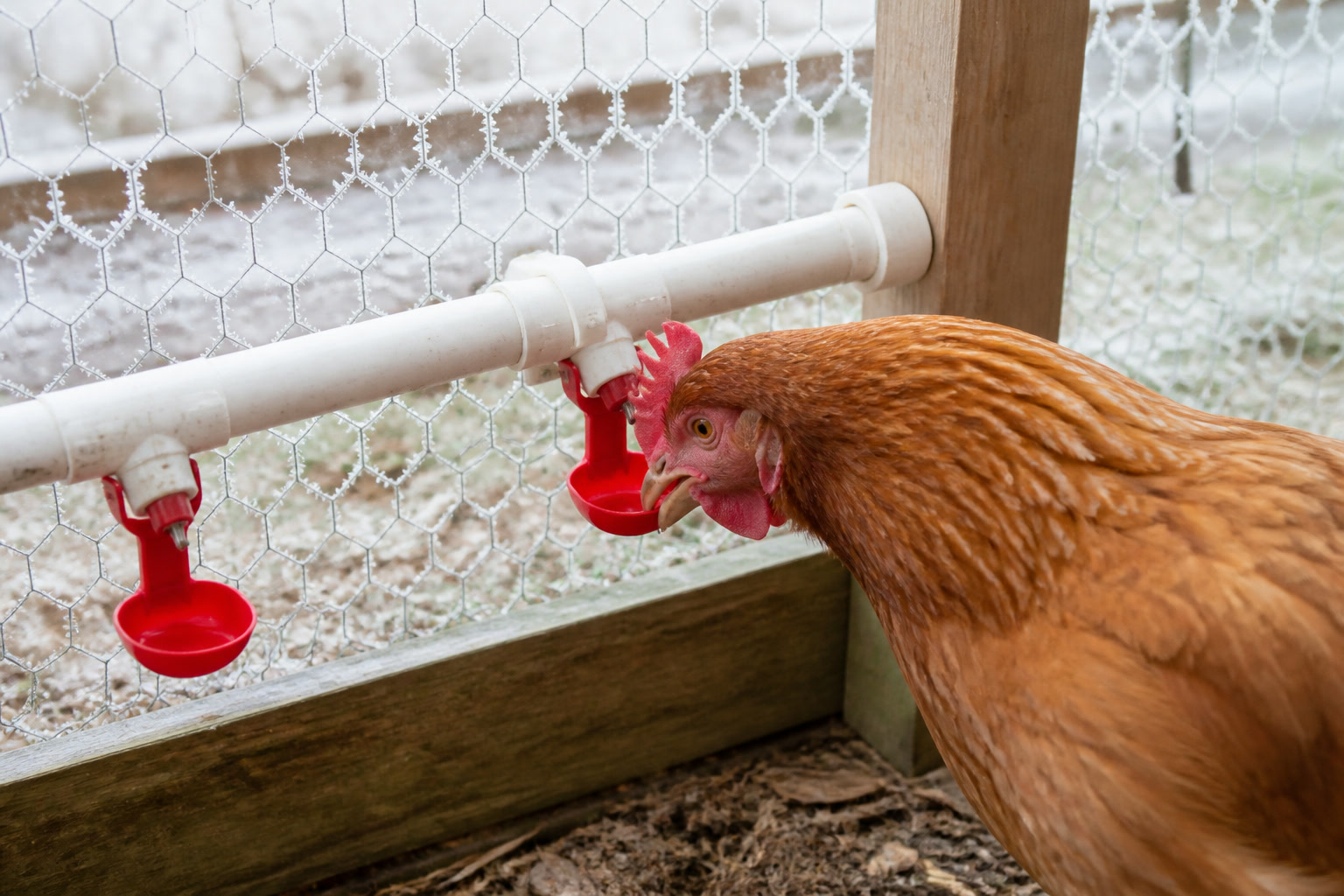
The nipple-and-cup waterer is my summer favorite because the water stays clean — no shavings, no droppings, no green scum by Thursday. In winter, a plain open nipple line will freeze at the tips, so the trick is to run the cups off a heated bucket instead of a cold reservoir.
That’s really the same idea as the heated base, just built into a bucket. If your run has power and you like how clean the cup system keeps things, this is a good path. If it doesn’t have power, be honest with yourself about that before you buy — a heated anything is only as good as the safe outdoor outlet feeding it, and stringing a sketchy extension cord across a snowy run is how people lose coops to fires. I won’t teach you to do that.
The cheap route that actually works: a DIY heated bucket
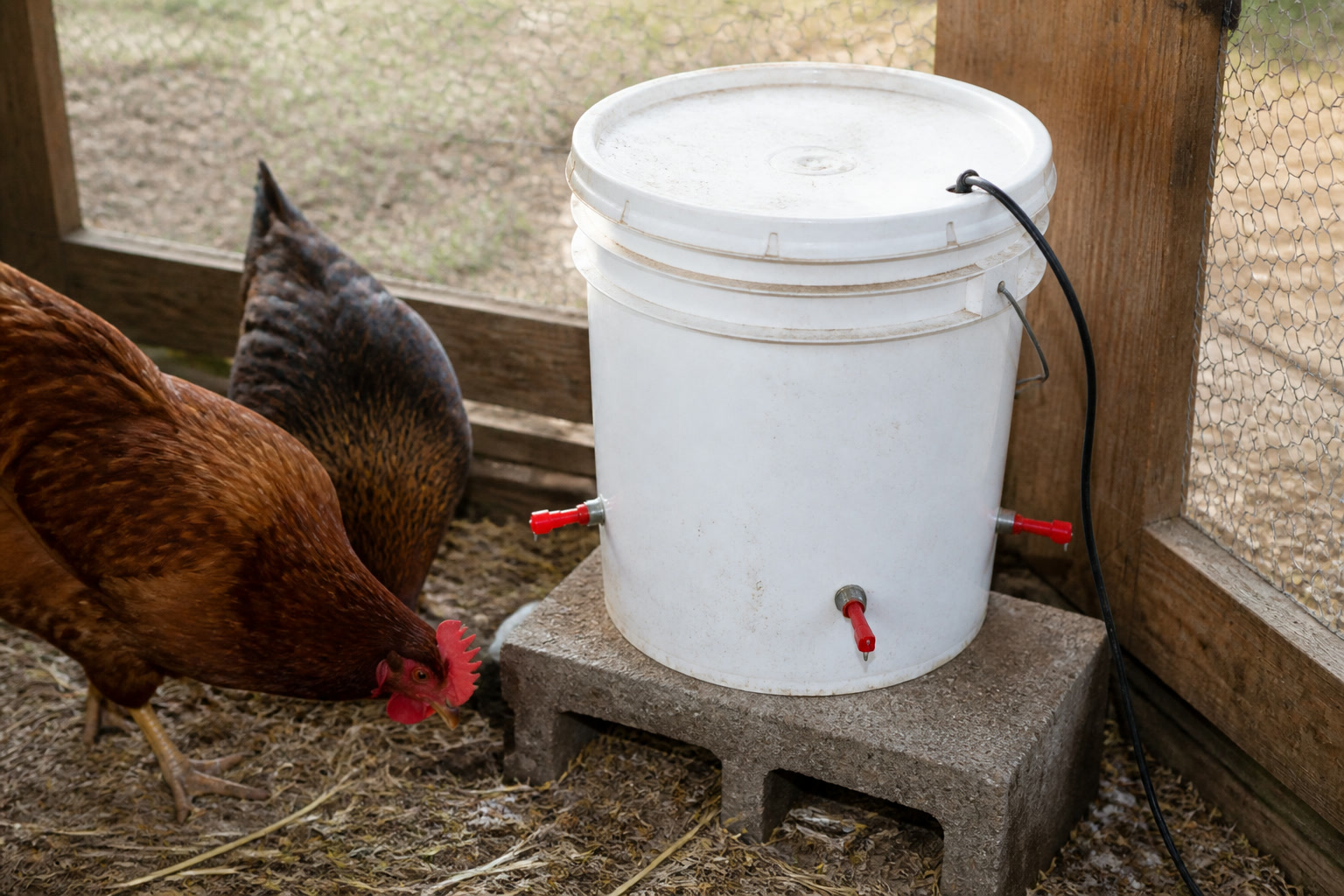
Not everybody wants to spend real money on winter water, and you don’t have to. The best-value setup I know is a five-gallon bucket fitted with a horizontal-nipple kit and kept above freezing with a submersible stock-tank de-icer or a cookie-tin heater build. The nipples come out the side low on the bucket, the girls learn them in a day, and a lidded bucket stays far cleaner than any open pan.
I walk through the plain version of this — no heat, just the build — in my DIY chicken bucket waterer post, and the winter version is that exact bucket with a thermostatic de-icer dropped inside. For a lot of small-flock keepers on a budget, this beats every store-bought option on price and holds up fine. My neighbor Linda has run one for three winters on her six hens and hasn’t cracked ice once.
What I’d skip, and the honest cost talk
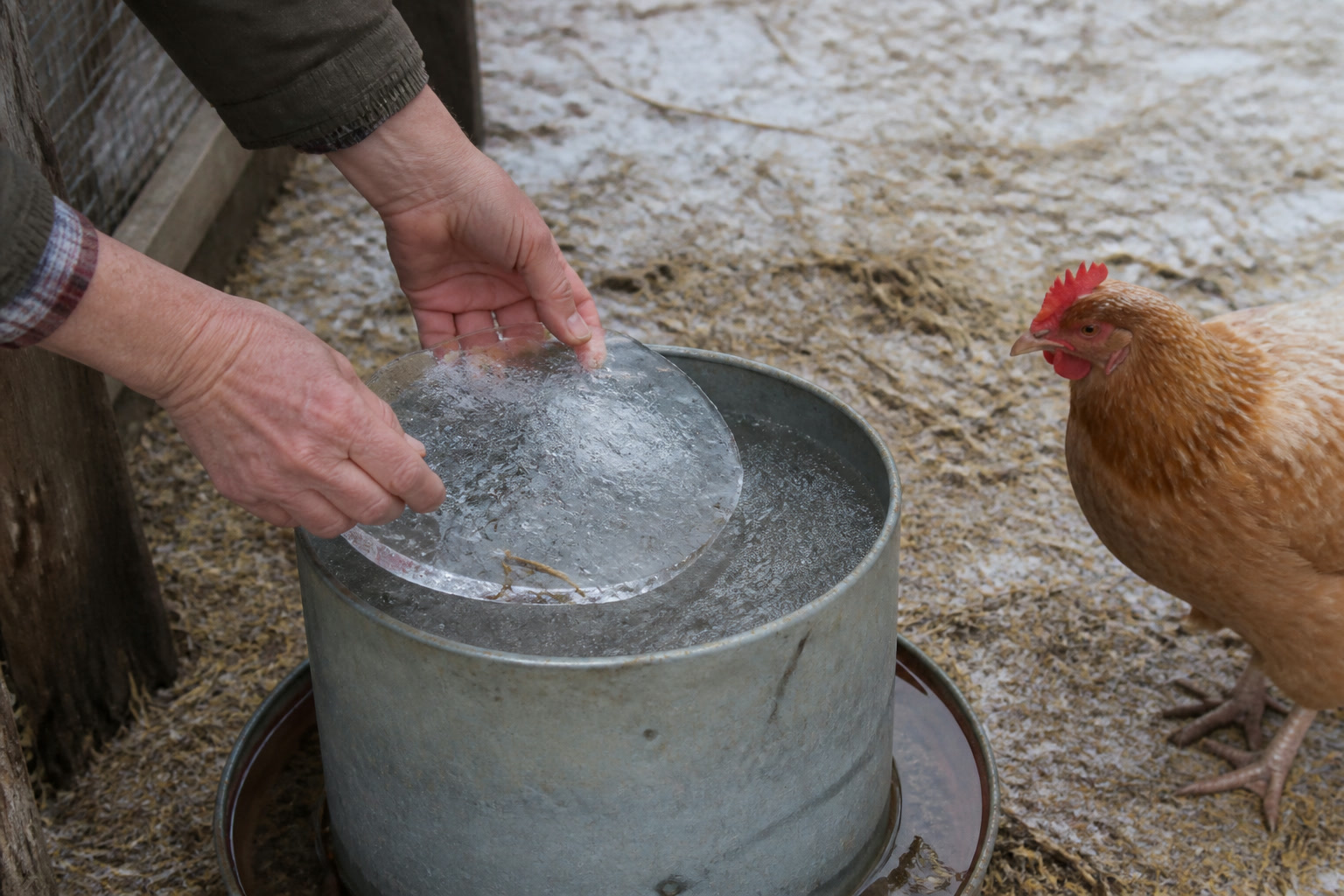
Skip the “just float a ball in it” and “add a saltwater bottle” tricks you’ll see on the forums. In a real cold snap they don’t keep up, and you’ll be back to the boot heel. And skip anything plastic that sits directly on a heat source — it’s the mistake I keep watching new keepers make.
On cost: a good heated setup runs more than a summer waterer, no way around it. But you’re not really buying warm water — you’re buying back the twice-a-day haul, and buying your flock steady laying and steady health through the months when a dehydrated bird goes downhill fast. For the once-a-winter money, it’s the easiest yes I give. If you’re building out the rest of your cold-weather plan, it pairs with everything in my winterize-your-coop checklist, and it’s the natural next step up from the no-power tricks in keeping chicken water from freezing.
I go a lot deeper on winter flock care — feed, light, molt, frostbite, the whole season — in Raising Backyard Chickens for Beginners. The waterer’s the piece that saves your mornings. The book’s the piece that gets the rest of the flock through to spring in good shape.
