The Foraging Field Guides Worth Owning (and Which to Skip)
Three foraging field guides I'd actually put in a beginner's hands, what each one is good for, and the kinds of books I'd leave on the shelf — from thirty years of use.
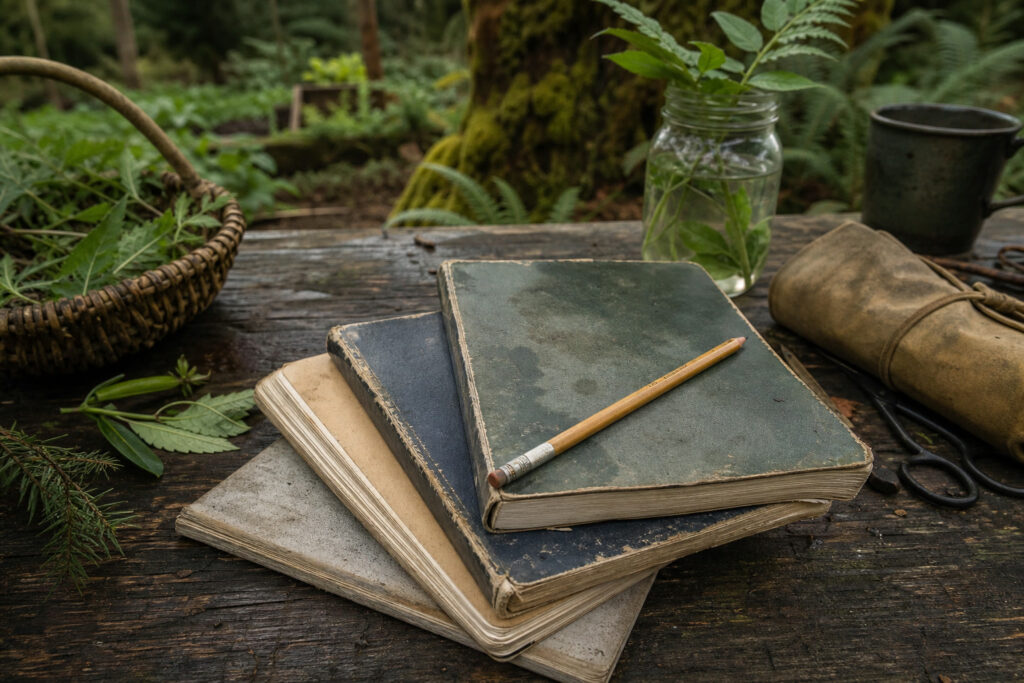
A field guide is the cheapest insurance you will ever buy against a very expensive mistake. I have a shelf of them gone soft at the corners, spines cracked, margins full of my own pencil — and I have a smaller pile in a box in the garage that I keep meaning to give away and never do, because they’re the ones that taught me what a bad guide looks like.
After thirty years foraging the same few miles of the Olympic Peninsula, I’ve got opinions about which books earn their place in a pack and which ones get a beginner into trouble. What follows are the three I actually reach for, what each is good at, and the kinds of guides I’d steer you around. Before any of that, though, the one rule that matters more than any book I’m about to recommend.
The rule that comes before the books
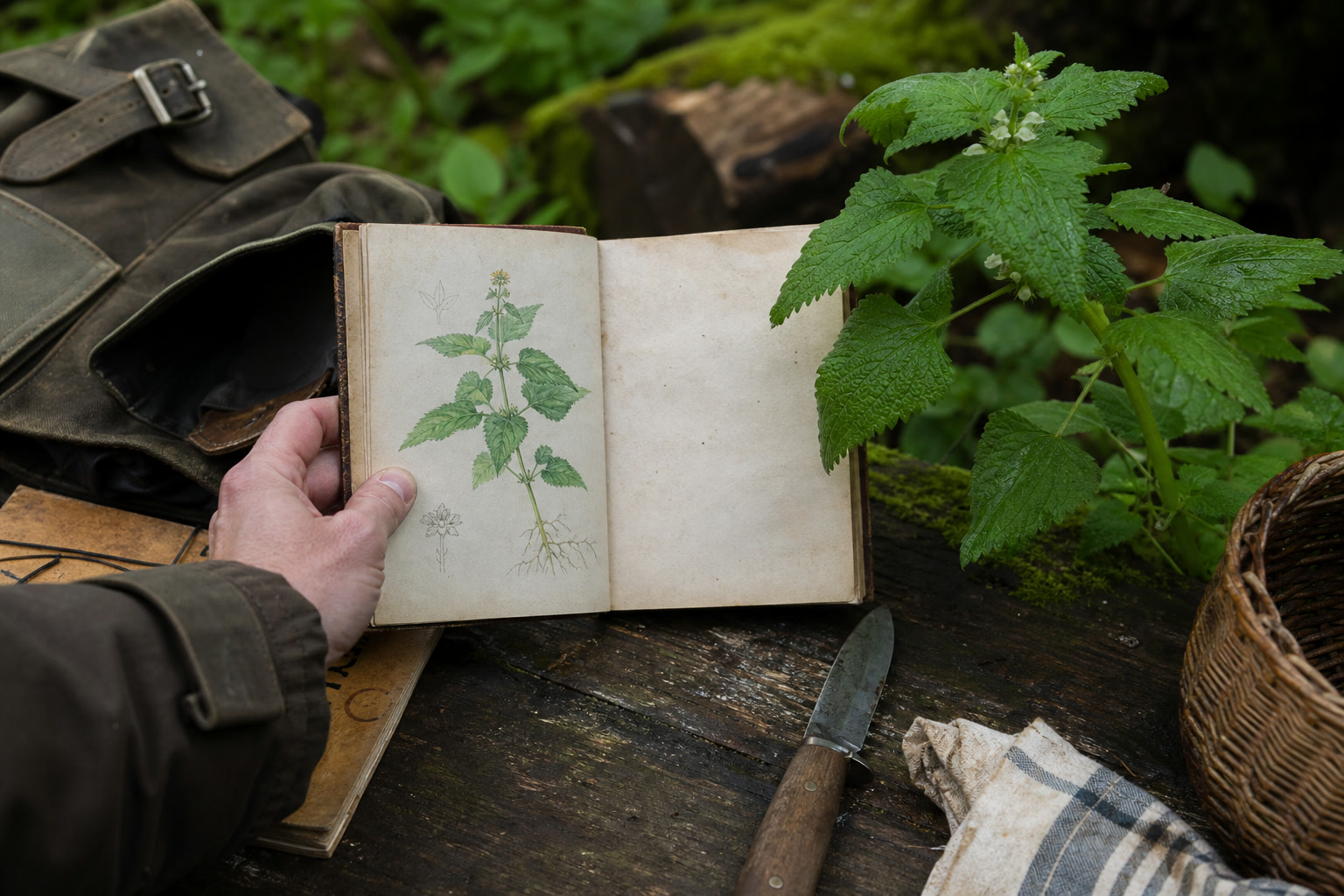
Never identify a plant or mushroom from a single source. Not from one book, not from one app, not from one well-meaning post online — and certainly not from one stranger at a trailhead, however confident they sound. Cross-check every identification against at least two reputable guides, and when you’re new, confirm it with an experienced local forager before anything goes in your mouth. When in doubt, throw it out. Two plants on this coast can kill you, and both of them look, to a hurried eye, like something you’d want to eat.
A field guide is a tool for slowing down and looking closely. It is not a permission slip. The books below are good books — they are not a substitute for the work of confirming what you’ve found.
The serious plant guide: Sam Thayer
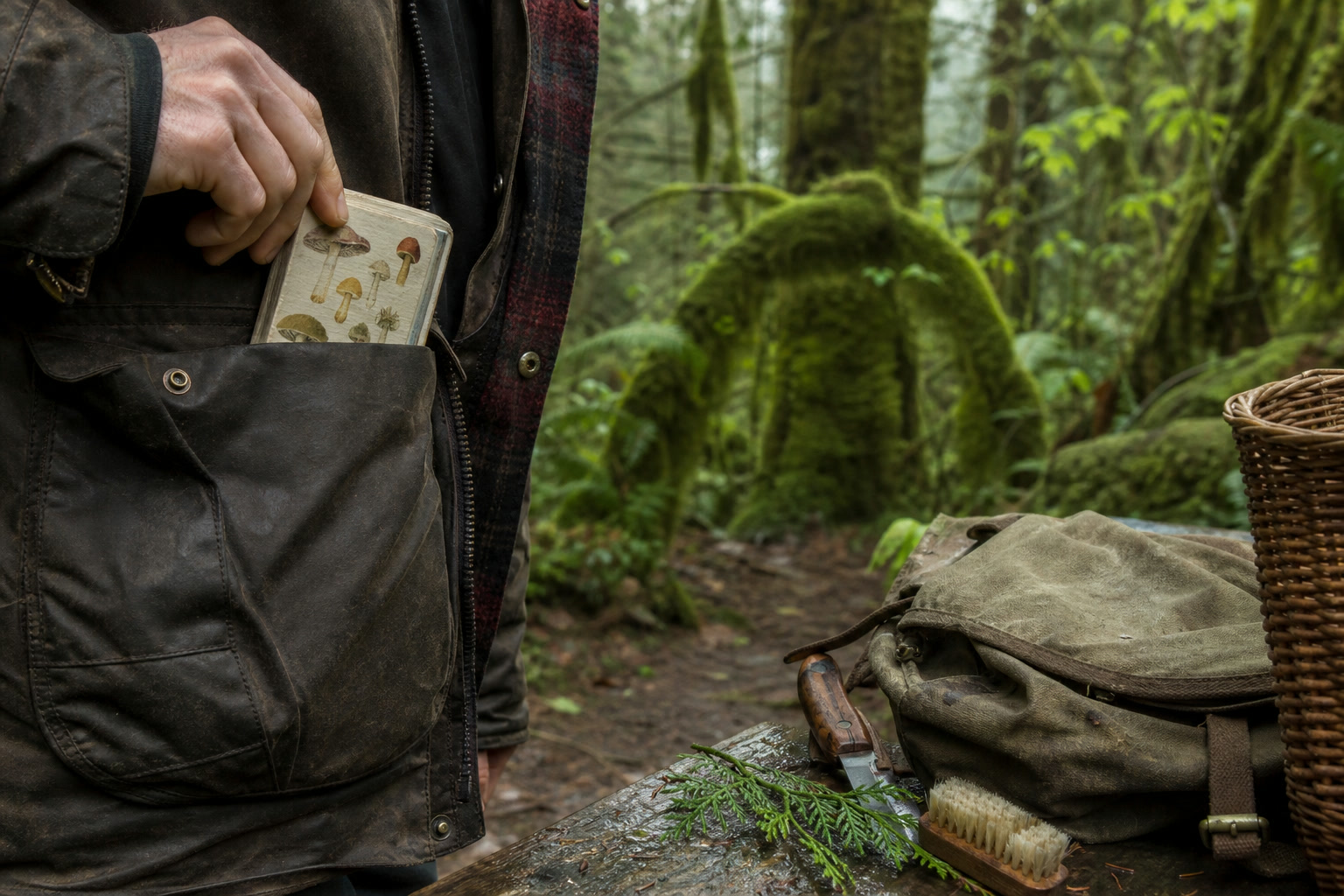
If you buy one book on edible wild plants, make it Sam Thayer’s Field Guide to Edible Wild Plants. Thayer is the rare author who has actually harvested, prepared, and eaten everything he writes about, repeatedly, over decades — and it shows on every page. He refuses to oversimplify. Where a lazier guide says “edible,” Thayer tells you which part, at which season, prepared which way, and which look-alikes have caught people out.
The honest drawback: it’s an Eastern and Central North America guide, so a fair number of his species don’t grow on our coast. I still recommend it to every beginner regardless, because what you’re really buying from Thayer is a way of thinking about identification — careful, skeptical, place-aware — that carries over to whatever plant is in front of you. It’s heavier than it needs to be and the better for it. Learn how Thayer looks at a plant, then apply that to ours.
The mushroom pocket guide: David Arora
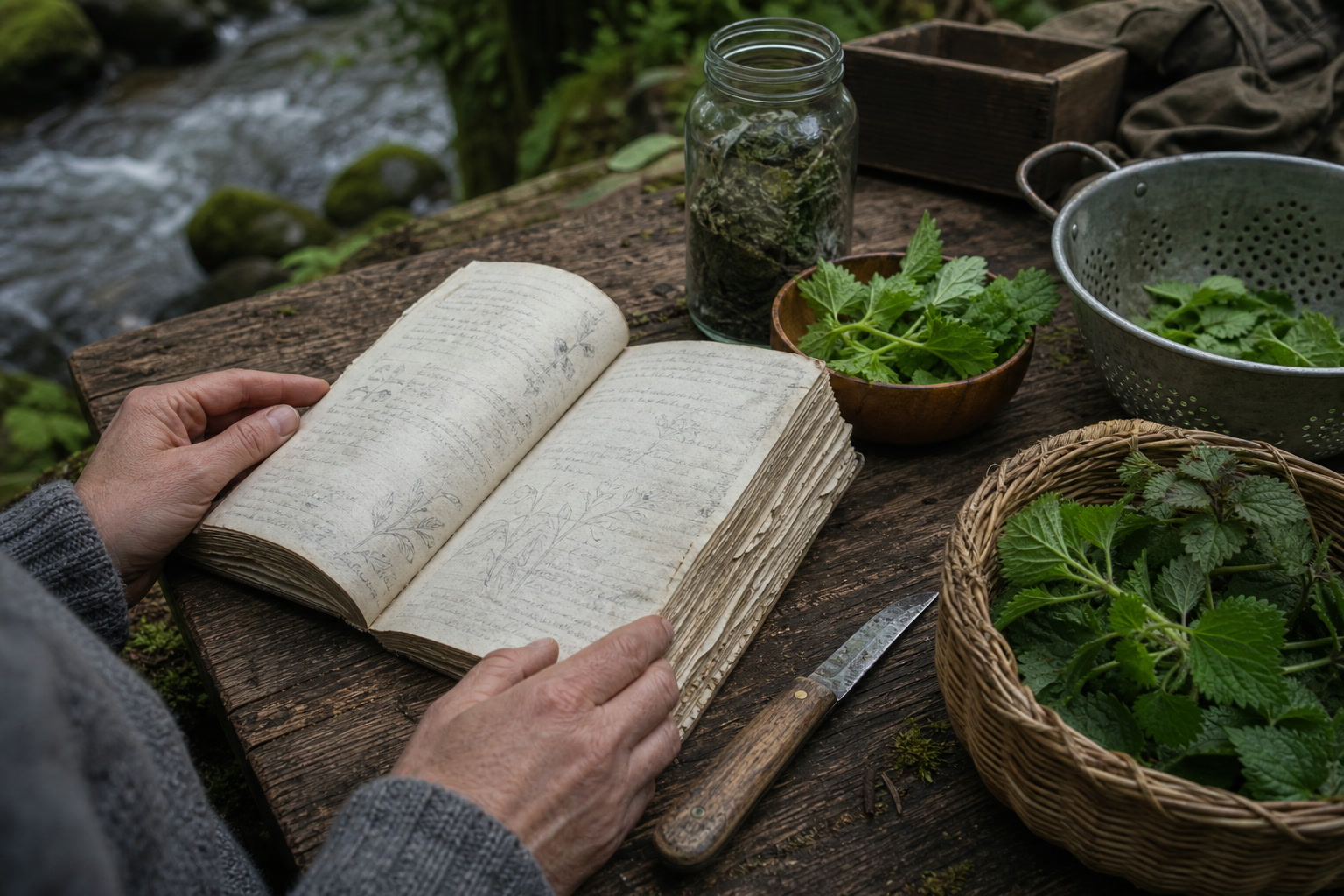
Mushrooms are their own world, with a higher safety bar and a steeper learning curve than green plants, and I’ll say plainly that I’m a plant person who forages fungi cautiously, not an expert. The guide I carry is All That the Rain Promises and More by David Arora. It’s small enough to live in a jacket pocket, it’s written for exactly our Western mushrooms, and Arora has a rare gift for making careful identification feel approachable without ever making it feel casual.
It is a starting guide, not the last word — Arora’s own Mushrooms Demystified is the doorstop reference for when you go deeper. But for a beginner walking the wet PNW woods in chanterelle season, the little pocket guide is the right first book. Pair it with the one rule above, doubled: with mushrooms, a second reputable source and a knowledgeable local are not optional. The margin for error is thinner than with plants.
The regional medicinal reference: Peterson
For the medicinal angle — which is most of what I do — I keep a Peterson Field Guide to Western Medicinal Plants and Herbs within reach. The Peterson guides are the long-running standard for good reason: clear photographs, honest entries that note the cautions and the poisonous look-alikes right alongside the traditional uses, and a regional focus that actually matches the plants growing outside my door. The Western edition covers our flora, which the generic national guides only half do.
It frames traditional and historical uses without making medical promises, which is the right and honest way to write about these plants. Read it for identification and for context — what a plant is, where it grows, what people before us did with it. It doesn’t reach for clinical claims, and that restraint is exactly why I trust it.
What I’d leave on the shelf
A few kinds of guides I’d steer a beginner away from. Skip the glossy general “foraging” books that try to cover plants, mushrooms, seaweed, and roadkill in two hundred pages — breadth that wide means depth that shallow, and shallow is dangerous in this hobby. Skip anything that leans on a few pretty photos and a cheerful tone without showing you the look-alikes; the look-alikes are the whole point. And be wary of guides written for a region that isn’t yours — a wonderful book for the Appalachians can mislead you badly on the Olympic Peninsula, where half the plants are different and the ones that overlap don’t always behave the same.
You don’t need a shelf of twenty books. You need two or three good ones for your region, used together, never trusted alone.
Where the books stop
A good guide gets you to a confident identification. It can’t stand in your kitchen and tell you when to gather a plant, how to dry it, or how the generations before us prepared it once it was on the shelf. That part takes longer, and it’s the part I care most about.
It’s also the heart of my own book, Pacific Northwest Medicinal Plants — written for this coast specifically: 115 wild herbs, how to identify each one without guessing, when to gather it, and how to use it the way my grandmother’s generation did. Read it alongside the guides above, not instead of them. The more good sources you cross-check, the safer you forage — that’s the whole rule, applied to my own shelf included.
