The Best Containers for Growing Vegetables in Small Spaces
The best containers for growing vegetables in a small space — fabric grow bags, self-watering planters, buckets, and terracotta, with the honest pros and cons of each.
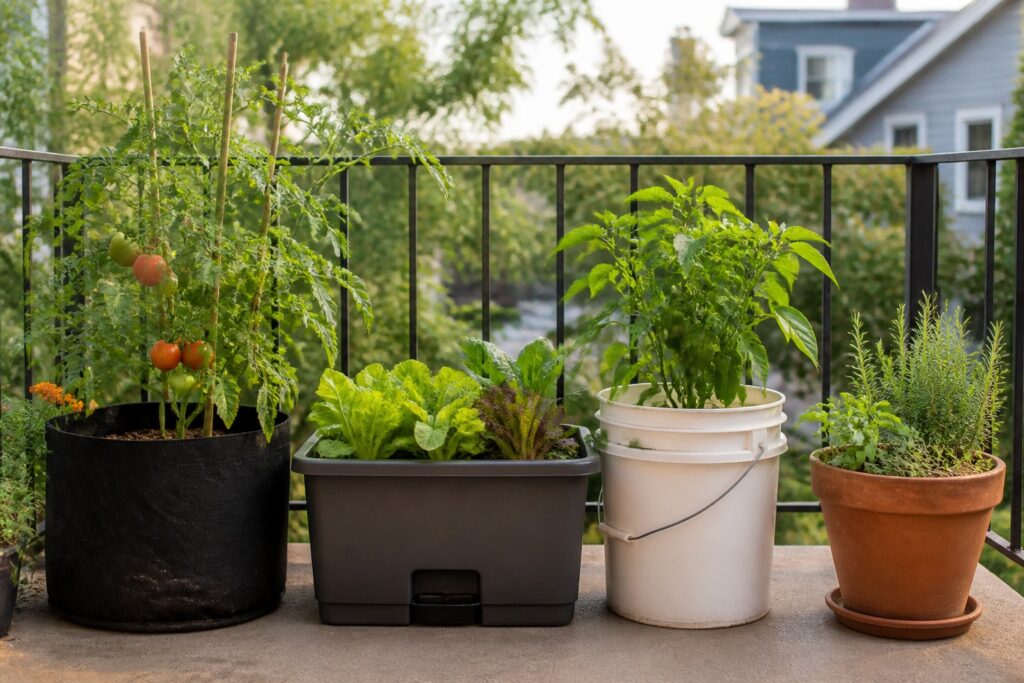
The container matters more than the plant.
I know that sounds backwards, but six seasons on a small balcony taught me it’s true. You can grow a beautiful tomato in a cheap black nursery pot and lose a gorgeous heirloom to a pretty terracotta one that dried out at noon. The vegetable is usually willing. The container is what decides whether it thrives or sulks — how much root room it gets, how fast it dries out, and how often you’re out there fussing with a watering can.
So this is a plain, honest look at the containers I’ve actually grown food in, what each one is genuinely good for, and where it’ll let you down. No single “best” pot exists, because your balcony, your budget, and how forgetful you are all count. Here’s how to match the container to your real situation.
Fabric grow bags — the beginner’s best all-arounder
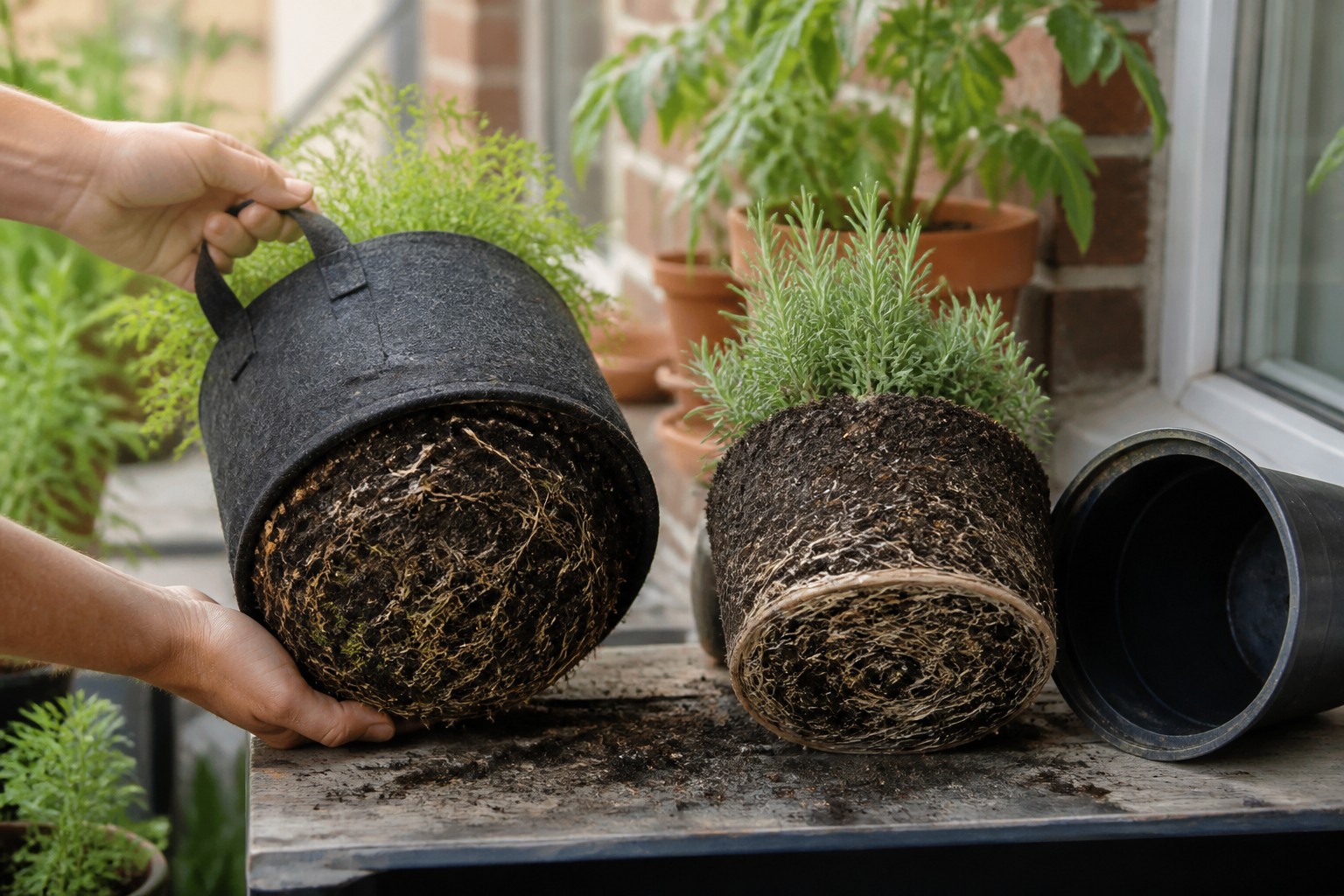
If you make me pick one container for someone just starting, it’s a fabric grow bag, every time. They’re cheap, they come in every size, and they do something rigid pots can’t: the fabric lets air reach the roots from all sides, so instead of circling the pot and choking, the roots hit the air, stop, and branch. You get a denser, healthier root system, which is the whole ballgame in a small space.
They’re also renter-perfect. Nothing to store, nothing the landlord notices, and at the end of the season you empty them, shake them out, and fold the whole “garden” into a drawer. I grow tomatoes, potatoes, greens, and herbs in them.
The honest downside: because they breathe, they also dry out faster than plastic. On a hot balcony a small bag can need water twice a day in July. Size up — a bigger bag holds more moisture — and don’t put your thirstiest plant in your smallest bag. I get into the full comparison in fabric grow bags vs. plastic pots if you’re weighing the two.
Self-watering planters — for the forgetful and the frequently-away
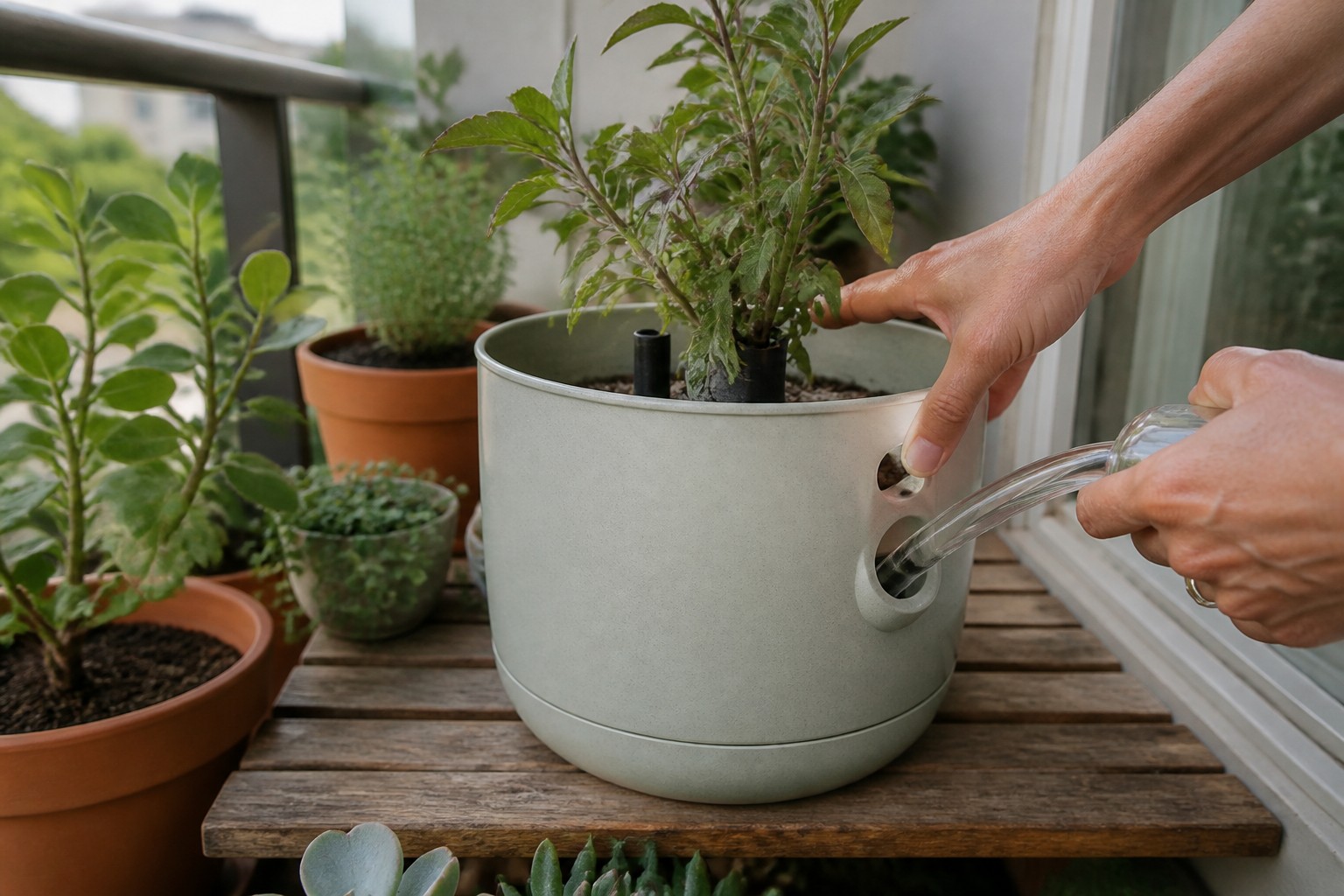
Here’s the thing about container gardening: more small-space plants die of thirst than of anything else, and it’s almost always because life got busy for two days. A self-watering planter fixes exactly that. There’s a reservoir in the bottom, the plant wicks up water as it needs it, and you fill the tank every few days instead of watering anxiously every morning.
For anyone who travels, works long hours, or just forgets, this is the container that keeps the garden alive. I lean on them hardest for tomatoes and anything leafy that bolts the second it dries out.
The downside: they cost more than a bag or a bucket, and they’re not right for herbs that like to dry between drinks — rosemary and thyme hate wet feet and will rot in a reservoir. Match them to the thirsty plants. I go deeper on choosing them in the best self-watering planters for small spaces.
Plastic nursery pots and 5-gallon buckets — cheap and genuinely good
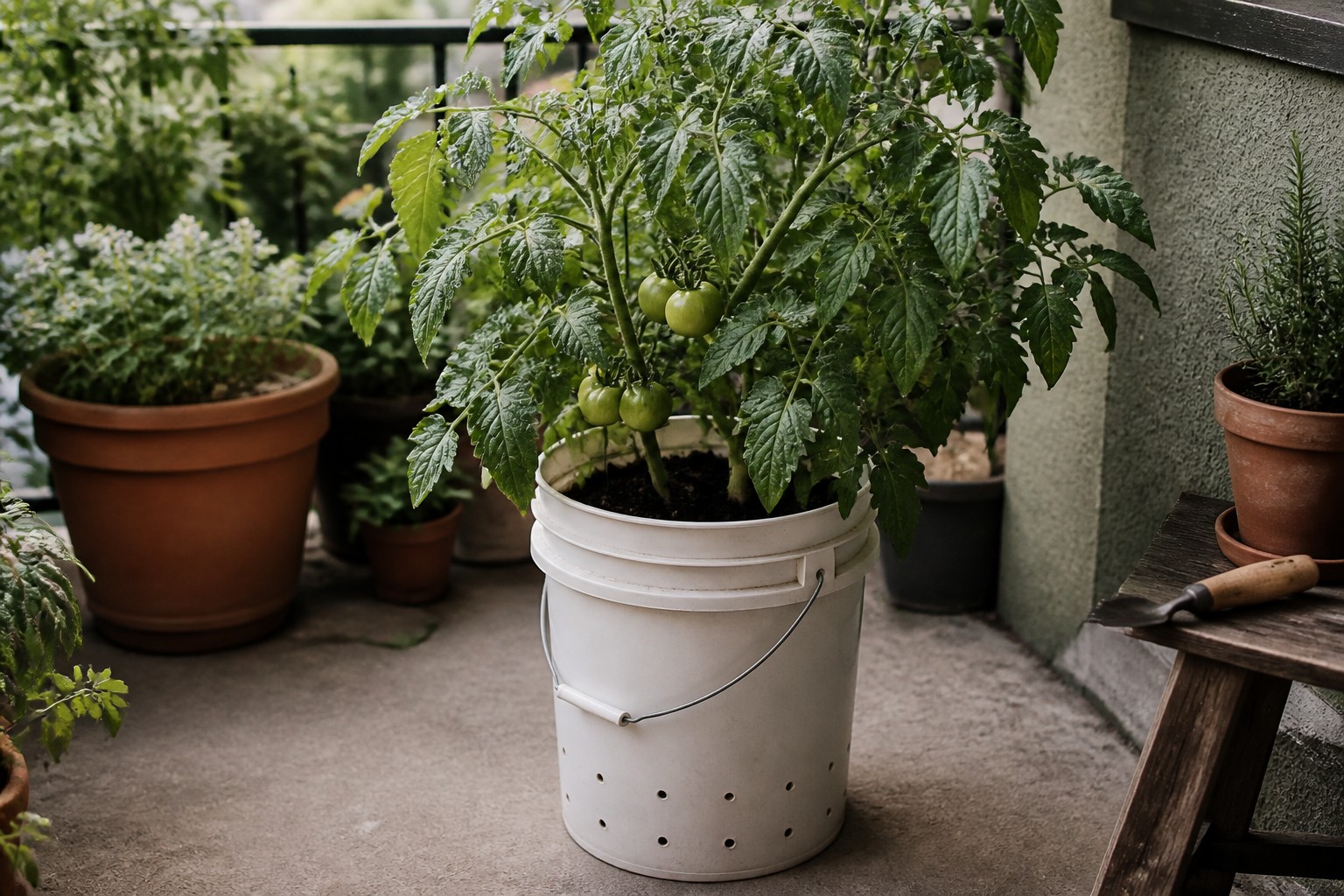
Don’t overlook the humble stuff. A plain black nursery pot holds moisture better than fabric or terracotta, and it’s often free — ask any garden center and they’ll usually hand you a stack. And a food-grade 5-gallon bucket from the hardware store, with a few holes drilled in the bottom, is the single best-value container there is for a big plant.
Why the bucket works: five gallons is exactly the root room a single tomato, pepper, or zucchini wants, it’s cheap, and it’s tough enough to last years. It’s not pretty. But a bucket of cherry tomatoes on a patio produces just as well as one in a fifty-dollar planter, and nobody’s grading your containers.
The only real rule with any of these: it must have drainage holes. A pot with no way for water to escape drowns roots quietly, and it’s the most common way I see beginners lose a plant. If it doesn’t have holes, drill them.
Terracotta — beautiful, breathable, and thirsty
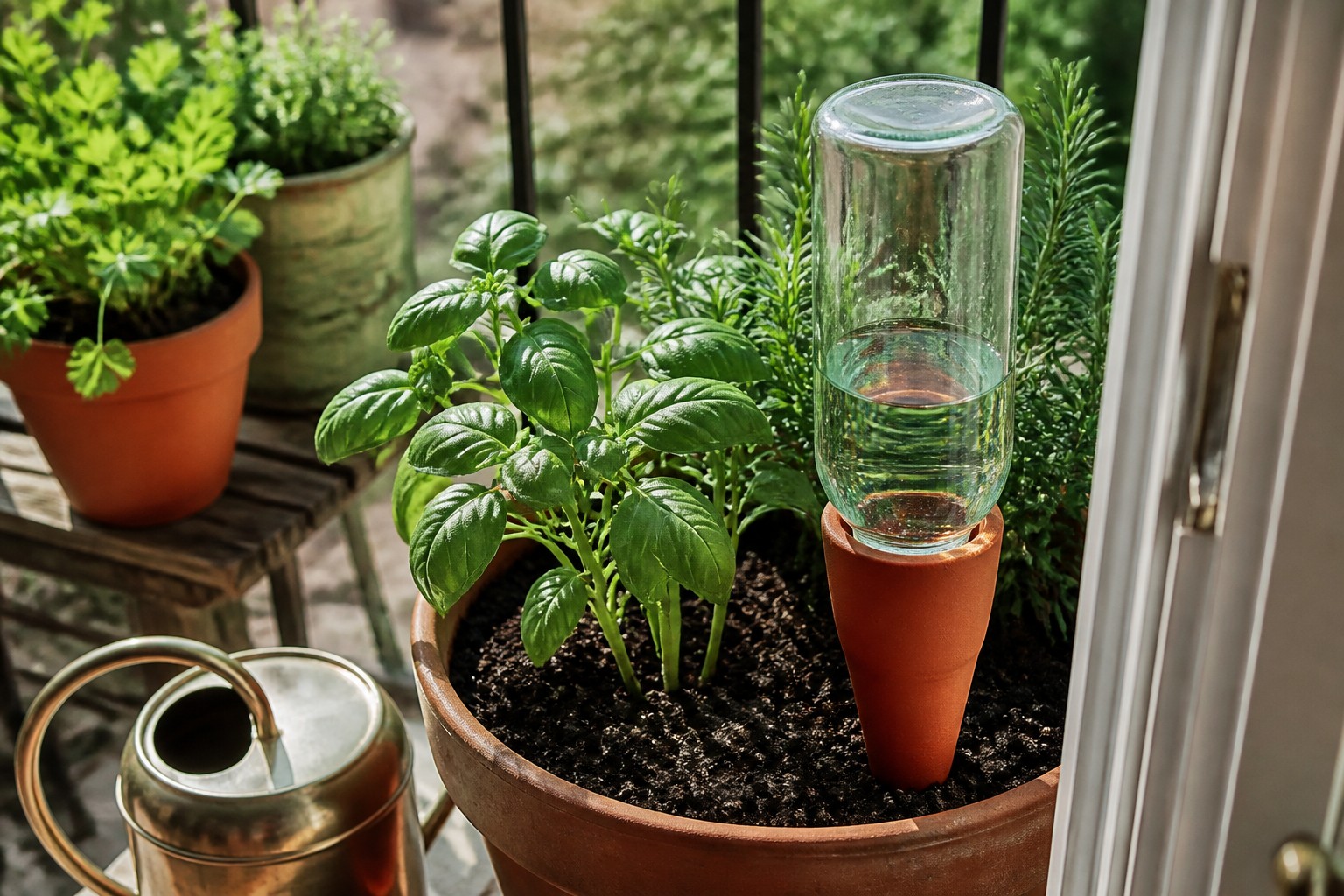
I love how terracotta looks, and I keep a few. The unglazed clay breathes, which is lovely for herbs and anything that likes to dry out — Mediterranean plants are happy in it. It’s heavy and stable, so a top-heavy tomato won’t tip in the wind.
But be honest with yourself about the watering. Terracotta wicks moisture out through its walls, so it dries fastest of anything here — a small clay pot in full sun is a plant on a timer. If you love the look but travel or forget, this is exactly where terracotta watering spikes earn their place: you invert a filled bottle into the spike and it feeds the pot slowly for days. And skip glazed-but-holeless “decorative” pots for actual growing — pretty, and a root-rot trap.
Window boxes and railing planters — when the floor is full
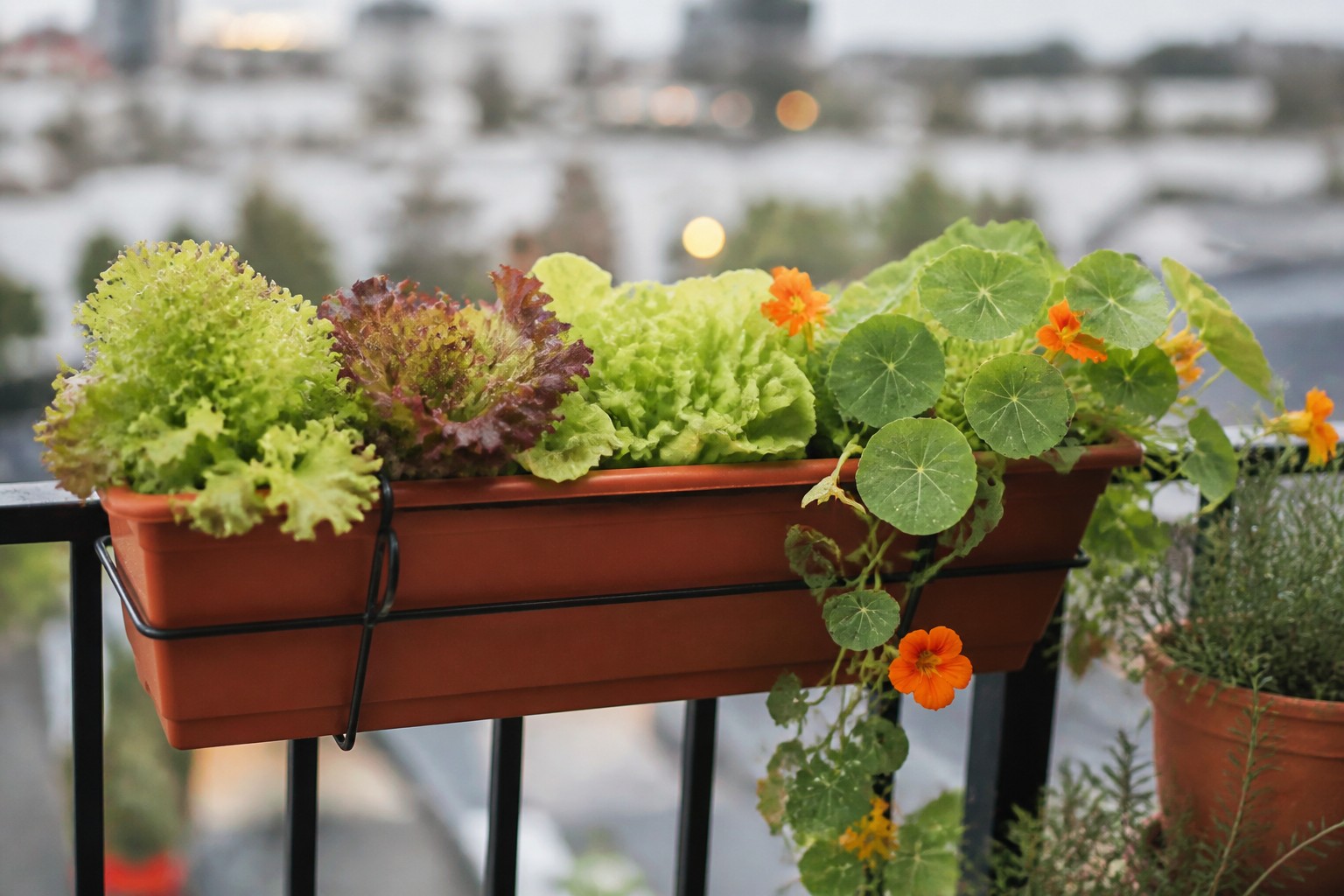
If your only space is a railing or a windowsill, this is your category, and it’s a good one. Railing planters clip right onto a balcony rail and turn dead space into a salad bar. Window boxes do the same on a sill. I grow lettuce, radishes, and trailing herbs and flowers this way, and the nasturtiums spilling over the edge are half the reason the balcony feels like a garden at all.
The catch is depth. Most railing boxes are shallow, so they’re for shallow-rooted crops — greens, herbs, radishes, strawberries — not a full-size tomato. And a shallow box on a sunny rail dries out fast, so keep the moisture meter handy.
Match the size to what you’re growing
More than the material, the size is what beginners get wrong. Too small a pot stunts the plant no matter how well you tend it. A rough guide from my own balcony:
Big plants — tomatoes, peppers, zucchini, potatoes: at least a 5-gallon container each. Crowd them into a 1-gallon pot and you’ll get a sad, tiny harvest.
Leafy greens and herbs: happy in shallower, smaller containers — a 1- to 3-gallon pot or a window box does nicely, and you can tuck several together.
Root crops — carrots, radishes: deep enough for the root to form, so a taller pot for carrots, a shallow one for radishes.
However you grow it, watering is the real skill
Whatever container you land on, they all share the same truth: they dry out faster than the ground, and reading their moisture is the skill that keeps a small-space garden alive. Before I water anything, I push a no-battery moisture meter down to root level and actually look, because the surface lies — it can be bone-dry on top and soaked below, or the reverse. If you’ve ever wondered whether you needed one, I make the case in do you need a soil moisture meter. And when I do water, a long-spout can lets me put it right at the soil and keep it off the leaves.
Otto, for his part, has opinions about which containers make the best napping spots, and it is always the one with a seedling just coming up. That’s a whole separate problem.
Pick the container that fits your space, your budget, and how much you’ll realistically fuss — then plant the thing. If you want the full small-space system, what to grow in each kind of pot and how to keep it producing all season, it’s all in Small-Space Big Harvest. The right container is the quiet start of a garden that actually feeds you a little.
